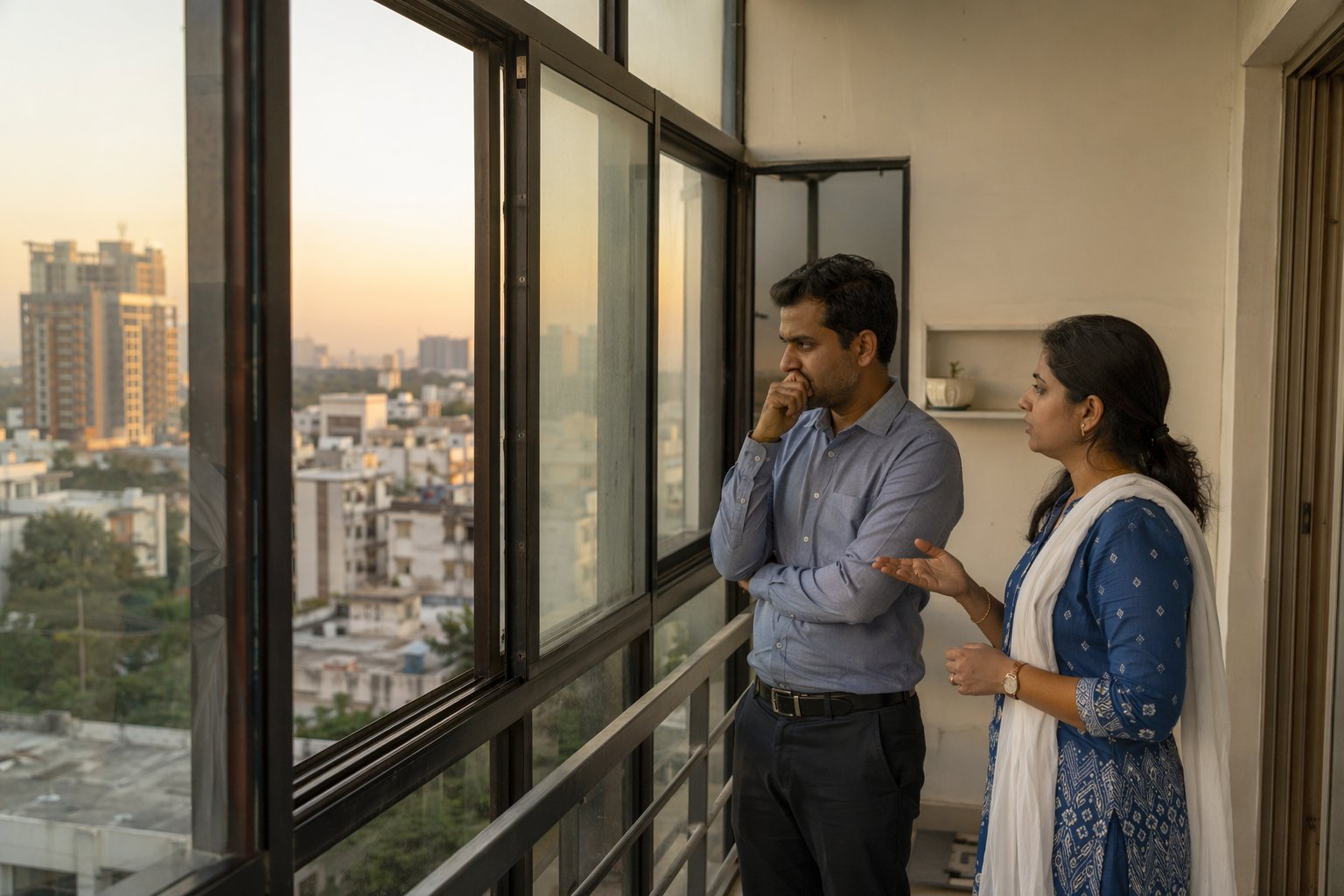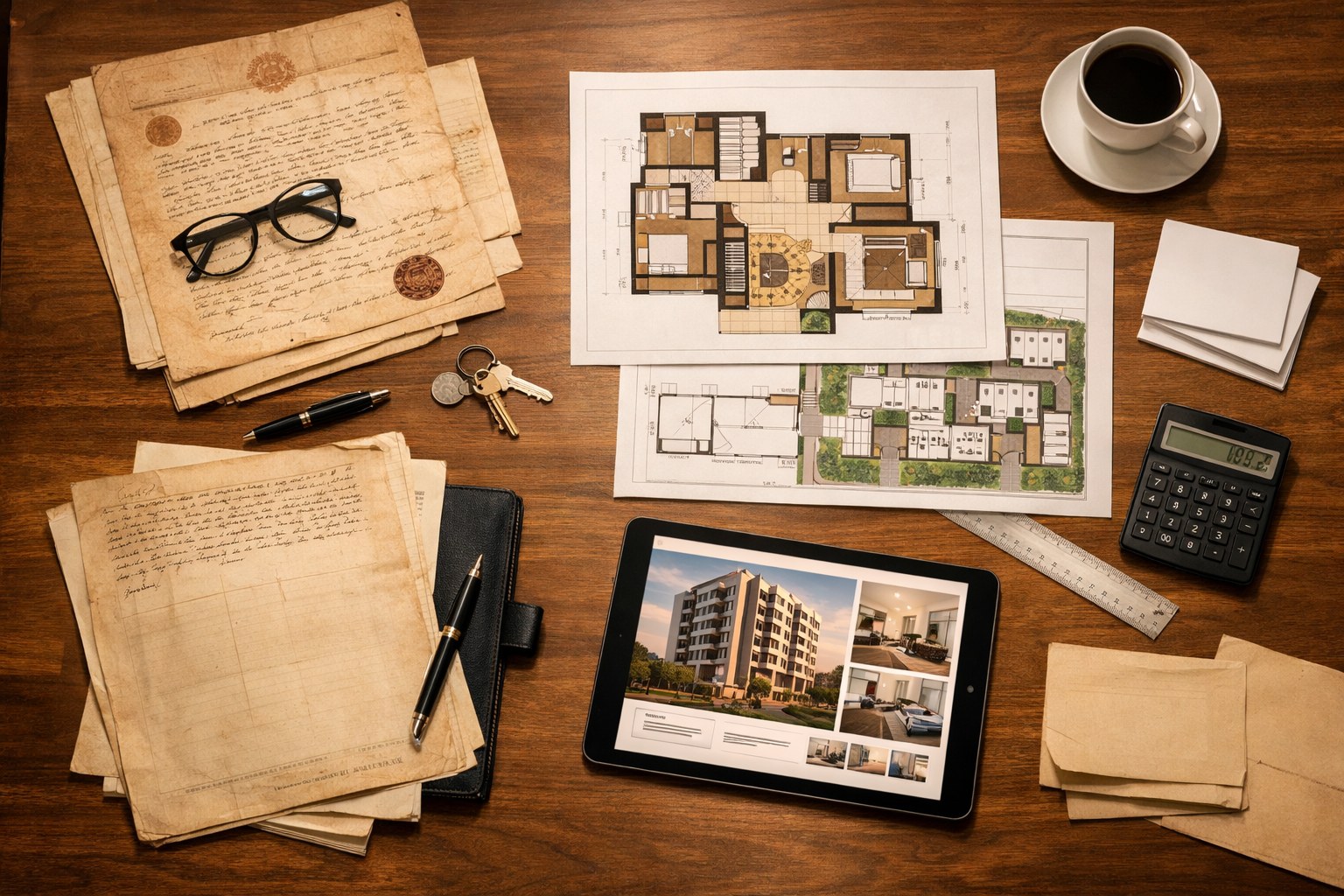
Telangana Case Study: The Waqf Note That Paused a Flat Sale starts with one number every serious buyer should respect: 147934. That is the count of prohibited-property records under Section 22-A in Telangana. In plain English, these are records where registration can be stopped or questioned because of government, endowment, Waqf, assigned land, court, or other notified restrictions. For a resale flat buyer in Hyderabad, this number is not abstract. It can decide whether you pay token advance today or walk back and verify for one more week.
This case is from a recent resale-flat enquiry in Hyderabad. Names are changed, but the paperwork pattern is very familiar. The buyer liked a 3BHK flat, the seller wanted a quick token, the broker said the papers were “all clear”, and the building looked normal from outside. The pause came only when a Waqf-related note surfaced during pre-token due diligence.
Our view is simple: before token payment, do not check only the flat number and sale deed. Check the land underneath the apartment. In Hyderabad, that one layer often carries the real risk.
Telangana Case Study: The Waqf Note That Paused a Flat Sale — The quick facts
| Item | Case detail |
|---|---|
| Property type | Resale 3BHK flat in a standalone apartment |
| City area | Hyderabad west zone belt, close to Shaikpet–Tolichowki side |
| Relevant mandal reference | Shaikpet mandal records were checked along with SRO records |
| Flat size discussed | About 1,520 sft super built-up area |
| Quoted resale price | Around Rs 1.18 crore, roughly Rs 7,760 per sft |
| Initial token demanded | Rs 5 lakh within 48 hours |
| Main risk trigger | Waqf-related note connected to underlying land reference |
| Decision | Buyer paused token payment and asked for written clarification |
The price was not unusual for that stretch. We have seen resale flats in Tolichowki, Shaikpet, Manikonda, Narsingi, Kondapur, Miyapur and Kukatpally vary sharply based on road width, age of building, parking, UDS, lift quality, and loan eligibility. A clean 10-year-old flat can still find buyers if the land documents are neat. But if the land trail has a Waqf, endowment, assigned land, or 22-A shadow, pricing becomes secondary.
In this case, the buyer’s family first treated it like a normal flat purchase. They checked the latest sale deed, link document, property tax, electricity bill, and society maintenance receipts. All were available. The seller had a bank loan earlier. The flat was occupied. Nothing looked suspicious in the usual buyer visit.
The issue came up when the buyer used a more land-focused checklist before paying token. That is where this case is useful for anyone buying in Hyderabad.
Why 1.48 lakh prohibited-property records matter in Telangana flat purchases
Section 22-A is not only a village-land issue. Many apartment buyers assume prohibited-property checks are needed only for open plots in Shankarpally, Mokila, Maheshwaram, Shadnagar, Tukkuguda, Ghatkesar, Medchal or Patancheru. That is a risky assumption.
Flats sit on land. If the land has a restriction, dispute note, prohibited-property entry, old grant question, Waqf claim, endowment notification, assigned land tag, government land overlap, or court status, the flat buyer can get dragged into it. The Sub-Registrar Office may allow some transactions in certain cases and reject others in certain circumstances. Banks may also take different calls based on their legal panel.
Telangana’s 147934 prohibited-property records show why buyers should not depend only on a broker’s confidence. These records are spread across categories and districts. Hyderabad, Rangareddy, Medchal-Malkajgiri, Sangareddy, Yadadri-Bhuvanagiri and Vikarabad see strong transaction activity, so even a small paperwork gap can become costly.
Before paying token, a buyer should run at least three checks: the SRO registration trail, the market value and village/survey identity, and the 22-A/prohibited-property status. On Verified.RealEstate, you can start with the Section 22-A Prohibited Property Check, then compare the declared property identity with the Market Value / Guideline Value Search, and pull the document trail through the Encumbrance Certificate Search.
Telangana Case Study: The Waqf Note That Paused a Flat Sale — What happened before token
The buyer, an IT professional working near Financial District, was upgrading from a rented 2BHK in Gachibowli. The family wanted a ready-to-move flat under Rs 1.25 crore, preferably within 25 to 35 minutes of office. They saw options in Puppalaguda, Manikonda, Tolichowki, Shaikpet and Kondapur.
This flat looked attractive because it gave better carpet space than newer gated community flats. The building had two lifts, cellar parking, a borewell plus municipal water arrangement, and decent road access. The seller said the apartment had no litigation. The broker pushed for quick closure, saying another buyer was ready.
The buyer almost agreed to pay Rs 5 lakh as token. In our experience, this is the exact stage where Hyderabad buyers make the biggest mistake. Token is emotionally small compared to a Rs 1 crore purchase, but legally and practically it can trap you. Once token is paid, pressure starts: bank loan, agreement deadline, seller’s next purchase, broker commission, family expectations.
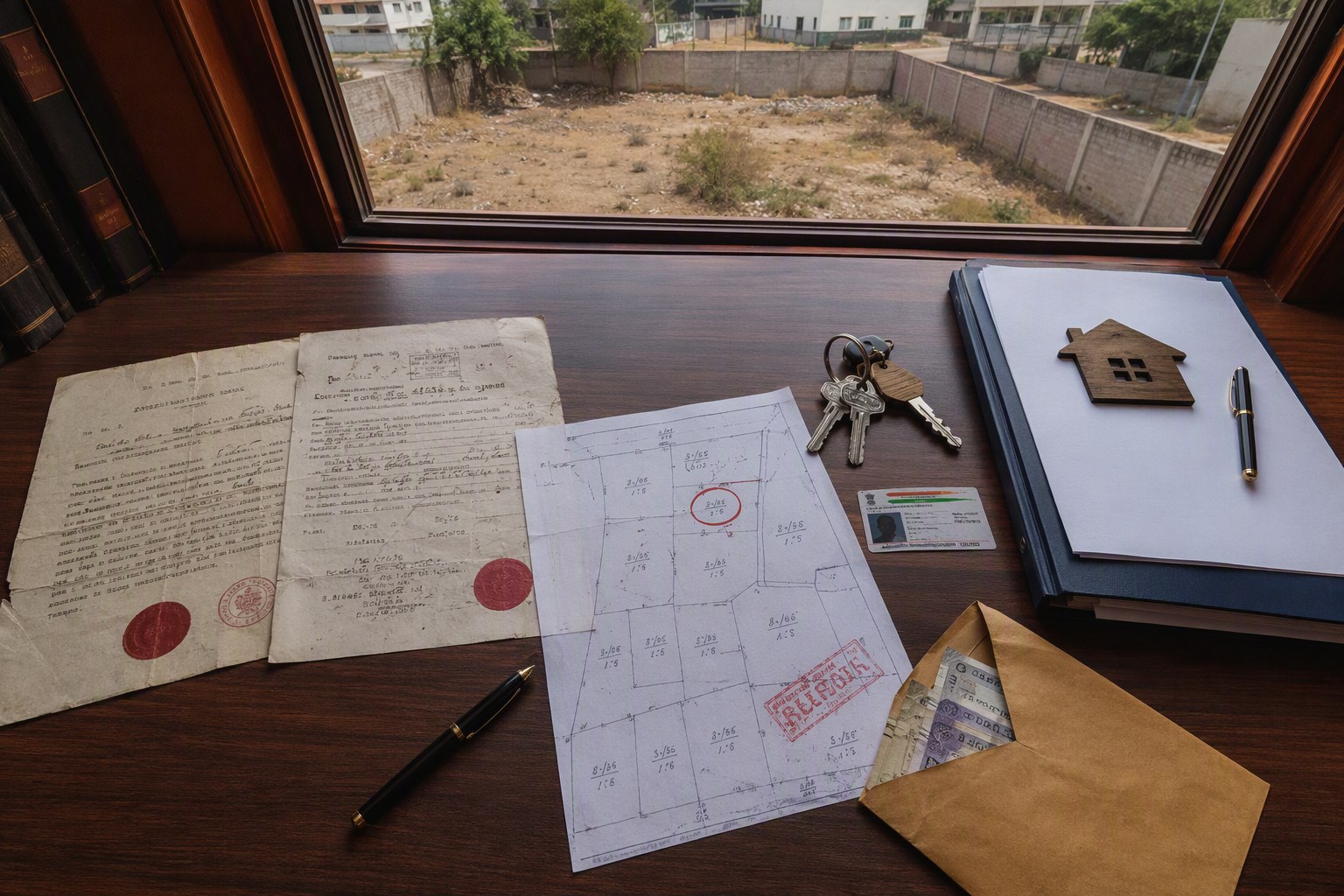
The buyer asked for the following before payment:
- Parent land document and link documents, not only flat sale deed
- Sanctioned plan and occupancy-related papers available with the association
- UDS details and schedule of property in the flat deed
- EC for the flat and land reference
- SRO jurisdiction check
- Any 22-A, Waqf, endowment, assigned land, or court note
The seller was able to share the registered sale deed and earlier sale deed. But the parent document had an older survey number reference that did not match neatly with the apartment’s present postal address. This is common in Hyderabad. Areas like Shaikpet, Tolichowki, Raidurg, Manikonda, Narsingi and Puppalaguda have old village records, municipal changes, layout changes and apartment redevelopment stories. Postal address alone is not enough.
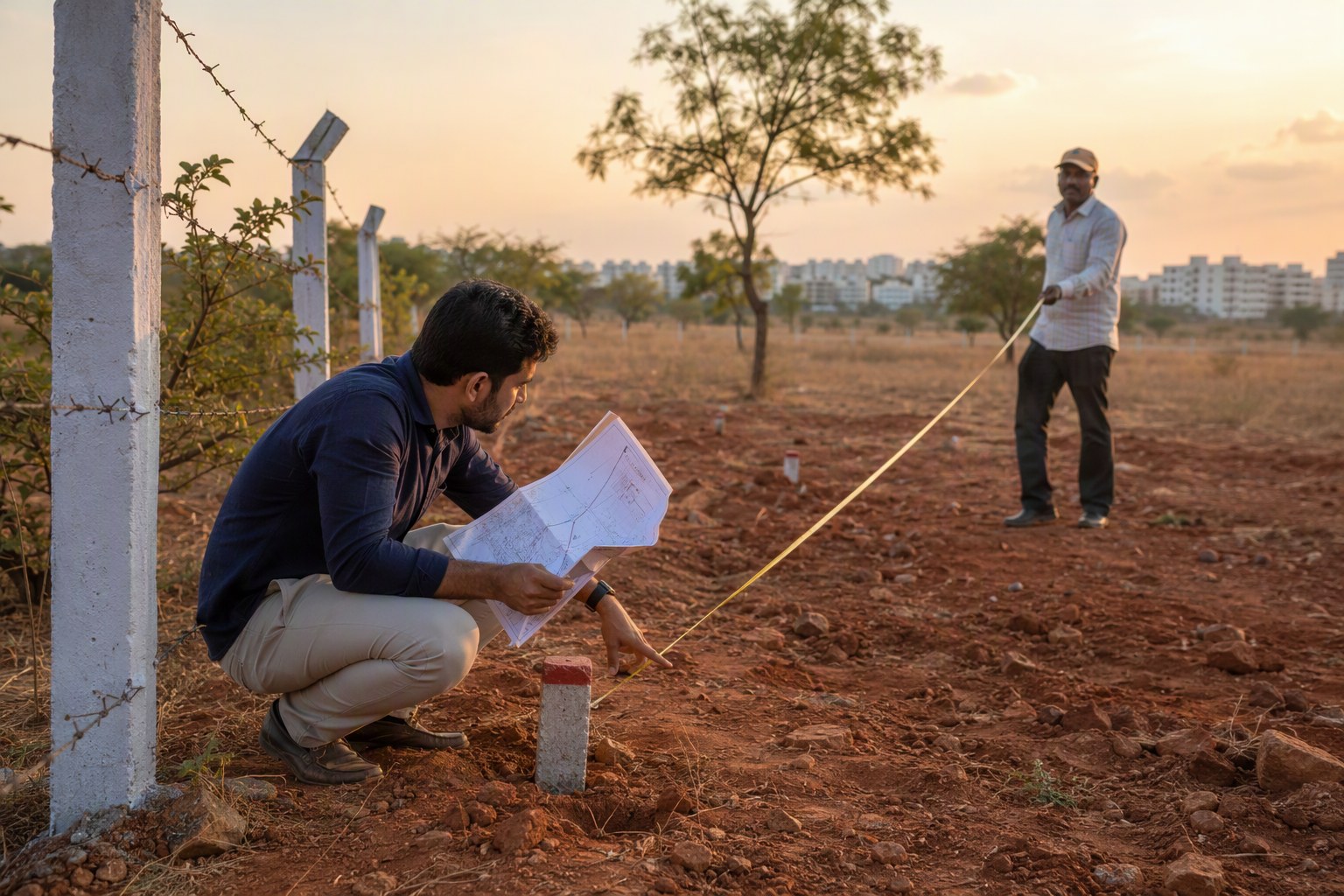
The buyer then used the survey reference mentioned in the schedule and cross-checked the land identity. For this, tools like the Survey Number Finder and Find Your SRO Office are useful because many buyers do not even know whether their property falls under the SRO they are visiting or another office.
The Waqf-related note: small line, big impact
The Waqf-related note did not say that the flat was definitely illegal. That distinction matters. Many people panic the moment they hear “Waqf”. Some sellers also dismiss it as an old issue. Both reactions are weak.
In this case, the note indicated that one of the older land references required further verification because of a Waqf-related entry in connected records. The flat itself had registered sale deeds. The building had residents. But the underlying land trail was not clean enough for the buyer to pay token without written clarity.
What changed immediately?
- The buyer refused to pay token until the seller produced land-level clarification.
- The buyer asked for the developer’s original land conversion and permission file.
- The buyer checked whether any bank had recently sanctioned loans in the same building.
- The buyer requested an advocate opinion specifically on Waqf and 22-A risk, not a generic title report.
- The buyer asked the broker to stop using phrases like “sir, everyone has bought here only”.
That last point may sound funny, but it is very real. In Hyderabad resale, social proof is often used as legal proof. “Many families are staying” is not a title certificate. “Bank loan came earlier” is not a permanent clearance. “Registration happened in 2017” does not guarantee registration will happen in 2026.
How the numbers looked: price, duty, and risk
The flat was quoted at about Rs 1.18 crore for 1,520 sft. The buyer’s budget after interiors and registration was tight. At this price, even stamp duty and registration charges become a serious cash component. Before committing, the buyer used a Stamp Duty Calculator to estimate the registration outflow and checked whether the sale consideration was in line with the ready reckoner value.
The ready reckoner or market value is not the same as market price. In many Hyderabad pockets, actual transaction prices can be much higher than government guideline values. For example, resale apartments in strong west Hyderabad micro-markets can trade at Rs 7,000 to Rs 12,000 per sft depending on exact location and building quality. Newer gated communities in Kokapet, Narsingi and Financial District can go much higher. Older standalone flats in Tolichowki or parts of Shaikpet may look cheaper, but document quality becomes a bigger filter.
Here is the practical risk calculation the buyer made:
| Cost / risk item | Approximate impact |
|---|---|
| Token advance | Rs 5 lakh at immediate risk if dispute starts |
| Legal verification | Rs 15000 to Rs 50000, depending on depth |
| Registration outflow | Several lakhs, based on value and duty calculation |
| Loan processing | Time and fees wasted if bank rejects title |
| Resale impact later | Lower buyer pool if Waqf note remains unresolved |
My opinion: the buyer took the right call. A Rs 15000 legal check before token is far better than a Rs 5 lakh argument after token. In Telangana property buying, the cheapest due diligence is the one done before emotions enter the transaction.
What the seller said, and why buyers must stay calm
The seller was not necessarily trying to cheat. This is another thing buyers should understand. Many Hyderabad flat owners themselves do not know the full land history of their apartment. They bought from a builder, paid registration charges, got mutation or municipal tax, took a loan, and moved in. Years later, when they sell, old land notes become visible.
The seller in this case said three things:
- The flat was registered properly when he bought it.
- The building had multiple flats already sold.
- No one in the apartment had received any notice recently.
All three may be true. Still, the buyer’s concern was valid. A Waqf-related note can affect future bank funding, resale confidence, and registration comfort. It may be curable in some cases. It may require certified copies, Gazette verification, board records, court orders, or revenue clarification. But the burden should not fall on the buyer after paying token.
The buyer asked for a conditional agreement: token to be paid only after satisfactory written title clarification from an advocate and acceptance by the lending bank. The seller was not ready immediately. So the buyer stepped back.
Checklist used in this Hyderabad resale flat case
This is the exact checklist we recommend for similar resale flats in Hyderabad, especially in older developed belts and village-to-urban transition areas.
1. Match the flat schedule with land identity
Check the flat number, floor, undivided share of land, apartment name, plot number, survey number, village, mandal and SRO. Do not accept only the door number. In many areas, municipal door number and old revenue survey reference are different layers.
2. Pull EC beyond the seller’s period
A 13-year EC is common, but for resale flats with land-history doubt, go deeper where possible. Use the Encumbrance Certificate Search as a starting point and compare document numbers with physical certified copies.
3. Check 22-A and prohibited status
Given Telangana has 147934 prohibited-property records, this is not optional. Run the survey or property reference through the Section 22-A Prohibited Property Check. If there is a hit or partial match, get professional verification before payment.
4. Verify SRO and market value
SRO mismatch creates confusion during registration. Use Find Your SRO Office and Market Value / Guideline Value Search. The market value also helps you understand whether the proposed consideration is realistic compared to the official value.
5. If it is a newer project, check RERA
For ongoing or recently completed projects, use the RERA Project Lookup. RERA will not solve every land-title issue, but it gives project registration, promoter and declared project details.
6. Ask for bank’s legal acceptance before agreement
If you are taking a loan, do not assume the bank will approve because another bank gave a loan earlier. Ask your bank to run title scrutiny before you sign a strict sale agreement.
What this case tells us about Waqf notes in Hyderabad real estate
Hyderabad has a long land history. Nizam-era grants, jagir records, Waqf notifications, municipal expansion, old layouts, GPA sales, regularisation files, and apartment conversions all sit together in the city’s property market. This does not mean every property with an old note is bad. It means every such note deserves respect.
Areas around Shaikpet, Tolichowki, Mehdipatnam, Attapur, parts of Rajendranagar, Raidurg, Manikonda, and old-city-adjacent belts have seen buyers become more careful about title language. In north and east Hyderabad too, buyers are checking assigned land, government land and lake buffer issues more seriously. The same discipline is now coming into flat purchases.
We’ve seen one clear shift: serious buyers are no longer satisfied with “EC clear” alone. They are asking for prohibited-property status, pahani references where relevant, Dharani entries for land parcels, GHMC/HMDA permission files, and advocate opinions that mention specific risks. This is healthy for the market.
Should the buyer have gone ahead?
With the information available before token, no. The buyer was right to pause.
If the seller later produces clean certified records, Waqf clarification, legal opinion, bank acceptance and no 22-A restriction, the buyer can reconsider. But the sequence matters. Verification first, token next. Not the other way round.
In our experience, the best resale deals in Hyderabad are not the ones closed fastest. They are the ones where the buyer knows exactly what risk is being accepted. A slightly higher-priced flat with clean title in Kondapur or Manikonda may be better than a cheaper flat with unresolved land notes in a sensitive pocket. On the other hand, a property with an old note may still be buyable if documents clearly resolve it. The point is not fear. The point is evidence.
Practical lesson from Telangana Case Study: The Waqf Note That Paused a Flat Sale
The biggest lesson from Telangana Case Study: The Waqf Note That Paused a Flat Sale is this: a flat sale can look clean at the apartment level and still carry doubt at the land level. Section 22-A records, Waqf-related notes and old survey references are not small technicalities. They affect registration confidence, bank funding and resale value.
Before paying token for any Hyderabad resale flat, especially in older or mixed-title localities, check the land trail. Use digital tools, but do not stop there. Get certified copies where required. Speak to the right SRO. Take an advocate’s written opinion. If a seller refuses reasonable verification before token, that itself is a signal.
Hyderabad real estate is still one of India’s strongest urban property markets. But strong markets also attract rushed decisions. A careful buyer does not lose good property; a careful buyer avoids bad paperwork.
Frequently Asked Questions
Can a Waqf-related note stop a flat registration in Telangana?
It can, depending on the exact record, property identity and SRO view. A Waqf-related note does not automatically mean the flat is illegal, but it must be checked before token or agreement.
Is an Encumbrance Certificate enough for a Hyderabad resale flat?
No. EC is necessary, but not enough. Buyers should also check parent documents, survey number, SRO jurisdiction, 22-A prohibited-property status, permissions and land-title history.
What is Section 22-A in Telangana property registration?
Section 22-A deals with prohibited properties where registration may be restricted due to government, assigned, endowment, Waqf, court or other notified issues. Telangana has 147934 such records.
Should I pay token before legal verification?
Avoid it. If the seller insists, make the token refundable in writing subject to title clearance, bank approval and absence of 22-A or similar restrictions.
Which documents should I ask for in a resale flat purchase?
Ask for sale deed, link documents, parent land documents, EC, sanctioned plan, occupancy or completion proof where available, tax receipts, UDS details, SRO details and any land clarification records.