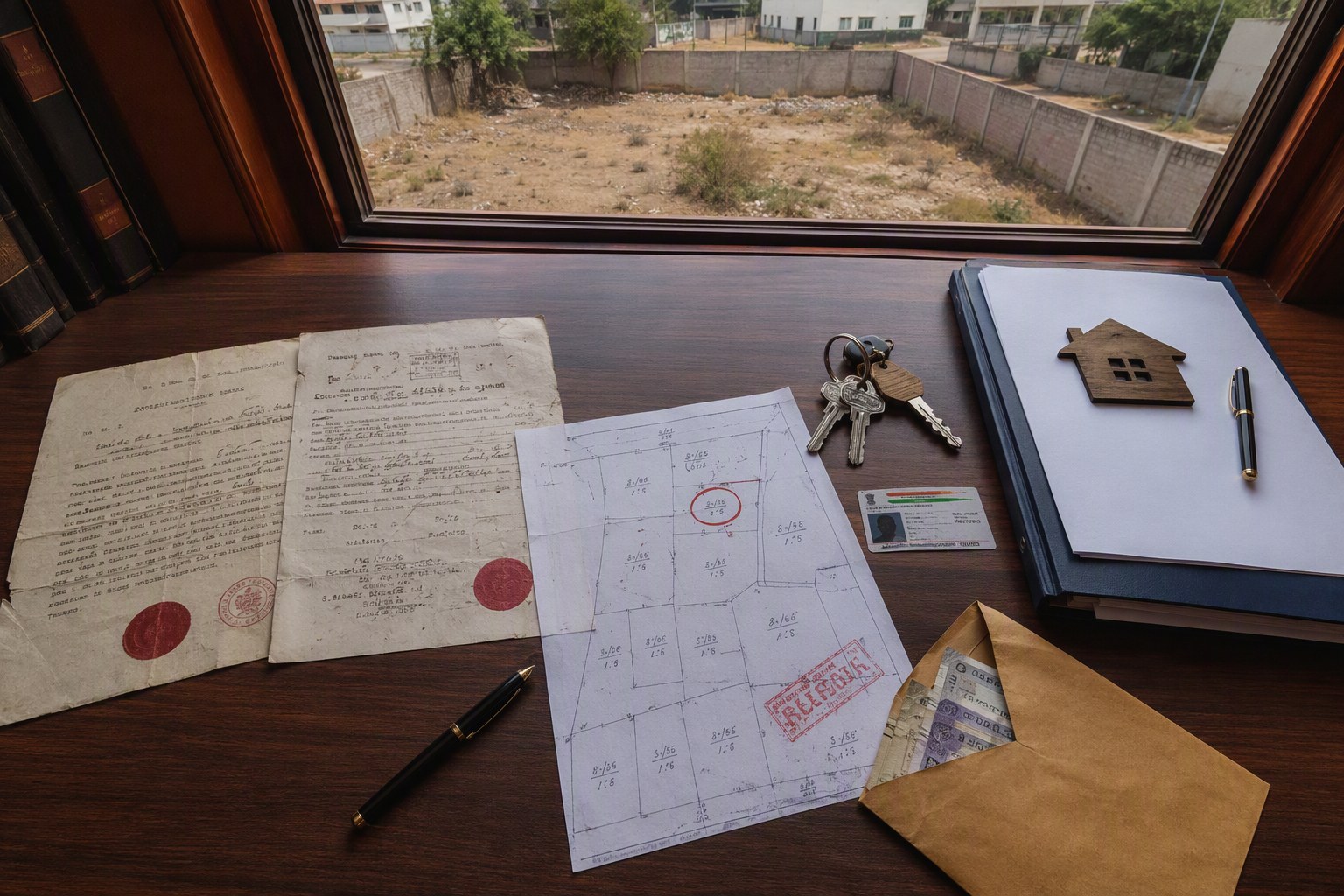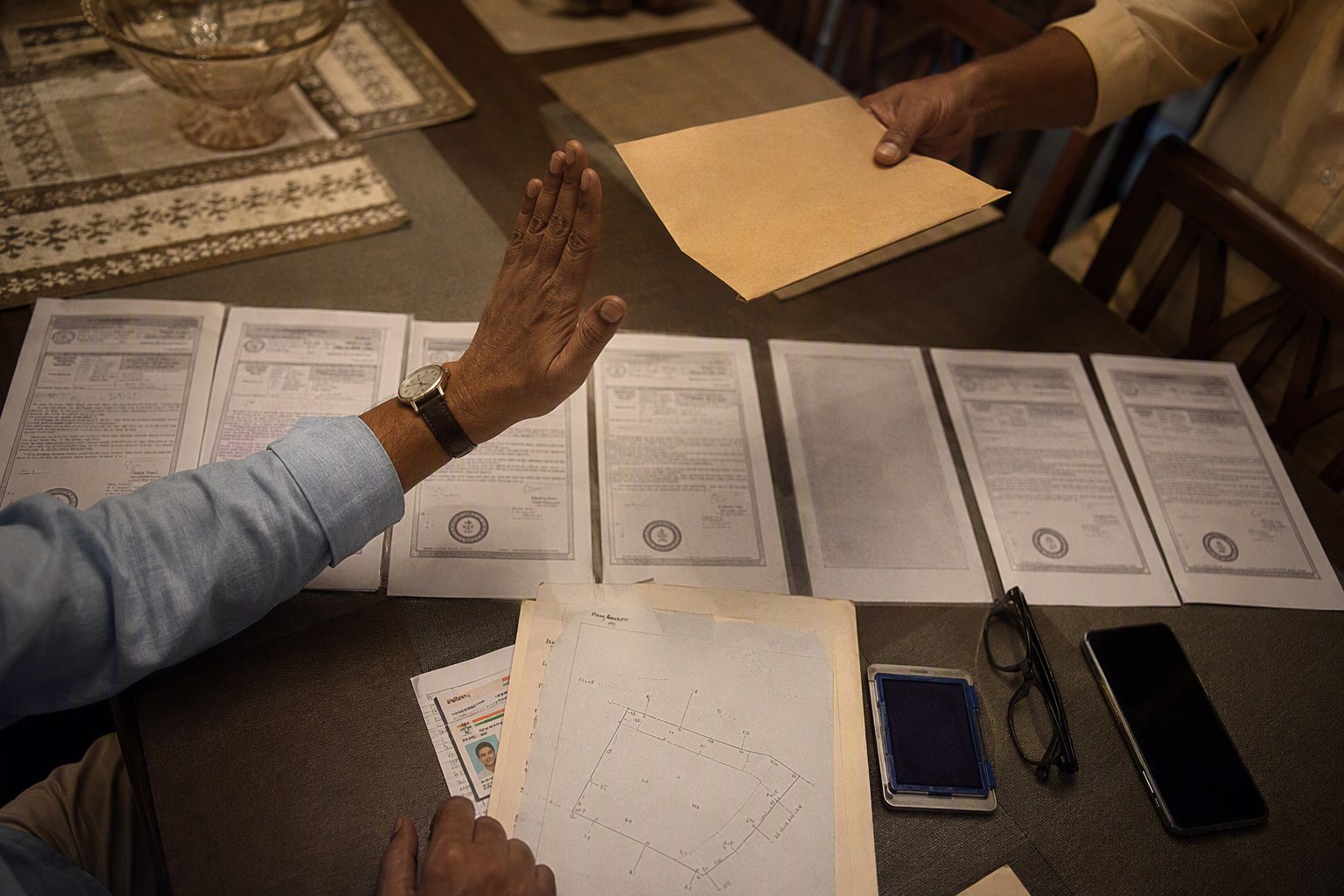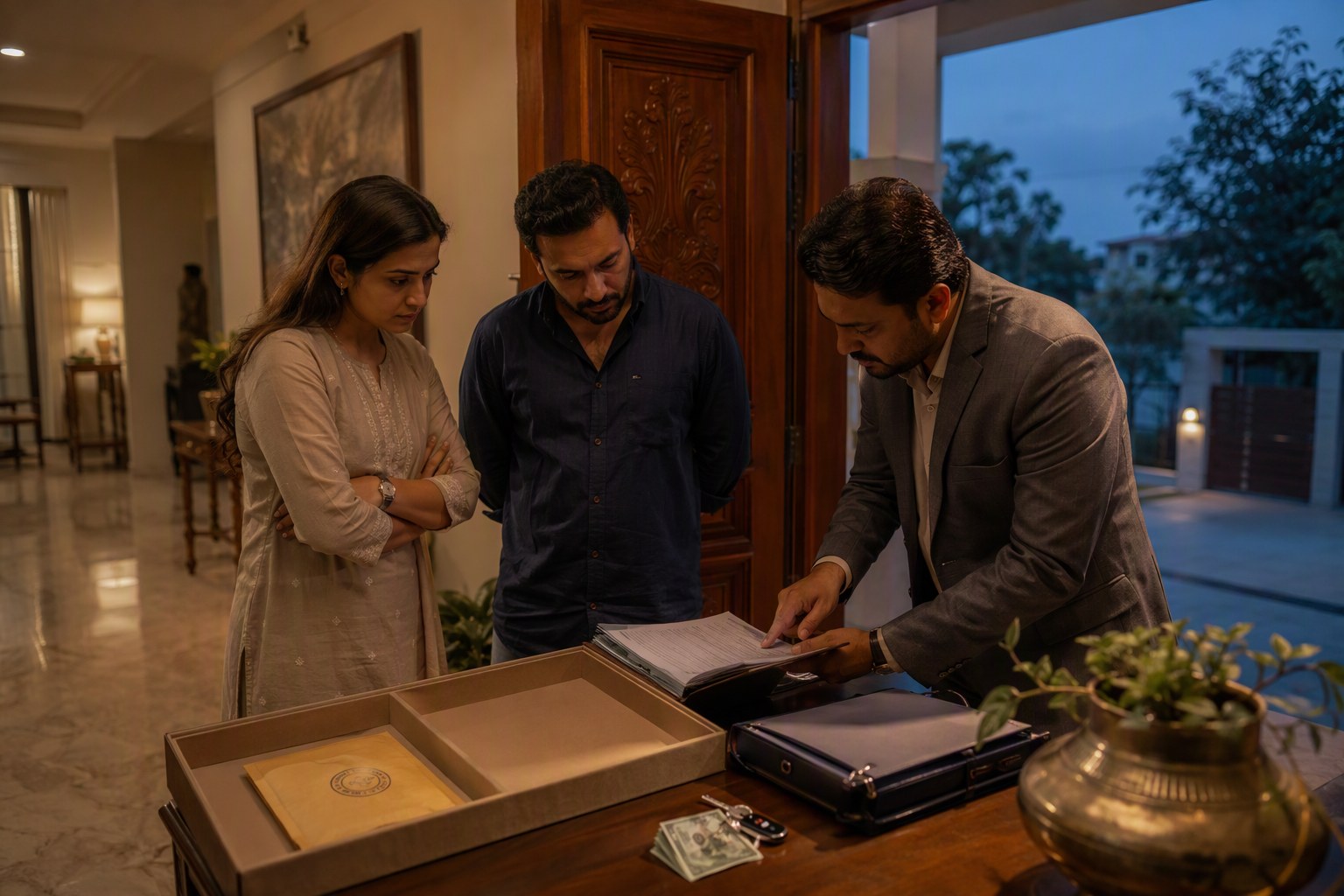
Missing Mortgage Release was the small document gap that stopped a near-final resale villa transaction in Hyderabad’s western corridor. The seller had closed the housing loan. The bank had issued a loan closure letter. The buyer’s family had already inspected the villa, negotiated furniture, discussed registration dates, and was ready to pay token. Then the Encumbrance Certificate still showed a live mortgage entry. The sale did not move.
This case is not rare in Kokapet, Narsingi, Tellapur, Mokila, Kollur, Gopanpally and other villa-heavy belts. In our experience, many sellers think “loan closed” means “title cleared”. It does not. If the mortgage was registered, the release must also be registered at the correct SRO. Until that happens, the buyer is taking a title risk.
Missing Mortgage Release: The news lead from this stalled villa sale
A resale villa deal in a premium gated community was put on hold after the buyer’s document check found that the seller’s old bank mortgage had not been formally released in registration records. The seller insisted the loan was fully paid. The bank statement supported that. But the EC still carried the mortgage entry, and no registered release deed was available.
The buyer’s lawyer advised the family not to pay token until the release was registered and reflected properly in the latest Encumbrance Certificate. That advice saved them from a messy position: once token is paid, pressure starts from brokers, sellers, relatives and sometimes even the builder’s association. Before token, the buyer still has bargaining power.
The property was in the western Hyderabad villa market, the kind of micro-market where buyers often move fast because good inventory does not remain open for long. The same issue can come up in Gandipet mandal, Serilingampally mandal, Ramachandrapuram side, Shankarpally mandal and nearby growth corridors. The locality may be posh. The clubhouse may be excellent. Still, the SRO record decides whether the title is clean enough for registration.
Our opinion is simple: do not treat a bank NOC as equal to a registered mortgage release. For a buyer, EC and SRO record matter more than verbal comfort.
Missing Mortgage Release: Why the buyer stopped before token
The buyer’s first doubt came from the EC. A normal resale check should include an Encumbrance Certificate Search for the relevant period. In this case, the EC showed that the seller had created a mortgage in favour of a bank during an earlier loan transaction. There was no matching release entry later.
The seller said the loan was closed. That may have been true. But a closed loan and a released mortgage are two different things:
- Loan closure means the borrower has repaid the bank.
- Bank NOC means the bank acknowledges repayment and has no objection from its side.
- Return of original documents means the bank has handed back title papers.
- Registered mortgage release means the charge is formally removed from registration records.
- Clean EC means the buyer can see the release trail in public record.
In a resale villa, this difference is not academic. Many buyers are funding the purchase with their own home loan. The new bank will also examine the title. If an earlier mortgage is still visible without release, the new lender may stop the file or ask for the release deed before sanction disbursement. So even if the buyer takes a risk, the bank may not.
What exactly went wrong in the document chain?
The seller had completed repayment and collected a loan closure document. But the mortgage was created through a registered instrument, and that means the release also had to be registered. Somebody in the chain assumed the bank’s letter was enough. It was not.
This is a common mistake after a busy loan closure process. Owners are happy that EMI is over. They collect original sale deed, link documents, approved layout copies, tax receipts, and NOC. Then the file goes back into a cupboard. Years later, when they decide to sell, the EC exposes the pending charge.
The uncomfortable part is timing. If this is found early, it is only a paperwork delay. If it is found after token, agreement, valuation, buyer loan login and packers booking, it becomes a dispute. If it is found on the week of registration, it can derail the whole plan.
How EC, CERSAI and SRO checks caught the issue
The buyer’s side did three sensible things before paying token. First, they pulled the EC. Second, they checked whether any central security interest was visible through a CERSAI Charge Check. Third, they identified the correct SRO using Find Your SRO Office instead of relying only on broker advice.
For villas, especially in gated communities, buyers sometimes focus too much on clubhouse access, UDS, maintenance dues, corpus fund and interiors. Those are relevant, yes. But title checks come first. If the SRO record still shows a mortgage, the villa is not ready for safe resale registration.
In Telangana, buyers should also check whether the property has any broader restriction risk. Our prohibited property dataset records 3,076,153 Section 22-A entries. That number is a reminder: public record checks are not optional. Use the Section 22-A Prohibited Property Check where survey number, village and local record details are relevant, especially for land parcels, plotted layouts and villas on larger converted lands.
The local Hyderabad angle: villa markets move faster than paperwork
Western Hyderabad has a habit of moving faster than the files. Buyers in Kokapet, Narsingi, Tellapur, Kollur, Mokila, Gopanpally and Financial District surroundings often compete for limited resale villas. A family may like a villa on Saturday and be asked for token by Monday. That is exactly where mistakes happen.
We have seen this behaviour across Gandipet mandal and the Serilingampally side. Buyers compare commute to Gachibowli, ORR access, school distance, road width, water supply and community reputation. Sellers compare two or three interested parties and push for quick commitment. Brokers say, “Sir, token petti block cheyyandi.” But a token paid without EC review is not a smart move.
Ready reckoner or market value check is also part of the sale planning. Buyers can use the Market Value / Guideline Value Search and then estimate registration cost through the Stamp Duty Calculator. These tools do not replace legal scrutiny, but they reduce guesswork before the family commits.
What the seller had to do to revive the deal
Once the missing release was found, the seller had to go back to the bank and arrange the release process. The usual steps are:
- Obtain loan closure confirmation from the bank.
- Confirm whether the mortgage was registered and at which SRO.
- Prepare the release deed or deed of reconveyance as required.
- Ensure the authorised bank representative signs where needed.
- Register the release at the correct SRO.
- Pull a fresh EC after registration and verify that the release entry appears.
- Share the full trail with the buyer before token or agreement.
Only after this chain is complete should the seller push for token. In this case, the buyer was willing to wait, but only because the issue was identified before money changed hands. If the seller had argued or hidden documents, the buyer would have walked out.
Buyer checklist before paying token for a resale villa
For a resale villa in Hyderabad or nearby Telangana growth corridors, I would not pay token until these checks are done. This is practical field advice, not theory.
| Check | What to verify | Why it matters |
|---|---|---|
| Latest EC | Sale deeds, mortgages, releases, court orders if any | Shows public record trail |
| CERSAI | Any active security interest | Useful where bank charge exists outside normal buyer knowledge |
| Original title deeds | Seller must show originals, not only photocopies | Confirms possession of title papers |
| Mortgage release | Registered release deed if earlier mortgage exists | Removes lender charge from record |
| SRO mapping | Correct SRO for the village/locality | Avoids wrong-office assumptions |
| Approvals | Layout, building permission, occupancy status where applicable | Confirms planning compliance |
| Community dues | Maintenance, corpus, transfer charges | Prevents post-sale surprises |
| Tax and utility dues | Property tax, electricity, water | Clears operational liabilities |
For plotted villas or independent villas on survey-number based land, also cross-check the survey number through Survey Number Finder and run a broader Property Verification Tool check. If the land started as agricultural land, ask for the conversion trail, pahani history where relevant, layout approval and link documents. Do not depend only on the community name.
What should the token agreement say?
If a buyer still wants to block the property while the release process is pending, the token terms must be very clear. I prefer a short written understanding rather than a casual bank transfer. The language should say that token is subject to clean title verification, registered mortgage release, latest EC, original document inspection and buyer bank approval.
The agreement should also say what happens if the seller cannot produce a clean EC within the agreed time. The buyer should get refund without deduction. If the seller is genuine, they should not object to this. A genuine seller will say, “Yes, let us complete the release and then proceed.” A risky seller will say, “Why all this, sir? Everyone buys like this.” That answer itself is a warning.
Use a proper draft. If needed, start with Legal Document Generator and then get it reviewed by a local property lawyer. For high-value villa deals, template drafting without legal review is penny-wise and pound-foolish.
Red flags that buyers should not ignore
- Seller says loan is closed but cannot show registered release deed.
- EC shows mortgage but seller calls it “old entry only”.
- Original documents are still with bank or “in process”.
- Broker pushes token before EC review.
- Seller refuses CERSAI check.
- Different names appear across sale deed, tax receipt and community records without explanation.
- Villa is on land with unclear survey number or village mapping.
- Seller wants cash token without written conditions.
None of these red flags automatically means fraud. But each one means slow down. A clean villa deal can survive questions. A weak title cannot.
Seller lesson: close the loan properly before listing
Sellers also lose when release paperwork is pending. A serious buyer may walk away. A buyer’s bank may reject the file. The property may get a reputation in the broker circle as “document issue villa”, even when the issue is fixable. That affects negotiation power.
Before listing a villa, sellers should pull their own EC and check the chain. If a mortgage appears, complete the release first. If the property has old bank loans, builder loans, family settlements, GPA transactions or inheritance documents, organise them before inviting buyers. The best resale transactions are boring: every paper is available, every entry has a matching explanation, and the SRO trail is clean.
Our take on the Missing Mortgage Release case
This case ended up as a delay, not a disaster, because the buyer checked before paying token. That is the big lesson. In Hyderabad’s villa market, emotion can run high. Families imagine shifting, children’s school bus route, parents’ room on the ground floor, weekend barbecue, all of it. But property purchase is still a document transaction first.
A missing mortgage release is not a small clerical issue. It is a title defect until corrected. The seller may be honest. The loan may be closed. The bank may be cooperative. Still, the buyer should wait for the registered release and fresh EC. That one discipline can prevent months of stress.
In our experience, the safest order is: inspect property, collect documents, check EC, check CERSAI, verify SRO and survey details, confirm release entries, then pay token with written conditions. If the seller cannot accept that order, the buyer should be ready to walk away.
Frequently Asked Questions
Is a bank NOC enough if the seller has closed the housing loan?
No. A bank NOC helps, but if the mortgage was registered, the release should also be registered at the SRO. The latest EC should show the release entry.
Should I pay token if the EC still shows an old mortgage?
Avoid paying token unless the token agreement clearly says payment is subject to registered mortgage release and clean EC. Safer option is to wait until the release is completed.
Can a closed loan still create trouble during resale?
Yes. If the public record still shows a mortgage and no release, the buyer’s lawyer or bank may stop the transaction until the defect is corrected.
Which checks should I do before buying a resale villa in Hyderabad?
Check EC, CERSAI, SRO details, original title deeds, mortgage release, approvals, tax dues, community dues and Section 22-A risk where land records are relevant.
Who should register the mortgage release, buyer or seller?
The seller should complete it with the concerned bank before sale registration. The buyer should verify the registered release deed and fresh EC before proceeding.