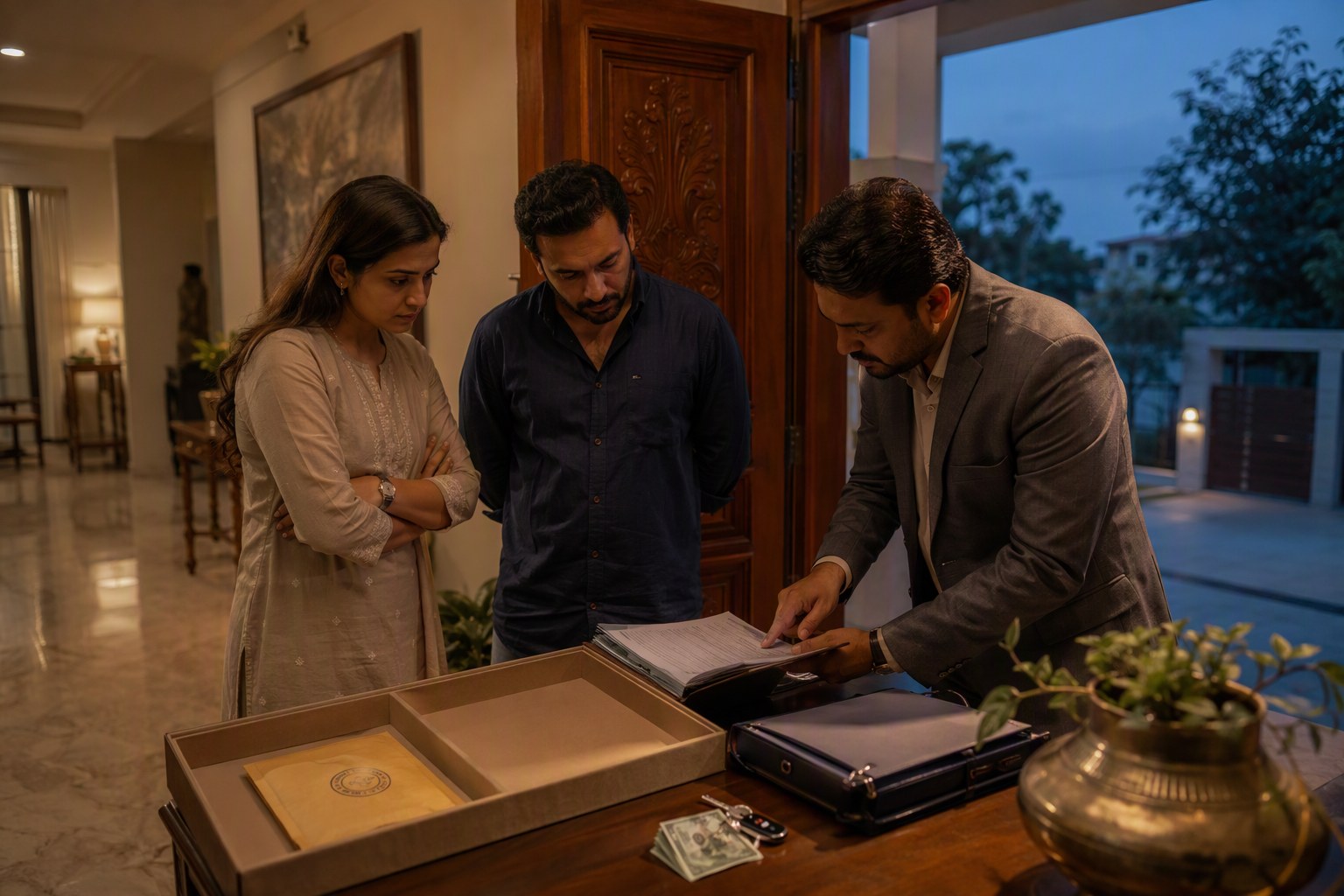
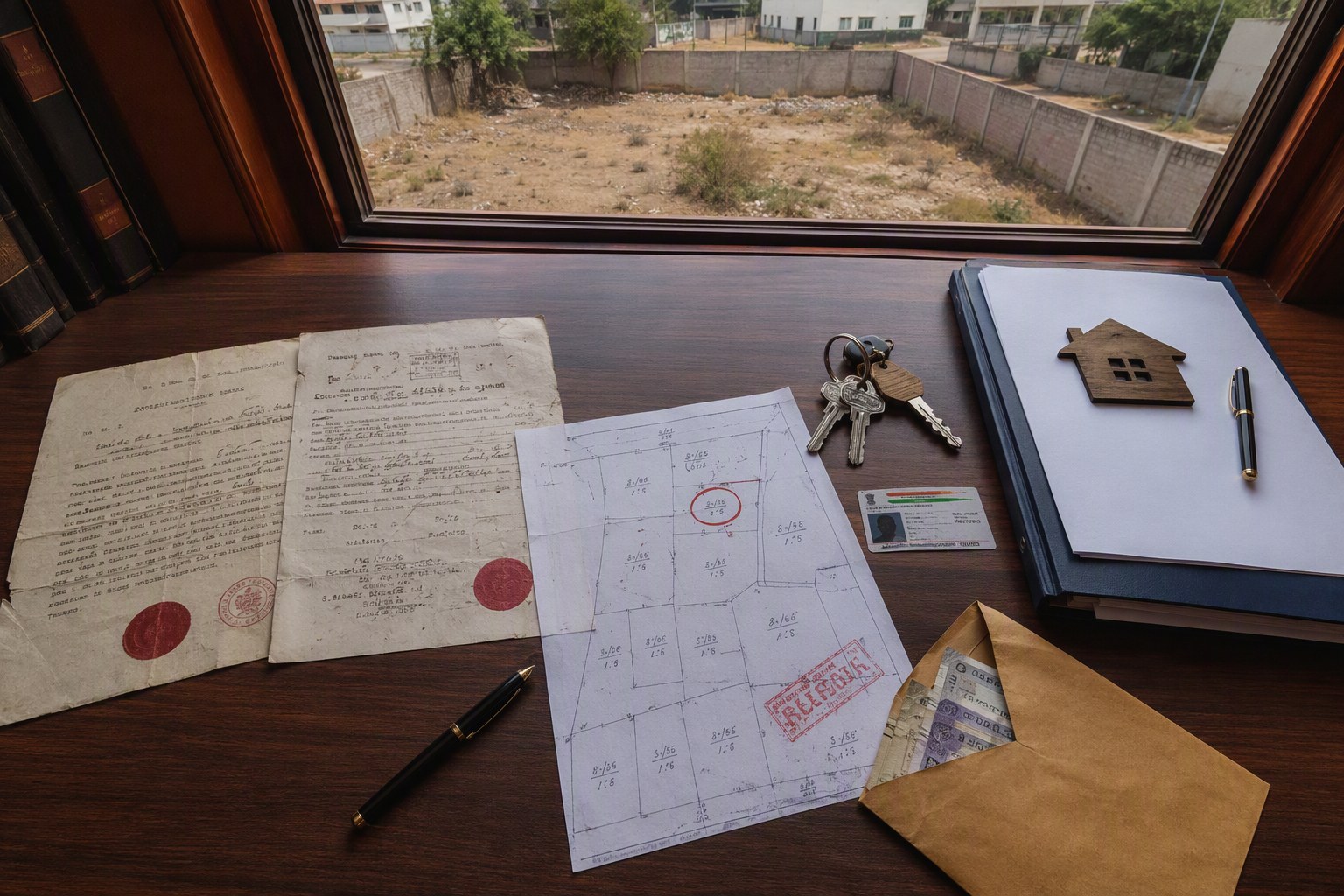
Case Study: A Resale Flat Deal Saved by an Old Link Deed is the kind of Hyderabad resale flat story we see often: the flat looks clean, the society is known, the seller sounds genuine, but one old document suddenly decides whether the buyer can proceed with confidence. In this case, the flat was in Kondapur, Serilingampally mandal, not some unknown layout on the city edge. Still, the deal almost went cold because the seller could not immediately prove the full ownership chain.
The buyer had already visited the flat twice. The family liked the approach road, the lift condition, the car parking bay, and the short drive towards Gachibowli. The seller had the current sale deed, latest tax receipts, association NOC, and electricity bill. On the face of it, everything looked normal. Then the buyer’s bank legal team asked for the old link deed connected to the land and undivided share. That one missing paper changed the mood completely.
In Hyderabad resale apartments, a sale deed alone is not the full story. The buyer must see how ownership travelled from the landowner to builder, from builder to first buyer, and then to the present seller.
Case Study: A Resale Flat Deal Saved by an Old Link Deed in Kondapur
Let me keep the parties anonymous, because the lesson matters more than the names. The buyer was an IT employee living on rent near Nallagandla. The seller was a family shifting out of Hyderabad. The property was a resale flat in an older gated community in Kondapur, Serilingampally mandal, Ranga Reddy district. This belt has many apartments where landowner share, builder share, development agreements and supplementary deeds are common. That is normal. But the documents must speak clearly.
The first round of document collection was quick. The seller shared the registered sale deed through which he purchased the flat, the possession letter, occupancy-related papers available with the association, property tax proof and maintenance clearance. The buyer also checked the current government market value through Market Value / Guideline Value Search instead of depending only on broker talk. That is a good habit. In our experience, resale buyers who verify ready reckoner or guideline value early avoid confusion during sale agreement drafting and stamp duty planning.
Then came the legal query. The bank’s lawyer wanted the earlier link deed showing how the builder or earlier owner got rights over the land and how the undivided share moved into the flat transaction. The seller initially said, “I bought with a bank loan earlier, so everything must be fine.” That answer may be emotionally satisfying, but it is not a document. A previous loan does not remove the present buyer’s duty to verify title.
The buyer’s confidence dropped. He had not paid the full advance, but a token discussion had started. The family was worried that if they moved ahead and the bank rejected the file, they would lose time, bargaining power and mental peace. I agreed with that concern. When an old link deed is missing, the issue may be small, but it may also expose a gap in the ownership chain. You should not guess.
Why the Old Link Deed Mattered in This Resale Flat Deal Saved by an Old Link Deed
A link deed is not just an old paper kept for sentiment. It is the bridge between two ownership stages. In a Hyderabad apartment, especially in areas like Kondapur, Madhapur, Manikonda, Gachibowli, Kukatpally and Miyapur, the flat sale deed often refers to earlier documents: development agreement, general power of attorney, landowner partition, builder allocation, prior sale deed or gift deed. If those references are not checked, the buyer sees only the last page of the story.
Here, the present seller’s deed mentioned an earlier registered document connected to the project land. That earlier document was not attached in the seller’s scan set. The bank legal officer asked for it because the seller’s title depended on that chain. Without it, the bank could not comfortably confirm that the seller had marketable title. Even if the flat was physically occupied and society records were clean, the legal file had a hole.
This is where many resale flat negotiations become emotional. Sellers feel insulted. Buyers feel scared. Brokers feel irritated because the deal slows down. But title checking is not personal. It is basic hygiene. If the document is genuine and available, everyone benefits. If it is not available, the buyer must know before signing a stronger agreement.
The exact document gap
The missing paper was an older registered link deed connected to the land and the builder’s right to convey flats. The seller had a photocopy reference number, but not a readable certified copy. The buyer’s advocate wanted the certified copy or at least a verifiable registered copy from the concerned SRO records. This is where the buyer used Find Your SRO Office to identify the right registration office path before running around between counters and private document writers.
We also suggested checking the encumbrance trail through Encumbrance Certificate Search and reviewing the entries with EC Analyzer. An EC is not a title certificate, but it helps confirm registered transactions affecting the property. If the EC shows the earlier document number, date and parties, it becomes easier to request or trace the certified copy.
How We Rebuilt the Ownership Chain Without Panic
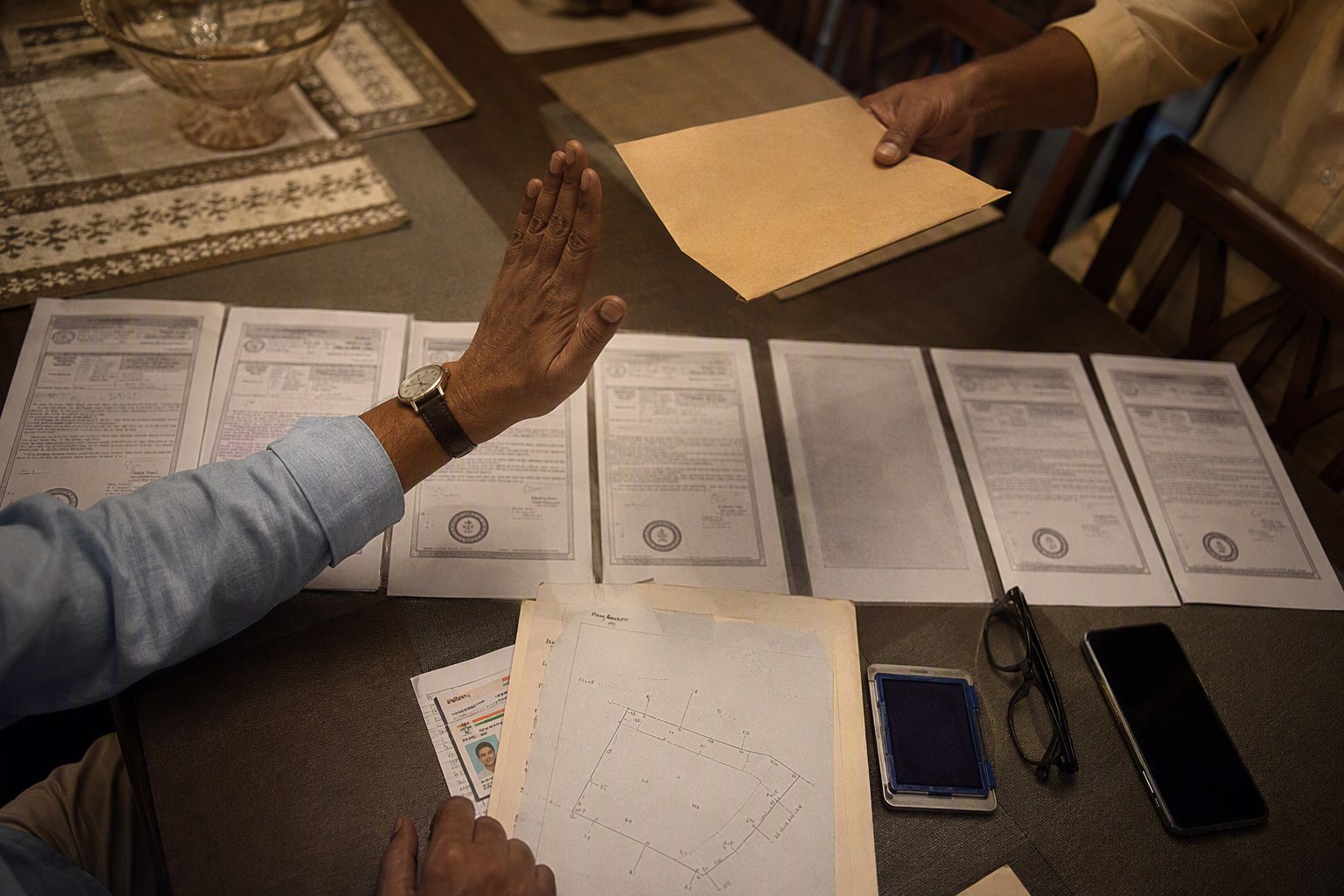
The first step was to stop arguing on WhatsApp and make a simple document chain table. I always prefer this in resale transactions. Put every deed in order. Mention who transferred to whom, what property description was used, and whether the flat number, undivided share and schedule boundaries are matching. Once the chain is visible, the missing link becomes easy to isolate.
| Document stage | What we checked | Why it mattered |
|---|---|---|
| Old land document | Survey details, parties and registered reference | To see the source of land rights before the apartment project |
| Development or allocation paper | Builder rights, landowner share and authority to sell | To confirm that the flat could be legally conveyed |
| First flat sale deed | Flat number, undivided share, schedule and common areas | To confirm the apartment title entered the flat chain correctly |
| Present seller’s purchase deed | Seller’s title, previous owner details and SRO references | To confirm the seller can transfer the flat now |
| Latest EC and charge checks | Registered transactions and possible loan charge indicators | To reduce risk before agreement and registration |
Once the table was prepared, the missing old link deed was not a mysterious problem anymore. It was a specific document with a number and approximate registration details. The seller checked his old home loan file. The builder’s office was also contacted. Older projects in Hyderabad often have a dusty document room or a senior accounts person who knows where past land papers are kept. After a few days, the builder’s office located a scanned copy. The seller then applied for a certified copy through the registration route.
During this period, we told the buyer not to pay any larger advance. A small token, if already discussed, should be backed by written conditions. The condition should say that the advance is subject to satisfactory legal verification, EC review, loan clearance and production of link documents. This is not mistrust. This is discipline.
Checks That Protected the Buyer Before Signing the Sale Agreement
The old link deed solved one major concern, but it was not the only check. A resale flat buyer in Telangana should not stop at one document. Hyderabad apartment deals sit at the meeting point of SRO records, municipal permissions, association records, bank charges and sometimes land classification issues. Each one has a different risk.
For this Kondapur flat, the buyer checked the following:
- Encumbrance trail: The EC entries had to match the sale deed references and previous transfers. Encumbrance Certificate Search helped structure this check.
- Government market value: The buyer checked the guideline value using Market Value / Guideline Value Search. This helped in stamp duty planning and avoided last-minute surprise at registration.
- Stamp duty estimate: Before final negotiation, the family used Stamp Duty Calculator to understand the registration cost direction.
- Prohibited property angle: Since Telangana has 3,076,153 prohibited property records under Section 22-A as per the available database count, we advised a check through Section 22-A Prohibited Property Check wherever land particulars are traceable. Apartment buyers often ignore the land beneath the building. That is a mistake.
- Loan charge check: The seller said the old loan was closed. The buyer still used CERSAI Charge Check as part of the comfort checks.
- General verification: The file was finally reviewed through Property Verification Tool to keep the document checklist organised.
Some buyers ask whether a flat in a known apartment society needs Section 22-A attention. My answer is yes, where land details are available. Section 22-A issues are not limited to empty plots. If the base land has restrictions, disputes or government-related entries, the flat buyer can face trouble later, especially during resale or bank finance. Not every apartment will have a problem, but the check is sensible.
What the Old Link Deed Finally Proved
When the certified copy came, it matched the reference in the present sale deed. The names, registration details and property description were consistent enough for the bank legal officer to proceed with the next level of review. The buyer’s advocate also checked whether the flat’s undivided share description was flowing properly through the documents. This is a small line in many sale deeds, but it carries big value. You are not buying only walls and tiles. You are buying a share in land along with the apartment.
The seller’s tone changed too. Initially, he felt the buyer was being too cautious. After the link deed was found, he understood that the buyer was not creating an issue; he was protecting both sides. If the document gap had remained open till registration week, the deal could have collapsed in a more painful way. Because it was caught early, the file moved forward with better trust.
In our experience, the best resale deals are not the ones without questions. They are the ones where questions are answered with documents. A clean seller should not fear a proper checklist. A serious buyer should not expect every paper in one hour, especially in older projects. But both sides should work with a deadline and written conditions.
Lessons for Buyers from This Resale Flat Deal Saved by an Old Link Deed
This resale flat deal saved by an old link deed gives a clear message: do not treat link documents as optional. Hyderabad’s western corridor has many apartment projects built through joint development structures. Serilingampally mandal, Gandipet mandal, Rajendranagar mandal and Balanagar side projects may all have different title histories. The locality may be premium, but the file still needs patient reading.
Here are my practical lessons for buyers:
- Ask for the full chain before discussing a big advance. Current sale deed, prior sale deed, builder documents, landowner documents and EC should be reviewed together.
- Do not rely only on society NOC. Association records show possession and maintenance status. They do not prove root title.
- Match schedules carefully. Flat number, parking, undivided share, boundaries and project name should not keep changing casually across deeds.
- Use SRO references properly. Document number, year and SRO name are powerful clues when tracing certified copies.
- Put refund conditions in writing. If title documents are not produced, the token or advance treatment must be clear.
- Check land-related risks also. Apartment buyers should not ignore survey numbers, old land classification or prohibited property concerns.
One more point: if the seller says the link deed is lost, that does not automatically kill the transaction. Certified copies can often be obtained if registration details are available. But if nobody knows the document number, parties, SRO or year, the exercise becomes harder. That is when an advocate’s title search becomes even more necessary.
What Sellers Should Learn from This Case
Sellers also lose good buyers because they do not prepare. Before listing a resale flat in Kondapur, Gachibowli, Madhapur, Kukatpally, Begumpet, Narsingi or Manikonda, keep a digital folder ready. Include your sale deed, prior link deed, EC, tax receipts, loan closure proof, CERSAI satisfaction proof where relevant, association NOC format, sanctioned plan or occupancy-related papers available with the society, and identity documents.
If your flat came from a builder many years ago, ask the association whether common title documents are stored centrally. Many societies keep copies of development agreement, landowner share details and approvals. They may not give originals, but copies help the buyer’s lawyer understand the chain. If you wait until the buyer’s bank raises an objection, the deal becomes tense.
A seller who shares documents early looks more credible. In Hyderabad resale market, credibility itself has value. Buyers have options in nearby micro-markets. If a Kondapur file is messy, they may shift to Nallagandla or Miyapur. If a Manikonda seller delays basic papers, the buyer may start looking in Puppalaguda. Documentation speed can decide negotiation strength.
My Take: Old Papers Still Run New-Age Hyderabad Deals
We talk so much about online listings, virtual tours and instant loan approvals. But at registration time, an old link deed from a previous decade can still control the deal. That is not outdated thinking. That is how immovable property works. Land has memory, and the SRO record preserves that memory through registered documents.
This case ended well because nobody ignored the gap. The buyer paused before paying a larger advance. The seller searched seriously. The old link deed was traced, certified, checked against the EC and placed in the legal file. The deal regained trust.
If you are buying a resale flat in Hyderabad, especially in established apartment belts like Kondapur, Gachibowli, Nallagandla, Kukatpally, Miyapur, Manikonda or Narsingi, ask one simple question early: “Can I see the full link document chain?” The answer will tell you a lot about the deal.
And if the answer is, “Why do you need all that?”, slow down. A genuine transaction can handle genuine verification.
Frequently Asked Questions
What is an old link deed in a resale flat purchase?
An old link deed is a registered document that connects earlier ownership to the present seller’s title. In an apartment, it may relate to the landowner, builder, development agreement or previous flat sale. It helps prove that the seller’s title is part of a valid chain.
Can I buy a Hyderabad resale flat if one link deed is missing?
Do not reject the deal immediately, but do not proceed blindly. Ask for document number, SRO details and certified copy. If the missing deed cannot be traced or explained, take legal advice before paying a major advance.
Is an Encumbrance Certificate enough to prove flat ownership?
No. An EC shows registered transactions and encumbrances for the searched period, but it is not a complete title certificate. You must read the sale deeds, link deeds, land documents, loan closure papers and other supporting records together.
Should apartment buyers check Section 22-A prohibited property records?
Yes, wherever land particulars are available. Telangana has 3,076,153 prohibited property records in the available database count. A flat buyer should not ignore the legal status of the underlying land.
When should I pay token advance for a resale flat?
Pay only after seeing basic documents, and record clear refund conditions. The agreement or receipt should say the amount is subject to satisfactory title verification, bank legal approval and production of required link documents.