


Case Study: The Plot Mortgage That Exposed a 22-A Entry starts with one hard number from Telangana property records: 30,3,076,153 prohibited properties are listed under Section 22-A as per latest IGRS data. That figure should make every plot buyer pause, especially in Hyderabad’s growth corridors like Mokila, Tellapur, Kollur, Adibatla, Shadnagar, Bachupally and Maheshwaram.
This case is about a common assumption we see in the market: “If a bank has already given a mortgage loan on the plot, the title must be safe.” That assumption can be costly. A lender’s comfort is not the same as a fresh 22-A verification before token advance or registration.
Our view is simple: a mortgaged plot may look safer than a cash-sale plot, but it still needs independent checks. Bank due diligence is not a substitute for buyer due diligence.
Why a 22-A Entry Can Still Exist on a Mortgaged Plot
Section 22-A is the part of the registration system that restricts registration of certain properties. In Telangana, buyers normally hear about it when a Sub-Registrar Office refuses registration or when a survey number appears in the prohibited properties list. By then, token money may already be paid, agreements may be signed, and family pressure may have started.
The database number itself is large: 30,3,076,153 prohibited properties. This is not a small side issue. It is a live due diligence point for land, plots and certain apartment-linked land parcels across Telangana.
In Hyderabad outskirts, many plotted transactions happen in villages that fall under mandals like Shankarpally, Moinabad, Gandipet, Rajendranagar, Maheshwaram, Kandukur, Hayathnagar and Medchal. These are not “remote” areas anymore. They are active real estate markets. Still, the land history may include assigned land, government land, ceiling land, waqf/endowment claims, court disputes, acquisition issues, or old revenue entries that have not been properly cleaned up.
A mortgage loan only tells you that a lender was willing to lend at that time, based on documents placed before it and its internal risk policy. It does not guarantee that the current SRO will accept your sale deed today.
Case Study: The 22-A Entry Found After the Plot Mortgage Looked Clean
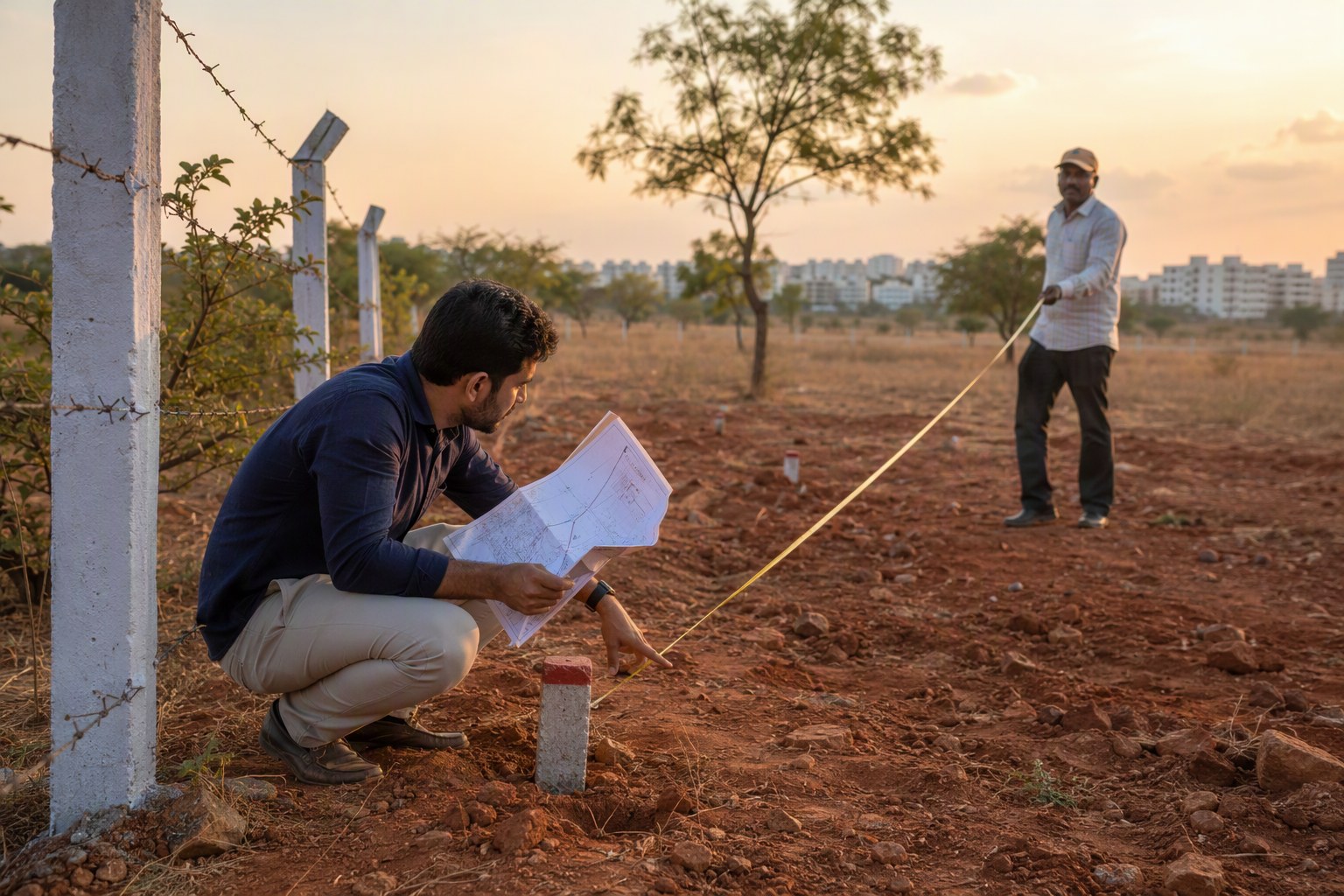
Here is the case, with names and identifying details masked. A Hyderabad-based buyer shortlisted a residential plot near the Mokila-Shankarpally belt. The village was under Shankarpally mandal in Ranga Reddy district. The plot was part of an approved-looking layout, the roads were formed, and nearby plots had compound walls. The seller showed a sale deed, link documents, latest tax-related papers and an existing mortgage with a bank.
The buyer felt reassured because the plot was already mortgaged. His thinking was fair on the surface: if the bank had sanctioned a loan, why would there be a title problem? The seller also used the mortgage as a selling point. He said the bank had checked everything and the buyer could clear the loan directly at the time of registration.
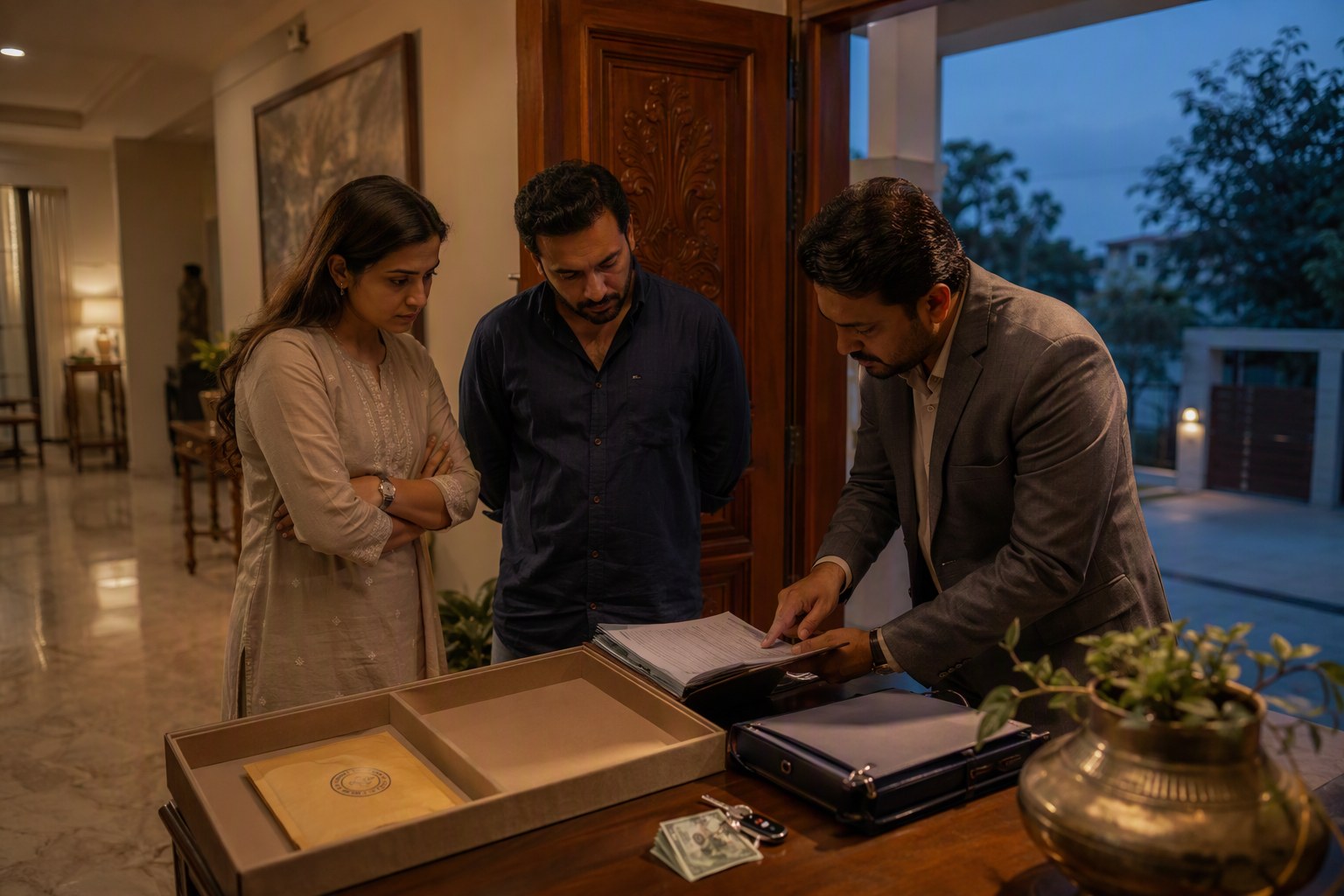
In our experience, this is exactly where many buyers reduce their checking. They ask for a bank NOC, maybe an Encumbrance Certificate, and then start negotiating the token. Some even say, “Bank loan is there, so title is confirmed.” That is not how land works in Telangana.
Before paying token, the buyer’s family asked for one more check. They ran the plot through a fresh Section 22-A verification, checked the survey number trail, and compared it with SRO and revenue references. That is when the problem surfaced: the parent survey number was appearing in the prohibited category as per government records.
The shock was not that the seller had a mortgage. The shock was that the mortgage did not prevent the 22-A risk from existing.
What the Buyer Had Checked Before the 22-A Entry Surfaced
The buyer had done some normal checks. But normal checks are not always complete checks, especially for plotted land around Hyderabad.
| Check Done | What It Showed | What It Missed |
|---|---|---|
| Sale deed review | Seller had a registered document | Registration history alone did not remove current 22-A risk |
| Link documents | Earlier transactions were available | Land classification and prohibited status still needed separate verification |
| Mortgage information | Bank charge existed on the plot | Lender comfort did not guarantee sale registration |
| EC check | Encumbrances were visible as per records searched | EC is not the same as 22-A clearance |
| Site visit | Roads, plots and activity were visible | Physical development did not prove clean title |
An Encumbrance Certificate is useful. It shows registered transactions, mortgages, releases and other recorded encumbrances for the search period. Buyers should use an Encumbrance Certificate Search and, where possible, analyse the document carefully. But an EC is not a magic certificate. If a property is hit by a prohibited property entry, the EC may not warn you in the way you expect.
The smarter route is to combine checks: EC, CERSAI, 22-A, survey number, SRO jurisdiction, guideline value, layout approval, revenue records and ground verification.
Why the Plot Mortgage Did Not Protect the Buyer
A mortgage is created for the lender’s security. The bank or housing finance company wants to know whether it can create a charge over the property and recover money if the borrower defaults. The buyer, on the other hand, needs something different: a clean and registrable title in his or her name.
Those two goals overlap, but they are not identical.
There are several reasons why a mortgaged plot can still create buyer risk:
- Timing gap: The mortgage may have been created earlier, while the buyer is registering now. Records can change, objections can surface, and SRO treatment can differ over time.
- Scope gap: A lender may focus on loan security. A buyer must focus on ownership transfer, land classification, layout approval and future resale.
- Document gap: The bank may have relied on papers submitted by the borrower. The buyer should still independently verify government records.
- Survey number gap: Plot numbers can look neat in a layout plan, but the parent survey number may carry the real risk.
- SRO gap: The Sub-Registrar’s system and local office practice matter on the registration date.
This is why we advise buyers to run a specific Section 22-A Prohibited Property Check before paying token. Not after agreement. Not one day before registration. Before money leaves your account.
How the 22-A Entry Changed the Negotiation
Once the 22-A entry was found, the buyer paused the deal. The seller first argued that the bank loan itself proved marketability. Then he said other plots in the same layout had already been sold. Later, he suggested that the issue was old and could be managed at the SRO.
That last line is a red flag. If a property needs “management” at the SRO, the buyer should slow down. Hyderabad buyers sometimes get carried away by fear of missing out, especially when a locality is rising. We have seen this around Kokapet, Narsingi, Tellapur, Kollur, Mokila, Shadnagar, Tukkuguda and Adibatla. But a rushed token payment can become a long legal headache.
The buyer asked for documentary clarification: revenue extracts, pahani references, Dharani-related records where applicable, layout approval papers, and written confirmation that the parent survey number was not blocked for registration. The seller could not provide a satisfactory clearance within the buyer’s comfort level.
The deal did not proceed. That may sound disappointing, but from a risk angle it was the correct outcome. Losing a plot is better than buying a file.
22-A Entry Due Diligence for Hyderabad Plot Buyers
For plots in Telangana, especially outside the core GHMC apartment market, a buyer should treat 22-A checking as a basic step. Not a special legal exercise. Basic.
Here is the due diligence sequence we prefer for plotted property:
1. Identify the correct survey number
Do not rely only on the marketing brochure or layout plot number. Find the parent survey number and village. A plot number like “Plot No. 45” has meaning only inside that layout. Government records work through village, survey number, sub-division and document details. Use the Survey Number Finder if you need help organising these details.
2. Check the SRO jurisdiction
Many buyers confuse locality names with registration jurisdiction. A plot advertised as Mokila may fall under a specific village and SRO based on official boundaries. A property near Tellapur may involve different revenue and registration references from what the broker casually says. Confirm the relevant office using Find Your SRO Office.
3. Run a fresh 22-A check
This is the key lesson from this case. Run the check before token. If the survey number or land parcel is appearing in prohibited records, do not depend on verbal assurances. Ask for documentary resolution.
4. Pull the Encumbrance Certificate
EC is still necessary. It helps you see registered sale deeds, mortgages, releases and other transactions. If there is a mortgage, you should also verify how it will be closed and whether the release will happen properly.
5. Check CERSAI for lender charge
A mortgage may be recorded through financial systems as well. Use CERSAI Charge Check to see if a security interest is recorded. This is especially useful when a seller says the loan is closed but cannot show clean release documents.
6. Compare guideline value and document value
Guideline value, commonly called ready reckoner value by many buyers, is not the same as market price. But it matters for stamp duty, registration and document preparation. Use the Market Value / Guideline Value Search and then estimate charges through the Stamp Duty Calculator.
What This Case Says About Bank NOC and Loan Closure
When a seller has a loan on the plot, the buyer should not panic. Mortgaged properties are bought and sold regularly. The issue is process.
A proper mortgage-closure transaction usually needs clear communication with the lender, outstanding loan confirmation, payment routing, original document release, and registration planning. But even if all that is arranged, the buyer should still check 22-A status. Bank NOC does not mean SRO acceptance. Loan closure does not mean land classification is clean.
One common mistake is paying token based on a promise that the seller will clear the bank loan later. If the plot then hits a 22-A roadblock, the buyer may be stuck chasing both seller and lender-related paperwork. A better approach is to complete verification first, then structure token and agreement conditions carefully.
For safer documentation, buyers can prepare clauses that make token refundable if 22-A, EC, title, layout approval or registration issues are found. A plain WhatsApp message is not enough. Use proper wording and keep proof of payment. The Legal Document Generator can help buyers create a starting draft, though a local property lawyer should review final terms.
Hyderabad Locality Lessons: Mokila Is Not the Only Market With This Risk
This case happened around the Mokila-Shankarpally side, but the lesson applies across Telangana’s active plotted markets. In west Hyderabad, buyers look at Tellapur, Kollur, Velimela, Nandigama, Shankarpally and Moinabad because of connectivity and future growth expectations. In the south, Maheshwaram, Kandukur, Tukkuguda, Adibatla and Shamshabad see heavy plot interest. In the north, Medchal, Kompally outskirts, Dundigal and nearby villages also attract budget and mid-segment buyers.
Each micro-market has its own records story. Some lands moved from agricultural use to layouts. Some have old pahanis with names that do not match later documents cleanly. Some layouts are sold as HMDA or DTCP approved, but buyers do not verify approval boundaries. Some sellers show one survey number during marketing and another during documentation.
Our opinion: if you are buying land in a village-based market, do not behave like you are buying a ready flat in an established apartment society. Land needs more patience.
Red Flags We Saw in the Plot Mortgage Case
Looking back, the risk signs were visible. They were just hidden under the comfort of the mortgage.
- The seller repeatedly said “bank already checked” instead of sharing fresh government verification.
- The buyer was shown plot-level papers, but parent survey number clarity was weak.
- The seller wanted quick token before giving full revenue documents.
- The mortgage was treated like a title certificate, which it is not.
- There was no written assurance on refund if SRO or 22-A issues appeared.
These red flags are not rare. We see some version of them in many Hyderabad plot deals. A confident seller is fine. A seller avoiding documents is not.
Practical Buyer Checklist Before Token Advance
If you remember only one part of this case study, remember this checklist:
- Get village name, mandal, district, survey number and plot number in writing.
- Check Section 22-A status before token.
- Search EC for the correct property details and relevant period.
- Verify mortgage status and insist on proper release process.
- Confirm SRO jurisdiction before planning registration.
- Check guideline value and estimated stamp duty.
- Ask for layout approval copy and match the plot with the approved plan.
- Review pahani, Dharani references and revenue history where applicable.
- Put refund conditions in the token receipt or agreement.
- Do not accept “SRO lo manage chestham” as a solution.
For a wider check, buyers can use the Property Verification Tool and then take the file to a lawyer who understands Telangana land records. Tools help you spot issues early. A good lawyer helps you decide whether the issue is curable, risky or a straight rejection.
Final Take: A Plot Mortgage Is Comfort, Not Clearance
The buyer in this case avoided a risky purchase because he checked before paying token. That is the right order. First verify, then negotiate, then pay.
A mortgaged plot is not automatically bad. But it is not automatically safe either. In Telangana, where 30,3,076,153 prohibited properties sit in the 22-A database as per latest IGRS data, every plot buyer should run a fresh prohibited property check. Especially when the deal is in a fast-moving Hyderabad corridor and the seller is pushing for speed.
We have seen buyers save themselves from years of stress by spending one evening on proper checks. That is not fear. That is discipline.
Frequently Asked Questions
Does a bank mortgage mean the plot title is safe?
No. A bank mortgage shows that a lender accepted the property for loan security at that time. It does not replace fresh checks for Section 22-A, EC, CERSAI, survey number, layout approval and SRO registration status.
Should I check 22-A before or after paying token?
Check it before paying token. If you must pay any advance, include written refund conditions linked to 22-A, title, EC, mortgage release and registration clearance.
Is an Encumbrance Certificate enough for buying a plot in Telangana?
No. EC is necessary, but it is not enough. It shows registered transactions and encumbrances for the searched period. It does not by itself confirm that the property is free from prohibited property issues.
What details do I need for a 22-A prohibited property check?
You should collect the village name, mandal, district, survey number, sub-division details if available, plot number and seller document details. The parent survey number is especially important for plotted layouts.
Can a 22-A issue be corrected by the seller?
Some issues may be clarified or corrected with proper government records, but some are serious restrictions. Do not rely on verbal promises. Ask for written documentary clearance and take legal advice before proceeding.