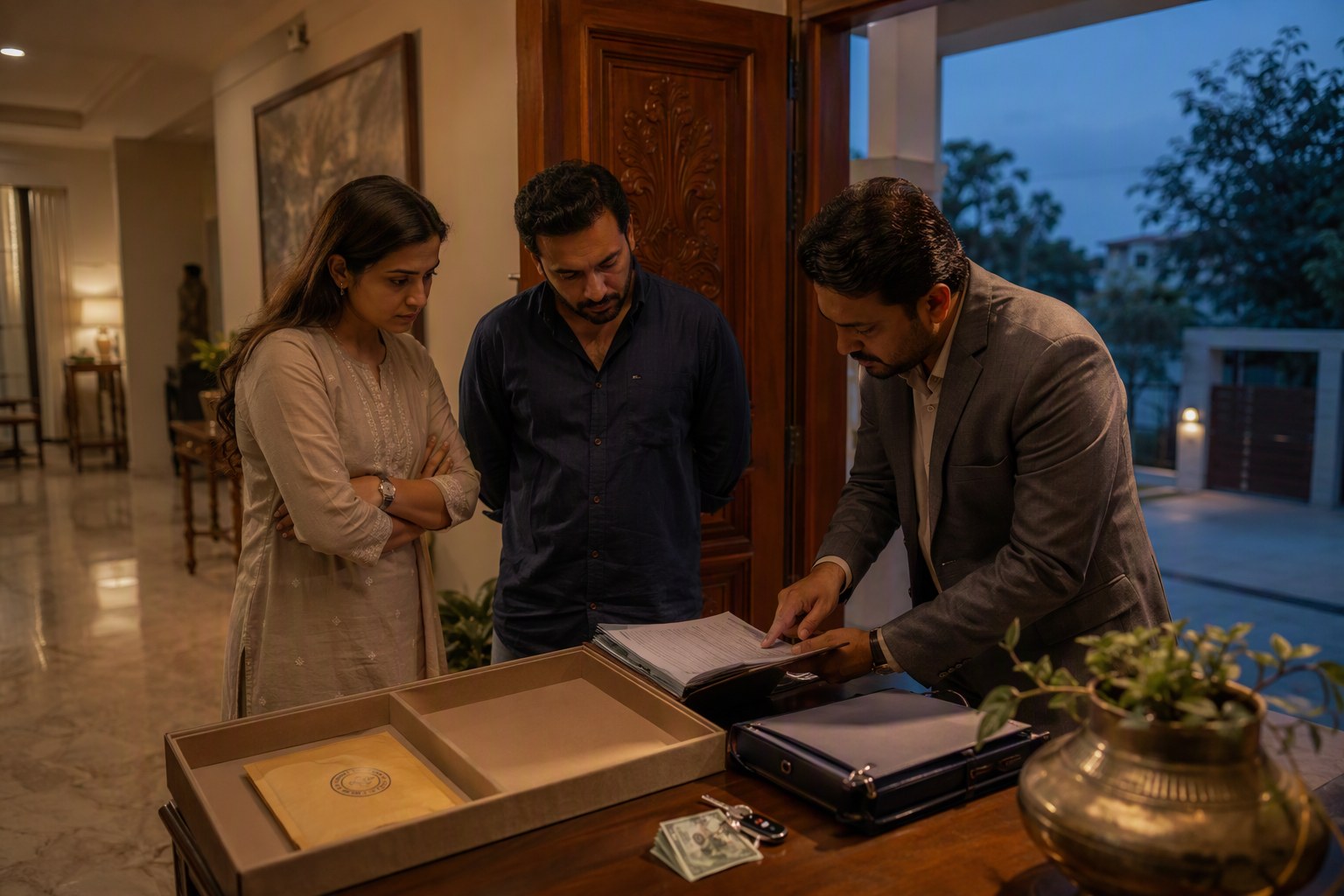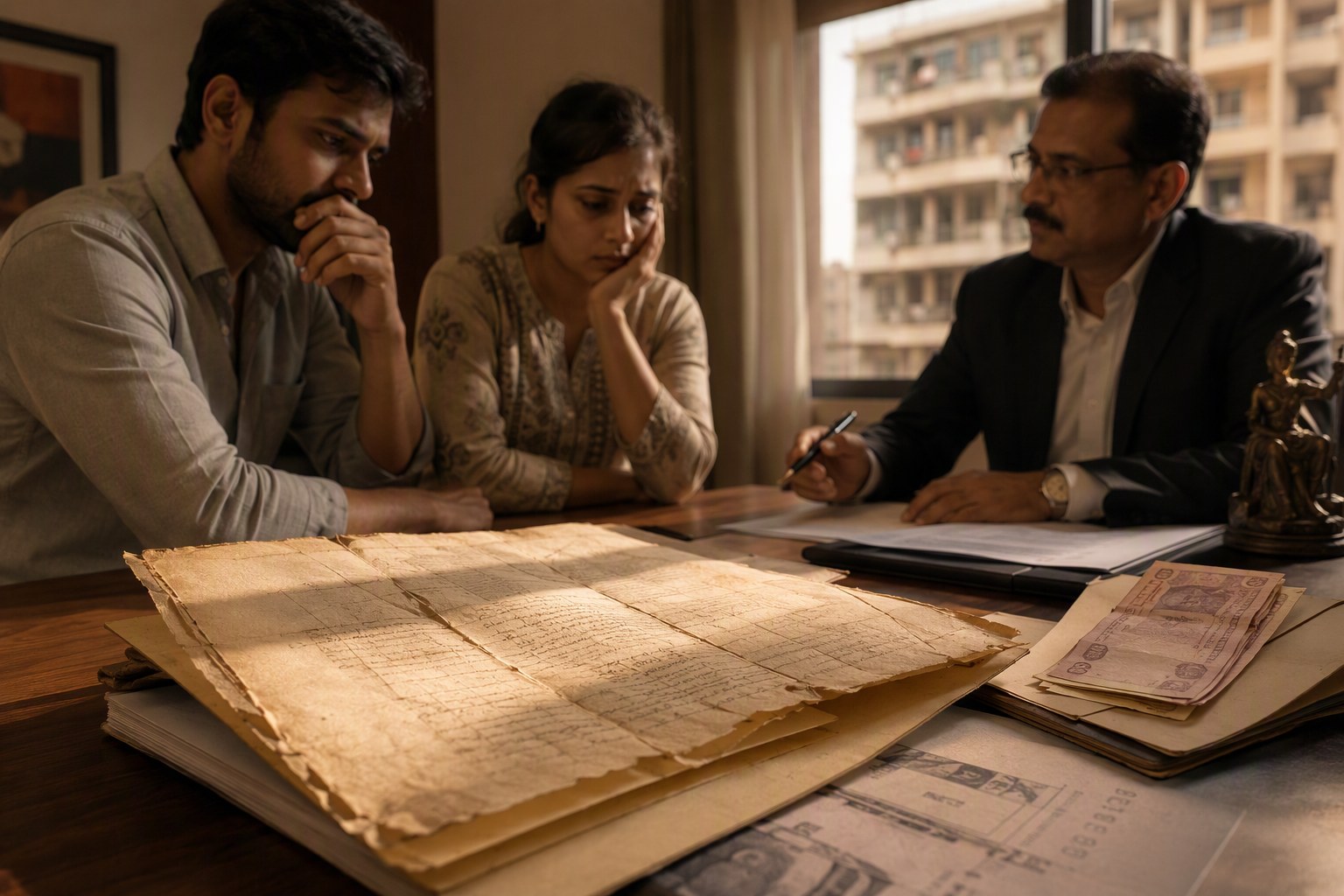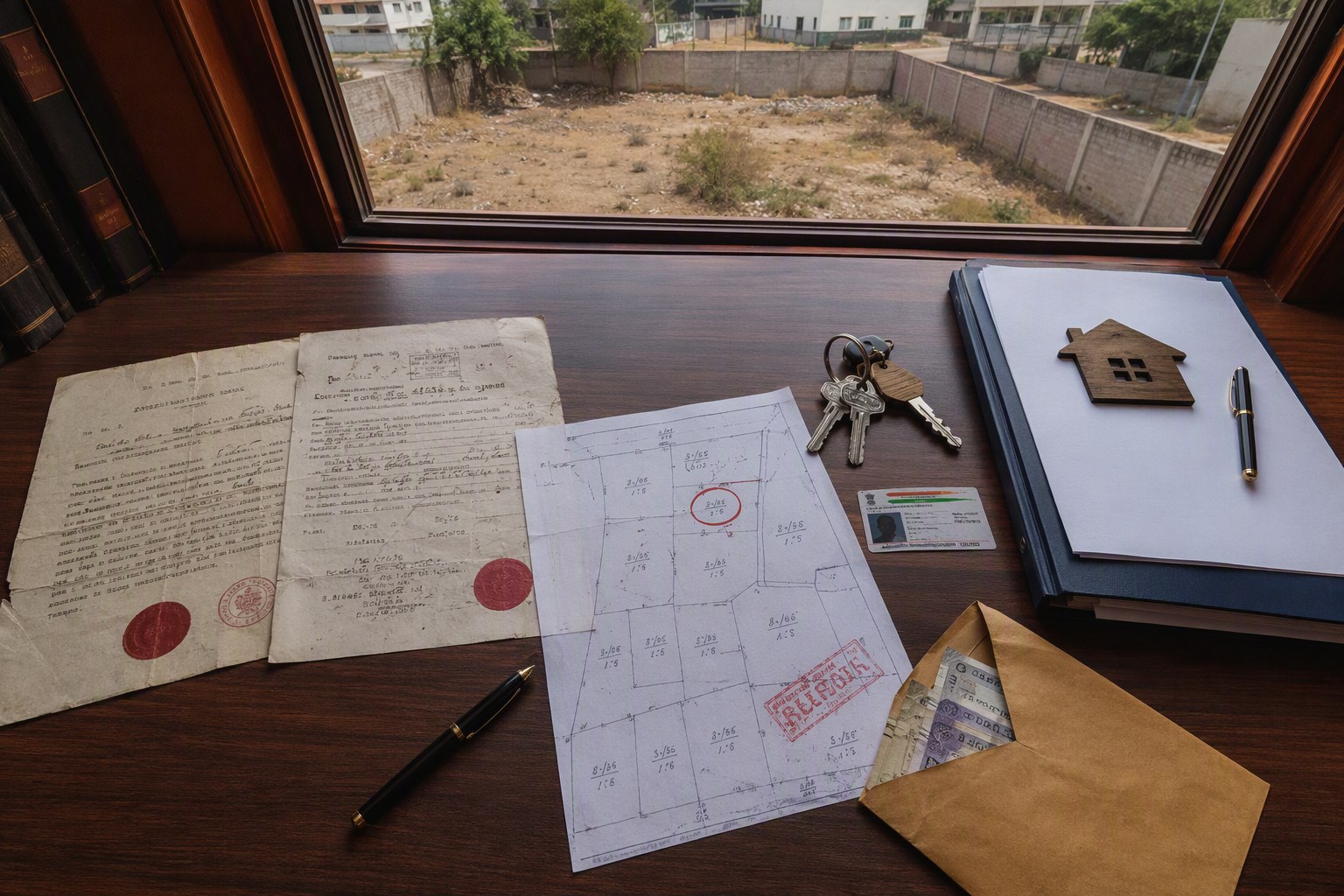
Telangana Case Study: Old ULC Note Paused a Flat Sale is a reminder that a clean-looking Hyderabad apartment resale can still get stuck because of an old land history entry. In this case, the buyer, seller, banker and document writer were all ready. The flat was in a normal gated apartment block, the seller had a registered sale deed, the tax receipts were available, and the bank had already given an in-principle nod. Then one line in the parent land record changed the mood: an old Urban Land Ceiling, or ULC, note attached to the survey number.
The sale did not fail on carpet area, loan eligibility, price negotiation or missing link documents. It paused because the Sub-Registrar Office wanted clarity on whether the underlying land had any restriction connected to old ULC proceedings. This is exactly why Telangana’s 1,47,934 prohibited property records under Section 22-A matter even to flat buyers in Hyderabad, not only to agricultural land buyers in villages.
Our view is simple: in Hyderabad resale transactions, the flat document is only half the story. The land beneath the apartment can still carry an old remark, and that remark can disturb registration, loan disbursement and buyer confidence.
Telangana Case Study: Old ULC Note Paused a Flat Sale in Hyderabad
The property in this case was a resale flat in the western Hyderabad belt, broadly similar to what buyers see in Kondapur, Hafeezpet, Miyapur, Manikonda, Narsingi, Puppalaguda, Kukatpally and Serilingampally. The buyer was not buying open land. He was buying a ready apartment from an individual owner. The building had residents, maintenance bills, electricity connections and earlier registrations in the same project.
On paper, the deal looked routine. The agreed sale consideration was around the mid-market band for that micro-market. In many parts of Kondapur and Gachibowli, apartment resale values now commonly move between Rs 7,500 and Rs 11,500 per sq ft depending on age, builder, road access, amenities and UDS share. In Miyapur and Hafeezpet, many mid-segment resales sit between Rs 5,800 and Rs 8,500 per sq ft. In Manikonda and Puppalaguda, good projects can see Rs 6,800 to Rs 10,000 per sq ft. These are market transaction bands we keep seeing in buyer-side checks, though the SRO market value may be lower.
The buyer had checked the basic costs too. For a normal sale deed in Telangana, buyers usually plan around 6% registration outgo, made up of 4% stamp duty, 1.5% transfer duty and 0.5% registration fee. Before blocking cash for registration, many buyers use our Stamp Duty Calculator and Market Value / Guideline Value Search to compare the agreed price with government market value. That part was not the problem here.
The pause came from the land trail. The apartment’s parent land, as per older documents, had survey number references where one entry showed an old Urban Land Ceiling note. The flat sale deed itself did not scream danger. The issue was hiding in the earlier land documents and related government records.
Why an Old ULC Note Can Pause a Flat Sale
Urban Land Ceiling was an older legal framework meant to regulate excess urban land holdings. In Hyderabad and its surrounding urban agglomeration, several large parcels passed through ULC declarations, exemptions, regularisation orders, surplus land questions and government correspondence. Telangana and undivided Andhra Pradesh saw many such land histories, especially around rapidly urbanised areas.
Many buyers think ULC is only a problem for vacant land. That is not correct. If an apartment project stands on land that once had ULC proceedings, the question becomes: was the land properly cleared, exempted, regularised, released, or covered by valid orders before development and sale? If yes, a flat buyer may be safe, but the paperwork must show it. If not, the SRO or bank legal team may ask for explanation.
In this case, the note was not a final rejection. It was a red flag. The SRO side wanted the parties to bring clarity. The bank’s legal panel also refused to treat it as a small clerical issue without supporting documents. That is where the transaction timeline moved from a planned registration week to an uncertain waiting period.
What the SRO and bank were effectively asking
- What is the correct survey number and sub-division of the apartment land?
- Was any part of the parent land covered by ULC proceedings?
- If there was a ULC case, was there an exemption, regularisation, release or final order?
- Is the property appearing in any Section 22-A prohibited property list?
- Do the EC and link documents match the land extent used for the project?
- Did the builder have a valid development right over the full land parcel?
For a buyer, these questions sound technical. For a registrar or bank lawyer, they are basic risk controls. We have seen many sales proceed after documents are produced. We have also seen buyers walk away when the seller or association cannot produce old permissions.
Telangana Case Study: Old ULC Note Paused a Flat Sale Because Section 22-A Risk Is Real
Telangana has 1,47,934 prohibited property records under Section 22-A. That number is not small. Section 22-A entries are meant to restrict registration of certain categories of properties, including government lands, endowment lands, assigned lands and other notified properties. In practice, buyers also worry when old land remarks appear in the record trail, because they can trigger extra scrutiny even when the current flat sale looks normal.
A Section 22-A hit is not the same as an old ULC note, but the buyer’s risk experience is similar: registration may slow down, the banker may hold the final disbursement, and the seller may struggle to explain an issue that started decades before the flat was built. That is why we always advise buyers to run a Section 22-A Prohibited Property Check before paying a large advance.
In this file, the flat itself was not directly shown as prohibited in the buyer’s initial check. But the old ULC mention in the parent land created a doubt. The banker wanted a written clarification and supporting documents. The buyer had already paid token advance. The seller was under pressure because his next purchase depended on this resale. This is how a small land-history note becomes a financial and emotional problem.
What the Buyer Checked Before the Pause
The buyer had done more homework than an average Hyderabad flat purchaser. He checked the seller’s sale deed, the latest property tax receipt, electricity bill, Aadhaar-PAN matching, association NOC and bank loan closure statement. He also pulled an Encumbrance Certificate for the flat.
The EC showed the seller’s purchase entry and no visible mortgage after the bank closure process was initiated. But an EC for only the flat door number may not always show the full land-side concern. In our experience, apartment buyers should also trace the parent land survey number, especially where the project was developed on converted agricultural land or old urban land parcels.
Tools can help at the first stage. Use Encumbrance Certificate Search for transaction history, Survey Number Finder to connect the flat documents with land identifiers, and Find Your SRO Office to confirm the correct registration jurisdiction. These checks will not replace a lawyer, but they reduce blind spots.
The missing piece
The missing piece was not the flat sale deed. It was the older land file. The buyer needed copies of the ULC order or clarification, layout/building permission references, development agreement, GPA if any, and link documents from landowners to builder. In many old projects, these documents are with the builder’s office, landowner family, association committee or old document writer. Sometimes they are not neatly available.
That is where the resale market becomes difficult. A first buyer from the builder may have received a bundle of documents. Ten years later, the second or third buyer gets only the seller’s sale deed and EC unless he asks properly.
Timeline: How a Normal Flat Resale Got Stuck
| Stage | What Happened | Risk Seen |
|---|---|---|
| Price finalised | Buyer and seller agreed on the resale price after comparing nearby apartment rates. | No major issue. |
| Token paid | Buyer paid a small advance and started loan processing. | Advance at risk if title issue grows. |
| EC checked | Flat-level EC looked mostly clean for recent transactions. | Land-level history still not fully checked. |
| Bank legal review | Panel lawyer noticed old ULC reference in parent documents. | Clarification required before final sanction. |
| SRO discussion | Document writer checked whether registration could proceed without extra papers. | Possible pause if land restriction is suspected. |
| Seller asked for records | Seller contacted association and earlier document sources. | Delay of days or weeks. |
This is not rare in Hyderabad. We have seen similar doubts in older apartment pockets of Ameerpet, Begumpet, Yousufguda, Mehdipatnam, Tolichowki, Kukatpally, Chandanagar and parts of Serilingampally mandal. Some files get cleared quickly because the ULC exemption order is available. Some become messy because the survey number in the sale deed, municipal permission and old pahani do not match cleanly.
Why Flat Buyers Must Look Beyond the Door Number
A flat has a door number, undivided share of land, built-up area, floor number and parking details. But the legal strength of the flat comes from the land title. If the land has a broken chain, old government claim, ULC doubt, assigned land issue, endowment angle or prohibited property entry, the flat buyer inherits the worry.
In Telangana, land records may appear across different systems and documents: pahani, old adangal, Dharani records for agricultural origin lands, municipal permissions, HMDA or GHMC approvals, SRO records, EC, court orders and government memos. A flat buyer need not master all of this, but he must know when to ask questions.
For under-construction projects, the RERA Project Lookup can show registered project details, promoter information and declared approvals where applicable. For resale flats, RERA may not answer every old land question, but it is still useful if the project was registered. For a broader check, our Property Verification Tool helps buyers organise title, EC, prohibited status and survey-level checks before they go too deep into negotiation.
Warning signs in a Hyderabad resale flat
- The seller says, “All flats are registered, so no need to check land papers.”
- The UDS land description is vague or differs between documents.
- The parent document survey number is different from the municipal approval reference.
- The EC is taken only for the flat and not reviewed against link documents.
- The building is old, but the seller cannot share link documents.
- The land was once agricultural, ceiling-surplus, assigned, wakf, endowment or government-adjacent.
- The project has internal family settlement deeds or old GPA transactions that are not explained.
One warning sign does not mean the buyer should reject the flat. But it means the buyer should slow down, put conditions in the agreement of sale and avoid paying a heavy non-refundable advance.
How the Old ULC Note Was Handled
In this case, the buyer did the right thing after the pause. He did not fight with the SRO staff or blindly pressure the bank. He asked the seller for written documents. The association helped identify old project papers. The seller approached the builder’s old office contact and collected copies of the relevant land clearance papers. A local lawyer compared the survey number, extent, UDS calculation and permissions.
The buyer also checked the registration value and transaction cost again because the delay affected loan validity. For buyers in this situation, it is sensible to keep the cost sheet updated using the Composite Value Calculator and stamp duty estimate. If the agreement deadline crosses, loan processing charges, interest rate validity and registration appointment may need fresh planning.
The final outcome in our case study was a conditional go-ahead, subject to the bank lawyer accepting the ULC-related clarification. The sale was not treated as a simple same-day resale anymore. It became a title-clarification transaction. That distinction matters.
A paused transaction is not always a bad transaction. Sometimes the pause saves the buyer from paying first and discovering the defect later.
What Sellers Should Do Before Listing an Older Flat
Sellers often feel buyers are over-checking. I disagree. If you are selling an older Hyderabad flat, especially in a project built on private land before RERA became active, keep your title packet ready. It improves trust and can protect your price.
A seller should keep the registered sale deed, link document copies, EC, latest tax receipts, society NOC, loan closure letter, approved plan copy if available, occupancy certificate if available, and any land clearance orders such as ULC exemption or regularisation papers. If the property is in a high-demand area like Gachibowli, Kondapur, Madhapur, Narsingi, Kokapet, Tellapur or Financial District surroundings, buyers may still pay a strong price, but they will ask sharper legal questions because ticket sizes are high.
For example, a 1,600 sq ft resale at Rs 9,000 per sq ft means Rs 1.44 crore consideration. Registration outgo at 6% is about Rs 8.64 lakh, subject to applicable valuation rules. No sensible buyer wants to risk that kind of money on an unexplained land-history remark.
What Buyers Should Put in the Agreement of Sale
The agreement of sale should not be a casual one-page receipt. If there is any old ULC note, Section 22-A doubt, land conversion issue or missing link document, the buyer should add protective clauses. The seller should confirm marketable title, no prohibited property issue, no pending government claim, no undisclosed litigation and willingness to provide missing parent documents.
We usually suggest these practical points:
- Make the advance partly refundable if title is not cleared by the bank or buyer’s lawyer.
- List the documents the seller must provide before registration.
- Mention the flat number, UDS, survey number and project name clearly.
- Set a realistic time for legal verification, not just loan processing.
- Do not take possession before registration unless advised by a lawyer.
- Do not rely only on WhatsApp assurances from broker or seller.
Buyers should also track changes if the deal takes time. A property status can change because of new litigation, mortgage, attachment or government update. The Property Change Tracker is useful for people who have paid an advance and are waiting for registration.
Hyderabad Market Lesson from This Case
Hyderabad’s resale apartment market is active because many buyers want ready-to-move homes near jobs, schools and metro access. Areas around Raidurg, HITEC City, Kondapur, Nallagandla, Tellapur, Miyapur, Kukatpally and Uppal continue to see strong demand. But fast-moving markets can make buyers skip land checks.
We have seen buyers negotiate Rs 200 per sq ft for two weeks, but they do not spend enough time reading the UDS clause. They compare amenities, clubhouse size and balcony view, but they do not ask whether the land has an old ULC, assigned land or Section 22-A shadow. That is risky.
The right approach is not fear. The right approach is verification. Most Hyderabad flats will not have serious title defects. Many old notes can be explained with the correct proceedings. But if the explanation is not available, the buyer should pause. That pause is not a delay; it is protection.
Practical Checklist for ULC and Section 22-A Risk
- Check whether the flat’s UDS land survey number is clearly mentioned in the sale deed.
- Take an EC and compare it with link documents, not only with the seller’s deed.
- Run a Section 22-A prohibited property check for the relevant survey number and village.
- Ask for ULC exemption, regularisation or clearance papers if any old note appears.
- Check whether the land falls under the correct SRO jurisdiction.
- Compare market value, agreed value and registration cost before paying advance.
- For newer projects, verify RERA details and approvals.
- Get a local property lawyer to read the parent land documents.
This case ended with a buyer who became more careful and a seller who realised that old land papers are part of resale value. In Telangana, with 1,47,934 prohibited property records sitting in the system, that lesson is not theoretical. It affects real flats, real families and real registration counters.
Frequently Asked Questions
Can an old ULC note stop a Hyderabad flat resale?
Yes, it can pause the transaction if the SRO or bank wants clarification on the parent land. The sale may still proceed if valid ULC clearance, exemption or regularisation documents are produced.
Is Section 22-A applicable only to open land?
No. Section 22-A records are usually linked to land, but flat buyers can be affected because every apartment has undivided share in the underlying land. If that land has a prohibited entry, registration can become difficult.
What should I check before paying advance for a resale flat in Hyderabad?
Check the sale deed, EC, link documents, UDS details, survey number, SRO jurisdiction, tax receipts, loan status, prohibited property status and any old ULC or government land remarks.
Does a clean Encumbrance Certificate mean the flat title is fully safe?
Not always. An EC shows registered transactions for the searched property, but it may not fully explain old land ceiling proceedings, government claims, wrong survey references or missing parent documents.
Should I cancel the deal if a ULC note appears?
Not immediately. Ask for supporting orders and get a legal review. If the seller cannot provide documents or the bank refuses the title, then it is safer to step back or renegotiate with clear conditions.