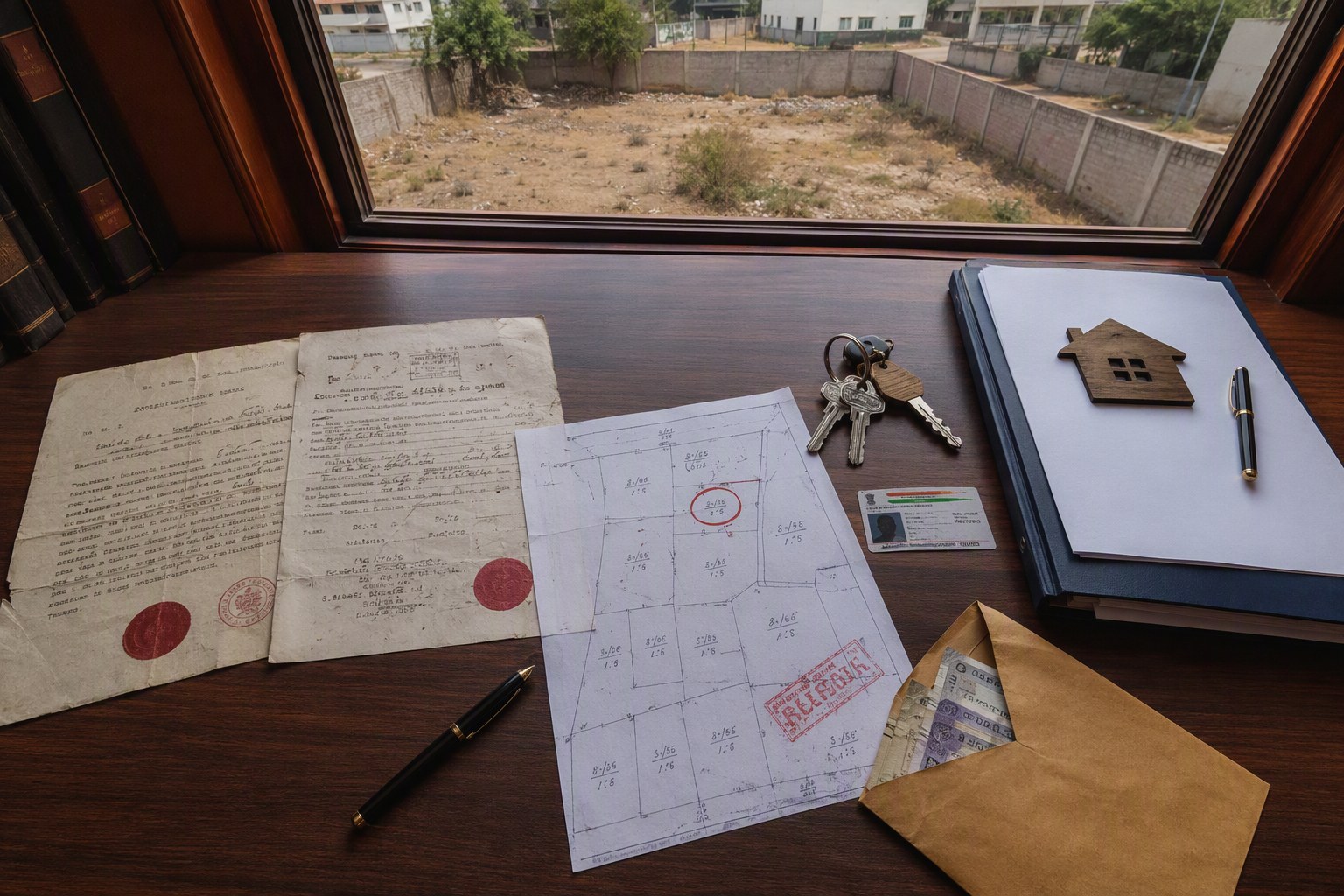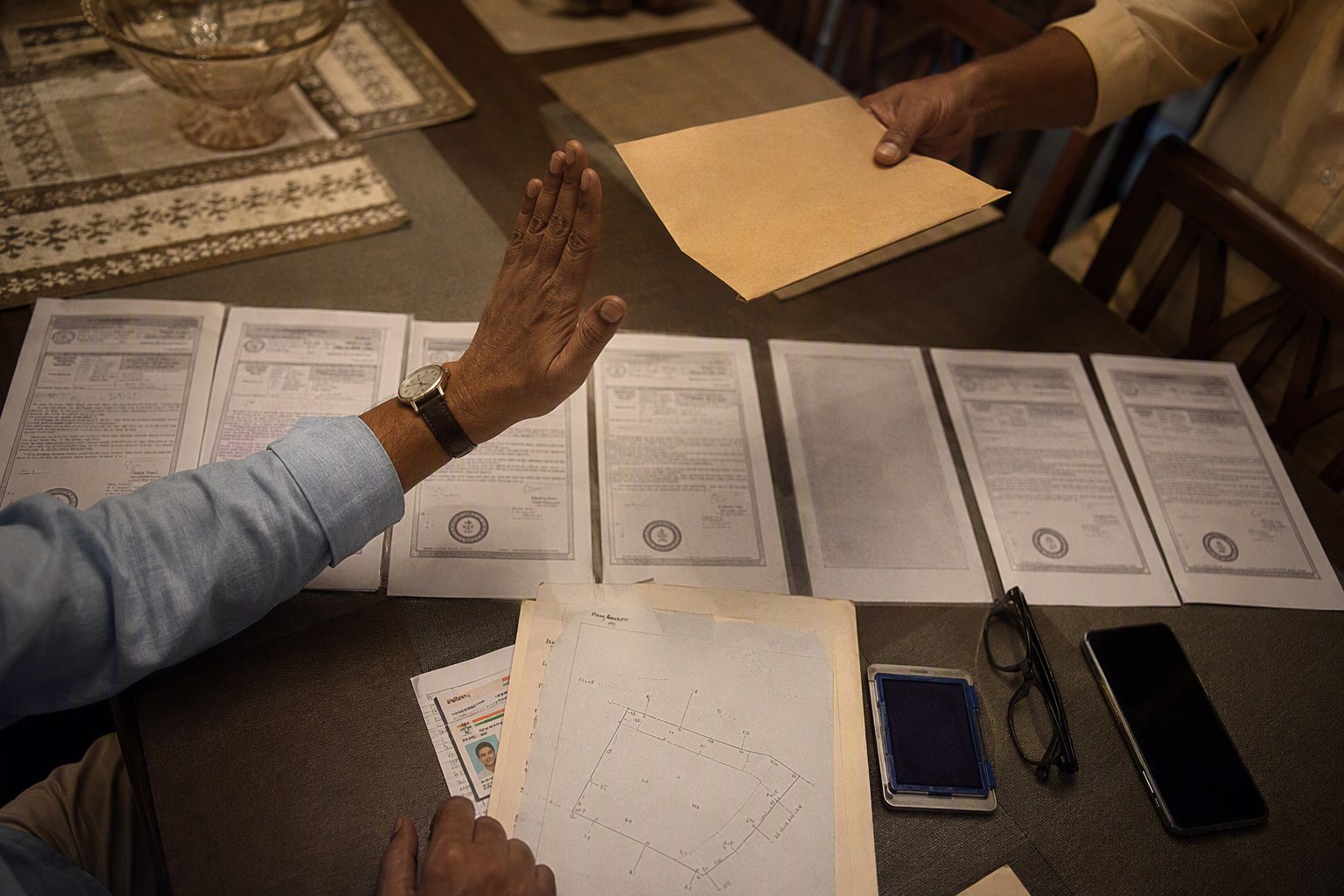



Can an Old GPA still block a family flat sale that otherwise looks clean? Yes. In this Hyderabad case study, an Old GPA became the weak link because the buyer’s lawyer could not clearly connect the person who signed an earlier document with the person who had legal authority to sell. The flat had a registered sale deed, society records, tax receipts and a regular residential address. Still, once the Encumbrance Certificate and authority papers were checked, buyer confidence dropped sharply.
This is the kind of issue we see in Kukatpally, Miyapur, Manikonda, Nallagandla, Attapur, Chandanagar, LB Nagar and other resale-heavy pockets. The flat may be perfectly livable. The seller may be genuine. The family may have been staying there for years. But if the old signing chain is weak, a careful buyer, bank or SRO-side document writer will pause.
Old GPA and flat sale: what was the question in this case?
The family asked a simple question: “We have a registered sale deed in our father’s name. Why is the buyer worried about an old GPA from the builder side?”
On the surface, their flat in a mid-sized apartment block in the Hyderabad market looked saleable. The family had possession, electricity connection, maintenance payments and a registered document. There was no open fight inside the family. The buyer liked the location and was ready to proceed after legal checking.
The problem came from an earlier transaction in the chain. Before the family bought the flat, one of the signing documents had been executed through a General Power of Attorney, commonly called GPA. The GPA holder had signed on behalf of another person. That itself is not automatically fatal. GPA documents are common in Telangana property files, especially in older layouts, builder collaborations and landowner share flats.
But in this file, the authority was not cleanly proved. The buyer’s lawyer wanted to know:
- Was the GPA registered or only notarised?
- Did the GPA clearly permit sale, registration and receipt of consideration?
- Was the principal alive and legally competent when the GPA holder signed?
- Was there any revocation, cancellation or later dispute?
- Did the EC reflect the same chain shown in the physical documents?
- Was the land under any restriction, including Section 22-A?
One weak answer in a property file may be manageable. Here, there were too many blanks. That changed the tone of the negotiation.
Old GPA risk: why buyer confidence changed after the EC check
The first serious trigger came from the Encumbrance Certificate. The EC did not say, in plain English, “this title is bad”. ECs rarely speak that way. But it showed an earlier registered transaction where the executant details and the GPA reference had to be matched carefully with the sale deed and supporting papers.
We asked the family to first pull a fresh EC instead of depending only on an old copy kept in the flat file. For this, buyers and sellers can start with the Encumbrance Certificate Search. For deeper reading of entries, document numbers and party names, the EC Analyzer is useful because many people misread EC entries and panic for the wrong reason.
In this case, the EC raised three practical doubts. First, the GPA was old and the original GPA document was not immediately available. Second, the sale deed referred to authority, but the authority paper had gaps in description. Third, the family had never checked whether the same property or underlying land appeared in restricted records.
That last point matters in Telangana. As per latest IGRS data in our database, 3,076,153 properties are recorded under prohibited properties linked to Section 22-A. Not every apartment issue is a Section 22-A issue. Many are not. But when a buyer is already worried about an old GPA, even a small chance of restriction becomes a major trust problem. A quick Section 22-A Prohibited Property Check should be part of any serious verification.
Our opinion is clear: an EC is not a title certificate, but ignoring EC clues is careless. It is like seeing smoke in the parking area and saying the building is fine because the lift is working.
How the family flat sale looked clean at first
The seller family had a normal story. The father had purchased the flat years ago. After his death, the mother and children wanted to sell. They had no intention to hide anything. They had original papers, property tax records and society confirmation. The buyer was also not trying to create drama. He wanted a bank-backed purchase and proper registration.
This is where many Hyderabad resale deals get emotional. The seller says, “We bought this long back, nobody objected till now.” The buyer says, “I am investing my savings, my bank is asking questions.” Both are right from their own side.
In our experience, trouble usually starts when people confuse possession with title. Staying in a flat for many years is a strong practical fact, but it does not cure every document defect. A registered sale deed is strong, but if the person who signed in the earlier chain had doubtful authority, the buyer’s lawyer will naturally ask for proof.
The same issue appears in several forms across Hyderabad:
- Landowner share flats in Madhapur, Kondapur and Gachibowli side projects.
- Older apartments in Himayatnagar, Narayanguda, Ameerpet and Begumpet.
- Builder-developed flats around Kukatpally, Nizampet and Chandanagar.
- Family-owned flats in Malkajgiri, Sainikpuri, Uppal and LB Nagar.
- Converted or redeveloped properties where old land documents are poorly indexed.
The flat may be in an excellent locality. Still, the file has to answer the legal chain.
What exactly went wrong in the Old GPA signing chain?
The issue was not that a GPA existed. The issue was that the GPA was doing too much work in the chain without enough supporting proof.
A good property chain should show a clear movement of rights. Owner to GPA holder, GPA holder to purchaser, purchaser to current family, current family to new buyer. Each step should have a document, authority and registration trail. In this file, the chain had a soft patch at the authority stage.
The buyer’s legal team wanted the GPA document and connected proof. They wanted to confirm whether the GPA gave power to sell the specific property, sign sale deed, present it at the SRO, admit execution and receive consideration. They also wanted to see if the principal’s identity and property description matched the later registered sale deed.
Instead, the family had only references in later documents and photocopies of some pages. The document writer who handled the old sale was no longer traceable. The builder’s office had changed staff. The apartment association had maintenance records, but not the builder’s authority file. This is common. Associations are not title custodians.
The buyer then asked for certified copies from the SRO. That was the right move. If you do not know the correct registration office, start with Find Your SRO Office. For older land-linked files, especially when the flat land survey number is unclear, the Survey Number Finder can also help you identify the correct survey number trail before searching revenue-linked records.
Once certified copies were reviewed, the concern remained. The GPA existed, but the authority language was not comforting enough for the buyer’s bank. The bank did not say the seller was a fraud. It simply refused to take a title risk that could surface later.
Old GPA checks every Hyderabad flat buyer should do
If an old GPA appears in a flat sale file, do not reject the property blindly. Many genuine titles have GPA documents in their history. But do not accept it blindly either. The correct response is structured checking.
1. Read the GPA authority, not just the document heading
Many people see the words “General Power of Attorney” and stop there. The heading is not enough. The operative clauses matter. Does it allow sale? Does it allow registration? Does it mention the property properly? Does it allow the GPA holder to receive money? Does it allow execution before the SRO?
2. Match names across EC, sale deed and ID proof
Hyderabad documents often have spelling variations, initials, father’s name differences and address changes. Some are harmless. Some create doubt. If the GPA holder’s name appears differently in the EC and sale deed, ask for clarification early.
3. Check whether the GPA was alive in law when used
A GPA is not a magic paper that remains valid in every situation. Death of the principal, cancellation, limitation of authority or later litigation can damage its usefulness. Buyers should ask for relevant supporting records instead of depending on verbal assurances.
4. Verify land and restriction risk
For apartment buyers, the temptation is to look only at the flat sale deed. That is not enough. The building stands on land. The land history matters. Use the Property Verification Tool for a broader verification workflow. If there is any doubt about prohibited entries, use the Section 22-A check mentioned above.
5. Check market value and SRO angle before negotiation
Even when title is acceptable, registration cannot be treated casually. The ready reckoner or government market value influences stamp duty and registration planning. Use Market Value / Guideline Value Search and Stamp Duty Calculator before fixing the final structure of the deal.
Why this Old GPA problem is common in Hyderabad resale flats
Hyderabad’s apartment market has grown through different models. In some projects, the builder purchased land directly. In many others, landowners gave development rights. In some files, the landowner executed a development agreement and GPA in favour of the builder. In landowner share flats, the builder may have sold some units while owners sold other units. When these documents are properly registered and drafted, resale usually goes smoothly.
Problems arise when older papers are missing, unclear or loosely drafted. We have seen buyers become uncomfortable even in prime localities like Banjara Hills, Jubilee Hills, Film Nagar, Shaikpet and Manikonda when the document chain is not explained. On the other side, we have seen ordinary flats in less flashy areas clear due diligence smoothly because the papers were neat.
Location can support value. It cannot repair authority.
Another local issue is the gap between family understanding and legal documentation. Families often know the story: “This was the builder’s share, then our father bought it.” But the buyer’s lawyer needs the paper version of that story. Oral history does not satisfy a bank panel advocate.
In mandals such as Serilingampally, Gandipet, Shaikpet, Hayathnagar, Uppal, Malkajgiri and Quthbullapur, apartment projects may have older land records, revenue descriptions, municipal approvals and SRO records sitting in different formats. If the chain includes pahanis, old survey numbers, revised municipal door numbers and GPA references, one missing certified copy can delay the sale.
What happened to the family flat sale?
The buyer did not immediately cancel. He asked for time and a clearer document set. The seller family first felt offended. That is natural. Nobody likes hearing that their family home has a title doubt.
After a calm review, they accepted that the buyer’s concern was not baseless. They applied for certified copies, collected association records and tried to get old builder-side papers. A local advocate reviewed the signing chain and gave a written opinion with qualifications. The buyer’s bank still remained uncomfortable because the missing authority proof could not be fully cured.
The sale did not proceed with that buyer. Later, the family had to reposition the property honestly. Instead of saying “all papers perfect”, they disclosed the old GPA issue upfront and shared the available legal opinion. That attracted a different category of buyer who was willing to evaluate the risk with independent advice.
This is not a happy filmi ending, but it is a realistic one. The first buyer’s confidence changed because the EC and authority checks exposed a weak signing chain. The seller family learned that a clean-looking flat file can still have a pressure point buried in an old document.
Practical document table for Old GPA flat sale checks
| Document or check | Why it matters | What to watch |
|---|---|---|
| Fresh EC | Shows registered transaction trail and encumbrance entries | Party name mismatch, missing document references, unusual entries |
| Certified copy of GPA | Proves the actual authority given to the GPA holder | Power to sell, property description, registration details |
| Earlier sale deed | Connects old owner, GPA holder and purchaser | Who signed, who admitted execution, SRO presentation |
| Land documents | Shows whether flat title rests on valid land rights | Survey number, mandal, old and new descriptions |
| Section 22-A check | Flags prohibited property risk | Any match with restricted records as per government data |
| Bank legal opinion | Shows lender comfort for loan-backed purchase | Qualified opinion, missing paper remarks, rejection notes |
Seller lessons from this Old GPA case study
If you are selling a family flat, do not wait for the buyer’s lawyer to discover the weak point. Prepare the file before listing the property. This is especially true after inheritance. Legal heirs often focus on death certificate, legal heir certificate and family consent, but forget the older title chain.
Before quoting your final price or collecting token advance, arrange these items:
- Latest EC covering the relevant transaction chain.
- Certified copies of old sale deeds and GPA documents.
- Society or apartment association no-dues letter.
- Property tax and utility records.
- Legal heir or succession-related documents where needed.
- Any builder handover papers, allotment letters or possession letters.
- RERA details for newer projects, checked through RERA Project Lookup where applicable.
Do not hide the GPA. Explain it. If the document is strong, transparency will help. If it is weak, early disclosure prevents token advance fights later.
Buyer lessons from the Old GPA blocked sale
For buyers, the biggest lesson is this: do not fall in love with the flat before reading the file. Hyderabad resale deals move fast in good localities, but speed should not kill verification.
Ask for the full chain before paying a serious advance. If the seller says papers will be shown only after token, be careful. A small booking amount may be fine in some cases, but the agreement should clearly say that the deal is subject to title verification and bank legal clearance.
Also, do not depend only on the broker’s confidence. Brokers know market demand, buyer mood and negotiation. Some are very good. But title verification is a different skill. A broker saying “registration ho jayega” is not the same as a clean legal chain.
Our working rule is simple: a flat with an old GPA is not automatically bad, but a flat with an unexplained old GPA is not ready for blind purchase.
Final view on the Old GPA that blocked this family flat sale
This case is a useful reminder for Hyderabad families, NRIs, first-time buyers and resale investors. A flat can look normal, be occupied for years and still face sale resistance because an old signing authority is weak. The EC did not kill the deal by itself. The authority checks did. Once the buyer saw that the GPA link could not be fully supported, confidence reduced.
If you are a seller, clean your file before marketing. If you are a buyer, verify before emotion takes over. If you are dealing with GPA, development agreement, landowner share or older SRO records, slow down and read every link. In Telangana property transactions, the story must match the paper trail.
Frequently Asked Questions
Can an old GPA make a Hyderabad flat unsaleable?
Not always. An old GPA can be acceptable if it was valid, properly registered where required, clearly authorised sale and matches the later registered documents. It becomes a problem when authority is unclear, missing or disputed.
Is an Encumbrance Certificate enough to prove flat title?
No. An EC is a very useful record of registered transactions and encumbrances, but it is not a full title certificate. Buyers must also read sale deeds, GPA documents, land records, approvals and legal heir papers where relevant.
Should a buyer reject every flat that has a GPA in the chain?
No. Many genuine Telangana flat files contain GPA documents, especially builder and landowner share transactions. The buyer should check the authority clauses, registration trail, principal details and whether the GPA was valid when used.
What should a seller do before listing a family flat for sale?
The seller should collect a fresh EC, certified copies of old documents, GPA papers, society no-dues, tax records and inheritance papers if applicable. Any weak document should be disclosed early with legal advice.
Why is Section 22-A checking relevant in flat resale?
Even though many flat resale issues are not Section 22-A issues, the underlying land should still be checked. Telangana records include a large prohibited property dataset, and a match can seriously affect registration and buyer confidence.