Telangana Utility Corridor Plans Put 22-A Checks on Route Land
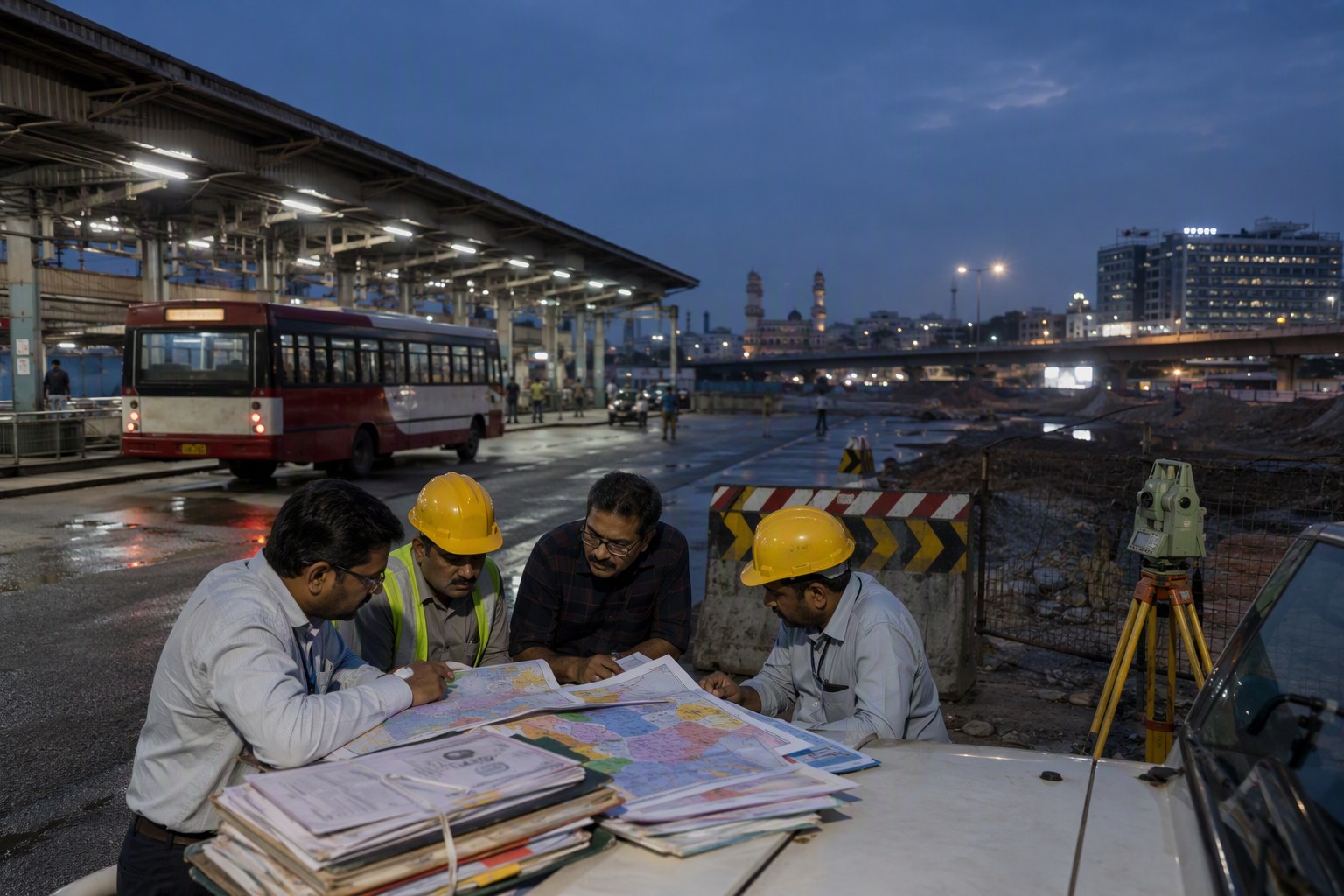
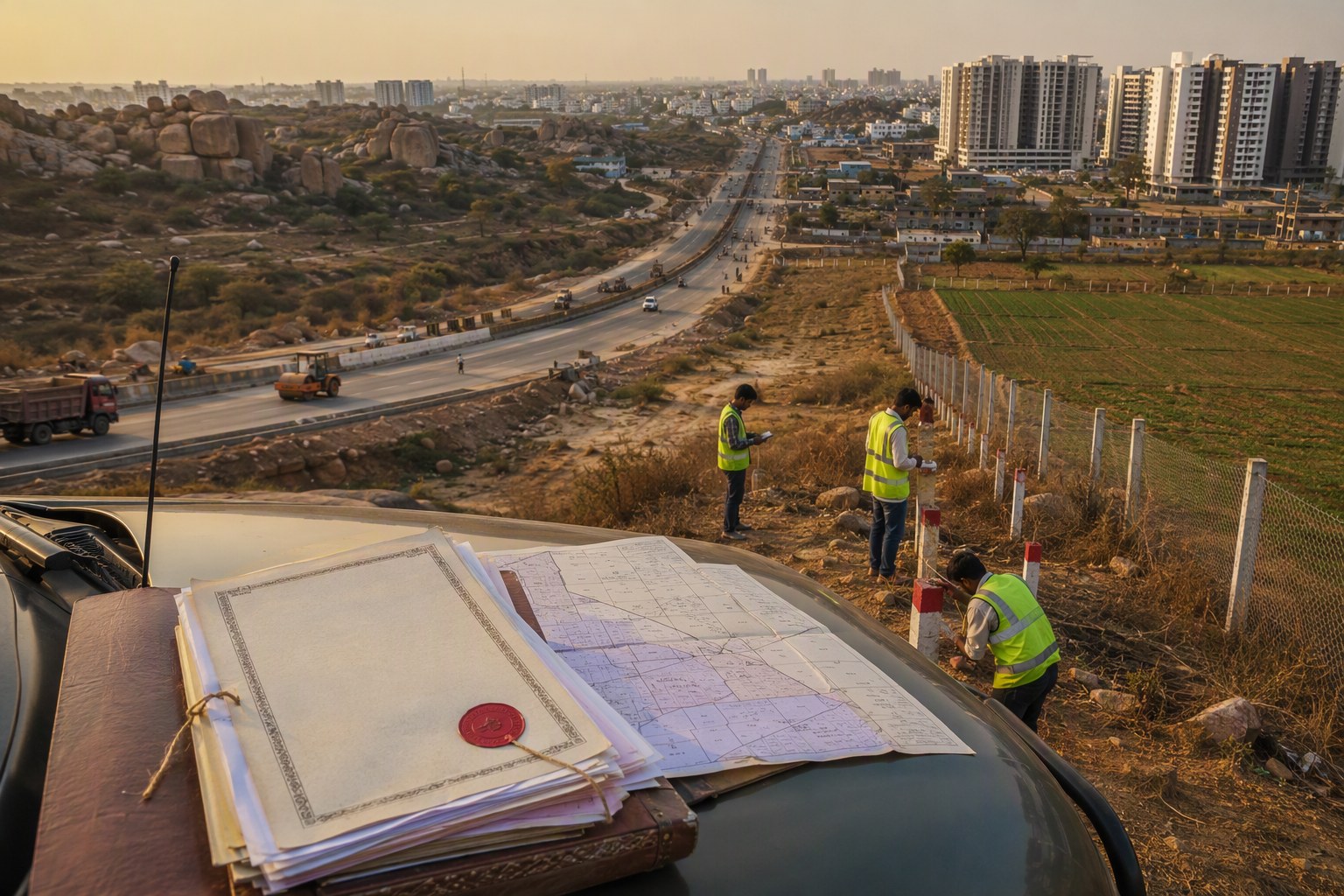
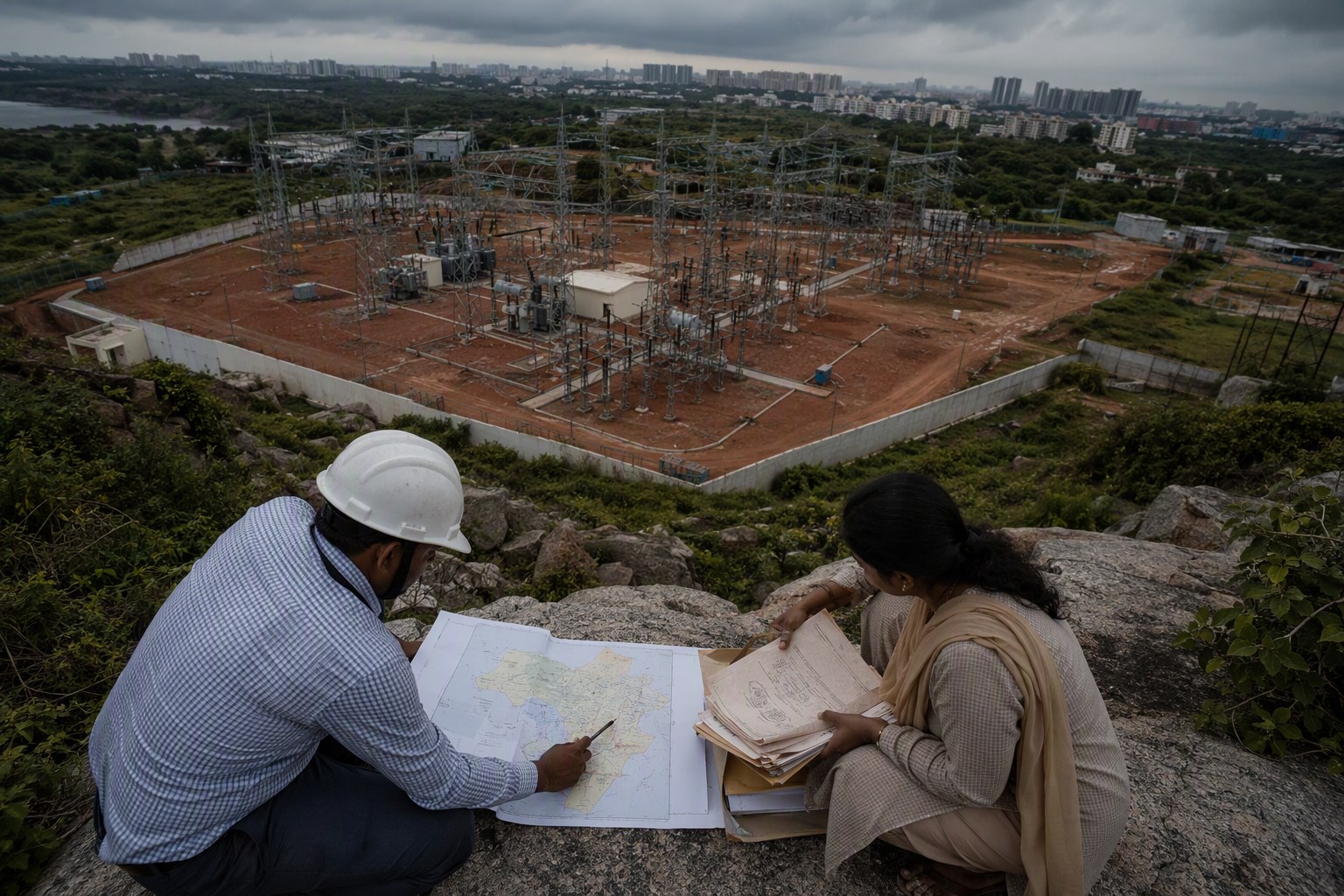
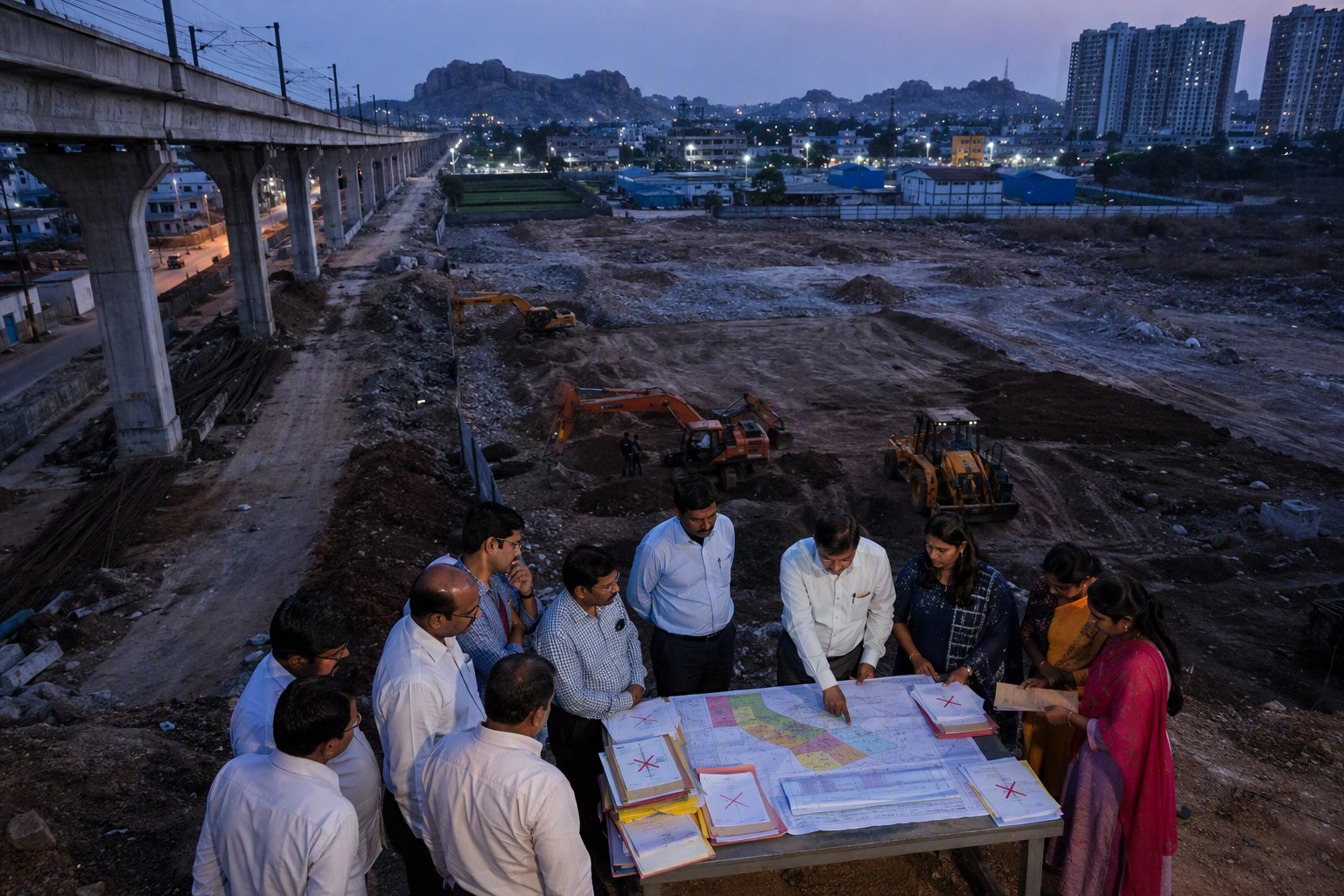
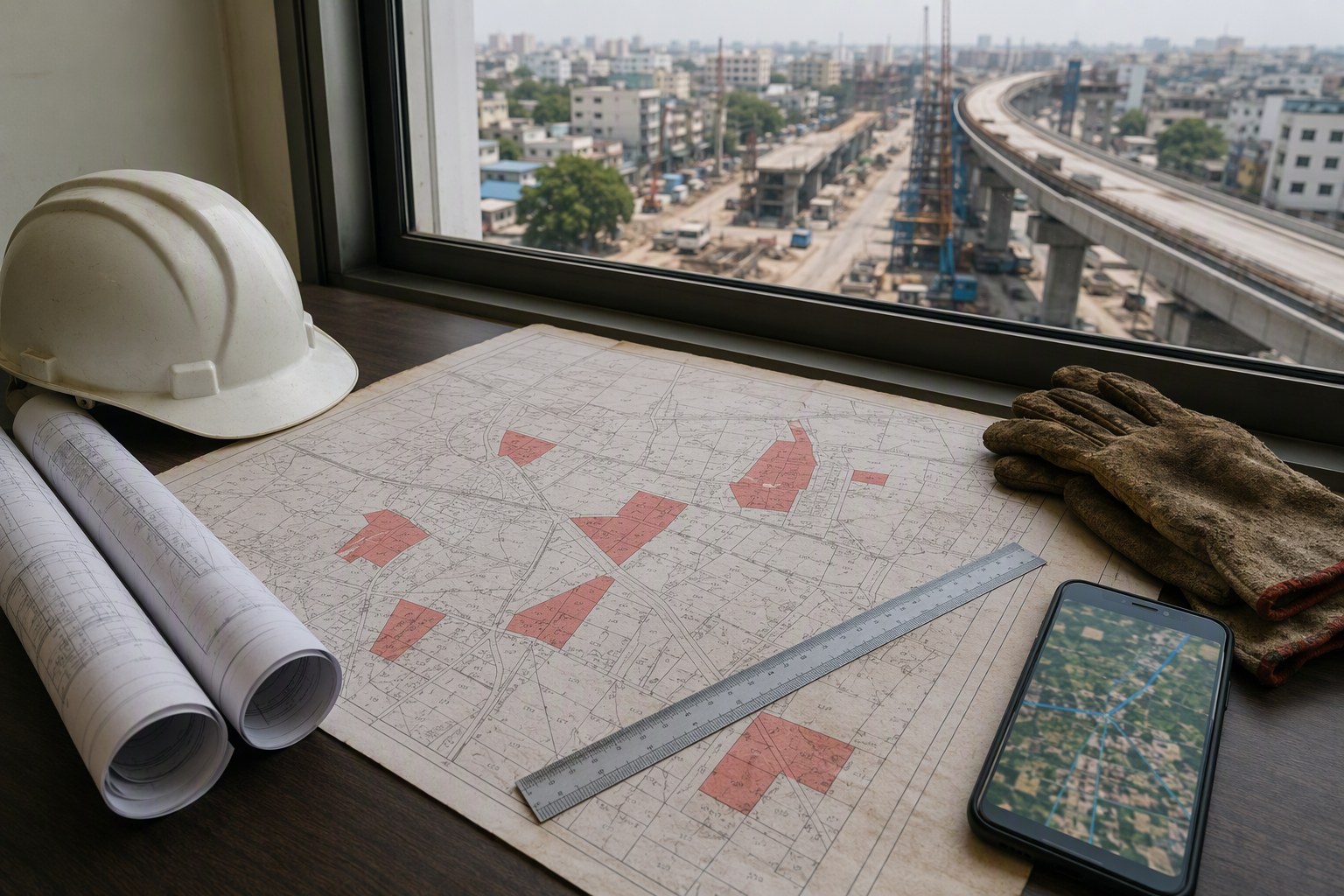
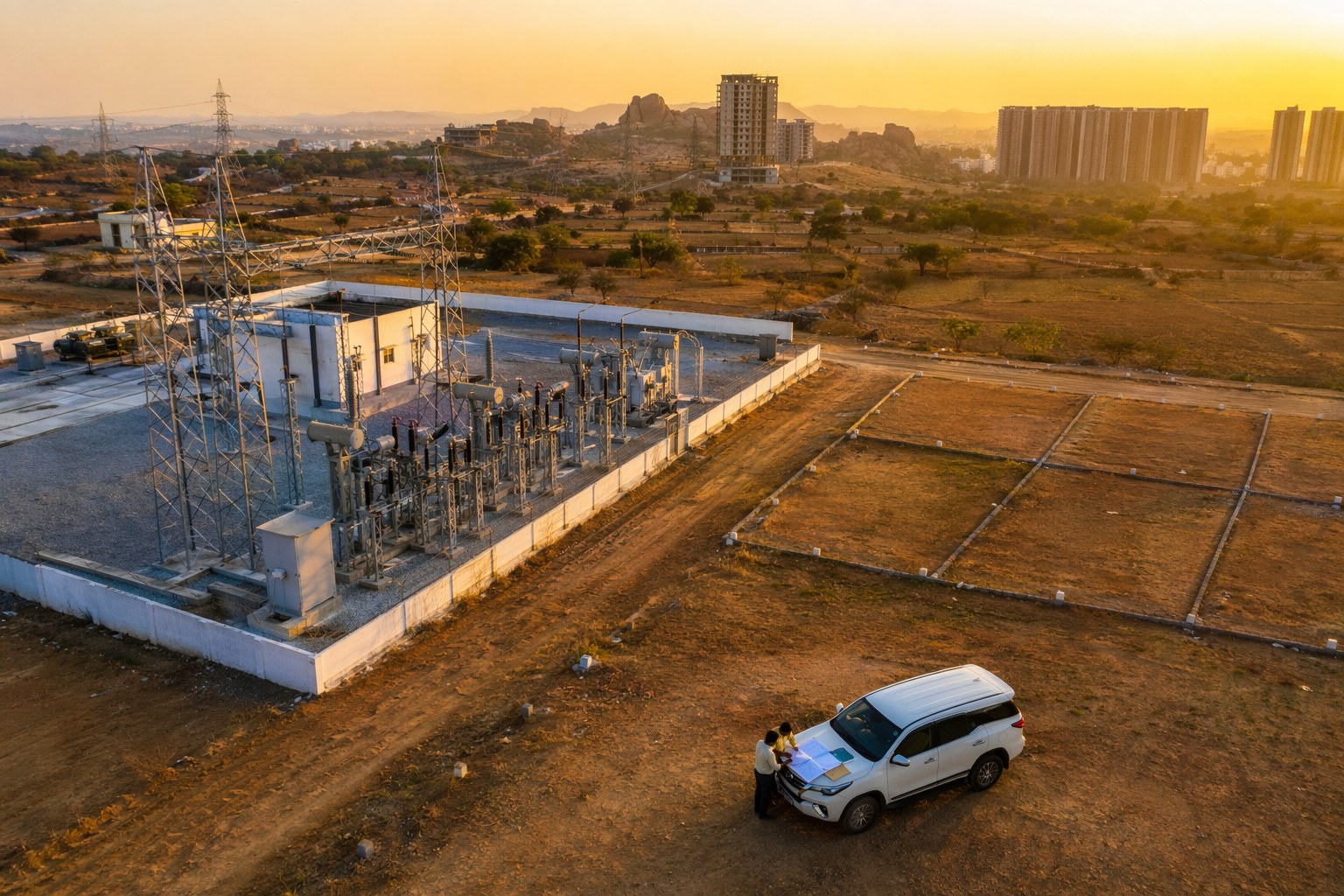
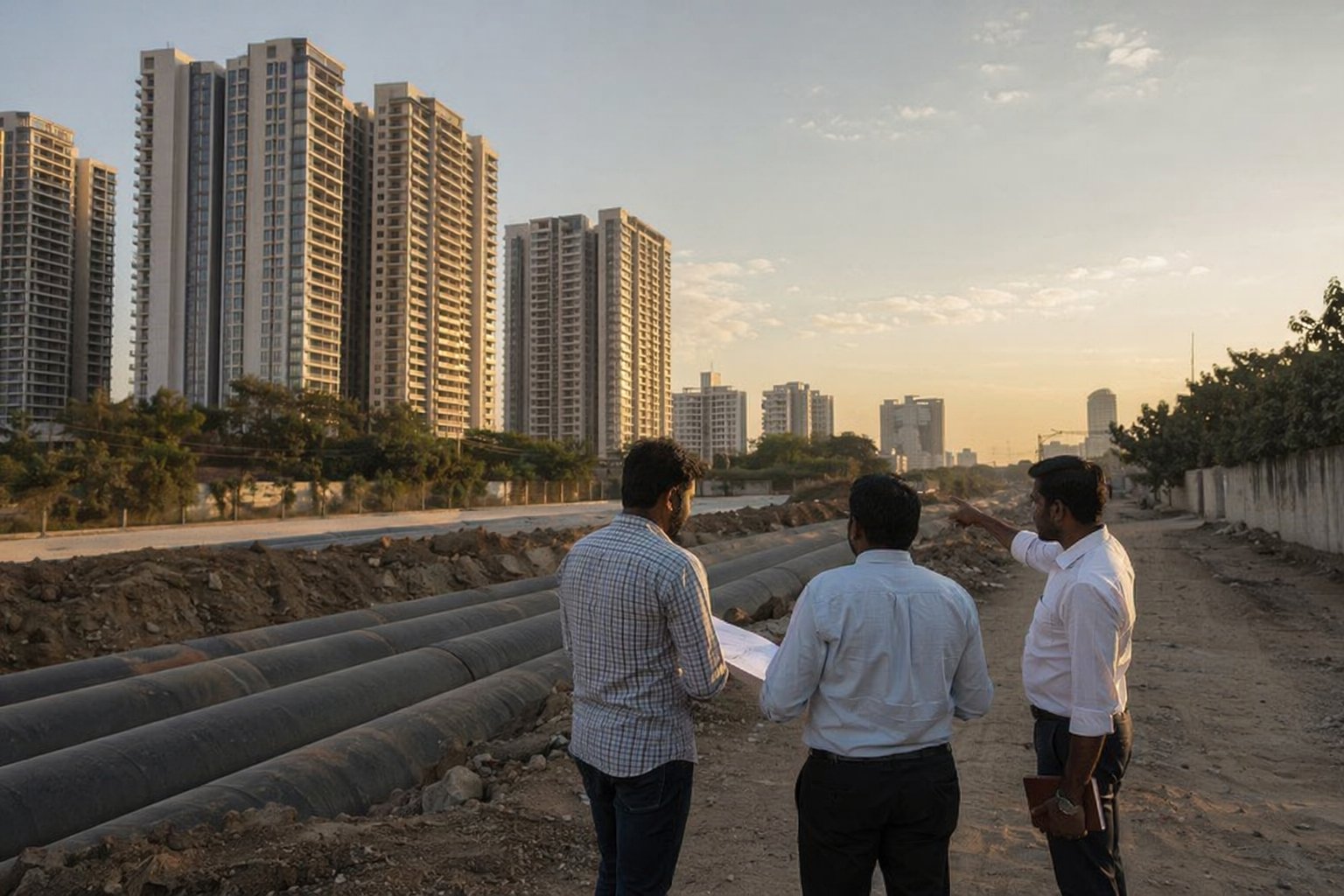
Utility corridors are quietly becoming one of the more sensitive land stories in Telangana. These routes may carry power lines, water pipelines, sewer trunks, gas lines, fibre ducts or other public infrastructure. On a planning map, the line may look clean. On the ground, it can pass through survey numbers with old assignments, government claims, ceiling disputes, endowment links, court issues or revenue restrictions.
That is where Section 22-A checks matter. Telangana already has a very large prohibited-property backdrop: 3,076,153 entries in the prohibited properties database. That number should make buyers, landowners, developers and corridor contractors slow down before treating any route-side parcel as clean land.
For the Hyderabad real estate market, this is not only a government-acquisition issue. Utility corridors can change land value, access, future layout design and development feasibility. A parcel near a proposed corridor may look attractive because infrastructure is coming. But if that parcel, or even a slice of its survey number, is sitting in a 22-A list, registration and financing can get stuck at the worst possible time.
Why 22-A is now a route-land issue
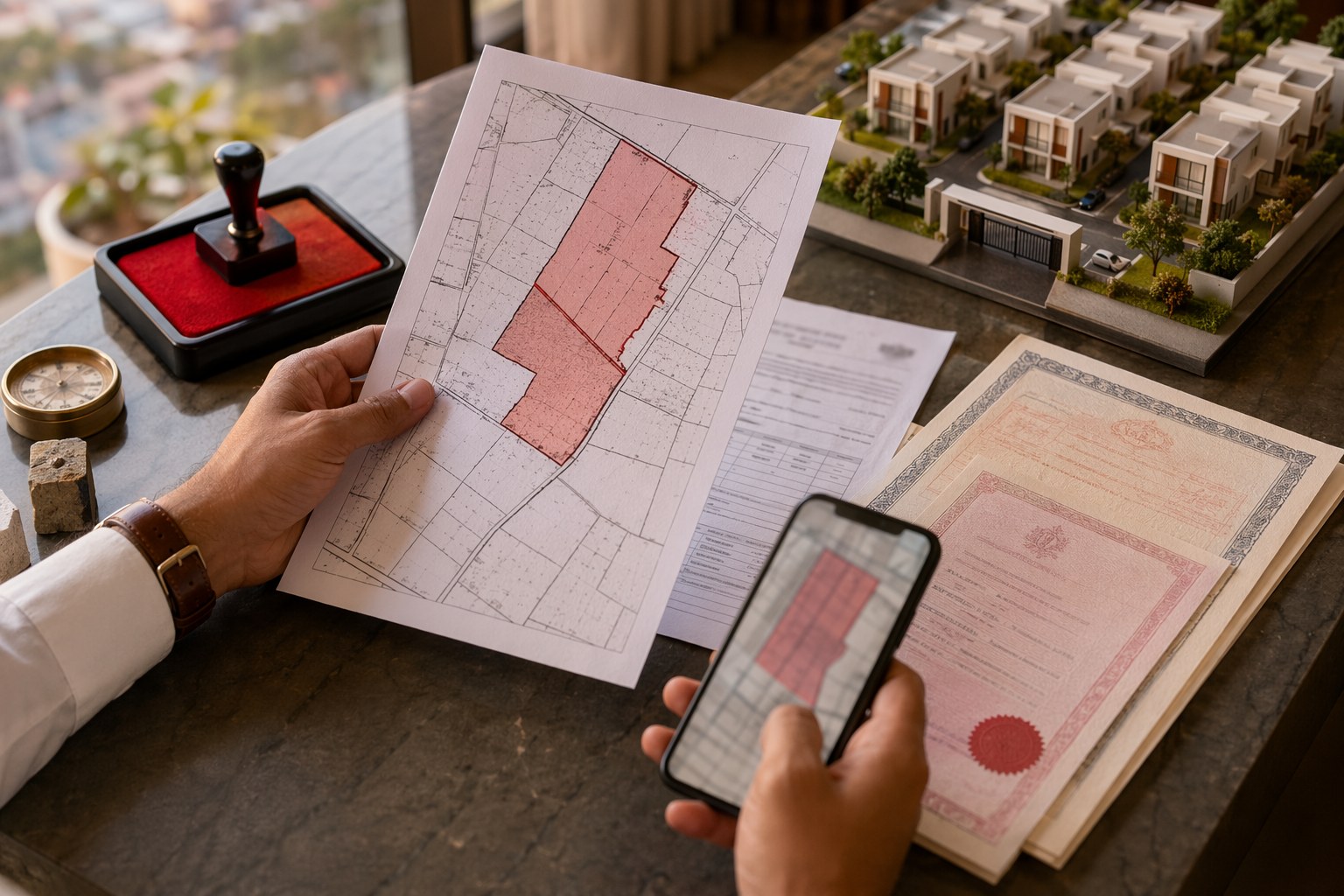
Section 22-A restrictions are used to stop registration of certain categories of properties. In practical terms, the Sub-Registrar Office may refuse registration if the property appears in the prohibited list. The list can include government land, assigned land, wakf or endowment properties, lands affected by specific legal restrictions, and other notified categories. The exact reason has to be checked case by case.
Utility corridors create a special problem because they cut across many survey numbers. A buyer may say, “I am buying only 600 square yards beside the road.” But the parent survey number may have a past entry in prohibited property records. In some villages, old revenue descriptions and present market boundaries do not match neatly. In peri-urban Telangana, that mismatch is common enough to worry about.
My view is simple: if a land parcel falls on or near a proposed utility route, 22-A verification should happen before price negotiation, not after token advance.
The 3,076,153-entry backdrop cannot be ignored
The figure of 3,076,153 prohibited-property entries across Telangana is not a small administrative footnote. It shows the scale of land parcels where registration may need careful scrutiny. Not every entry means a buyer has a bad title. Some entries may be old, disputed, wrongly mapped or capable of clarification through the proper revenue process. Still, until verified, they are a registration risk.
For utility-corridor land, the risk becomes sharper. Infrastructure plans can create sudden market excitement in nearby villages and mandals. Middlemen may start quoting corridor premium. Landowners may rush to sell before acquisition talk becomes serious. Developers may try to aggregate parcels for warehouses, plotted layouts, service yards or commercial frontage. In that rush, 22-A due diligence is often treated as a final step. That is a mistake.
What can go wrong if checks are late?
A late 22-A surprise can affect the deal in several ways. The sale deed may not be accepted for registration. Bank legal teams may refuse mortgage processing. Layout approvals may face title objections. Compensation claims for acquisition or easement may become contested. Family settlement documents may get delayed. Even genuine owners may be forced to spend months collecting revenue records and rectification letters.
In Hyderabad’s outer growth belt, many buyers focus on road width, HMDA or DTCP possibility, and future appreciation. Those checks are useful, but they do not replace prohibited-property verification. A beautiful location with unclear registration status is not a safe investment.
Early verification checklist for corridor parcels
- Identify the exact survey number: Do not rely only on local names, patta passbook photos or broker sketches. Use the Survey Number Finder to start with the right land identity.
- Check 22-A status: Run a specific check through the Prohibited Property Check before paying advance.
- Confirm the SRO: Registration jurisdiction matters. Use Find Your Sro or the Sro Village Directory.
- Read the EC properly: An Encumbrance Certificate may show past transactions, but it will not always solve 22-A risk by itself. Use Ec Search and, where needed, Ec Analyzer.
- Check land-use impact: A utility corridor may affect future building plans. Use Landuse Zone Finder and Road Width Check for a wider planning view.
- Track changes: Corridor-related files can move slowly. Use Property Tracker for follow-up discipline.
Who should be most careful?
Small buyers should be careful because one blocked registration can tie up life savings. Developers should be careful because one disputed survey number can disturb aggregation. Landowners should be careful because a wrong 22-A tag can depress value. Contractors and infrastructure agencies should be careful because route execution can slow down when title objections are discovered after mobilisation.
NRIs and Hyderabad-based salaried buyers need extra caution. They often buy land on weekend site visits around growth corridors. A sales pitch may sound polished: “Pipeline is coming, road expansion is coming, rates will double.” Maybe the location has potential. But potential is not title. First verify whether the land can actually be registered and developed.
Table: corridor land risk and what to check
| Situation | Possible risk | Early action |
|---|---|---|
| Survey number touches a proposed utility route | Part acquisition, easement limits or access change | Verify route impact and title before agreement |
| Property appears in 22-A list | Registration refusal or delayed clarification | Check category and obtain legal revenue advice |
| Parent survey number has old government or assigned land references | Sub-division sale may still face objections | Review old pahani, passbook, mutation and SRO records |
| Land is being sold at unusual urgency | Seller may be trying to exit before corridor restrictions are known | Do not pay token without document verification |
| Developer is aggregating route-side parcels | One bad parcel can disturb project planning | Do parcel-wise 22-A, EC and land-use checks |
Registration is only one part of the story
Even if a parcel is not blocked under 22-A, corridor influence can affect future use. Building setbacks, access control, buffer requirements, right of way, road widening and service-line restrictions can change the usable portion of land. For plots and layouts, this can affect saleable area. For commercial parcels, it can affect entry and frontage value.
Before valuing such land, buyers should compare the government market value using the Guideline Value tool and estimate registration outgo through the Stamp Duty Calculator. For development projects, Fsi Calculator, Composite Value and Osr Calculator can help frame a more realistic feasibility view.
The local reality: maps move faster than records
In Telangana, especially around Hyderabad’s expanding edges, planning discussions often move faster than land records correction. A corridor alignment may be discussed, revised, surveyed and marked. But revenue records, SRO notes, old village maps and family partitions may still carry older descriptions. This gap is where disputes enter.
Buyers should insist on full chain documents, not just a present passbook. Ask for title deed, link documents, mutation details, latest EC, tax receipts if applicable, layout or conversion papers where relevant, and any revenue correspondence linked to 22-A removal or clarification. If the land is agricultural, check whether future conversion is realistic. If it is in a village with known government land history, do not depend only on verbal assurances.
What sellers should do before marketing route land
Landowners near proposed utility corridors should not wait for buyers to find problems. If the parcel is wrongly tagged or partly affected, gather records early. A clean file improves credibility and price negotiation. If there is a genuine restriction, disclose it. Hidden issues usually come out at SRO stage, bank legal stage or buyer due diligence stage.
For owners, early verification is also useful if compensation, exchange, easement or access claims arise later. The person with organised records is better placed than the person who starts searching for old documents after notices arrive.
Verified.RealEstate view
Utility corridors are necessary for Telangana’s next growth phase. Hyderabad and its surrounding districts need better trunk infrastructure. But land transactions around such routes require discipline. The 3,076,153 prohibited-property backdrop tells us that title checking is not a formality in this state. It is a front-end task.
My advice to buyers is direct: do not buy corridor-side land only because someone says infrastructure is coming. First check the survey number, SRO, EC, 22-A status, land use and road position. Then discuss price. In Telangana real estate, a verified parcel may cost more, but an unverified parcel can cost peace of mind.
Frequently Asked Questions
What is a 22-A prohibited property check in Telangana?
It is a check to see whether a property is listed under registration restrictions. If the land appears in the 22-A list, the SRO may refuse registration until the issue is clarified or resolved.
Why are utility corridor lands risky for buyers?
Utility corridors can pass through many survey numbers. Some parcels may have government, assigned, endowment, wakf, court or revenue restrictions. A buyer must verify the exact survey number before paying advance.
Does a clean EC mean the land is free from 22-A issues?
No. An EC shows registered transactions and encumbrances, but it may not fully answer prohibited-property status. Buyers should do a separate 22-A check along with EC review.
When should I verify 22-A status for corridor land?
Do it before price negotiation or token advance. Early checking prevents blocked registration, financing delays and disputes over acquisition or route impact.