


NBFCs May Add 22-A Liquidity Tests to Telangana Land Loans
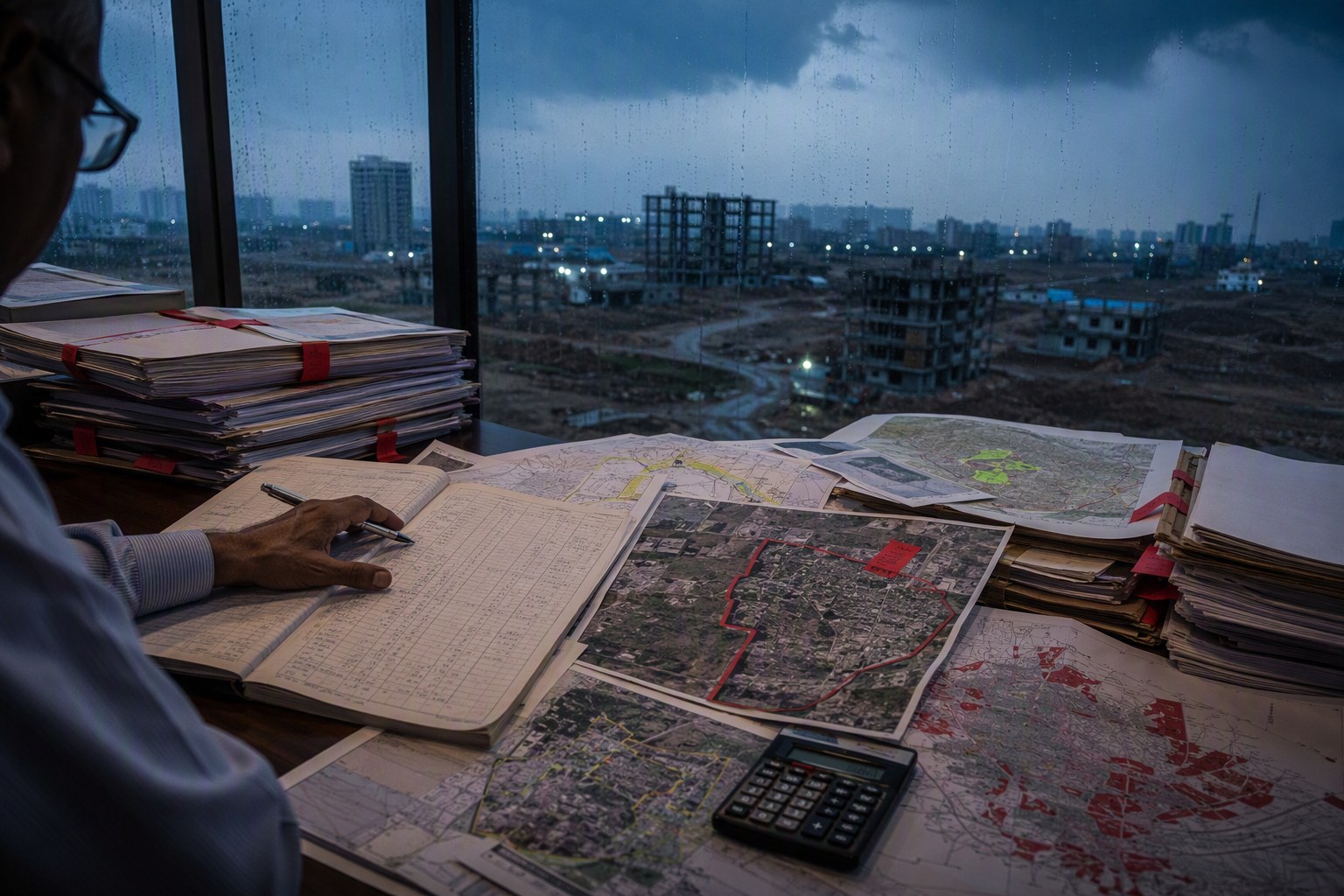
NBFCs May Add 22-A Liquidity Tests to Telangana Land Loans as lenders become more cautious about land-backed finance in Hyderabad’s expanding property belt. The trigger is simple: Telangana has 3,076,153 prohibited-property entries under Section 22-A in the current database context. For a borrower, that entry can affect saleability. For an NBFC, it can affect exit value if the loan goes bad.
The immediate lending story is not that every 22-A entry is disputed or unsellable. Many entries need careful reading, updated village records, old assignment history, court orders, endowment links, government land classification, or clerical correction. But from a lender’s desk, the question is practical: if this land has to be sold tomorrow, can it be registered without friction at the SRO?
In our experience, NBFCs are not only looking at title ownership now. They are looking at liquidity of title. That is a different and tougher test.
NBFCs May Add 22-A Liquidity Tests to Telangana Land Loans: What Changes
For years, many land loans were priced mainly around location, borrower profile, guideline value, market comfort and basic title documents. That model is now looking incomplete. A land parcel in Shankarpally mandal, a plotted site near Maheshwaram, or agricultural land on the edges of Moinabad may have good market demand, but a Section 22-A flag can slow down registration or stop it at the SRO level.
That delay matters to NBFCs. Land is not like a flat in a registered RERA project in Kokapet or Narsingi where the collateral is easier to benchmark. Land-backed finance depends heavily on enforceability and resale confidence. If the asset cannot be transferred quickly, the lender’s recovery timeline stretches. Once timelines stretch, pricing usually hardens.
We may therefore see NBFC credit teams adding a separate 22-A liquidity filter before sanctioning or renewing land loans. This filter could sit alongside encumbrance certificate checks, link document review, pahani and dharani record review, SRO verification, CERSAI search, and physical boundary inspection.
Why 3,076,153 Section 22-A Entries Matter for Land Finance
The number is too large for lenders to treat 22-A as a rare exception. Verified.RealEstate’s database context records 3,076,153 prohibited properties under Section 22-A. In market language, that is roughly 30.76 lakh entries that may require a deeper look before any lender treats the land as liquid security.
Section 22-A entries can come from different categories. Some may relate to government land. Some may relate to assigned land. Some may involve endowment or wakf concerns. Some may reflect prohibited survey numbers in a village record. Some may need updated administrative action. The lending issue is not one single legal category. It is the combined uncertainty created at the time of registration.
Take a common Hyderabad periphery case. A borrower offers land in a village near Tukkuguda, Adibatla, Shankarpally, Kollur or Kandukur. The market may be active. Developers may be asking around. The borrower may even show old link documents and tax receipts. But if the survey number or part-survey number is in a prohibited-property list, the NBFC will ask one sharp question: can we monetise this collateral if repayment fails?
How NBFCs Could Price the 22-A Risk
No public NBFC pricing grid has been declared for this specific factor, so we should not pretend there is a fixed formula. But based on how credit committees behave, three outcomes are likely.
- Lower loan-to-value comfort: The lender may lend more conservatively against land that has a 22-A sensitivity, even if the location is strong.
- Higher documentation burden: Borrowers may be asked for updated dharani extracts, pahani copies, village map references, SRO-level clarity, legal opinions and revenue-office correspondence.
- Longer sanction time: Files may move from branch credit to central legal or risk teams, especially for land in fast-changing mandals around Hyderabad.
For borrowers, the pain point is not only interest cost. Delay itself has a cost. If a builder needs short-term finance against land in Gandipet mandal or a trader wants a loan against family land in Rajendranagar, two extra weeks of document checking can affect the deal.
Documents NBFCs Will Look at More Closely
We have seen land loan files getting rejected for small mismatches: survey number spelling, extent variation, old patta name not matching current dharani entry, EC not covering enough years, or boundaries not matching the physical site. With 22-A checks becoming more visible, these small gaps will carry more weight.
| Check | Why NBFCs Care | Borrower Action |
|---|---|---|
| Section 22-A status | Shows whether registration may be restricted | Run a Section 22-A Prohibited Property Check |
| Survey number match | Prevents wrong-village or wrong-extent risk | Use the Survey Number Finder |
| Guideline value | Helps compare official value with collateral expectations | Check Market Value / Guideline Value Search |
| Encumbrance trail | Shows registered charges, sales and mortgages | Run an Encumbrance Certificate Search |
| SRO jurisdiction | Registration issues are handled at the correct office | Use Find Your SRO Office |
| CERSAI charge | Checks whether another lender has already marked security interest | Check CERSAI Charge Check |
Hyderabad Periphery Will Feel This First
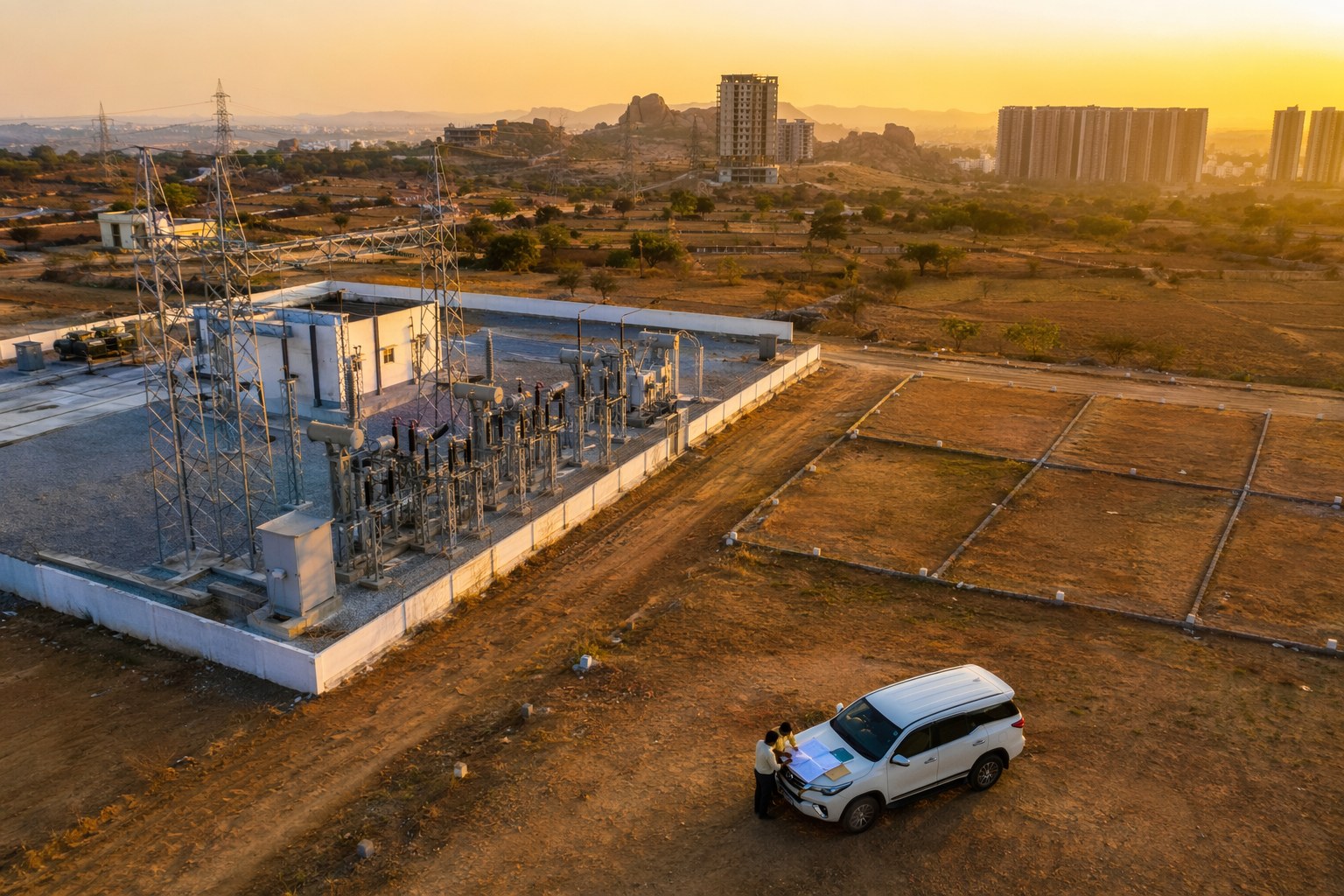
The strongest impact may be seen in land-heavy transactions outside the core apartment market. Localities and mandals such as Shankarpally, Chevella, Moinabad, Maheshwaram, Kandukur, Rajendranagar, Gandipet and Medchal are popular for plotted layouts, farmhouse-style land, warehousing, small developer aggregation and family asset loans.
In these areas, many buyers still think in old-school terms: passbook unda? dharani lo name unda? link documents unnaya? Those are valid questions, but lenders will go one step ahead. They will ask whether the asset has clean transferability today, not only historical ownership comfort.
This shift could also affect negotiated land prices. A clean parcel with matching revenue records, clean EC and no 22-A restriction will command more lender confidence. A parcel with unclear classification may still attract buyers, but finance availability can become thinner. Cash buyers may negotiate harder. NBFC-backed buyers may back out if the legal team does not clear the file.
NBFCs May Add 22-A Liquidity Tests to Telangana Land Loans: What Borrowers Should Do Before Applying
Borrowers should not wait for the lender’s lawyer to discover the problem. A better approach is to prepare a clean land file before applying. That means checking the prohibited-property status, downloading updated revenue records, matching extent and boundaries, checking EC, and confirming SRO jurisdiction.
If there is a 22-A entry, do not hide it. In land finance, hidden issues usually come back stronger. Give the lender the full background: whether it is a full survey restriction or part-survey issue, whether any correction petition is pending, whether there is a court order, and whether the local revenue office has given any clarification. A transparent file has a better chance than a file that looks clean for one week and collapses during legal due diligence.
For buyers, the same discipline applies. Before paying advance for land in a village near the ORR growth corridor, run basic checks. The Property Verification Tool can help structure the first round of review. If the deal involves layout potential, also check road access, land-use classification and development constraints through tools like Land Use Zone Finder and Road Width Check.
What This Means for Developers and Land Aggregators
Developers and aggregators will need to price legal clean-up time into acquisitions. Earlier, many aggregators bought first and corrected records later. That approach is becoming riskier when NBFC money is involved. If project finance, bridge finance or promoter funding depends on land mortgage, unresolved 22-A entries can block the chain.
In Hyderabad’s western corridor, especially around Narsingi, Kokapet, Kollur and Tellapur, lenders already ask more questions because ticket sizes are high. The next wave of scrutiny may move to peripheral growth pockets where land is still the main collateral. The land may be valuable, but value is not the same as liquidity. This is the line NBFCs are likely to draw.
My view is straightforward: 22-A checking will become a normal pre-sanction item, not an afterthought. Borrowers who prepare early will get faster answers. Borrowers who rely only on oral assurances from brokers or old village-level comfort will face tougher credit calls.
The Bottom Line for Telangana Land Loans
Telangana’s 3,076,153 prohibited-property entries are now more than a registration-office issue. They are becoming a finance issue. NBFCs may not reject every file touched by a 22-A reference, but they are likely to treat it as a liquidity risk that affects sanction comfort, collateral valuation and recovery planning.
For anyone raising money against land, the message is clear: check first, apply later. In Telangana land finance, clean documentation is no longer only a legal formality. It is part of the price of money.
Frequently Asked Questions
Will NBFCs stop giving loans against Telangana land with a 22-A entry?
Not necessarily. A 22-A entry may trigger deeper legal and liquidity checks. Some files may still be funded if the borrower provides strong clarification, updated records and a clear legal opinion.
Why does Section 22-A matter to a lender?
Because it can affect registration and resale. If the borrower defaults, the lender wants confidence that the land can be transferred or sold without major delay at the SRO.
How many prohibited-property entries are recorded in Telangana?
As per the current Verified.RealEstate database context, Telangana has 3,076,153 prohibited-property entries under Section 22-A.
What should I check before applying for a land-backed NBFC loan?
Check Section 22-A status, EC, dharani and pahani records, survey number details, SRO jurisdiction, guideline value and any existing lender charge through CERSAI.
Can a good Hyderabad location overcome a 22-A issue?
A strong location helps market interest, but it does not automatically solve registration risk. NBFCs will still examine whether the land is legally transferable and liquid as collateral.