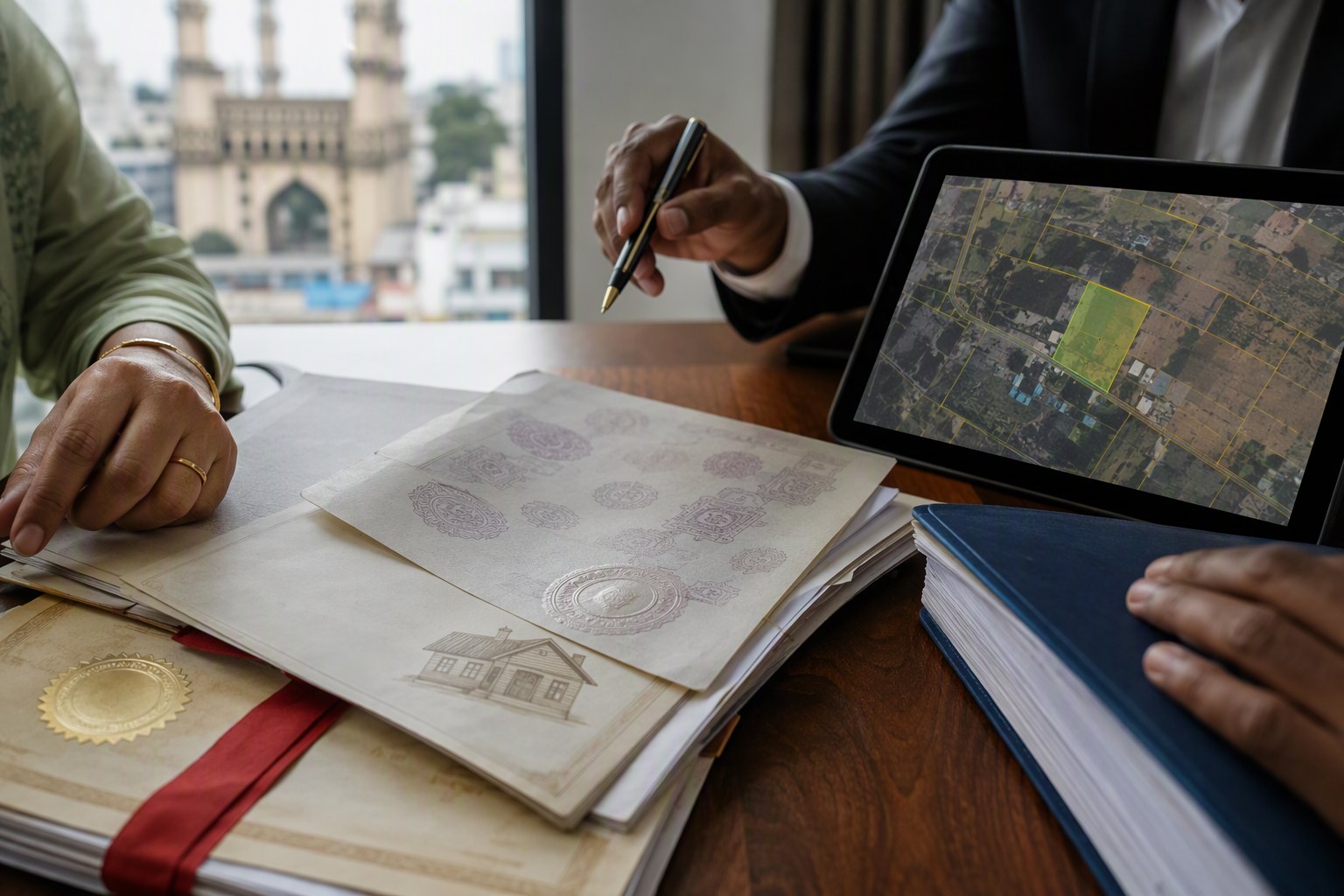
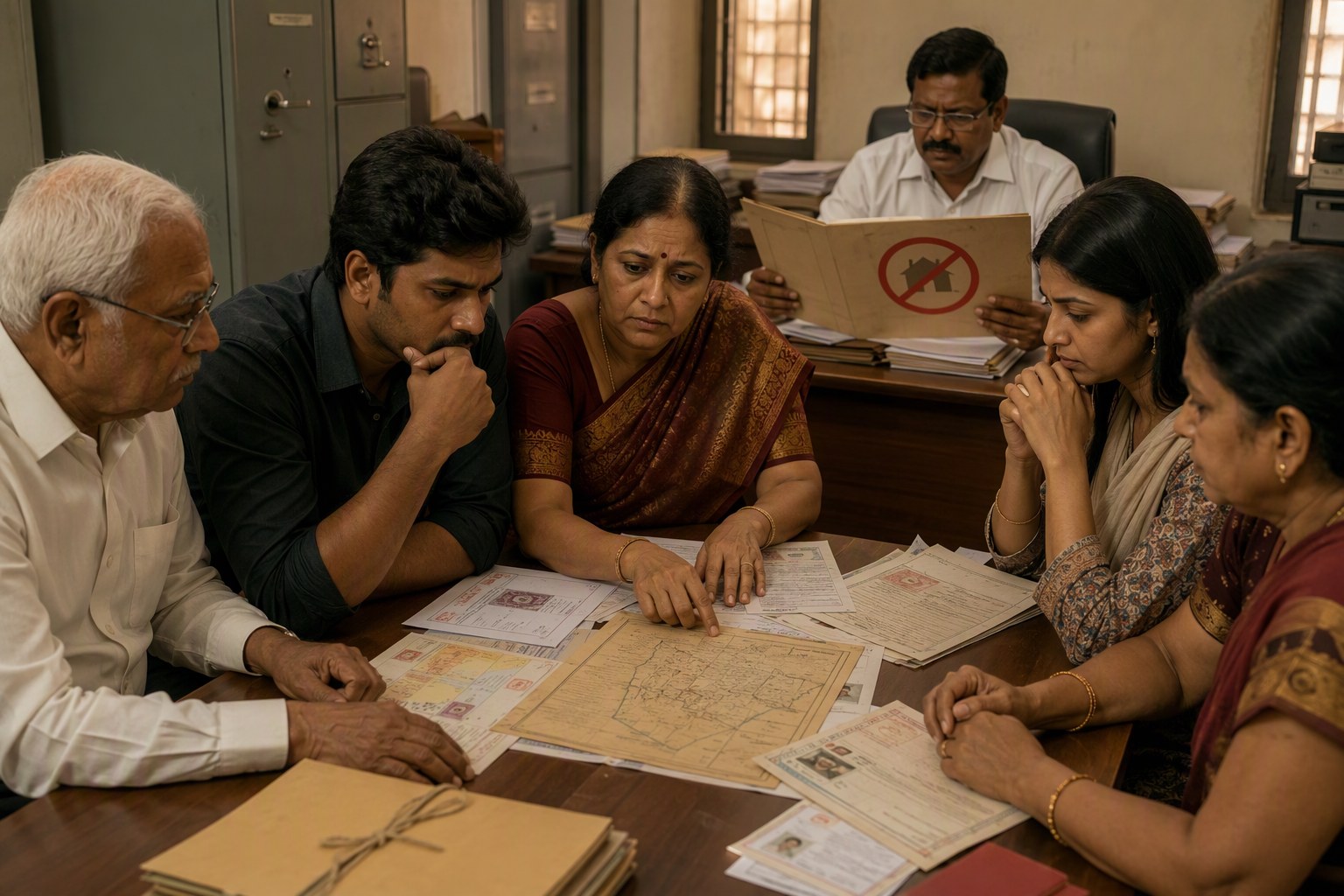
Telangana Land Deals May Put 22-A Risk on Board Agendas because the prohibited-property universe is no longer a small legal footnote. As per latest IGRS data available in our database, Telangana has 30.76 lakh prohibited properties, recorded as 3,076,153 entries under the Section 22-A risk bucket. For developers, land aggregators, family offices, NBFCs and corporate buyers, this is not just a Sub-Registrar Office problem on registration day. It is a board governance issue before the first token advance is paid.
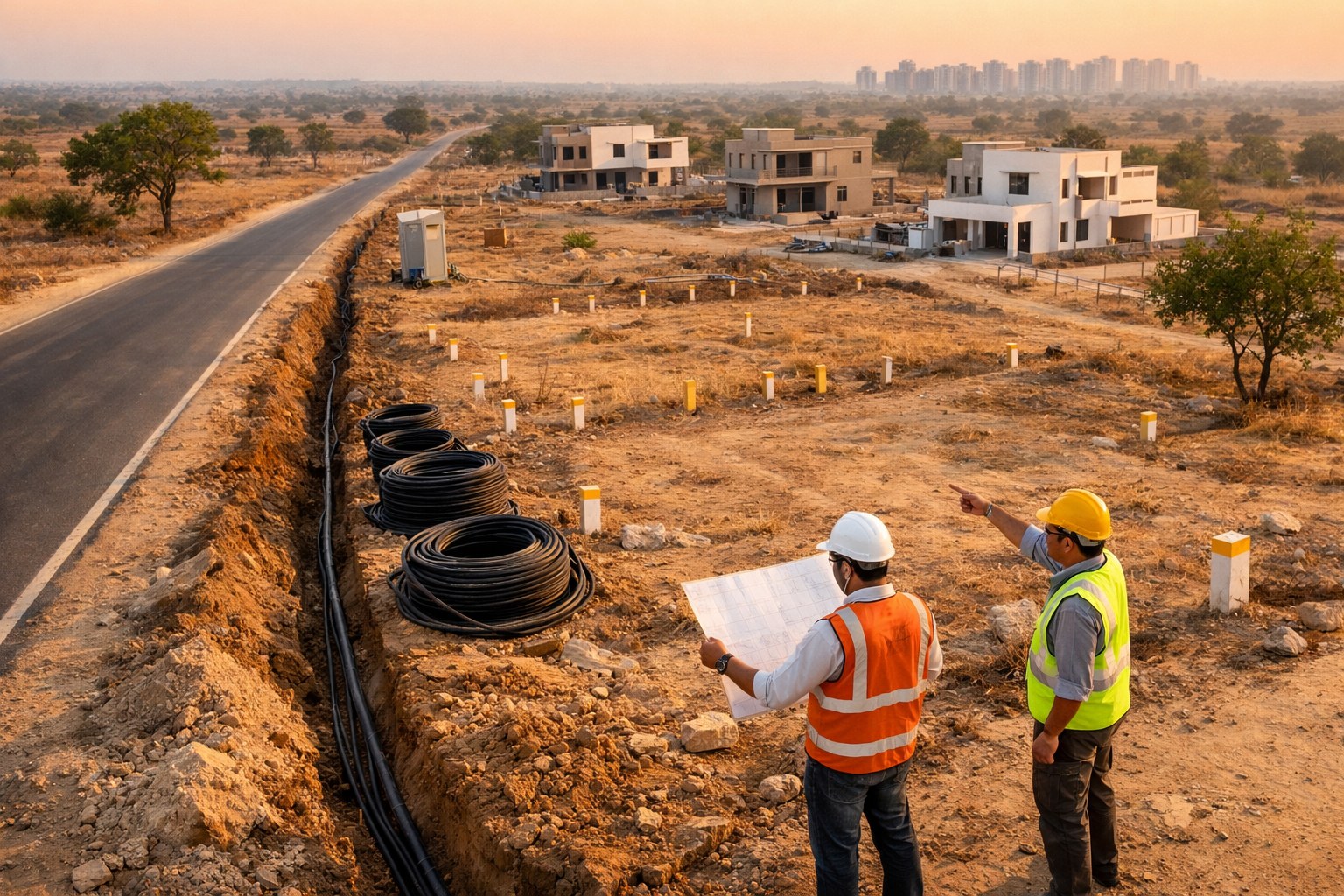
In Hyderabad’s growth corridors, we have seen land conversations move very fast. A parcel near Kokapet, Narsingi, Tellapur, Mokila, Patancheru, Kompally, Ghatkesar or Shamshabad can enter an investment memo within days. But if the survey number later shows a 22-A restriction, the deal does not merely slow down. The board may have to explain why the risk was not caught before approval.
Why Telangana Land Deals Need 22-A Checks Before Board Approval
Section 22-A refers to properties that are restricted from registration under government records. The reason can vary: government land, assigned land, endowment-related land, wakf-related entries, litigation-linked prohibitions, or other notified restrictions. The practical result is the same. The SRO may refuse registration, or the buyer may face a title cloud that cannot be cleaned up by a simple indemnity clause.
The old habit was to treat 22-A verification as a lawyer’s checklist item just before sale deed registration. That approach is now weak. With 3,076,153 prohibited-property entries in Telangana as per latest IGRS data, the exposure is wide enough for boards to ask sharper questions.
Our view is simple: if the land parcel is material to the company, the 22-A status must be part of the board note, not an annexure buried in the legal file.
This matters more in peri-urban mandals where revenue records, pahanis, old sethwar entries, Dharani data, mutation trails and SRO records may not always tell the same story at first glance. In Gandipet mandal, for example, land around Kokapet and Narsingi is often discussed for premium residential and mixed-use development. In Shankarpally mandal, Mokila-side land has seen strong buyer interest. In Ghatkesar mandal, plotted development and warehouse-linked enquiries keep coming. In Shamshabad mandal, airport-side land has long-term commercial appeal. None of these localities can be examined only through location and frontage.
Telangana Land Deals: What 30.76 Lakh Prohibited Properties Mean for Directors
The 30.76 lakh figure should change the tone inside boardrooms. Directors and investment committees need to move from “Has legal checked it?” to “What exactly has legal checked, against which government record, and when?”
A 22-A issue can affect several board-level decisions:
- Capital allocation: Advances, conversion costs, planning costs and consultant fees can get locked before title clarity is reached.
- Project timelines: If registration is blocked, downstream approvals, RERA filings and financing plans may get disturbed.
- Disclosure quality: A developer or corporate buyer may need to disclose land title risks to lenders, investors or joint venture partners.
- Personal accountability: In large acquisitions, directors cannot comfortably say they were unaware of a public-record restriction.
For listed entities, large private developers and institutional buyers, the better practice is to record the 22-A check in the approval paper itself. The note should mention the village, mandal, district, survey number, extent, SRO jurisdiction, latest EC status, Dharani or revenue position, and whether the property appears in any prohibited list as per government records.
How Hyderabad-Side Transactions Can Get Caught
Many high-interest parcels around Hyderabad are not clean urban plots with a straight title chain. They are agricultural lands, converted lands, old layouts, inheritance partitions, GPA histories, or assembled parcels across multiple survey numbers. One survey number may look fine, while the adjoining number may carry a restriction. In a land aggregation, that one problem can affect the entire scheme.
Take a typical board proposal for land near Tellapur in Ramachandrapuram mandal or Mokila in Shankarpally mandal. The management presentation may focus on road access, demand, nearby projects and expected product mix. Fair enough. But the board should also ask for the survey-number level checks. Not just the village name. Not just a screenshot from one portal. The actual survey number and sub-division, if any, must be verified.
Buyers should use the Survey Number Finder to pin down the correct survey reference, run the Section 22-A Prohibited Property Check, and cross-check ownership movement through the Encumbrance Certificate Search. For larger deals, we also suggest using the Property Verification Tool before the investment note is finalised.
Board-Level 22-A Risk Checklist for Telangana Land Deals
A good governance process is not complicated. It just has to be done early and documented properly. In our experience, the following controls make a real difference:
| Board question | Why it matters | Useful check |
|---|---|---|
| Is the exact survey number identified? | 22-A restrictions are often survey-number specific, not locality specific. | Confirm village, mandal and sub-division details. |
| Which SRO has jurisdiction? | Wrong SRO assumptions can delay document searches and registration planning. | Use Find Your SRO Office. |
| Does the land appear in prohibited records? | This is the core 22-A risk. | Use Section 22-A Prohibited Property Check. |
| Is the EC clean for the relevant period? | Charges, prior sales, court attachments or old transactions can alter risk. | Run Encumbrance Certificate Search. |
| Does pricing align with official market value? | Boards should not approve consideration blindly. | Refer Market Value / Guideline Value Search and Stamp Duty Calculator. |
For apartment or villa projects, the board should also check whether the project itself is registered where required. The RERA Project Lookup is useful for that layer, though RERA registration does not by itself cure land title defects.
What Lawyers, CFOs and Land Teams Should Put in the Note
The board note should avoid vague phrases like “title appears clear”. That kind of language is too soft for land acquisition in Telangana. A better note will state the exact documents reviewed: pahanis, Dharani extracts where available, EC, link documents, mutation records, SRO search results, ready reckoner or guideline value reference, and 22-A status.
CFOs should also insist on conditions before releasing money. A token advance may be acceptable in some deals, but a large payment without 22-A confirmation is poor discipline. If the seller says the restriction is an error, the board should ask for government correction proof before treating the parcel as acquisition-ready.
In joint development agreements, the same caution applies. Many developers think risk is lower because they are not buying the land outright. That is not correct. If the landowner’s title is blocked or the land is restricted from registration, the JDA, development rights, mortgage creation and customer sale process can all suffer.
The Governance Shift Is Already Visible
Hyderabad real estate has matured. Land is no longer examined only by local brokers, document writers and field surveyors. Institutional money, structured debt, platform-level joint ventures and family office capital are all active in Telangana. That means land risk is now discussed in investment committee language.
The 22-A list size — 30.76 lakh prohibited-property entries as per latest IGRS data — gives boards a clear reason to formalise this process. The check is not anti-deal. In fact, it protects good deals from getting mixed with avoidable title trouble.
My advice to buyers is direct: do the 22-A check before valuation excitement takes over. Check the survey number, EC, SRO, guideline value and revenue record trail. If the land passes, proceed with confidence. If it does not, pause. In Telangana land, a pause at board stage is cheaper than a blocked registration later.
Frequently Asked Questions
What is Section 22-A in Telangana property registration?
Section 22-A covers properties that are prohibited or restricted from registration as per government records. If a land parcel falls under this list, the SRO may refuse registration.
Why should boards check 22-A status before approving land deals?
Because Telangana has 30.76 lakh prohibited-property entries as per latest IGRS data. A missed 22-A issue can affect capital deployment, registration, project timelines and director-level governance.
Is an Encumbrance Certificate enough to clear 22-A risk?
No. An EC shows registered transactions and charges, but 22-A status must be checked separately against prohibited-property records and relevant revenue documents.
Which details are needed for a proper 22-A check?
You need the correct village, mandal, district, survey number, sub-division if applicable, and SRO jurisdiction. A locality name alone is not enough.