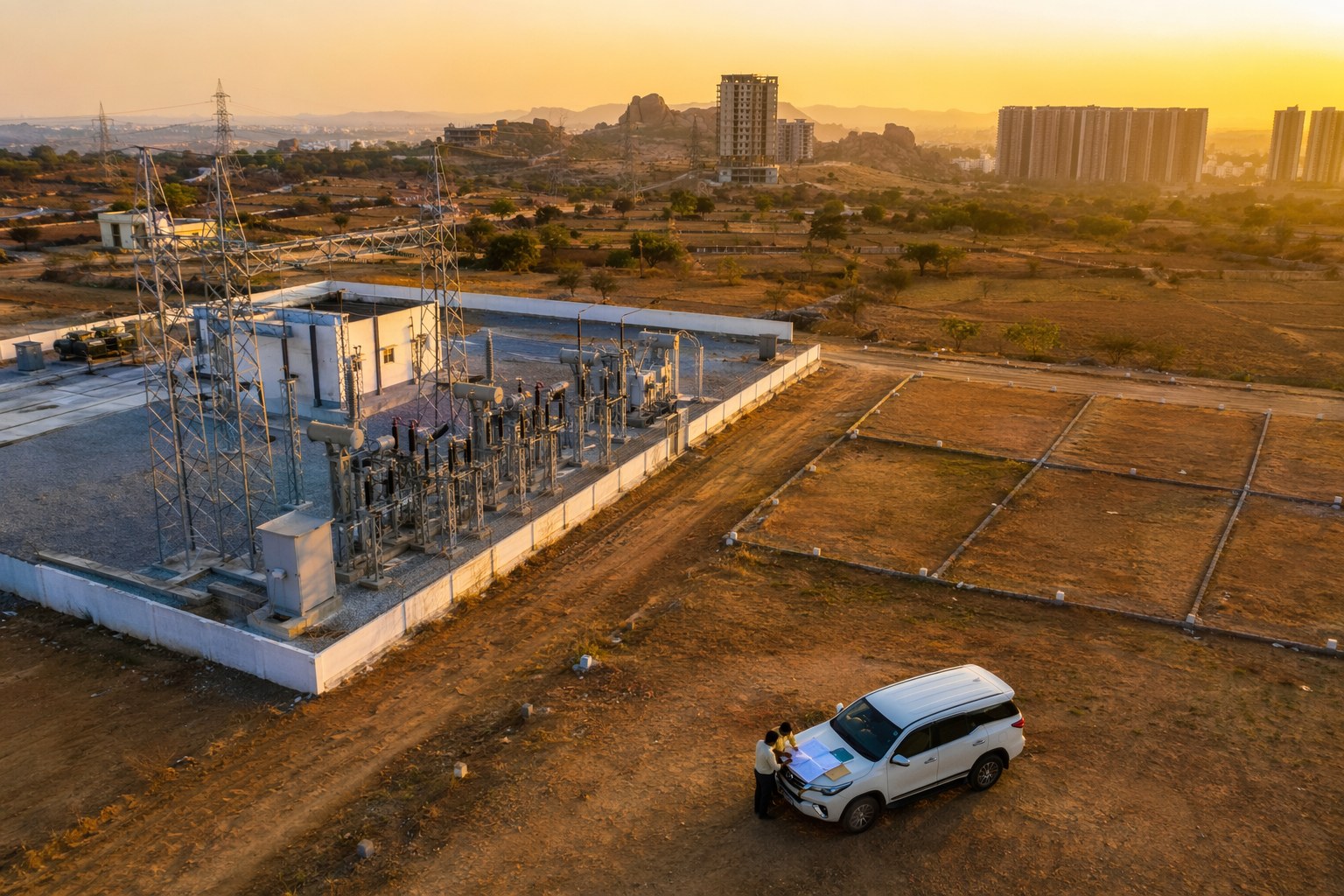



Title Insurance Underwriters May Revisit Telangana 22-A Risk as Telangana continues to carry a large base of Section 22-A prohibited properties in government records. As per latest IGRS data available in our database, Telangana has 3,076,153 prohibited property records. For insurers, lenders, developers and serious buyers, that number is not just a data point. It is a pricing signal, a documentation warning, and in many cases, a reason to slow down a transaction until the land record story is clean.
In Hyderabad’s active corridors like Kokapet, Narsingi, Tellapur, Mokila, Gandipet, Gachibowli, Patancheru, Shamshabad, Medchal and Hayathnagar, the real issue is not whether demand exists. Demand is clearly visible on the ground. The issue is whether the title chain, survey number, pahani, Dharani entry, SRO record and 22-A status are all saying the same thing.
Why Telangana 22-A Risk Matters To Title Insurance Underwriters
Section 22-A entries generally restrict registration of certain properties. These may include government lands, assigned lands, endowment lands, wakf-related properties, ceiling surplus lands, lands under dispute, or other categories notified by the State. For a title insurance underwriter, a property falling into or even touching this category changes the risk profile immediately.
We have seen cases where the buyer has an agreement of sale, the seller has old link documents, and the broker says, “Registration ho jayega.” But when the survey number is checked at SRO level or through government records, the parcel is flagged. At that point, title insurance cannot be treated like a routine product. The underwriter will ask harder questions.
The main concern is simple: if registration itself is restricted, or if the property’s ownership trail conflicts with revenue records, the future claim exposure is high. Title insurance is built around insurable title. Section 22-A creates a direct question on whether the title is insurable at all, or only insurable with exclusions.
Our view is that Telangana’s 22-A base will push underwriters towards stricter file-level checks rather than broad locality-level comfort. A clean project in Tellapur and a risky survey number in the same belt cannot be priced in the same way.
Telangana 22-A Risk Could Change Pricing, Exclusions And Due Diligence
The likely shift will not be dramatic overnight. Underwriting teams usually move step by step. First, they ask for more documents. Then they narrow down coverage. Then pricing gets sharper for specific land types, mandals and title histories.
In our experience, the following areas may see tighter scrutiny:
- Policy pricing: Files with unclear revenue history, missing pahani entries, mismatched survey numbers or pending mutation issues may attract tougher pricing or may not move ahead until rectified.
- Exclusions: Underwriters may exclude claims connected to government land notifications, assigned land disputes, 22-A entries, boundary mismatch, unregistered family arrangements or pending revenue appeals.
- Document checks: Expect deeper verification of sale deeds, link documents, EC, Dharani passbook details, mutation records, layout approvals and local authority permissions.
- Survey-level review: A broad address like “near Mokila” or “near Maheshwaram” will not be enough. Survey number, village, mandal and SRO mapping will matter.
Buyers should start with a basic check using the Section 22-A Prohibited Property Check. For the title trail, use the Encumbrance Certificate Search and then run a deeper reading through the EC Analyzer. If the SRO itself is unclear, the Find Your SRO Office page is useful before paying an advance.
What Underwriters Will Look For In Hyderabad And Surrounding Mandals
Hyderabad’s growth is now strongly linked with surrounding mandals. Serilingampally and Rajendranagar remain active for apartments and gated communities. Gandipet, Shankarpally, Moinabad and Chevella attract villa and plotted layout buyers. Patancheru, Ameenpur and Sangareddy side see steady end-user and investor interest. Shamshabad, Maheshwaram and Kandukur are regularly discussed because of airport-side development expectations.
For all these locations, underwriters will not rely only on market buzz. They will read the land file. A premium apartment unit in a RERA-registered project may still need land-level comfort. A villa plot in a HMDA layout may still need survey number verification. A farm land parcel near a fast-growing road may still be affected by an old assigned land or government land notation.
The checks will usually include:
| Document / Check | Why It Matters For Title Insurance |
|---|---|
| Section 22-A status | Shows whether registration is prohibited or restricted in government records. |
| Encumbrance Certificate | Reveals registered transactions, mortgages, releases and other recorded interests. |
| Pahani / Adangal | Helps match revenue possession and land classification history. |
| Dharani record | Useful for agricultural land ownership and mutation trail in Telangana. |
| Survey number and village mapping | Prevents confusion between similar locality names and adjoining villages. |
| Layout / building permissions | Confirms whether development approvals match the land parcel being insured. |
For project buyers, I would also cross-check the project on RERA Project Lookup. For land buyers, the Survey Number Finder and Property Verification Tool should be used early, not after token money is paid.
Why Section 22-A Is Not A Small Technical Objection
Many buyers treat 22-A as a clerical issue. Sometimes it may be a wrong entry or an outdated record. But sometimes it is a serious legal block. That difference is exactly what the underwriter wants to establish.
A property may have old registered documents and still face a registration block now. A seller may show tax receipts, but tax payment is not the same as clear title. A layout may have internal roads and compound walls, but that does not settle land classification. This is where Telangana files become tricky, especially in peri-urban zones where agricultural lands have moved into residential use over time.
In local practice, a clean title file should speak the same language across SRO records, revenue records and planning approvals. If the EC says one thing, Dharani says another, and the village revenue record has a third version, the underwriter will pause. So should the buyer.
Telangana 22-A Risk And The Ready Reckoner Angle
Ready reckoner or guideline value is mainly used for stamp duty and registration value reference. It does not certify title. This distinction is very relevant. A property may have a guideline value available, but still face a title or registration concern. Buyers should use the Market Value / Guideline Value Search for value reference, and the Stamp Duty Calculator for transaction cost planning, but those tools do not replace title diligence.
For underwriters, valuation and title risk are separate tracks. High market value does not make a risky title safe. A property near a major road in Kokapet or a fast-selling gated community zone in Patancheru can still carry a problematic land history if the base documents are weak.
What Buyers, Developers And Lenders Should Do Now
The practical response is not panic. It is better documentation. Telangana’s property market is still active, and clean files continue to move. But casual buying based on WhatsApp brochures, location hype and half-checked link documents is becoming dangerous.
My suggestion for buyers is clear: before advance payment, ask for the survey number, village, mandal, SRO details, latest EC, link documents and land classification. If the seller delays these basics, treat it as a warning sign. For apartment buyers, ask how the developer acquired the land and whether the project land has any 22-A history. For plotted layouts, check whether approvals match the exact survey numbers being sold.
Developers should prepare insurer-ready title packs. That means clean indexing of link documents, revenue records, conversion permissions, layout approvals, RERA filings where applicable, and clarification notes for any past discrepancy. Lenders should not depend only on empanelled advocate opinions where the land has complex history; the file needs revenue-side confirmation too.
The big change is cultural. Earlier, many buyers asked, “Is registration possible?” Now the better question is, “Is the title insurable without major exclusions?” That one change can save years of litigation.
Our Take On Title Insurance Underwriters And Telangana 22-A Risk
With 3,076,153 prohibited property records in the database, title insurance underwriters have enough reason to revisit Telangana 22-A risk at a granular level. I expect more survey-number-based checks, tighter policy language, more exclusions for government and revenue disputes, and higher insistence on clean Dharani and SRO alignment.
For genuine buyers, this is not bad news. It may actually improve market discipline. Good projects and clean land parcels will stand out. Risky files will face questions earlier. In a market like Hyderabad, where land values can move faster than documentation habits, that is a healthy correction.
Frequently Asked Questions
What is Telangana 22-A risk in property transactions?
Telangana 22-A risk refers to the risk that a property is listed under Section 22-A as prohibited or restricted for registration. Such entries can affect sale, mortgage, title insurance and future resale.
Can title insurance cover a Section 22-A prohibited property?
It depends on the file. Many underwriters may refuse coverage, charge tighter pricing, or exclude claims linked to the 22-A issue unless the record is clarified or removed through proper government process.
Which documents should I check before buying land in Telangana?
Check the latest EC, link documents, pahani or adangal, Dharani details where applicable, survey number, village, mandal, SRO jurisdiction, layout approval and Section 22-A status.
Is guideline value proof of clear title?
No. Guideline value or ready reckoner value helps for registration value and stamp duty reference. It does not prove ownership, land classification or freedom from 22-A restrictions.
Should apartment buyers also worry about 22-A risk?
Yes. Even if you are buying a flat, the project stands on land. Buyers should check the project’s land title, RERA details where applicable, approvals and any past 22-A or revenue record concerns.