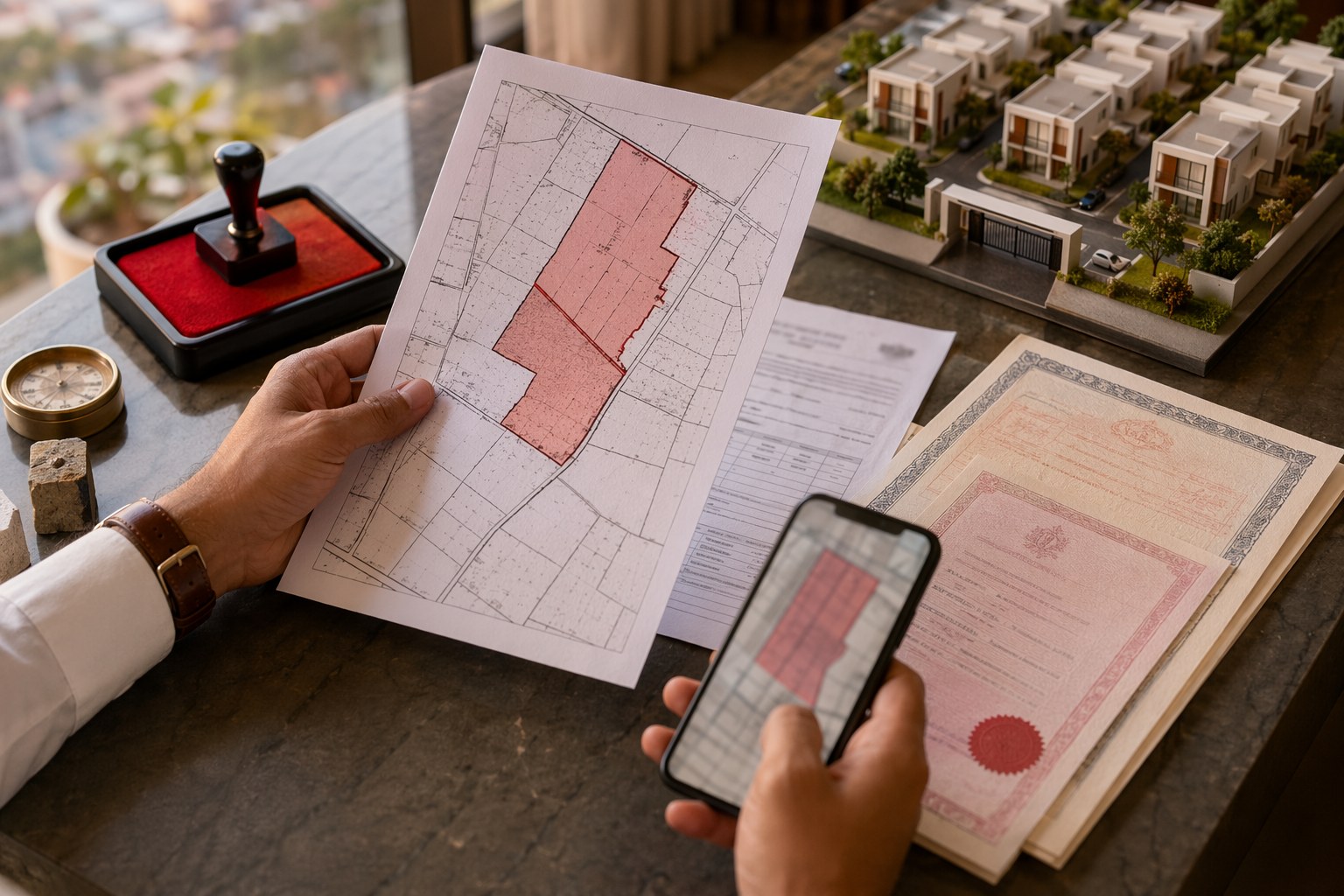
Family Settlement Deeds May Face 22-A Scrutiny in Telangana as lawyers, document writers and property advisors are expected to push families towards a basic 22-A check before registering settlement, partition or release deeds. The reason is simple: a family transaction may look private, but the SRO will still examine whether the land is on the prohibited properties list under Section 22-A. As per latest IGRS data available with Verified.RealEstate, Telangana has 3,076,153 prohibited property records in the 22-A database. That number is too large for families to ignore.
In practical terms, this means a father settling land in favour of children, siblings partitioning ancestral property, or legal heirs executing a release deed may face scrutiny if the survey number, plot, extent or government classification has an adverse entry. We have seen this issue come up in Hyderabad’s growth corridors, especially where old agricultural survey numbers later became layouts, villa communities or plotted ventures.
Family Settlement Deeds and 22-A Scrutiny: What Has Changed on the Ground?
The law itself is not new. Section 22-A allows certain properties to be barred from registration, especially where government land, assigned land, endowment land, wakf land, ceiling surplus land, prohibited survey numbers or other restricted categories are involved. What is changing is the behaviour of advisors. Instead of treating 22-A as a buyer-side due diligence item, many lawyers are now likely to insist on checking it even for family documents.
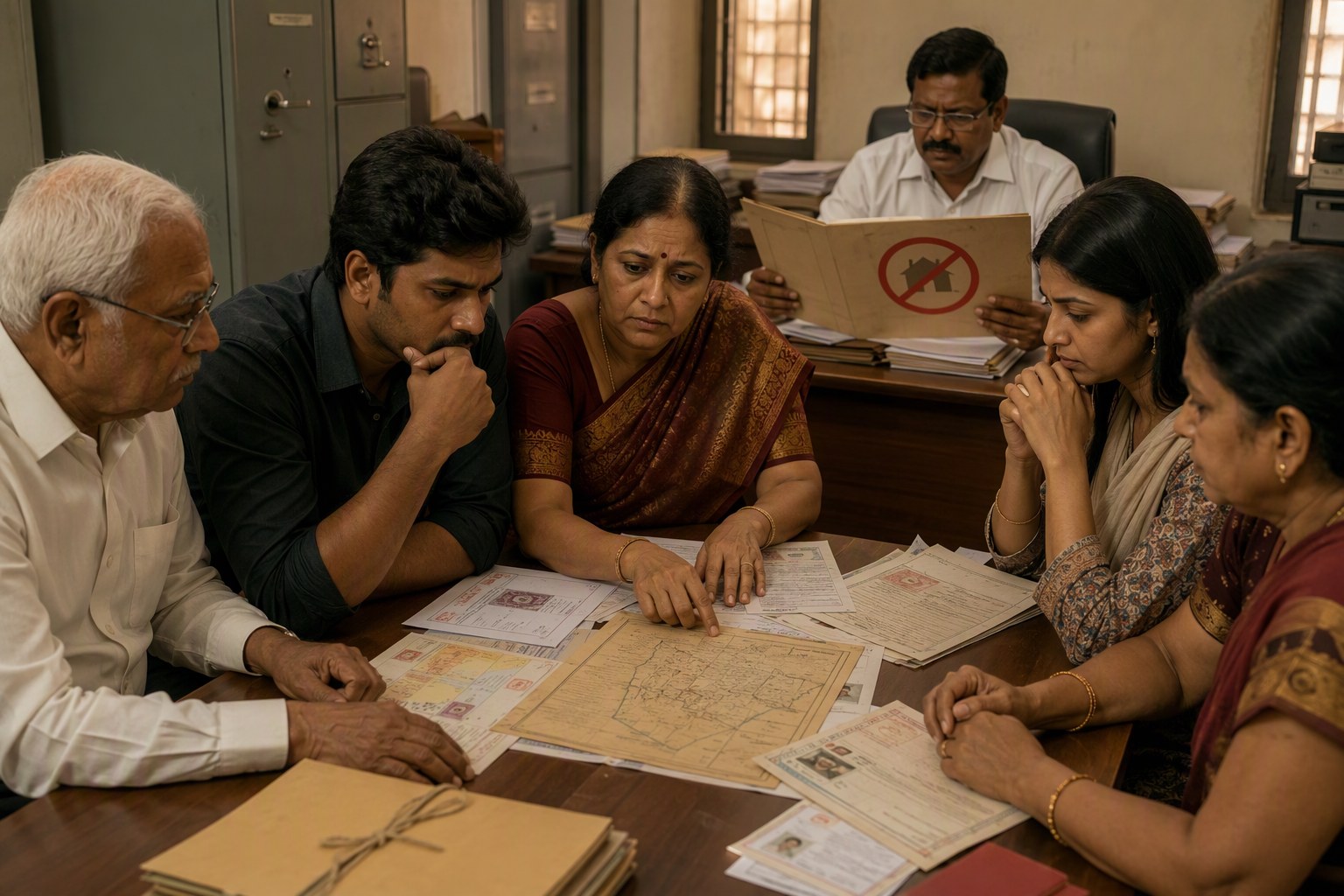
That shift is sensible. A settlement deed or partition deed does not create a sale price like a normal sale deed, but it still creates or recognises rights in immovable property. If the underlying land is flagged, the registration department can refuse registration or seek clarification. Once a family reaches the SRO counter and faces an objection, the matter becomes stressful. Relatives may start blaming each other, old revenue records are pulled out, and the deed may need rewriting.
For Hyderabad families holding property in Serilingampally, Gandipet, Rajendranagar, Kukatpally, Quthbullapur, Hayathnagar, Shamirpet, Medchal, Moinabad and Maheshwaram mandals, the risk is not theoretical. Many holdings began as agricultural land with survey numbers and pahanis. Later, they moved into HMDA layouts, gram panchayat layouts, plotted ventures or apartment projects. If the old survey number carries a 22-A entry, the present-day flat, plot or share in land can still attract questions.
Our view is clear: before a family signs a settlement, partition or release deed, the first file on the table should be the 22-A status, not the stamp paper.
Why Family Settlement Deeds Need a Section 22-A Check Before SRO Registration
Family documents are often prepared in a hurry. One sibling is leaving for the US, a bank loan is pending, an elderly parent wants to settle property, or a buyer wants clean title after a family partition. In that rush, families check Aadhaar, PAN, family tree and tax receipts, but miss the most basic land restriction check.
A Section 22-A issue can arise in different ways:
- Survey number flagged: The entire survey number or part extent may be listed as prohibited.
- Mismatch in records: The pahani, Dharani record, old pattadar passbook and registered document may not speak the same language.
- Assigned land angle: Land originally assigned by the government may have restrictions on transfer.
- Endowment or wakf reference: Some properties may have legacy claims or departmental entries.
- Layout conversion gap: The plot may be in a developed area, but the parent survey number may still carry an old issue.
This is why property advisors are likely to recommend a layered check. Start with the Section 22-A Prohibited Property Check. Then confirm the survey number using the Survey Number Finder. After that, pull the past transaction trail through the Encumbrance Certificate Search or review it with the EC Analyzer.
Family Settlement Deeds in Telangana: The Documents Lawyers Will Ask For
In our experience, a careful lawyer will not stop with the draft deed. For a family settlement deed in Telangana, they may ask for the parent document, latest EC, link documents, pahani or Dharani extract where applicable, property tax receipt, layout approval if it is a plot, building permission if it is a house, and identity proof of all executants and claimants.
For agricultural or converted land, the mandal-level history matters. A property in Gandipet mandal may have a different due diligence trail compared to a flat in Kondapur under Serilingampally. A plot in Adibatla or Maheshwaram may need closer reading of the parent survey number. A house in old city areas may require checking the chain through the concerned SRO and municipal records. The Find Your SRO Office tool helps families identify the right registration office before they start running around.
Stamp duty is another practical point. Settlement, partition and release deeds have their own registration cost treatment based on relationship and document type. Families should check the payable duty before drafting, using the Stamp Duty Calculator. The government market value or ready reckoner value can be checked through the Market Value / Guideline Value Search, especially when the property is being divided by shares.
What the 3,076,153 Prohibited Property Records Mean for Hyderabad Families
The figure of 3,076,153 prohibited property records does not mean every property in Telangana is risky. It means the database is large enough that casual assumptions are dangerous. Families often say, “This is our ancestral land, no outsider is involved.” That is exactly where the problem begins. The registration system does not exempt a document from scrutiny merely because it is within the family.
A partition deed between brothers in Rajendranagar, a release deed by sisters in Kukatpally, or a settlement deed by parents in Nagole may still be checked against the same prohibited property framework. If the property has a clean chain, the process can move normally. If there is an entry, the family may need to approach the relevant revenue authority, collect clarification, or correct the record before registration.
There is also a valuation angle. When family members divide plots, shops, apartments or land parcels, they should not rely only on informal market talk. Ready reckoner value, composite land-building value and SRO jurisdiction can influence how the deed is prepared. For built properties, families can use the Composite Value Calculator and Building Value Calculator for internal planning before meeting the document writer.
How Families Should Prepare Before Executing Family Settlement Deeds
My practical suggestion is to treat a family deed almost like a buyer’s title verification. Not because family members are outsiders, but because the SRO and future banks will still read the document as part of title history.
| Step | What to Check | Why It Matters |
|---|---|---|
| 1 | 22-A status | To see whether the survey number or property is barred from registration |
| 2 | Survey number and extent | To avoid mismatch between deed, pahani, Dharani and layout records |
| 3 | Encumbrance certificate | To confirm past sales, mortgages, releases and court-related entries |
| 4 | SRO jurisdiction | To file the document at the correct registration office |
| 5 | Market value and stamp duty | To avoid under-calculation or last-minute payment issues |
Families should also be careful with wording. A settlement deed, partition deed and release deed are not interchangeable. A settlement usually transfers or confirms property in favour of family members. A partition divides joint property by shares. A release deed is often used when one legal heir gives up rights in favour of another. The facts must match the document type. Wrong drafting may not only create tax and title questions, it may also invite objections during registration.
If there is any doubt, use the Property Verification Tool before execution. For families handling old land records in Telugu, the Telugu-English Property Terms Dictionary can help decode terms seen in pahanis, link documents and revenue extracts.
Family Settlement Deeds May Face 22-A Scrutiny: Our Take
The next phase of Telangana property due diligence will not be limited to sale transactions. Family arrangements will also come under sharper review, especially where old survey numbers, converted land, assigned land allegations or incomplete link documents are involved. This is healthy for the market. A clean family settlement today prevents disputes when the next sale, mortgage or development agreement happens.
At Verified.RealEstate, we would rather see a family spend time checking 22-A, EC, SRO and ready reckoner value before signing than fight over a rejected document later. In Hyderabad real estate, the cheapest due diligence is the one done before the deed is executed.
Frequently Asked Questions
Can a family settlement deed be refused under Section 22-A in Telangana?
Yes. If the property or survey number is listed as prohibited under Section 22-A, the SRO may refuse registration or ask for clarification, even if the transaction is within the family.
Should I check 22-A before a partition deed?
Yes. A partition deed changes or records rights in property. Checking the 22-A status before drafting helps avoid objections at the registration stage.
Is an EC enough for family property verification?
No. An encumbrance certificate shows registered transactions, but it may not fully answer prohibited property, revenue classification, pahani or Dharani-related issues.
Which records should families check before a release deed?
Check the parent deed, link documents, EC, 22-A status, survey number, SRO jurisdiction, property tax records and relevant revenue records before executing a release deed.