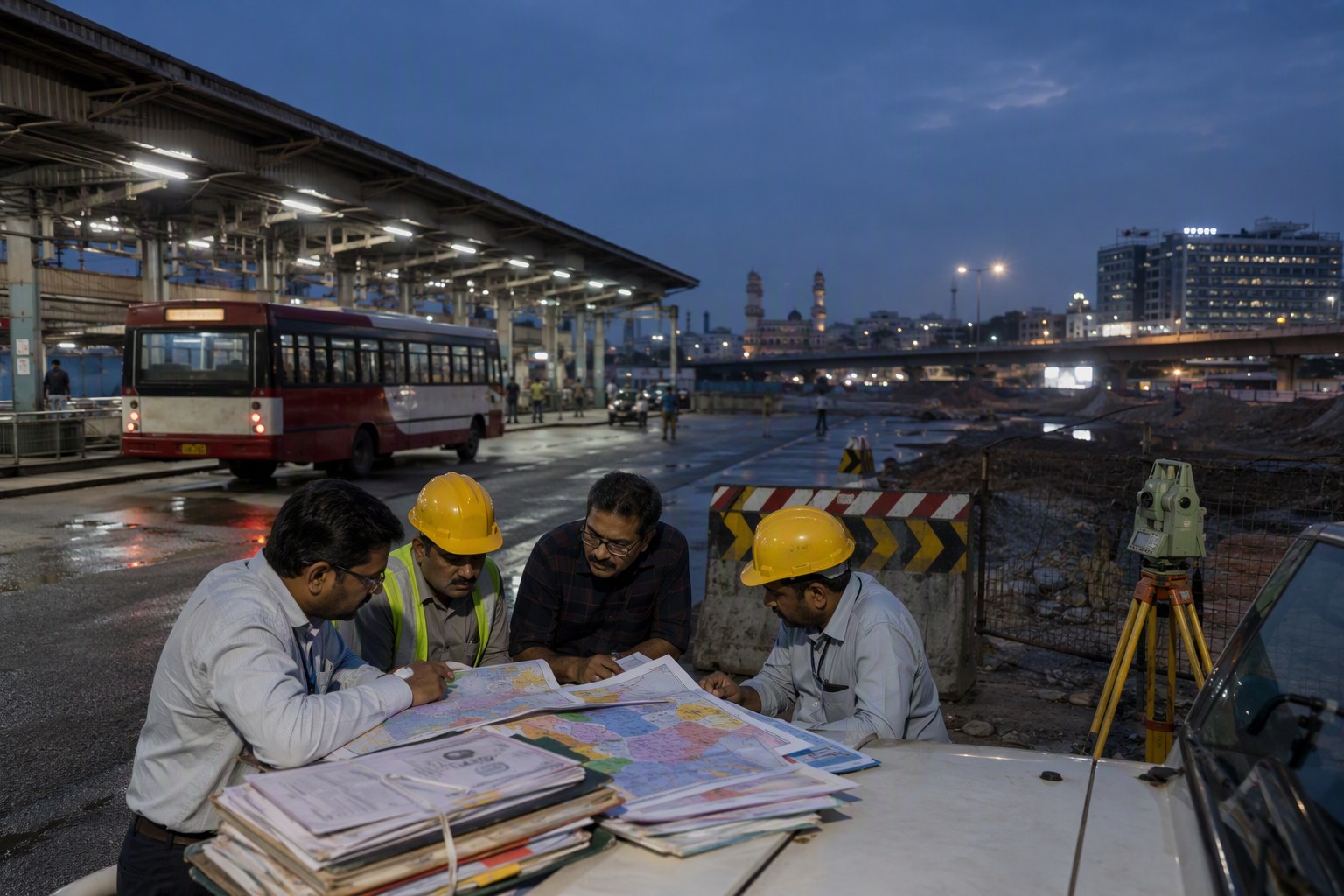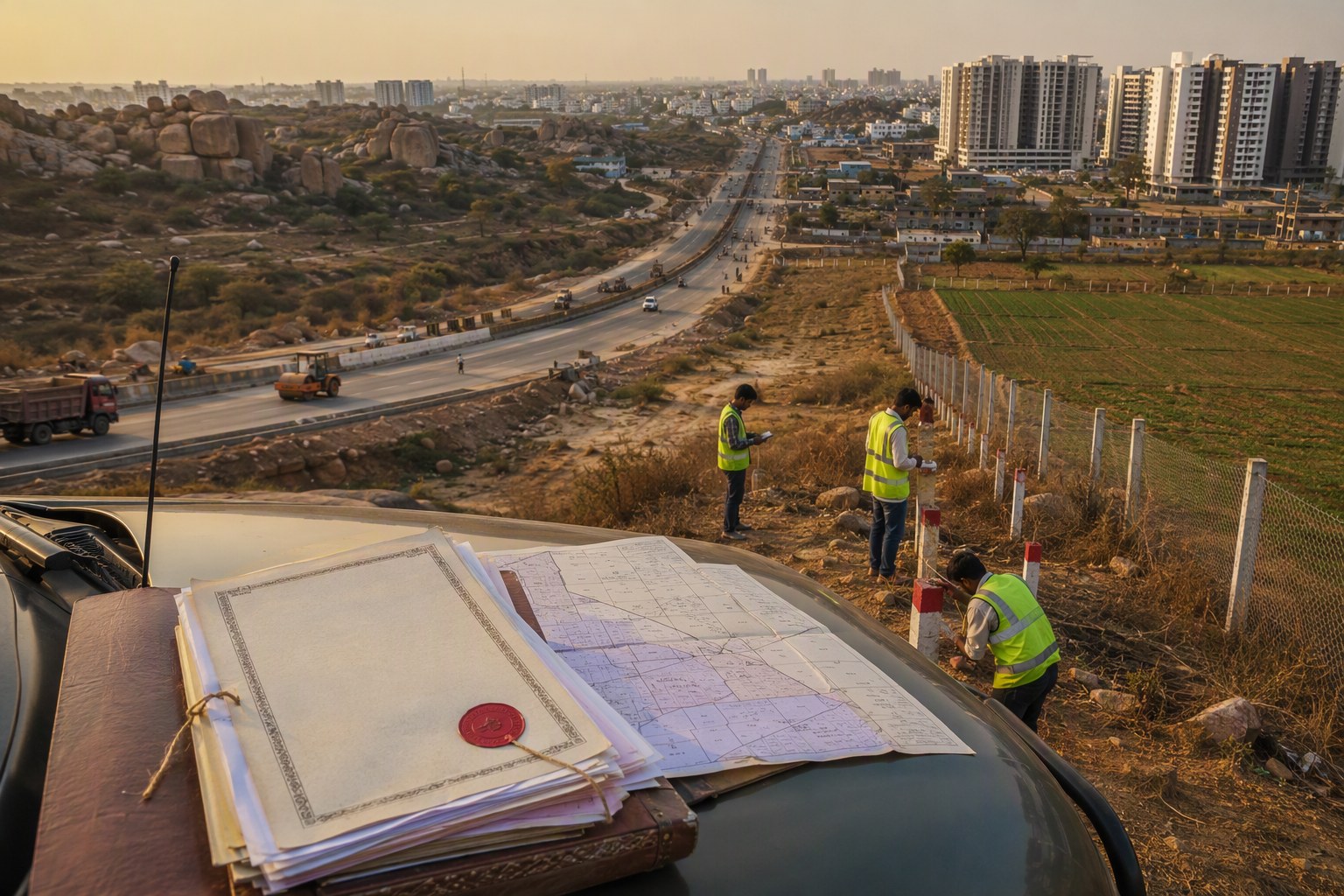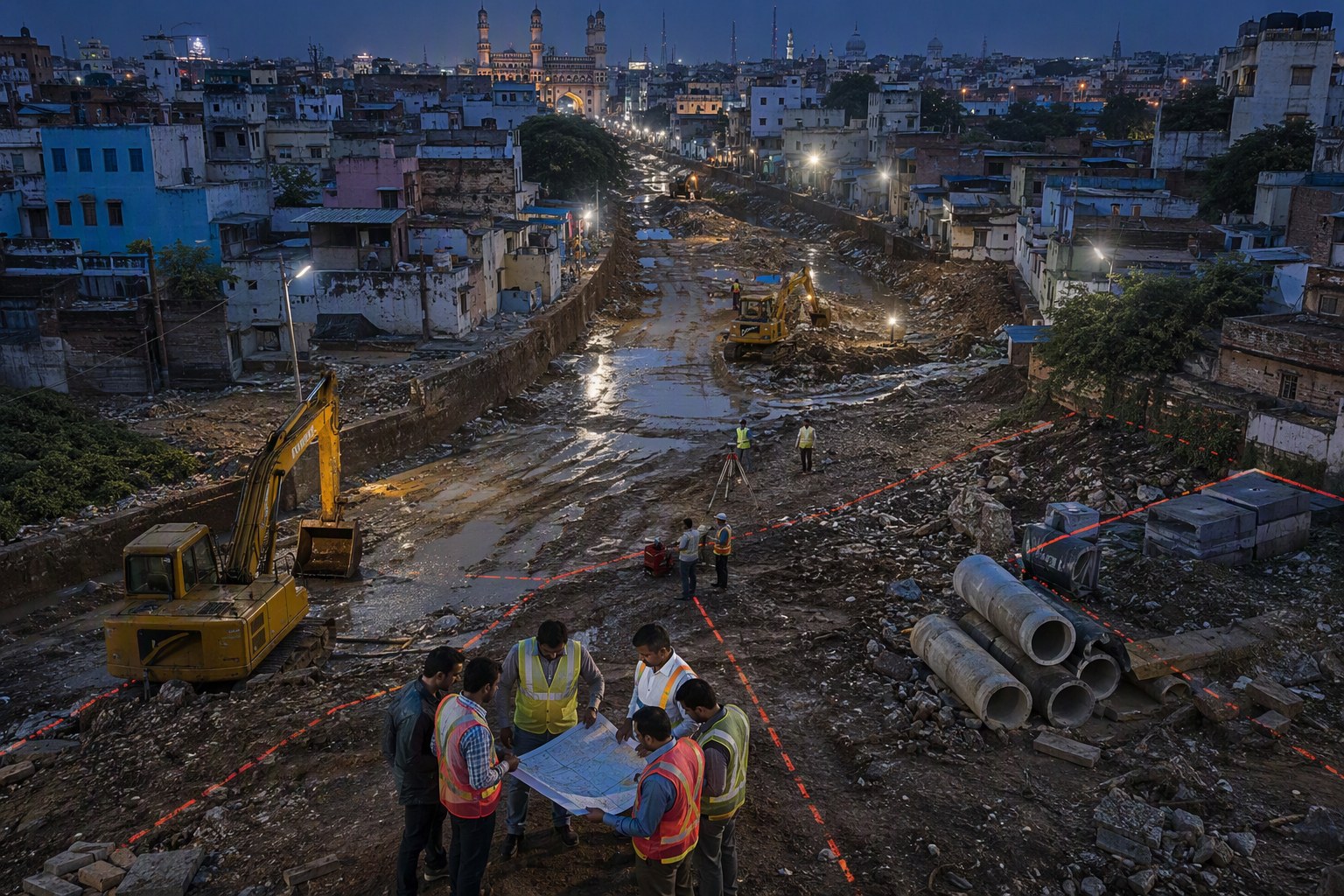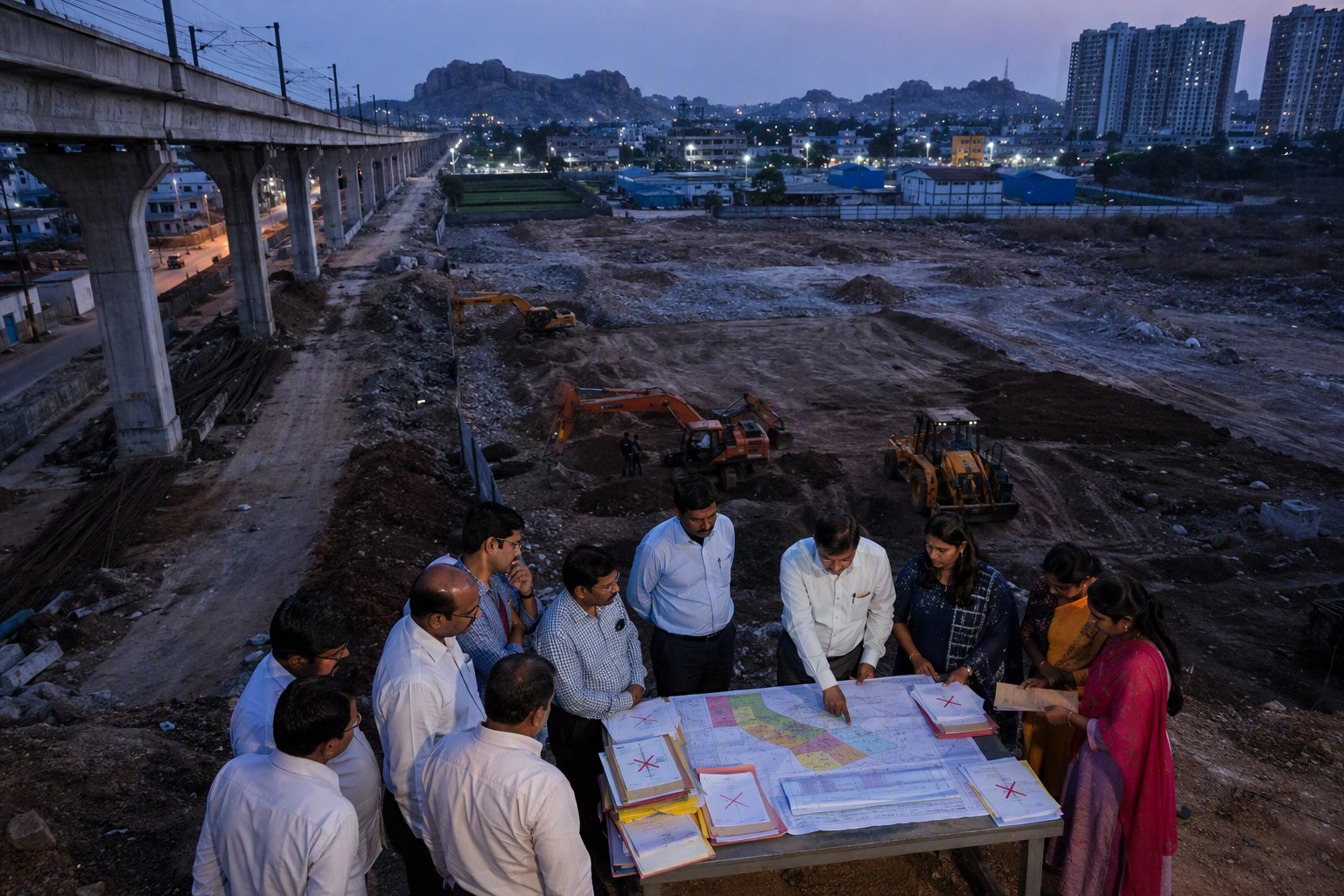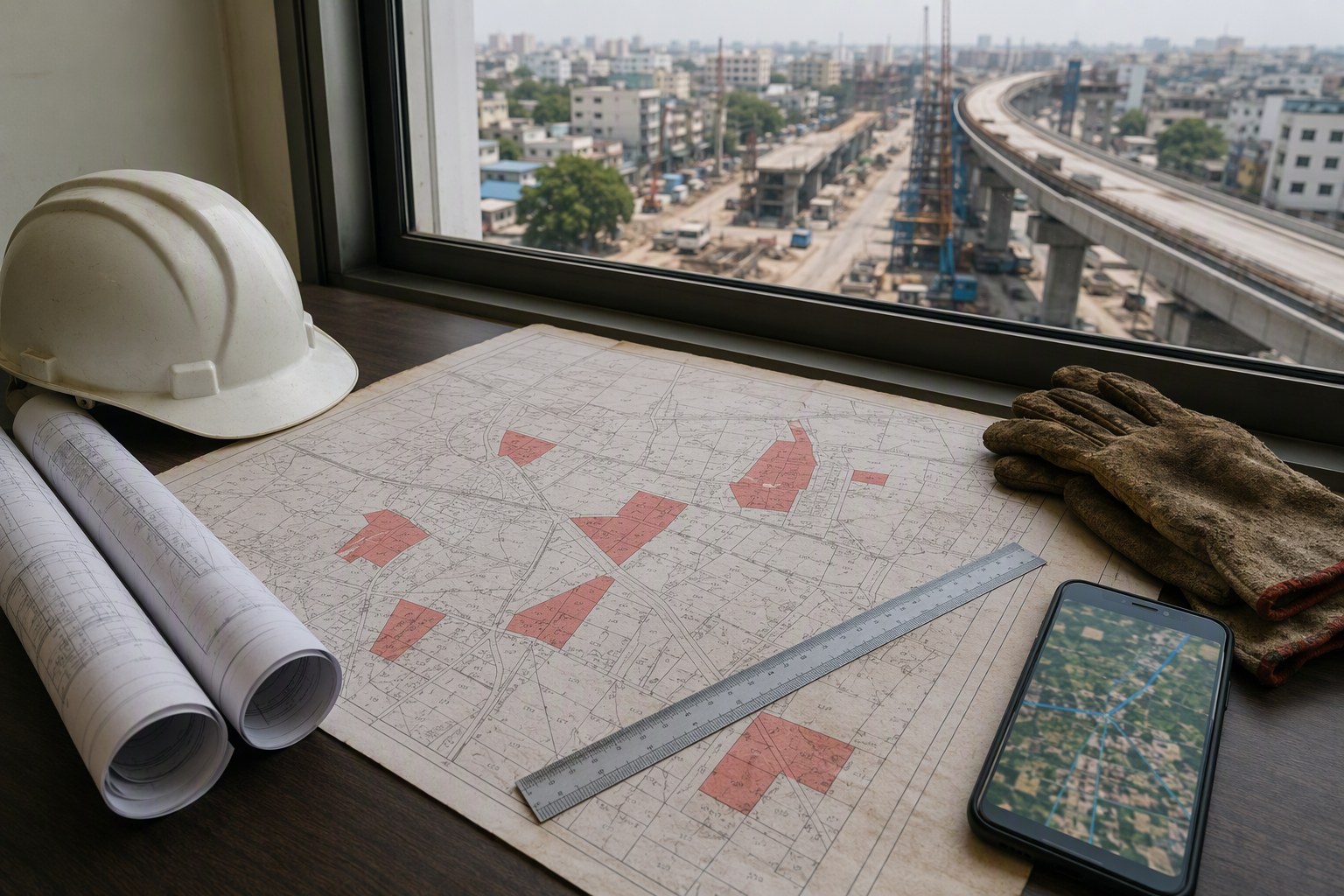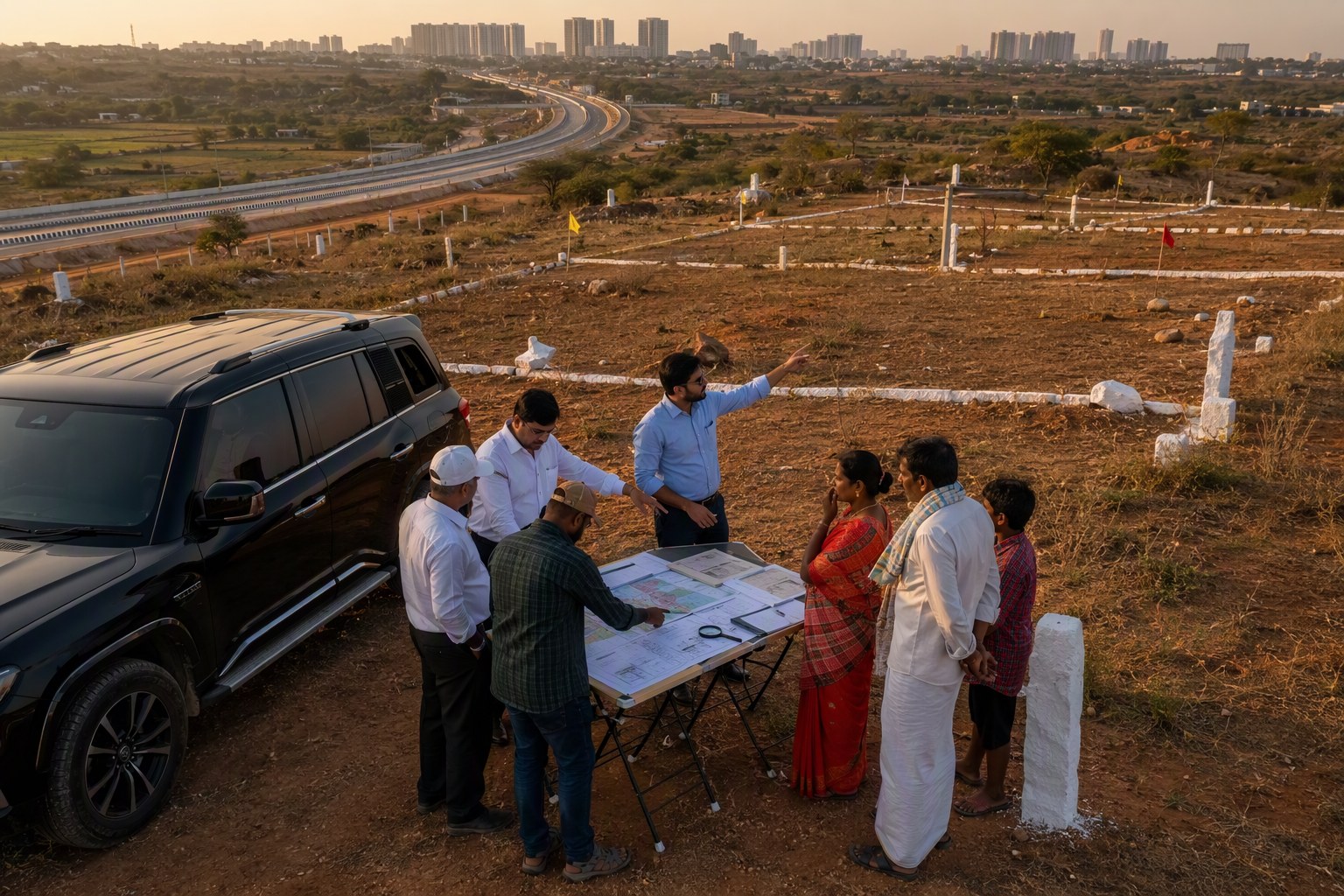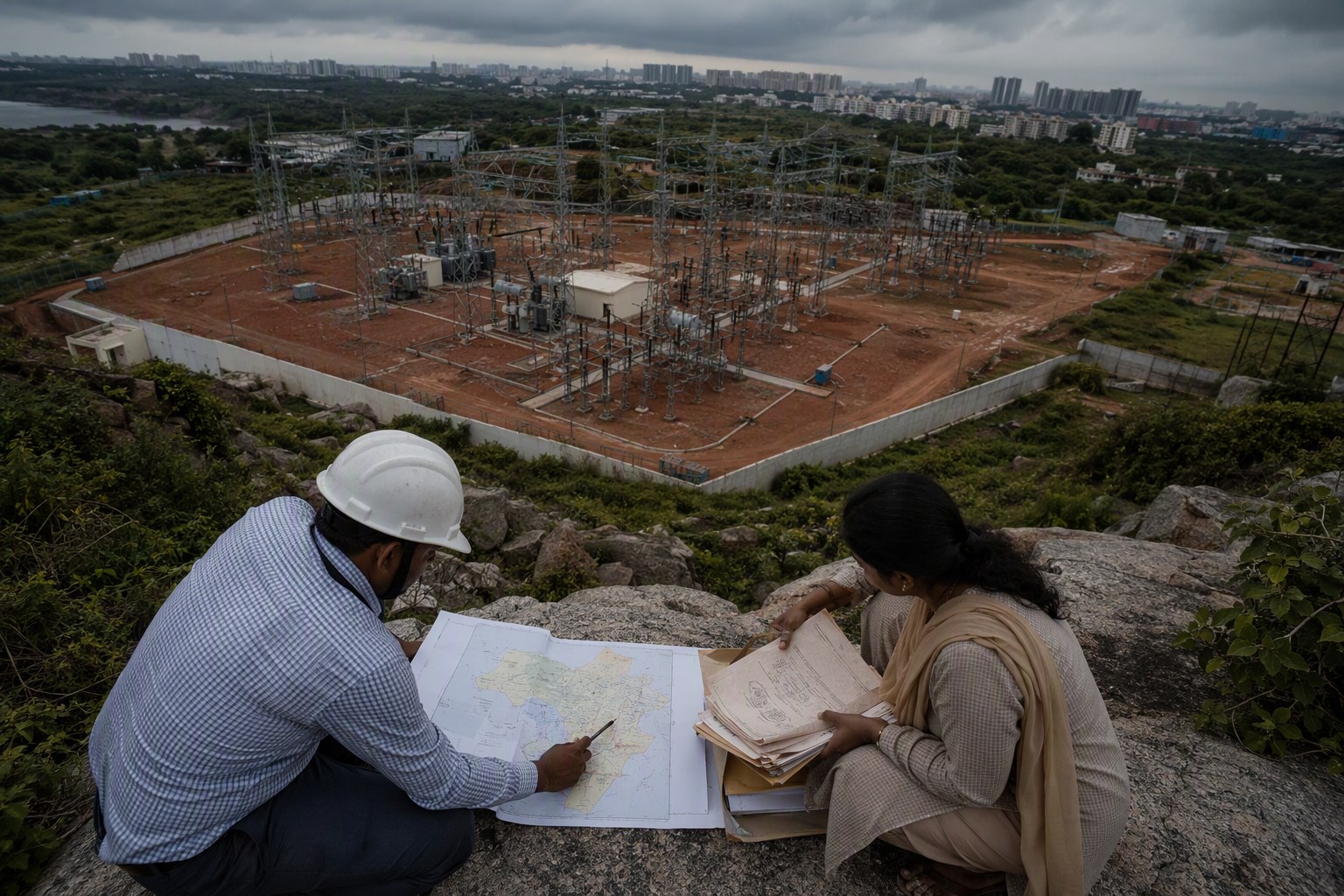
Telangana Substation Sites proposed for new power infrastructure may need sharper pre-tender land verification, especially because Telangana has 30,3,076,153 prohibited properties under Section 22-A as per latest IGRS data. For transmission and distribution agencies, the issue is simple: a technically perfect substation plan can still get stuck if the selected survey number has a registration bar, government land entry, assigned land issue, court dispute, endowment claim, or other restriction.
In Hyderabad’s growth corridors, this is no small matter. Power demand follows real estate activity. Kokapet in Gandipet mandal, Gachibowli and Nanakramguda in Serilingampally mandal, Kollur and Tellapur side, Tukkuguda in Maheshwaram mandal, Patancheru industrial belt, Medchal, Keesara and Shankarpally are all seeing heavy land-use change. Substations, feeders and transmission yards are not optional in such areas. But land due diligence before tendering is still where many public projects can save months.
Why Telangana Substation Sites Need 22-A Checks Before Tender
Section 22-A of the Registration Act is a serious filter in Telangana land transactions. If a property is listed as prohibited, the Sub-Registrar Office may refuse registration. For a private buyer, that means a failed sale deed. For a power utility, it can mean delayed land acquisition, re-tendering, redesign, compensation disputes, contractor claims and local political pressure.
The current IGRS figure of 3,076,153 prohibited properties is enough reason to treat 22-A verification as a pre-tender requirement, not a file-stage formality after the contractor is already mobilised. We’ve seen this pattern in infrastructure-linked land: the engineering team identifies the “best” location based on load centre and access, while the revenue record tells a different story. Survey numbers may sit in a prohibited list, or the pahani may show a classification that does not match field possession.
For substations, even a small parcel problem can disturb the entire alignment of approach road, equipment layout, transformer bays and line-in-line-out connectivity. If the land parcel is not clean, the tender document itself becomes weak.
Our view is straightforward: no substation tender should go out only on a location sketch. It should carry a survey-number-level land verification note, including 22-A status, EC status, SRO mapping and revenue classification.
Telangana Substation Sites: What Can Go Wrong Without 22-A Screening?
Land for a substation is different from normal real estate purchase. The site must be technically suitable, legally transferable and socially manageable. A site near a fast-growing layout in Mokila, a logistics pocket in Patancheru, or an airport-side corridor in Tukkuguda may look ideal on a map. But the tender risk sits in the revenue documents.
Common red flags include:
- Section 22-A prohibition: Registration may be blocked at SRO level.
- Government land classification: Poramboke, shikam, assigned land or other entries may appear in revenue records.
- Mismatch in survey number: Field boundaries may not match pahani, Dharani entry or village map.
- Encumbrances: Prior sale agreements, mortgages, court attachments or family claims can surface late.
- Access issues: A technically good parcel may not have legal road access for heavy equipment movement.
- Land-use conflict: The site may fall in a zone where conversion or specific approvals are needed.
This is why early use of the Section 22-A Prohibited Property Check, Encumbrance Certificate Search and Survey Number Finder can reduce avoidable tender risk. These are not substitutes for official departmental verification, but they help project teams shortlist better sites before files move across offices.
Pre-Tender Verification Should Start At Survey Number Level
In many Telangana villages, one local name can cover multiple survey numbers and sub-divisions. A proposal may say “near Kollur” or “near Maheshwaram road”, but the legal risk sits in the exact survey number, extent and classification. That is why the tendering authority should not rely only on a Google map pin or field inspection note.
A practical pre-tender land note for Telangana substation sites should cover the following:
| Verification item | Why it matters before tender |
|---|---|
| 22-A prohibited property status | Checks whether registration or transfer may be blocked at SRO level. |
| Village, mandal and SRO mapping | Prevents file movement to the wrong registration office or wrong revenue jurisdiction. |
| Pahani and Dharani entries | Shows land nature, pattadar details, extent and revenue classification. |
| Encumbrance Certificate | Reveals registered transactions, mortgages and other recorded interests. |
| Guideline value / market value | Helps estimate stamp duty, compensation and internal financial approvals using official values. |
| Road access and land-use zone | Reduces layout redesign and later permission issues. |
For quick preliminary checks, project teams can use Find Your SRO Office, Market Value / Guideline Value Search and Land Use Zone Finder. If the substation land is being assembled through purchase, the Stamp Duty Calculator also helps estimate transaction costs using declared values.
Why Hyderabad Growth Corridors Need Extra Caution
The risk is higher around Hyderabad because land parcels have changed hands rapidly in the last few years. Around Kokapet, Narsingi, Tellapur, Kollur, Shankarpally, Tukkuguda, Adibatla, Medchal and Patancheru, land is no longer just agricultural in practical use. Some parcels are under layouts, some are near industrial activity, some are under conversion proposals, and some are caught between old village records and new development pressure.
In our experience, infrastructure agencies often face the toughest questions after the tender is issued: Who owns the land? Is the extent correct? Can the parcel be registered? Is there a court case? Is the access road legal? Is the land in the prohibited list? These questions should come before the tender, not after the contractor raises a site-handover claim.
Substations also need community acceptance. Villagers may accept a road-widening project differently from a high-voltage substation compound. If the land title itself is unclear, local resistance becomes stronger. Clean documents do not remove every ground issue, but they give the department a stronger position.
How A 22-A Check Changes Tender Quality
A tender document backed by verified land records is more bankable, more defensible and easier to execute. Contractors can price risk better. Departments can avoid repeated site changes. Finance teams can release funds with clearer file support. Legal teams can respond faster if objections arise.
A good pre-tender process should ideally have three filters:
1. Revenue filter
Confirm village, mandal, survey number, extent, pattadar details, land classification and Dharani status. This is where pahani and mutation history matter.
2. Registration filter
Check Section 22-A status, SRO jurisdiction and EC history. The EC Analyzer can help teams read an Encumbrance Certificate more carefully before sending it for legal review.
3. Planning and access filter
Review approach road, land-use zone, nearby habitation, drainage, water bodies and equipment movement feasibility. The Road Width Check and Geo Insights are useful starting points for this layer.
For government and utility projects, this does not mean slowing down tenders. It means avoiding blind tenders. A one-week verification effort at the start can prevent a site from becoming unusable later. That is a fair trade in infrastructure work.
What Developers And Landowners Should Watch
This issue is not only for power utilities. Developers near proposed substation corridors should also watch land status. A new substation can improve power reliability in a locality, which matters for gated communities, commercial buildings, warehouses and data-heavy uses. But if the substation land is stuck in a title dispute, the benefit is delayed for everyone.
Landowners offering parcels for infrastructure use must keep their papers ready: title deeds, link documents, EC, pattadar passbook details, Dharani extracts, tax receipts where applicable and any conversion permissions. If the land has an old family partition, unregistered agreement or pending litigation, it should be disclosed early. Hiding a defect only pushes the problem into the tender stage.
My reading is that Telangana’s next phase of power infrastructure will need closer coordination between electricity departments, revenue officials, registration teams and planning authorities. With 30,76,153 properties in the prohibited category, land verification cannot be treated as clerical work. It is execution risk management.
For buyers and project teams doing their own first-level diligence, the Property Verification Tool and Property Change Tracker can be useful to monitor changes and catch issues early. Final reliance should always be on official records and legal opinion, especially for public infrastructure land.
Frequently Asked Questions
What is a Section 22-A prohibited property in Telangana?
A Section 22-A prohibited property is a property where registration may be refused due to government restriction, land classification, legal bar or other notified reason. Telangana has 30,76,153 such prohibited properties as per latest IGRS data.
Why should substation sites be checked before tender?
Substation works depend on clean land handover. If the selected survey number is under 22-A or has title issues, the project can face registration delays, site change, contractor claims and local objections.
Which records should be checked for a proposed substation land parcel?
Authorities should check the survey number, pahani, Dharani details, Section 22-A status, Encumbrance Certificate, SRO jurisdiction, land-use zone and road access before issuing a tender.
Do 22-A checks replace legal due diligence?
No. A 22-A check is an early warning tool. Final decisions should be based on official records, department verification and legal opinion, especially for government or utility infrastructure land.