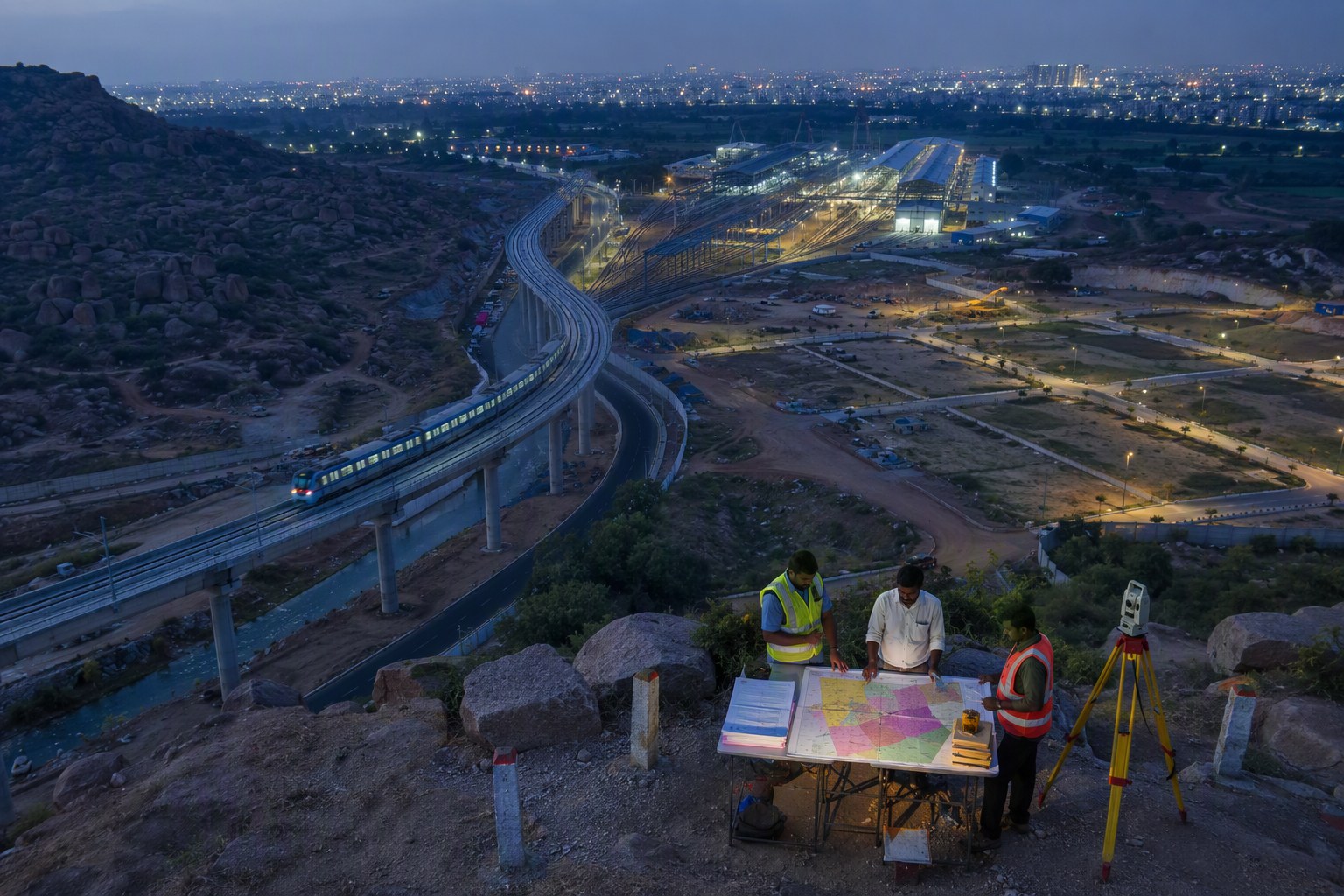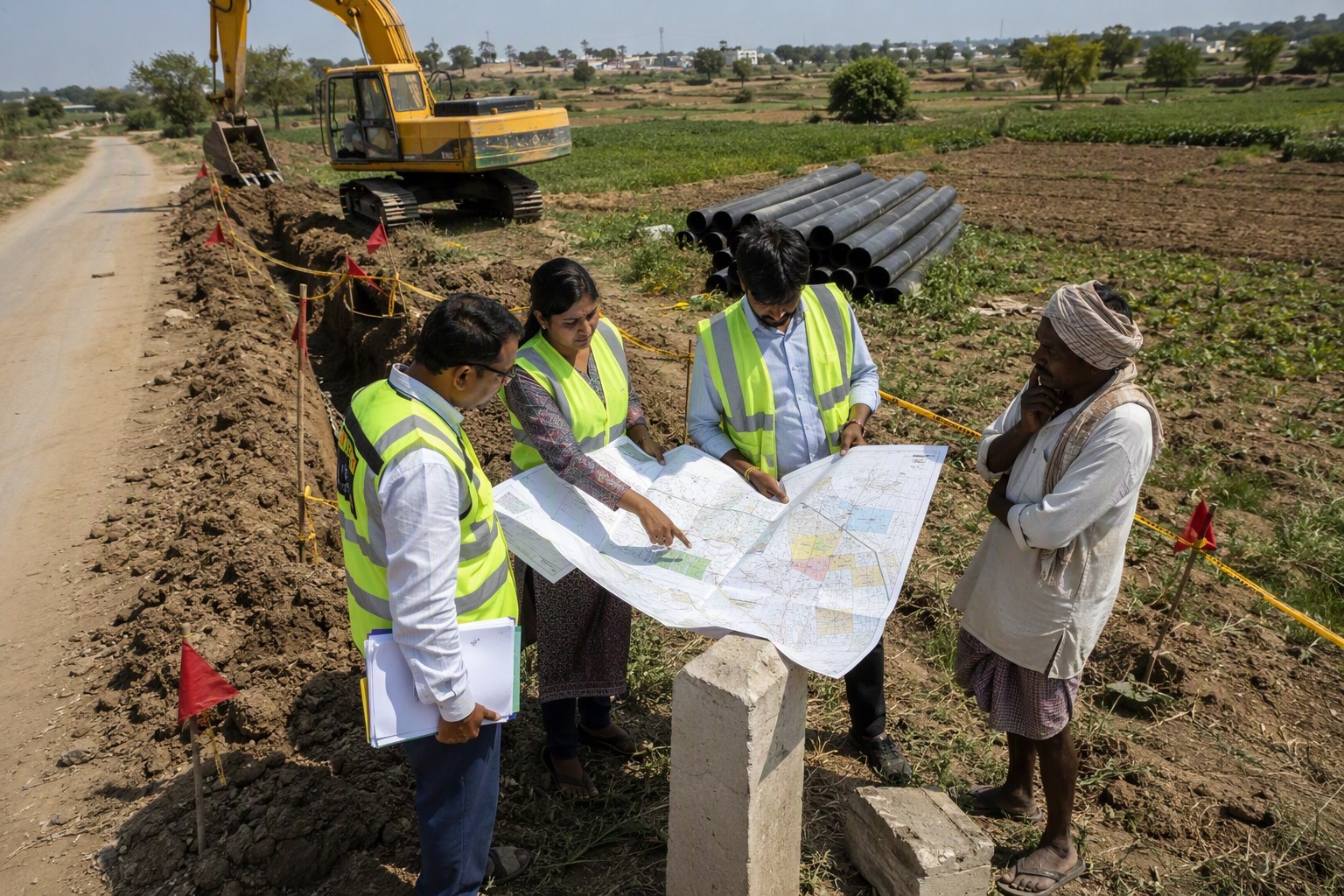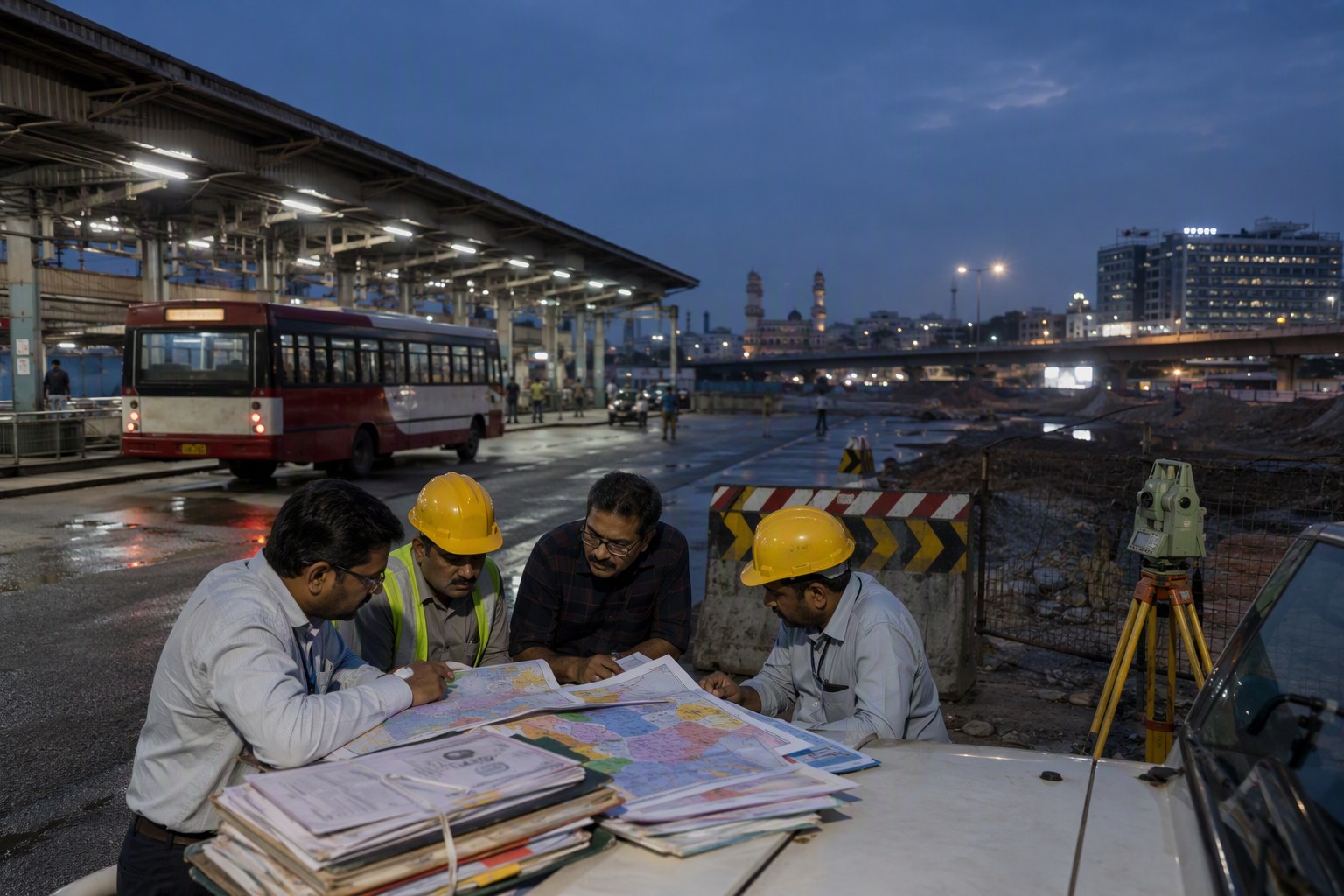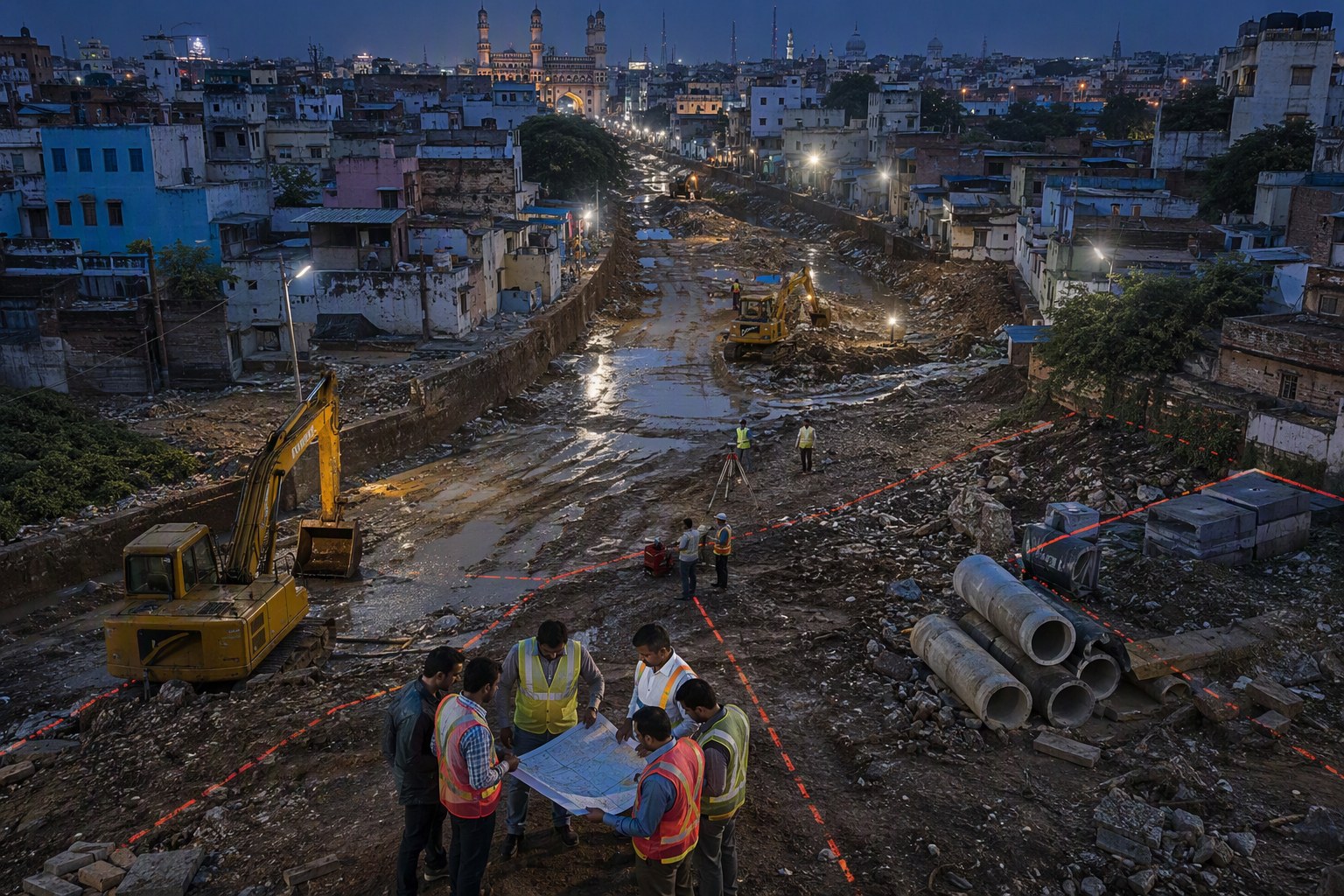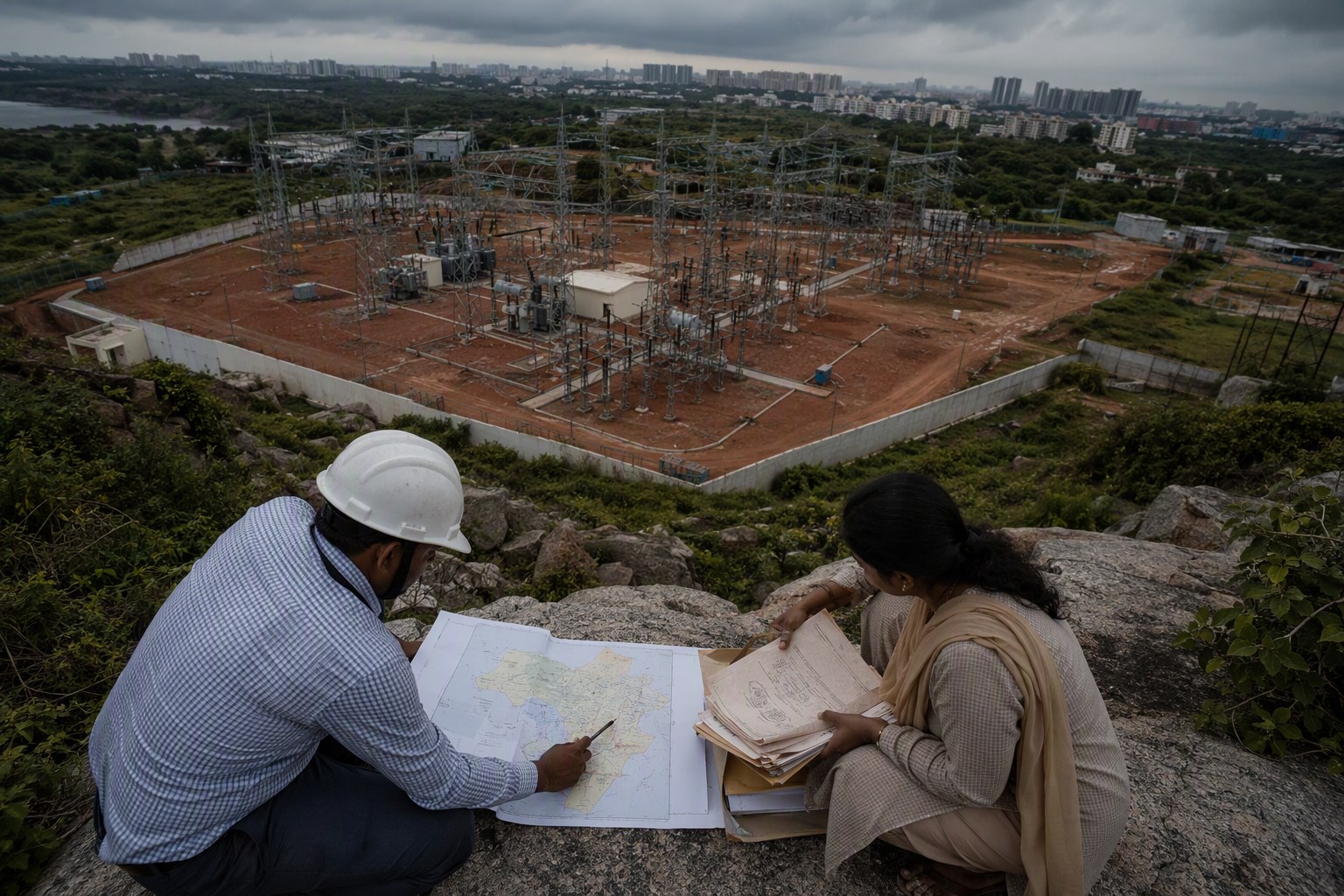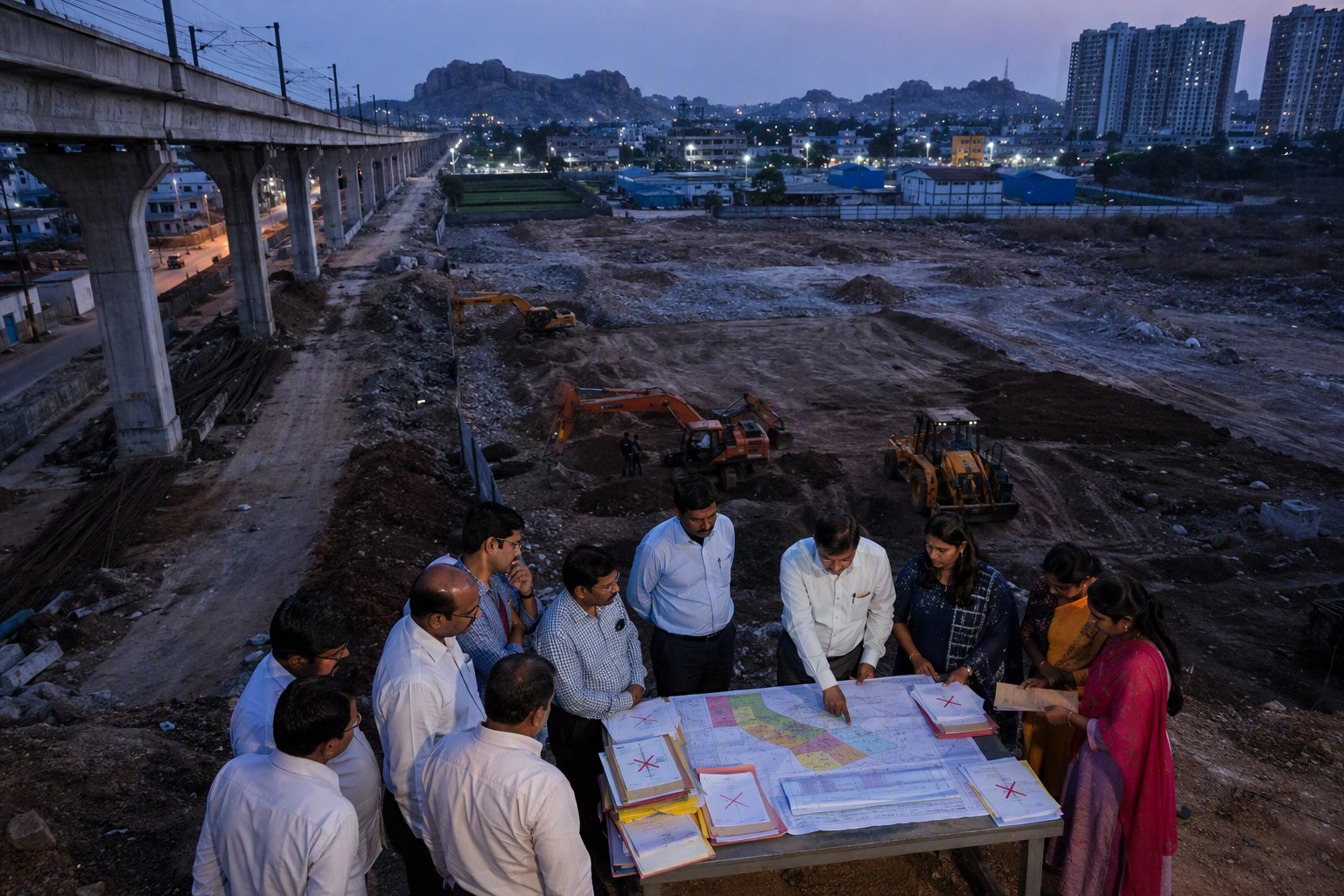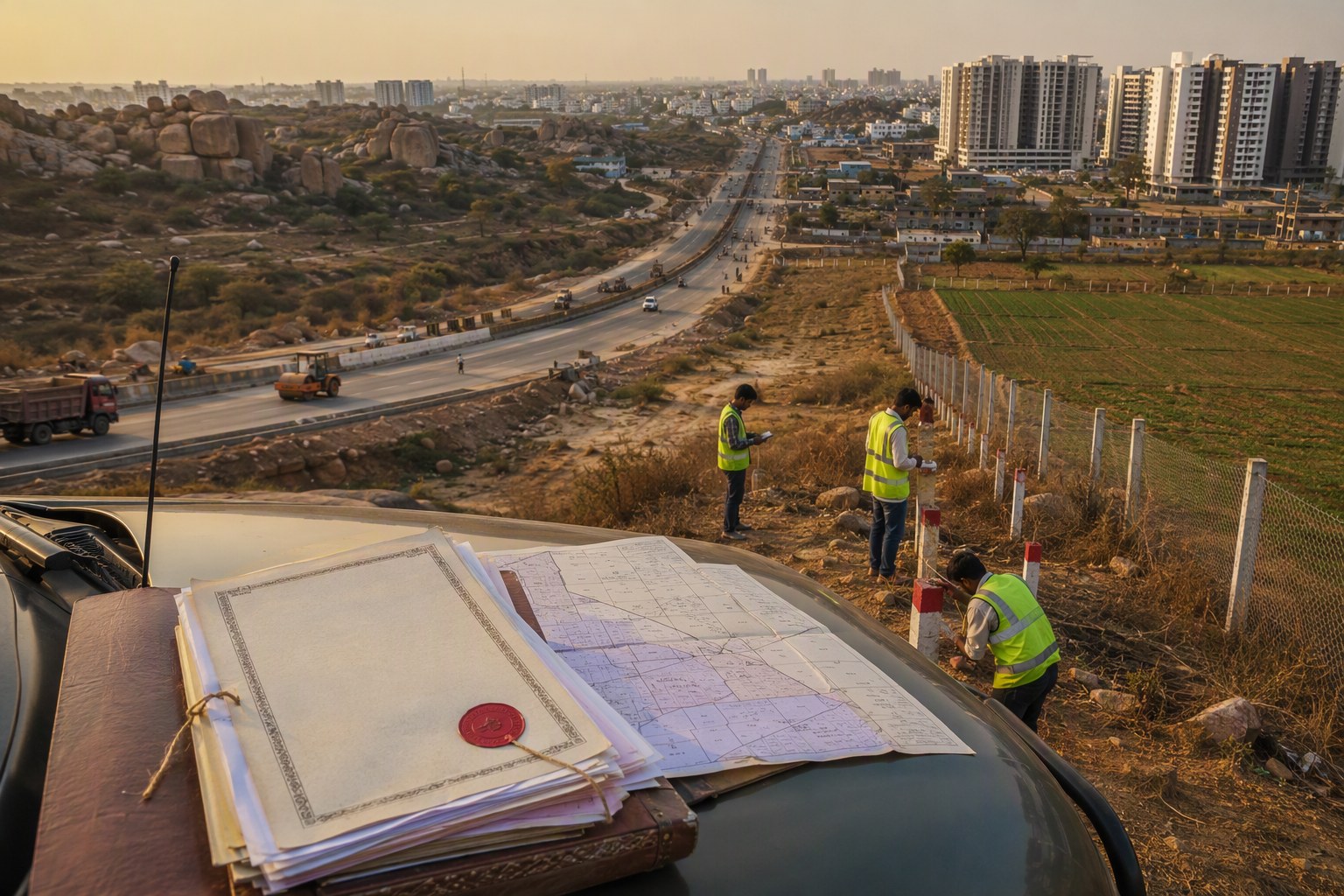
Telangana Road-Widening Works across Hyderabad’s growth corridors may soon need earlier land-status screening, especially where alignments touch private parcels, assigned lands, endowment lands, wakf lands, government lands or disputed survey numbers. The reason is simple: as per latest IGRS data available with Verified.RealEstate, Telangana has 30,3,076,153 prohibited properties listed under Section 22-A. For any road-widening, transport corridor, junction improvement or approach-road work, that is not a small background issue. It can decide whether compensation moves smoothly, whether registration is blocked, and whether a project gets dragged into file-level clarifications.
In our experience, 22-A checks usually come late in many infrastructure-linked land discussions. That is risky. Once notices, acquisition markings, road-width drawings and compensation papers start moving, a prohibited-property flag can slow down land pooling, sale deeds, gift deeds, TDR-related documentation and even family settlements around the affected parcel.
Telangana Road-Widening Works: why 22-A screening is becoming unavoidable
Section 22-A, in practical terms, is the government’s prohibited-property filter. If a property is on the prohibited list, the Sub-Registrar Office generally cannot register transactions for that parcel unless the restriction is clarified or removed through the proper process. For ordinary buyers this is a title risk. For road-widening and transport corridor works, it becomes a project-delivery risk.
Hyderabad’s expansion is now strongly tied to road access. Areas such as Kokapet, Narsingi, Gachibowli, Tellapur, Kollur, Patancheru, Kompally, Medchal, Uppal, LB Nagar, Shamshabad, Rajendranagar and Bandlaguda Jagir are all seeing pressure on internal roads, approach roads and connecting corridors. Even smaller stretches in mandals around Serilingampally, Gandipet, Ramachandrapuram, Shamshabad, Medchal, Hayathnagar and Moinabad can run into complicated land records.
The key issue is not only land acquisition. It is record matching. A road-widening drawing may show one parcel boundary, Dharani may show another record, old pahani entries may carry a different nature of land, and the SRO may have a prohibited-property remark. If this is found after field demarcation, local objections become sharper and the file takes longer to settle.
Our view is that every road-widening proposal touching private or semi-private land should run a 22-A check at the planning stage itself, not after compensation discussions begin.
Telangana Road-Widening Works and the 30,76,153 prohibited-property database
The number that should catch the attention of planners, landowners and developers is 30,76,153. That is the count of prohibited properties in the current database reviewed by Verified.RealEstate. These are not all linked to infrastructure projects, of course. But the size of the database tells us why road projects cannot treat 22-A as an afterthought.
For a road-widening stretch, one flagged survey number can affect several people: the present occupant, the buyer waiting for registration, the apartment association expecting a better approach road, the developer planning access, and the authority preparing widening notices. In fast-changing localities like Kondapur, Nanakramguda, Narsingi and Kokapet, even a small title ambiguity near a road edge can become expensive because frontage has high practical value.
Buyers also need to understand one point clearly. A property may physically exist, have a compound wall, carry an old sale deed and still face registration issues if the survey number is under a prohibited category. That is why checking only the visible site is not enough. Use the Section 22-A Prohibited Property Check before committing token advance, especially if the land is near an existing or proposed widening line.
Where the risk is higher in Hyderabad’s road corridors
Not every road-widening file will hit a 22-A problem. The risk is higher in locations where urban growth has moved faster than record clean-up. We have seen this pattern in peri-urban belts where agricultural survey numbers were converted, plotted, inherited, sold in parts and then absorbed into municipal layouts or gram panchayat layouts over many years.
Some typical risk zones include:
- ORR-side villages: Kokapet, Narsingi, Kollur, Tellapur, Mokila, Adibatla and Tukkuguda, where road access is closely linked to layout value.
- Old-to-new transition corridors: Uppal to Ghatkesar side, LB Nagar to Hayathnagar side, and Rajendranagar to Shamshabad side, where older revenue entries still matter.
- Industrial and warehousing belts: Patancheru, Bollaram, Medchal, Kompally and Dundigal side, where road width directly affects truck movement and land utility.
- High-value residential pockets: Gachibowli, Kondapur, Nanakramguda and Manikonda, where even small access changes can alter buyer interest.
For these locations, road width, land use, SRO jurisdiction and survey-number history should be checked together. A practical starting point is the Road Width Check, followed by the Survey Number Finder and Find Your SRO Office. These do not replace legal scrutiny, but they help you ask the right questions before money changes hands.
What 22-A means for landowners on a widening stretch
If your property is marked for road-widening, a 22-A flag can complicate documentation. You may be asked to show title flow, old link documents, pahani extracts, mutation records, Dharani status, layout approvals, building permission papers and SRO registration history. If the land falls under an assigned, government, endowment, wakf or other prohibited category, the route to resolution will depend on the nature of the entry.
Landowners should not panic merely because a road-widening survey team visits the area. But they should not ignore paperwork either. The most sensible step is to pull the encumbrance history and check the survey number before signing any agreement with a buyer, developer or intermediary. The Encumbrance Certificate Search and EC Analyzer are useful for reading transaction patterns. For apartment buyers near corridor works, the RERA Project Lookup can help verify project-level disclosures.
How early screening can reduce disputes in Telangana Road-Widening Works
Early screening is not only a buyer-protection step. It helps government departments, municipal bodies, contractors and landowners avoid avoidable disputes. Before finalising a widening line, authorities can map affected survey numbers against the 22-A list, SRO records, Dharani entries and field measurements. If a parcel is flagged, it can be separated for clarification instead of holding up the entire stretch.
Here is a practical sequence we would like to see in major widening and corridor works:
| Stage | Suggested check | Why it matters |
|---|---|---|
| Planning | Survey number and village mapping | Prevents mismatch between drawings and revenue records |
| Pre-notice | Section 22-A screening | Identifies prohibited-property issues before public objections |
| Valuation | Guideline value and ready reckoner review | Helps understand official value references without guessing |
| Documentation | EC, link documents and SRO check | Reduces later registration and compensation disputes |
| Execution | Road width and boundary confirmation | Limits conflict at site level |
For value reference, landowners can use the Market Value / Guideline Value Search. If a transaction is still legally possible and not hit by 22-A, the Stamp Duty Calculator can help estimate registration cost. For redevelopment or frontage-linked planning, the FSI/FAR Calculator and Land Use Zone Finder are also relevant.
Impact on buyers, developers and apartment associations
For buyers, the message is direct: if a plot or flat is being sold with a promise that “road widening will increase value”, verify the land record first. Do not rely only on broker talk or a colourful road map. Ask for the survey number, village name, mandal, SRO and latest EC. Then check whether the property or its parent survey number has any 22-A remark.
For developers, 22-A due diligence should happen before land aggregation. A single prohibited survey number inside an access strip can create a headache for layout approval, mortgage, handover and customer confidence. In our Hyderabad market, access is often as valuable as the built-up area. If the approach road is disputed, the project’s sales story weakens.
Apartment associations also need to be alert. In places like Manikonda, Narsingi, Tellapur and Kompally, residents often push for road widening after occupancy because traffic becomes unbearable. Before taking up representations, associations should collect basic land details of the approach road and check whether the road margin involves private, government or disputed land. That makes the representation more credible.
What should property owners do now?
If your land, plot, building or apartment access road falls near a proposed widening line, do these checks before entering into sale, development or compensation discussions:
- Confirm the exact survey number and sub-division number.
- Check whether the property appears under Section 22-A prohibited records.
- Pull the latest EC and compare it with link documents.
- Verify SRO jurisdiction because registration practice depends on the correct SRO record.
- Compare road width on paper with the actual site condition.
- Keep pahani, mutation, Dharani and layout documents ready.
My opinion is clear: Telangana’s next phase of infrastructure delivery will need cleaner land-data workflows. Road-widening is not just civil work. It is revenue work, registration work and local negotiation rolled into one. With 30,76,153 prohibited properties in the database, early 22-A screening is a sensible filter, not an extra burden.
Frequently Asked Questions
What is Section 22-A in Telangana property records?
Section 22-A refers to properties prohibited from registration, such as certain government, assigned, endowment, wakf or disputed lands. If a property is flagged, the SRO may refuse registration unless the issue is cleared through the proper process.
Why does 22-A matter for Telangana Road-Widening Works?
Road-widening often touches private and revenue land parcels. If any affected survey number is on the prohibited list, compensation, sale, gift deed, development agreement or registration activity can get delayed.
How many prohibited properties are listed in Telangana?
As per latest IGRS data available with Verified.RealEstate, Telangana has 30,3,076,153 prohibited properties in the Section 22-A database.
How can I check if my land near a road-widening stretch is prohibited?
Start with the survey number, village and mandal details. Then use the Section 22-A Prohibited Property Check, EC search and SRO verification to see whether any restriction or registration risk is visible.
Should buyers avoid properties near proposed road widening?
Not necessarily. Road access can improve property utility. But buyers should verify 22-A status, EC, road width, land use and SRO records before paying advance or signing an agreement.