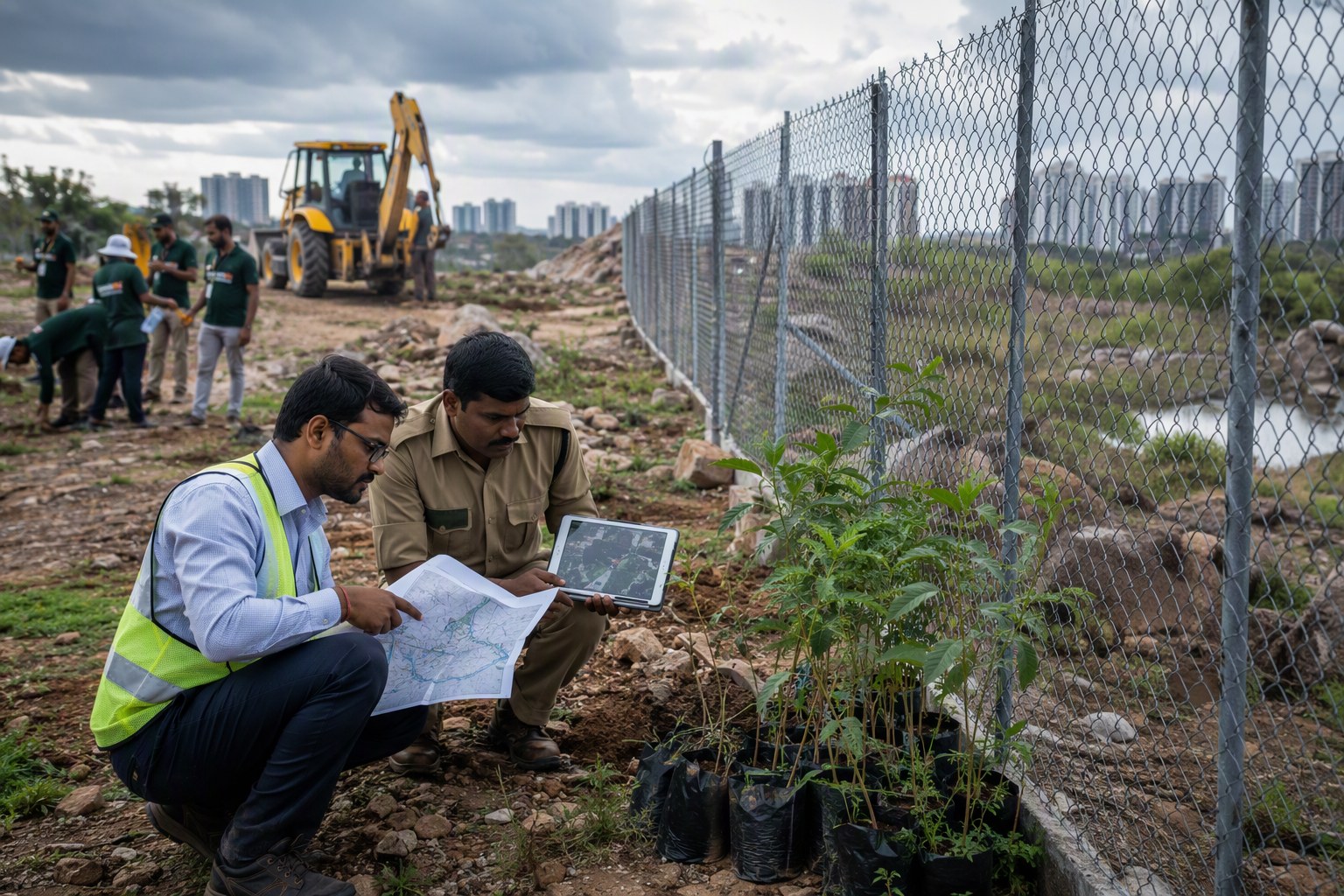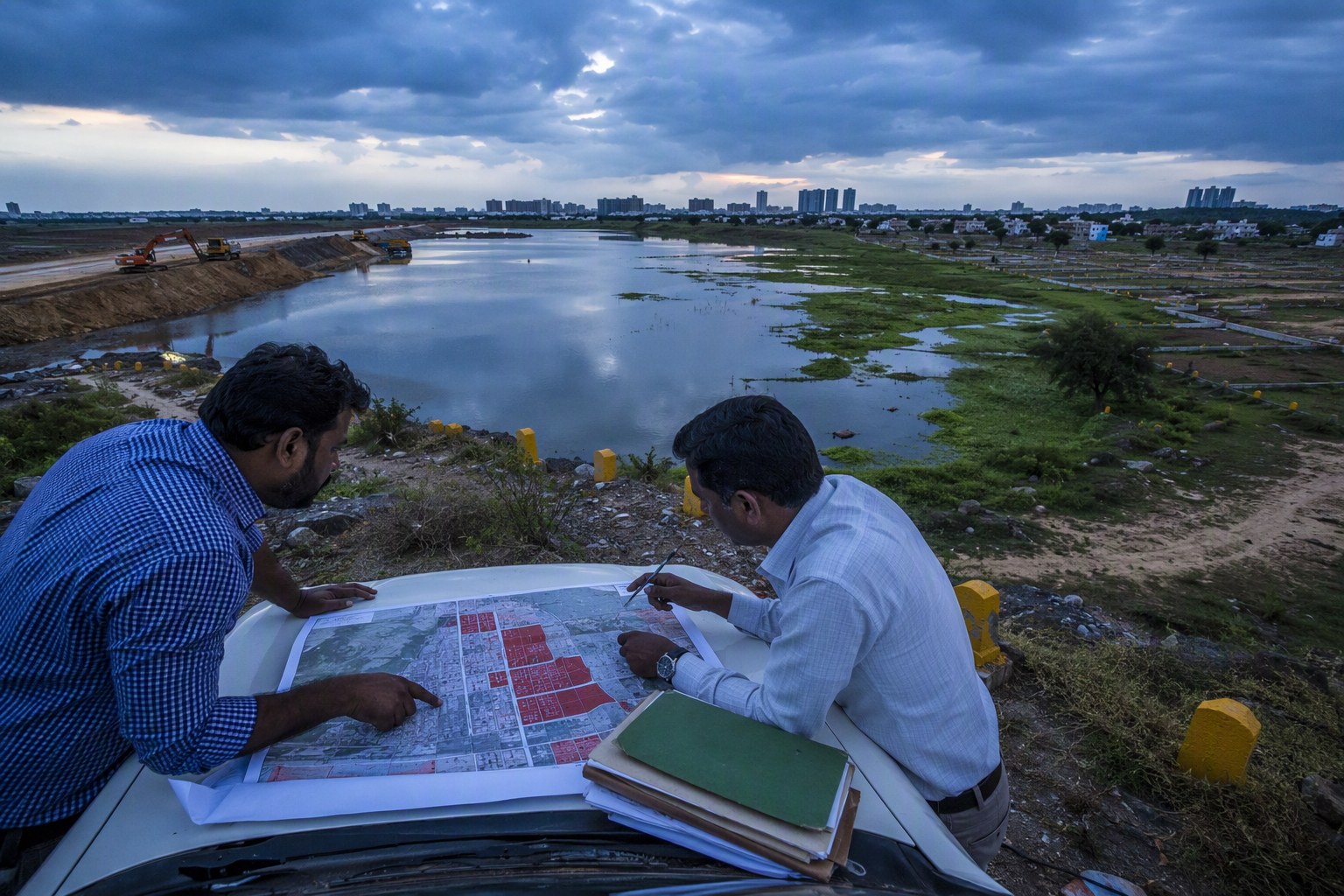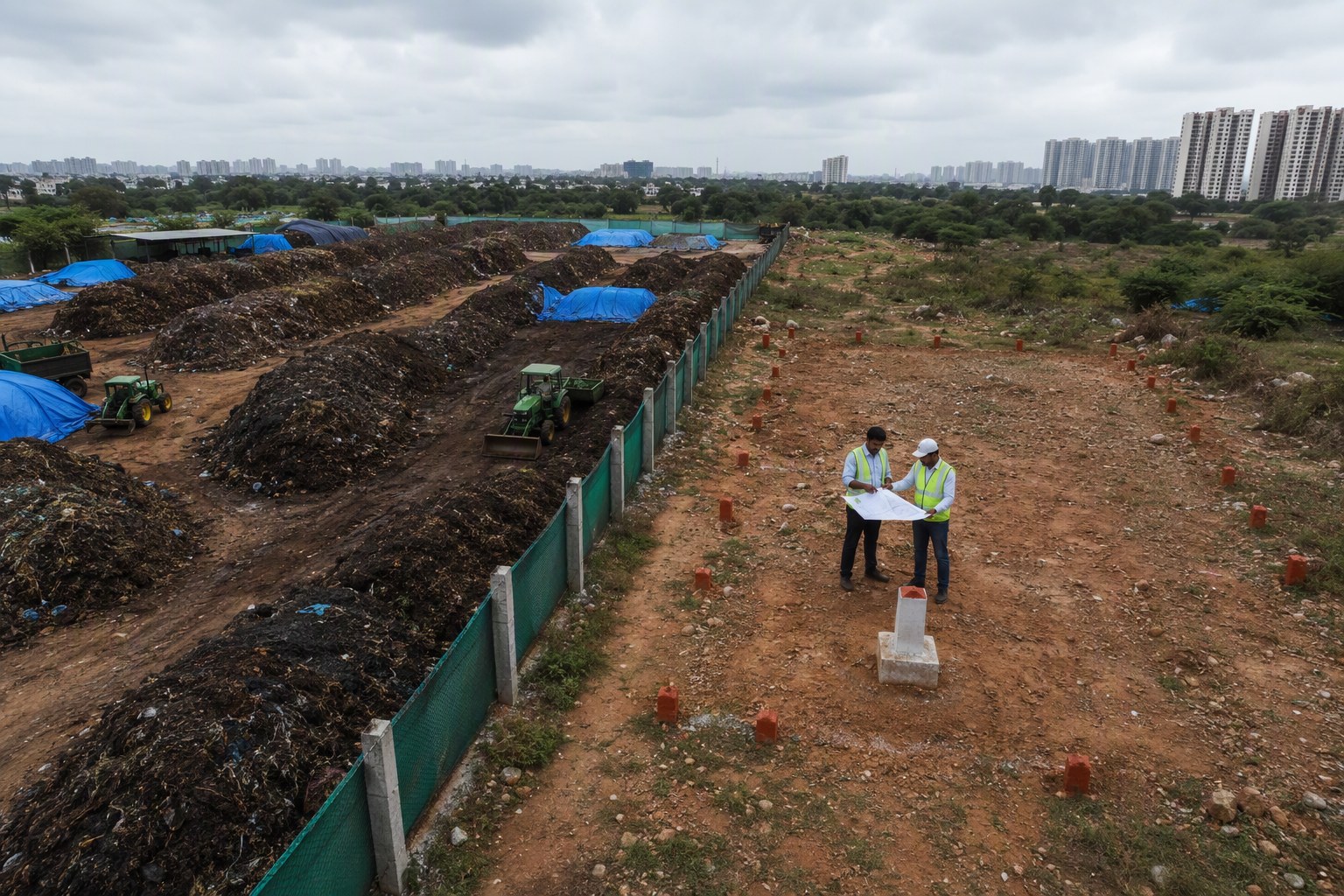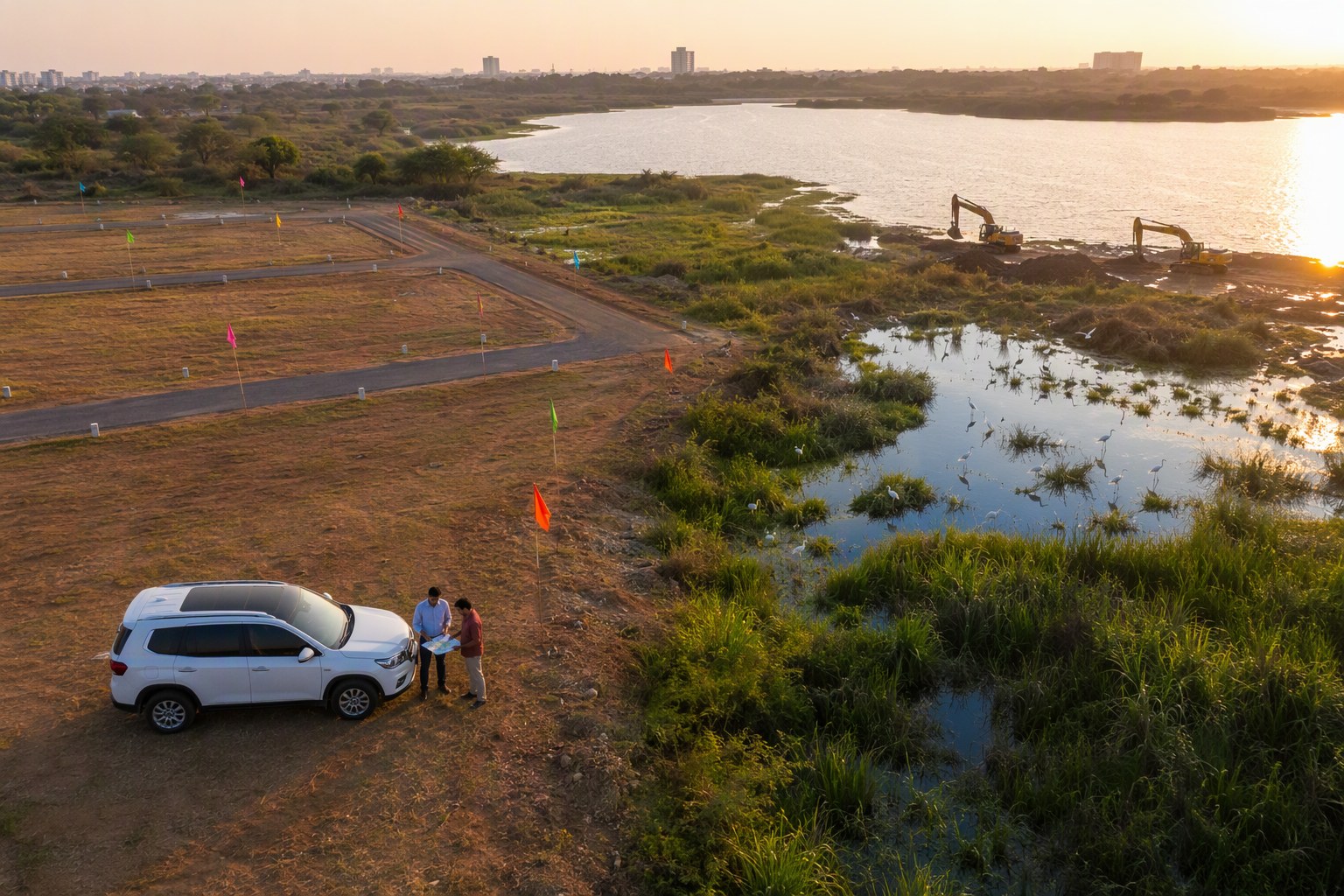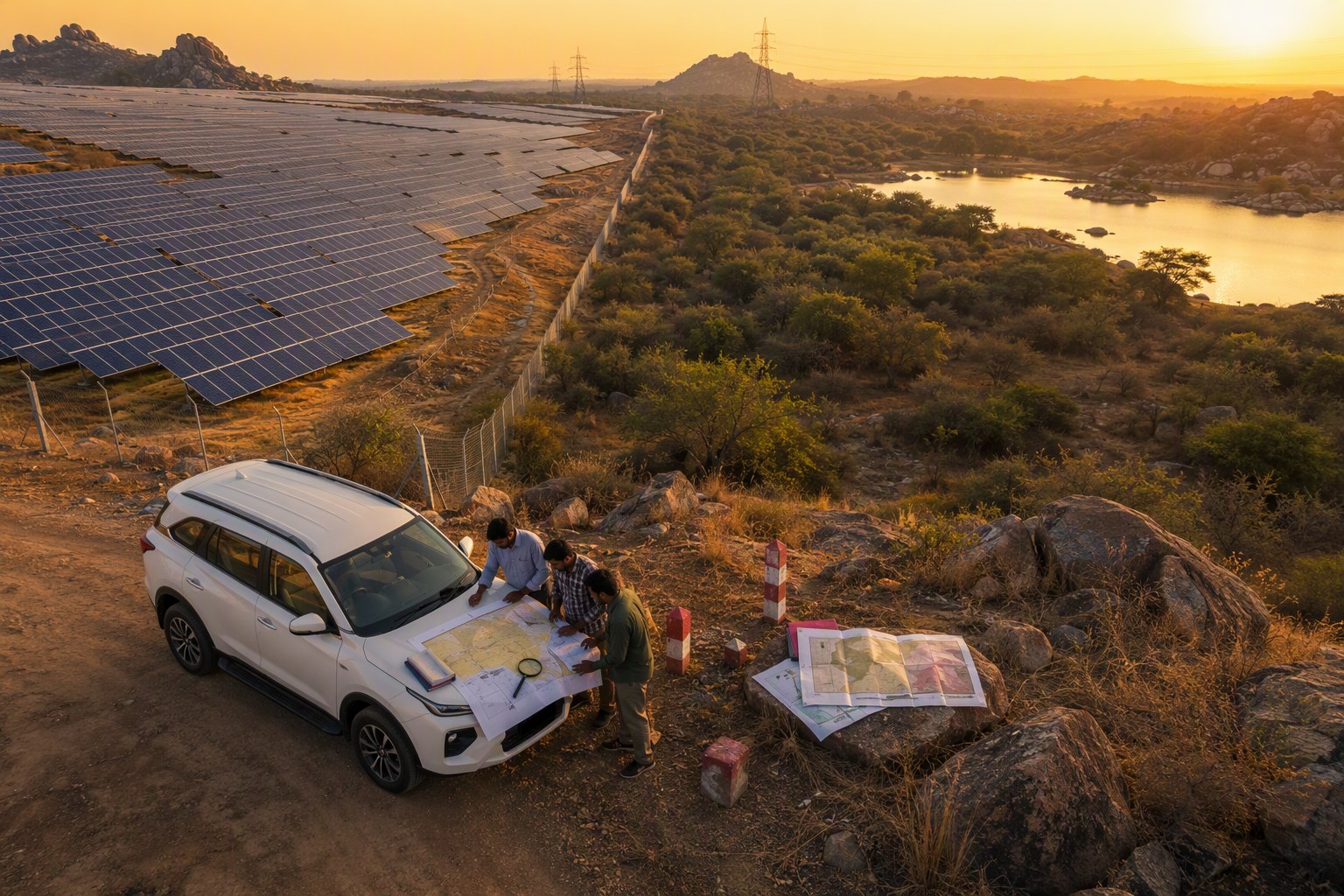
Telangana Solar Park Sites proposed through private aggregation, lease pooling, or direct purchase may need a 22-A check much earlier than usual. As per latest IGRS data available with Verified.RealEstate, Telangana has 30,76,153 prohibited property entries under Section 22-A. That number is large enough to affect not just housing layouts and farm land sales, but also clean energy land deals where hundreds of survey numbers may be stitched together.
The immediate issue is simple. A solar park may look clean on the ground, have road access, and even have willing pattadars. But if one survey number is tagged under 22-A, the SRO may refuse registration or insist on clearance. For Hyderabad-based renewable developers scouting land in Maheshwaram, Kandukur, Yacharam, Shabad, Chevella, Shankarpally, Medchal, Sangareddy, Vikarabad, Nalgonda, Mahabubnagar and other solar-suitable belts, this is no longer a last-week paperwork item. It has to come before commercial term sheets.
Telangana Solar Park Sites and the 22-A risk
Section 22-A entries are not a minor clerical layer. They are meant to stop registration of certain properties such as government land, assigned land, endowment land, Waqf-related parcels, ceiling surplus land, court-disputed land, or other properties notified by government records. In practice, the exact reason has to be checked against the concerned revenue and registration records.
In our experience, large land aggregation is where this risk becomes sharper. A residential buyer may be checking one plot or one apartment. A solar developer may be reviewing a long list of survey numbers across one or more villages in a mandal. Even if most parcels are privately held patta lands, one prohibited entry inside the proposed block can disturb fencing, evacuation line planning, internal road alignment, financing conditions, or lease documentation.
That is why the Section 22-A Prohibited Property Check should be used at the survey-number stage, not after advance payments. The difference is not academic. Early verification gives the buyer or developer time to drop a problematic parcel, seek clarification, or restructure the aggregation before the deal becomes politically and financially sensitive.
Telangana Solar Park Sites need survey-level screening, not just village-level comfort
Many land conversations in Telangana still start with village reputation. Someone says a particular village in Kandukur mandal or Shabad mandal has already seen industrial buying, or that land near a highway stretch is safe because other registrations happened nearby. That is not enough for solar aggregation.
22-A is usually checked at the property or survey-number level. Two neighbouring parcels can have different legal treatment. One may be a clean patta land. Another may carry an assigned land history. A third may have a government classification mismatch in pahani, Dharani, or legacy revenue records. For a solar park, the developer cannot rely only on local word of mouth or a broker's file.
A practical first cut should include the Survey Number Finder, followed by Encumbrance Certificate Search and the Property Verification Tool. If the land is being purchased instead of leased, the SRO mapping must also be clear through Find Your SRO Office. These checks will not replace legal opinion, but they can flag obvious registration and title problems before the team spends weeks on site visits.
Why 30,76,153 prohibited property entries matter for clean energy deals
The database figure of 30,76,153 prohibited property entries should be read as a warning signal for transaction design. It does not mean every solar proposal will face an objection. It also does not mean every 22-A entry is permanent or impossible to clarify. But for any project depending on multiple parcels, the probability of hitting at least one sensitive record becomes a real due diligence issue.
Solar park land selection is different from a villa project in Kollur or a commercial site in Gachibowli. Developers look for contiguous or near-contiguous stretches, easier access, lower habitation conflict, grid evacuation feasibility, and long-term possession comfort. The land file may include dry agricultural land, old family partitions, inherited shares, mutation gaps, and village road dependencies. When such parcels are aggregated quickly, 22-A screening can get pushed behind commercial negotiation. That is the wrong order.
Our view is clear: for Telangana solar park land, a 22-A check should happen before token advance, before lease pooling MoUs, and before public announcements. It is cheaper to identify a blocked survey number early than to redesign a project later.
What developers should verify before aggregating solar park land
For land around Hyderabad's outer growth belt, we have seen buyers focus heavily on approach road, price, and future conversion potential. For solar parks, the checklist has to be slightly different. Land may be away from premium residential corridors, but title discipline has to be stronger because lenders and long-term power buyers will ask harder questions.
| Check | Why it matters for solar park land | Suggested action |
|---|---|---|
| 22-A status | SRO may refuse registration if the survey number is prohibited | Run a survey-number level check before advance |
| Pahani and Dharani match | Mismatch in owner name, extent, or classification can delay execution | Compare current and legacy revenue records |
| EC history | Mortgages, agreements, court attachments or old sales can affect title | Use EC and legal review together |
| SRO jurisdiction | Wrong SRO assumption delays document preparation | Confirm village and SRO mapping early |
| Market value | Stamp duty and registration planning needs correct ready reckoner value | Check guideline value before drafting consideration |
For ready reckoner and registration planning, developers can use the Market Value / Guideline Value Search and Stamp Duty Calculator. If a project involves sale of land by multiple family owners, tax impact should also be discussed with advisors using the Capital Gains Tax Calculator as a starting point.
Mandals near Hyderabad may see tougher documentation questions
Solar proposals near the Hyderabad region have a special challenge. Land in places like Maheshwaram, Kandukur, Yacharam, Shabad, Chevella and Shankarpally is not viewed only as agricultural or energy land anymore. These areas also attract warehousing, pharma, plotted development, farmhouses and long-hold investors. That creates mixed expectations among landowners.
One pattadar may want an outright sale. Another may prefer a long lease. A family member may live in Hyderabad and ask for a higher consideration after hearing about nearby industrial activity. In this kind of market, any later discovery of 22-A status can damage trust between aggregators and owners. It may also give room for competing buyers to disturb the transaction.
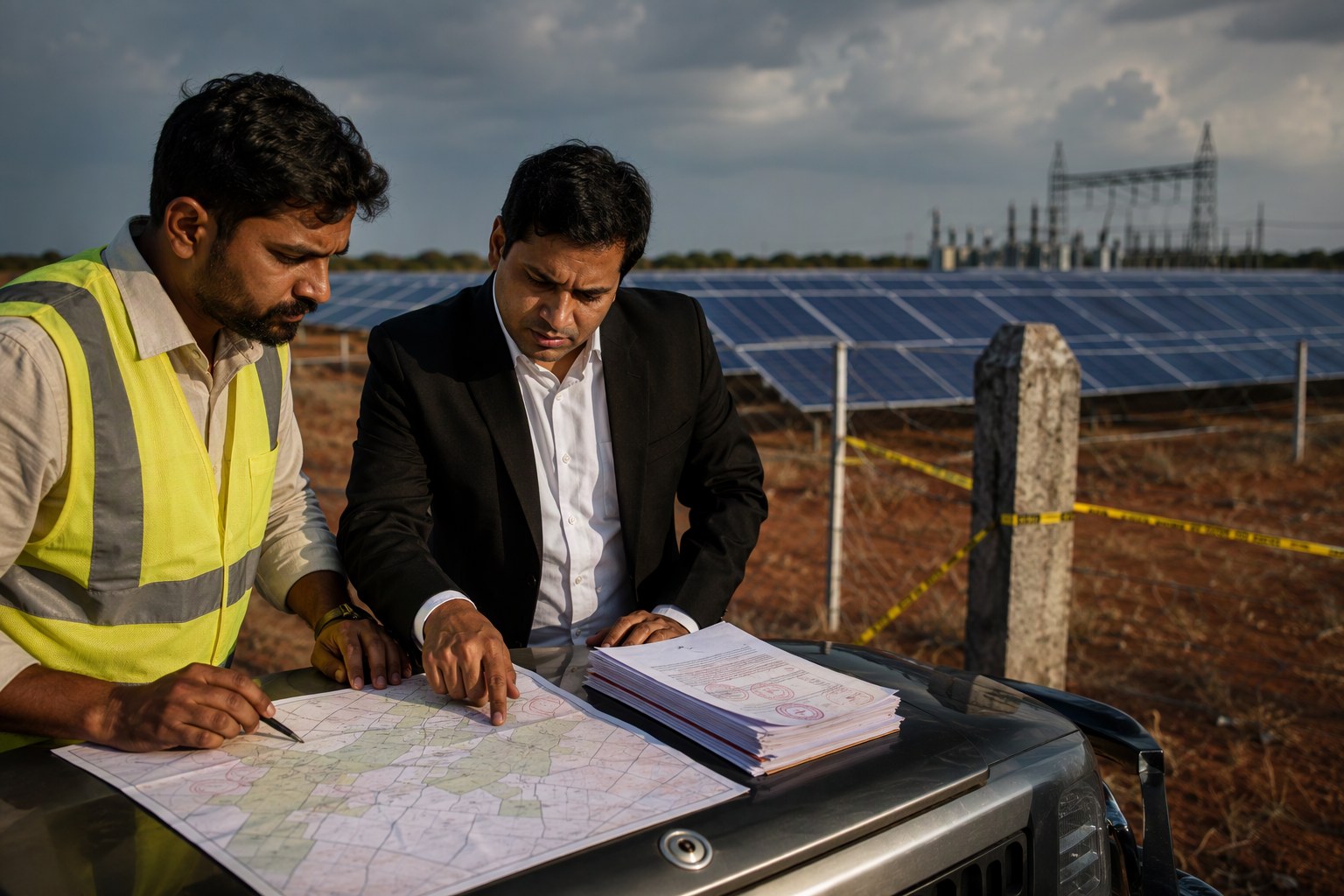
Developers should insist on a village-wise and survey-wise land schedule. Do not accept only a hand-drawn map or broker list. The schedule should mention survey number, sub-division, total extent, owner names as per records, present possession, access road dependency, and whether any part is already tagged in prohibited property records. This is basic, but many rushed land deals still miss it.
Telangana Solar Park Sites: what landowners should understand
Landowners also need clarity. If a survey number appears in a 22-A list, it does not automatically mean the family has done something wrong. Many entries come from old classifications, assigned land conditions, government claims, institutional records, or disputes that need document-level review. The correct approach is to collect pahani, Dharani details, old pattadar passbooks where available, link documents, mutation records and any proceedings connected to the land.
Owners should not sign a low-value distress agreement only because someone says the land is blocked. At the same time, they should not hide a known 22-A issue from a developer. In energy projects, the paper trail is usually checked by lawyers, lenders and technical consultants. Hidden problems come out at the worst possible time.
Early 22-A verification may become the new normal
The clean energy sector wants speed. Telangana has land, sun exposure and strong industrial demand. But speed cannot come at the cost of title hygiene. With 30,76,153 prohibited property entries in the current prohibited property dataset, land teams should treat 22-A verification as a front-end filter.
For residential buyers, a blocked registration is painful. For a solar park, it can affect land contiguity, project design, evacuation layout, finance timelines and community confidence. The sensible route is not to panic, but to verify early, document properly and keep alternate parcels ready.
In our reading, the next serious Telangana solar land deals will be won not only by who offers the best commercial terms, but by who builds the cleanest survey-number file.
Frequently Asked Questions
What is the 22-A issue in Telangana solar park sites?
Section 22-A refers to prohibited property records where registration can be blocked by the SRO. For solar park sites, even one affected survey number can disturb land aggregation, lease execution or sale registration.
How many prohibited property entries are there in Telangana?
As per latest IGRS data available with Verified.RealEstate, Telangana has 30,76,153 prohibited property entries under Section 22-A.
Should solar developers check 22-A before signing MoUs?
Yes. Developers should check 22-A status before token advance, lease pooling MoUs or sale agreements. Early screening helps avoid blocked survey numbers and later SRO-level surprises.
Which records should be checked for solar land in Telangana?
Developers should check 22-A status, pahani, Dharani entries, link documents, EC, SRO jurisdiction, market value and possession details for each survey number.
Does a 22-A entry mean the land can never be used?
Not always. Some entries may need clarification, correction or government-level clearance. The reason for the entry must be verified through revenue and registration records before taking a decision.