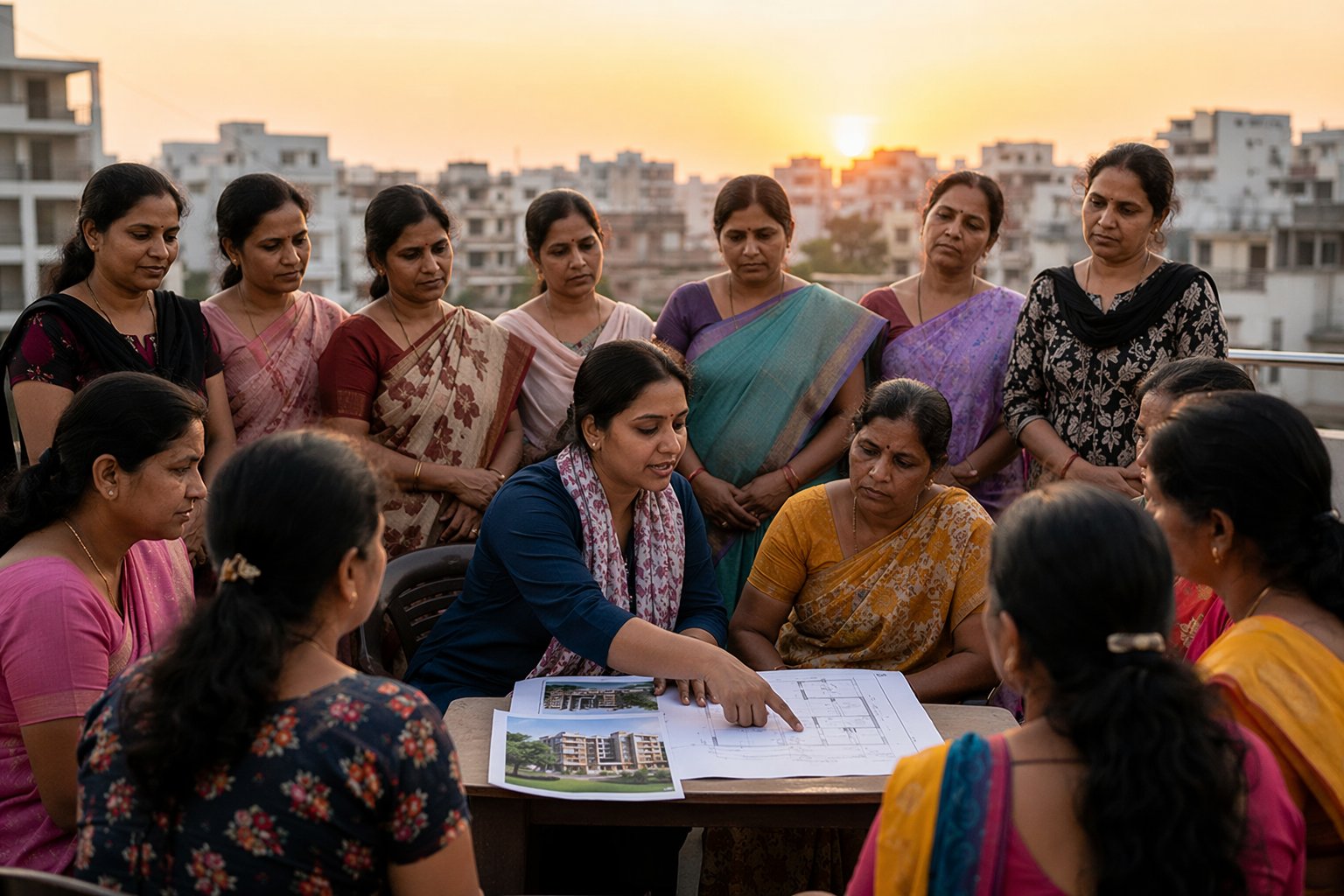
Telangana SHGs May Start 22-A Awareness Drives for Women Buyers
For many women in Telangana, a property purchase starts inside the home. A husband, brother, father, neighbour, chit fund contact or local broker brings a deal. The woman may be the buyer on paper, the loan applicant, or the person putting her savings into the advance. But the first safety question is often missed: is the land or house hit by a 22-A prohibition?
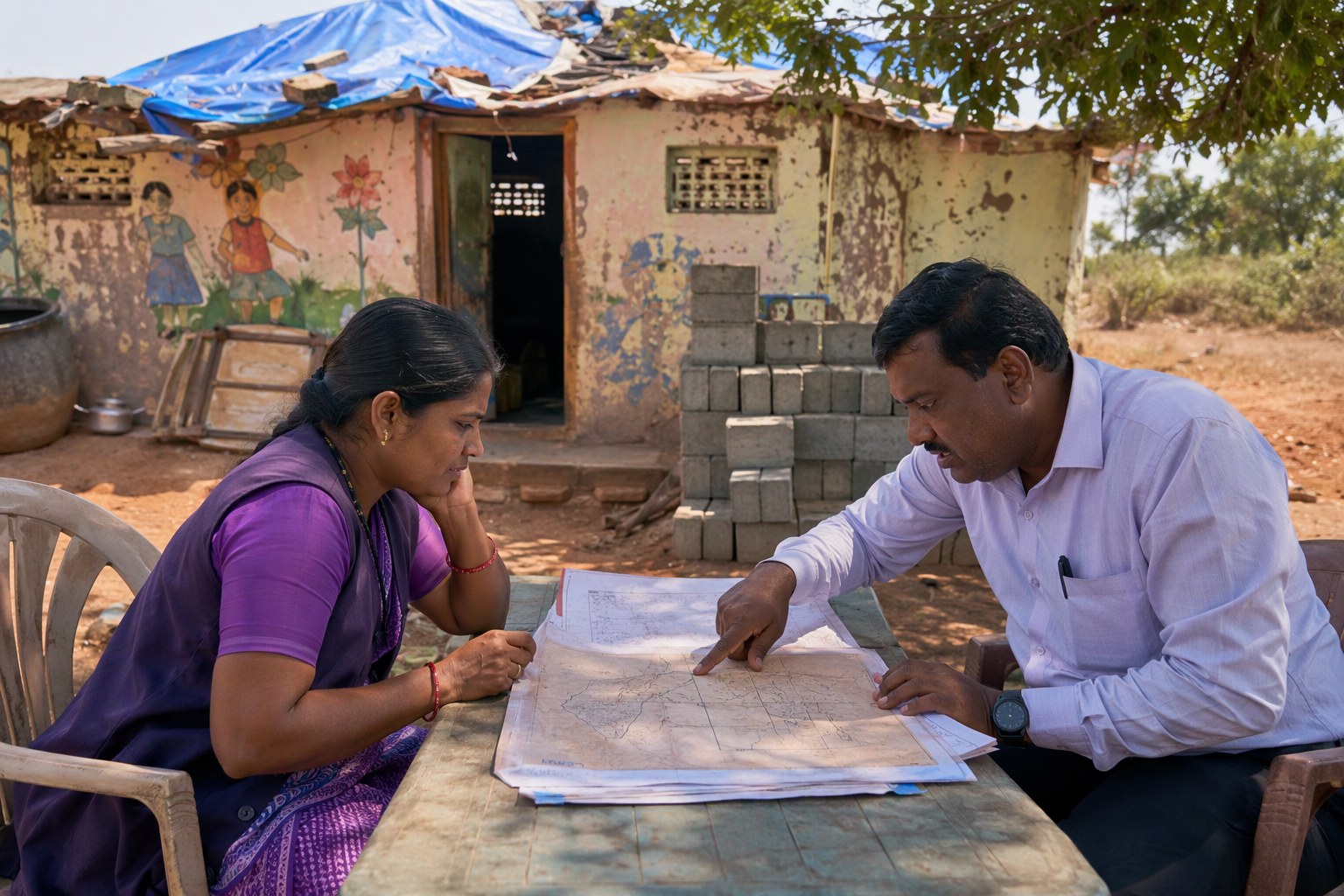
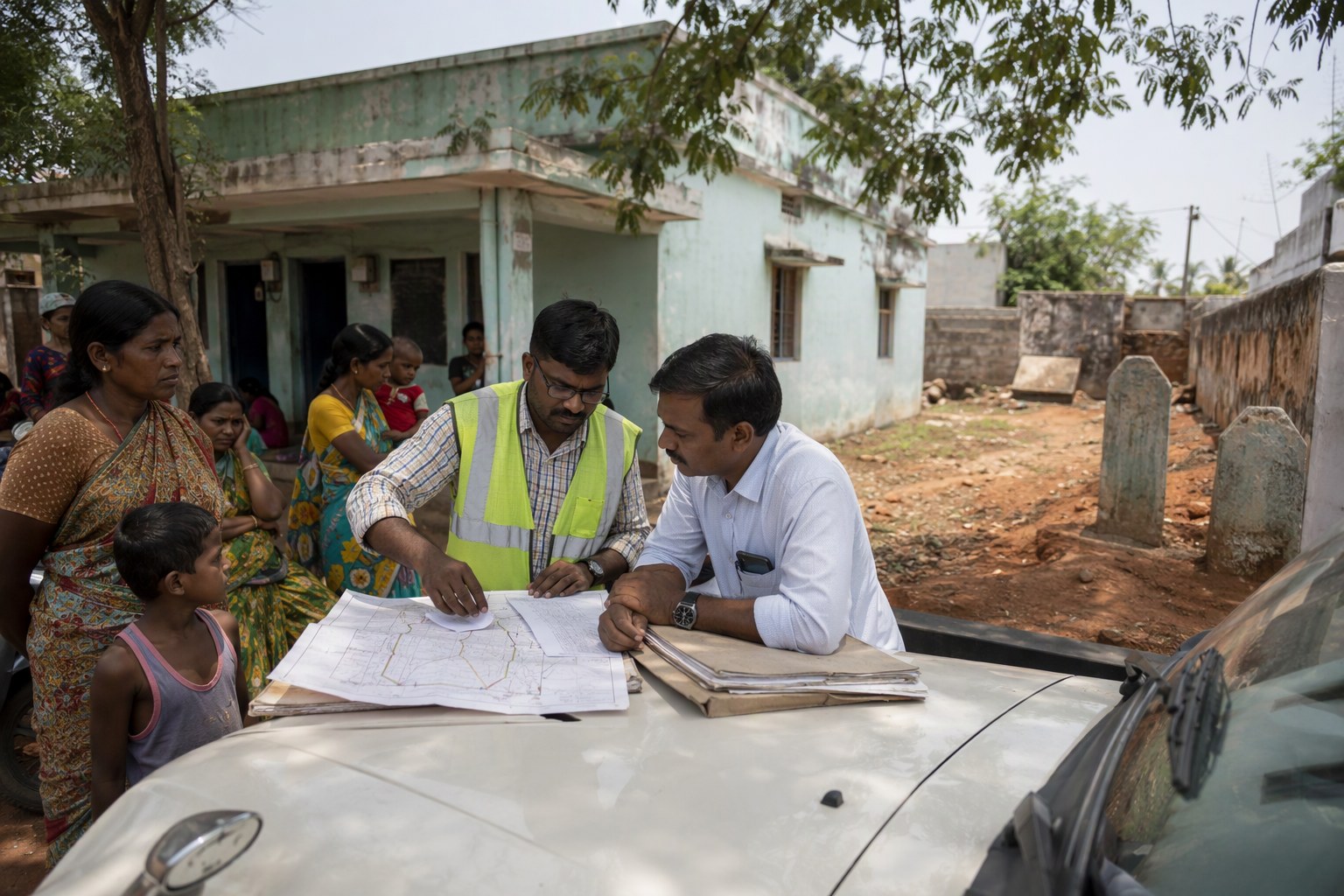
That is where Telangana’s self-help group network can become a serious public-interest force. SHGs already sit close to household decisions. They know which families are planning to buy a small plot, regularise a house, shift from rent, or invest in land near the village road. If these groups start simple 22-A awareness drives, prohibited-property checking can move from SRO counters and advocate offices into women’s weekly meetings.
At Verified.RealEstate, our database context for prohibited properties in Telangana contains 3,076,153 entries. That number itself should make buyers pause. Not every entry affects every transaction, and the nature of prohibition differs from case to case. Still, it shows why one casual “registration ayipothadi madam” from a broker is not enough.
Why 22-A matters before a woman signs the agreement
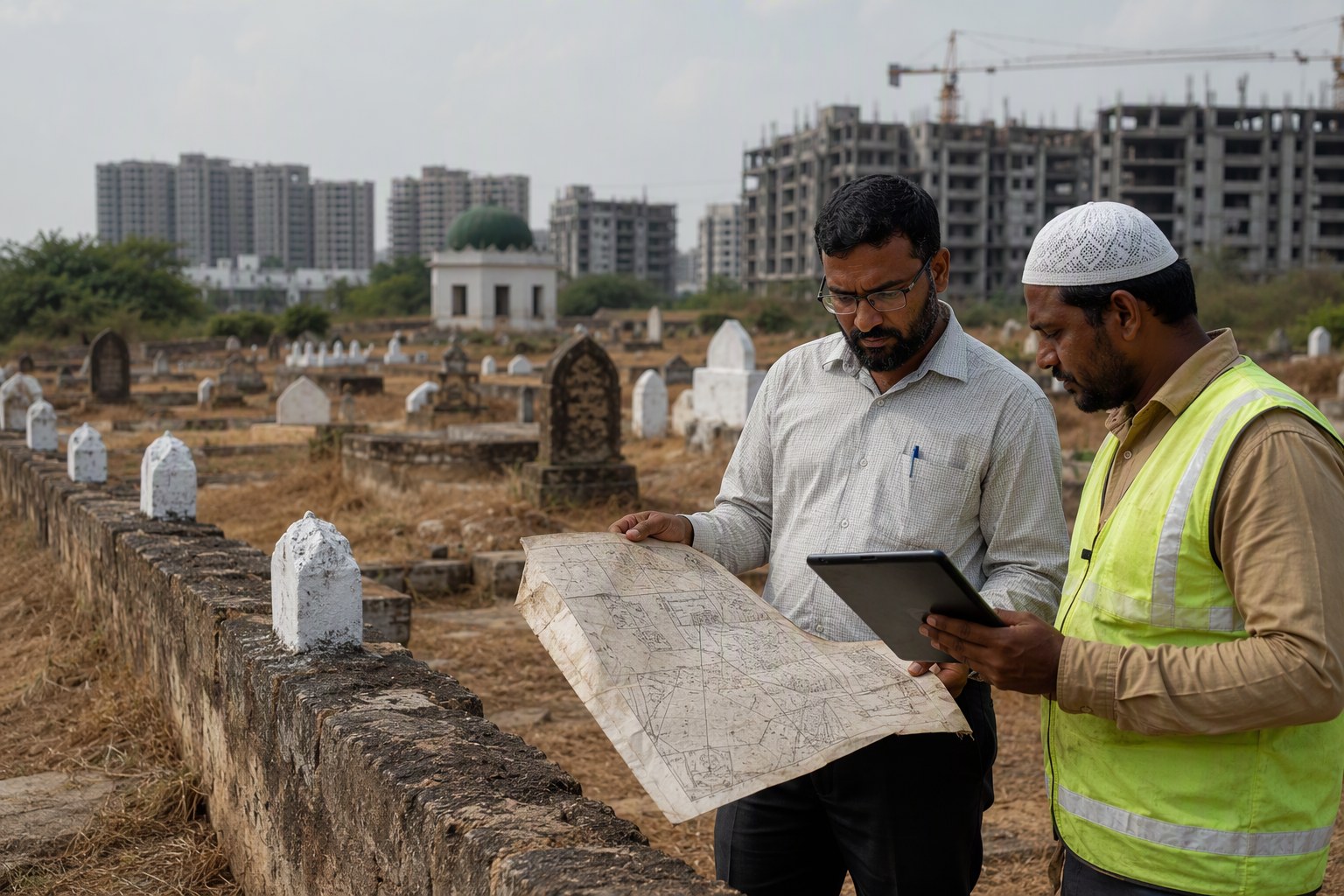
Section 22-A, in practical buyer language, deals with properties that may be restricted from registration. These can include government lands, assigned lands, endowment lands, wakf-related entries, ceiling surplus issues, court-attached matters, and other notified categories. The exact reason has to be checked against the survey number, village, mandal and SRO jurisdiction.
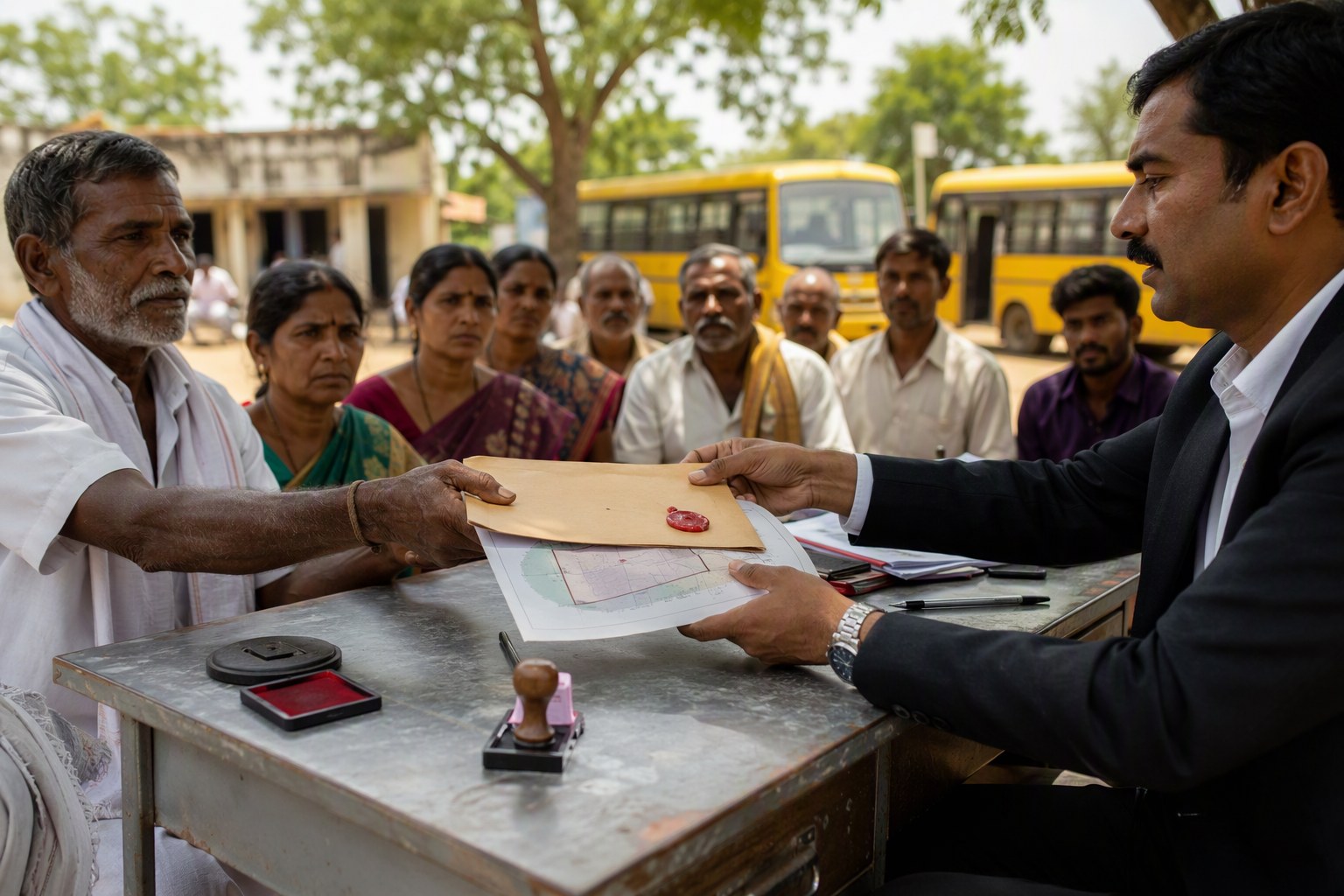
For a woman buyer, the damage from a missed 22-A entry can be harsh. The sale agreement may be signed. Advance may be paid. Gold loan may be taken. Family pressure may start. Then at the registration stage, the document can face refusal or delay. In some cases, the problem comes out even later, when the buyer applies for a loan, mutation, building permission or resale.
My view is simple: no woman should pay a token advance on land in Telangana without a basic prohibited-property check. It is as essential as seeing the passbook or link documents.
Why SHGs are a natural fit for property safety awareness
Self-help groups are not just savings groups. In many Telangana localities, they are trusted information channels. Women discuss loans, school fees, health issues, welfare schemes, crop payments and small businesses in these meetings. Property buying is also part of that household economy, even when men negotiate outside.
An SHG-led awareness drive need not become a legal camp. It can be a practical checklist session. The message can be in plain Telugu or local mixed language: before giving advance, check survey number; before believing layout talk, check village records; before registration date, check SRO and 22-A status.
This is especially useful in peri-urban belts around Hyderabad, Warangal, Karimnagar, Nizamabad, Khammam, Mahabubnagar and district headquarters where agricultural land, open plots and gram panchayat layouts are often sold through local contacts. Women buyers are frequently told that “rate will increase next month” or “only two plots are left”. A calm SHG meeting can reduce that pressure.
The household-level safety check: a workable model
A good SHG awareness format can be kept short. Thirty minutes is enough if the trainer avoids legal jargon and sticks to the buying journey.
Step 1: Ask the buyer to collect the survey number, village name, mandal, extent and seller name before paying any advance.
Step 2: Identify the correct registration office using Find Your Sro or a local SRO village directory.
Step 3: Run a basic check through Prohibited Property Check using the available property details.
Step 4: Compare the survey details with past transactions through Ec Search.
Step 5: If the land is agricultural or village land, cross-check survey identity using Survey Number Finder and then take local legal advice.
Step 6: Do not pay a non-refundable advance until doubts are cleared in writing.
This is not a replacement for a lawyer or official verification. But it is a first filter. Many bad deals can be stopped at this stage itself.
What SHG volunteers should be trained to say
The language matters. If the message sounds too technical, women may think property checking is only for advocates. If it sounds too casual, families may ignore it. SHG volunteers can use simple lines:
“Survey number lekunda advance ivvakandi.”
“22-A lo unda leda first check cheddam.”
“Registration office lo document accept avutunda ane doubt mundhe clear cheyyali.”
“Seller original documents chupinchadam okkate saripodu.”
“Family member name lo konna, responsibility buyer de.”
Such messaging respects the buyer’s intelligence. It does not scare her. It gives her one strong rule: verify before advance.
Where women buyers are most exposed
The risk is not limited to big-ticket purchases. In fact, smaller transactions can be more vulnerable because buyers try to save on professional checks. A two-gunta house site, a 100-square-yard plot, or a share in family land can create long-term pain if the title is blocked.
| Purchase situation | Common risk | Useful first check |
|---|---|---|
| Open plot near village or highway | Wrong survey number or 22-A entry | Prohibited Property Check |
| Resale flat or house | Past mortgage, missing link deed, unclear EC | Ec Search |
| Agricultural land purchase | Assigned land, government claim, classification issue | Verify My Land |
| Layout plot | Approval claims without document support | Rera where applicable |
| Price negotiation | Overpayment against local value | Guideline Value |
Why this is a social impact issue, not only a property issue
Women often bring disciplined savings into the transaction. SHG savings, gold, DWCRA-linked credit history, salary income, small business earnings and family support all get mixed into the purchase. When a prohibited-property problem appears, the loss is not only financial. It affects confidence, marriage discussions, family standing, children’s education plans and borrowing capacity.
That is why a 22-A awareness drive through SHGs can have real social value. It shifts the buyer from dependence to questioning. It also changes the behaviour of sellers and brokers. If local women start asking for survey numbers, SRO details and EC copies before paying token advance, the market becomes cleaner at the bottom level.
What government and civil society can do
A practical programme can be built without heavy cost. District administrations, SERP-linked networks, municipal staff, legal services authorities, banks and civil society groups can prepare a one-page property safety card for SHG meetings. The card should cover 22-A, EC, SRO, guideline value, RERA for eligible projects, and the difference between agreement and registered sale deed.
Banks also have a role. Many women approach banks after paying the advance. By then, the bargaining power is gone. Loan officers can advise borrowers to complete basic checks before loan processing. Local advocates can conduct monthly question sessions. SRO staff can clarify common refusal reasons in public meetings without commenting on individual disputes.
The key is to keep the system buyer-friendly. A woman should not feel that asking for documents is an insult to the seller. In Telangana property culture, that hesitation is common. SHGs can normalise the question.
Verified.RealEstate view
Telangana’s real estate market is expanding beyond traditional city limits. Families are buying plots in growth corridors, district outskirts and village layouts. Women are increasingly becoming named owners, co-applicants and financial contributors. But title-risk awareness has not grown at the same speed.
SHG-led 22-A awareness is not a magic fix. It will not solve every land dispute. It will not replace official records or legal opinions. But it can stop many avoidable mistakes before the first payment leaves the buyer’s hand. In my reporting experience, that first pause is often the difference between a safe purchase and years of follow-up.
For women-led purchases, the message should be direct: check 22-A status, confirm SRO, read the EC, verify survey number, then discuss price. Order matters. Safety first, negotiation next.
Frequently Asked Questions
What is a 22-A prohibited-property check in Telangana?
It is a check to see whether a property falls under a category restricted from registration, such as certain government, assigned, endowment, wakf or other notified lands. The exact status depends on property details and official records.
Why should women buyers do this before paying advance?
Once advance is paid, the buyer loses bargaining power. A 22-A issue can delay or block registration, so the safer approach is to check survey number, SRO and property status before committing money.
Can SHG members verify land title by themselves?
SHG members can run first-level awareness and checklist checks. For final purchase decisions, buyers should still use official records and take advice from a qualified property lawyer where needed.
Which details are needed for a basic prohibited-property check?
Usually the buyer needs the survey number, village, mandal, district, extent, seller details and SRO jurisdiction. For flats or houses, past document numbers and EC details are also useful.