Telangana Clinic Sites Face 22-A Review Before Upgrades
Telangana clinic sites proposed for public health upgrades may first have to clear a basic but serious land test: whether the site appears in the Section 22-A prohibited properties list. As per the Verified.RealEstate database context, Telangana has 3,076,153 prohibited property entries under Section 22-A. For health departments, local bodies, donors, contractors and citizens waiting for better clinics, this land verification step can decide whether an upgrade moves quickly or gets stuck at the mandal and SRO level.
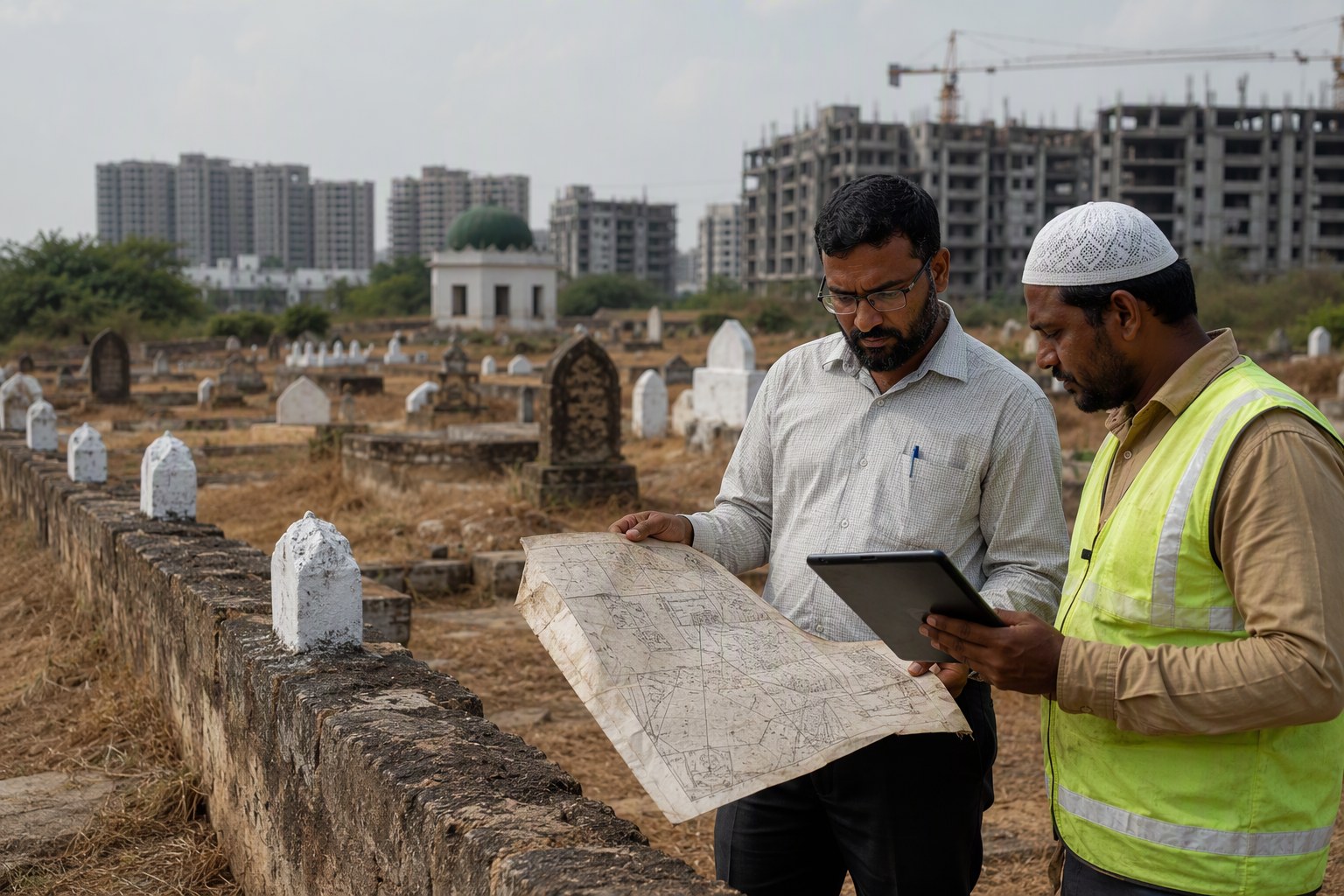
The issue is not only legal paperwork. A primary health centre, basti dawakhana, urban health post or government clinic can sit on land that people assume is clean because it has been used publicly for years. But when a new building, expansion, compound wall, approach road, or formal handover is planned, officials usually need to re-check the survey number, pahani record, Dharani status, registration history and any prohibition under Section 22-A.
In our experience tracking Hyderabad and Telangana land files, the delay often starts with one simple mismatch: the clinic name is known locally, but the underlying land record is still described through an old survey number, sub-division, government land classification, assigned land note, endowment tag, wakf claim, court case, or acquisition entry. That is where the 22-A review becomes unavoidable.
Why Telangana clinic sites are getting pulled into Section 22-A checks
Section 22-A entries restrict registration of certain properties. These may include categories such as government land, assigned land, endowment land, wakf-related entries, lands affected by court orders, or other notified properties. For a clinic upgrade, the problem is not always that the site is wrongly occupied. The problem is that the record must support the upgrade clearly.
For example, a clinic in a dense Hyderabad locality like Amberpet, Musheerabad, Khairatabad, Saidabad, Malakpet, Uppal or Serilingampally may be functioning for many years. Local residents may call it government land. The ward office may treat it as a public facility. But the SRO system still needs the survey number and classification to match. If the site falls in a village record under a mandal such as Shaikpet, Balanagar, Hayathnagar, Gandipet, Medchal, Malkajgiri or Rajendranagar, the verification trail can move through revenue, municipal and registration records.
That is why a Section 22-A check is now becoming part of basic due diligence for any public health land upgrade. It protects the project from future objections, but it can also expose old record gaps. We have seen cases where public-purpose land is available on the ground, yet the paperwork still carries outdated descriptions from earlier village accounts.
For clinic upgrades, clean title is not a luxury. It is the base on which approvals, budgets, construction and long-term public use stand.
Telangana clinic sites: what the 3,076,153 prohibited entries mean for public health upgrades
The figure of 3,076,153 prohibited property entries is large enough to affect ordinary land checks across the state. It does not mean every clinic site is disputed. It means every serious public health upgrade should verify whether the relevant survey number, sub-division or property record is touched by Section 22-A.
For a private buyer, a 22-A entry may stop a sale deed. For a clinic project, the impact can be different. It may hold up building permission, mutation, asset transfer, contractor mobilisation, bank-linked funding, donor participation, or even a simple boundary confirmation. If the site is meant for a public hospital extension, diagnostic centre, mother-and-child health unit, or urban clinic, officials cannot afford unclear land status.
Citizens usually see only the visible part: a clinic building waiting for renovation. The file, however, may be moving between the tahsildar office, municipal engineering wing, health department, SRO, district collectorate and sometimes the legal cell. If the land is in a gram panchayat area or recently urbanised pocket around Hyderabad, the revenue record may still carry old village references. That is common in places around Narsingi, Kokapet, Tellapur, Bachupally, Kompally, Pocharam, Adibatla and Shamshabad, where land records and urban growth have not always moved at the same speed.
What should be checked before upgrading a clinic site?
A proper check should start with the survey number, not with the building name. Many public assets are identified in departmental files by local names, but land records work on survey number, extent, village, mandal and SRO jurisdiction. If any one detail is wrong, the search may give a misleading comfort.
For a clean review, the file should ideally include:
- Survey number and sub-division number, wherever available.
- Village and mandal details from pahani or revenue records.
- Dharani status and classification of the land.
- SRO jurisdiction and past registration references, if any.
- Section 22-A prohibited property status.
- Encumbrance certificate history for recorded transactions.
- Municipal or gram panchayat land-use and road access position.
- Any government order, allotment memo, acquisition record or court reference linked to the land.
On Verified.RealEstate, readers can start with the Section 22-A Prohibited Property Check, then cross-check ownership trail using the Encumbrance Certificate Search. If the survey number is not clear, the Survey Number Finder can help users organise the basic land identifier before they approach the department or consultant. For SRO mapping, use Find Your SRO Office.
Where delays usually happen in Hyderabad and surrounding mandals
Hyderabad’s public health infrastructure sits on a mix of old municipal lands, revenue lands, transferred parcels and legacy institutional sites. In core areas like Charminar, Nampally, Himayatnagar and Secunderabad, the land record may have old municipal references. In the western corridor around Serilingampally, Gachibowli, Kondapur, Nanakramguda and Manikonda, the issue may be conversion of old village land records into present urban use. In eastern growth pockets like Uppal, Nagole, Boduppal, Ghatkesar and Pocharam, expanding municipal limits have created similar record-matching work.
Clinic upgrades are particularly sensitive because they are public-facing. A delay in a residential layout approval affects a developer and buyers. A delay in a health facility affects daily wage families, pregnant women, elderly patients and people who depend on nearby government services. That is why I feel land verification for clinic sites should be done before the tender stage, not after contractors are already waiting.
There is another practical issue. If a site is listed under Section 22-A for a valid reason, the solution may require departmental clarification, deletion proposal, collector-level review or legal action. That takes time. If the entry is due to a clerical mismatch, early detection gives officials a chance to correct it before the project becomes public controversy.
Quick verification table for clinic and public health lands
| Check | Why it matters | Useful tool |
|---|---|---|
| Section 22-A status | Shows whether registration or transfer is restricted | Section 22-A Prohibited Property Check |
| EC history | Helps identify recorded transactions and encumbrances | Encumbrance Certificate Search |
| Survey number | Connects the site to village and mandal land records | Survey Number Finder |
| SRO jurisdiction | Shows where registration records must be verified | Find Your SRO Office |
| Guideline value | Helps understand official value references where needed | Market Value / Guideline Value Search |
What officials and citizens should do next
For officials, the safest approach is to prepare a land verification note for each proposed clinic site before sanctioning civil works. The note should mention the survey number, extent, village, mandal, SRO, present possession, land classification, 22-A result and pending objections, if any. That one-page discipline can save months later.
For citizens, the message is simple. If your area’s clinic upgrade is delayed, ask for the land status, not only the budget status. Many times the money is not the only bottleneck. A pending revenue clarification can hold the file. Local ward members, resident welfare associations and community groups can request clarity on whether the site has any Section 22-A issue.
For contractors and NGOs supporting health infrastructure, do not assume that a government-use site is automatically free from title risk. Before spending on design, soil tests, compound walls or temporary structures, check the land record. The Property Verification Tool and Land Use Zone Finder can help organise the first level of due diligence.
Telangana needs stronger neighbourhood health facilities, especially in fast-growing urban and peri-urban pockets. But upgrades built on unclear land records can become vulnerable. With 3,076,153 prohibited property entries in the database context, Section 22-A verification is not a side task. It is now part of responsible public project planning.
Frequently Asked Questions
What is Section 22-A in Telangana property records?
Section 22-A refers to prohibited properties where registration may be restricted. These entries can cover government land, assigned land, endowment or wakf-related properties, court-affected lands and other notified categories.
Why do Telangana clinic sites need 22-A verification?
Clinic upgrades often require clear land status for approvals, funding, construction and asset handover. If the survey number is in the prohibited list, the project may need clarification or correction before work proceeds.
Does a 22-A entry mean a clinic is illegal?
Not always. A 22-A entry means the land record has a restriction or issue that must be examined. Some cases may involve valid public land, while others may need revenue or legal clarification.
Which details are needed to check a clinic land parcel?
The key details are survey number, village, mandal, SRO, pahani or Dharani record, extent and any government allotment or acquisition document connected to the site.
Can citizens check if a public health site is prohibited?
Citizens can start by checking the survey number through a Section 22-A search and EC search. For official decisions, the concerned revenue, municipal and health department records must be relied on.