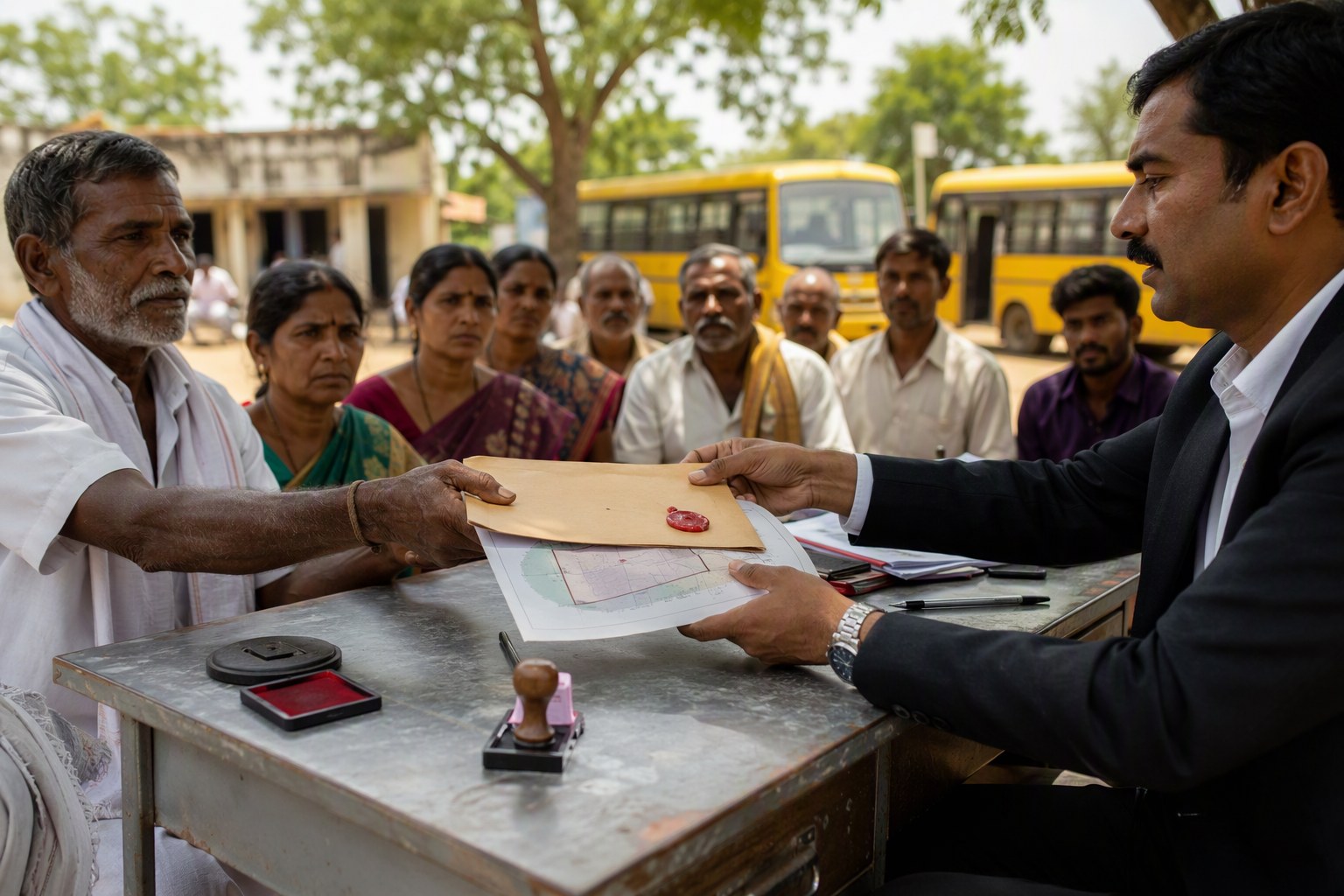
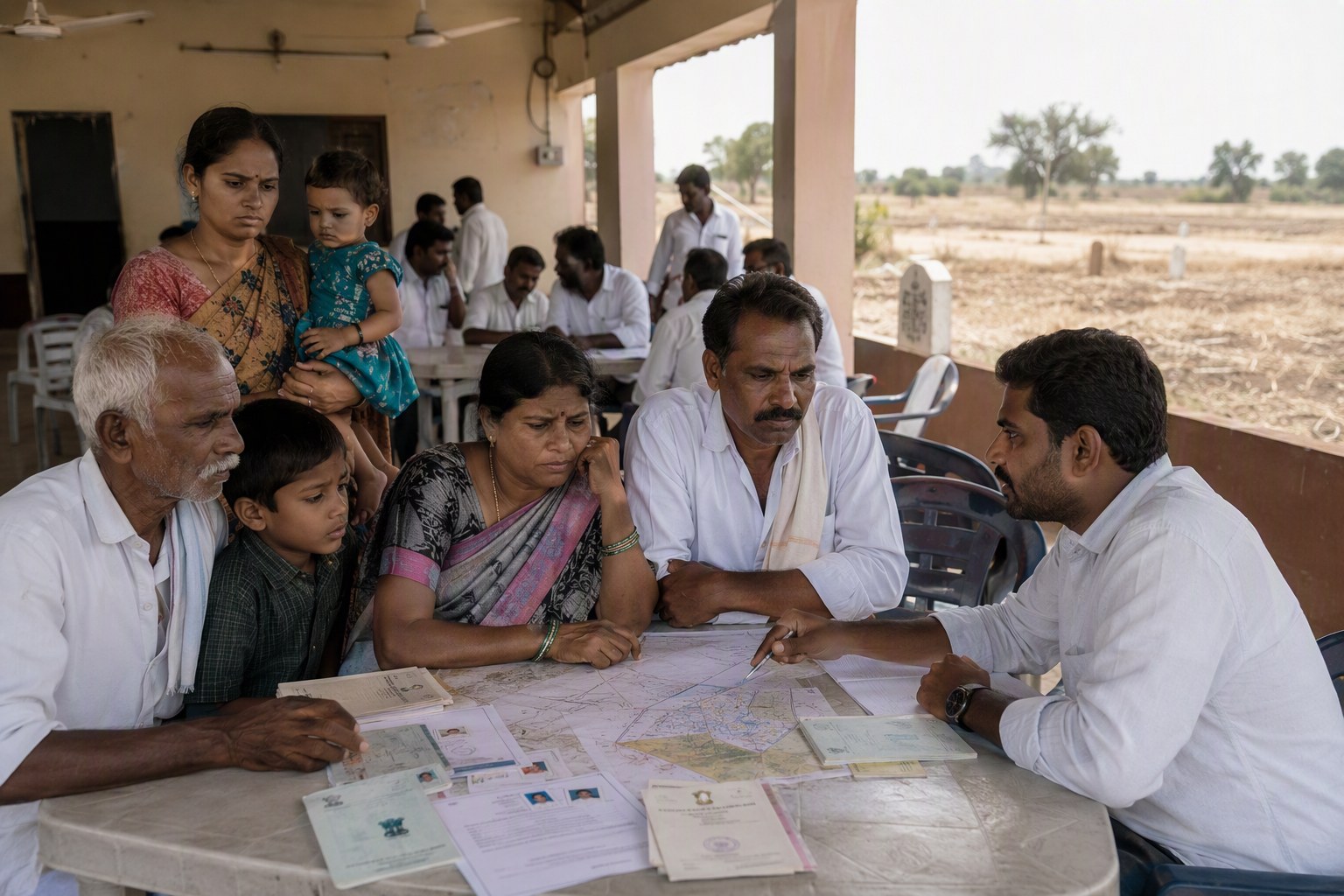
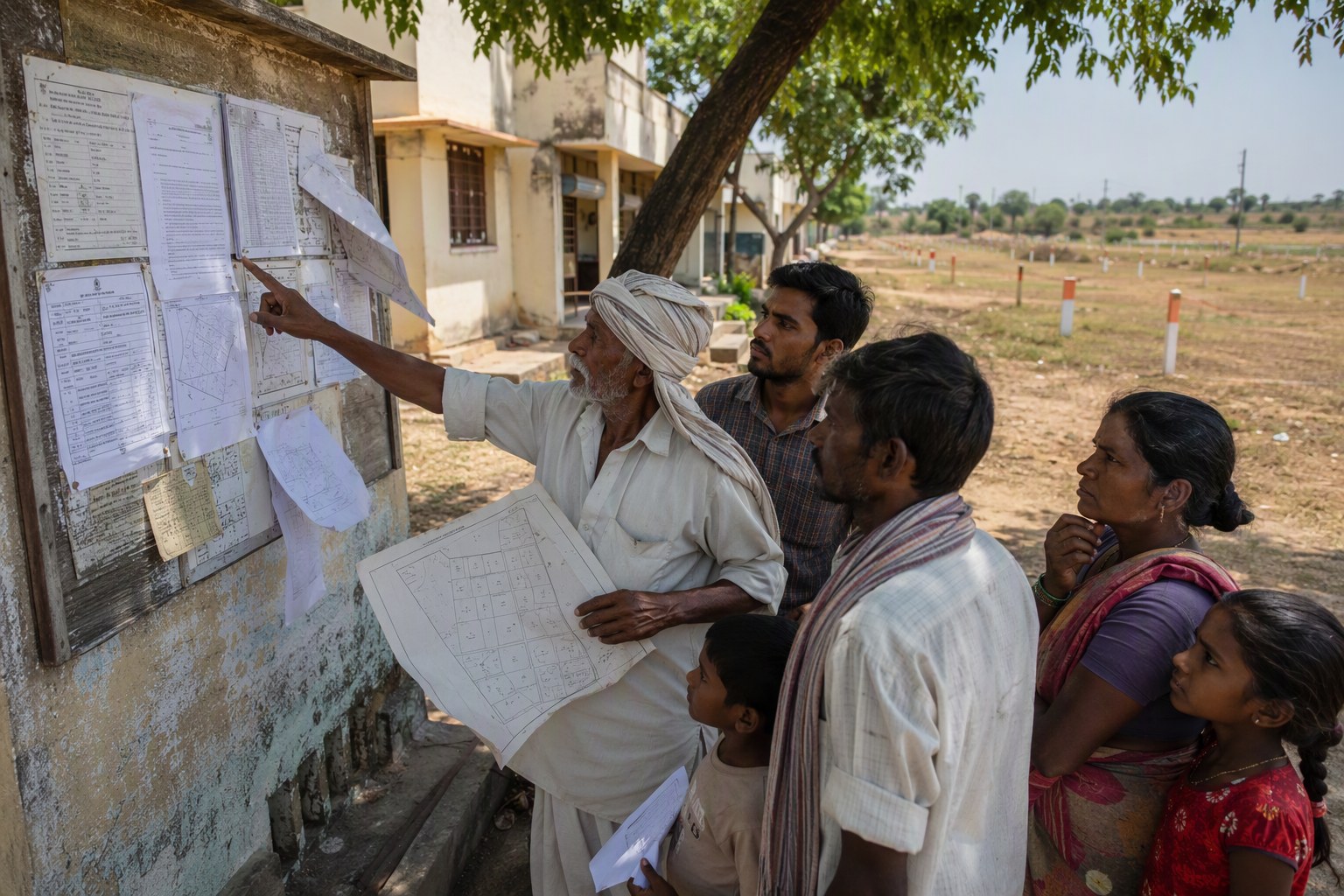
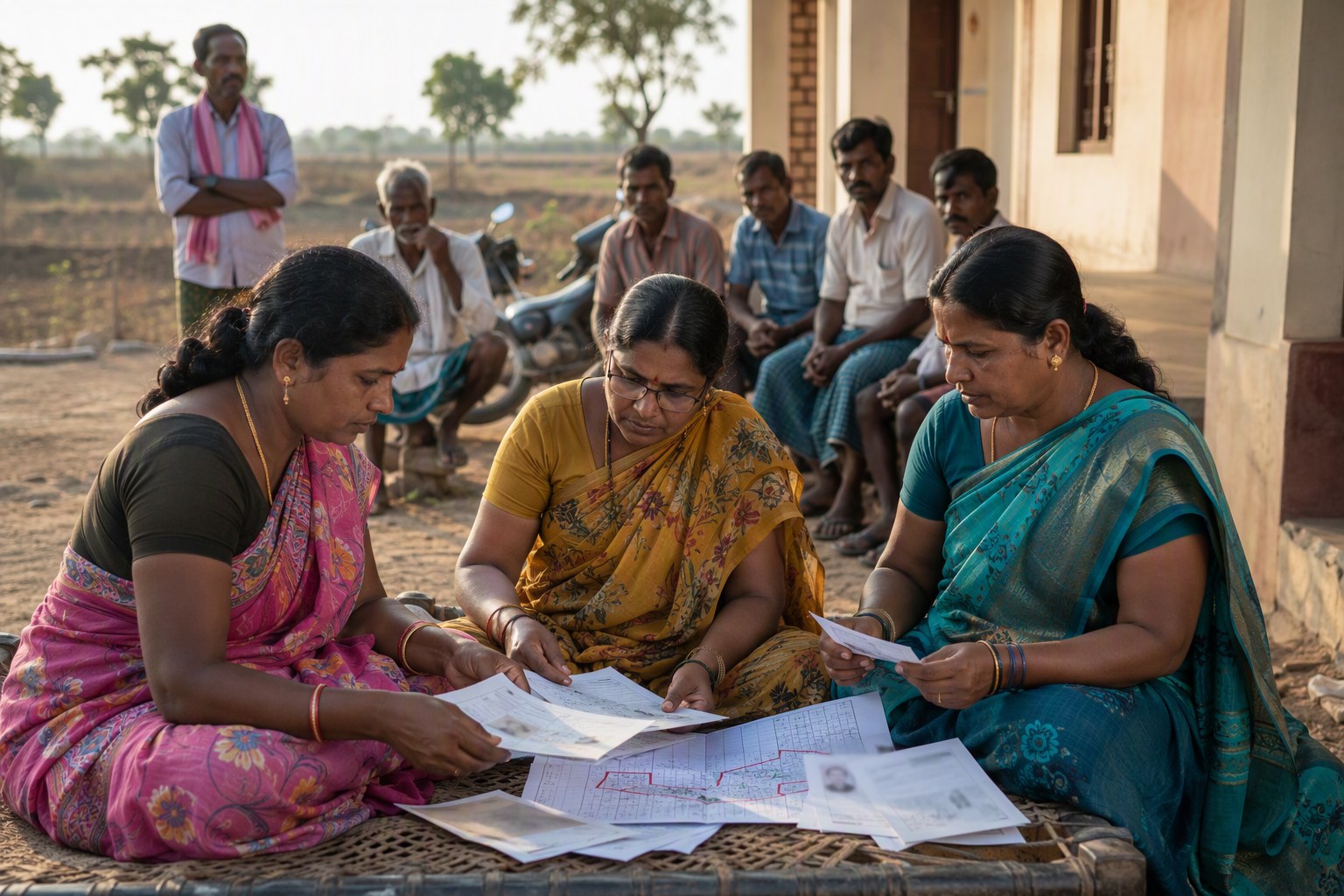
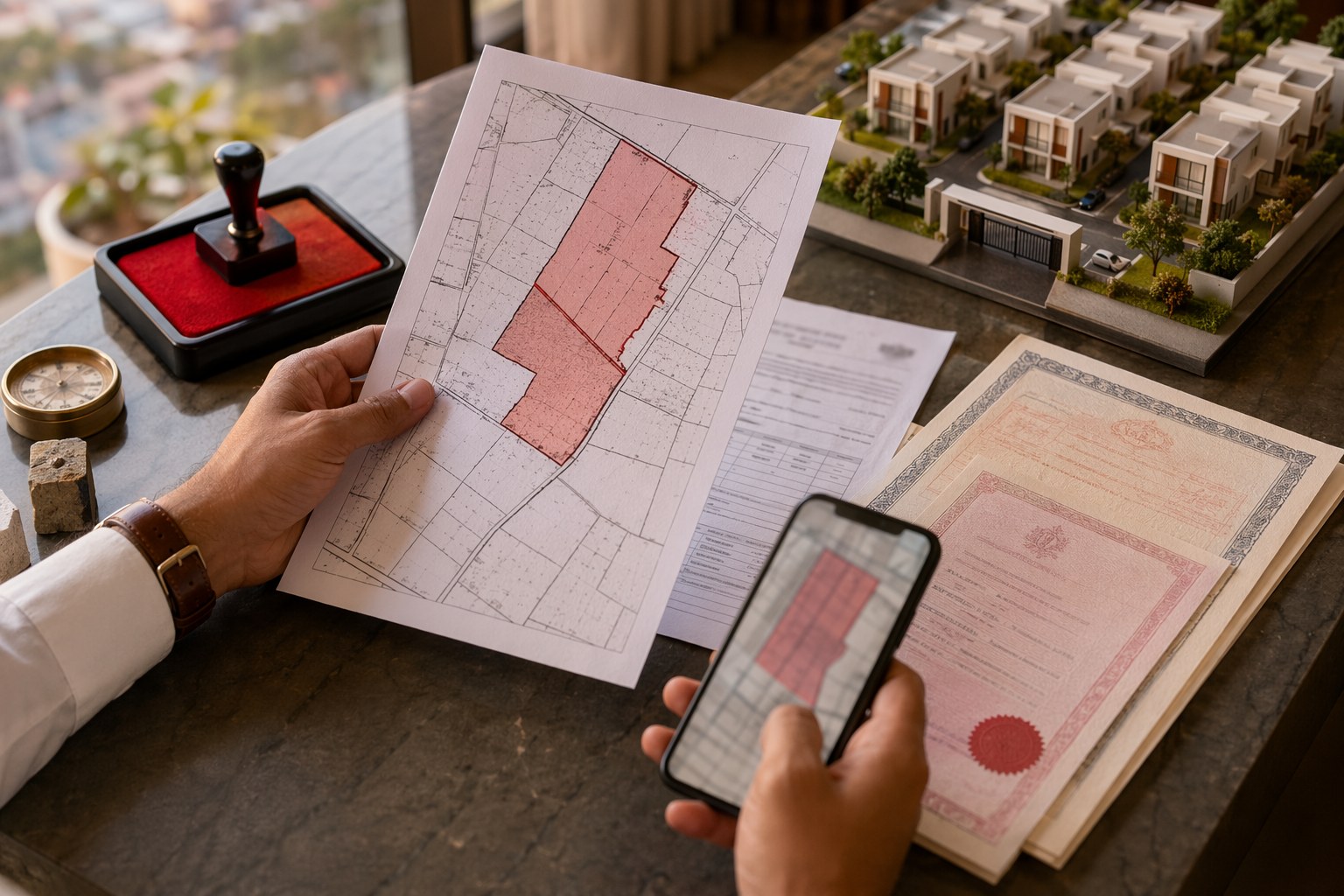
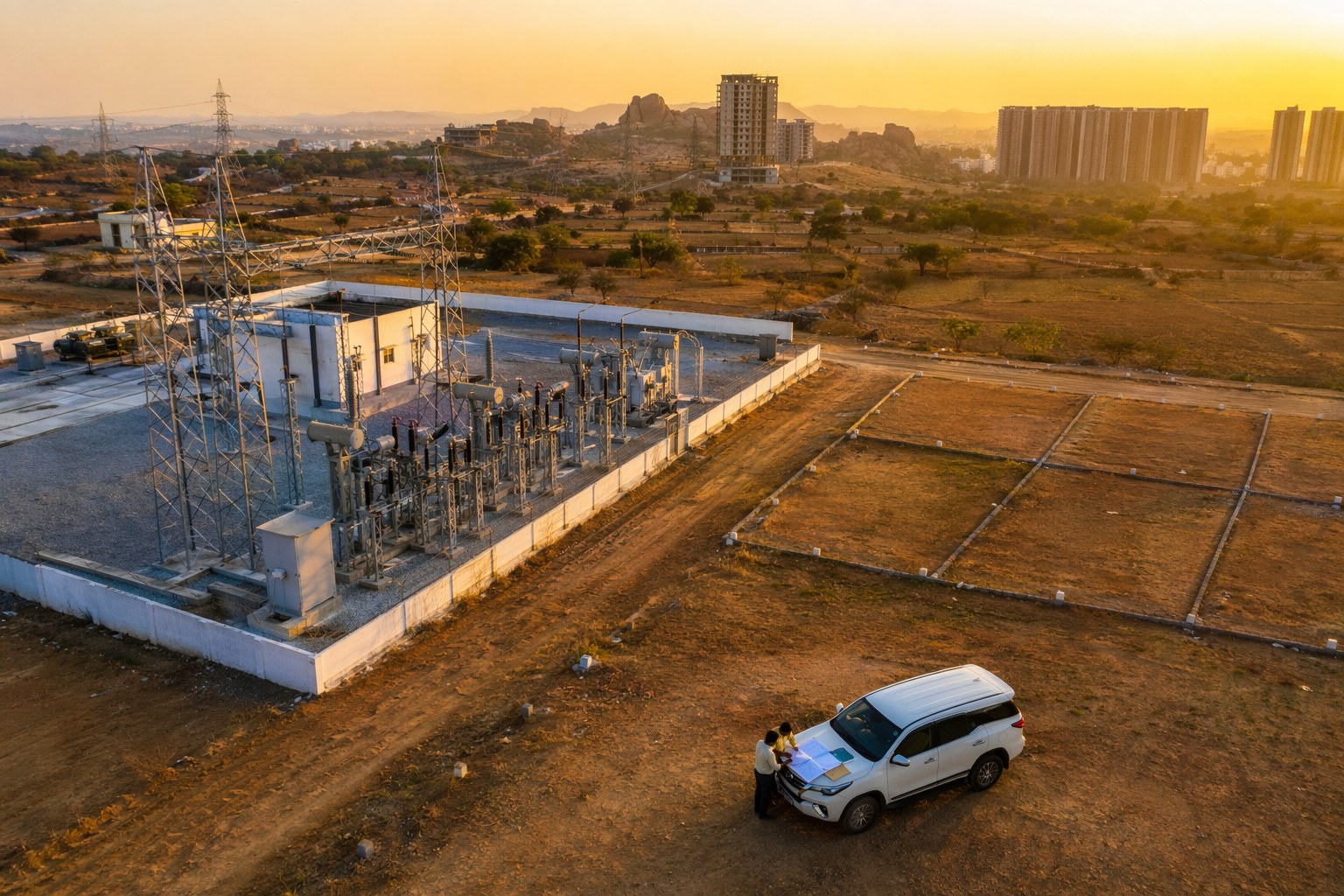
Public Library Sites May Face 22-A Checks Across Telangana as land verification becomes stricter at SRO level and through Dharani-linked records. The immediate issue is not just sale or purchase. Even a donated plot, an old panchayat land parcel, or a site earmarked for a reading room can get delayed if the survey number appears in the Section 22-A prohibited properties list.
As per latest IGRS data available to Verified.RealEstate, Telangana has 3,076,153 prohibited properties under Section 22-A. That number tells us why local bodies, library committees, donors, trustees and residents should not treat a library site as a simple community asset without title checks. In Hyderabad and surrounding districts, we have seen public-use land carry old notings such as government land, assigned land, endowment land, wakf land, ceiling surplus land or court dispute. Any one of these can slow down a library upgrade.
Public Library Sites May Face 22-A Checks Before Upgrades
The news angle is simple: Telangana’s verification culture around Section 22-A is expanding from pure registration scrutiny to broader land-use caution. Earlier, many neighbourhood-level library proposals moved on goodwill: a donor offered a plot, a colony association identified space, or a local body permitted an unused building. Now, before money is spent on renovation, digital library rooms, reading halls or children’s study spaces, the first question is likely to be: is the land registrable and clean in government records?
In practical terms, this affects places like Serilingampally mandal, Rajendranagar mandal, Uppal mandal, Malkajgiri mandal, Hayathnagar mandal and Shamirpet mandal, where village records, municipal layouts and older revenue entries often sit together. A plot near a school in Kukatpally, a colony library room in LB Nagar, or a donated site near Gachibowli may look fine on the ground. But the survey number, pahani entry, Dharani status and SRO record may tell a more complicated story.
Our view is clear: public libraries are social infrastructure, but social purpose does not cure a bad title. A clean Section 22-A check should come before foundation work, donor publicity or grant utilisation.
Residents can start with the Section 22-A Prohibited Property Check. If the land is old village land, pair it with the Survey Number Finder and the Encumbrance Certificate Search. These three checks alone can prevent a painful surprise at registration or building-permission stage.
Why Public Library Sites May Face 22-A Checks in Telangana
Section 22-A restrictions are meant to stop registration of certain prohibited properties. The list can include government lands, assigned lands, endowment properties, wakf properties and other categories that the registration department cannot process in the usual way. For a private apartment buyer, the impact is direct: the sale deed may not go through. For public library land, the issue is slightly different but equally serious. A library may not always need a sale deed today, but it will need clear proof of lawful possession, permitted use and transfer history.
Consider a few common Telangana situations. A retired teacher donates a small plot for a colony library. A gram panchayat earlier allowed community use on a corner site. A trust has an old gift deed but the survey number is not matching current Dharani data. A municipal body wants to upgrade an existing reading room near a bus stop. In each case, a 22-A entry can raise questions: Who owns the land? Was the original assignment transferable? Is the land reserved for another public purpose? Is the donor competent to gift it?
This is where the SRO becomes a gatekeeper. Use the Find Your SRO Office tool before drafting deeds or MoUs. For ready reckoner and government value cross-checks, use the Market Value / Guideline Value Search. If a building is proposed, residents should also check land use through the Land Use Zone Finder, because title clearance and land-use permission are not the same thing.
Impact on Donated Plots and Neighbourhood Reading Rooms
Library land is often emotional land. In many Telangana towns, a public library is not only a book room. It is where intermediate students prepare for exams, senior citizens read newspapers, job aspirants sit for hours, and colony meetings happen. That is exactly why weak paperwork should not be ignored.
In our experience, donated public-purpose land usually faces three risks. First, the donor’s title may be incomplete. Second, the land may be in a prohibited category even if local people have used it for years. Third, the present site may not match the old document boundaries. In older parts of Hyderabad such as Chikkadpally, Narayanguda, Mallepally and Secunderabad, boundary descriptions in documents can be based on neighbours, lanes and landmarks. In expanding areas like Tellapur, Kokapet, Narsingi, Bachupally and Adibatla, survey numbers and sub-divisions become more critical.
| Library Site Situation | Likely 22-A Risk | Suggested Check |
|---|---|---|
| Donated private plot | Donor title, past mortgage, prohibited survey number | EC, 22-A check, SRO verification |
| Old panchayat or municipal site | Government land entry or reserved public purpose | Pahani, Dharani status, land-use check |
| Trust-owned reading room | Endowment, wakf or trust restrictions | Title deed review and competent authority clearance |
| Upgradation of existing library building | Mismatch between occupation and revenue record | Survey number, sketch and local body record check |
A basic property file for a public library site should include the mother deed or grant order, latest EC, pahani or relevant revenue extract, municipal or panchayat permission, layout reference if any, and a current survey sketch. The Property Verification Tool can help organise these checks before a committee approaches donors or officials.
What Local Bodies and Library Committees Should Do Now
For district library committees, colony welfare associations and municipal teams, the safest approach is to treat every public library parcel like a high-value civic asset. Do not wait for construction tender stage. Check the land first. If the site is in a mixed urban zone, check whether the proposed use is allowed. If the site is a donated parcel, confirm whether the gift deed can be registered and whether stamp duty treatment is clear. For deed cost planning, use the Stamp Duty Calculator.
Where funds are already promised, one practical step is to create a title note before release of money. The note need not be fancy. It should say who owns the land, how it came to the library, whether Section 22-A applies, whether any EC entries exist, which SRO has jurisdiction, and whether the ready reckoner value has been checked. In Hyderabad’s fast-growing corridors, this discipline matters. A library in a dense locality like Ameerpet has different land pressure from a library site on the edge of Maheshwaram or Medchal mandal, but both need clean records.
We’ve seen community projects suffer because people assumed public use means automatic legality. It does not. Section 22-A is blind to good intentions. If the survey number is blocked, the registration system will treat it as blocked unless proper deletion, clarification or competent authority order is obtained.
Public Access Should Not Become a Casualty
The wider worry is access. If public library sites are caught in long title disputes, students and readers lose. Telangana needs shared learning spaces in old city lanes, migrant worker neighbourhoods, peri-urban gram panchayats and new apartment clusters. But quick construction on doubtful land is also risky. A building raised on a disputed or prohibited parcel can later become unusable, politically sensitive or legally frozen.
The balanced answer is early verification, not fear. Library committees should publish basic land details for public review: village, mandal, survey number, extent, SRO and nature of ownership. Residents can then flag errors before money is spent. This is especially useful in places where village boundaries and municipal ward boundaries overlap, such as parts of Manikonda, Bandlaguda Jagir, Peerzadiguda and Nizampet.
For citizens, the takeaway is direct: when a new public library is announced in your colony, ask for the survey number first. Then check 22-A status, EC and land use. That is not obstruction. That is protecting a community asset for the next generation.
Frequently Asked Questions
Can Section 22-A affect a public library site in Telangana?
Yes. If the survey number is listed as prohibited property, registration, transfer, donation or formalisation of the library site can face scrutiny at the SRO level.
What should a donor check before giving land for a public library?
The donor should check title deeds, EC, pahani or revenue record, Dharani status, 22-A status, SRO jurisdiction and whether the land can legally be gifted for public use.
Is a public-purpose library automatically safe from land objections?
No. Public purpose does not remove title defects. Government land, assigned land, endowment land or disputed land can still attract restrictions.
Which tools help residents verify a proposed library site?
Start with the Section 22-A check, EC search, survey number finder, SRO finder and land-use zone finder. These give a practical first-level picture before legal review.