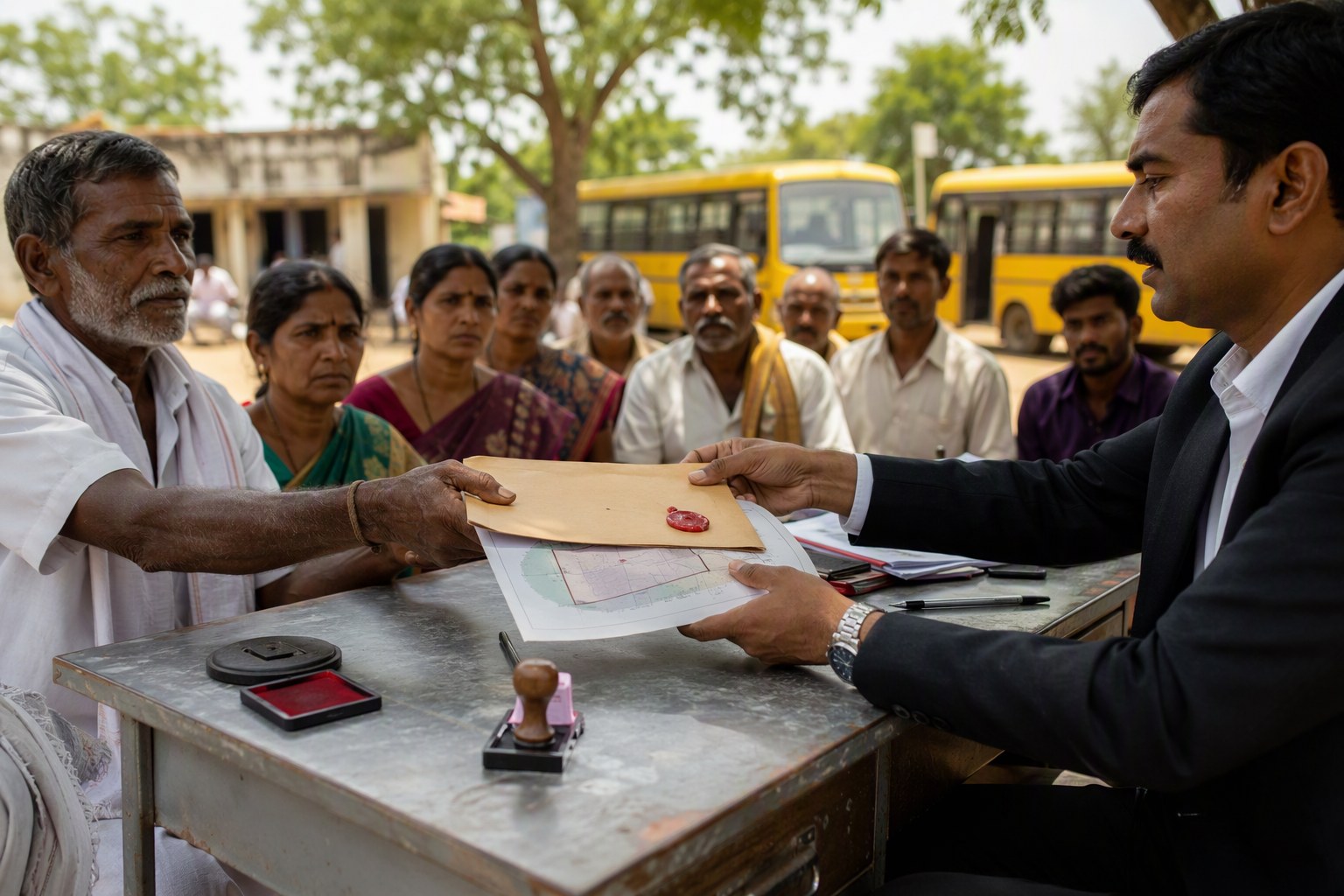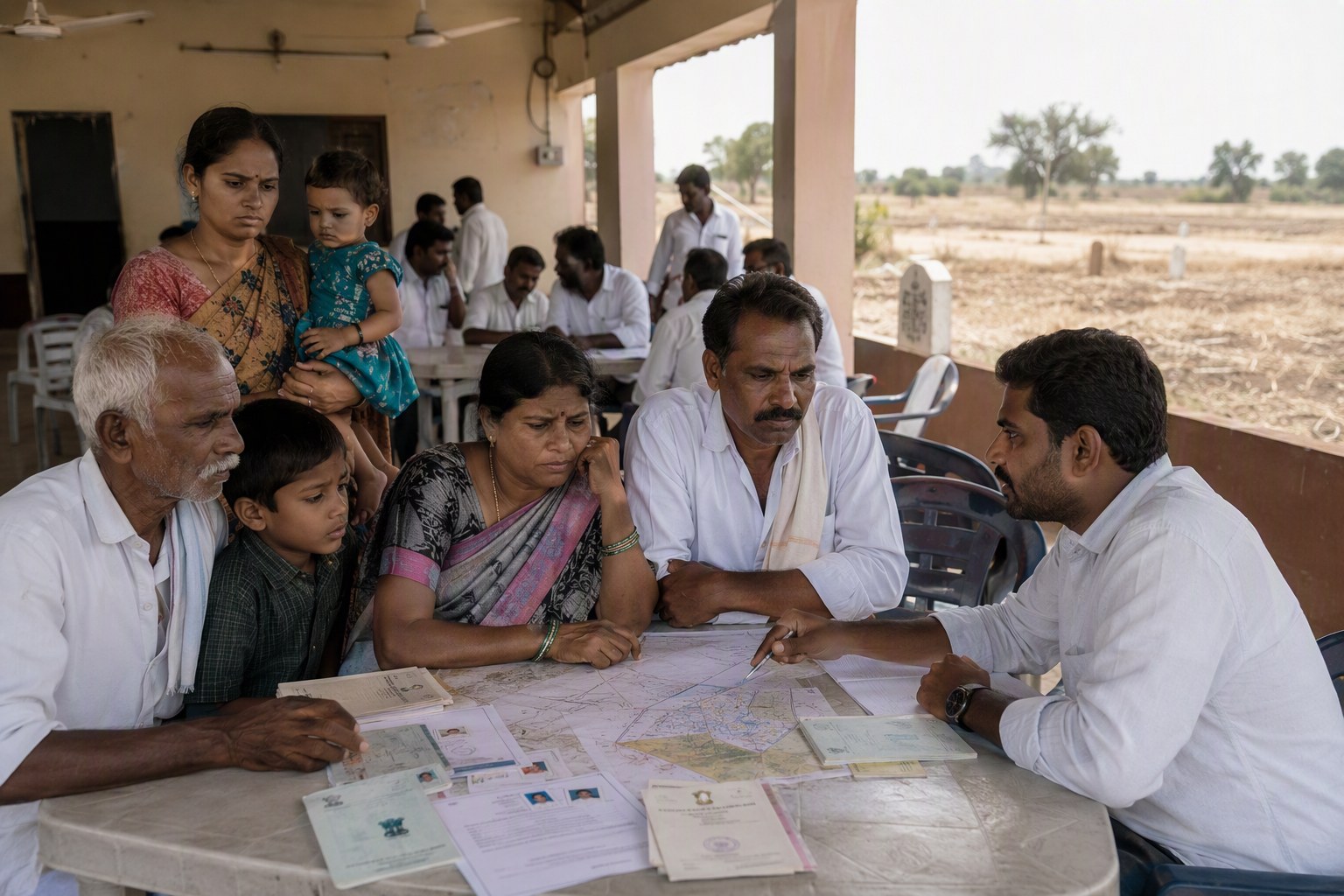
Telangana SHGs May Help Villagers Check 22-A Land Before Sales by acting as local awareness points for families who may not know how to verify whether their survey number is listed as prohibited under Section 22-A before signing a sale deed, gift deed, partition deed, or settlement deed.
The issue is not small. As per latest IGRS data available with Verified.RealEstate, Telangana has 3,076,153 prohibited property records under Section 22-A. For ordinary families in village panchayats and mandal headquarters, one missed check can mean a failed registration, a blocked family transfer, or a dispute that starts only after token advance is paid.
The idea being discussed in real estate circles is simple: self-help groups, already trusted at village level, can become first-level awareness points. They need not replace the SRO, revenue office, Dharani portal, or legal verification. But they can ask the right first question: “Did you check whether this land is in 22-A?”
Why Telangana SHGs May Help Villagers Check 22-A Land Before Sales
In our experience, many rural land problems do not begin with cheating. They begin with incomplete checking. A family in Shankarpally mandal may agree to sell ancestral land because they need money for education. A relative in Moinabad may plan a gift deed. A farmer near Ghatkesar may try to divide land among children. Only at the registration stage do they discover that the property is affected by a prohibited property entry.
Section 22-A entries can relate to government land, assigned land, endowment land, waqf claims, ceiling surplus, court-related restrictions, or other categories notified for registration refusal. The common villager usually hears only one sentence from the document writer or buyer: “Registration avvadhu.” By then, emotions and money are already involved.
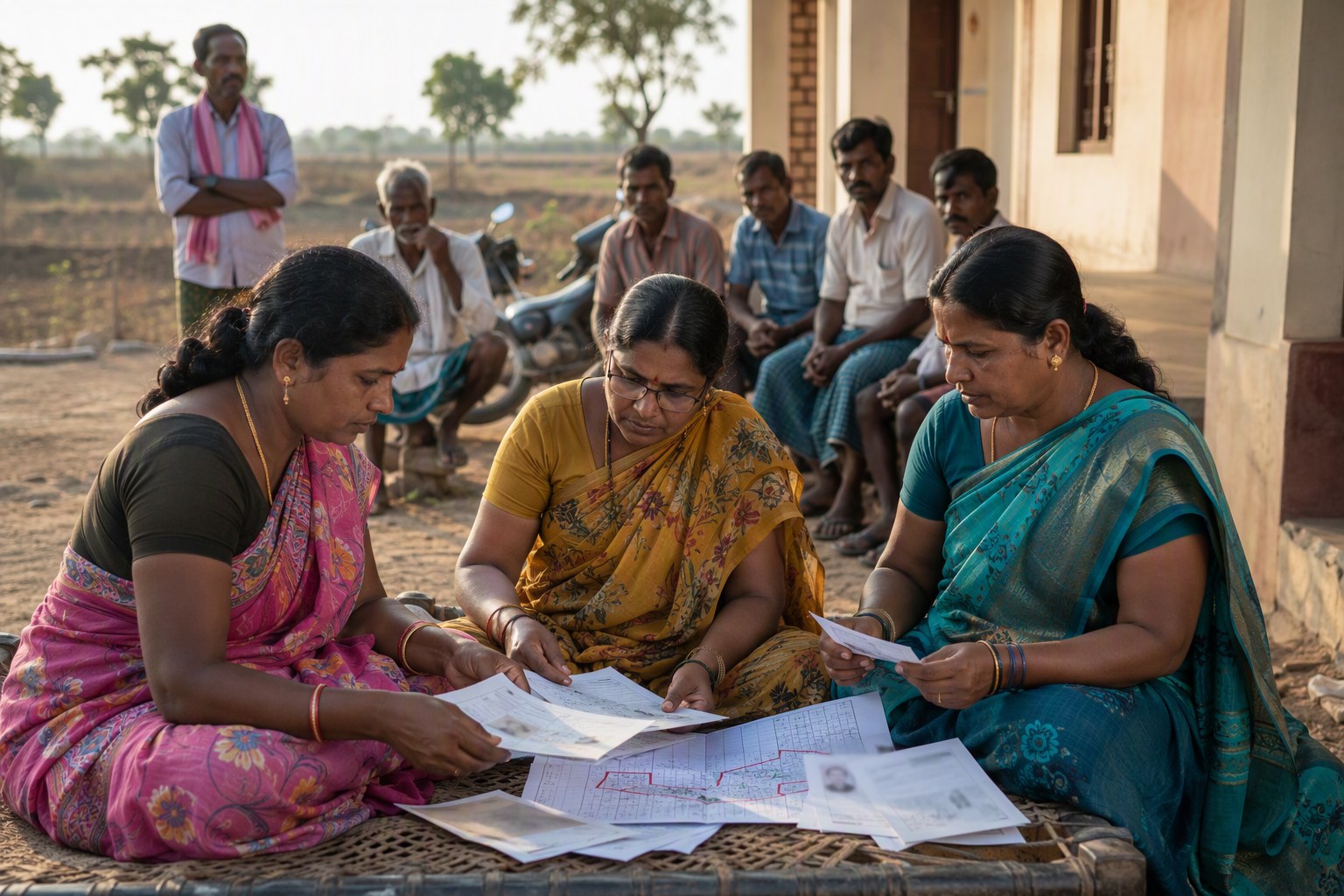
This is where SHGs can play a practical role. Women’s groups in villages already discuss bank loans, pensions, welfare schemes, crop-related issues, and household finances. If they are given basic land-check awareness material in Telugu, they can remind families to verify the survey number before they accept advance money or sign private agreements.
My view is clear: SHGs should not be made responsible for legal certification. But they can become a strong early-warning network, especially in villages where people still depend on word-of-mouth for land information.
Telangana SHGs May Help Villagers Check 22-A Land Before Sales, Gifts, and Family Transfers
The headline focus is sale, but the risk is wider. In Telangana villages, property moves within families through gift deeds, partition deeds, release deeds, settlement deeds, and sometimes unregistered family arrangements. If the land is affected by Section 22-A, the family may not be able to register the intended transfer at the SRO.
We have seen this confusion around fast-growing Hyderabad edges such as Shamshabad, Rajendranagar, Serilingampally, Hayathnagar, Ibrahimpatnam, Medchal, and Keesara. Land values and buyer interest have changed quickly in these belts. But the old revenue record, pahani, survey boundaries, assigned land history, and prohibited status may not be understood by all family members.
A village-level SHG meeting can carry a simple checklist:
- Know the correct survey number and extent before discussing sale.
- Check whether the land appears in Section 22-A prohibited property records.
- Check the Encumbrance Certificate for past transactions, mortgages, and claims.
- Confirm the correct SRO jurisdiction and village mapping.
- Compare Dharani details, old pahani, passbook entries, and family documents.
- Do not accept large token advance only on oral assurance.
Families can start with Verified.RealEstate tools such as the Section 22-A Prohibited Property Check, Property Verification Tool, and Survey Number Finder. For past transaction history, the Encumbrance Certificate Search is also useful. These checks do not replace official advice, but they reduce blind decisions.
What Section 22-A Means for a Telangana Family
Section 22-A is a registration restriction mechanism. In plain Indian English, if a property is placed in a prohibited category, the Sub-Registrar may refuse registration of documents relating to that property. For the family, the problem is not academic. It can affect marriage settlements, sibling partitions, bank loan plans, NRI family transfers, and sale agreements.
One common mistake is assuming that possession means clean title. Another is assuming that if neighbours sold land, our land is also clear. Survey numbers can have different histories even within the same village. A land parcel in one sub-division may be clear, while another part may carry a restriction.
In Hyderabad’s surrounding mandals, this becomes more sensitive because buyers are often in a hurry. They check road access, HMDA limits, ORR distance, and future resale potential. But they may skip the boring items: 22-A, EC, SRO mapping, pahani consistency, and land use. That is where a small awareness push from SHGs can save families from bigger fights.
How SHGs Can Work Without Becoming Land Brokers
The model should be careful. SHGs should not certify land title, negotiate sale consideration, recommend buyers, or collect unofficial fees. Their role should be awareness and referral.
| SHG role | What they can do | What they should avoid |
|---|---|---|
| Awareness | Tell families to check 22-A before sale, gift, or partition | Giving final legal opinion |
| Document readiness | Remind people to keep survey number, passbook, old pahani, and link documents ready | Preparing false declarations |
| Digital help | Guide villagers to online tools and official offices | Charging hidden service amounts |
| Referral | Direct families to SRO, revenue office, or legal professional | Acting as middlemen for registration |
This distinction matters. Telangana land records have a long history: old pahanis, ROR entries, Dharani data, mutation records, court orders, and local claims. A trained lawyer or authorised office must handle final verification. But an SHG member can still say, “Before you take advance, please check the 22-A status.” That one sentence is valuable.
Hyderabad Periphery Needs This Awareness More Than Ever
The pressure is highest where rural land is turning into plotted layouts, farm plots, warehouses, weekend homes, and villa projects. Think of villages around Shankarpally, Chevella, Moinabad, Shamshabad, Maheshwaram, Ghatkesar, Yadagirigutta side, and Ibrahimpatnam. The buyer may be from Hyderabad. The seller may be an old local family. Both may depend on different information channels.
In such transactions, the ready reckoner or market value is only one part. Families also need to know the SRO office, land classification, survey number details, and whether the land is restricted. For valuation-related checking, users can refer to the Market Value / Guideline Value Search and Stamp Duty Calculator. To identify jurisdiction, the Find Your SRO Office tool helps.
We should also talk about women’s role here. In many Telangana households, women are involved in loan repayment, gold loans, SHG savings, children’s education expenses, and emergency decisions. But land sale discussions may still happen between male relatives and outside buyers. If SHG meetings carry land-check awareness, women in the family get a chance to ask basic but strong questions before the deal moves ahead.
A Practical 22-A Checklist for Village Families
Before selling, gifting, or transferring land in Telangana, families should follow a simple sequence:
- Step 1: Confirm the village, mandal, survey number, sub-division number, and extent.
- Step 2: Check whether the property appears in Section 22-A prohibited records.
- Step 3: Review the EC for past registrations, mortgages, court-related entries, or bank charges.
- Step 4: Compare Dharani record, pattadar passbook, old pahani, and family link documents.
- Step 5: Visit the concerned SRO or revenue office if there is any mismatch.
- Step 6: Take legal advice before signing an agreement of sale or accepting major advance.
For buyers, the same checklist applies in reverse. Do not rely only on the seller’s word, village talk, or a photocopy of a passbook. Search the survey number, check the EC, and verify the SRO. If you are buying in a layout or project, also check project approvals and, where applicable, use the RERA Project Lookup.
What Government and Community Groups Can Do Next
If this idea is taken seriously, the best format would be short training modules in Telugu for SHG leaders. Not legal-heavy sessions. Simple examples, screenshots, and warning signs. The training can explain terms like 22-A, pahani, Dharani, SRO, mutation, EC, assigned land, and prohibited property.
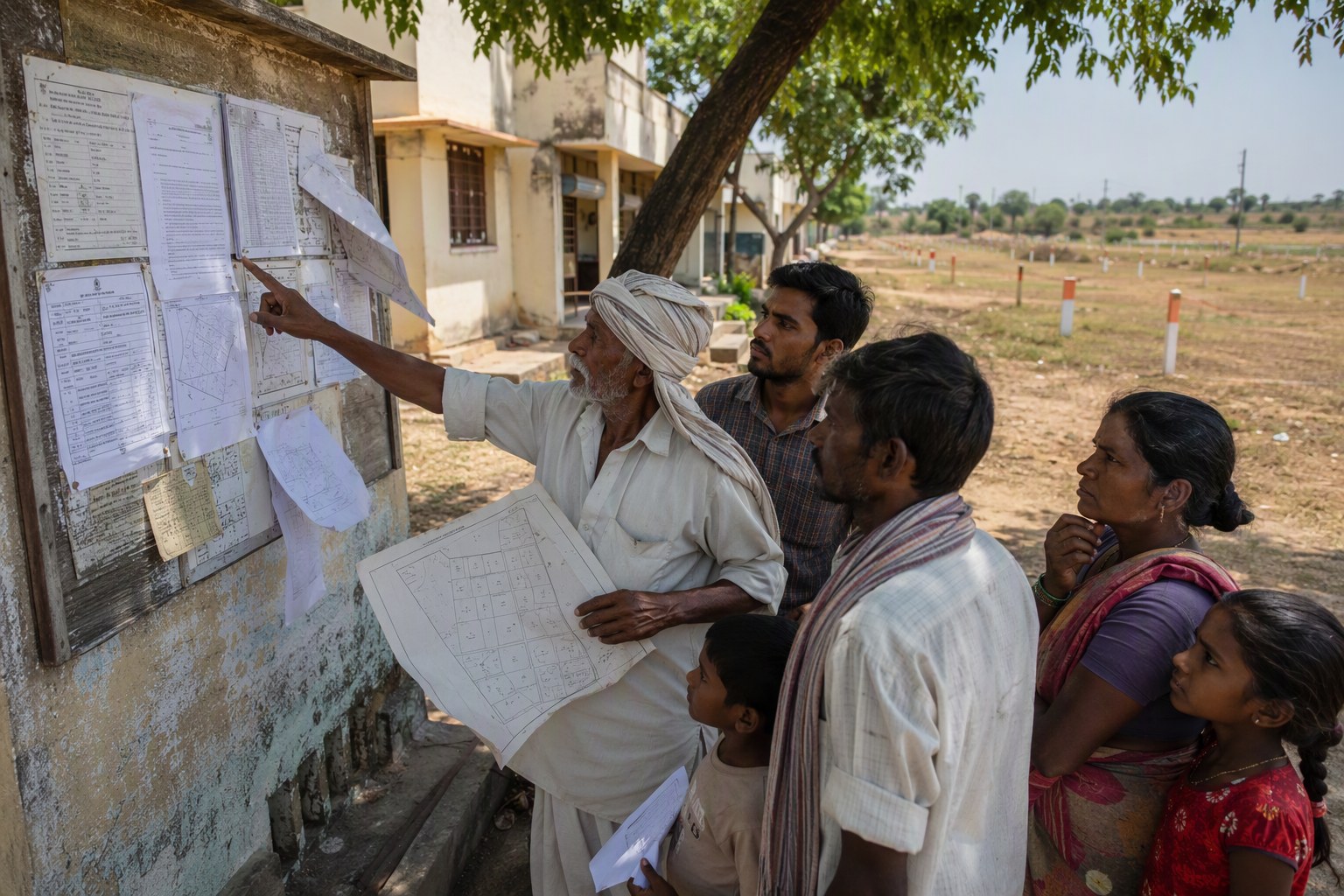
Village secretariats, mandal offices, registration department staff, and legal aid groups can support this. SHGs can keep printed checklists at meeting points. Panchayat notice boards can carry a line saying: “Check 22-A status before land sale or family transfer.” That is not expensive, but it can prevent serious distress.
There should also be caution. Land information is sensitive. SHG members must not be pulled into private disputes between siblings, neighbours, or buyers. They should only guide people towards official verification and documented checks.
Verified.RealEstate View
Telangana’s land market is becoming more digital, but village-level understanding has not moved at the same speed. With 3,076,153 prohibited property records under Section 22-A in the latest IGRS data we track, awareness cannot remain limited to lawyers, document writers, and regular property investors.
SHGs are not a magic solution. Still, they are trusted, local, and active. If they are trained properly, they can help families pause before a risky transaction. In property, that pause is often the difference between a clean transfer and years of stress.
Frequently Asked Questions
What is Section 22-A land in Telangana?
Section 22-A refers to properties where registration may be prohibited or refused, such as certain government, assigned, endowment, waqf, ceiling, or disputed lands, depending on official records.
Can SHGs certify whether land is clear for sale?
No. SHGs should not certify title or give legal opinions. Their useful role is to create awareness and guide families to check 22-A status, EC, SRO jurisdiction, and official records before a transaction.
When should a family check 22-A status?
Check before accepting advance, signing an agreement of sale, executing a gift deed, partition deed, release deed, or any family transfer document. Waiting until registration day is risky.
Which tools can help with initial land verification?
Start with the Section 22-A Prohibited Property Check, Property Verification Tool, Survey Number Finder, EC Search, and Find Your SRO Office tools on Verified.RealEstate.