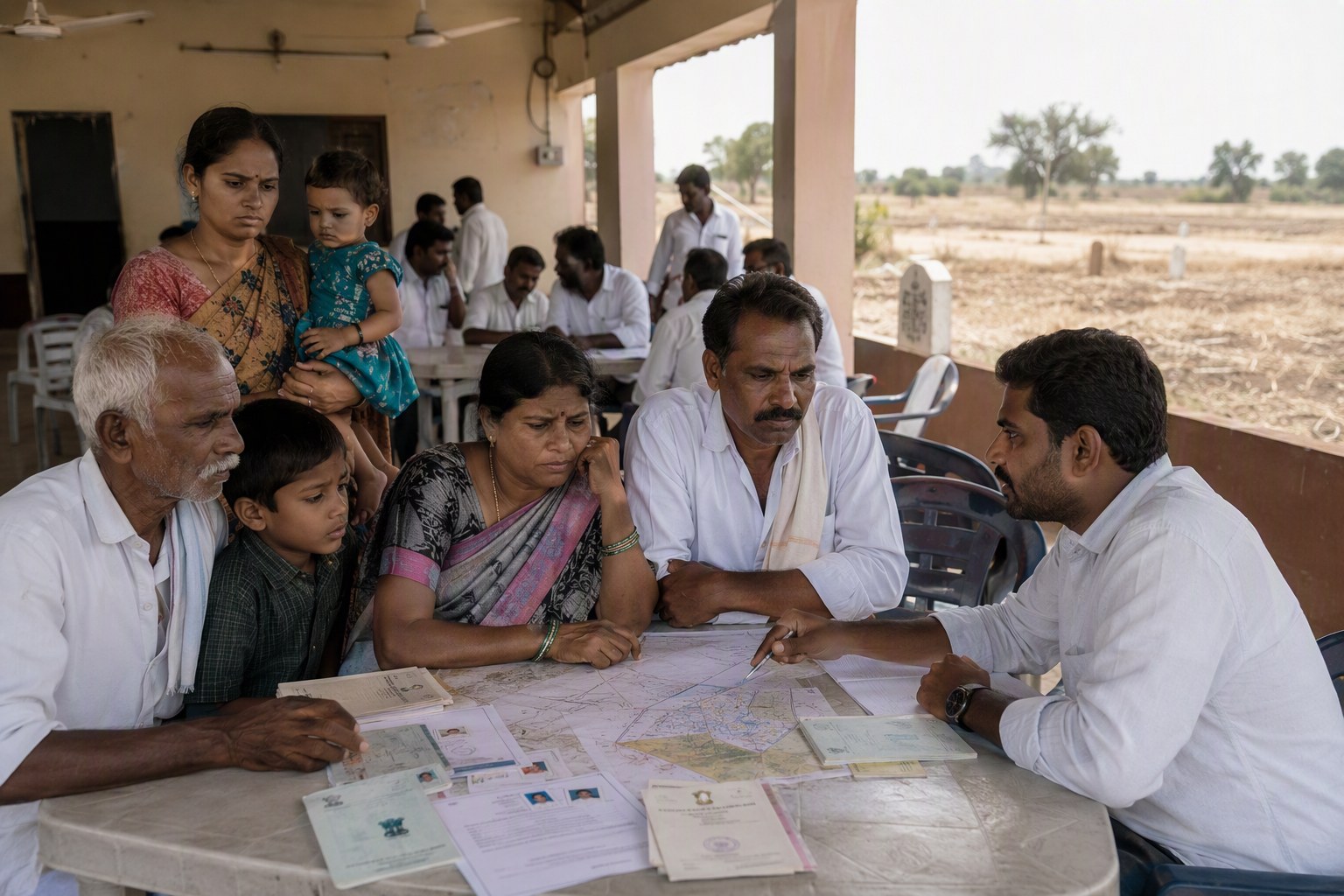
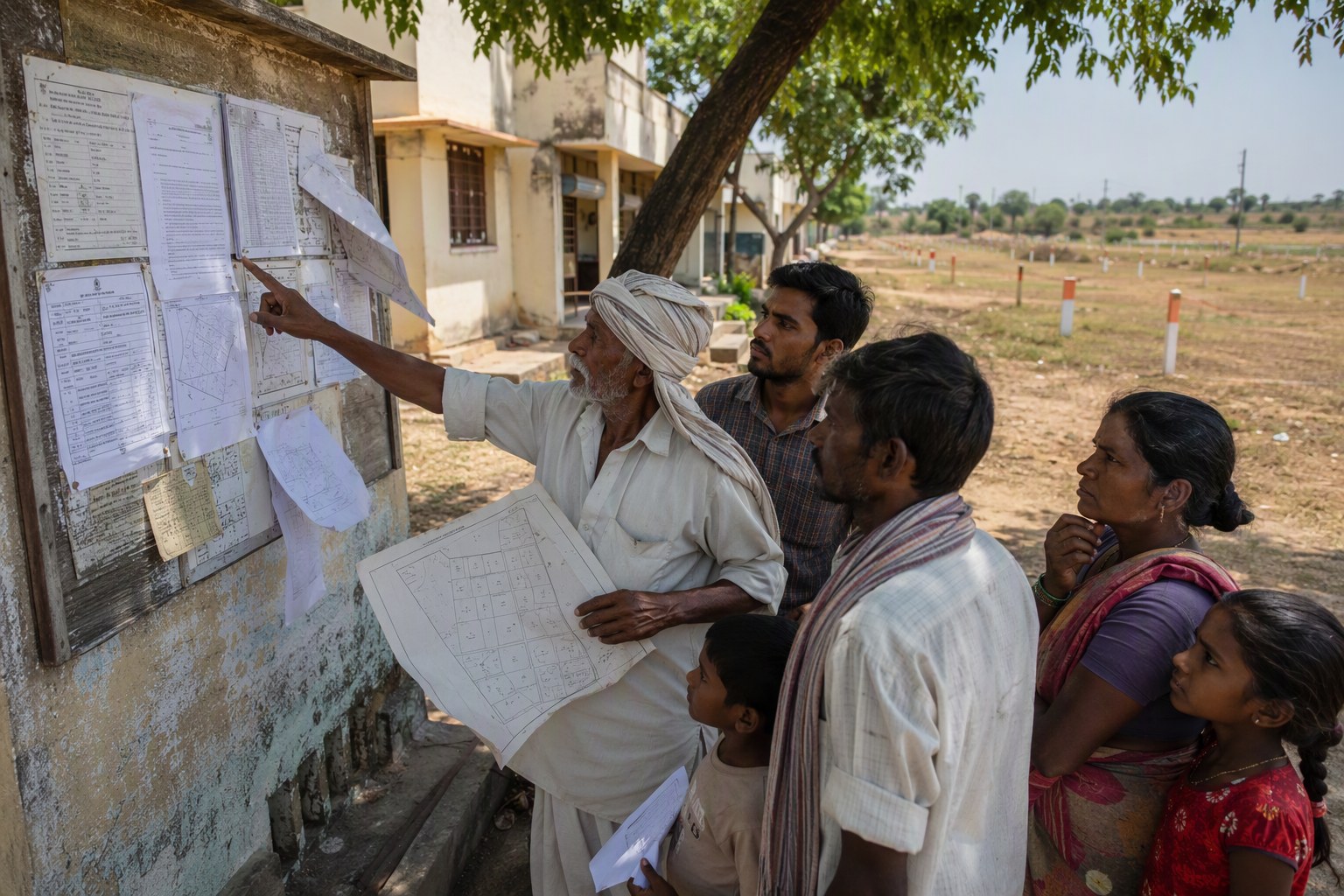
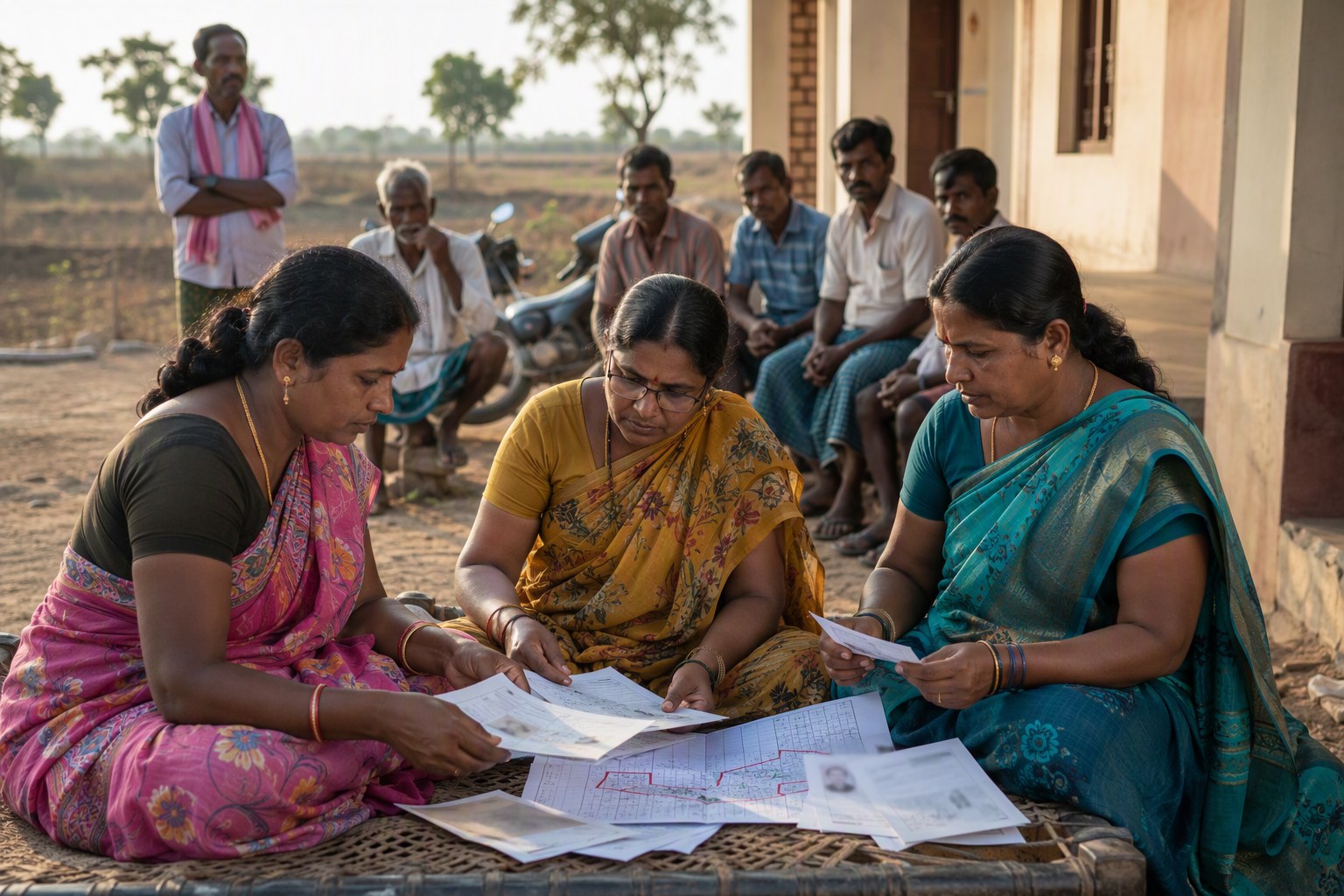
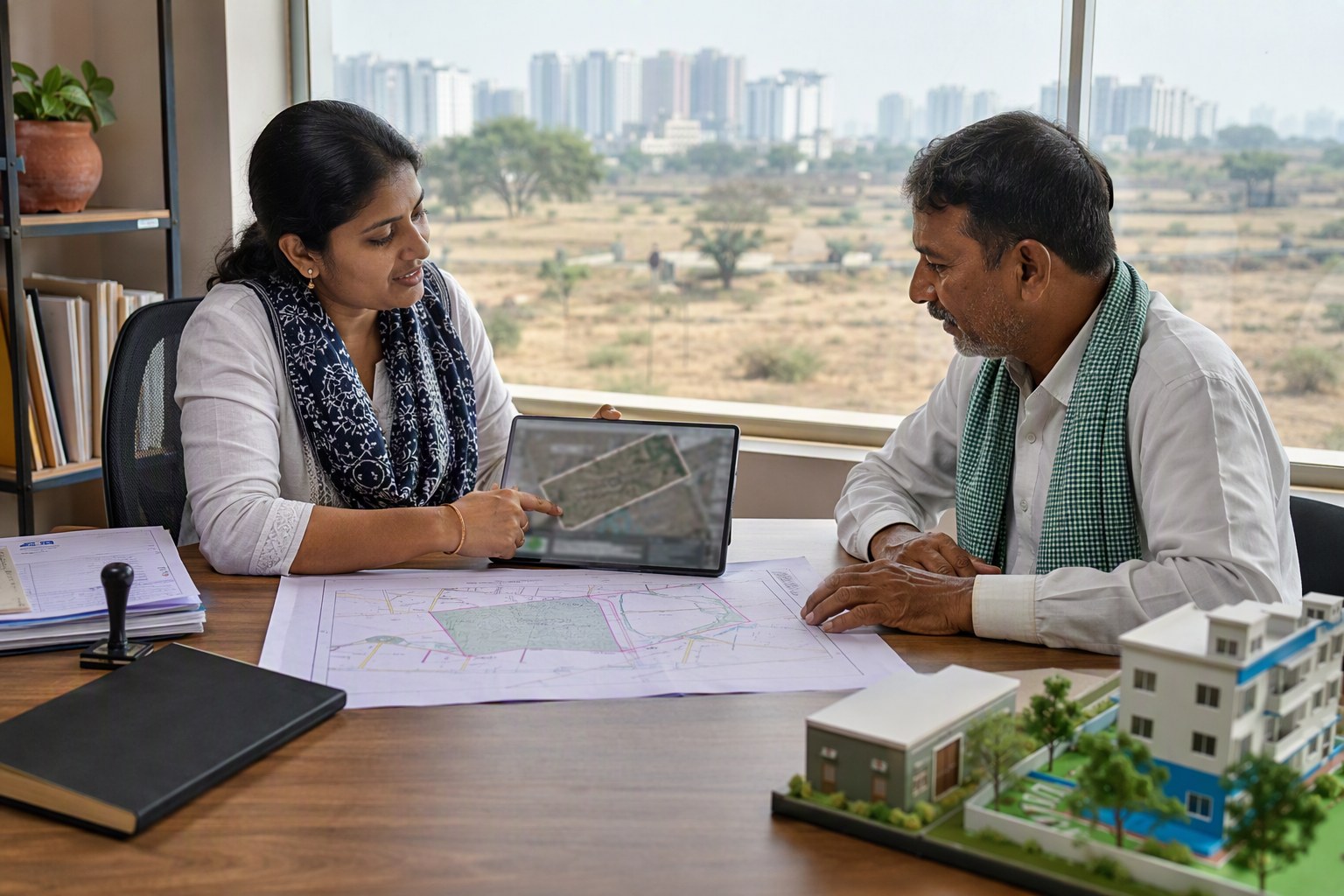
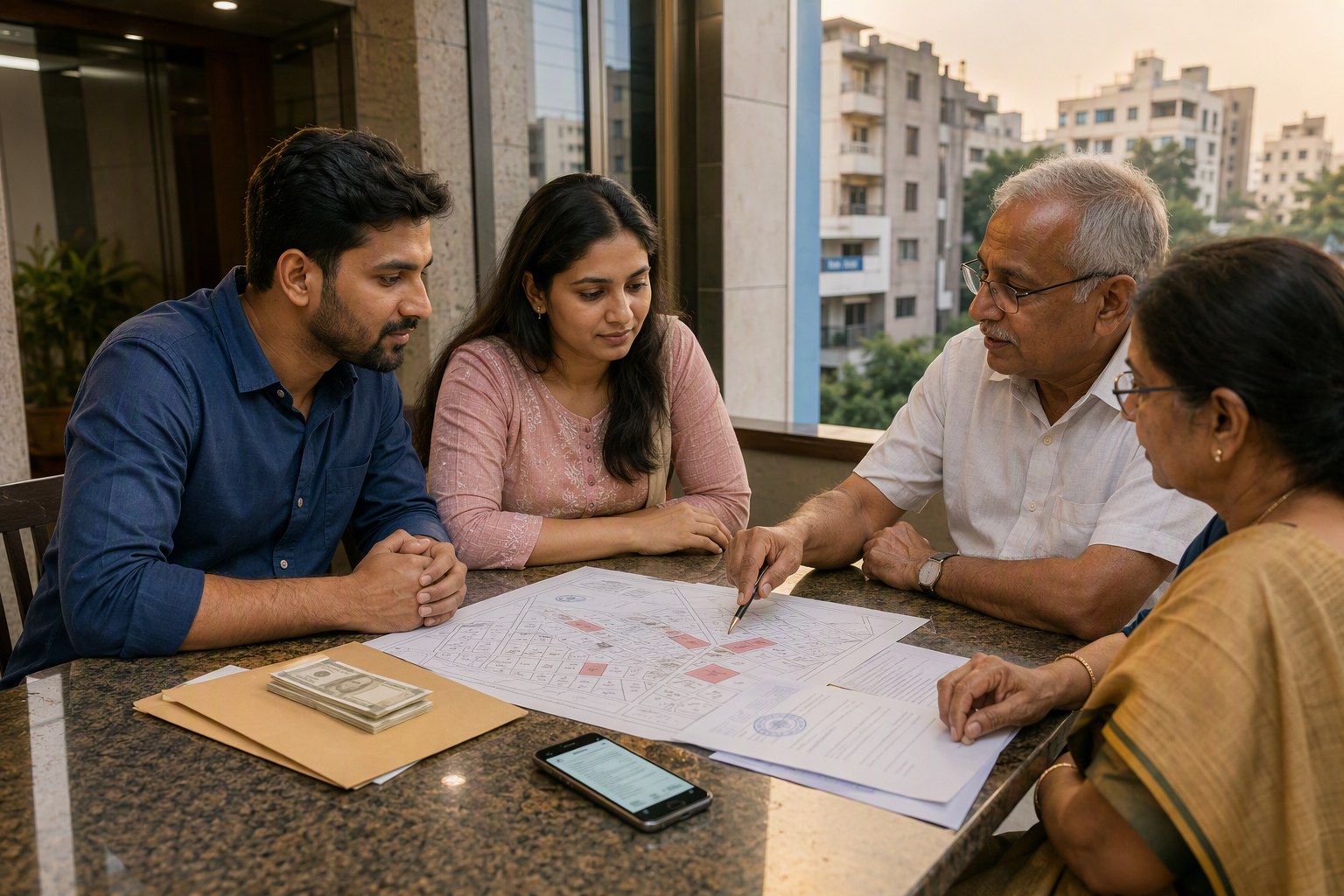
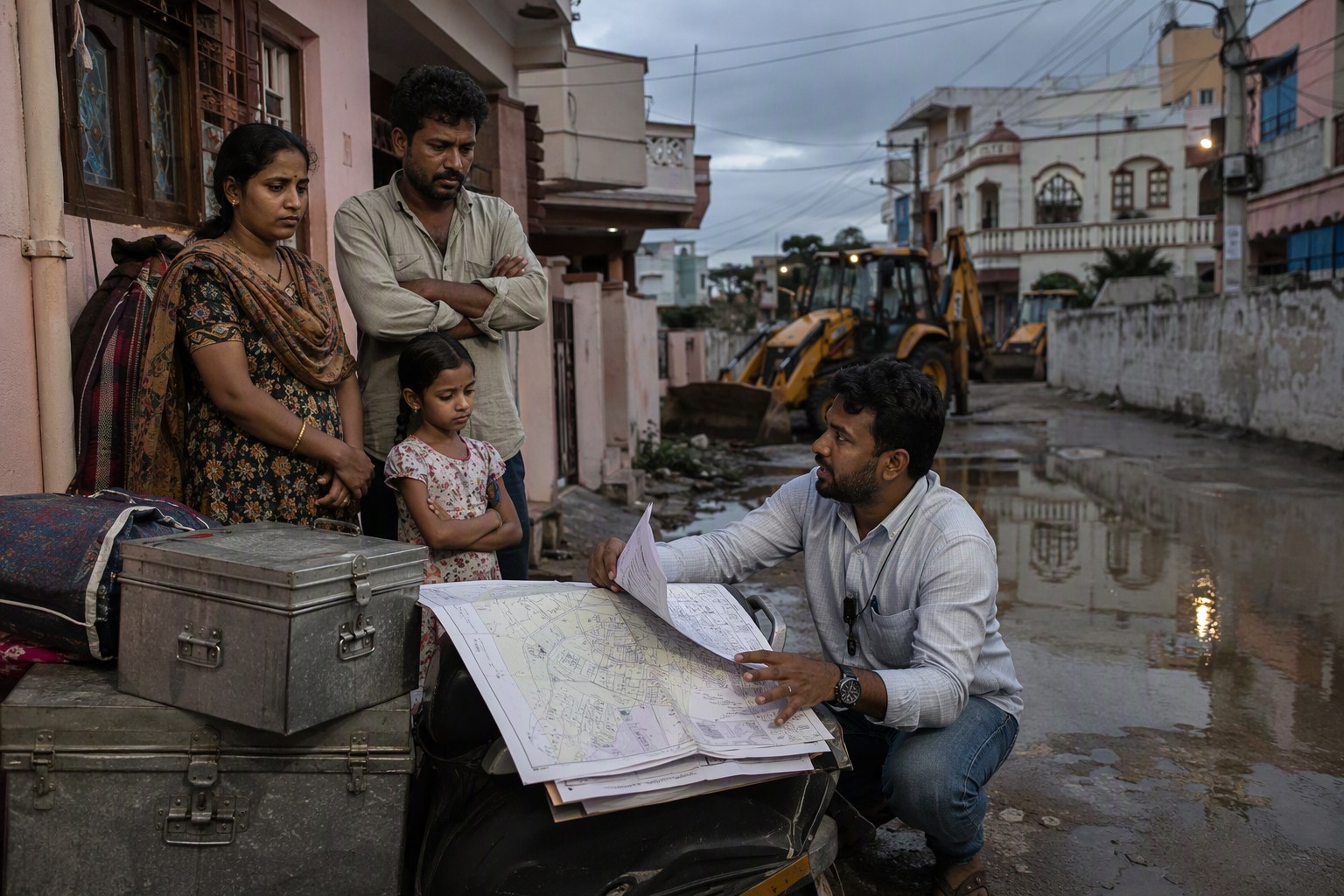
Community Halls Face Fresh 22-A Title Review in Telangana is not just a paperwork story. It is about protecting shared neighbourhood assets before they are renovated, leased, booked for public functions, or pulled into local disputes. In our experience, community halls are often built with donations, panchayat support, trust funds or association money, but the underlying land record may still sit in an old survey number, a gram panchayat account, a society name, or worse, a disputed entry.
As per the latest IGRS-linked prohibited properties data available with Verified.RealEstate, Telangana has 3,076,153 properties listed under prohibited properties, commonly referred to through Section 22-A. That number is a serious reminder: before any community hall is upgraded or opened for wider public use, the title must be checked against SRO, survey, pahani, dharani and local body records.
Community Halls Face Fresh 22-A Title Review in Telangana: What changes on the ground?
The immediate impact will be felt by colony associations, caste sangams, welfare groups, religious trusts, municipal bodies and gram panchayats that manage public halls. A 22-A title review means the property is checked to see whether it falls under a prohibited category where registration, transfer or certain transactions may be restricted.
For a private plot buyer, this is already a routine fear. For a community hall, the problem is more sensitive. A hall in Kukatpally, Uppal, Serilingampally, Hayathnagar, Rajendranagar, Gandipet, Medchal, Shamshabad, Moinabad or LB Nagar may be used by hundreds of families over many years. If the title is unclear, the entire neighbourhood asset becomes vulnerable.
We’ve seen local disputes start with a small question: who actually owns the land under the hall? Once that question comes up, bookings stop, renovation bills get questioned, donors hesitate, and political pressure enters. A 22-A check, done early, gives the public a cleaner answer.
Our view is simple: a community hall should not depend only on local memory. It should stand on clean land records, clear SRO references and transparent public documentation.
Why Community Halls Face Fresh 22-A Title Review in Telangana now matters
Community halls are not ordinary buildings. They are social infrastructure. They host marriages, condolence meetings, colony general body meetings, training camps, vaccination drives, blood donation camps and local cultural events. When such a property is caught in a title doubt, the damage is not limited to one owner.
The 22-A review can help in three ways. First, it can identify whether the land is government land, assigned land, endowment land, wakf-related land, forest-linked land, ceiling surplus land, or another category restricted for registration. Second, it can reduce future quarrels between association members, donors and public representatives. Third, it can make public spending on repairs or expansion more accountable.
In Hyderabad’s older colonies, we often find halls built on land that was informally earmarked during layout development. In fast-growing outskirts like Tellapur, Narsingi, Mokila, Kompally, Adibatla and Tukkuguda, the issue is different: layouts have changed hands, survey boundaries are confusing, and association assets may not have been properly transferred. Both situations need verification, not guesswork.
What exactly should be verified before a community hall upgrade?
A proper title review should not stop with one EC printout. The Encumbrance Certificate is useful, but it may not tell the full story if old records, prohibitory entries or local body proceedings are missing. For community assets, I would check the following:
- Survey number and sub-division: Match the hall location with survey maps, pahani, dharani records and municipal property details.
- 22-A status: Confirm whether the survey number or premises falls in a prohibited property list.
- SRO jurisdiction: Check the correct Sub-Registrar Office before relying on any old registered deed.
- EC history: Review past transactions, mortgages, releases, gifts, settlement deeds or trust transfers.
- Local body permission: Check whether the construction or proposed expansion fits municipal, gram panchayat or HMDA planning norms.
- Association authority: Verify whether the society, trust or welfare association has legal authority to manage, lease, renovate or collect charges.
For quick starting checks, residents can use the Section 22-A Prohibited Property Check, Encumbrance Certificate Search, Survey Number Finder and Find Your SRO Office. These tools do not replace legal due diligence, but they help residents ask better questions before money is spent.
Where disputes usually begin: old layouts, donated land and unclear records
In many Hyderabad neighbourhoods, community halls came up in a practical way. A local leader donated land. A developer promised a site for community use. A gram panchayat allowed construction. Residents pooled money. Years later, the original papers are missing, the association has changed office bearers, and the land record is still not updated properly.
This is common in areas that moved from rural to urban administration. Villages that became part of municipalities or corporations often carry old revenue records alongside new municipal assessments. A hall may have electricity bills, property tax receipts and booking registers, but the title may still be weak. Property tax payment is not the same as ownership; this point must be understood clearly.
In mandals around Ranga Reddy, Medchal-Malkajgiri, Sangareddy and Yadadri-Bhuvanagiri, survey-level clarity becomes even more critical. A small mismatch in survey number can push a public hall into a dispute involving adjacent private land, assigned land or government land. That is exactly where a 22-A review becomes useful.
How residents and associations can respond without panic
The review should not be treated as an accusation. It is a chance to clean up records. If the hall is genuine and the land is properly earmarked, the association can place documents in order. If there is a gap, it is better to discover it before starting a large renovation, adding floors, leasing the hall, or collecting major donations.
Here is a practical workflow we recommend:
| Step | What to check | Why it matters |
|---|---|---|
| 1 | Survey number, village and mandal | Confirms the exact land identity before SRO or dharani checks |
| 2 | 22-A prohibited status | Shows whether registration-related restrictions may apply |
| 3 | EC and link documents | Reveals recorded transactions and possible claims |
| 4 | Guideline value and SRO records | Helps assess record consistency using ready reckoner references |
| 5 | Building and land-use permissions | Checks whether public use and expansion are legally supportable |
For valuation references, residents can check Market Value / Guideline Value Search. If any redevelopment, additional floor or major repair is planned, the FSI/FAR Calculator, Land Use Zone Finder and Road Width Check are sensible starting points.
The transparency benefit: fewer rumours, cleaner public use
Community halls are emotional properties. People feel ownership even when the legal owner may be a registered society, trust, municipality or panchayat. That emotional ownership is good for community life, but it can also create confusion. Clear title records reduce rumours such as “this land belongs to the government”, “one family donated it but never transferred it”, or “the association cannot collect rent”.
A public notice board at the hall can make a big difference. It should display the managing body name, survey number, mandal, SRO, permission details, and a basic document list. In larger colonies, a digital document folder shared with members is even better. No need to publish sensitive personal data, but public assets deserve public clarity.
For halls funded by donations, transparency also protects donors. Nobody wants to contribute to a kitchen upgrade, compound wall or lift installation and later discover that the land is under a prohibitory entry. Before spending association money, run the 22-A check and EC review. It is a small discipline with big value.
What this means for Hyderabad’s neighbourhood future
Hyderabad is expanding fast, but community spaces are not keeping pace in many localities. Apartments have clubhouses, but older colonies still depend on shared halls for social life. Protecting these halls is not only a legal task; it is a civic responsibility.
The fresh 22-A title review can be positive if implemented fairly and transparently. It should not become a harassment tool for small associations. Officials should give clear reasons, allow document submission, and update records where the hall is genuinely meant for community use. Residents, on their side, should stop relying only on oral history and start maintaining proper land files.
My reading is this: the review will be uncomfortable for some groups in the short term, but it can save many neighbourhoods from bigger disputes later. In Telangana real estate, clean title is not only for flats, plots and villas. It matters equally for the hall where a colony gathers.
Frequently Asked Questions
What is a 22-A title review for a community hall?
It is a verification to check whether the land or property falls under Section 22-A prohibited property records, where registration or transfer-related restrictions may apply.
Why are community halls in Telangana being checked?
Community halls are shared public assets. A title review helps confirm ownership, reduce disputes, and ensure that public money or donations are not spent on legally doubtful property.
Which records should a residents association verify?
The association should verify survey number, mandal, pahani or dharani records, SRO jurisdiction, Encumbrance Certificate, 22-A status, local body permissions and society or trust documents.
Does property tax prove ownership of a community hall?
No. Property tax records support possession or assessment details, but they do not by themselves prove ownership. Title documents and land records must also be checked.
Where can residents start checking 22-A status?
Residents can begin with the Section 22-A Prohibited Property Check, EC Search, Survey Number Finder and SRO tools on Verified.RealEstate before taking legal advice.