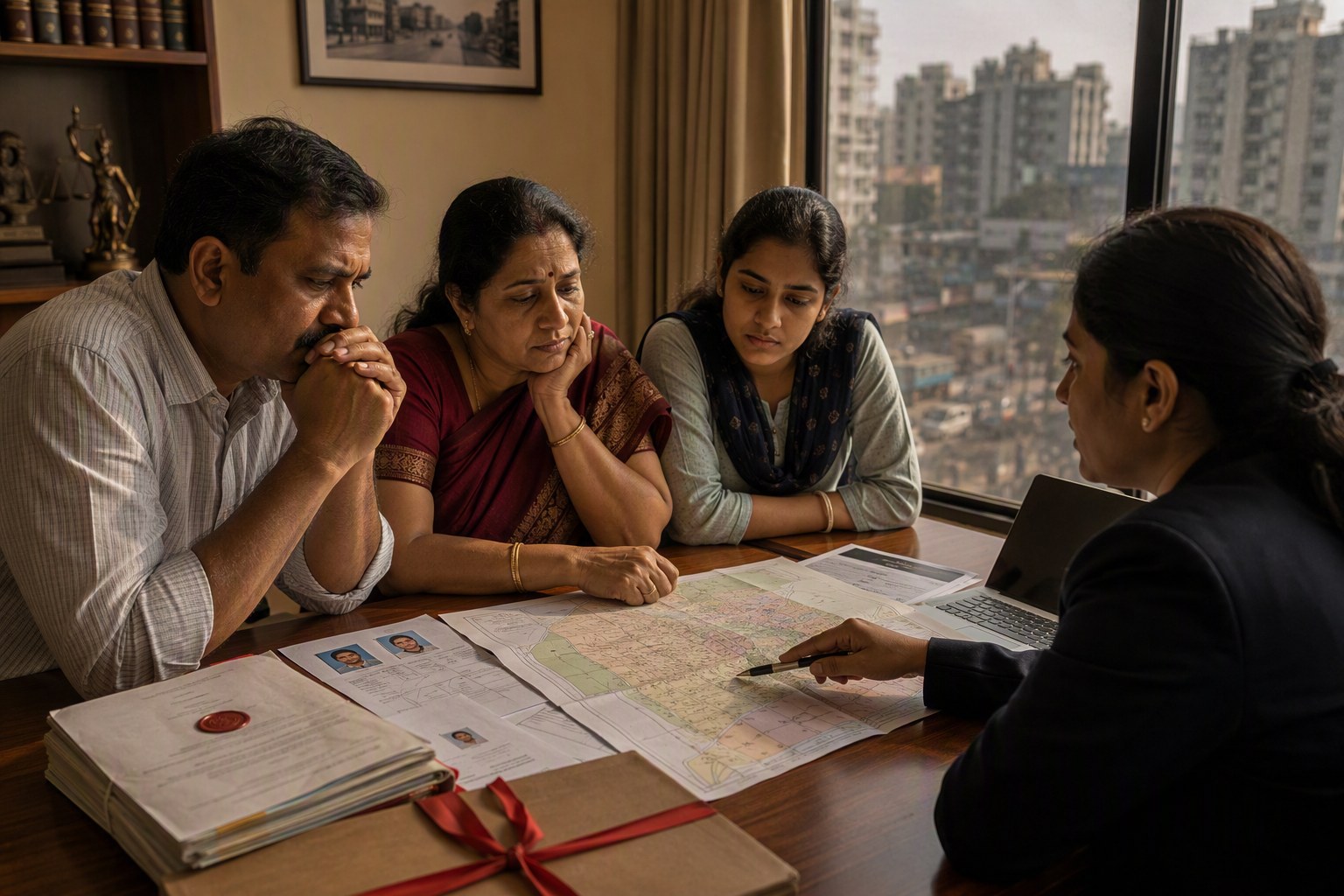
Telangana NGOs may verify 22-A status before land donations as a basic legal safety step, especially when land is offered for schools, clinics, old-age homes, gaushalas, skill centres, burial grounds, community halls or religious trusts. As per latest IGRS data available in our database, Telangana has 3,076,153 prohibited properties under Section 22-A. That number alone should make every trustee pause before accepting a “generous” land gift on plain paper or oral assurance.
In Hyderabad’s expanding edge markets — from Shankarpally and Chevella to Maheshwaram, Medchal, Abdullapurmet, Hayathnagar and Ghatkesar mandals — donation-linked land is often seen as social capital. But if the survey number is hit by Section 22-A restrictions, the NGO may not be able to register, mortgage, develop or legally transfer the land for its project.
Our view is simple: charity land also needs title discipline. A good intention cannot cure a prohibited property entry.
Telangana NGOs May Verify 22-A Status Before Land Donations: Why This Is Now A Board-Level Issue
For NGOs and community trusts, land is not just an asset. It is the foundation for donor confidence, bank approvals, CSR partnerships, local permissions and long-term operations. A trust may receive land for a free school in Moinabad, a rural health centre near Ibrahimpatnam, a women’s hostel near Shamshabad, or a community kitchen in Uppal. If that land later faces registration refusal because of Section 22-A, the project can get stuck before the first brick is laid.
Section 22-A of the Registration Act is used to prohibit registration of certain properties. These may include government lands, assigned lands, endowment lands, wakf-related lands, ceiling surplus lands, disputed categories and other notified properties. The exact reason has to be checked against government records, SRO data and the local revenue trail.
In our experience, NGOs often spend time on donor background, tax paperwork and trust resolutions, but the land file gets treated as a formality. That is risky in Telangana, where old revenue records, pahani entries, mutation history, Dharani status, village maps and SRO records can tell different parts of the same story.
Telangana NGOs May Verify 22-A Status Before Land Donations Before Passing A Trust Resolution
The safest stage to check 22-A status is before the NGO board or trust committee formally accepts the donation. Once a resolution is passed, expectations start building. Donors may announce the gift publicly. Local leaders may attend a bhoomi puja. Volunteers may begin fundraising. If the SRO later refuses registration, the NGO is left to manage embarrassment, sunk costs and community questions.
Before accepting any land donation, trustees should run the survey number through the Section 22-A Prohibited Property Check. They should also confirm the correct village, mandal and SRO jurisdiction using the Find Your SRO Office tool. A wrong village name or an old survey subdivision can give false comfort.
For example, a donor may describe land as being “near Shamshabad” when the actual revenue village may fall under a different mandal or SRO jurisdiction. Similarly, land marketed as “Kollur side” may require careful checking of the exact survey number, village and registration office. In Telangana land work, the locality name used in conversation is not enough. The survey number is the anchor.
What 22-A Can Mean For A Donated Land Parcel
If a land parcel is listed under Section 22-A, the registration office can refuse registration. For an NGO, that can affect:
- Gift deed registration: The donor’s intention may be genuine, but the SRO may not register the gift deed.
- Building permissions: Local bodies may ask for clear title documents before granting permissions for schools, hospitals, shelters or community halls.
- CSR funding: Corporate donors usually want clean title papers before funding construction or long-term operations.
- Bank facilities: Even if the NGO does not plan to sell the land, banks and lenders may reject prohibited or unclear title.
- Future expansion: A trust may be unable to regularise, merge, subdivide or develop the property as planned.
We have seen social organisations become emotionally attached to a land offer because it is free or offered at a concessional value. But “free land” can become expensive if litigation, boundary disputes, missing link documents or 22-A issues surface later.
Practical Due Diligence For NGOs And Trusts
A sensible NGO land acceptance checklist should cover revenue, registration, physical and planning checks. It need not be overcomplicated, but it should be written and approved by the board.
| Check | What NGO Trustees Should Verify | Helpful Tool |
|---|---|---|
| 22-A status | Whether the survey number appears as a prohibited property under government records | Section 22-A Prohibited Property Check |
| Survey number accuracy | Village, mandal, subdivision and extent as per revenue records | Survey Number Finder |
| Encumbrances | Mortgages, sale deeds, gift deeds, court attachments or other registered transactions | Encumbrance Certificate Search |
| SRO jurisdiction | Correct registration office before drafting any deed | Find Your SRO Office |
| Guideline value | Government market value for stamp duty and accounting reference | Market Value / Guideline Value Search |
| Overall title review | Combined review of title, records and risk flags | Property Verification Tool |
Even for a donation, stamp duty and registration treatment must be checked properly. Trustees can use the Stamp Duty Calculator for planning, but final advice should come from the SRO and a property lawyer handling Telangana registrations.
Local Hyderabad Edge Areas Need Extra Care
Land donations usually happen where land is still available in larger extents. Around Hyderabad, that often means peri-urban mandals and fast-changing villages. Chevella, Shankarpally, Moinabad, Maheshwaram, Kandukur, Ibrahimpatnam, Yacharam, Ghatkesar, Medchal, Shamirpet, Patancheru and Abdullapurmet regularly come up in conversations around social projects.
These areas are attractive because NGOs can plan larger campuses — a school with playground, a rehabilitation centre with open space, a rural clinic with staff quarters, or a training institute with hostels. But the same areas can have older assigned land histories, family partitions not fully recorded, missing pattadar passbook links, layout conversion gaps, or mismatch between actual possession and revenue entries.
Ready reckoner or guideline value is only one part of the picture. A land parcel can have an attractive government value, good road access and strong local support, but still be unsuitable if it is restricted under 22-A or if the donor cannot prove clean title. Trustees should not treat a pahani extract or Dharani screenshot as the full title report.
What The Donor Should Provide Before The NGO Says Yes
A serious donor should not object to document verification. In fact, transparent donors usually welcome it because it protects the social purpose of the gift. NGOs should ask for:
- Latest pattadar details and land records for the correct survey number.
- Link documents showing how the donor acquired the land.
- Latest encumbrance certificate from the relevant SRO.
- Copies of any family settlement, partition deed, gift deed, sale deed or court order connected to the property.
- Clear boundary details and physical access route.
- Confirmation on 22-A status and any past registration refusal, if applicable.
- Board-approved draft gift deed prepared after legal review.
If the donor says “registration can be done later” or “our village revenue people know the matter”, trustees should slow down. Social organisations cannot run on verbal assurances. The land must stand on paper.
How A 22-A Check Protects Donors Also
This is not only about protecting NGOs. A 22-A verification also protects the donor’s name and intent. Nobody wants donated land to become a dispute in the village or a headline for the wrong reason. If the land is clear, the donor gets a cleaner record of philanthropy. If the land has an issue, it can be addressed before public commitment.
For family-donated land, all legal heirs should be aligned before the gift deed is prepared. Many Telangana land disputes start after one branch of a family donates or sells land without fully settling internal rights. NGOs should be especially careful when elderly donors, inherited agricultural lands or jointly held properties are involved.
Our Editorial Take
The big learning is this: Telangana NGOs may verify 22-A status before land donations not as a technical formality, but as a governance duty. Trustees are custodians of public trust. If they accept disputed or prohibited land, they risk donor money, volunteer effort and community faith.
With 3,076,153 prohibited properties under Section 22-A in the available IGRS-linked database context, no responsible organisation should accept land without a basic check. The process may take effort, but it is far easier than unwinding a bad gift deed, explaining a stalled project, or fighting a title battle years later.
For NGOs planning land-backed projects in and around Hyderabad, the practical rule is clear: verify the survey number, verify the SRO, check the EC, check 22-A, review the guideline value, then place the proposal before the board. Charity deserves clean land.
Frequently Asked Questions
Can an NGO accept land if it appears under Section 22-A?
Usually, the NGO should not proceed until the exact reason for the 22-A entry is verified and legally resolved. A prohibited property entry can block registration of the gift deed at the SRO.
Is a Dharani record enough before accepting donated land?
No. Dharani details are useful, but NGOs should also check the EC, link documents, survey number, pahani history, SRO jurisdiction and 22-A status before accepting land.
Which tool should trustees use first for donated land?
Start with the Section 22-A Prohibited Property Check, then verify the survey number, SRO jurisdiction and encumbrance certificate. For a fuller review, use the Property Verification Tool.
Does 22-A checking matter for free land donations?
Yes. Even if the land is donated without sale consideration, the NGO still needs a registrable and legally usable title. Free land with title restrictions can stop the project.
Should NGO boards pass a resolution before or after land verification?
The better practice is to pass only an in-principle resolution first, subject to title, EC, 22-A and legal verification. Final acceptance should happen after the land file is cleared.