

Telangana Legal Aid Clinics May Guide Families on 22-A Relief
Telangana Legal Aid Clinics could become a practical first stop for families who are stuck with Section 22-A prohibited property entries, missing land papers, old pahani gaps, or confusion at the SRO counter. As per latest IGRS data, Telangana has 3,076,153 prohibited property entries under Section 22-A. That is not a small clerical issue. It affects sale plans, family partitions, loan discussions, inheritance transfers, and even basic confidence before buying a plot or flat.
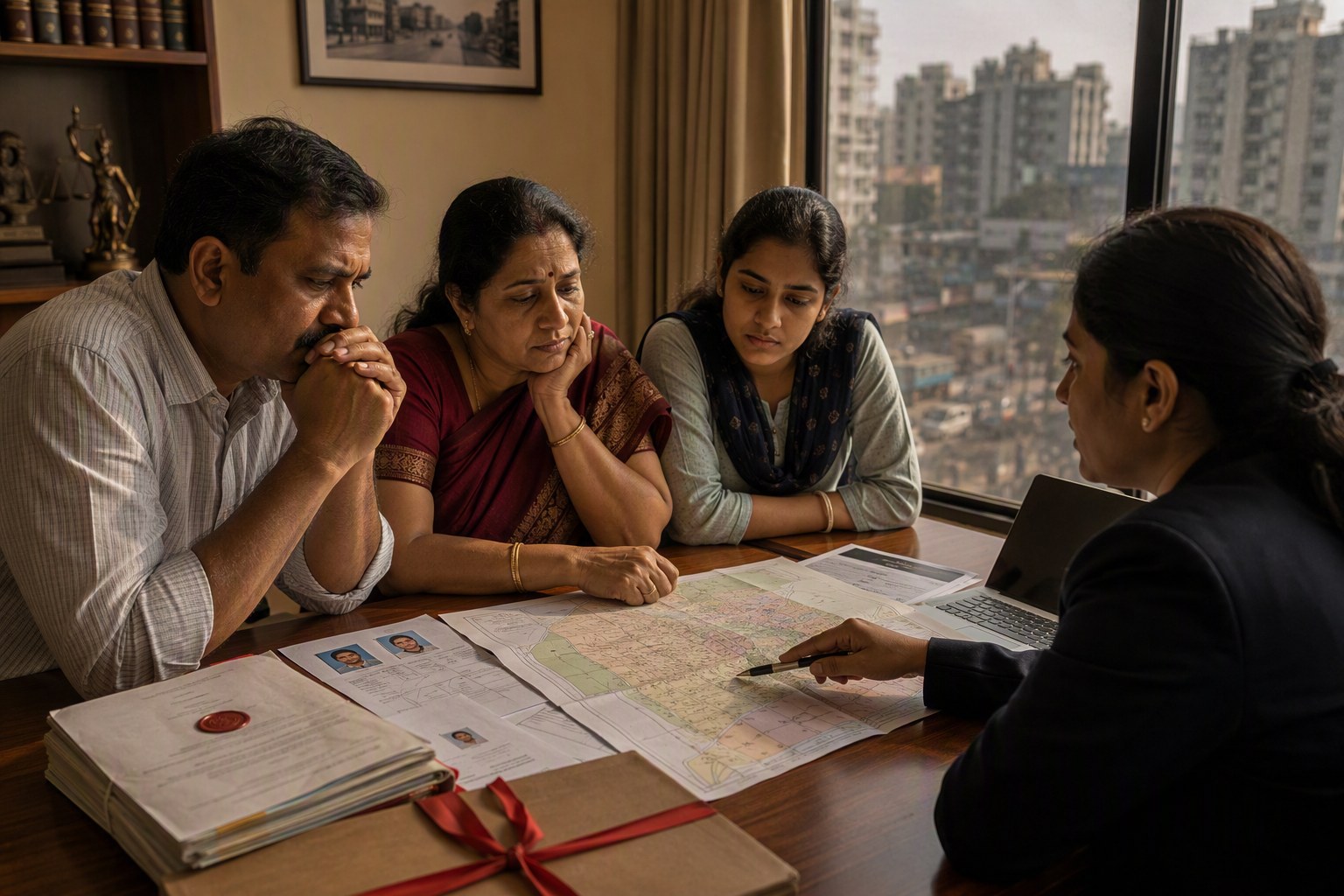
The community impact angle is simple: many families do not need expensive litigation on day one. They first need someone to sit with them, read the entry, check the survey number, compare the pahani and Dharani record, and explain whether the issue is a document gap, a wrong classification, a government land claim, an assigned land restriction, a court-related entry, or something else.
Telangana Legal Aid Clinics and the 22-A Problem Families Face
Section 22-A blocks registration of certain properties. In plain Hyderabad language, if your property or survey number is on the prohibited list, the SRO may refuse registration. The buyer backs out, the bank becomes cautious, and the family starts running between the mandal office, SRO, advocate, revenue office, and sometimes the collectorate.
We have seen this in areas where old village records and modern layouts overlap: Serilingampally, Kukatpally, Rajendranagar, Hayathnagar, Shamshabad, Medchal, Gandipet, Ghatkesar, and parts around Maheshwaram. A family may have link documents and tax receipts, but the survey number may still carry a restriction in government records. In another case, the plot may be clear, but the parent survey number may show an unresolved classification.
This is where neighbourhood-level legal aid clinics can help. They may not give instant relief, and they cannot simply remove an entry. But they can separate panic from process. For a middle-class family trying to sell a house in Miyapur or buy a plot near Adibatla, that first clarity is valuable.
Telangana Legal Aid Clinics Can Decode 22-A Before a Sale Decision
A good legal aid desk should start with the basics: survey number, village, mandal, SRO jurisdiction, current owner name, link documents, pahani, Dharani status, EC, and any old regularisation or layout papers. Without these, a 22-A discussion becomes guesswork.
Before visiting a clinic, families can do a first-level check using Section 22-A Prohibited Property Check. If the land is agricultural or converted from agricultural history, the Survey Number Finder can help identify the correct survey reference. For flats, villas, and resale homes, an Encumbrance Certificate Search is still one of the most basic checks because it shows registered transactions and charges recorded through registration channels.
Our view is clear: do not pay a large advance only because the seller says, “registration will happen somehow.” In Telangana, 22-A status must be checked before token amount, sale agreement, or bank processing.
What a 22-A Legal Aid Clinic Should Check
The best clinics will not stop at saying “go to an advocate.” They should create a document checklist and tell the family which office is relevant. A mistake many people make is going to the wrong counter with incomplete papers. That wastes weeks.
| Issue noticed | What the clinic can review | Likely next step |
|---|---|---|
| Survey number appears in 22-A list | Pahani, Dharani entry, old pattadar passbook, link documents | Clarify classification and prepare representation to competent authority |
| Flat registration blocked due to parent land issue | Builder title chain, layout approval, EC, RERA status where applicable | Check whether the problem is project-level, survey-level, or document-level |
| Inherited property has missing papers | Legal heir records, old sale deeds, mutation papers, family partition documents | Prepare missing-document route before sale discussions |
| Wrong SRO or village confusion | Village name, mandal, SRO mapping, document schedule | Confirm jurisdiction using SRO records |
Families can also use Find Your SRO Office before visiting the registration office. In fast-growing belts like Tellapur, Narsingi, Kollur, Mokila, Pocharam, and Tukkuguda, village and SRO mapping matters because old documents may mention revenue village names that buyers do not recognise today.
Why This Matters in Hyderabad’s Property Market
Hyderabad’s property discussions often start with locality and price talk. “What is the rate in Kokapet?” “How much in Bachupally?” “Is Shamshabad moving?” These are normal buyer questions. But for any property touched by 22-A, the first question should be different: is the title transferable at the SRO?
Ready reckoner or market value rates are only one part of the decision. Families should check the government guideline value using Market Value / Guideline Value Search, but a guideline value does not cure a prohibited status. Stamp duty planning also comes later. The Stamp Duty Calculator is useful when the property is registrable; it should not be treated as proof that registration will be accepted.
In our experience, the biggest risk is not always fraud. Sometimes it is half-knowledge. A seller may genuinely believe the property is clear because tax is being paid. A buyer may assume an EC is enough. A family member may say, “our neighbour registered last year.” None of these replace a proper 22-A check.
Possible Relief Pathways Families Can Discuss
Legal aid clinics can help families understand the route, not promise results. Depending on the reason for the entry, the pathway may involve correction of survey details, production of old revenue records, clarification of land classification, certified copies from the SRO, or a representation before the competent revenue authority.
For flats and plotted developments, clinics can ask for builder documents, approved layout copies, RERA details where applicable, and the title flow from the landowner to developer to buyers. The RERA Project Lookup can be useful for regulated projects, while the Property Verification Tool helps buyers put multiple checks in one place.
There is also a language gap. Many older documents use Telugu revenue terms like pahani, adangal, khata, sethwar, patta, and sarkari. Younger buyers may not understand these words. A simple reference like Telugu-English Property Terms Dictionary can reduce confusion before a clinic visit.
Telangana Legal Aid Clinics Should Focus on Prevention, Not Only Disputes
The strongest community benefit will come if clinics treat 22-A as a prevention issue. Before a marriage settlement, before a family partition, before taking an advance from a buyer, and before signing a sale agreement, families should be encouraged to verify the property status.
For senior citizens, widows, and families with inherited land, this support can be especially useful. Many of them have papers, but not in the neat format a buyer or bank expects. A clinic can tell them what to collect: certified copy of sale deed, EC, pahani, mutation record, Dharani details, property tax receipt, layout approval, court order if any, and identity/legal heir documents where needed.
My opinion: Telangana needs more property-literacy support at the neighbourhood level. Not everyone can interpret revenue records. Not everyone knows which mandal office to approach. If legal aid clinics can translate government record language into practical next steps, many families will avoid bad agreements and unnecessary distress.
What Families Should Do Before Visiting a 22-A Clinic
- Write down the exact survey number, sub-division number, village, mandal, and district.
- Carry copies of sale deeds, link documents, EC, pahani, Dharani record, tax receipts, and layout papers if available.
- Check the property using Section 22-A Prohibited Property Check before meeting anyone.
- Do not rely only on oral assurances from sellers, brokers, or neighbours.
- Avoid paying a large advance until the SRO position and title documents are reviewed.
For Telangana families, 22-A is not just a legal entry on a portal. It is often the difference between a smooth sale and a blocked life plan. Local legal aid clinics, if run with proper property-record awareness, can give people a fair starting point.
Frequently Asked Questions
What is Section 22-A in Telangana property registration?
Section 22-A refers to properties that are prohibited from registration. If a property or survey number is listed, the SRO may refuse registration until the issue is clarified or resolved through the proper authority.
Can Telangana Legal Aid Clinics remove a 22-A entry?
No, a clinic itself cannot remove a 22-A entry. It can help families understand the reason, organise documents, identify the correct office, and prepare for representation or legal advice.
Which documents should I carry for a 22-A property check?
Carry the sale deed, link documents, EC, pahani, Dharani details, pattadar passbook if applicable, tax receipts, layout approval papers, and any court or revenue orders connected to the property.
Is an Encumbrance Certificate enough to prove a property is safe?
No. An EC shows registered transactions and charges, but it may not fully answer 22-A status, land classification, survey disputes, or government restrictions. It should be checked along with revenue and SRO records.
Should I buy a property if the seller says the 22-A issue will be cleared later?
Be careful. Do not pay a major advance or sign binding papers without written clarity from records and proper legal review. First verify the prohibited status, survey number, and relief route.