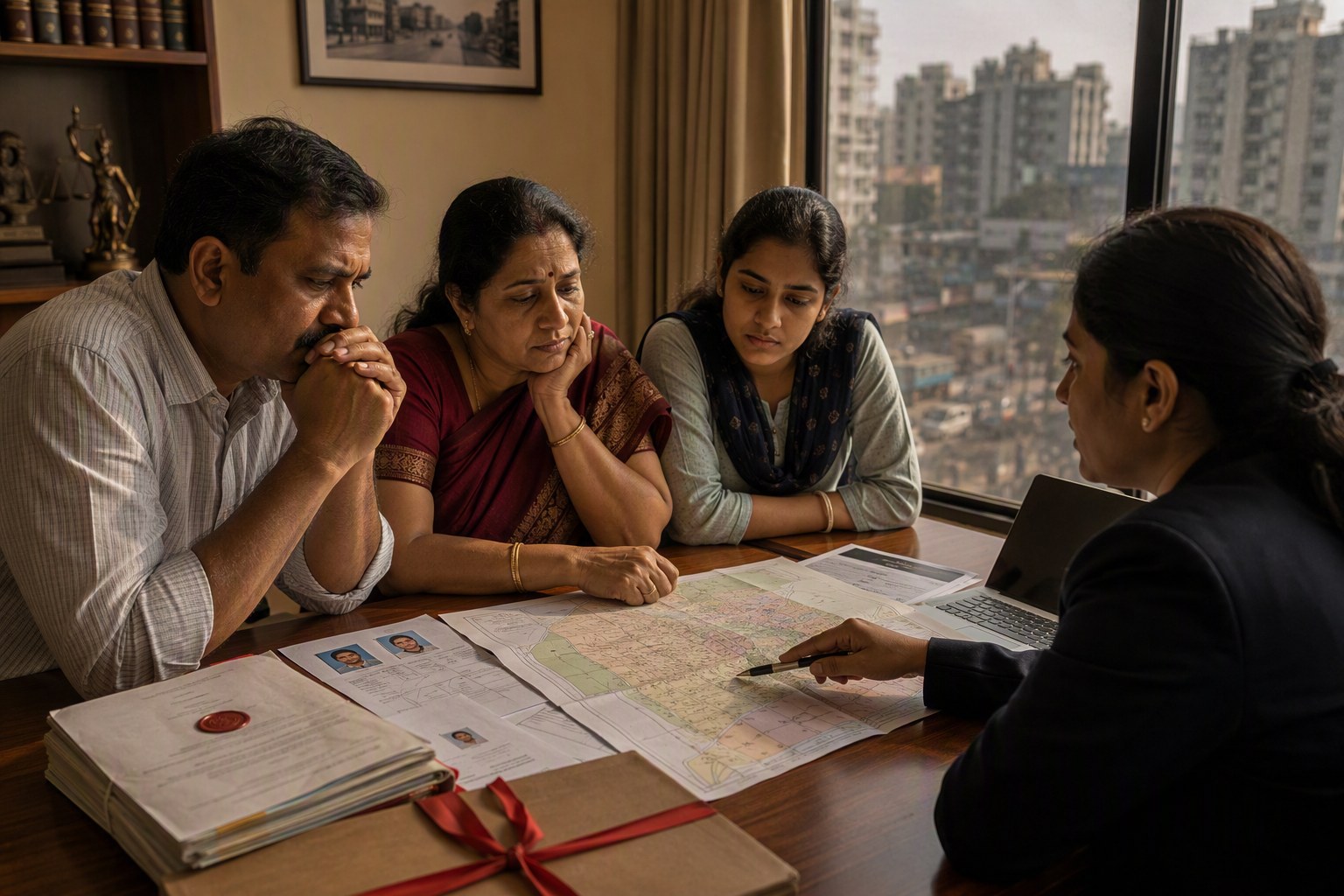
Telangana Panchayats May Open Land Record Help Desks at the village level, and if this idea moves from discussion to implementation, it can directly help families, farmers and small buyers who are stuck with confusing prohibited property entries under Section 22-A. As per latest IGRS data available to us, Telangana has 3,076,153 prohibited property records. That is not a small clerical issue. It affects sale deeds, bank loans, family partitions, inheritance planning and even simple buyer confidence.
The proposed panchayat-level help desk model is being watched closely because many landowners first discover a 22-A problem only when they go to the SRO for registration, apply for a loan, or check Dharani records before selling land. By then, the buyer is nervous, the advance amount is at risk, and the family has already spent weeks collecting old pahani copies, link documents and revenue extracts.
Telangana Panchayats May Open Land Record Help Desks: why this matters now
In our experience, the biggest pain point is not only the prohibited property tag itself. The bigger issue is that ordinary people do not know where the problem started. Was it entered because the land is government land? Is it assigned land? Is it endowment land? Is it ceiling surplus? Is there a court case? Or is it an old revenue entry that was never corrected after subdivision or succession?
For a farmer in a village, going between the panchayat office, mandal revenue office, Dharani portal, SRO and sometimes district collectorate is tiring. For a small buyer from Hyderabad looking at plots around Shankarpally, Mokila, Kollur, Patancheru, Hayathnagar, Ibrahimpatnam, Maheshwaram or Shamshabad, the uncertainty can kill the deal. Nobody wants to buy land where registration may be refused later.
A help desk at the gram panchayat can become the first screening point. It may not replace the Tahsildar, Sub-Registrar or district-level authority. But it can tell citizens what documents to collect, whether survey number details match, which office to approach, and whether the issue appears to be a 22-A block, mutation gap, wrong classification, missing succession record or boundary mismatch.
My view is simple: if the help desk is only a token counter, it will fail. If it is connected to Dharani, IGRS and mandal-level revenue workflow, it can reduce genuine confusion for thousands of households.
Telangana Panchayats May Open Land Record Help Desks for Section 22-A confusion
Section 22-A prohibited property records are a sensitive area because they restrict registration of certain categories of land. These entries are meant to protect public land, assigned land, endowment land and other restricted categories. But on the ground, families often complain that their private patta land is also getting caught due to old records, spelling differences, survey number splits or unclear village maps.
Before paying an advance for agricultural land or a plotted layout, buyers should independently run a basic check using the Section 22-A Prohibited Property Check. For survey number clarity, use the Survey Number Finder. If you are unsure which registration office covers the village, the Find Your SRO Office tool is useful.
In fast-growing belts near Hyderabad, one survey number may have agricultural history, layout activity, inheritance transfers and bank charges over many years. That is why a simple oral assurance from a broker is not enough. Buyers must compare the pahani, Dharani passbook details, EC, market value, village map and SRO jurisdiction before taking a call.
What a panchayat land record help desk should actually do
If Telangana moves ahead with this model, the help desk should be practical. Villagers do not need jargon. They need a clear document checklist and status pathway.
- Survey number screening: Check whether the survey number and sub-division number are written correctly in old and new records.
- 22-A indication: Tell the citizen whether the land appears in prohibited property records and what category is visible, wherever available.
- Dharani mismatch support: Guide families when pattadar name, extent or land classification differs from old pahani or passbook details.
- SRO guidance: Explain which SRO handles the village and whether registration is likely to face a document-level objection.
- Application routing: Help citizens identify whether the issue must go to the Tahsildar, RDO, Collector, Endowments department or another authority.
- Document preparation: Provide a standard checklist for legal heir, partition, mutation, correction and grievance applications.
For buyers, a help desk can also reduce blind dependence on middlemen. Many people are not trying to bypass law. They simply do not understand how a land record entry travels from village revenue accounts to Dharani and then to SRO registration systems.
How buyers in Hyderabad outskirts should respond
Hyderabad’s peripheral land market is active in multiple directions: west towards Shankarpally and Patancheru, south towards Shamshabad and Maheshwaram, east towards Hayathnagar and Ibrahimpatnam, and north towards Medchal and Shamirpet. These areas attract families buying small plots, farmers selling inherited holdings, and salaried buyers investing in agricultural parcels. Land record clarity is the main protection for all three groups.
Before believing any claim that a land parcel is “clear”, do these checks:
- Search the EC using the Encumbrance Certificate Search and compare names with link documents.
- Use the Property Verification Tool for a broader pre-purchase review.
- Check ready reckoner or government market value through Market Value / Guideline Value Search before estimating stamp duty.
- Use the Stamp Duty Calculator before planning registration expenses.
- If the property is part of a plotted development or apartment project, verify registration status through RERA Project Lookup.
One practical point: do not treat a clean EC as final proof of ownership. EC shows registered transactions and encumbrances recorded through the registration system. It may not reveal every revenue restriction, 22-A entry, court dispute or informal family claim. That is where panchayat-level support, if properly designed, can help people ask the right questions early.
Where panchayat help desks can reduce family disputes
Many land record problems are not buyer-seller disputes. They are family issues. A father’s name is still in the record though he passed away years ago. Brothers have divided land orally but not updated revenue records. Daughters are not included in succession documents. One legal heir is abroad. In such cases, families often approach the SRO only at the sale stage and then realise the chain is incomplete.
A village help desk can educate families before the crisis point. It can push people to update legal heir records, mutation entries and subdivision details. It can also explain Telugu property terms to younger family members who may not understand words like pahani, adangal, sethwar, khata, patta, gramakantam and banjar. For quick reference, our Telugu-English Property Terms Dictionary is a useful starting point.
We have seen cases where a family loses a serious buyer not because the land is bad, but because the record is incomplete. Better village-level guidance can prevent that.
What can go wrong if help desks are poorly run
There are risks. A help desk must not become another unofficial approval counter. Staff should not give verbal “clear title” certificates. They should not promise deletion from 22-A lists without proper authority. They should not collect informal charges for printing or forwarding applications. If citizens are made to run from desk to desk again, the whole purpose is lost.
The success of this idea will depend on training, access to updated records, escalation timelines and accountability. Panchayat staff need clear instructions on what they can say and what they cannot say. A simple written acknowledgement for every citizen query will go a long way.
| Citizen problem | What help desk can clarify | Office likely involved |
|---|---|---|
| Survey number appears in prohibited list | Basic category and next document checklist | Mandal revenue office or district authority |
| Name mismatch in Dharani | Whether mutation or succession records are pending | Tahsildar office |
| SRO refuses registration | Whether 22-A, document gap or jurisdiction issue is involved | SRO and revenue office |
| Old family partition not updated | Required records for mutation or partition documentation | Revenue office and legal advisor |
Our take for families, farmers and small buyers
The proposal for Telangana panchayats to open land record help desks is a good community-level idea, provided it is treated as a citizen support system and not as a substitute for legal verification. With 3,076,153 prohibited property records in the system as per latest IGRS data available to us, even a modest reduction in confusion can make a real difference at village level.
For farmers, it can reduce repeated trips to mandal offices. For families, it can create awareness before inheritance and partition issues become sale blockers. For small buyers, it can encourage early verification before paying token amounts. For the government, it can reduce pressure at SRO counters and revenue grievance channels.
My advice is straightforward: use the panchayat help desk if it becomes available, but keep your own file ready. Collect pahani copies, Dharani records, link documents, EC, tax receipts, layout approvals if any, and identity documents of all legal heirs. For any serious purchase, get a proper legal opinion. Land is not like buying a phone. One wrong survey number can lock your money for years.
Frequently Asked Questions
What is the main purpose of Telangana panchayat land record help desks?
The main purpose would be to help citizens understand land record issues at the village level, especially 22-A prohibited property entries, Dharani mismatches, survey number confusion and document checklists before they approach higher offices.
Can a panchayat help desk remove a property from the prohibited list?
No. A panchayat help desk should not be treated as the authority for removing prohibited property entries. It may guide citizens on documents and the correct office to approach, but deletion or correction must follow the official government process.
How can buyers check if land is under Section 22-A?
Buyers can start with the Section 22-A Prohibited Property Check, then compare survey number details, Dharani records, EC and SRO information. A local legal opinion is strongly recommended before paying an advance.
Is an Encumbrance Certificate enough to confirm clear land title?
No. An EC is useful, but it is not enough on its own. It may not show every revenue restriction, family dispute, court issue or prohibited property entry. Buyers should verify revenue records, survey details and registration restrictions also.
Who benefits most from village-level land record help desks?
Farmers, senior citizens, legal heirs, small plot buyers and families with inherited land can benefit the most, because they often need basic guidance on pahani, Dharani, mutation, SRO jurisdiction and 22-A related issues.