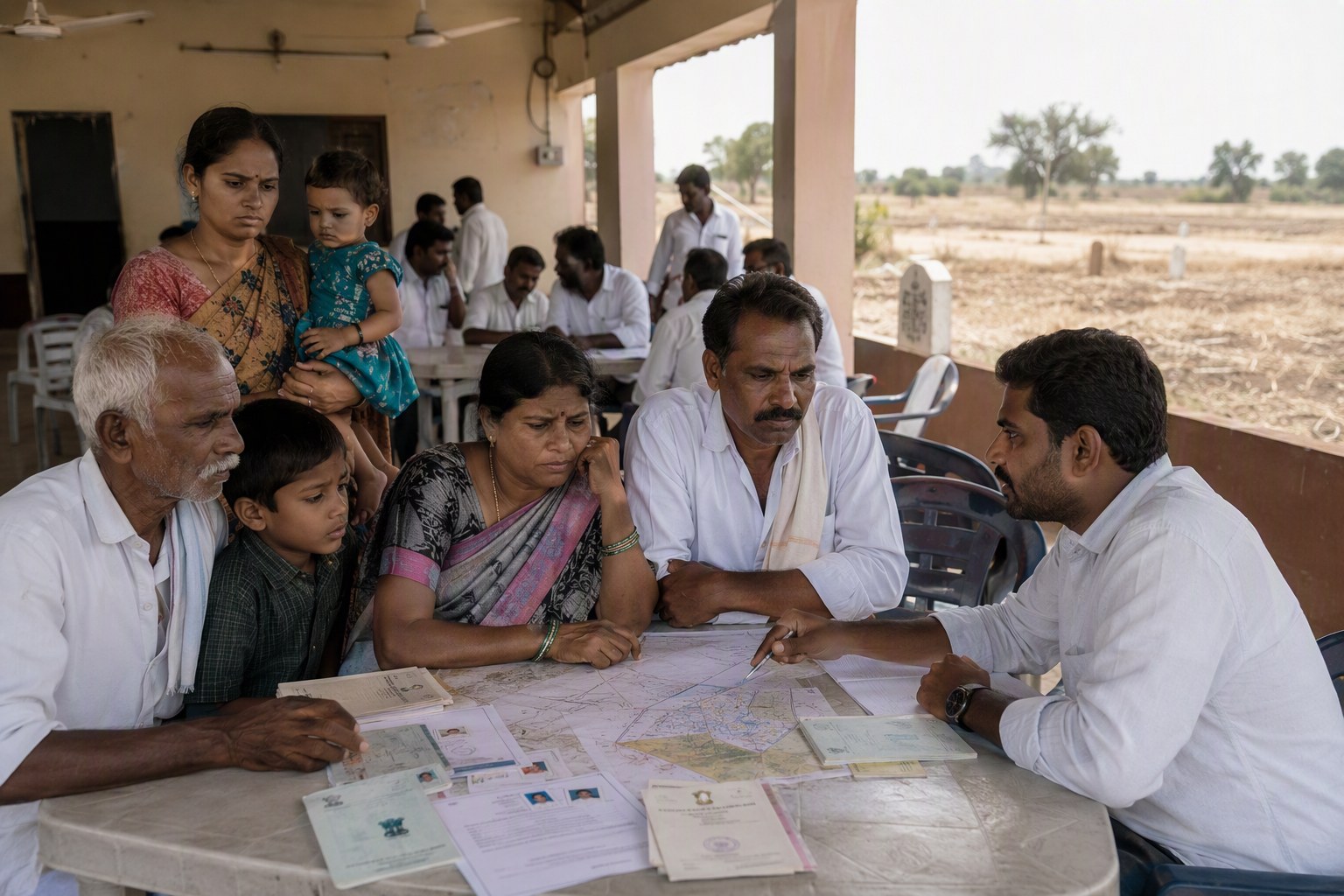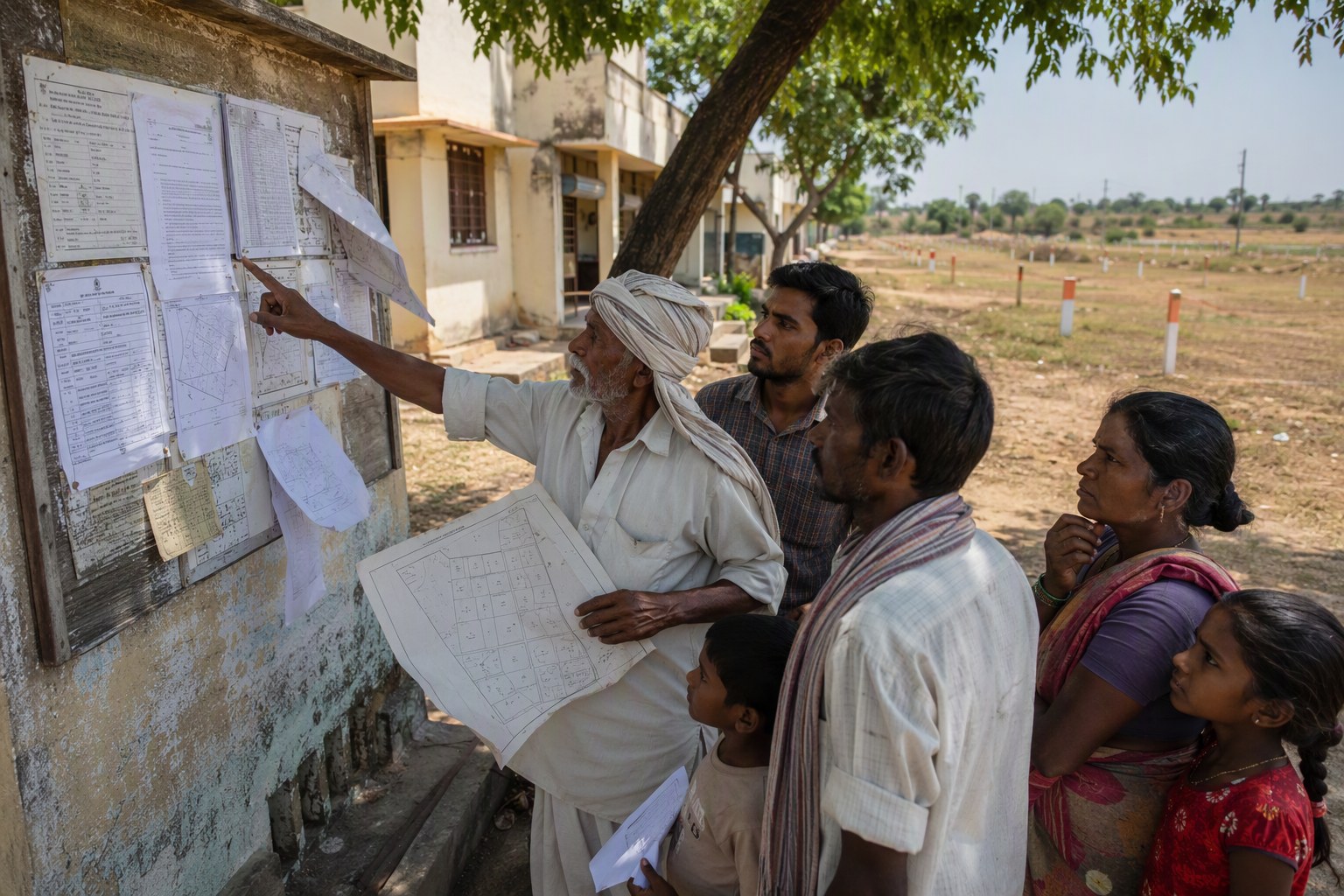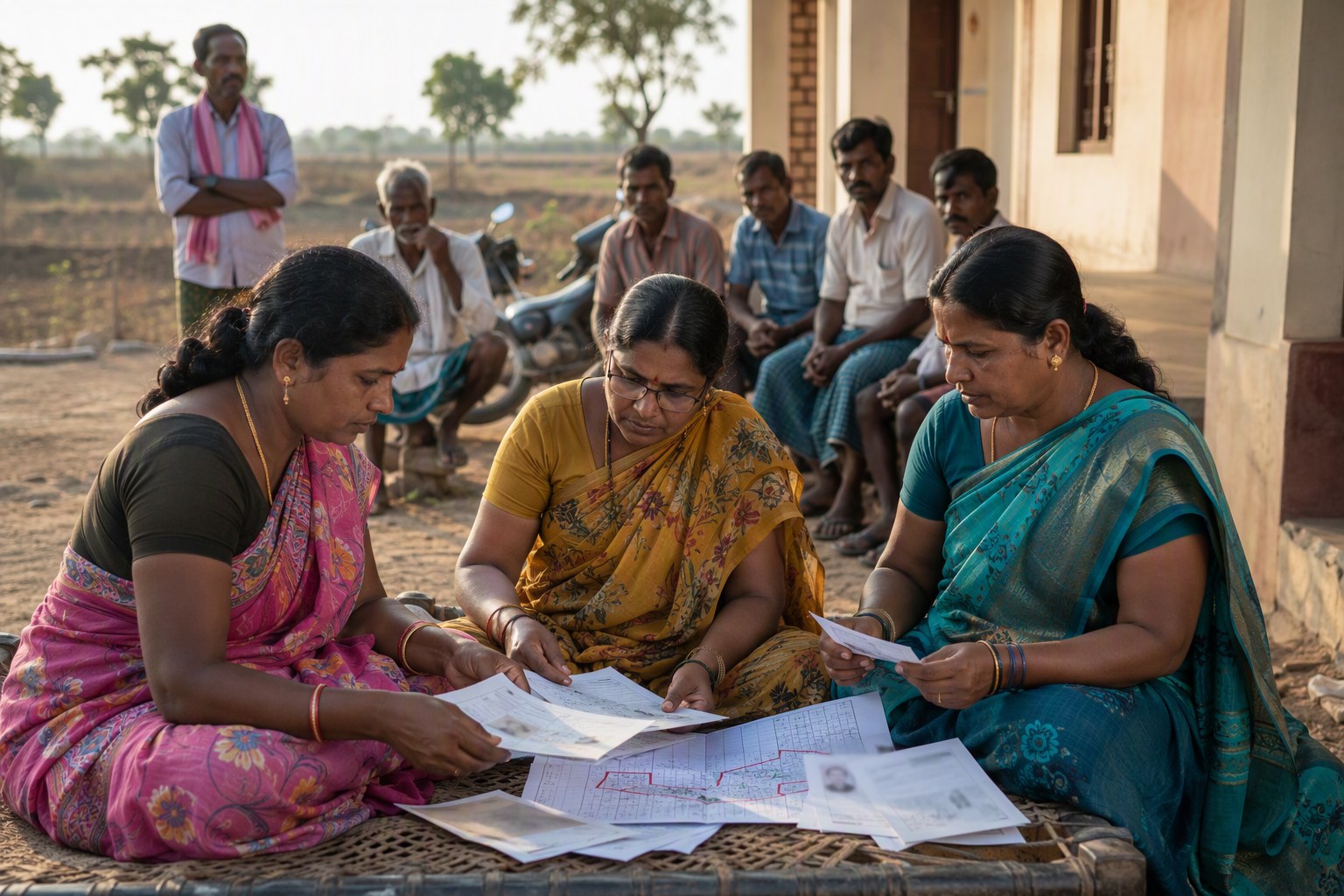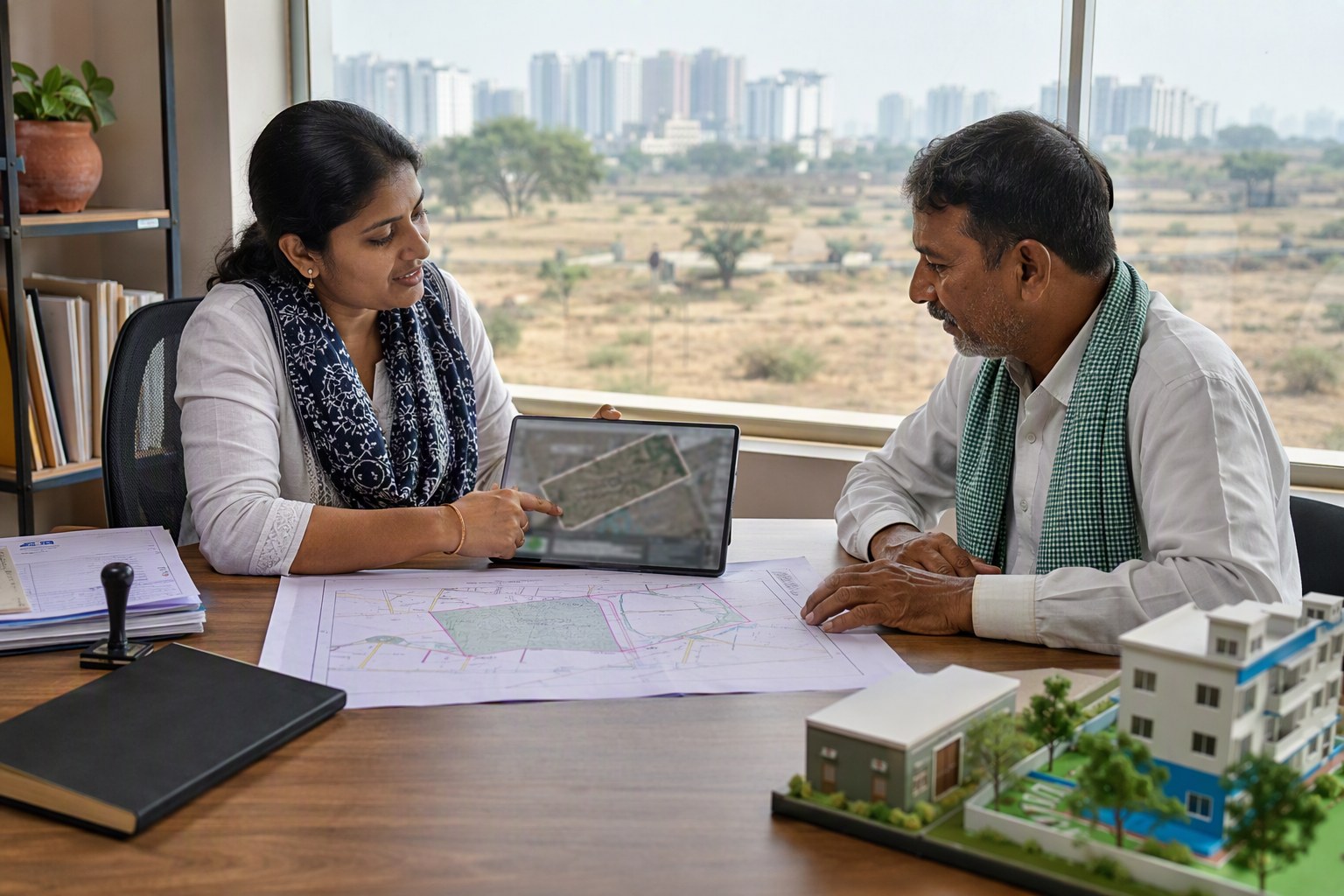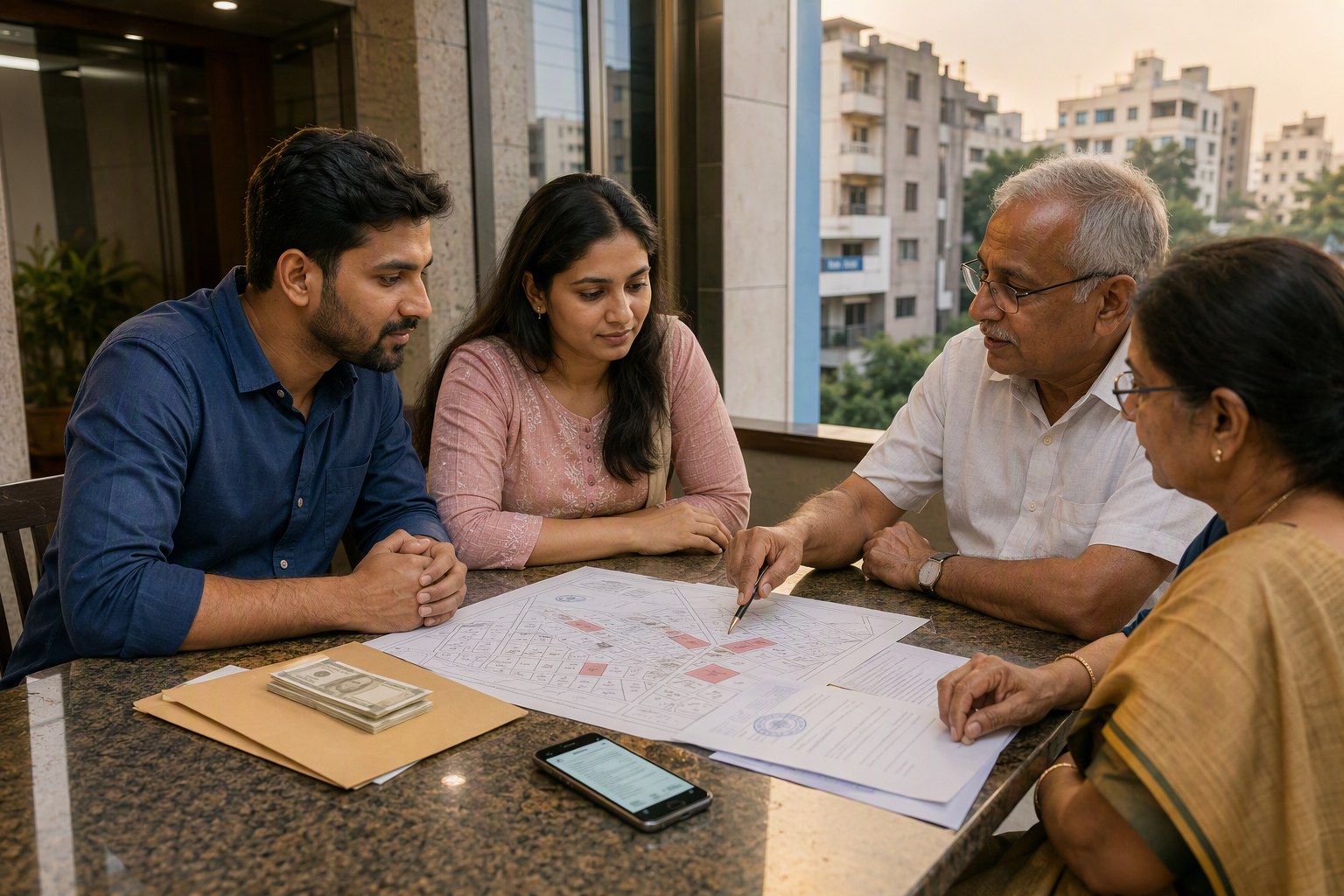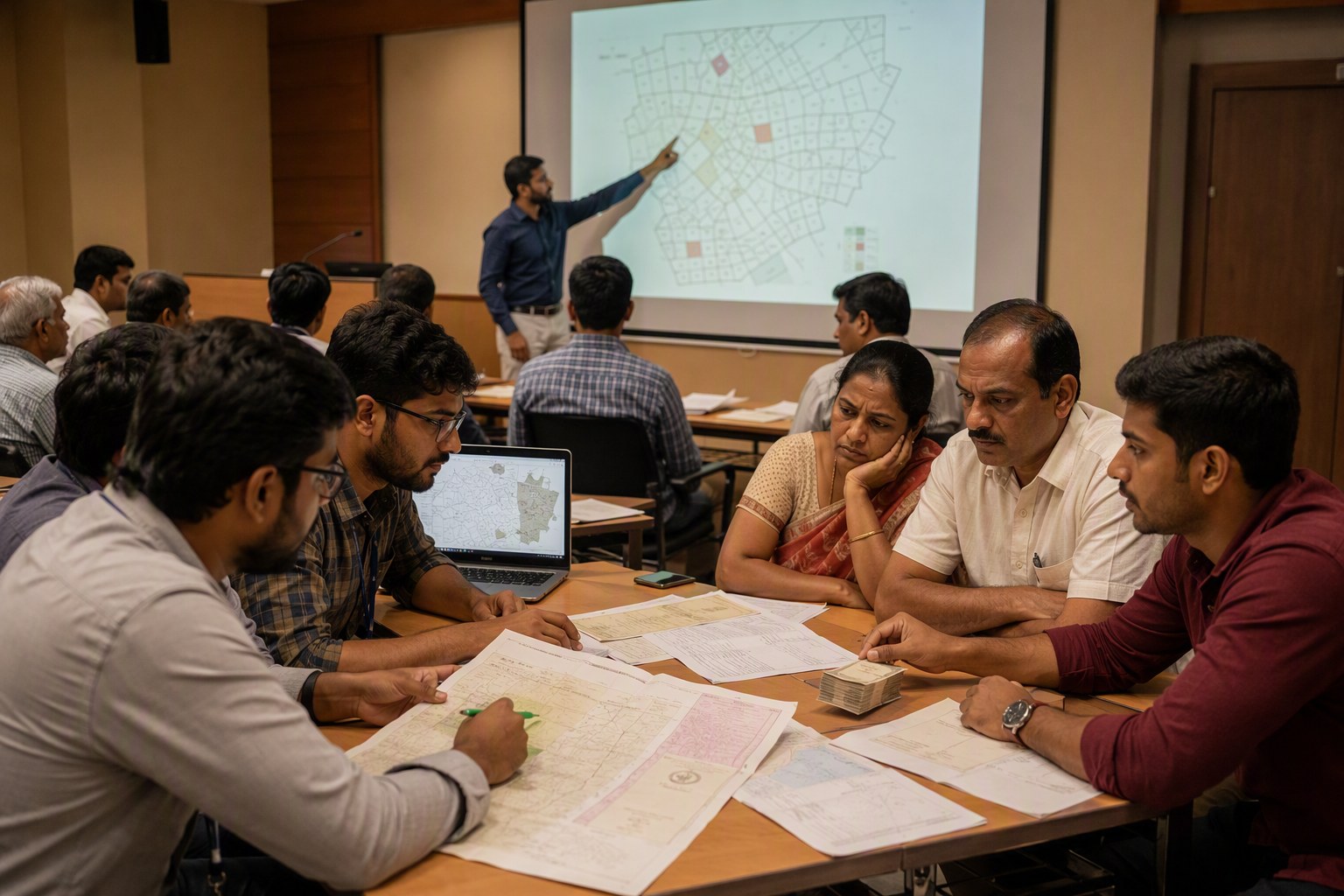
Telangana Colleges May Run Land Record Literacy Camps is the kind of community move our property market badly needs. The idea is simple: colleges can become local awareness hubs where students, parents, small investors and first-time buyers learn how to read land records, check pahani and Dharani entries, verify EC history, identify SRO jurisdiction and catch Section 22-A prohibited property risks before paying token advance.
As per latest IGRS data available with Verified.RealEstate, Telangana has 3,076,153 prohibited property records under Section 22-A. That number alone explains why basic land record literacy should not remain only with document writers, brokers and advocates. It has to reach ordinary families in places like Kukatpally, Miyapur, Narsingi, Manikonda, Bachupally, Shamshabad, Shankarpally, Ghatkesar and Ibrahimpatnam, where land and flat buying decisions often happen across the dining table.
Telangana Colleges May Run Land Record Literacy Camps: Why This Matters Now
The proposed college-led model can work because colleges already sit at the centre of local communities. A degree college in Malkajgiri, an engineering college near Medchal, a junior college in LB Nagar or a private institution around Patancheru does not serve only students. It pulls in parents, alumni, staff, local shop owners, hostel landlords and small builders. That is exactly the audience that needs practical property awareness.
In our experience, most land-related mistakes do not start with fraud on day one. They start with overconfidence. Someone says the plot is “clear title”. Someone shows an old sale deed. Someone forwards a Dharani screenshot on WhatsApp. A buyer visits the site once, sees boundary stones, and pays an advance. Only later they hear words like 22-A, assigned land, ceiling land, court case, missing link document, mutation issue or wrong survey number.
If colleges conduct land record literacy camps in Telugu and English, that gap can reduce. Students can learn how to check a survey number. Parents can understand why EC is not the full title. First-time buyers can learn why market value, registration value and actual deal value are different things. More importantly, they can learn when to pause.
Telangana Colleges May Run Land Record Literacy Camps Around 22-A Risk
Section 22-A is not a small technical column. It can stop registration. It can expose a buyer to long disputes. It can also reveal that the land falls under government, assigned, endowment, wakf, ceiling surplus or other restricted categories as recorded by the authorities. With 3,076,153 prohibited property records in Telangana, awareness camps must treat 22-A checking as a basic step, not an advanced legal topic.
A useful camp should show people how to cross-check the property through the Section 22-A Prohibited Property Check. The trainer should also explain that a “not found” result does not automatically mean perfect title. It only means the buyer has one less red flag from that particular check. Title verification still needs link documents, EC, mutation records, layout approvals, RERA status if applicable, and local revenue checks.
Our view is clear: a family should not pay even a small advance on land in Telangana without checking 22-A status, survey number identity, EC flow and SRO jurisdiction. These are not luxury checks. They are basic hygiene.
What A Land Record Literacy Camp Should Teach
A proper camp should be practical, not lecture-heavy. Students and families should leave with a checklist they can use the same evening. The session can cover:
- Survey number basics: How a survey number, sub-division number and village name identify land. A plot in Mokila and a plot in Shankarpally mandal cannot be checked casually just by layout name.
- Pahani and Dharani entries: What pattadar name, extent, nature of land and classification indicate, and why mismatch in extent is a warning sign.
- EC reading: Why an Encumbrance Certificate shows registered transactions but may not reveal every legal risk.
- SRO mapping: Why buyers should know the correct Sub-Registrar Office before assuming registration feasibility.
- Ready reckoner or guideline value: Why government market value should be checked for the exact village and property category before planning stamp duty.
- RERA check for apartments: Why buyers in Kokapet, Financial District, Tellapur, Kollur and Bachupally should verify the project, promoter and approval details.
For hands-on checking, colleges can ask participants to use the Survey Number Finder, Encumbrance Certificate Search, Find Your SRO Office and Market Value / Guideline Value Search. These tools make the learning less theoretical.
Hyderabad Localities Where This Awareness Can Help
The need is visible across Hyderabad’s growth corridors. Around Narsingi, Puppalaguda, Manikonda and Kokapet in Gandipet mandal, families often compare apartments, villas and small land parcels without fully understanding revenue village boundaries. In Miyapur, Chandanagar and Hafeezpet, buyers frequently focus on connectivity and loan eligibility, while older title chains and EC entries get checked late. In Bachupally and Pragathi Nagar, layout history and approval status need careful reading.
On the western side, Mokila, Velimela, Kollur, Tellapur and Shankarpally attract many salaried buyers looking for future appreciation. Here, survey number-level clarity is very important because agricultural land conversion, layout approval, road access and 22-A status can vary from parcel to parcel. Towards Shamshabad, Kothur, Maheshwaram and Tukkuguda, buyers must be careful about land classification and approach roads. Towards Ghatkesar, Pocharam, Bibinagar and Yadagirigutta side, families often buy on the strength of future corridor stories; record verification should come before emotion.
We have seen educated buyers make basic mistakes because they assume land records are only for advocates. That mindset has to change. A student who learns to read a pahani today may prevent a family dispute tomorrow.
Suggested Camp Format For Colleges
| Session | What Participants Learn | Useful Tool |
|---|---|---|
| Land identity | Village, mandal, survey number, extent and boundaries | Survey Number Finder |
| Title trail | Sale deed flow, EC entries and missing links | EC Analyzer |
| 22-A risk | How prohibited property flags can affect registration | Section 22-A Prohibited Property Check |
| Apartment buying | Project registration and promoter details | RERA Project Lookup |
| Cost planning | Stamp duty and registration cost estimate | Stamp Duty Calculator |
A two-hour camp is enough for a first round. The first hour can explain land terminology: patta, pahani, khata, mutation, EC, SRO, GP layout, HMDA layout, building permission, UDS and ready reckoner. The second hour should be live practice using sample records. If the college has law, commerce, civil engineering or urban planning students, they can be trained as volunteers.
The best camps will not make students act like lawyers. That is not the aim. The aim is to create alert citizens who know when a record looks suspicious and when to call a professional.
Why First-Time Buyers Need This Before Paying Advance
In Telangana, token advance culture is strong. A buyer sees a plot near a proposed road or a flat close to metro connectivity, then pays quickly because they fear missing the deal. That is where mistakes enter. Once money is paid, the buyer becomes emotionally committed. Even when records show issues, they may push ahead because the broker says it can be “managed”.
A college awareness camp should repeatedly say one thing: verify first, negotiate later. Check the property using the Property Verification Tool. Track changes where needed through the Property Change Tracker. For apartments, run the RERA Project Lookup. For land, begin with survey number, EC, 22-A and SRO checks.
There is also a social benefit. When students understand land records, they can help parents who may not be comfortable with English portals or online forms. Many land disputes in Telangana involve families who trusted middlemen because they did not know how to ask the right questions. Colleges can reduce that dependency.
What Government And Colleges Can Do Next
Colleges need a simple, standard module. Not a thick legal textbook. A printable checklist in Telugu and English, sample EC copies, sample pahani extracts, common red flags and a list of official verification steps will do the job. Revenue officials, SRO staff, local advocates, RERA-aware professionals and verified property researchers can be invited for sessions.
For NSS units and legal literacy cells, this is a natural community project. A college in Serilingampally can hold a camp for apartment buyers. A college in Ibrahimpatnam can focus on agricultural land conversion and survey verification. A college in Medchal can address layout approvals and SRO checks. A college in Nalgonda or Warangal can adapt the same material to local land categories and revenue practices.
My opinion: this should not be treated as one annual event. Land record literacy should run like financial literacy. Repeat it every semester. Let students bring one property document from home, mask private details, and learn the checklist. That one exercise can save families from years of litigation.
Frequently Asked Questions
Frequently Asked Questions
What is the main purpose of Telangana land record literacy camps in colleges?
The purpose is to teach students, parents and first-time buyers how to verify basic land records such as survey number, pahani, EC, SRO jurisdiction, guideline value and Section 22-A status before paying advance or signing an agreement.
Why is Section 22-A checking important in Telangana?
Section 22-A lists prohibited properties where registration may be restricted due to government, assigned, endowment, wakf, ceiling or other recorded issues. As per latest IGRS data, Telangana has 3,076,153 prohibited property records, so checking this early is essential.
Can an Encumbrance Certificate prove clear title?
No. An EC is useful because it shows registered transactions and charges for the searched period, but it is not a complete title certificate. Buyers must also check link documents, revenue records, 22-A status, approvals and legal disputes.
Which Hyderabad areas need extra care in land record verification?
Fast-growing areas such as Kokapet, Narsingi, Manikonda, Tellapur, Kollur, Mokila, Shankarpally, Bachupally, Shamshabad, Maheshwaram, Ghatkesar and Pocharam need careful survey number, approval and 22-A checks because land histories can vary sharply even within nearby parcels.
Should buyers rely only on brokers for land verification?
No. Brokers may know the local market, but buyers should independently verify records through official checks and professional review. A broker’s assurance is not a substitute for EC, pahani, Dharani, SRO, RERA and 22-A verification.