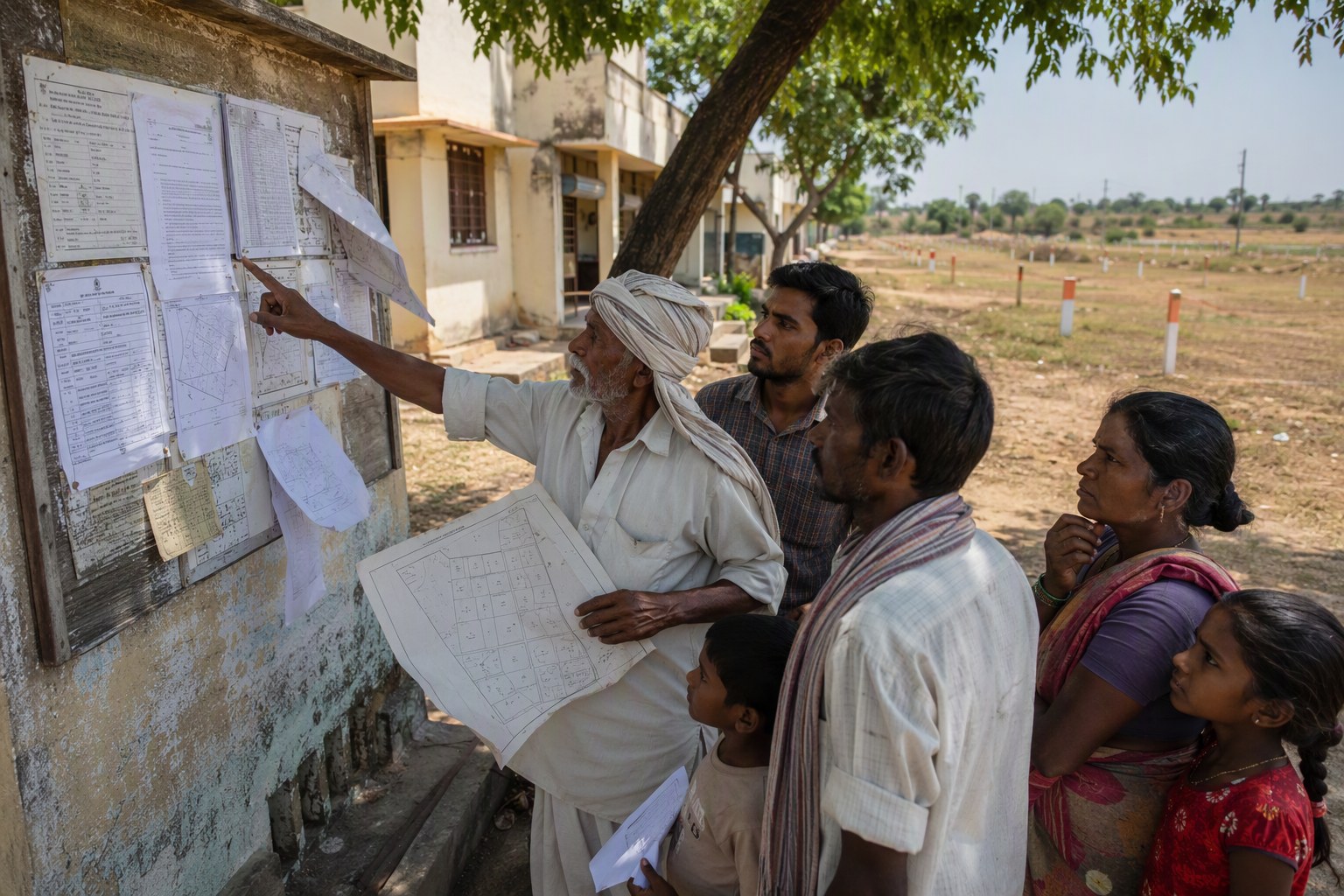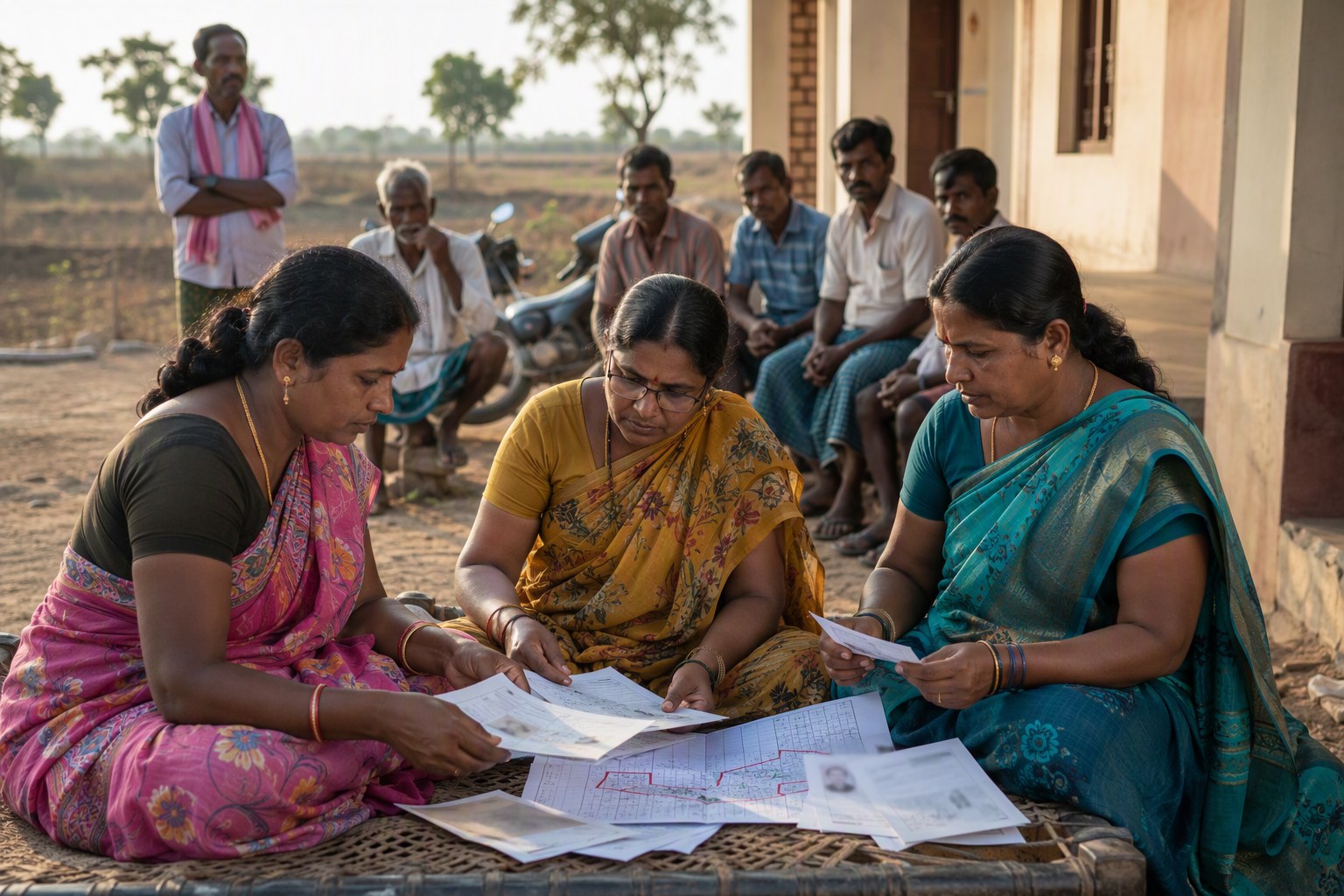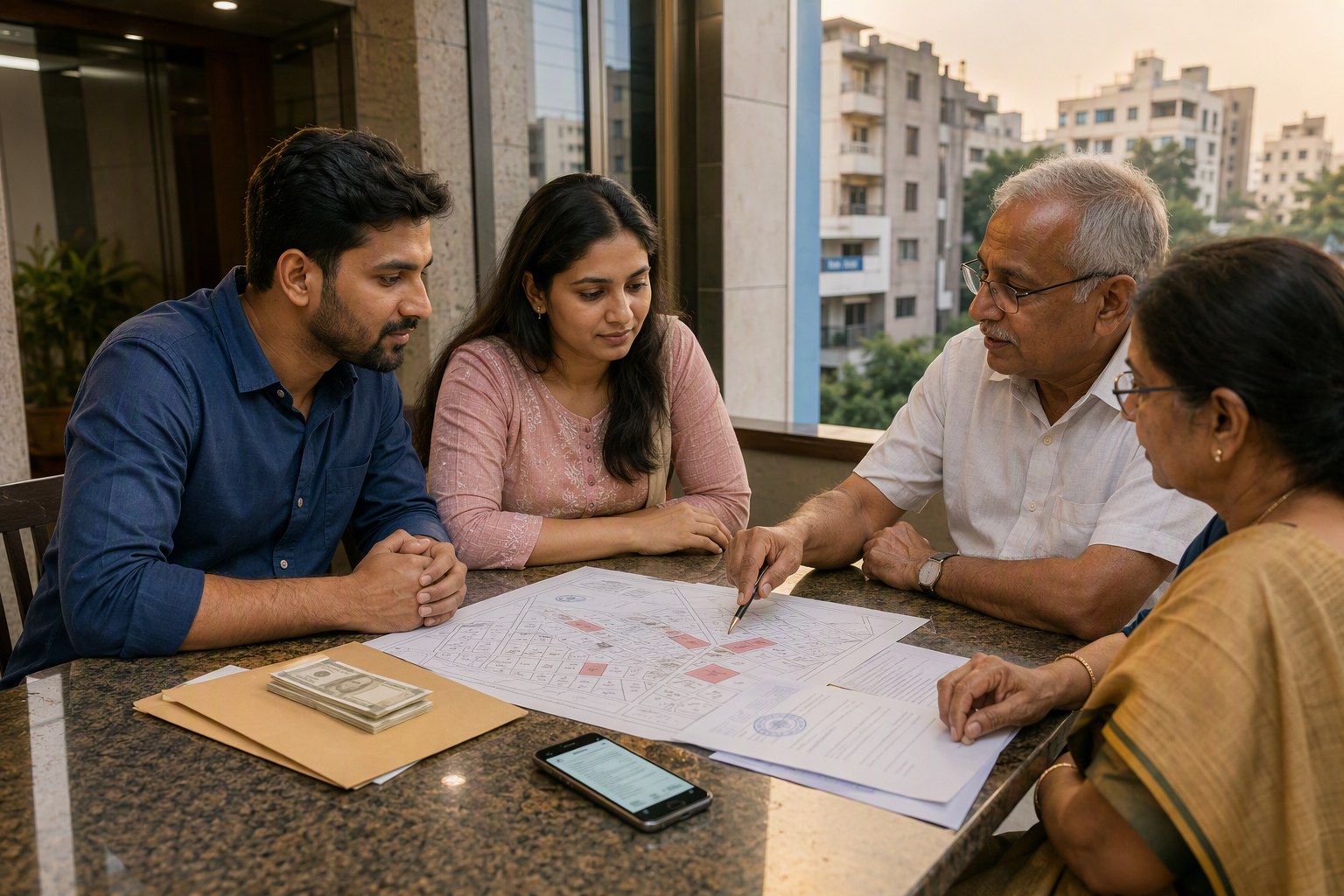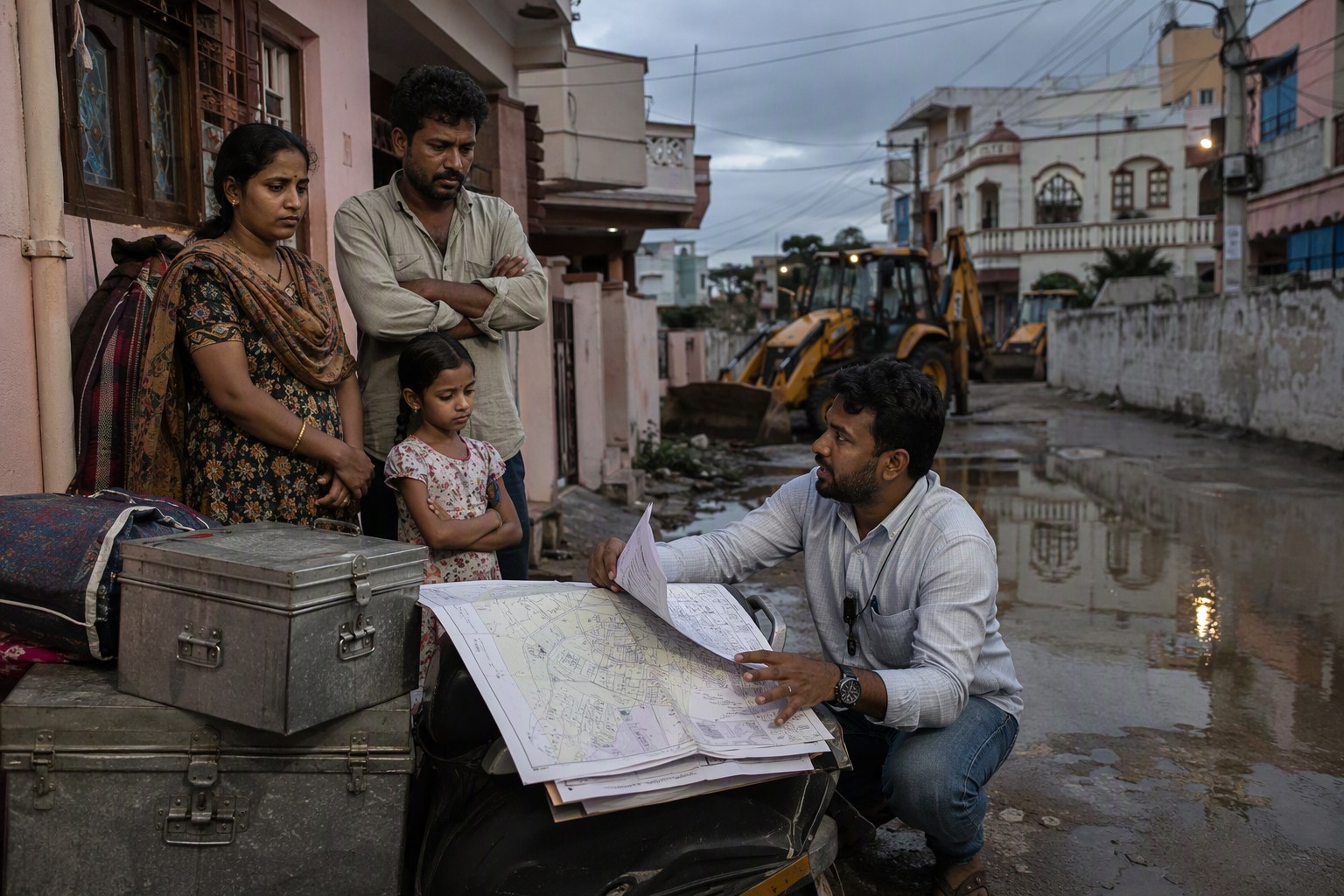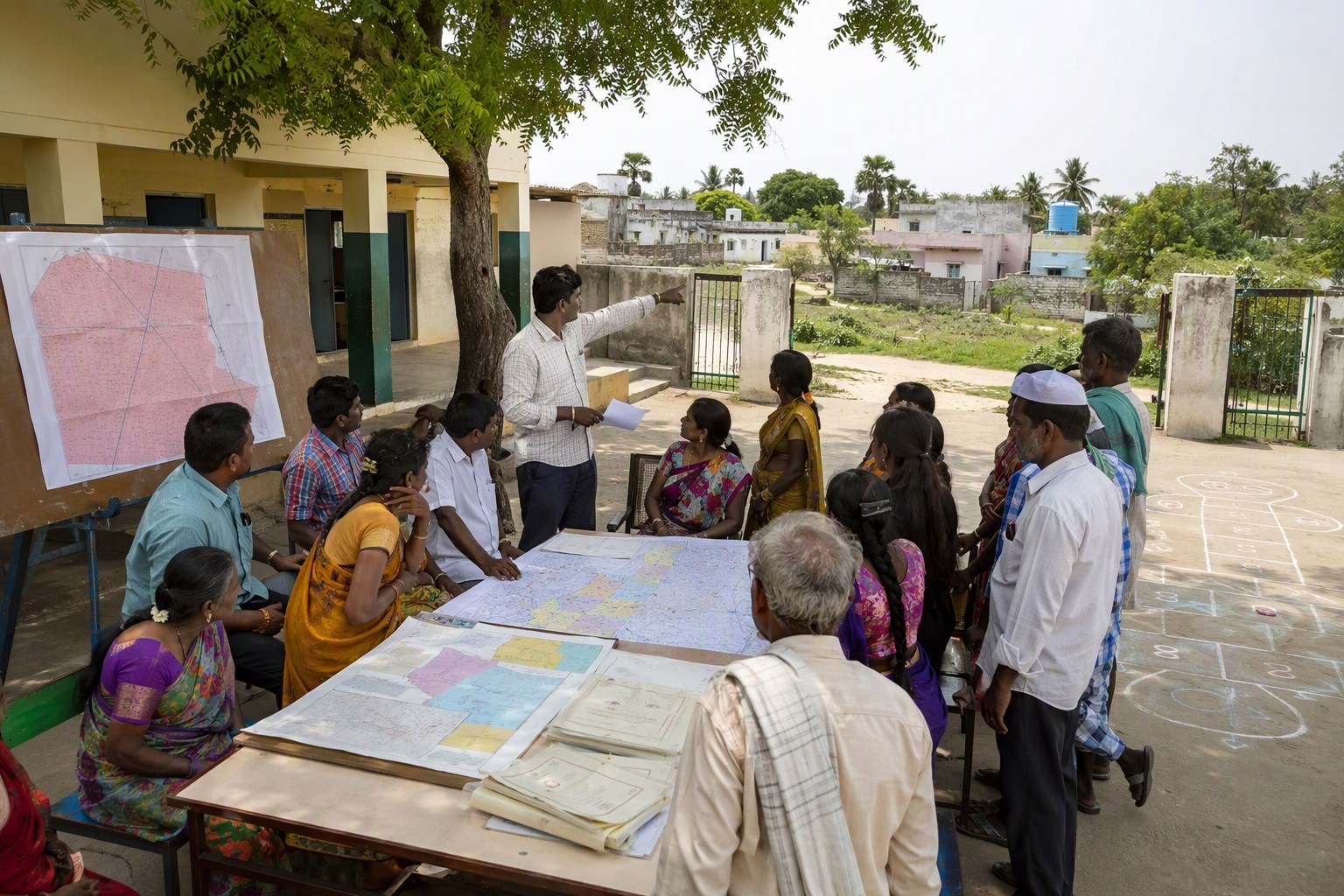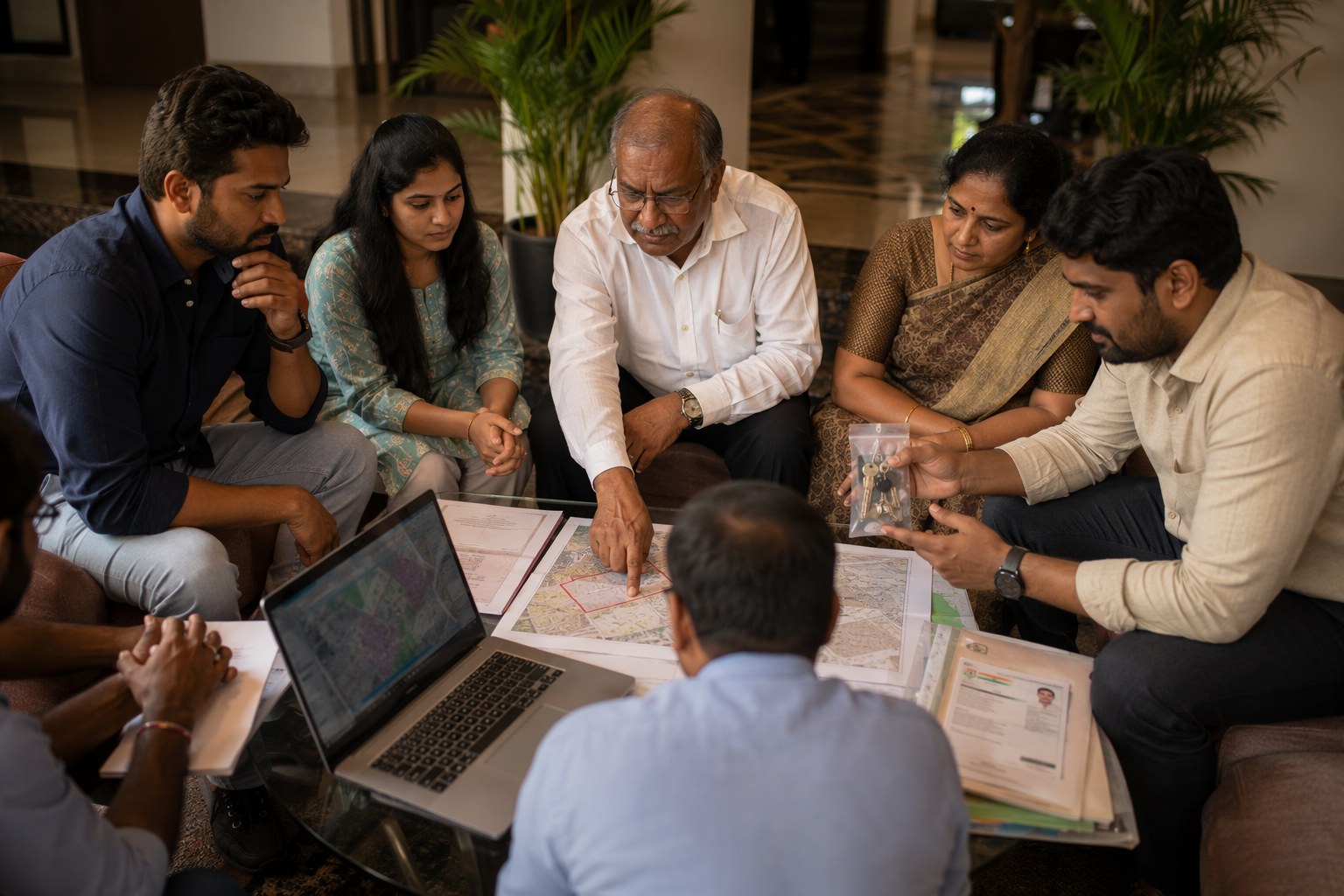
Telangana Resident Welfare Groups May Start 22-A Buyer Clinics as a practical neighbourhood-level response to one of the most painful property risks in the state: families paying advances on land or flats linked to Section 22-A prohibited property records. As per latest IGRS data available with Verified.RealEstate, Telangana has 3,076,153 prohibited property entries under Section 22-A. That number alone explains why buyer awareness cannot remain only with lawyers, brokers and SRO counters.
The idea is simple. Resident welfare associations, colony committees and apartment federations can run monthly buyer clinics where local families bring survey numbers, draft agreements, EC copies, pahani extracts, Dharani details and sale deed drafts before they pay token money. The clinic need not give legal certification. It can help buyers ask the right questions early.
In our experience, many property problems in Hyderabad do not start at registration. They start much earlier, when a buyer pays an advance based on trust, urgency or broker pressure without checking whether the land parcel has any 22-A shadow.
Why Telangana Resident Welfare Groups May Start 22-A Buyer Clinics in local colonies
Hyderabad’s housing market has become hyper-local. A buyer in Nallagandla may be checking one SRO, a family in Manikonda may be dealing with Gandipet or Rajendranagar side records, and someone buying near Adibatla, Tukkuguda or Maheshwaram may be working through a completely different mandal record trail. Even within one neighbourhood, survey numbers can change risk levels sharply.
That is where resident welfare groups can help. They already know which layouts have long-standing issues, which roads are under dispute, where government land claims have been discussed, and which projects have repeated buyer complaints. This local memory is valuable. It should be organised, not left to WhatsApp forwards.
A 22-A buyer clinic can be run from a clubhouse, community hall, apartment association office or colony welfare room. Volunteers can guide people to first run a Section 22-A Prohibited Property Check, then compare the survey number with revenue documents and SRO records. For many middle-class families, even this basic sequence can prevent a costly mistake.
How Telangana Resident Welfare Groups May Start 22-A Buyer Clinics before advances are paid
The most useful timing is before the advance. Once money is paid, the buyer’s bargaining power drops. Sellers may delay refunds. Brokers may ask for more time. Families feel emotionally locked into the property. A clinic should therefore promote one clear rule: no advance before basic document screening.
The first screening can cover three questions. Is the property or survey number appearing in any prohibited category? Is the seller’s ownership chain visible through EC and earlier deeds? Is the land use and layout history reasonably clear for the intended purchase?
For this, RWAs can ask buyers to carry the following:
- Survey number, sub-division number and village name
- Mandal name and district, especially for peri-urban land
- Draft agreement of sale, if already shared by the seller
- Latest EC copy or details required for Encumbrance Certificate Search
- Sale deed copies available from the seller
- Pahani, Dharani or mutation references where applicable
- Layout approval, building permission or RERA details for projects
In apartment purchases, the focus may be on the parent land, approvals and project registration. Buyers can use RERA Project Lookup for registered projects and then separately check whether the underlying land has any red flag. In plotted layouts, survey number matching becomes even more crucial.
What a 22-A buyer clinic should check first
Section 22-A is not a small procedural issue. If a property falls under prohibited categories, registration can be refused or challenged depending on the nature of the entry. Buyers often discover this only after making payments. By then, the dispute becomes personal, financial and emotional.
A practical RWA clinic should not behave like a law firm. It should behave like a first-response desk. The job is to help residents slow down, verify and then go to a professional where needed.
| Clinic checkpoint | Why it matters | Suggested tool or record |
|---|---|---|
| 22-A status | Checks whether the property appears in prohibited property records | Section 22-A Prohibited Property Check |
| Survey number match | Prevents confusion between nearby parcels and sub-divisions | Survey Number Finder |
| SRO jurisdiction | Helps buyer approach the correct registration office | Find Your SRO Office |
| EC trail | Shows registered transactions and possible gaps in ownership history | Encumbrance Certificate Search |
| Guideline value | Helps compare government market value before duty planning | Market Value / Guideline Value Search |
For example, a buyer considering land near Shankarpally mandal should not rely only on the project brochure. A family looking at a resale flat in Kokapet or Nanakramguda should ask about parent land documents. A buyer near Ghatkesar, Keesara or Medchal should check both the survey number and the village record trail. These are not negative areas; they are active real estate belts where documentation discipline matters.
The Hyderabad localities where awareness clinics can make a visible difference
We’ve seen buyer confusion most often in fast-moving corridors where agricultural land, layouts, HMDA permissions, gram panchayat histories and urban expansion overlap. Areas around Tellapur, Kollur, Mokila, Shankarpally, Narsingi, Manikonda, Bandlaguda Jagir, Shamshabad, Adibatla, Tukkuguda, Ghatkesar and Kompally need better buyer education at the community level.
In these locations, a family may hear different words from different people: assigned land, government land, ceiling land, endowment land, waqf claim, layout regularisation, mutation pending, old pattadar passbook, Dharani issue, SRO refusal, court case. Most buyers do not need to become revenue experts. But they must know when to pause.
Resident welfare groups are well placed because they are trusted locally. A lawyer may be approached only after an advance is paid. A banker may check documents only during loan processing. An RWA clinic can intervene earlier, when the buyer is still comparing options.
How RWAs can run the clinics without creating legal risk
There is one sensible boundary. RWAs should not declare a property safe or unsafe. They should document observations and guide buyers to verified checks. A simple disclaimer can say the clinic is only for awareness and preliminary screening, not a title certificate or legal opinion.
A workable model can look like this:
- One fixed clinic day every month, preferably on a weekend
- Two volunteer slots: document intake and digital search assistance
- A checklist in Telugu and English for common property terms using Telugu-English Property Terms Dictionary
- Referral list of independent advocates, surveyors and document writers, without commission arrangements
- Separate help for senior citizens who may not understand Dharani, EC or SRO processes
- Record only the query summary, not private financial details
This model keeps the clinic community-oriented. It avoids the common trap of turning awareness into brokerage. In our view, the moment an RWA clinic starts recommending one seller, one agent or one project, public trust will suffer.
Why Section 22-A awareness should be discussed before stamp duty and registration
Many buyers spend time calculating stamp duty, registration charges and interior budgets, but they do not first check whether the property can pass basic legal scrutiny. That order is wrong. First check 22-A status, ownership trail, EC and land identity. Then estimate costs using the Stamp Duty Calculator.
Ready reckoner value, market value and final sale consideration are all relevant, but they cannot cure a title problem. A low quote in a good location should actually trigger more checking, not faster payment. This is especially true when the seller asks for cash advance, pushes for immediate agreement or says “registration will happen, don’t worry”.
For flats under construction, the buyer should also check RERA status, sanctioned plans, land ownership and any charge or mortgage disclosed by the developer. For independent houses in older colonies like Alwal, Uppal, LB Nagar, Malkajgiri or Kukatpally, the EC trail and old link documents may matter more. Each property type has a different risk pattern.
What families should ask at a 22-A buyer clinic
A good clinic should train buyers to ask sharp questions. Not aggressive questions, just clear ones. Here are the basics:
- What is the exact survey number and village name?
- Which mandal and SRO does this property fall under?
- Does the seller’s name match the latest available revenue or registered record?
- Is there any 22-A entry connected to the survey number?
- Are link documents available from the previous owner?
- Is the EC clean for the period being checked, or are there gaps?
- For projects, is the RERA registration matching the marketed project name?
- Is the layout approval from the right authority?
Buyers should also keep screenshots, application references and copies of documents reviewed. If a seller refuses to share even basic details before advance, that itself is a signal. Genuine sellers may negotiate price, but they should not hide the survey number.
The community impact can be bigger than one property deal
Property mistakes do not hurt only one buyer. They affect whole colonies. Disputed plots remain vacant for years. Half-built houses become litigation markers. Apartment associations inherit land disputes from developer-era decisions. Local infrastructure also suffers when layouts are unclear or access roads are contested.
This is why 22-A buyer clinics can become a social impact initiative, not just a real estate helpdesk. They can protect first-time buyers, retired parents investing savings, NRIs buying through relatives and young families shifting from rent to ownership.
Telangana has the digital tools and public records to make early checking easier than before. But tools alone are not enough. People need local guidance, patient explanation and a place where no one laughs at basic questions. Resident welfare groups can provide that missing bridge.
If RWAs in Hyderabad, Warangal, Karimnagar, Nizamabad and growing municipal belts adopt this model, the buyer culture will improve. Fewer blind advances. Fewer panic calls before registration. Fewer families discovering 22-A problems after signing an agreement. That is a practical win for communities.
Frequently Asked Questions
What is a 22-A buyer clinic?
A 22-A buyer clinic is a local awareness desk where residents can check basic property risk indicators, especially whether a property or survey number may be linked to Section 22-A prohibited property records before paying an advance.
Can an RWA certify that a property is safe to buy?
No. An RWA should not issue legal certification. It can help buyers understand documents, use verification tools, identify red flags and then consult a qualified advocate or property professional for title opinion.
Which documents should I bring to a 22-A buyer clinic?
Bring the survey number, village and mandal details, draft agreement, sale deed copies, EC details, pahani or Dharani references, layout approval and RERA details if it is a project purchase.
Should I check 22-A status before or after paying token advance?
Check it before paying any token advance. Once money is paid, getting a refund can become difficult if the property later shows a prohibited property issue or registration problem.
Is Section 22-A relevant only for open plots?
No. It can also matter for apartments and villas because the parent land may have a record issue. Buyers should check the underlying land documents, not just the flat number or project brochure.