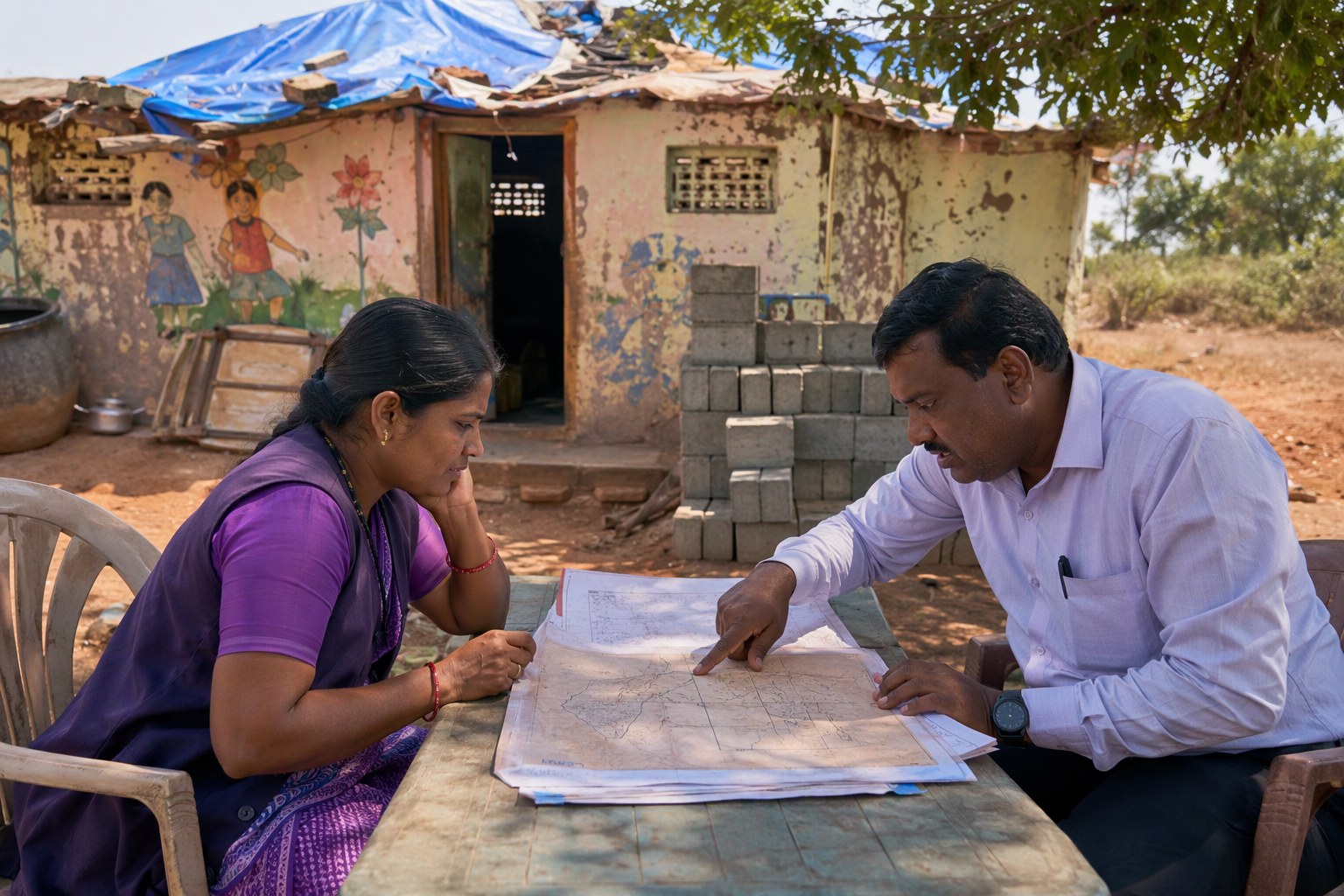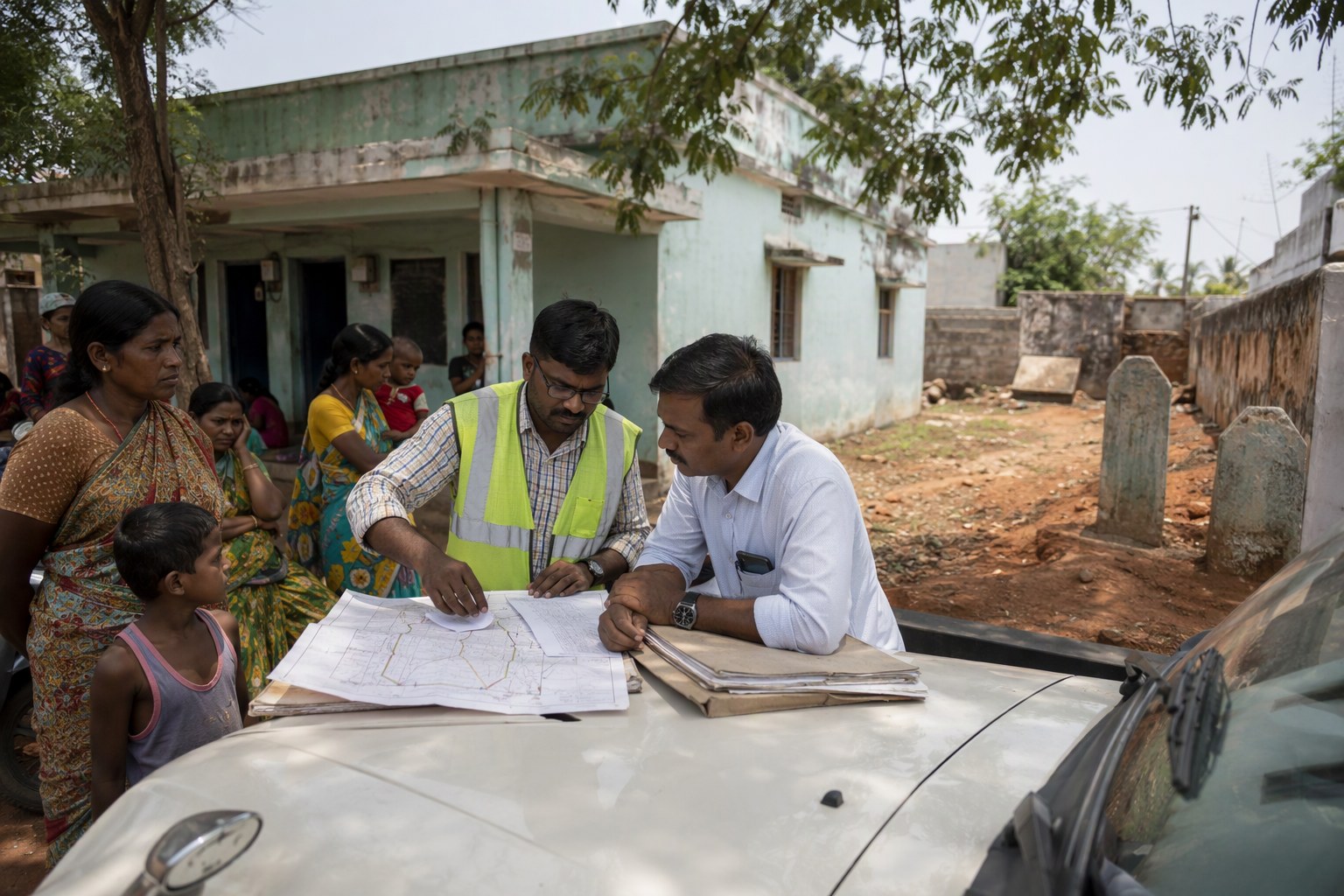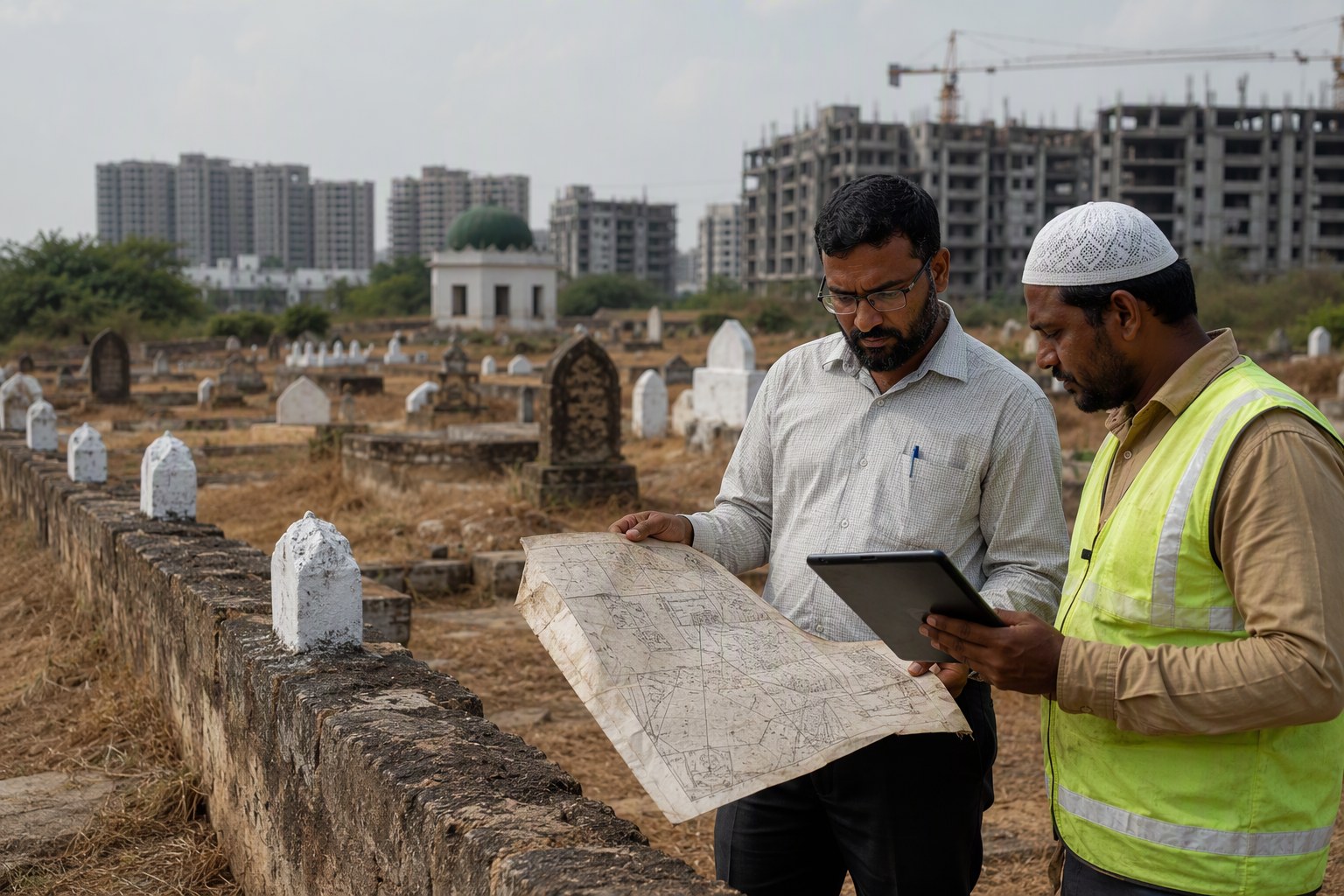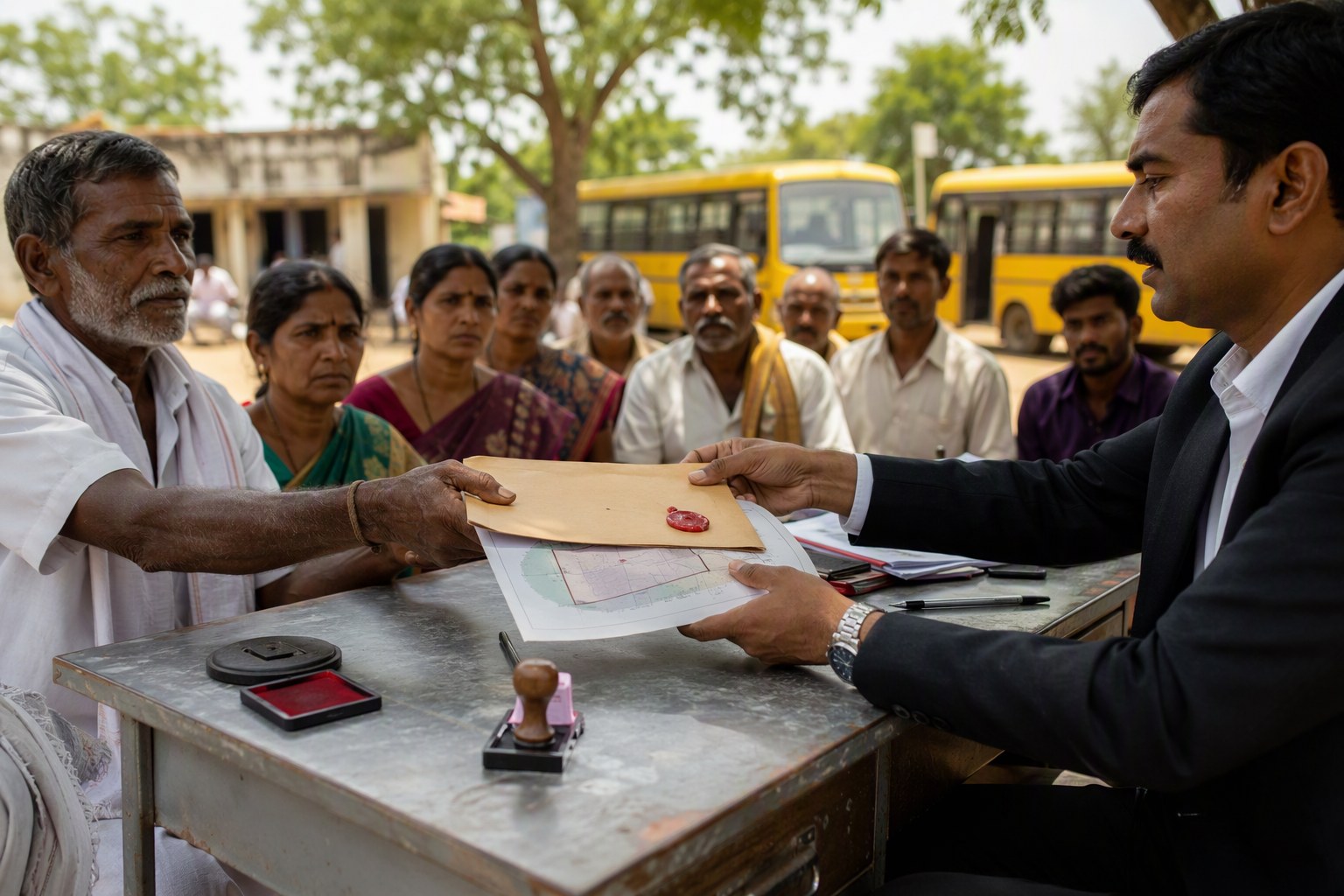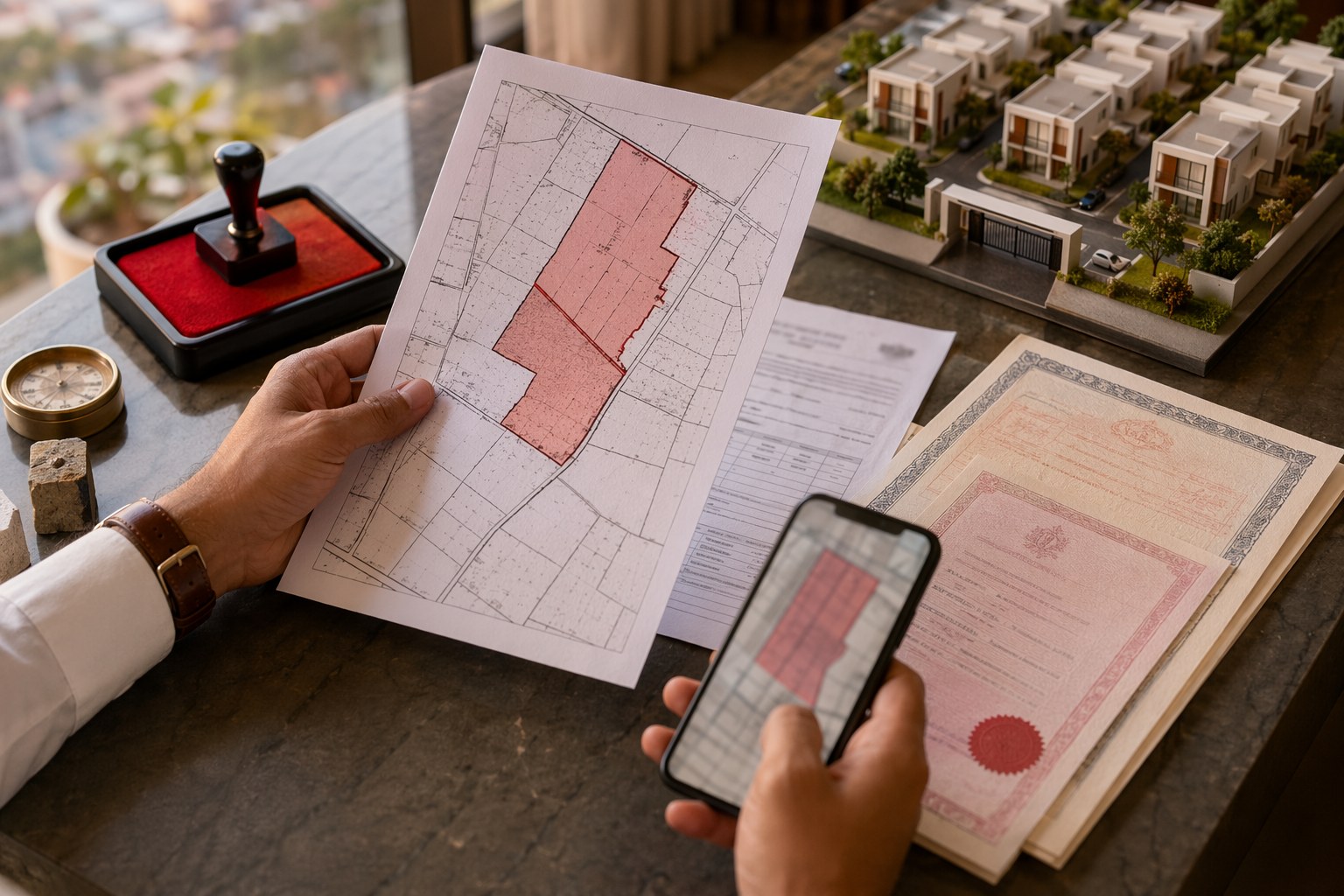
Telangana NGOs May Run Legal Aid Camps for 22-A Families as pressure builds around Section 22-A prohibited property entries affecting families across the state. As per latest IGRS data, Telangana has 3,076,153 prohibited properties recorded under 22-A related blocks. That is over 30.76 lakh properties where sale, registration, mortgage or mutation can become difficult unless the entry is clarified or removed through the proper route.
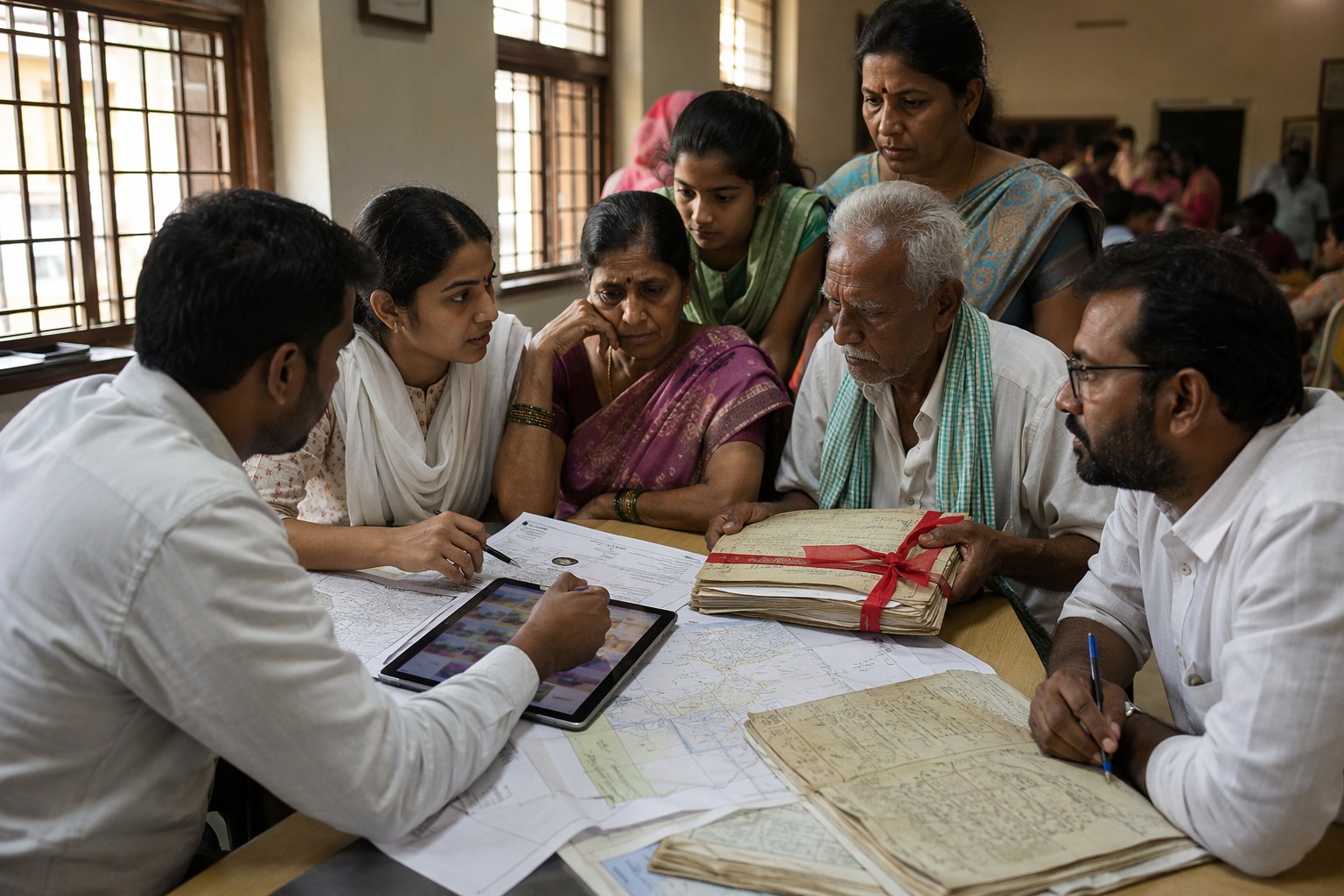
The proposal being discussed in community and legal circles is simple: NGOs, local advocates and documentation volunteers could hold mandal-level legal aid camps for families who do not know why their land, house site or inherited property is appearing in the prohibited list. In our experience, many affected owners are not big litigants. They are ordinary families carrying old sale deeds, pahani copies, pattadar passbooks, link documents and SRO receipts from one counter to another.
Telangana NGOs May Run Legal Aid Camps for 22-A Families: Why this matters now
Section 22-A entries are meant to stop registration of certain properties that fall under government land, assigned land, endowment land, wakf land, ceiling surplus, court-disputed or other prohibited categories. The problem starts when genuine private holdings also get stuck due to survey number overlap, old village records, spelling differences, sub-division confusion or outdated entries.
Families in Hyderabad’s growth belt regularly face this issue in mandals such as Serilingampally, Rajendranagar, Gandipet, Moinabad, Shankarpally, Maheshwaram, Hayathnagar, Ghatkesar, Medchal and Keesara. A buyer may be ready. A bank may have sanctioned in principle. But at the SRO stage, one line in the prohibited property list can freeze the transaction.
That is where NGO-backed camps can make a visible difference. A well-run camp can help people identify whether the problem is a true legal prohibition, a survey mapping mistake, a Dharani-related classification issue, a missing mutation, or a documentation gap that needs representation before revenue authorities.
My view is that 22-A is not only a registration issue. It is a household liquidity issue. When a family cannot sell, gift, partition or mortgage its own property because of an unclear record, the impact reaches education loans, medical expenses, marriage planning and small business finance.
Telangana NGOs May Run Legal Aid Camps for 22-A Families in mandals with high public distress
The first priority should be mandals where urban expansion has collided with older revenue records. Around Hyderabad, village boundaries, survey subdivisions and layout histories can be messy. A single survey number may have old agricultural entries, later plotted layouts, building permissions, court orders and family partitions. When one layer is not updated, the owner standing at the SRO counter suffers.
NGOs can help by organising camps close to affected people rather than asking families to travel repeatedly to district offices. A practical camp in a mandal headquarters or large village can have three desks: document screening, legal opinion and next-step guidance. The screening team can check names, survey numbers, village, extent, old passbook details and SRO jurisdiction. The legal desk can explain whether the family needs a representation, appeal, rectification, certified copies or a civil remedy. The guidance desk can help prepare a simple file index.
Before attending any such camp, families should do some homework. They can check the property through the Section 22-A Prohibited Property Check, identify jurisdiction using Find Your SRO Office, and verify basic land details through the Survey Number Finder. These tools do not replace legal advice, but they reduce confusion before meeting an advocate.
What a 22-A legal aid camp should actually do
A genuine legal aid camp should not promise instant deletion of 22-A entries. That would be misleading. The camp’s job is to sort cases into clear categories and tell families what is realistically possible.
- Record mismatch cases: Name spelling, village name variation, old survey and new survey confusion, extent mismatch or sub-division not reflected correctly.
- Assigned land or government land cases: These need careful review because private sale rights may be restricted depending on the nature of assignment and government record.
- Endowment, wakf or institutional land cases: Families need specific legal guidance, not casual advice from document writers.
- Court dispute cases: If a court order is behind the 22-A entry, the remedy may be through the same litigation channel or through certified clarification.
- Old layout and house site cases: Many families in fringe areas bought plots years ago. Their documents may need EC review, link deed tracing and layout history check.
For urban plots and flats, families should also check the Encumbrance Certificate Search and use the EC Analyzer to understand transaction history. If the property is part of a project, the RERA Project Lookup is useful. For land purchase decisions, our Property Verification Tool can help create a first-level risk picture.
Documents families should carry to a 22-A camp
In many cases, families attend public grievance meetings with incomplete papers. Then the matter gets adjourned or pushed to another counter. A legal aid camp can work better if people carry a proper file.
| Document | Why it helps |
|---|---|
| Sale deed or gift deed | Shows title source and registered document details. |
| Link documents | Helps trace ownership chain and old survey references. |
| Pahani or revenue records | Useful for agricultural land and old possession entries. |
| Pattadar passbook or Dharani details | Shows present revenue record position, if available. |
| Encumbrance certificate | Shows registered transactions and mortgage history. |
| 22-A extract or SRO refusal note | Shows the exact reason why registration is blocked. |
| Tax receipts or building permission papers | Helpful for house sites and developed properties. |
For value-related checks, owners can use the Market Value / Guideline Value Search and the Stamp Duty Calculator. I would not advise anyone to finalise a sale agreement only because the guideline value looks attractive. First confirm whether the property is registrable and whether the survey number is clean.
How NGOs can protect families from bad advice
Whenever land records become complicated, middlemen enter the scene. Some promise deletion from 22-A for a fee. Some push families to sign unregistered agreements. Some say, “registration will open soon” without any file movement. These shortcuts can create bigger trouble.
NGO camps can reduce this damage by giving written checklists, not vague verbal assurances. They can also maintain a case register with the family name, village, mandal, survey number, SRO, type of prohibition and next step suggested. This helps follow-up and prevents the same family from starting from zero every month.
For elderly owners, widows and NRI families, the camp should explain power of attorney, certified copies and representation formats in plain Telugu and English. The Telugu-English Property Terms Dictionary can help families understand words like pahani, mutation, adangal, extent, prohibitory order and encumbrance.
What government offices and SROs should do better
Sub-registrars are bound by the prohibited property list. If a property is blocked under 22-A, the SRO generally cannot ignore the entry and register the document. So the solution is not to pressure the SRO at the last minute. The solution is to correct the underlying record through the proper authority.
Revenue offices can help by giving clearer reasons in writing. A family should know whether the block is due to government land classification, assigned land status, court case, endowment claim or survey mismatch. Without that clarity, people keep filing generic petitions.
We’ve seen many cases where the first breakthrough came only after the owner obtained the correct village record, old pahani, EC, link deed and SRO refusal note in one file. Legal aid camps should train families to build that file properly. That is not glamorous work, but it is what solves land record disputes.
The community impact of 3,076,153 prohibited property entries
The figure 3,076,153 is not just a database count. Behind it are families trying to partition ancestral land, sell a small plot, regularise an old transaction, raise funds against property or settle succession issues. In Telangana’s fast-growing corridors, a 22-A entry can stop a family’s financial plan overnight.
NGO-backed legal aid camps will not clear every case. Some properties may genuinely be non-transferable. Some may need court orders. Some may require detailed revenue enquiry. But even then, a camp can tell people the truth early. That itself saves money, time and mental stress.
My opinion is clear: Telangana needs structured, local, document-based assistance for 22-A families. Not political slogans. Not instant promises. A mandal-level camp with trained volunteers, local advocates and revenue-document awareness can bring order to a very emotional problem.
Frequently Asked Questions
What is a 22-A prohibited property in Telangana?
A 22-A prohibited property is a property that appears in government records as restricted for registration. It may relate to government land, assigned land, endowment land, wakf land, court disputes or other notified restrictions.
Can an NGO legal aid camp remove my property from 22-A?
No camp can directly remove an entry. A legal aid camp can review documents, identify the reason for the block and guide you on filing the correct representation or legal remedy.
Which documents should I carry for a 22-A legal aid camp?
Carry sale deeds, link documents, pahani records, pattadar passbook or Dharani details, EC, tax receipts, building permission papers and any SRO refusal note or 22-A extract.
Can I sell a property that is listed under 22-A?
Usually, registration will be blocked until the 22-A issue is clarified or removed through the proper authority. Do not sign risky agreements without legal advice.
How can I check if my land is affected by Section 22-A?
You can start with the Section 22-A Prohibited Property Check on Verified.RealEstate, then verify SRO jurisdiction, survey number details and encumbrance records before taking legal advice.