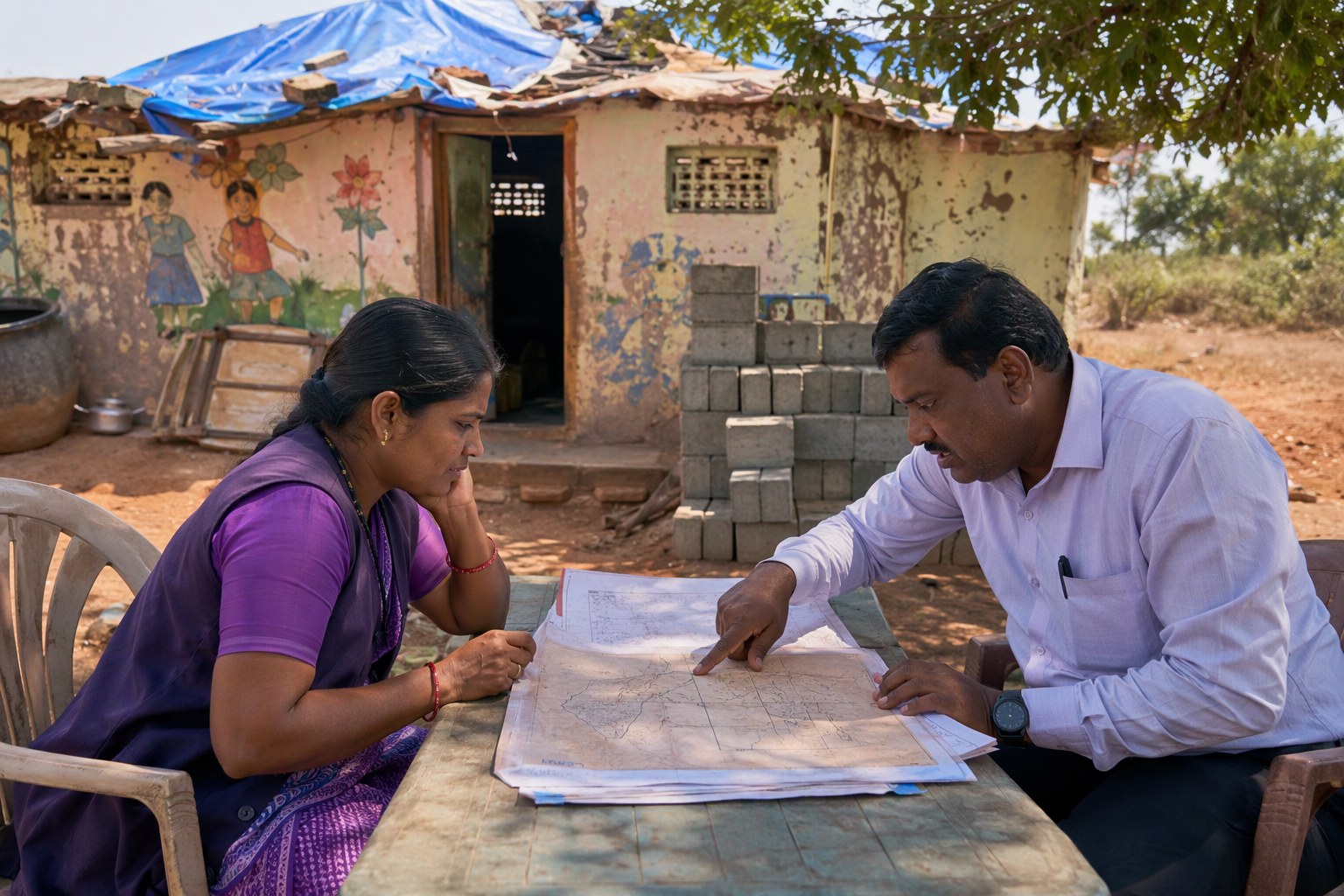
Telangana Anganwadi Repairs May Need 22-A Land Proof First
Telangana Anganwadi Repairs May Need 22-A Land Proof First before departments take up building repairs, compound wall work, toilet upgrades or kitchen improvements on government-linked sites. The reason is simple: Telangana records carry 30,3,076,153 prohibited properties under Section 22-A as per latest IGRS data. If an Anganwadi site sits on land that is wrongly mapped, disputed, assigned, endowment-linked, waqf-linked, government-classified or otherwise blocked in registration records, even a small repair file can get stuck at the worst time.
For families, this is not a paper issue. An Anganwadi is where children get early learning support, nutrition services, weighing, health days and mother-child outreach. A leaking roof in monsoon, broken flooring, missing toilet door or unsafe compound wall can directly affect attendance and service delivery. In our experience, the delay usually begins when land status is checked after administrative approval, not before it.
Our view is clear: Anganwadi repair proposals in Telangana should carry a basic 22-A and survey-number verification note at the planning stage itself. It is cheaper to verify early than to pause work after tender, sanction or site handover.
Why Telangana Anganwadi Repairs Need 22-A Screening
Section 22-A refers to properties that are prohibited from registration under government records. These entries can include government land, assigned land, ceiling surplus land, endowment land, waqf land, court-attached properties and other categories depending on the record trail. The exact reason has to be checked case by case through the survey number, village, mandal and SRO jurisdiction.
For an Anganwadi building, the problem may not always be ownership in the usual private-sale sense. Many centres function from panchayat land, donated plots, rented premises, school campus corners, community halls or old government structures. Some are in dense Hyderabad localities where boundaries are unclear. Others are in expanding mandals like Ghatkesar, Medchal, Patancheru, Hayathnagar, Rajendranagar and Serilingampally, where land records have gone through several rounds of conversion, layout activity and road widening.
When a repair or upgrade is proposed, the file may move through Women Development and Child Welfare, Panchayat Raj, municipal bodies, local engineering wings, SRO references, revenue offices and sometimes donor or CSR partners. If the land status is unclear, nobody wants to sign off blindly. That caution is understandable. But it can slow down basic child-care infrastructure unless the first file itself contains land proof.
Telangana Anganwadi Repairs: What 30,3,076,153 prohibited properties Mean On Ground
The number 30,76,153 is not a small clerical list. It shows how deep land restrictions are in Telangana’s registration and revenue ecosystem. For Anganwadi repairs, this means every site should be treated as a land-record-sensitive asset, even if the work is only a roof repair or toilet renovation.
Hyderabad and its surrounding districts are especially tricky. In places like Uppal, LB Nagar, Kukatpally, Malkajgiri, Alwal, Bandlaguda, Shamshabad and Patancheru, old village records sit under present-day urban growth. One survey number may now contain a school, colony road, community building and small public facility. In gram panchayat areas of Rangareddy, Medchal-Malkajgiri and Sangareddy, the pahani may say one thing, the physical possession may show another, and the SRO record may carry a restriction.
That is why a repair proposal should not rely only on local knowledge like “this building has been here for many years”. Local memory helps, but government works need record-backed clarity.
| Checkpoint | Why it matters for Anganwadi repair work |
|---|---|
| Survey number and village | Confirms the exact land parcel before estimate and sanction. |
| Mandal and SRO jurisdiction | Helps locate the right revenue and registration office records. |
| Section 22-A status | Flags whether the property is blocked or restricted in official records. |
| EC and past transactions | Shows registration history, transfers, charges or unusual entries. |
| Site possession proof | Supports the department’s right to repair, upgrade or maintain the building. |
How Early 22-A Verification Can Prevent Anganwadi Service Delays
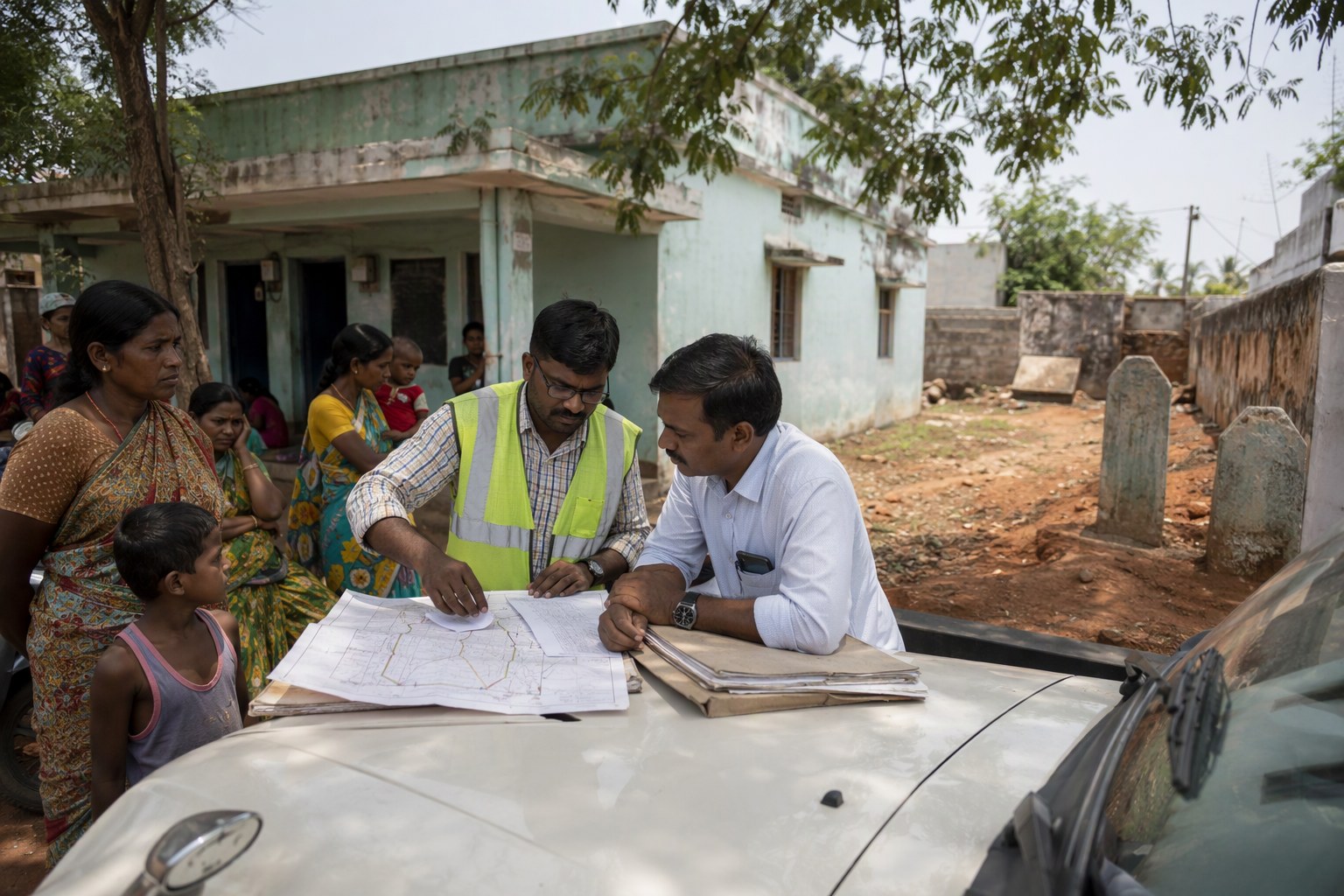
The most practical stage for verification is before the estimate is finalised. The local officer, engineering assistant or mandal-level team can identify the survey number, village and present use. Then the file can be checked against registration and revenue records. If there is a mismatch, it can be corrected or escalated before funds and contractors enter the picture.
For a quick first check, readers and field teams can use the Section 22-A Prohibited Property Check. Where the exact survey number is unclear, start with the Survey Number Finder. For registration history, the Encumbrance Certificate Search and EC Analyzer can help identify entries that need a closer look. If the site falls near a jurisdiction boundary, use Find Your SRO Office or the SRO Village Directory.
We’ve seen this pattern in many public-purpose sites: the physical building exists, people use it daily, and only when repair money is sanctioned does someone ask for a clean land note. By then, the contractor is ready, the community is waiting, and the monsoon or summer heat does not wait for a file clarification.
Documents Anganwadi Repair Files Should Carry
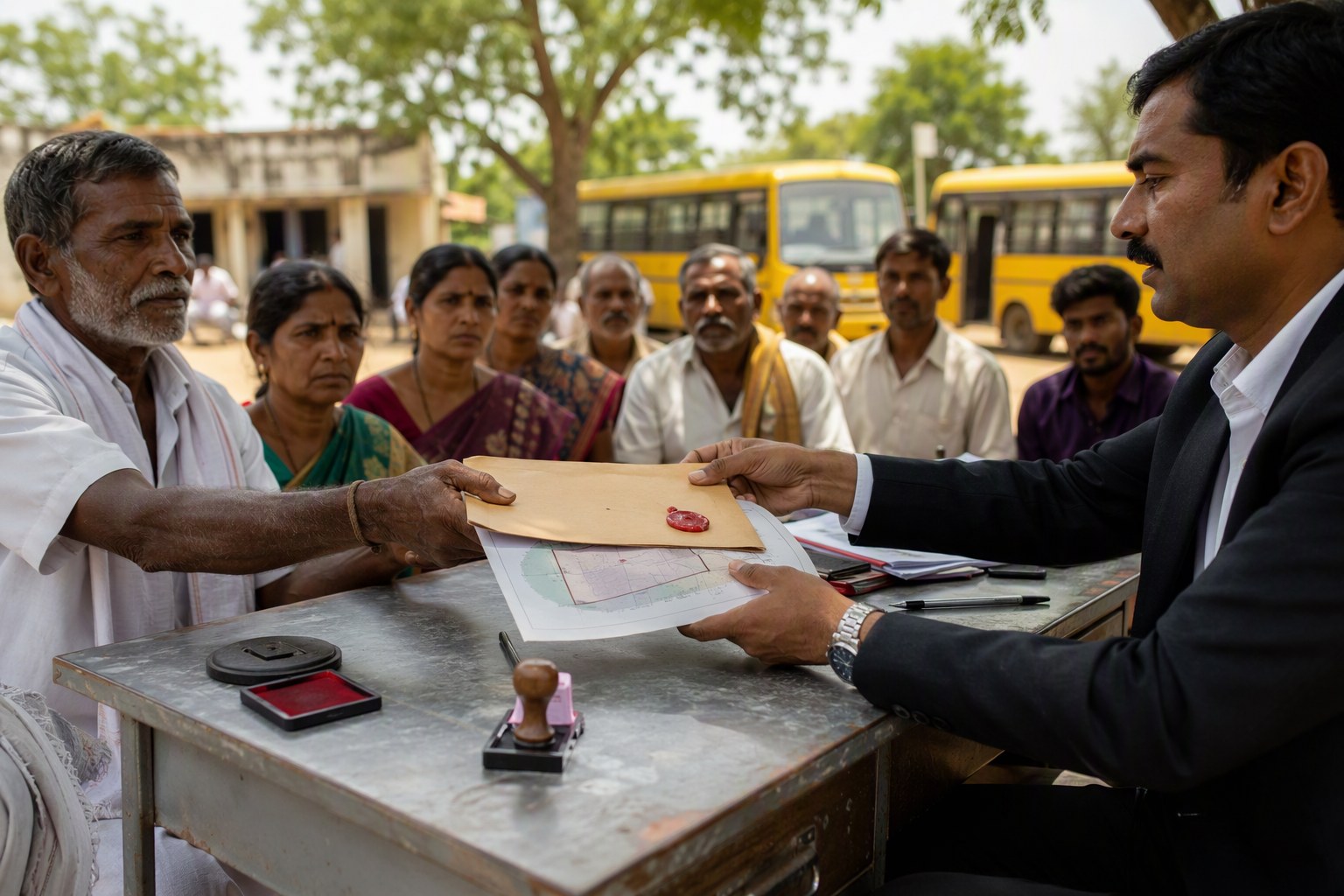
A simple land-proof bundle can save weeks of back-and-forth. It need not be overcomplicated, but it should be specific. “Government land” is not enough. The file should say which survey number, which village, which mandal, which SRO and what the current record shows.
- Latest pahani or revenue extract, where available.
- Dharani or related land record reference for the survey number.
- Section 22-A status note for the property.
- Encumbrance Certificate, if the land has a registrable history.
- Proceedings, allotment letter, panchayat resolution or departmental possession proof.
- Site sketch showing building location, access road and boundaries.
- Photographs of the existing Anganwadi structure and repair requirement.
- Local body confirmation if the building is on municipal or gram panchayat land.
For urban sites, the Market Value / Guideline Value Search can also help identify the correct village and registration zone, though guideline value is not ownership proof. If a new room or structural extension is proposed, basic planning checks like Road Width Check, Land Use Zone Finder and FSI/FAR Calculator may be useful, especially in municipal limits.
Hyderabad Region Needs Extra Care On Anganwadi Site Records
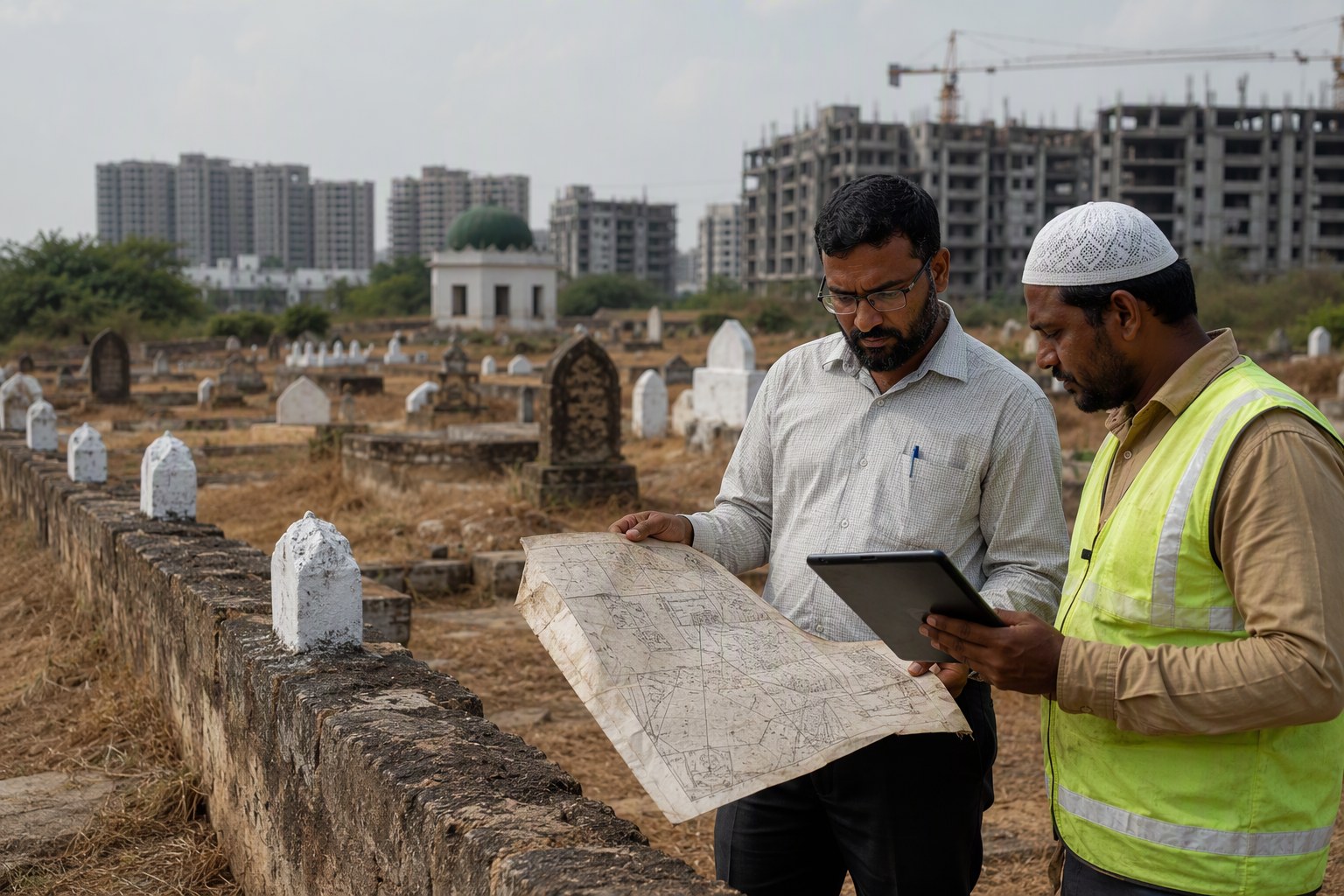
The Hyderabad region has a special challenge. Many Anganwadi centres operate in areas that were once revenue villages and are now fully urban neighbourhoods. Take Serilingampally mandal around Kondapur, Miyapur and Gachibowli; Rajendranagar mandal near Attapur and Kismatpur; Hayathnagar towards Vanasthalipuram and Abdullapurmet side; or Ghatkesar mandal along the eastern growth corridor. Land values, layout pressure and old survey boundaries make public-site verification sensitive.
In older city pockets also, the issue is not always a clean survey number. Buildings may be inside school premises, basti community spaces or local body properties. The department may have uninterrupted use, but record language may still be vague. That is where a proper SRO and revenue note becomes valuable.
My opinion: every Anganwadi repair estimate above a routine maintenance level should have a one-page land status sheet. It should be signed at field level and backed by record extracts. This is not red tape if done early. It becomes red tape only when discovered after work is approved.
What Officials, Donors And Local Committees Should Do Now
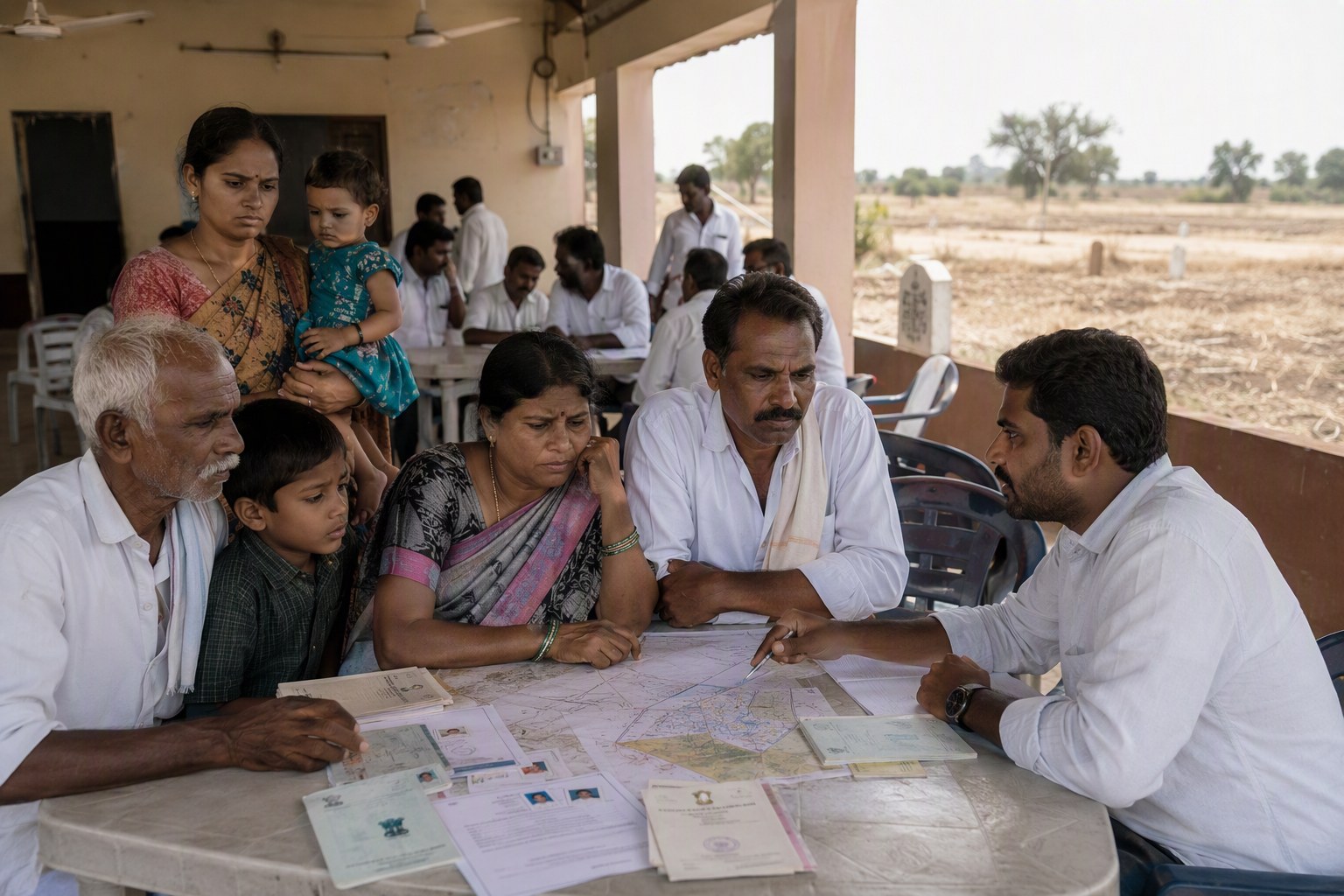
Officials should create a district-wise list of Anganwadi buildings proposed for repair and tag each one with village, mandal, survey number and SRO. Donors or CSR teams should ask for 22-A confirmation before promising construction support. Local committees can help by identifying the correct historic name of the village, old ward references and neighbouring survey numbers.
Parents and community members also have a role. If an Anganwadi has a damaged roof, weak wall or unsafe toilet, they should press for repairs, but they should also ask whether land documents are ready. In Telangana real estate and public infrastructure, paperwork may look boring, but it decides whether work starts on time.
The larger lesson from the 30,76,153 prohibited-property record is that public service buildings cannot be planned only from physical inspection. Telangana’s land system is record-heavy. Anganwadi repair work must respect that system without allowing children’s services to suffer. Early 22-A verification is the practical middle path.
Frequently Asked Questions
Why do Telangana Anganwadi repairs need 22-A land proof?
Because Section 22-A restrictions can block or delay approvals if the site is recorded as prohibited, disputed or government-restricted. Checking it early helps repair work move without last-minute land objections.
What is Section 22-A in Telangana property records?
Section 22-A covers properties prohibited from registration under official records. The category can include government land, assigned land, endowment land, waqf land and other restricted properties depending on the record.
Which details are needed to check an Anganwadi site?
The key details are village name, mandal, survey number, SRO jurisdiction, pahani or revenue extract, possession proof and any allotment or local body record linked to the building.
Can a small repair also get delayed due to land records?
Yes. Even small works like roof repair, toilets, kitchen upgrades or compound wall repairs can face file delays if the land status is unclear or the survey number appears in a restricted list.
How can local teams do a first-level check?
They can start with survey-number identification, SRO mapping, EC search and Section 22-A status check. If any mismatch appears, the matter should be taken to the revenue or registration office before sanctioning work.