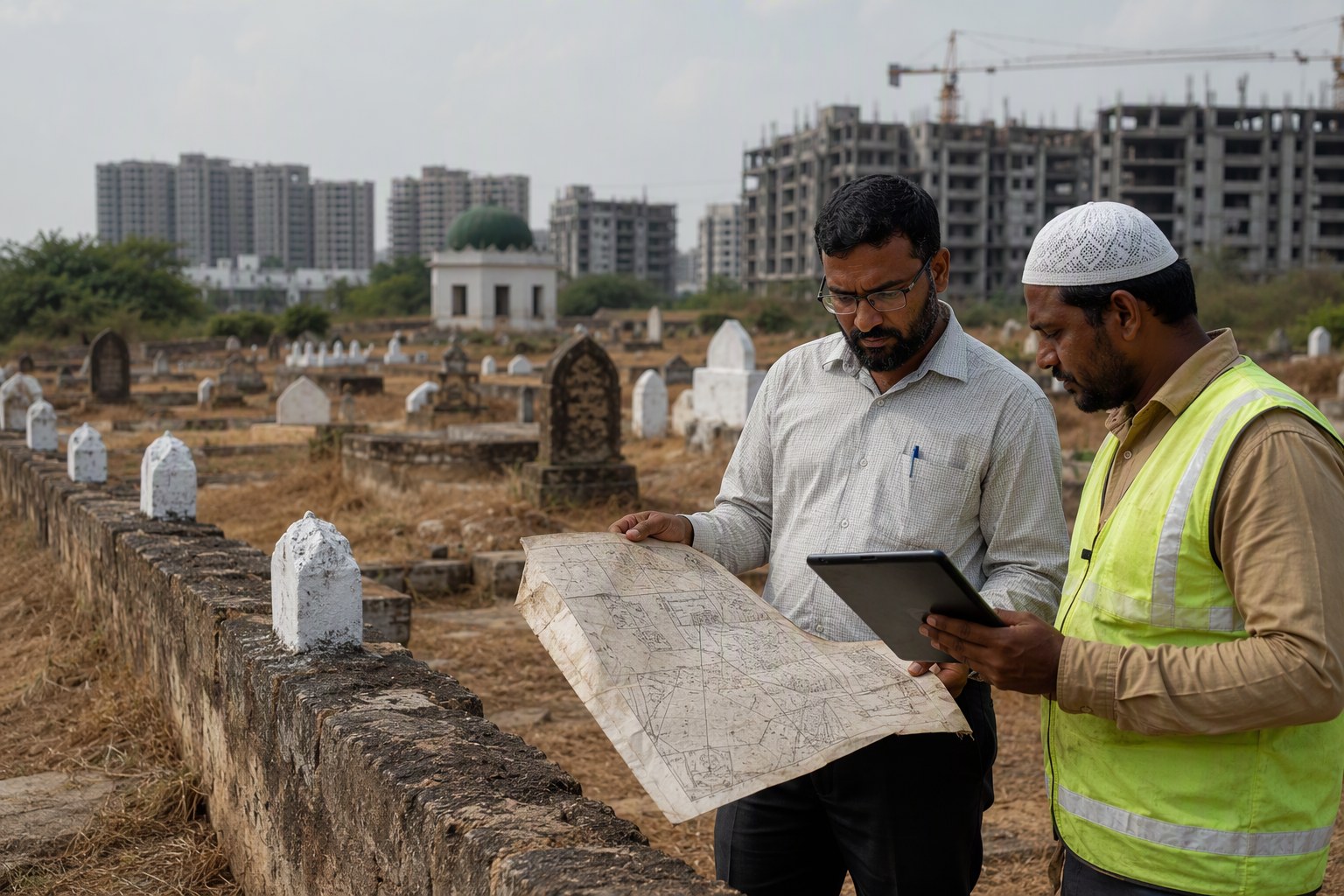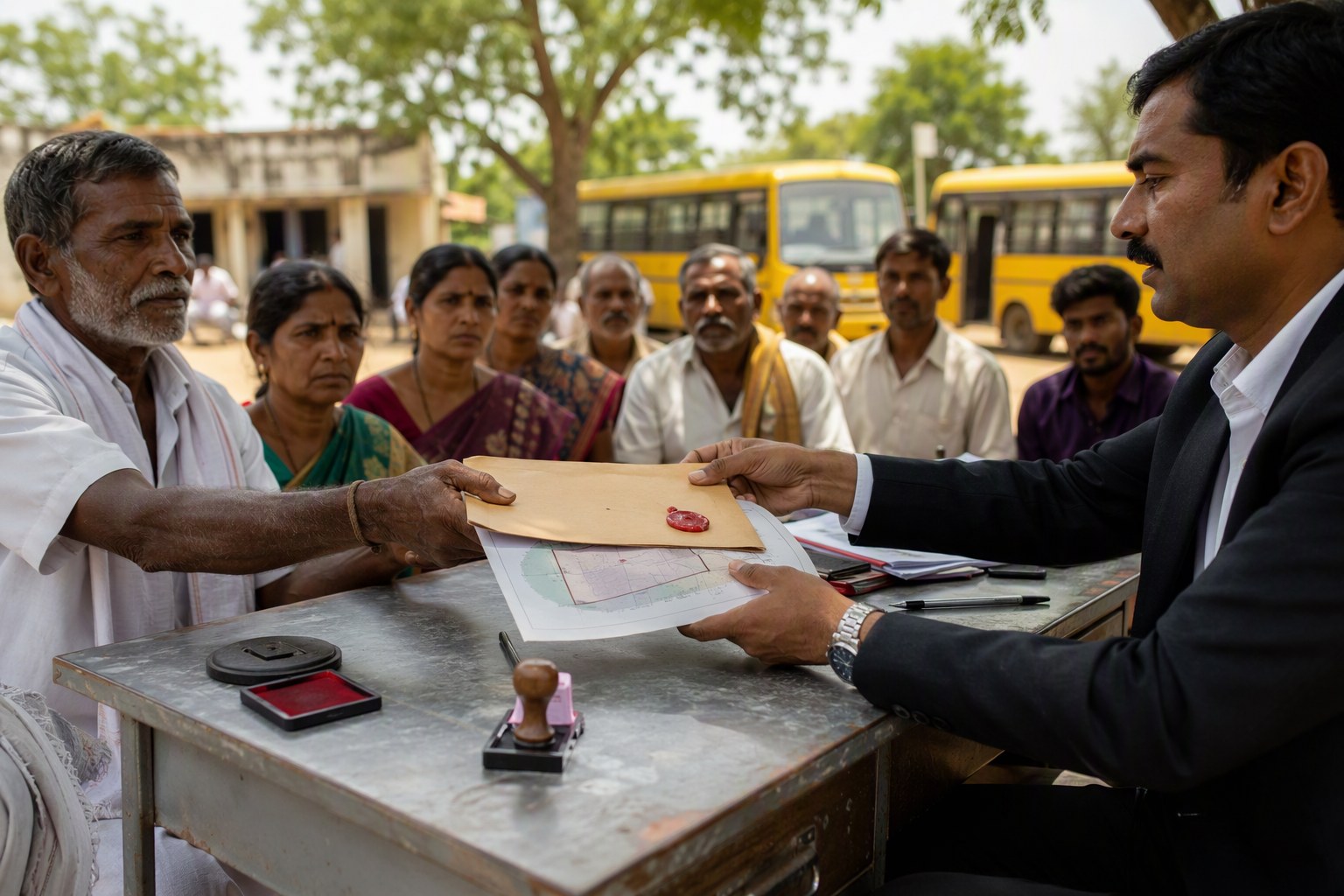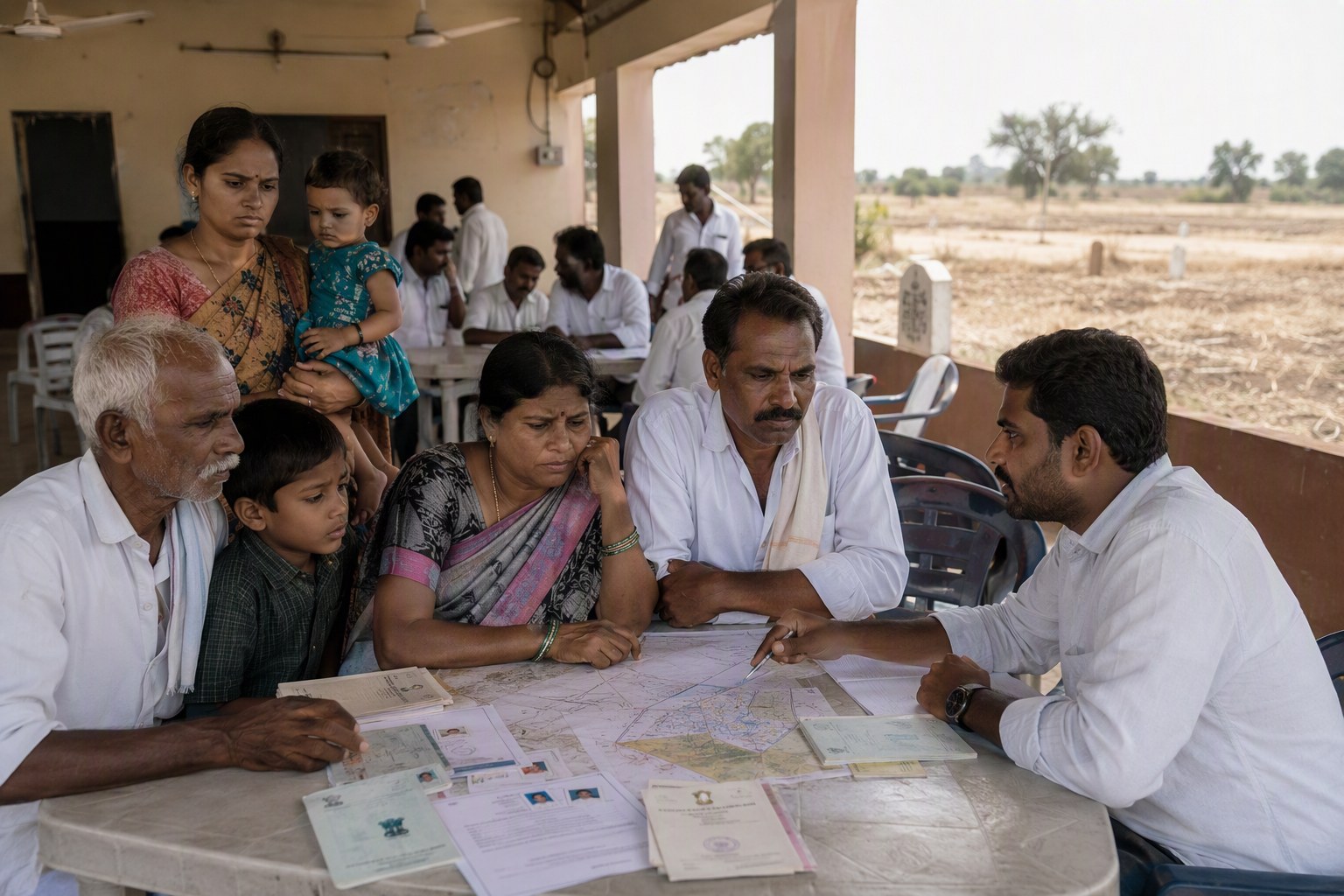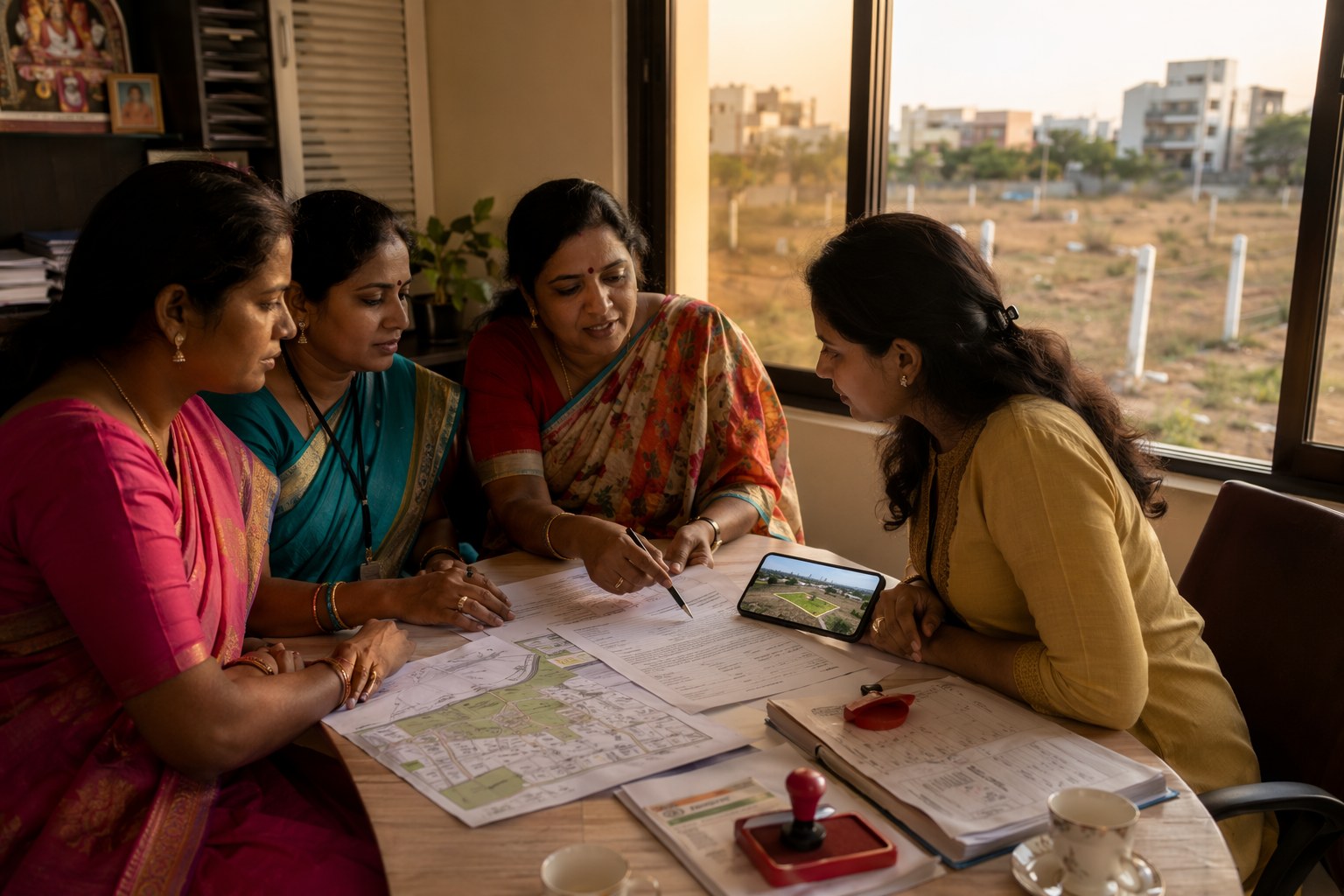
Telangana SHGs Could Bring Title Helpdesks to Women Buyers at a time when property verification has become too technical for many ordinary families, especially women purchasing flats, plots or inherited land. The pressure point is clear: Telangana’s Section 22-A prohibited property database contains 3,076,153 entries as per the latest data available with Verified.RealEstate. For a buyer in Miyapur, Uppal, Kondapur, Hayathnagar or Shamshabad, one missed EC check or one ignored survey number can turn a dream purchase into years of SRO visits.
The idea is simple and very Telangana-friendly: train self-help group members to act as first-level property record helpdesks in villages, colonies and mandal centres. Not as brokers. Not as legal certifiers. But as informed local women who can help other women ask the right questions before they pay an advance.
Telangana SHGs Could Bring Title Helpdesks to Women Buyers: the local gap
In Hyderabad’s active property belt, buyers usually hear these words only after trouble starts: EC, pahani, Dharani, mutation, 22-A, SRO jurisdiction, market value, link document. For many women buyers, especially first-time plot buyers, widows handling family property, daughters receiving partition shares, and homemakers investing savings, the property office language itself becomes a barrier.
We’ve seen this repeatedly in and around Serilingampally mandal, Rajendranagar mandal, Uppal mandal, Medchal mandal and Hayathnagar mandal. The buyer may know the apartment name, builder name or survey number. But she may not know which SRO applies, whether the EC has a gap, whether the land is on the prohibited list, or whether the quoted ready reckoner value matches the government record for that locality.
That is where SHGs can make a real difference. Telangana already has women’s group networks that understand local families, local land names and village boundaries. If trained properly, they can become the first public-facing layer between a confused buyer and a risky transaction.
In my view, the most useful SHG property helpdesk will not give legal opinions. It will slow down bad decisions. It will tell a buyer: “Do not pay token money until these records are checked.” That alone can save families from serious trouble.
Telangana SHGs Could Bring Title Helpdesks to Women Buyers because 22-A is not a small footnote
Section 22-A prohibited properties are not a minor clerical issue in Telangana. With 3,076,153 entries in the database, the risk is spread across many land categories and locations. A buyer may see an open plot near a growth corridor, a low-priced agricultural parcel near a village road, or a resale flat with old link documents. But if the underlying property is restricted, registration can be blocked or challenged.
For women buyers, the danger is often social as much as legal. Many are pushed to decide quickly by relatives, agents or sellers. “Madam, tomorrow rate will increase” is a common line. In such moments, a local SHG helpdesk can offer a practical pause: check the survey number, check the EC, check 22-A, check SRO, then decide.
Verified.RealEstate tools can support that workflow. A helpdesk volunteer can use the Section 22-A Prohibited Property Check to screen the property, the Encumbrance Certificate Search to start the EC review, and the Find Your SRO Office tool to identify the correct registration office. For land parcels, the Survey Number Finder is also useful, especially where buyers know only the village name or seller’s oral description.
What an SHG property helpdesk should actually do
An SHG helpdesk should be designed with clear limits. It should not draft sale deeds, certify title, negotiate brokerage, or promise registration. Its role should be record awareness and buyer protection. That is enough work by itself.
| Buyer concern | SHG helpdesk action | Useful tool |
|---|---|---|
| “Is this property blocked under 22-A?” | Check the survey number or property details against prohibited property records. | Section 22-A Prohibited Property Check |
| “Which SRO should I visit?” | Identify the correct SRO based on village, locality or jurisdiction. | Find Your SRO Office |
| “Are there old loans or transactions?” | Help the buyer request and read the EC trail before paying an advance. | Encumbrance Certificate Search |
| “Is the government value matching the quote?” | Check the applicable market value or guideline value for that location. | Market Value / Guideline Value Search |
| “Is this builder project registered?” | Guide flat buyers to verify project registration where applicable. | RERA Project Lookup |
This is not high drama. It is basic record hygiene. But basic record hygiene is exactly what many buyers miss.
Why women buyers need this more in Hyderabad’s resale and plot markets
New apartment purchases in Gachibowli, Kokapet, Narsingi, Tellapur and Kukatpally often come with sales teams, brochures and bank tie-ups. Even there, RERA checks and EC review matter. But the bigger risk for women buyers is usually in resale flats, unapproved layouts, old gram panchayat layouts, family partitions, and agricultural land conversions around city edges.
In areas like Adibatla, Kandukur, Shankarpally, Patancheru, Medchal and Ibrahimpatnam, land descriptions can still move between old village names, survey numbers, pattadar passbooks, Dharani records and SRO documents. If a buyer is not used to reading these records, she may not realise that the name on one document, the extent in another, and the boundary description in the sale deed must all make sense together.
In our experience, a suspiciously low price is not the only warning sign. A seller refusing to share link documents is a warning sign. An agent saying “EC is not needed for this type of land” is a warning sign. A mismatch between survey number and location is a warning sign. A registration promise without SRO clarity is also a warning sign.
How the helpdesk model can work at mandal level
A practical model can be kept simple. Each mandal-level SHG cluster could have a few trained members who understand property record basics. They can maintain a checklist in Telugu and English, help women buyers collect documents, and guide them to digital checks before visiting the SRO or lawyer.
- Step one: collect seller name, village/locality, survey number, flat number or document number if available.
- Step two: check whether the property appears in 22-A prohibited property records.
- Step three: identify the correct SRO and ask for EC review.
- Step four: compare the government market value or guideline value for the locality. The rate must be checked from the current record; blanket rates for places like Kondapur, Uppal or Shamshabad should not be casually quoted.
- Step five: send the buyer to a qualified lawyer for title opinion before signing or paying a major advance.
The Property Verification Tool can help buyers organise these checks in one place. For families struggling with Telugu property terms like pahani, sethwar, link document, mutation or khata, the Telugu-English Property Terms Dictionary can reduce confusion. That small language support matters more than people in the industry admit.
The risk: helpdesks must not become another middleman layer
There is one genuine concern. If SHG helpdesks are not properly monitored, they can get captured by local agents, document writers or politically connected land sellers. Then the buyer is back to square one, only with a friendlier face at the counter.
So the rules must be strict. No commission from sellers. No recommendation of specific agents. No title certificate. No oral guarantee. Every helpdesk response should be record-based: “This is what the EC shows”, “This is the SRO”, “This is the 22-A status”, “Please take legal opinion.”
That discipline will decide whether the model becomes genuinely useful or just another local arrangement.
What buyers should do right now
Until such helpdesks become common, women buyers should create their own verification routine. Before paying token amount for a plot in Shadnagar, a resale flat in Manikonda, a house in LB Nagar, or land near Medchal, insist on basic documents. Ask for the previous sale deed, EC, link documents, property tax details where applicable, survey number, pattadar details for land, and SRO information.
Do not feel shy about asking. A clean seller will usually cooperate. A hurried seller who avoids paperwork is telling you something without saying it directly.
Telangana’s property market is strong, but strong markets also attract shortcuts. SHG-led title helpdesks can bring record literacy closer to women buyers. Not by replacing lawyers or government offices, but by helping families ask better questions at the right time.
Frequently Asked Questions
Can an SHG helpdesk certify property title in Telangana?
No. An SHG helpdesk should only assist with basic record checks like EC, SRO, survey number and 22-A status. Final title opinion must come from a qualified property lawyer.
Why is Section 22-A checking important for women buyers?
Section 22-A properties may face registration restrictions. Telangana’s prohibited property database has 3,076,153 entries, so buyers should check this before paying an advance.
Which property records should be checked before buying a plot?
Check the EC, survey number, SRO jurisdiction, link documents, Dharani or revenue details where applicable, market value, and 22-A prohibited property status.
Can SHGs help flat buyers in Hyderabad also?
Yes. For flat buyers, SHGs can guide basic checks such as EC review, SRO identification, RERA project lookup where applicable, and market value verification.