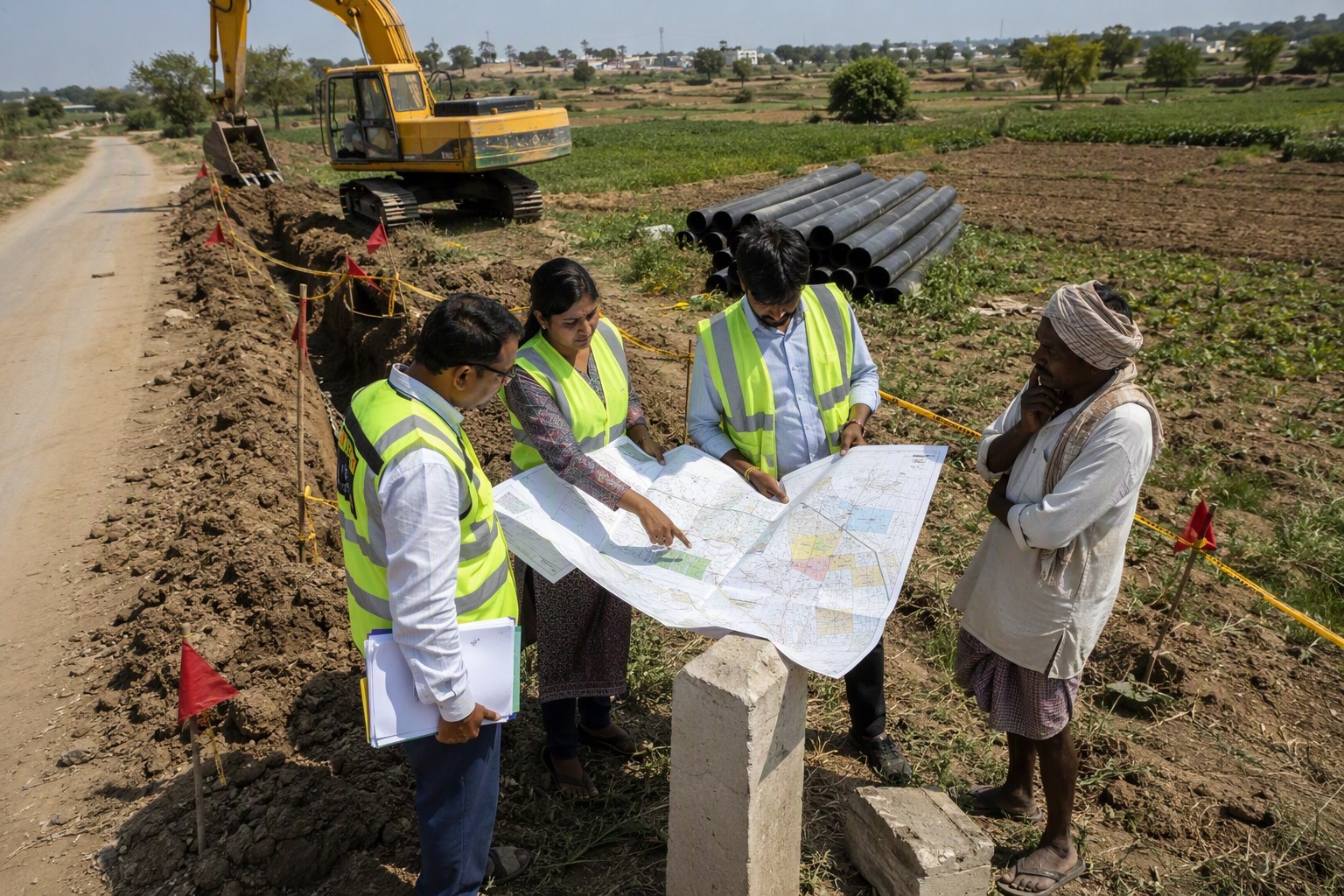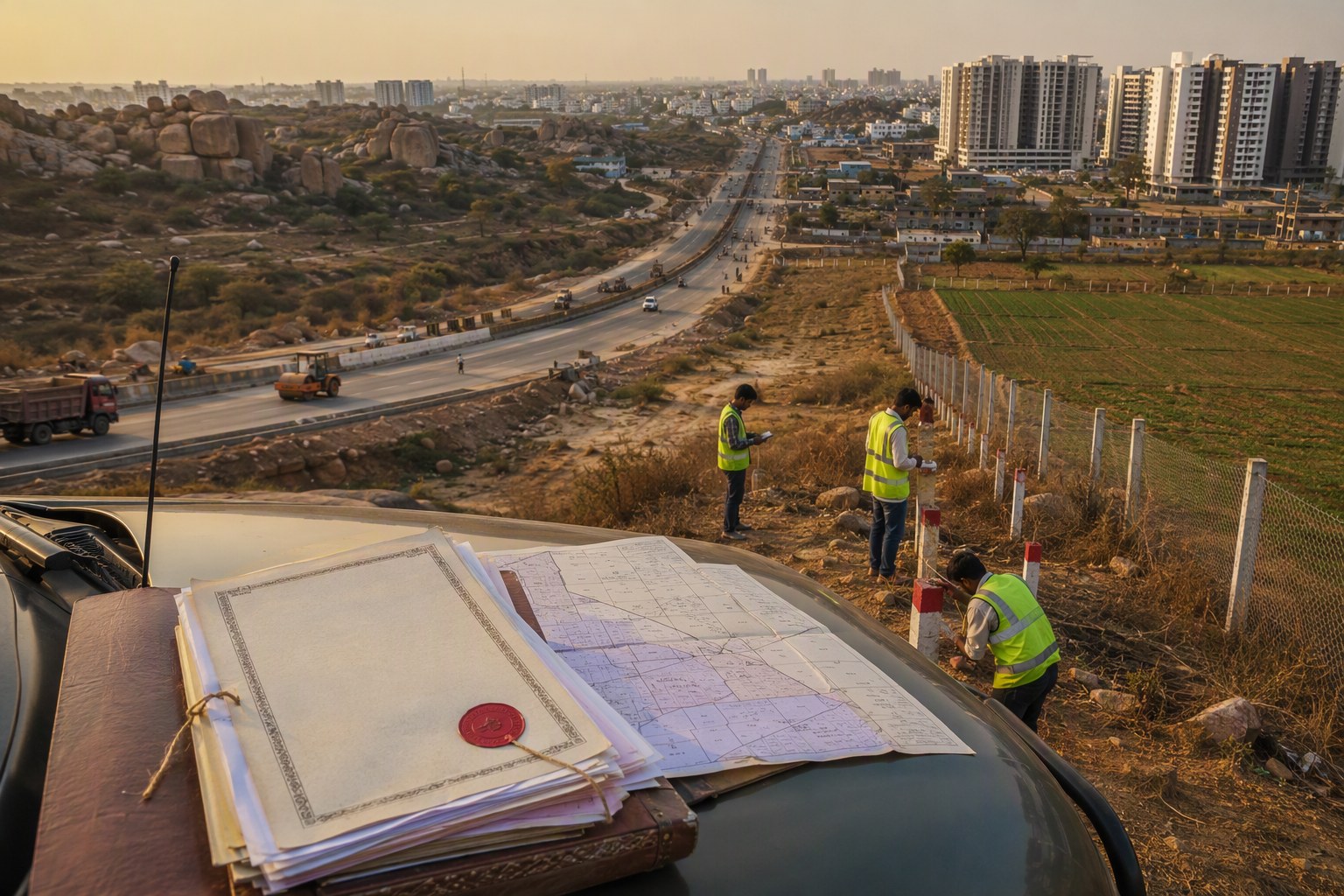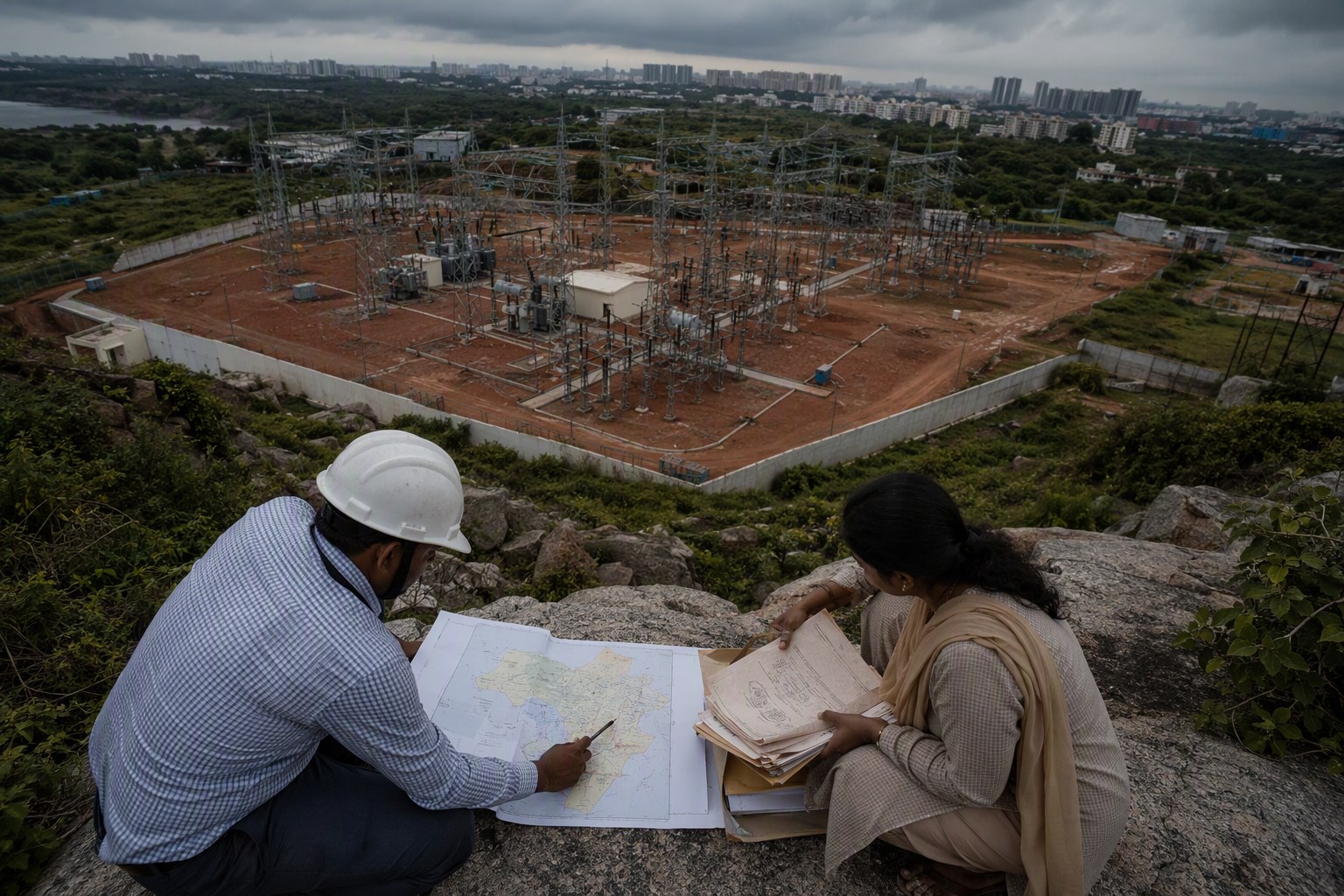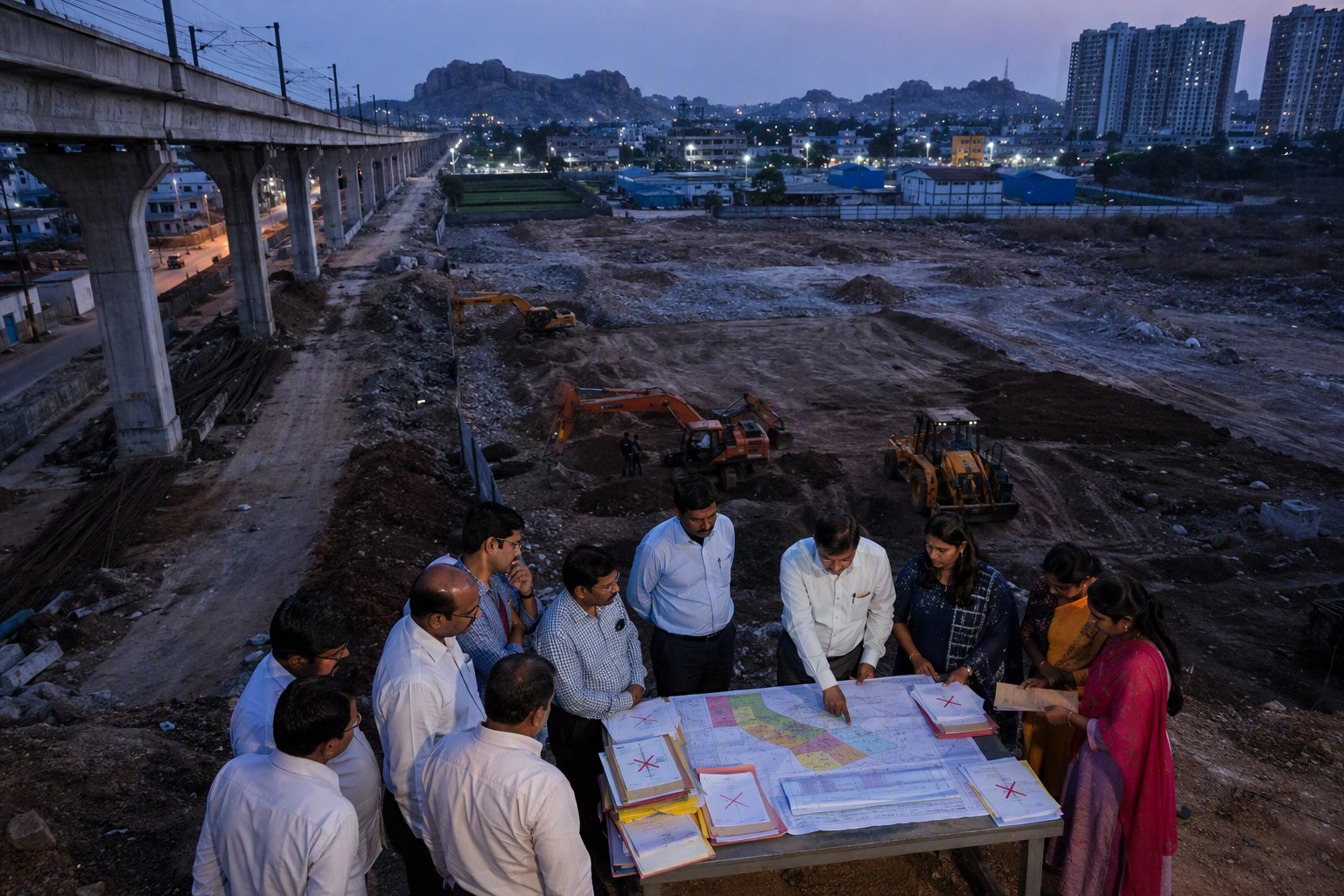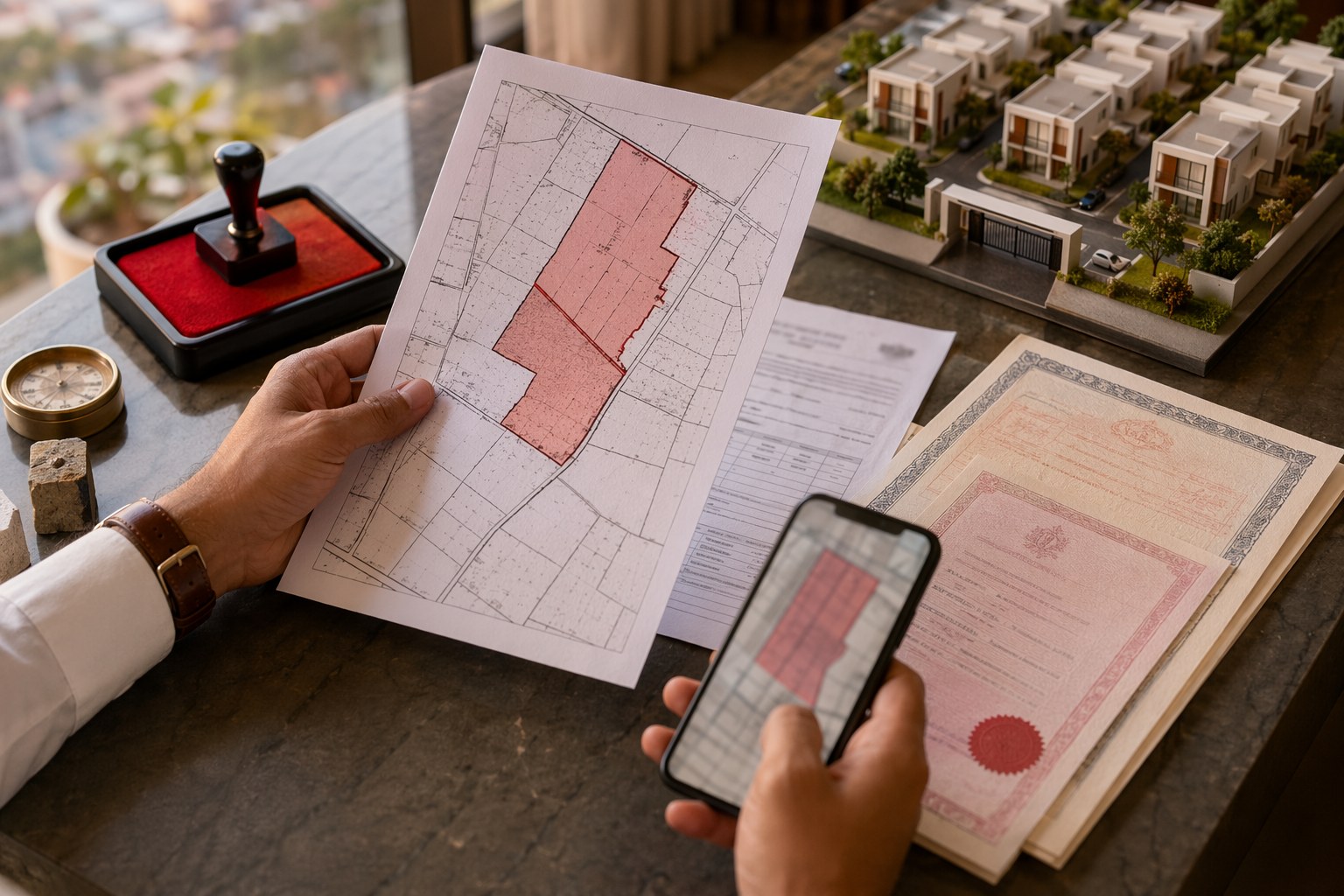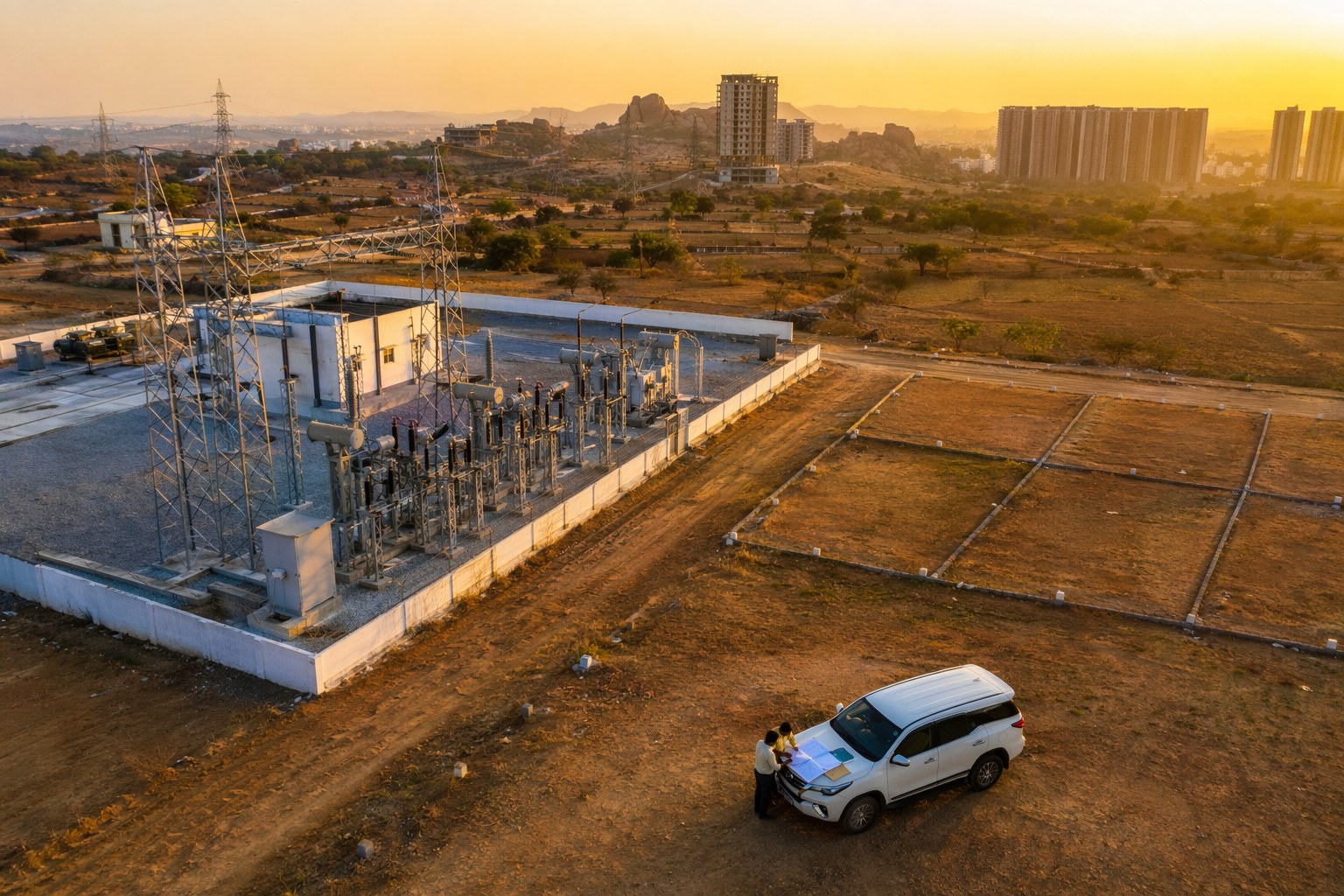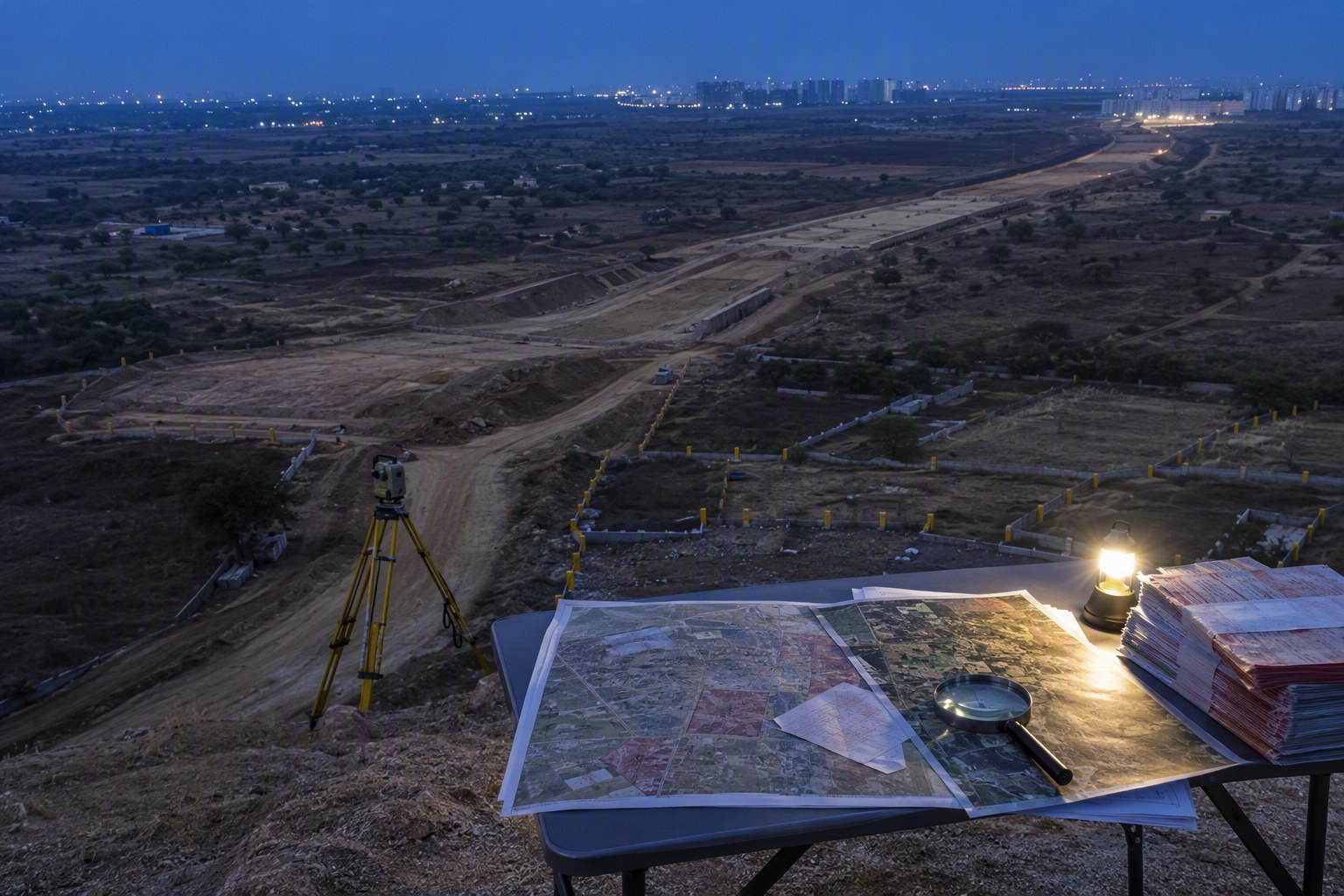
Telangana Regional Ring Road land planning is likely to push one old but often ignored due-diligence step to the front of every transaction: Section 22-A prohibited property verification. For owners, buyers and developers tracking land near proposed corridors, the question is no longer only about road alignment, access or future layout potential. The first question is simpler: can this survey number be registered at all?
As per latest IGRS data available with Verified.RealEstate, Telangana has 3,076,153 prohibited property entries under Section 22-A. That number is large enough to matter in any infrastructure-led land market. Around Regional Ring Road discussions, even a clean-looking pahani or an attractive road-facing parcel cannot be treated as safe without checking 22-A status, EC history, SRO jurisdiction and land use.
Our view is straightforward: before paying token advance near any proposed Regional Ring Road influence area, check the survey number against 22-A. In many mandals around Hyderabad, registration risk can be more serious than price risk.
Telangana Regional Ring Road planning puts Section 22-A due diligence in focus
The Telangana Regional Ring Road has become one of the most watched infrastructure themes around Hyderabad. Landowners in outer mandals, plotted development firms, farmhouse buyers and investors are all watching villages near areas such as Sangareddy, Toopran, Gajwel side, Choutuppal, Ibrahimpatnam, Kandukur, Amangal, Shadnagar, Chevella and Shankarpally. These names regularly come up in market conversations whenever outer growth and road-led development are discussed.
But land beside a proposed corridor is not automatically saleable land. In Telangana, Section 22-A entries can cover properties where registration is restricted due to government land classification, assigned land issues, endowment claims, wakf claims, court orders, surplus land, prohibited survey numbers or other notified reasons. The exact reason must be checked record by record.
For a buyer, the danger is not only losing appreciation. The bigger problem is paying advance for land that the SRO may refuse to register. For an owner, a 22-A flag can block sale, development agreement, mortgage or family settlement registration. For a developer, one disputed survey number inside a larger aggregation can disturb layout planning, lender comfort and project timelines.
If you are checking a land parcel near the Regional Ring Road discussion belt, start with the Section 22-A Prohibited Property Check. Then match it with the Encumbrance Certificate Search and the Survey Number Finder. These three checks catch many early red flags before money changes hands.
Why Telangana Regional Ring Road buyers should not rely only on local enquiries
In our experience, many rural land deals around Hyderabad still begin with village-level confidence: “pattadar known person”, “no issue in pahani”, “road is coming nearby”, “last month same village registration happened”. These statements may be useful background, but they are not title verification.
Section 22-A is a statutory registration filter. If a survey number is listed as prohibited, the sub-registrar can refuse registration even if the seller has old documents and even if the land is being physically enjoyed. That is why buyers must verify through official records and not depend only on brokers, neighbours or old passbooks.
Regional Ring Road-related planning can create fresh pressure on old land records. Once a road corridor, interchange possibility, industrial node, logistics activity or layout demand enters the market discussion, dormant title issues surface quickly. Family disputes come out. Government land boundaries get questioned. Assigned land histories are rechecked. Old agreements suddenly become active. A buyer who skipped basic verification will be the weakest party in that situation.
What the 3,076,153 prohibited property entries mean for land near proposed corridors
The figure of 3,076,153 prohibited property entries does not mean every outer Hyderabad land parcel is risky. It means the risk universe is too large to ignore. Telangana’s land records are village-based, survey-number based and history-heavy. One survey number in a village may be clean, while the adjoining one may carry a restriction. Even within a family holding, sub-division details can change the result.
This matters sharply in mandals where land is being aggregated for ventures, warehouses, farm plots or long-hold investments. A developer may buy or enter into agreements across multiple survey numbers. If even one important access strip or central block has a 22-A problem, the whole plan can get stuck. For individual buyers, especially those buying small plots carved out from agricultural land, the risk is different: the parent land itself may not support the promised transaction structure.
| Buyer type | Main 22-A risk near RRR areas | First check to do |
|---|---|---|
| Individual land buyer | Registration refusal after advance payment | Survey number-wise 22-A check |
| Plot buyer | Parent land title or layout approval gap | EC, land use and RERA where applicable |
| Developer | One restricted parcel affecting aggregation | Village map, pahani, EC and SRO review |
| Landowner | Sale or development agreement getting blocked | 22-A status and revenue record correction path |
Telangana Regional Ring Road: checks owners should finish before marketing land
Owners near proposed growth corridors often wait until a buyer arrives to check documents. That is a mistake. If land is in places like Kandukur, Shadnagar side villages, Choutuppal belt, Sangareddy outskirts, Shankarpally side or Chevella mandal villages, document readiness itself can decide negotiation power.
Before quoting a price or signing a memorandum, owners should keep these records ready:
- Latest Dharani details and pattadar passbook information, where applicable.
- Recent pahani/adangal entries and mutation history.
- Survey number, extent and village name matched exactly with records.
- Encumbrance Certificate for the relevant period.
- 22-A prohibited property status.
- SRO jurisdiction and previous registration document numbers.
- Land use and road access position, especially for development proposals.
For SRO confirmation, use Find Your SRO Office. For ready reckoner-style value reference, check Market Value / Guideline Value Search. If a plotted or apartment project is being sold on the strength of future growth, verify the project through RERA Project Lookup before booking.
Developers need deeper checks than ordinary buyers
For developers, the Regional Ring Road story is not just about buying land early. It is about buying land that can be converted, planned, financed, approved and sold. A clean sale deed alone does not answer all these questions.
Land aggregation near proposed corridors should ideally be checked at four levels. First, title and EC. Second, Section 22-A and government restriction status. Third, land use, road width and access. Fourth, layout or building feasibility. We have seen cases where land looked attractive on location but failed practical planning because the approach road, zone or survey mismatch was not studied early.
Use Land Use Zone Finder and Road Width Check before assuming future plotting potential. For built-up development assumptions, the FSI/FAR Calculator can help frame early feasibility. These tools do not replace legal opinion, but they reduce blind spots before a lawyer or planner starts paid work.
How buyers should sequence verification before paying advance
The order of checks matters. Many buyers first negotiate, then pay token, then search documents. That sequence suits sellers and brokers, not buyers. Near infrastructure-influenced markets, the better sequence is record-first, payment-later.
- Step 1: Confirm village, mandal, survey number and extent. Do not accept only location pins.
- Step 2: Run Section 22-A check for the exact survey number.
- Step 3: Pull EC and compare seller names, document flow and mortgage entries.
- Step 4: Match pahani, Dharani and physical possession details.
- Step 5: Check SRO, guideline value and stamp duty impact using Stamp Duty Calculator.
- Step 6: For projects, check RERA, approvals, layout permissions and road access.
If the seller is pushing for immediate advance without sharing survey details, treat it as a warning sign. Good land can stand verification. Problem land usually depends on urgency.
What this means for the Regional Ring Road land market
The Regional Ring Road may continue to influence land conversations around Hyderabad’s outer belt. But the smarter market will separate “near growth corridor” from “legally registerable and developable land”. That difference is where buyers either protect capital or get trapped.
My reading is that 22-A checks will become a first-stage filter in serious RRR-linked land transactions. Banks, developers and informed buyers will ask for it early. Owners with clean records will benefit because they can prove readiness. Owners with record problems should not wait for a buyer to discover them at the SRO counter.
For Verified.RealEstate readers, the practical message is simple: do not buy the road story without checking the land record story. In Telangana, survey number truth beats brochure promise.
Frequently Asked Questions
What is Section 22-A in Telangana property registration?
Section 22-A refers to properties where registration is prohibited or restricted due to reasons such as government land status, assigned land issues, endowment or wakf claims, court orders or other notified restrictions. The exact reason must be checked for the specific survey number.
Why is 22-A checking important near the Telangana Regional Ring Road?
RRR-related land demand can push quick transactions in outer mandals. If a land parcel is listed under 22-A, the SRO may refuse registration. So buyers, owners and developers should verify 22-A status before paying advance or signing agreements.
Can a landowner sell property if it appears in the prohibited property list?
Not through normal registration until the restriction is resolved or clarified as per the applicable government process. The owner should first identify the reason for the 22-A entry and take proper legal and revenue advice.
Which documents should I check before buying land near proposed RRR corridors?
Check the survey number, Dharani details, pahani, EC, 22-A status, SRO jurisdiction, land use, road access and seller title documents. For plotted or apartment projects, check RERA registration and approvals also.
Is a clean Encumbrance Certificate enough for buying agricultural land?
No. An EC shows registered transactions and charges, but it may not fully answer prohibited property status, land classification, possession, family disputes or land use. EC should be read along with 22-A, revenue and physical verification.