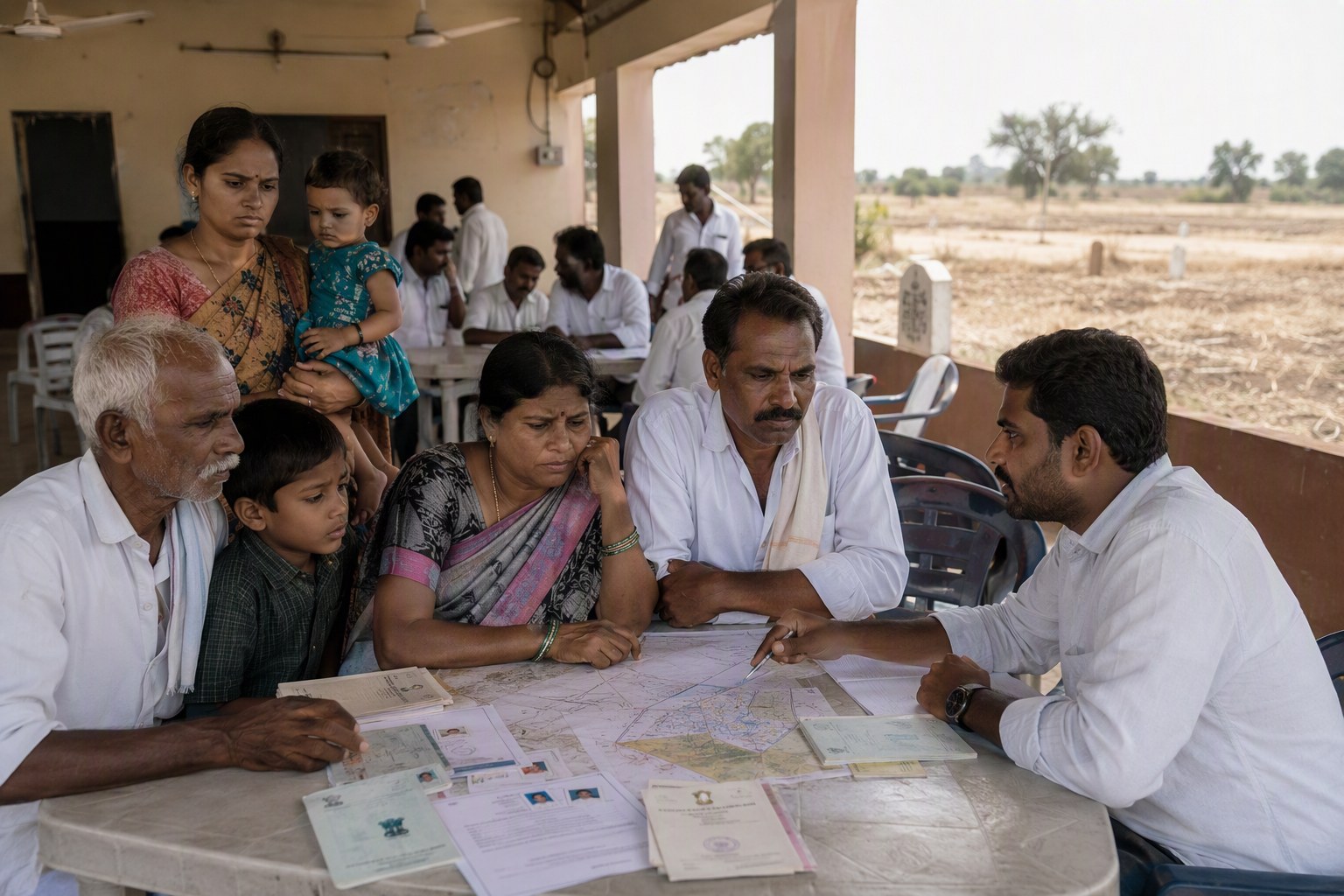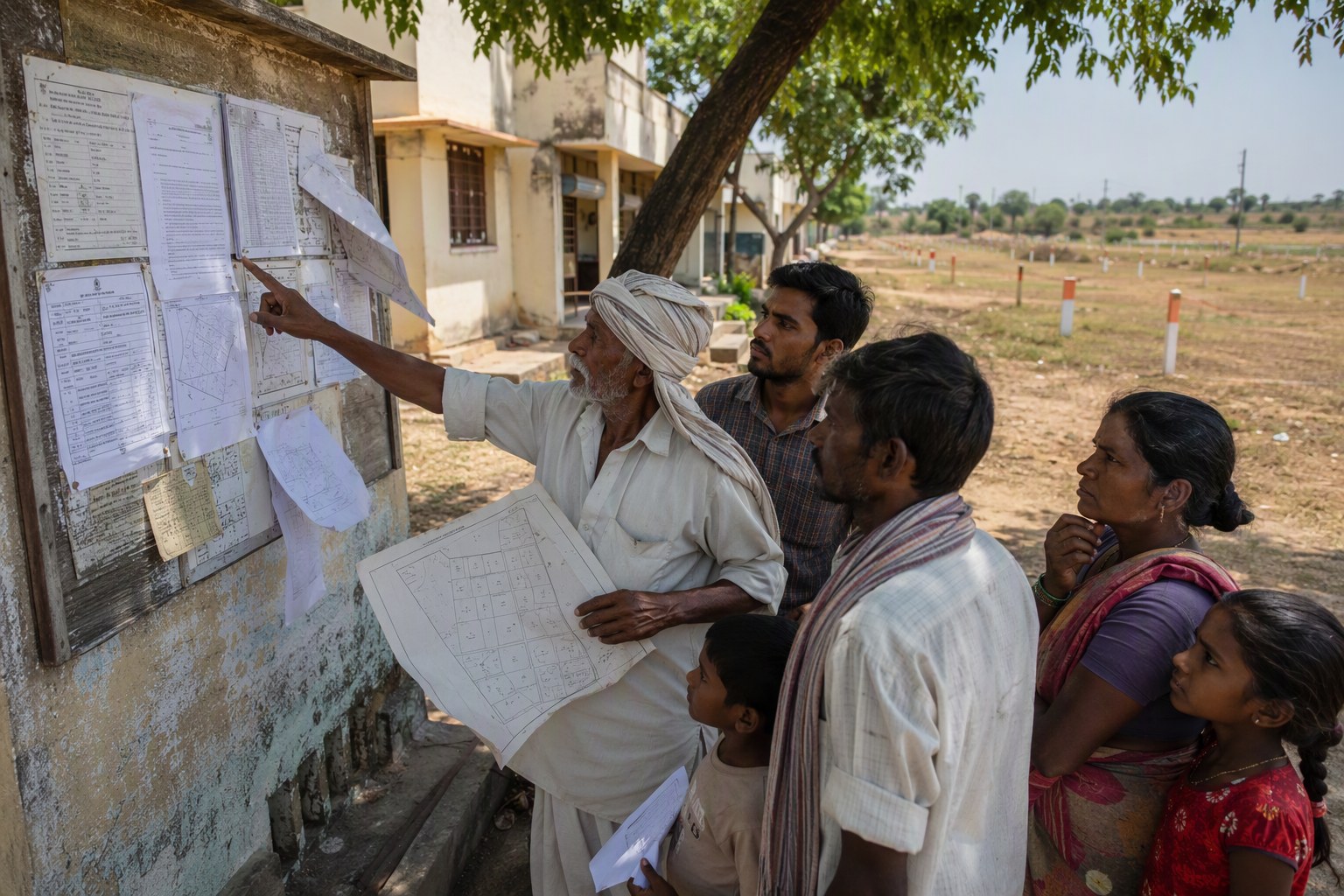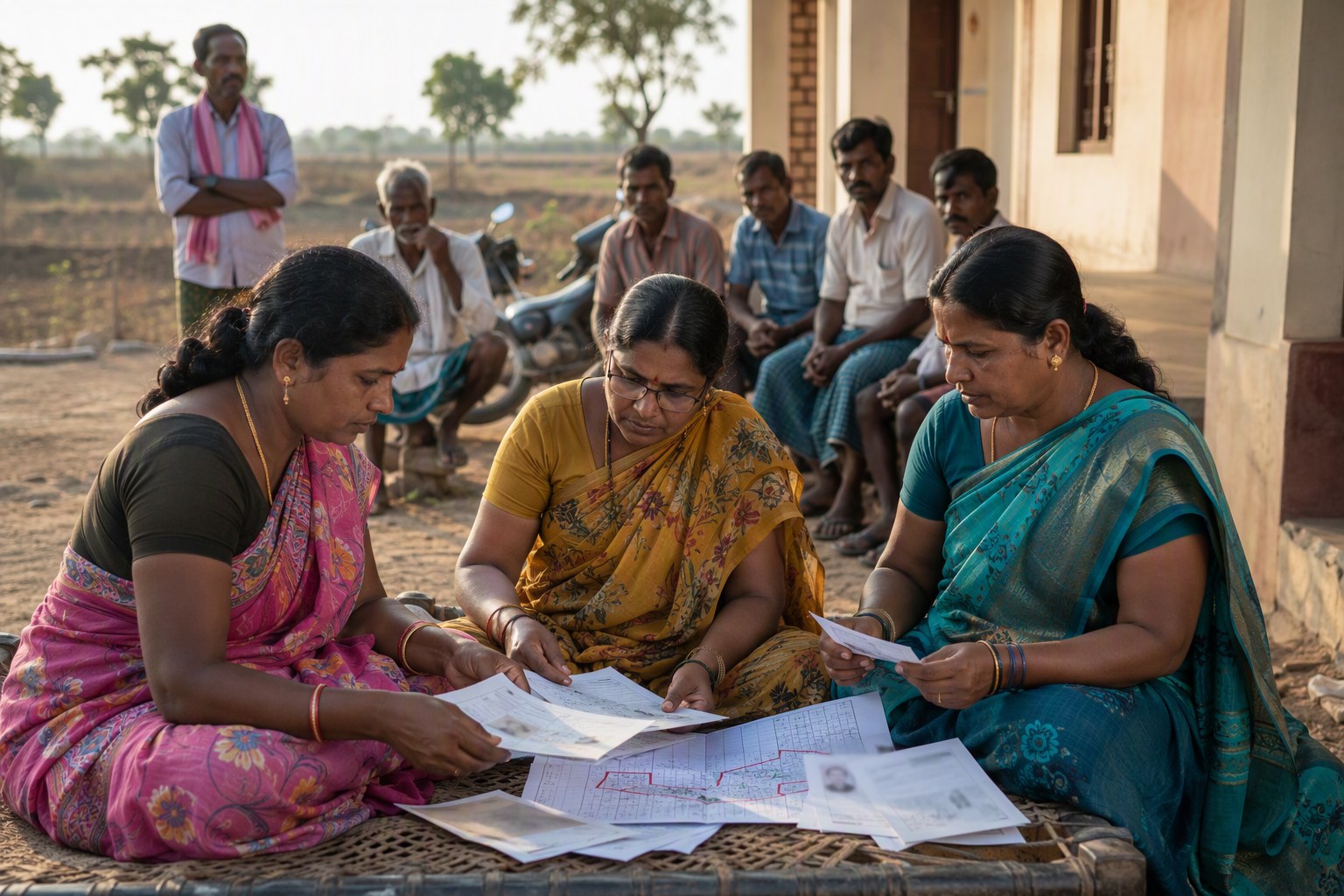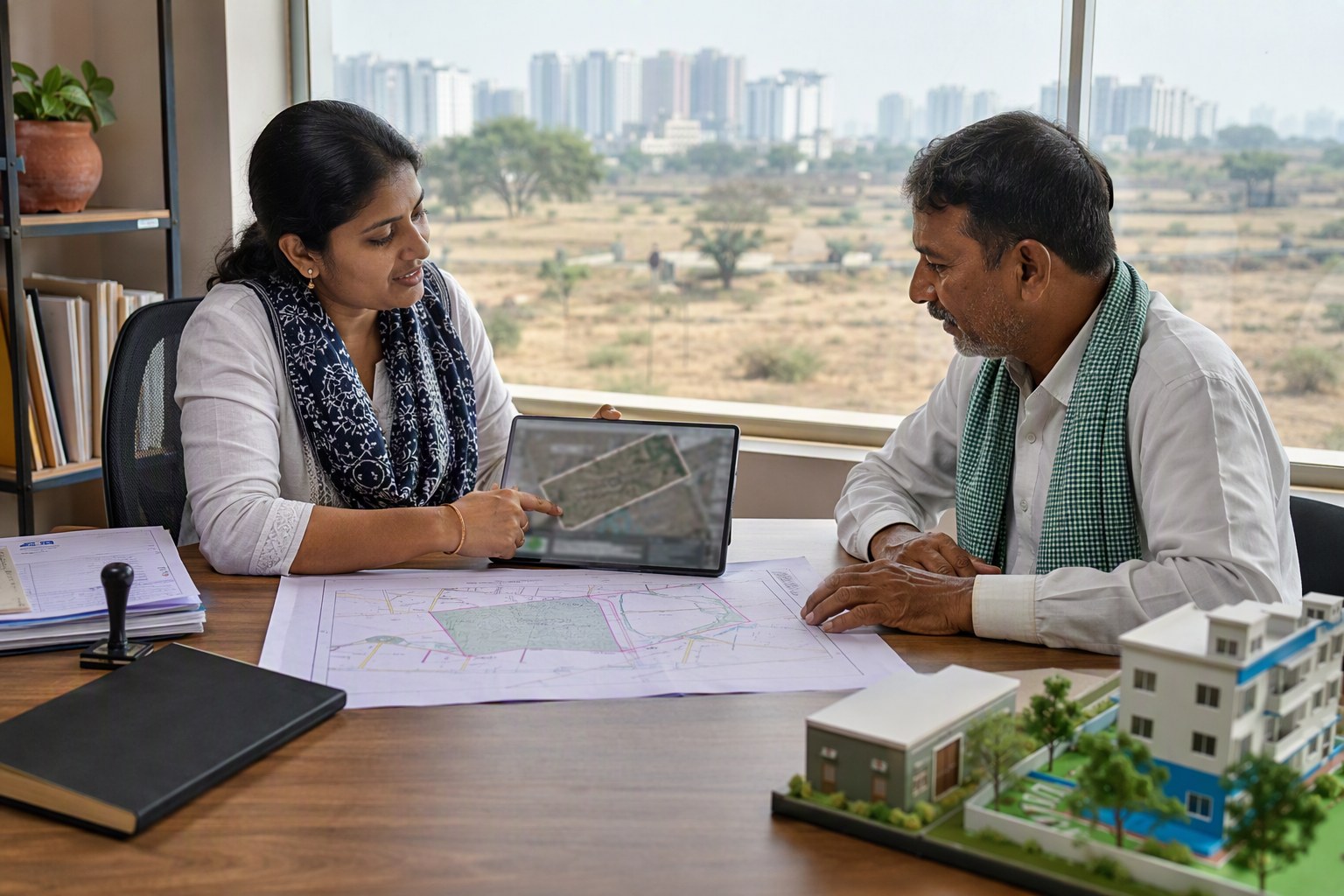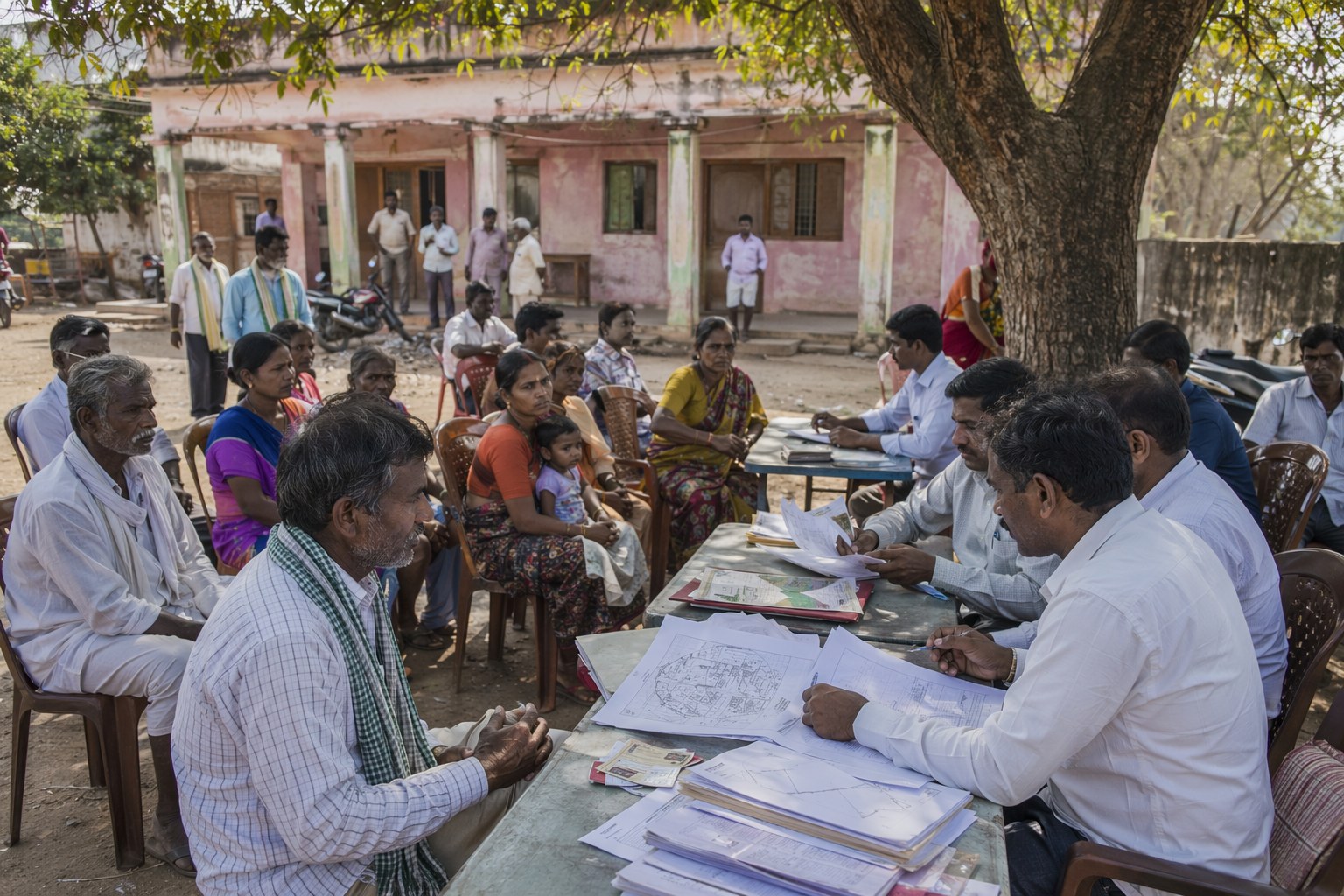
Telangana Panchayats May Host 22-A Help Camps for Families is a practical idea whose time has come. With Section 22-A prohibited properties affecting 3,076,153 entries as per latest IGRS data, many families are still discovering land restrictions only when they try to sell, partition, inherit, mortgage, or register property. A panchayat-level help camp can bring the first layer of clarity closer to the village, instead of sending every family to the SRO, mandal office, advocate, bank, or document writer.
The issue is not only legal. It is social. In Telangana, land is often the family’s main asset. A single survey number in a 22-A list can delay a daughter’s marriage settlement, a bank loan for education, a brother’s partition deed, or an elderly parent’s inheritance transfer. In our experience, most families do not need a lecture on land law first. They need someone to check the survey number, explain the entry in plain Telugu or simple English, and tell them which office to approach next.
Telangana Panchayats May Host 22-A Help Camps for Families: Why this matters now
Section 22-A entries are not small in scale. Telangana’s prohibited properties database has 3,076,153 entries. That number alone explains why confusion is common at the village level. Families hear words like assigned land, endowment land, waqf, government land, court dispute, ceiling surplus, or prohibited survey number. But they may not know whether the restriction covers the whole survey number, a part of it, an old subdivision, or a clerical mismatch.
A help camp at the gram panchayat can act as a first-response desk. It need not decide ownership. It should not promise deletion from 22-A. But it can help families read the record before they make expensive decisions. That difference is big.
Take a family in Shankarpally mandal planning to sell ancestral land near Mokila. Or a buyer looking at a plot around Narsingi in Gandipet mandal. Or a farmer family in Maheshwaram mandal trying to mortgage land for a child’s higher studies. Even in Hyderabad’s high-interest corridors like Kokapet, Gachibowli, Patancheru, Shamshabad, Moinabad, Medchal, and Hayathnagar, a registration shock usually starts with one small line in the property record.
Our view is simple: a family should not learn about a 22-A problem only after paying an advance, signing an agreement, or standing at the Sub-Registrar Office counter.
Telangana Panchayats May Host 22-A Help Camps for Families before sale, inheritance and loans
The most useful timing for these camps is before a transaction, not after a dispute. A village-level camp can prioritise three common situations.
1. Sale or purchase of land
Before a buyer pays token advance, both sides can check whether the survey number appears in the prohibited list. This is especially relevant in peri-urban mandals where agricultural land, plotted layouts, and road-widening expectations are all mixed together. Around Patancheru, Shankarpally, Shamshabad, Maheshwaram and Medchal, families often rely on local market talk. But registration depends on records, not gossip.
Basic checks should include the 22-A status, EC, SRO jurisdiction, market value or guideline value, and survey number match. Buyers can start with Section 22-A Prohibited Property Check, then verify transaction history through Encumbrance Certificate Search. If the family is unsure about the correct registration office, Find Your SRO Office helps avoid wasted trips.
2. Inheritance and partition
Many 22-A shocks come during inheritance. A son or daughter may try to mutate land after a parent’s death and then discover that the survey number has a restriction. In villages, the emotional pressure is already high during partition. If the panchayat camp can identify the issue early, families can collect pahanis, old sale deeds, succession papers, Dharani records, and revenue correspondence in a more orderly way.
For families not comfortable with English property terms, Telugu-English Property Terms Dictionary can help them understand words seen in pahani, adangal, EC, sale deed, gift deed, release deed, and mutation records.
3. Loan-linked property decisions
Banks and NBFCs ask for clean title. If a land parcel is under Section 22-A, a loan may get stuck or delayed. A panchayat camp can help families avoid paying processing fees, valuation charges, or legal scrutiny costs without first checking basic risk. It can also guide them to check whether any mortgage charge appears through CERSAI Charge Check and to review past transactions using EC Analyzer.
What a panchayat-level 22-A camp should actually do
A good camp should be practical, not ceremonial. It should have a small checklist and a clear boundary. Panchayat staff, revenue staff, SRO coordination teams, legal volunteers, and trained data operators can all play a role, depending on how the government structures it.
| Family situation | What the camp can check | What the camp should not promise |
|---|---|---|
| Planning to sell land | Survey number, village, mandal, 22-A entry, SRO jurisdiction | Guaranteed registration |
| Inheritance after death | Pahani details, Dharani status, old documents, possible restriction reason | Automatic mutation or deletion |
| Applying for bank loan | Basic title red flags, EC, mortgage clues, prohibited property status | Loan approval |
| Buying a plot | Survey number linkage, layout clues, guideline value search route | Final legal opinion |
The camp should give families a written acknowledgement of what was checked. Even a simple note saying “survey number verified in available records; further clarification needed from revenue/SRO” can help people know the next step. In rural Telangana, verbal advice often gets distorted by the time it reaches all family members.
For property value awareness, families should use Market Value / Guideline Value Search. For registration cost planning, they can use Stamp Duty Calculator. These tools do not replace official approval, but they reduce blind dependence on hearsay.
Where Hyderabad families will feel the impact
This is not only a remote village issue. Hyderabad’s expansion has pulled many gram panchayat areas into active real estate discussion. Villages around Gandipet, Shankarpally, Moinabad, Shamshabad, Maheshwaram, Kandukur, Patancheru, Sangareddy-side growth belts, Medchal, Shamirpet, Ghatkesar and Hayathnagar see constant enquiries from buyers, developers, and families holding old agricultural land.
In these locations, one survey number may have multiple stories: old pattadar passbook, Dharani entry, family oral partition, unregistered agreement, layout conversion talk, road proposal, or a 22-A restriction. We’ve seen buyers focus only on location names like Kokapet, Narsingi, Tellapur, Mokila, Kollur or Tukkuguda. But the file lives in the survey number, village and mandal. That is where the camp can bring discipline.
Families should carry copies of the sale deed, pattadar passbook if available, pahani/adangal, Dharani details, tax receipts, old link documents, death certificate in inheritance cases, family member certificate where relevant, and any bank or court notices. If the land is plotted, they should carry layout papers and plot-to-survey linkage documents.
Why the 22-A list causes family-level confusion
Section 22-A is meant to stop registration of certain categories of properties. But public understanding is poor because land records are layered. A family may know the land by local name, not by survey number. A buyer may know only the plot number. An NRI child may have a scanned sale deed but no latest pahani. A widow may know the boundary stones but not the mandal record terminology.
There is also a trust gap. People ask the document writer, then the village elder, then the broker, then the bank agent. Each person may give a different answer. A panchayat camp can reduce this running around by creating one recognised starting point. The final authority may still be the revenue department, SRO, court, or specific government body depending on the case. But at least families will know where the problem sits.
- Is the survey number fully or partly listed?
- Is the restriction linked to government land, assigned land, institution land, or another category?
- Does the old deed match the present village and mandal records?
- Is the property under the correct SRO jurisdiction?
- Should the family seek revenue clarification before signing any agreement?
Verified.RealEstate view: make camps document-first, not broker-first
My opinion is that these camps will work only if they are document-first. If they become another place for middlemen, families will again lose confidence. The display board should clearly say what the camp can do, what documents are needed, and which matters require higher-level review.
The panchayat is the right access point because people already come there for certificates, local issues and basic government communication. But 22-A handling must be careful. A wrong oral assurance can create bigger disputes. So the camp should guide, record and refer — not casually clear titles.
For families, the safest approach is to do a layered check. Start with survey number identification using Survey Number Finder. Then run a 22-A check, EC search, SRO check and guideline value search. For a broader risk view, use Property Verification Tool. If buying in a project or apartment, also verify the project through RERA Project Lookup.
What families should do before visiting a 22-A help camp
Do not go empty-handed. Do not rely only on a WhatsApp photo of the land. Carry clear copies and write down the exact village, mandal, survey number, extent, owner name and document number if available. If the property is in a fast-growing Hyderabad belt, also check whether the land has been converted, plotted, mortgaged, inherited, or gifted earlier.
If there is an urgency — sale agreement deadline, bank loan deadline, family partition meeting — mention it at the camp, but do not skip legal verification. Section 22-A issues can be clerical in some cases and serious in others. The camp’s best role is to separate simple record confusion from matters that need formal legal or revenue action.
For Telangana families, this is where local governance can make a real difference. A panchayat-level 22-A help camp will not solve every title problem. But it can stop many families from making avoidable mistakes before sale, inheritance or loan decisions. With 3,076,153 prohibited property entries in the state database, bringing basic clarity closer to people is not a luxury. It is common sense.
Frequently Asked Questions
What is a Section 22-A prohibited property in Telangana?
A Section 22-A prohibited property is a property restricted from registration under specified categories in government records. The reason can vary by case, so families should check the exact survey number, village and mandal before any transaction.
How can panchayat help camps support families?
They can help families check basic records, understand whether a survey number appears in the prohibited list, identify the correct SRO or revenue office, and prepare documents for further clarification.
Can a panchayat camp remove land from the 22-A list?
No. A panchayat camp should not be treated as a deletion authority. It can guide families on the next steps, but changes to official records require the proper government process.
What should I check before buying land in Hyderabad outskirts?
Check the survey number, Section 22-A status, EC, SRO jurisdiction, guideline value, link documents, layout approvals where relevant, and any loan or mortgage charge before paying an advance.
Is an EC enough to confirm that a property is safe?
No. An Encumbrance Certificate shows registered transactions for the searched period, but it does not by itself clear all title, land use, 22-A, revenue, inheritance or litigation risks.