Telangana Metro Depot Plans May Trigger Land Title Checks
Metro depot planning is not just an engineering matter. For land buyers around proposed depot pockets in Telangana, it can become a title, access and acquisition-risk question very quickly. A depot needs large land parcels, approach roads, utility corridors, parking, workshops and operational buffers. Once land assembly starts moving, the nearby real estate market usually reacts before official paperwork becomes easy for ordinary buyers to read.
That is exactly why buyers looking at plots, farm land conversions, small layouts or apartment projects near potential metro infrastructure zones should slow down and check the basics. Not because every nearby parcel is unsafe. Many may be perfectly valid and even benefit from better connectivity later. But the risk profile changes when a public transport project starts identifying land in a locality.
My view is simple: metro proximity can improve long-term demand, but a rushed purchase near a proposed depot without checking acquisition risk is not smart investing. Depot land is different from a station frontage. It needs depth, access and clear control over land.
Why depot land assembly matters to buyers
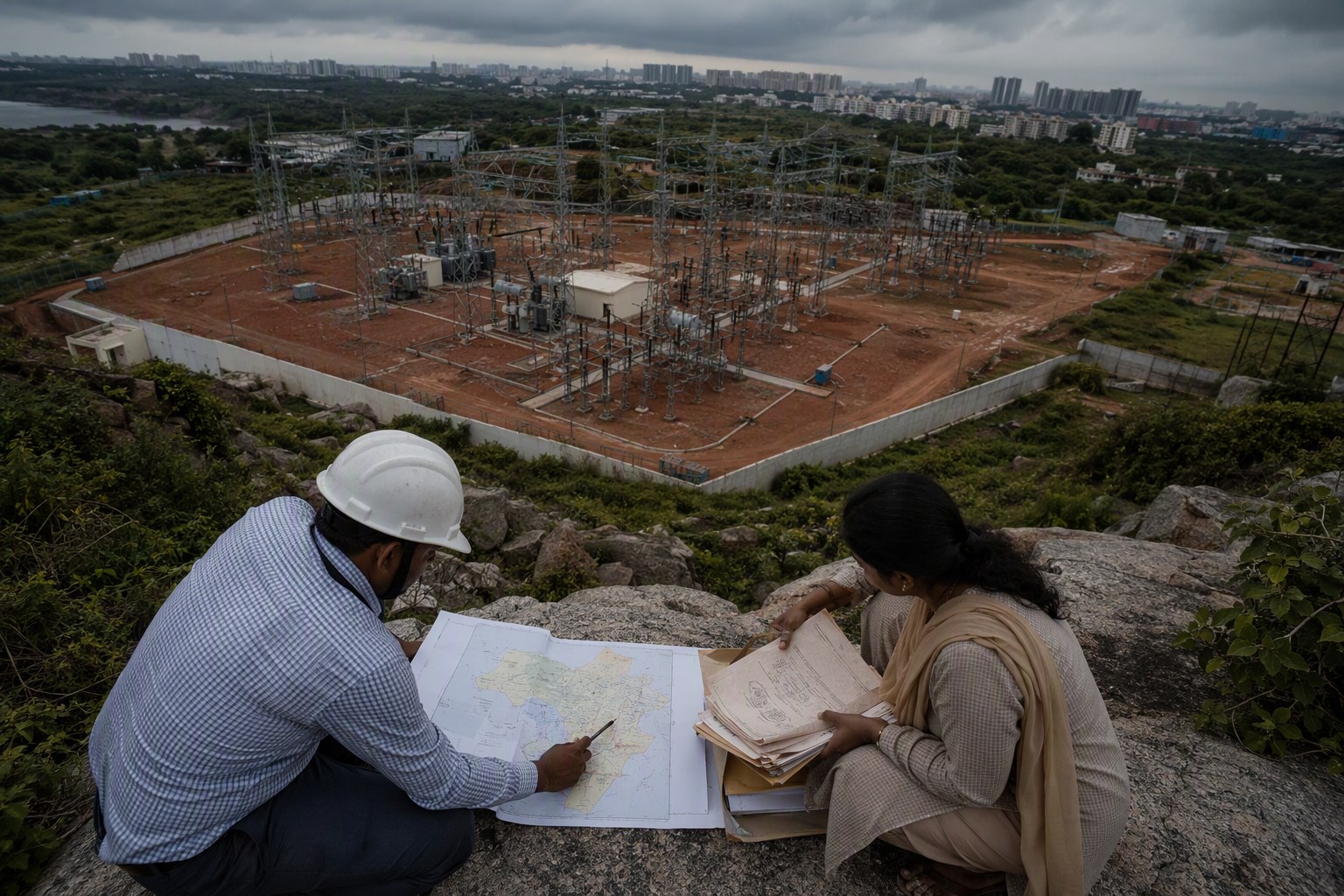
A metro station usually creates visibility and footfall. A depot is more land-intensive. It may sit away from the main road, touch multiple survey numbers, require service access and sometimes affect internal village roads or private approach paths. If a buyer is looking at land near such a pocket, the first question should not be only rate per square yard. It should be: Is this survey number safe for private transfer and use?
In Telangana, land title checks are already becoming more data-driven. Buyers now ask for EC, pattadar details, layout permissions, RERA status for projects, land-use zoning and prohibited-property checks. Depot planning adds another layer: whether the land or its access falls inside any future acquisition, reservation, government control, nala, road-widening, utility or transport requirement.
There is also a practical issue. Even if the plot itself is not acquired, its access may get affected. A 30-feet internal road shown by a seller may not remain usable if the approach depends on land that later becomes part of public infrastructure. For independent houses and small gated communities, access rights can decide resale value.
What buyers should verify before paying token advance
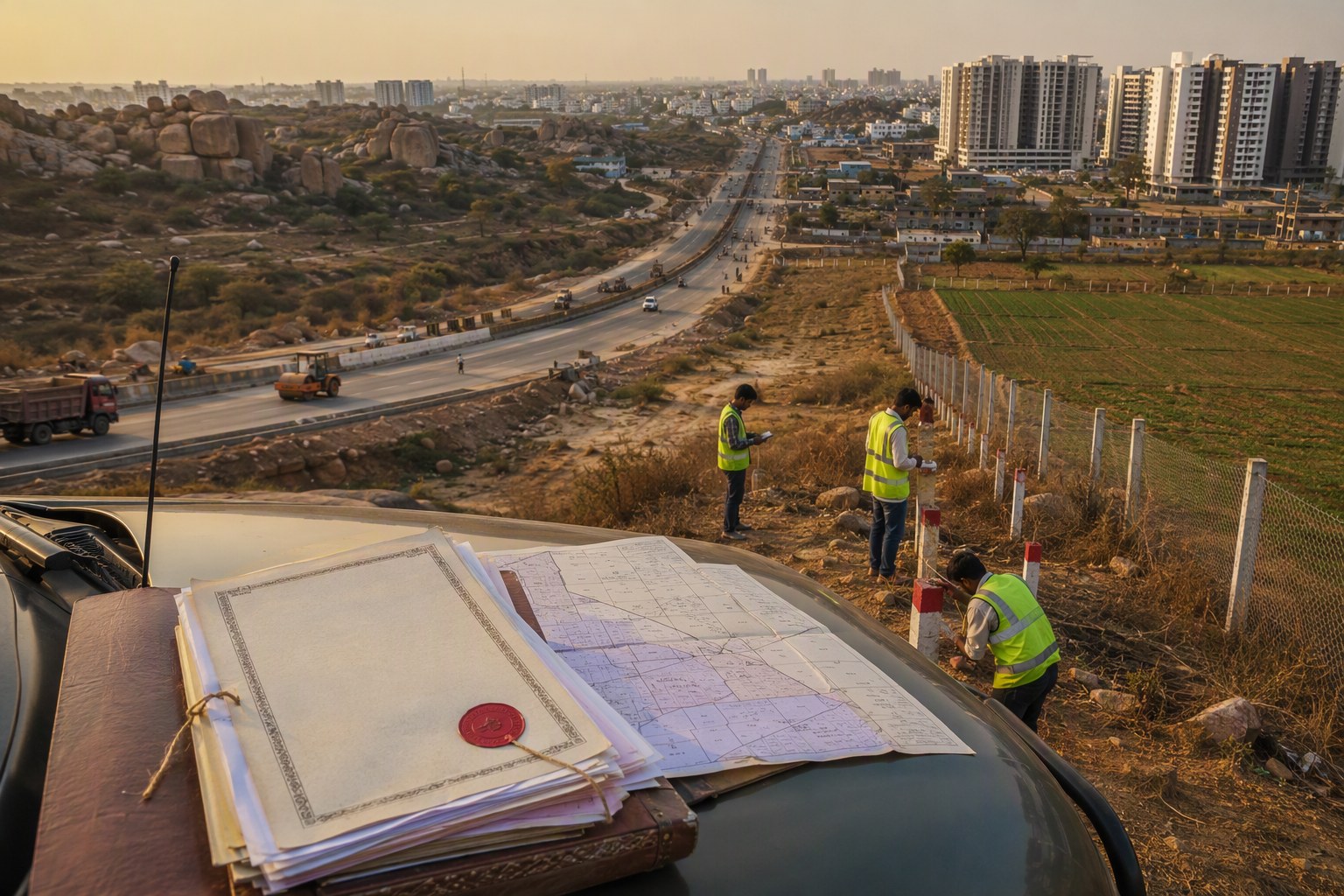
Before paying even a small advance, buyers should insist on survey-number clarity. A vague location pin or a brochure boundary is not enough. Ask for the exact survey number, sub-division number, village, mandal and SRO jurisdiction. Then run basic checks through official records and professional due diligence.
- Survey number identity: Confirm that the land being shown on ground matches the document survey number. Use Survey Number Finder where possible and cross-check with village maps.
- Prohibited-property status: Screen the land against prohibited lists. Verified.RealEstate database context currently includes 3,076,153 prohibited-property records, which shows the scale of records buyers must be careful about. Use Prohibited Property Check.
- Encumbrance trail: Check past transactions, mortgages, court-related entries and ownership flow through Ec Search and, for easier reading, Ec Analyzer.
- Road and access: Verify the approach road width, road continuity and whether it is public, private or only a permissive path. A Road Width Check can help as an early filter.
- Land-use zoning: Check whether the parcel is in a residential, conservation, industrial, transport or other zone using Landuse Zone Finder.
- Project approvals: For apartments and plotted ventures, verify RERA where applicable through Rera.
Acquisition risk is not only about the plot boundary
Many buyers wrongly assume that acquisition risk means only one thing: whether the government takes their full plot. In reality, there are smaller but serious issues. A strip of land may be needed for road widening. A corner may be marked for utility movement. A connecting road may be blocked or realigned. A land parcel may remain private, but its best use can be reduced due to traffic restrictions or depot-related boundaries.
This matters especially in peri-urban belts where agricultural land, gram panchayat layouts, old revenue roads and new real estate marketing all overlap. A seller may show a future metro advantage. The buyer must ask for present legal clarity. If access is through another survey number, get written proof of right of way. If it is through a layout road, check layout approval. If it is a village road, verify its existence in revenue and local-body records.
| Buyer concern | Why it matters near depot planning | Suggested check |
|---|---|---|
| Exact survey number | Depot land assembly may cover selected survey parcels | Survey map, sale deed schedule, ground verification |
| Prohibited property | Government, assigned, endowment or restricted land may not be freely transferable | Prohibited Property Check |
| Access road | Approach may be affected by public works or private ownership disputes | Road Width Check and local enquiry |
| EC and title flow | Old mortgages, gaps in title or pending claims can block registration or bank loans | Ec Search |
| Land-use | Transport, conservation or non-residential zoning can limit construction plans | Landuse Zone Finder |
How sellers may pitch metro-linked land
In Hyderabad and the wider Telangana market, metro news often enters sales talk quickly. You will hear lines like near future depot, close to metro corridor, government planning nearby, rates will double. Some of it may be honest optimism. Some of it may be marketing without paperwork.
A serious seller should not object to document verification. If the seller refuses to share survey numbers before advance, that is a red flag. If the sale deed schedule is unclear, pause. If the land is sold through an unregistered agreement chain, be careful. If the access road is only shown in a private sketch and not in approved layout or revenue records, ask harder questions.
Buyers should also compare market value and registration cost before negotiation. The Guideline Value tool and Stamp Duty Calculator can help estimate transaction cost. For construction potential, especially near bigger roads, use Fsi Calculator and check local rules before assuming extra floors are possible.
Apartment buyers are not exempt
Apartment buyers near proposed depot-related infrastructure should also check land title. A flat buyer may feel protected because the project has a builder, brochure and sales office. That is not enough. The underlying land must be clean. If the project is ongoing and requires RERA registration, verify it. Check whether the builder has clear title, development rights, mortgage disclosures and sanctioned plans.
Bank loan approval is useful, but it is not a full title guarantee. Banks mainly protect their loan exposure. A buyer must protect family savings, resale value and peaceful possession. If the project boundary touches a road proposed for widening or a transport facility, ask the builder for written clarification and approved plans.
What local enquiries can reveal
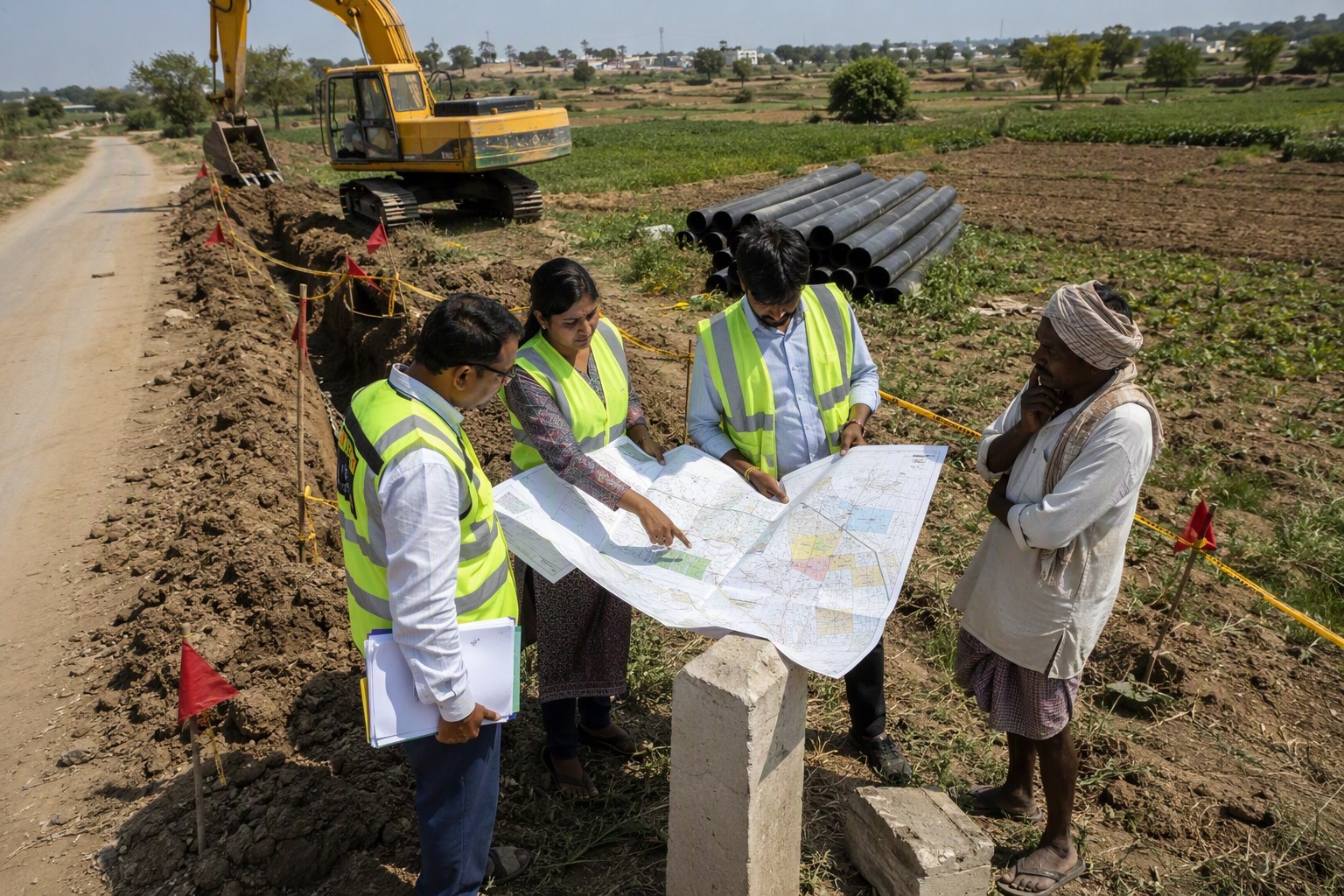
Digital checks are essential, but near infrastructure land assembly, local enquiry still has value. Speak to neighbouring landowners, village revenue contacts, layout residents, local brokers who know old survey numbers and people living near the road. Ask whether any survey has been measured recently, whether officials visited, whether stones or markings appeared, and whether compensation discussions are happening.
Do not treat oral information as final proof. Treat it as an alert. If local enquiry raises doubt, take it to a document lawyer or land survey professional before signing an agreement of sale.
A practical buyer checklist
- Do not buy only on metro rumours. Ask for documents first.
- Collect sale deed, link documents, pattadar passbook details where relevant, EC, tax receipts and layout approvals.
- Check SRO jurisdiction through Find Your Sro or Sro Village Directory.
- Run prohibited-property screening before agreement, not after registration.
- Confirm access width and ownership of the road.
- For plotted layouts, verify approval authority and open space details.
- For apartments, verify RERA, sanctioned plan and land mortgage status through available documents and Cersai Check where relevant.
- Use Verify My Land for a broader pre-purchase review.
The bottom line for Telangana buyers
Metro infrastructure can lift confidence in a location. But depot-linked land is sensitive because it involves larger parcels and operational access. Buyers should treat nearby land as a due-diligence-heavy purchase, not a quick speculative bet.
If the title is clean, access is secure, land-use supports the intended purpose and there is no acquisition or prohibited-property concern, the property may still be attractive. If any one of these is unclear, the safest answer is to pause. In Telangana real estate, the best deal is not the cheapest one. It is the one you can register, use, mortgage and resell without tension.
Frequently Asked Questions
Can metro depot planning affect private land buyers?
Yes. Depot land assembly may affect selected survey numbers, approach roads, utility corridors or nearby land use. Buyers should verify title, access and acquisition risk before paying advance.
What is the first document to check near a proposed depot area?
Start with the exact survey number and sale deed schedule. Then check EC, prohibited-property status, land-use zoning, access road records and approvals.
Is a plot safe if it is not directly acquired?
Not always. Even if the plot is outside acquisition, its road access, development potential or resale value may be affected. Access rights must be verified separately.
Should apartment buyers near metro depot zones check land title?
Yes. Apartment buyers should verify RERA status where applicable, sanctioned plans, land title, mortgages and whether any boundary or road is affected by proposed infrastructure.