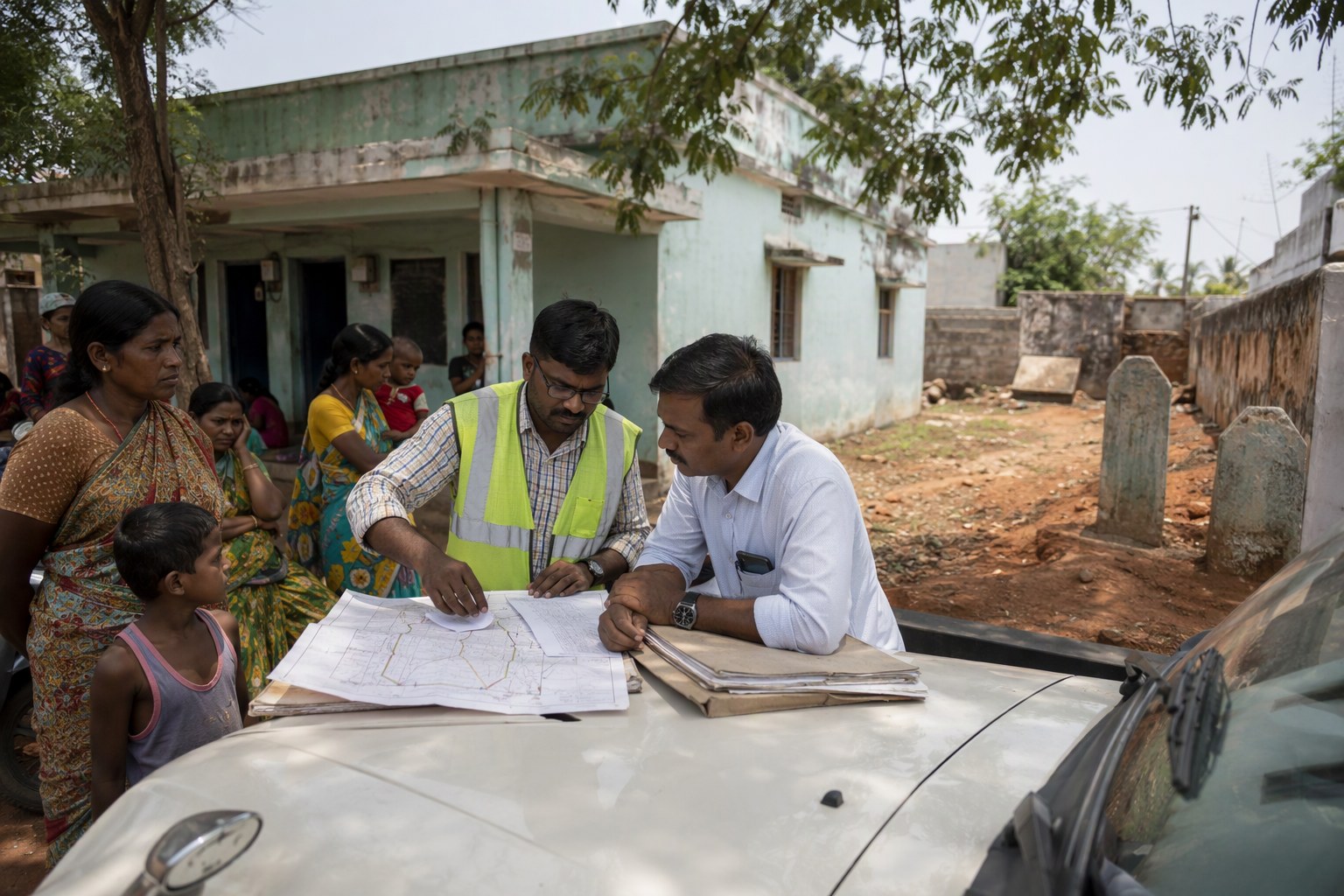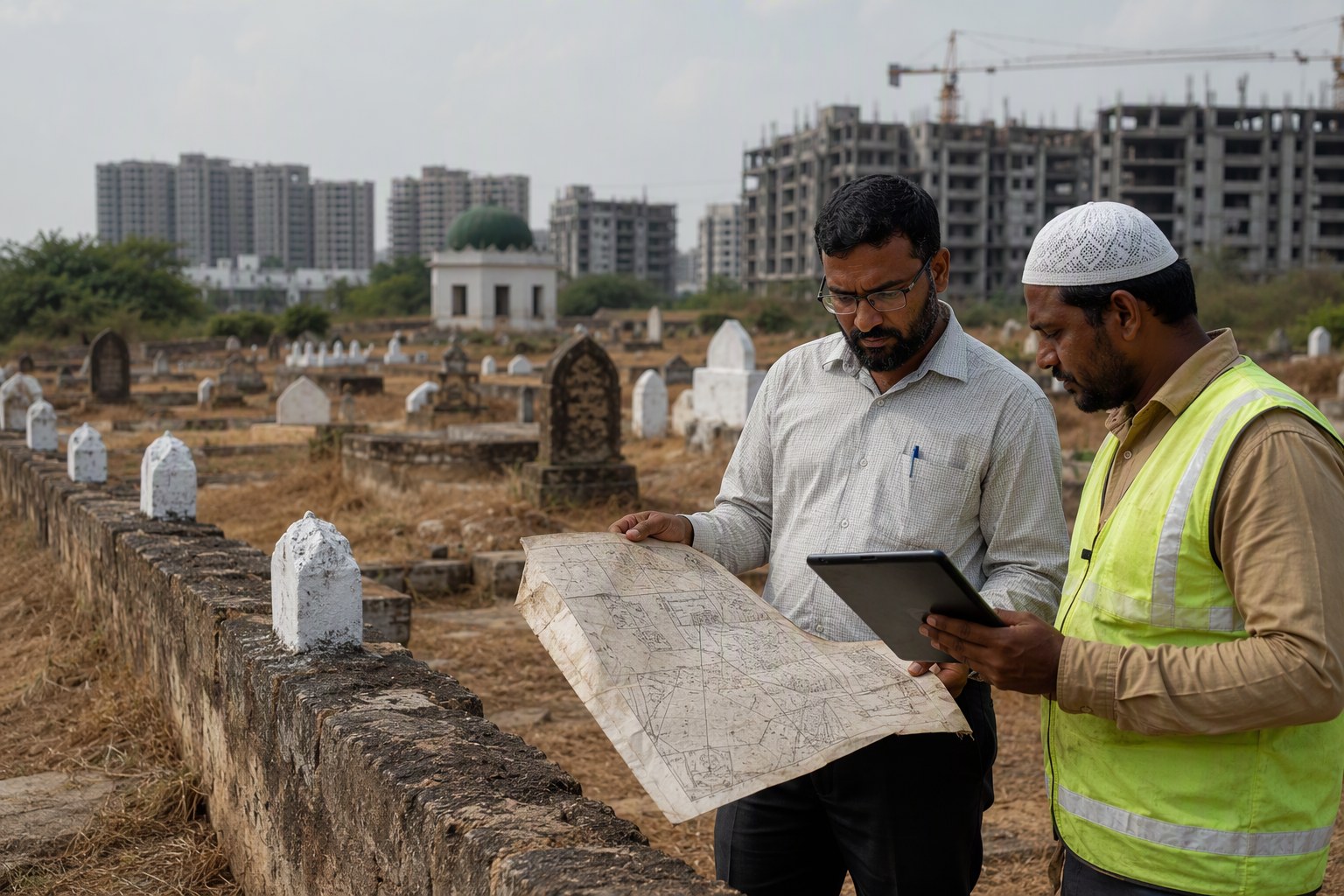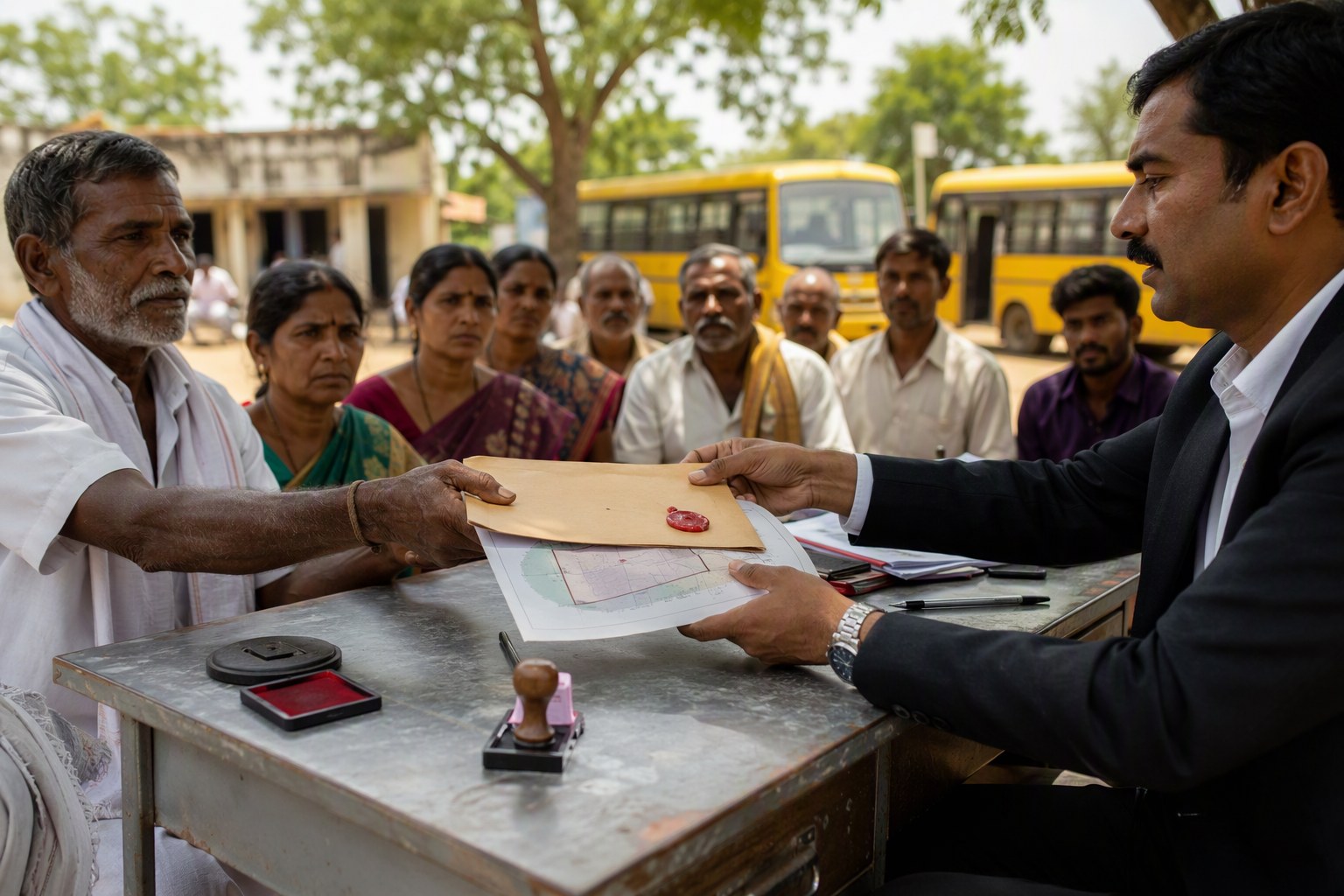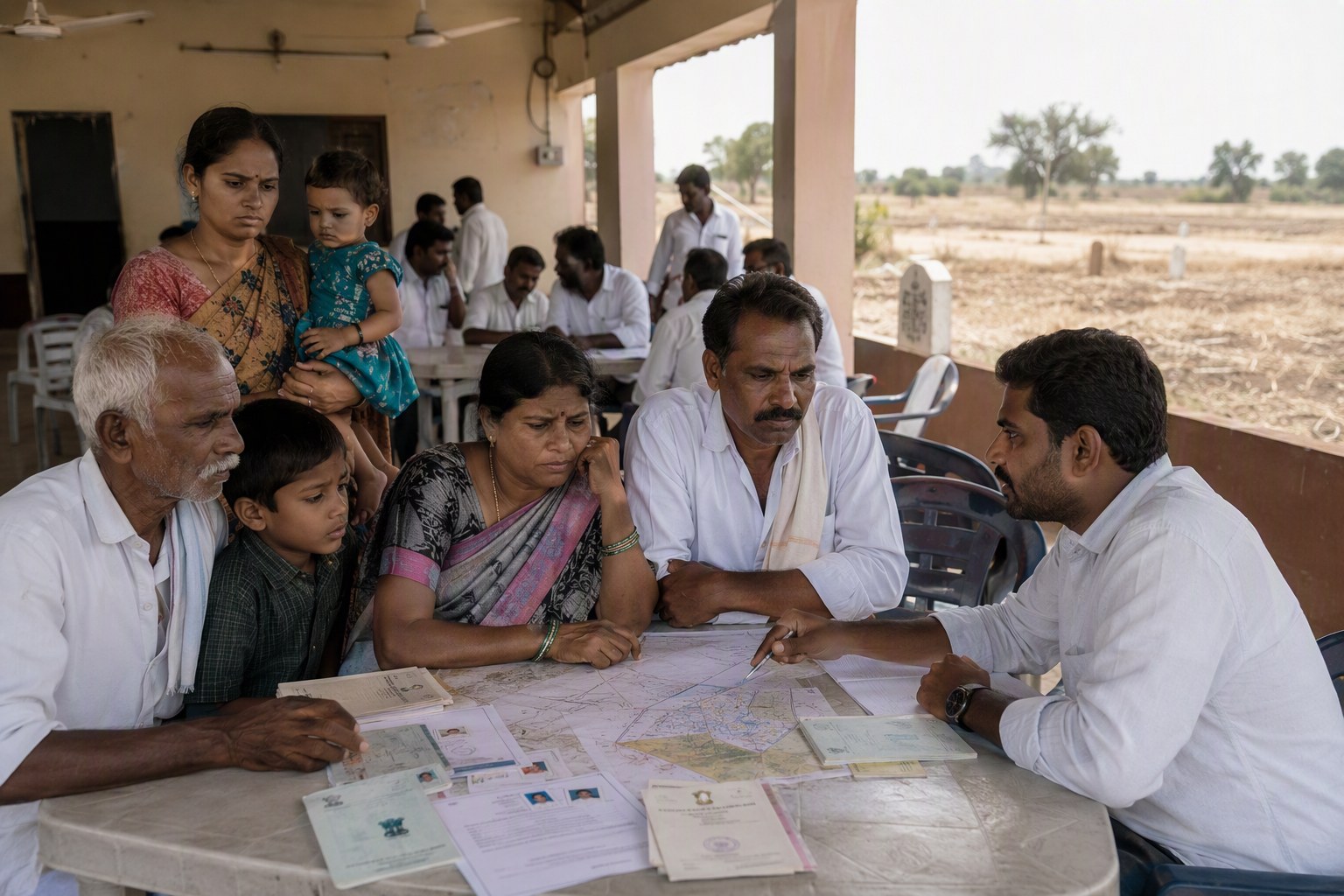
Telangana Legal Aid Cells May Prioritise Senior 22-A Cases
For many senior citizens in Telangana, a 22-A entry is not just a line in a prohibited property list. It can stop a sale needed for medical expenses, block a family partition, delay a gift deed to children, or freeze a long-pending regularisation attempt. That is why legal-aid cells in the State may need a separate priority lane for elderly owners and other vulnerable families stuck with prohibited property records.
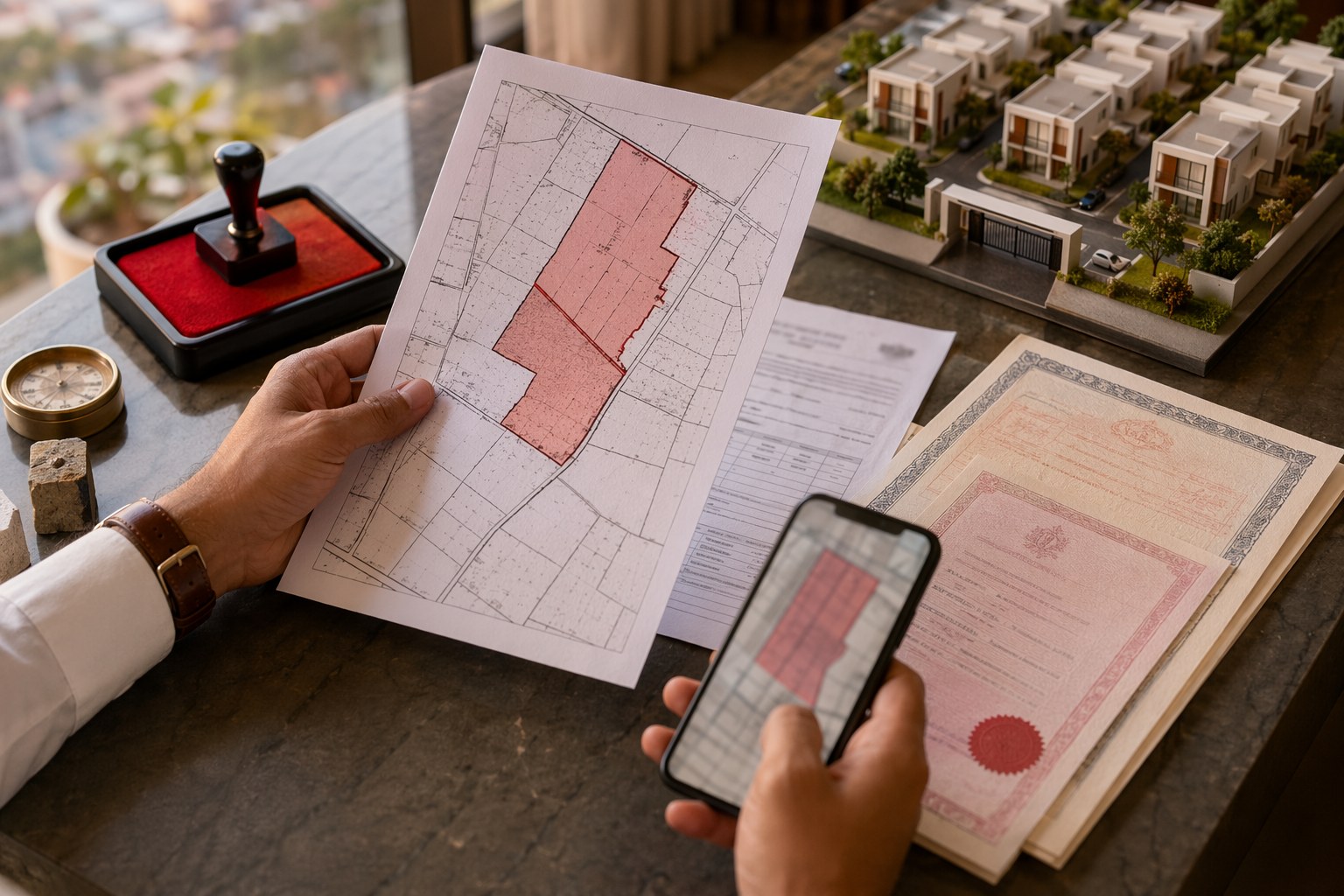
Section 22-A related entries are meant to prevent registration of government lands, endowment lands, assigned lands, disputed parcels and other notified properties. In practice, however, families often discover the issue only when they approach the sub-registrar office. By then, the buyer is waiting, advance amounts may have changed hands, and the owner is running between revenue, registration and local offices with old pattadar passbooks, link documents and tax receipts.
In the Verified.RealEstate data context available to this newsroom, the prohibited property table contains 3,076,153 records. A record count is not the same as the number of affected owners, and it should not be read that way. Still, the scale tells us one thing clearly: this is not a small paperwork problem. It touches urban plots, village lands, inherited properties and properties where the present owner may have no idea why the flag exists.
For senior citizens, the real issue is not only whether the 22-A entry is correct. The issue is whether they can physically and financially fight through the file trail needed to correct or clarify it.
Why senior 22-A cases need a different approach
Most elderly owners do not have the stamina to visit multiple offices repeatedly. Some are widows holding family property after their husband’s death. Some are retired employees who bought plots decades ago on society layouts. Some live with children outside Telangana and come down only for a few days to complete a transaction. When the registration system rejects a document due to a prohibited property match, they are left with very little practical guidance.
In Hyderabad outskirts, Medchal-Malkajgiri, Rangareddy, Sangareddy, Yadadri-Bhuvanagiri and fast-growing district corridors, many old survey numbers have seen layout changes, road widening, village boundary changes and revenue record updates. A senior owner may be holding a genuine sale deed, but the survey number may still be tagged due to an old classification. In other cases, the 22-A entry may be valid and the family may need advice on what cannot be sold. Both situations need clear legal counselling, not casual counter advice.
My view is simple: legal-aid cells should not wait for these families to reach litigation stage. A dedicated screening desk can separate clerical record issues, title defects, revenue classification disputes and genuinely prohibited categories at the start itself.
What a priority legal-aid desk can do
A legal-aid desk for senior 22-A cases need not replace the revenue or registration department. It can act as a first response point. The desk can read the documents, identify the concerned office, explain whether a representation, appeal, legal notice or court remedy is suitable, and help the owner avoid brokers who promise quick deletion of entries.
| Problem faced by senior owners | Support a legal-aid cell can offer |
|---|---|
| Property blocked during registration | Check whether the survey number or door number is matching a prohibited entry and guide the next representation. |
| Old documents missing or unclear | Prepare a document checklist and help obtain certified copies, ECs and revenue extracts where available. |
| Family members living outside Telangana | Advise on authorisations, affidavits and safe documentation without forcing repeated travel. |
| Confusion between title dispute and 22-A restriction | Explain whether the problem is civil title, government classification, assigned land status or registration department refusal. |
| Risk of false promises by middlemen | Give written guidance on official process and likely legal route. |
First checks owners can do before visiting the office
Families should first verify the basic property identifiers. In Telangana, one wrong survey number, sub-division, village name or SRO mapping can create panic. Use the Prohibited Property Check to see whether the land or property appears in a prohibited list context. Then compare it with link documents, old sale deeds, passbook entries and municipal records.
An Ec Search is useful to understand the registration history. It does not solve a 22-A issue by itself, but it helps show past transactions and whether earlier deeds were registered. For rural or peri-urban land, the Survey Number Finder can help families confirm the village and survey reference before they approach officials. If the family is unsure about the correct sub-registrar office, the Find Your Sro tool can reduce one common round of confusion.
For a deeper pre-check, owners can use Verify My Land. Where the family is planning a sale after clearance, Guideline Value and the Stamp Duty Calculator can help estimate transaction costs. These tools are not legal orders, but they help the family walk into a legal-aid meeting with better papers and fewer doubts.
What documents should seniors carry?
A senior citizen approaching a legal-aid cell should ideally carry originals and photocopies. If originals are not safe to carry, clear scanned copies are still better than verbal narration. The following bundle is practical for most cases:
- Latest sale deed, gift deed, partition deed or settlement deed.
- Link documents showing earlier ownership.
- Encumbrance certificate for the relevant period, where available.
- Pattadar passbook, title deed book, pahani or Dharani-related extracts, if it is agricultural land.
- Municipal property tax receipt, building permission or layout paper, if it is an urban property.
- Any refusal slip, objection note or communication from the SRO.
- Aadhaar, age proof and contact details of family members assisting the senior citizen.
- Death certificate and legal heir papers where the original owner has passed away.
The legal-aid cell should record the grievance in plain language. Many elderly owners cannot explain the difference between mutation, registration, assignment, patta, layout approval and 22-A notification. The lawyer or para-legal volunteer must translate the problem into a workable file note.
Vulnerable owners beyond senior citizens
The same priority logic should cover widows, persons with disabilities, single women owners, families below comfortable income levels, and people facing medical emergencies. In many homes, property is the only fallback asset. If a genuine property is wrongly blocked, delay can create real hardship. If the property is legally prohibited, the family still deserves a clear answer instead of spending years chasing rumours.
There is also a social angle. When owners do not understand the official route, informal agents step in. They may collect money for “removing” a 22-A entry without any authority. A visible legal-aid desk can cut this dependency. It can also reduce pressure on SRO staff, because applicants would come with organised papers and a clearer request.
What government systems can improve
Priority support will work better if departments share readable reasons for each prohibited entry. A senior owner should be able to know whether the property is flagged as government land, endowment land, assigned land, ceiling surplus land, wakf-related land, court-restrained property or some other category. A generic block without reason creates unnecessary fear.
Legal-aid cells can maintain a standard format: property details, owner details, nature of 22-A match, documents examined, office to be approached, and next legal option. This will not decide ownership. It will give the applicant a map. For elderly citizens, that map itself is a relief.
District Legal Services Authorities, revenue officers and registration officials can also hold periodic camps in areas where many 22-A grievances are reported. The camp model is useful because seniors can get document reading, basic legal advice and office direction in one sitting. It is not a shortcut to delete valid prohibitions. It is a way to make lawful remedies reachable.
Buyer families should also be careful
Buyers dealing with senior sellers should not assume that sympathy replaces due diligence. Before paying a large advance, check prohibited property status, EC, survey number, SRO jurisdiction and land use. A good buyer will give the elderly seller time to clarify the record instead of pushing for a rushed agreement. A bad agreement can turn a record issue into a family dispute.
For Telangana’s property market, this is where community impact meets title hygiene. If genuine owners are stuck because of outdated or unclear records, legal-aid support can prevent distress. If a restriction is valid, early advice can prevent illegal transactions. Either way, senior citizens deserve a calmer process than standing in queues without answers.
Frequently Asked Questions
What is a 22-A prohibited property entry in Telangana?
It is a registration restriction linked to categories such as government land, assigned land, endowment land, disputed notified land or other properties barred from registration. The exact reason must be checked against the property record.
Why should senior citizens get priority in 22-A cases?
Senior owners often face health, mobility and documentation difficulties. A priority legal-aid desk can help them identify the issue, prepare papers and approach the correct office without repeated travel.
Can a legal-aid cell remove a prohibited property entry?
No. A legal-aid cell cannot directly delete an official entry. It can examine documents, explain remedies, draft representations and guide the owner toward the proper revenue, registration or court process.
Which documents are useful for a senior 22-A complaint?
Sale deed, link documents, EC, pattadar passbook or revenue extracts, municipal tax receipts, SRO refusal note, identity proof, age proof and legal heir papers are commonly useful.
Should buyers proceed if a senior seller’s property is under 22-A?
Buyers should pause and verify the record before paying major advances. If the restriction is clerical or explainable, the seller can seek clarification. If it is valid, registration may not be possible.