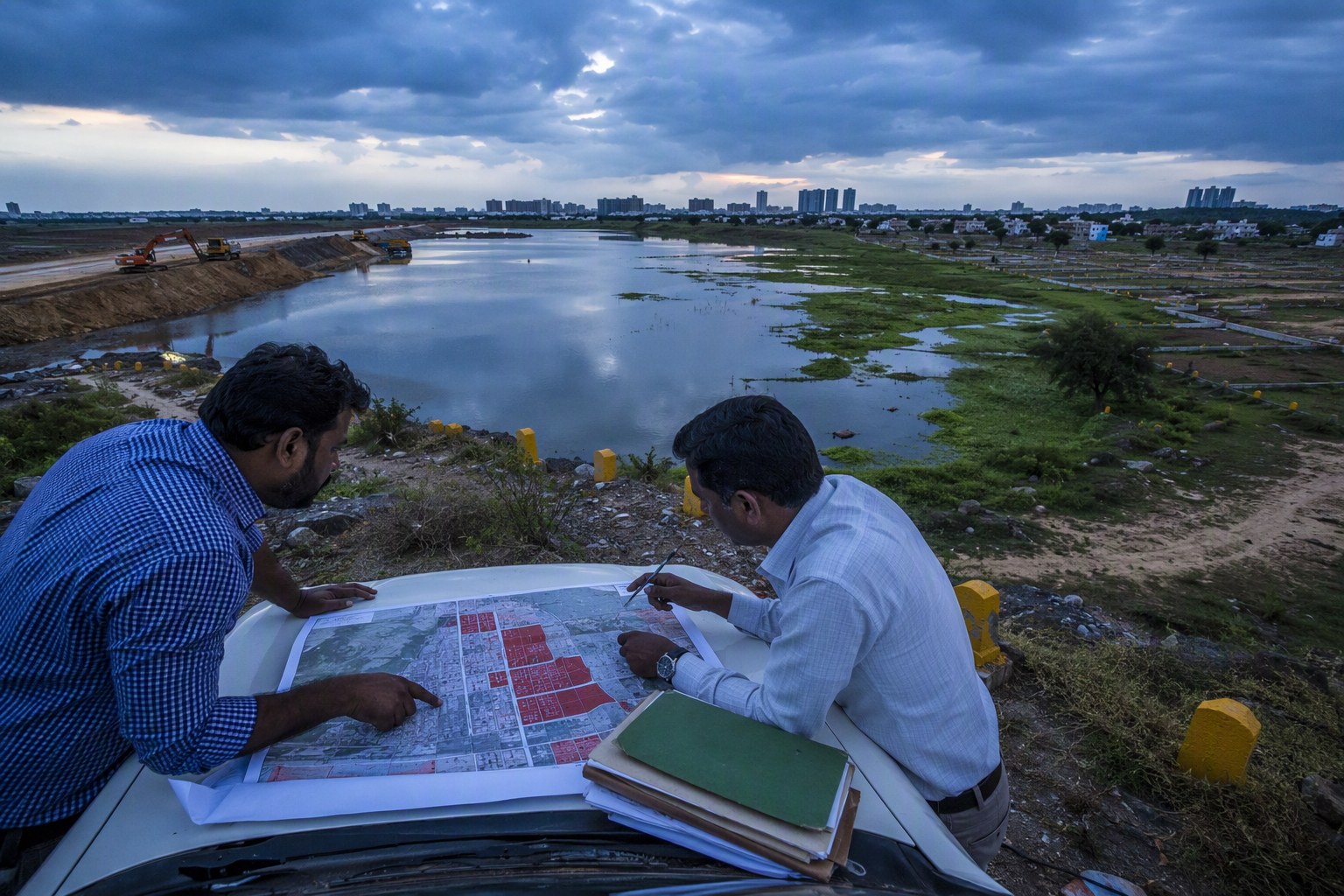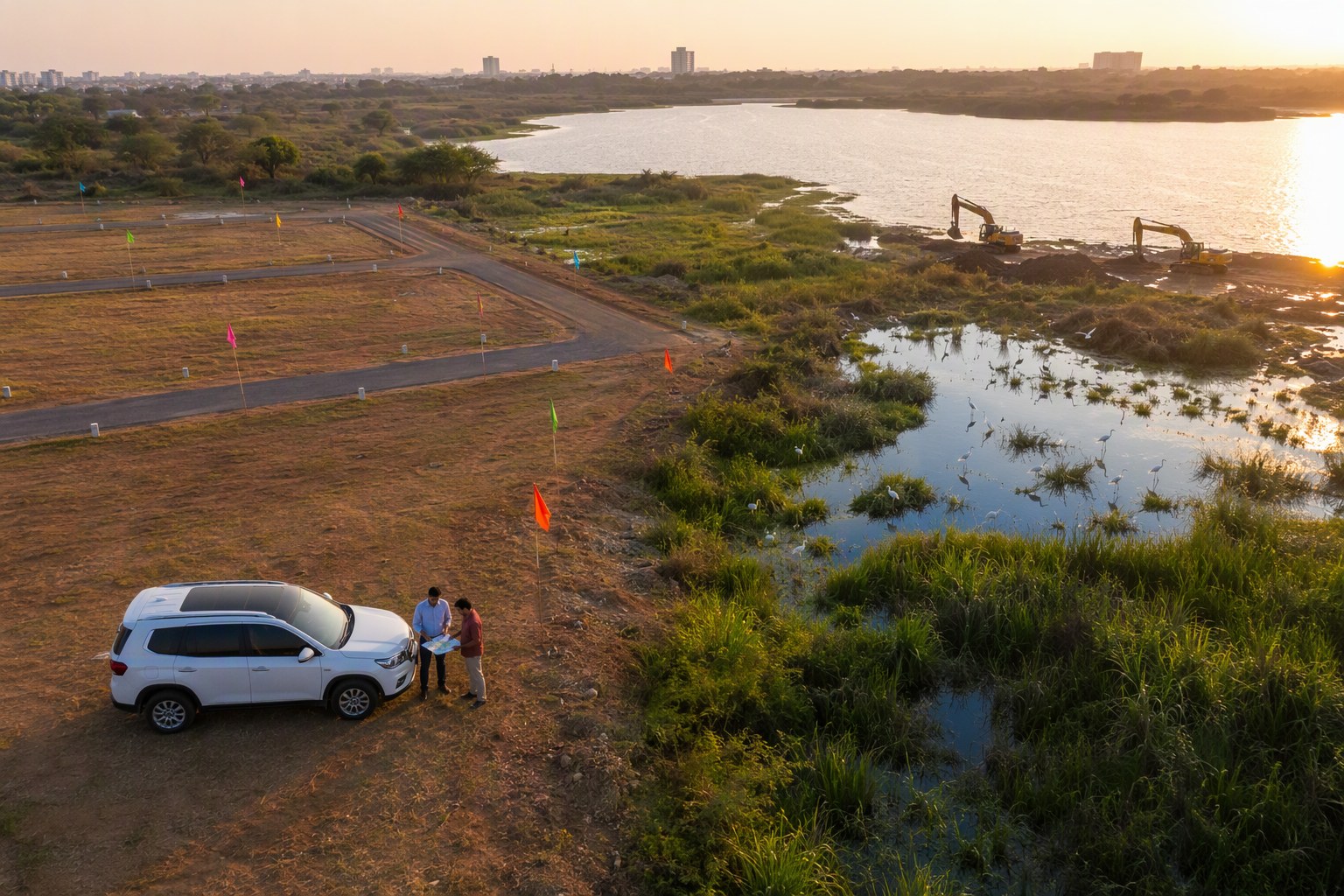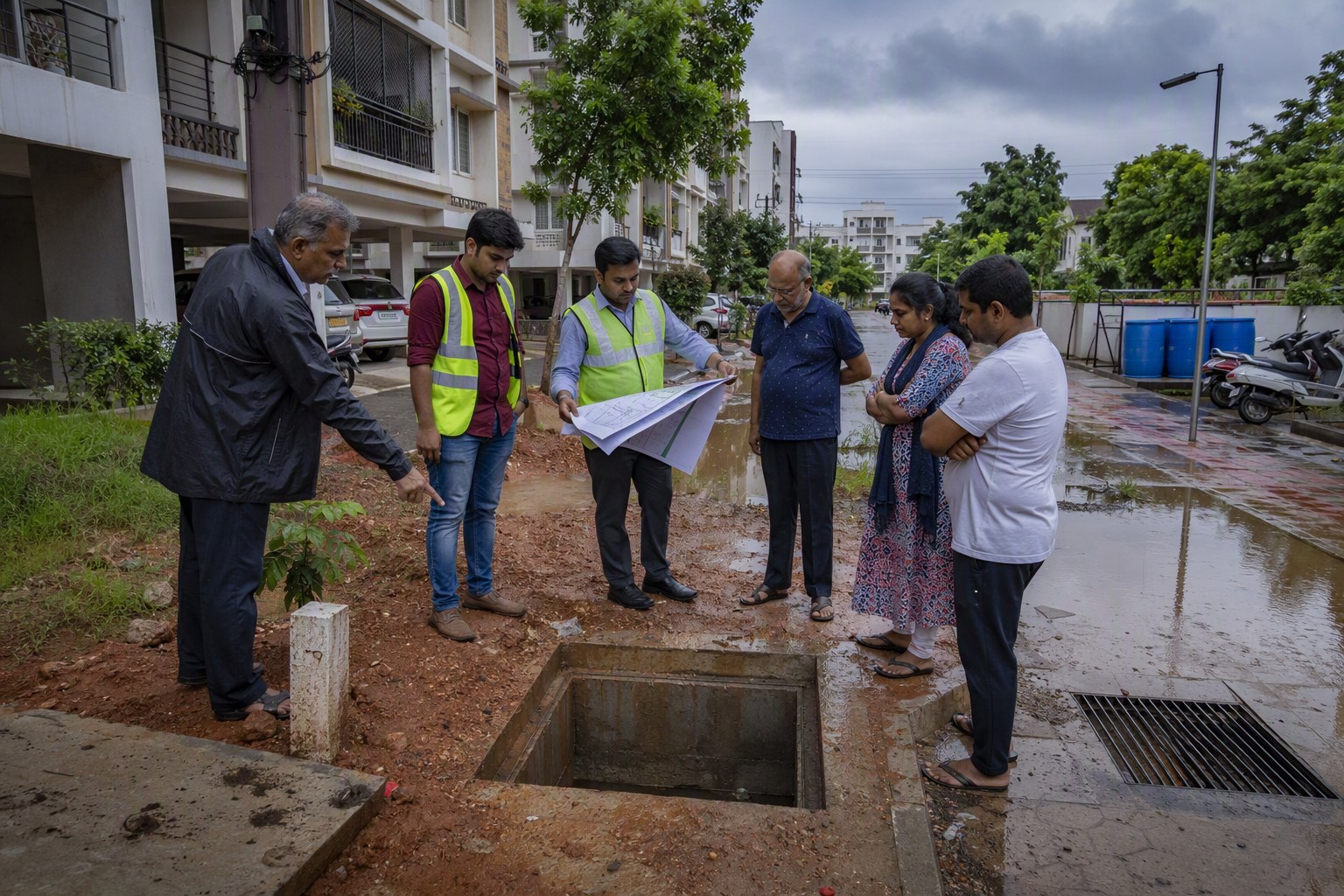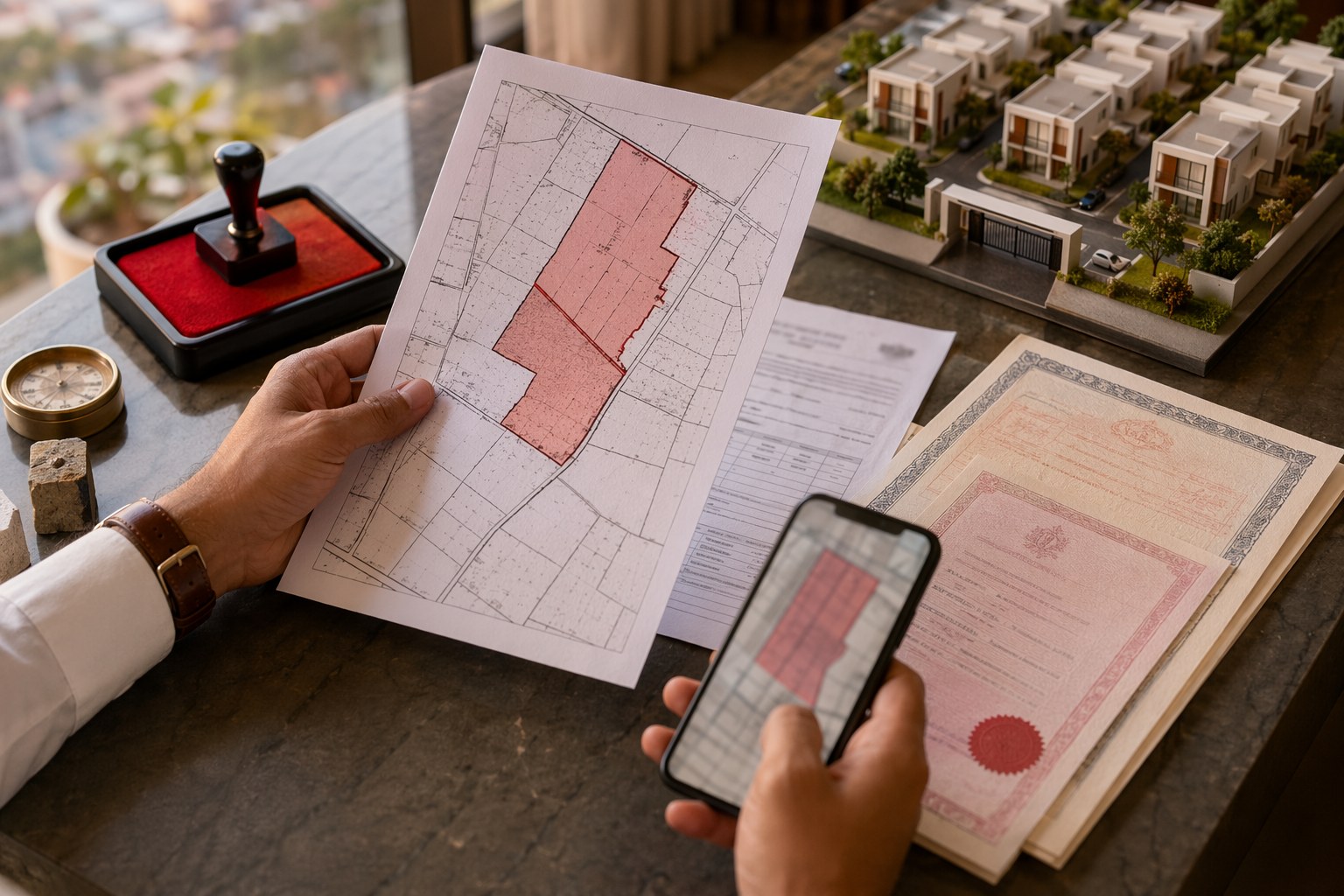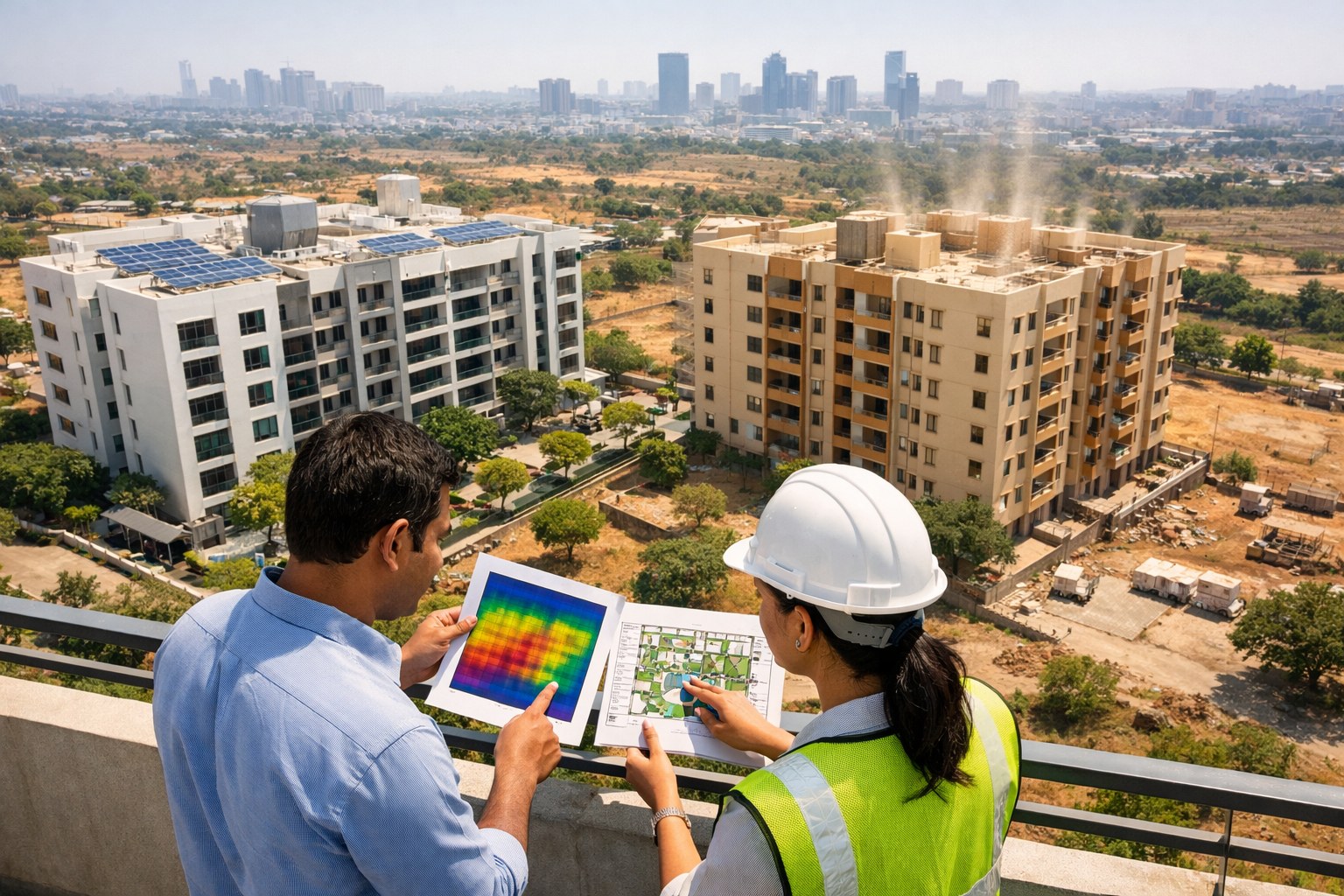
Telangana Heat-Island Mapping may soon change the way Hyderabad homebuyers judge a flat, villa plot or gated community. If the state moves ahead with detailed heat-island layers for urban areas, buyers may start asking new questions before paying token advance: How much shade does the site get? Is there cross-ventilation? Are there tree buffers along the road? What is the roof material? Does the layout leave enough open space for cooling, or is it only concrete from compound wall to compound wall?
This is not a small shift. Till now, most buyer due diligence in Telangana has been around price, title, RERA, EC, Dharani entries, pahani history and SRO valuation. That will not go away. In fact, legal checks remain non-negotiable, especially when the state database already carries 147,934 prohibited properties under Section 22-A. But climate comfort is becoming a parallel risk, particularly in dense pockets of Hyderabad and its growth corridors.
Telangana Heat-Island Mapping: what may change for Hyderabad buyers
Heat islands are areas where concrete, asphalt, glass facades and low tree cover trap heat, making local temperatures feel higher than surrounding zones. Anyone who has walked from a shaded lane in Jubilee Hills to a wide exposed road near a commercial stretch knows the difference. The same city can feel like two different climates within two kilometres.
For real estate, the practical impact is direct. A hotter site means higher power bills, poor balcony use, stressed landscaping, uncomfortable internal roads and weaker liveability during peak summer. In our experience, buyers often compare only the quoted rate per sft. In 2025 market discussions, new apartment asking bands are commonly around ₹12,000-₹18,000 per sft in parts of Kokapet, Nanakramguda and Financial District; around ₹8,000-₹12,000 per sft in Tellapur, Nallagandla and Kollur; and roughly ₹6,000-₹9,000 per sft in Uppal, Bachupally and Kompally, depending on project grade, handover stage and road access. These are market asking bands, not official ready reckoner values.
If heat mapping becomes part of public urban data, that ₹/sft comparison may need one more column: heat exposure. A flat at a slightly lower price in a high-heat pocket can cost more over time through air-conditioning, maintenance and day-to-day discomfort.
Telangana Heat-Island Mapping will not replace title checks
Some buyers may get carried away by green brochures. My view is simple: cooling features are valuable only after the property passes basic legal and planning checks. A shaded clubhouse cannot fix a weak title. A Miyawaki patch cannot cure a prohibited survey number.
Before looking at heat comfort, check the project or land through the usual route. Search the current market value using the Market Value / Guideline Value Search. Verify old transactions through the Encumbrance Certificate Search. For apartments and large layouts, use the RERA Project Lookup. If the property is land, especially around Shankarpally mandal, Maheshwaram mandal, Moinabad mandal, Shamshabad mandal or Ibrahimpatnam mandal, run a Section 22-A Prohibited Property Check before you even discuss the final rate.
Green due diligence should sit on top of legal due diligence, not in place of it. Hyderabad buyers need both: clean title and climate comfort.
How Telangana Heat-Island Mapping may enter the buyer checklist
If ward-level or mandal-level heat maps become accessible, buyers can use them like they use SRO ready reckoner data today. It may not be a statutory approval document, but it can become a strong decision input. We have already seen buyers in Gachibowli, Narsingi, Tellapur and Kompally asking about UDS, carpet area, road width and water source. The next set of questions should be about shade, airflow and surface temperature.
| Buyer check | Why it matters in heat-prone pockets | Useful action |
|---|---|---|
| Tree cover and buffer planting | Reduces exposed hardscape heat and improves walking comfort | Check site plan, OSR area and actual plantation width |
| Building orientation | West-facing walls and glass-heavy elevations can increase indoor heat | Visit the flat between 2 pm and 5 pm before booking |
| Ventilation and corridor design | Closed corridors trap heat in mid-rise and high-rise towers | Ask for floor plans, shaft sizes and cross-ventilation details |
| Roof and terrace treatment | Top-floor heat depends heavily on insulation and cool roof coating | Ask the builder for material specifications in writing |
| Road width and setbacks | Narrow internal roads with parking on both sides reduce airflow | Use a Road Width Check and compare with sanctioned layout |
Localities where heat checks may become sharper
The impact will not be equal across Hyderabad. Older neighbourhoods like Himayatnagar, parts of Banjara Hills, Tarnaka and Sainikpuri have mature tree cover in many lanes, though redevelopment is reducing that advantage in some places. High-growth zones such as Kokapet, Narsingi, Puppalaguda, Tellapur, Kollur, Bachupally and Adibatla often have large roads, new towers and open construction patches. These areas can become heat-stressed until tree canopies mature.
In Gandipet mandal, buyers looking at Narsingi and Kokapet should not only ask about lake views and ORR access. They should ask whether the podium is fully paved, whether visitor parking is under shade, and whether the open space is usable in May. In Ramachandrapuram mandal, buyers comparing Tellapur and Kollur should check if the project has wide internal green buffers or only ornamental landscaping near the entrance gate. In Uppal and Hayathnagar-side apartment markets, ventilation and road-facing heat can matter as much as metro access.
For plots, the issue is even sharper. A west-facing plot on a blacktop road with no tree line will behave differently from a plot with a green buffer and better setbacks. If you are checking survey details, use the Survey Number Finder and then run a wider Property Verification Tool check. Climate comfort should not distract from survey number accuracy, Dharani status and pahani consistency.
Planning approvals and cooling: where buyers should look
Many heat-related answers are hidden inside planning documents. Open Space Reservation, land use, road width, FSI and building height all affect how much heat gets trapped. A project with very high built-up intensity and poor tree planning can feel harsh even if the flat specifications look premium.
Use the Land Use Zone Finder to understand whether the surrounding area is residential, commercial, conservation or mixed use. Check the development intensity with the FSI/FAR Calculator. For layouts, the OSR Calculator helps buyers understand whether open space claims are realistic. When builders quote one final package price, check the tax and registration side through the Stamp Duty Calculator. In Telangana, regular sale deed costs are commonly calculated around 6% of value, split broadly as 4% stamp duty, 1.5% transfer duty and 0.5% registration fee, subject to the nature of document and official valuation.
Also check the SRO mapped to the property using Find Your SRO Office. Ready reckoner values and registration scrutiny can vary by SRO jurisdiction. A buyer in Serilingampally SRO will face a different micro-market from someone buying in Medchal, Shamshabad or Ibrahimpatnam.
What builders may need to disclose better
If heat-island mapping becomes part of mainstream housing discussion, builders will have to move beyond generic green claims. Buyers should ask for measurable disclosures: percentage of shaded pedestrian paths, number of native trees, roof insulation type, solar reflective index of terrace materials, basement ventilation, STP reuse for landscaping and maintenance cost for green areas.
RERA filings currently help with project identity, approvals, carpet area, completion timelines and promoter details. They may not tell you how hot the podium will feel in April. That gap is where heat mapping can help. A buyer can compare the mapped heat exposure of a locality with the project design and then decide if the price premium is justified.
We have seen this pattern before in water-sensitive areas. Once buyers started asking about borewell depth, HMWS connections, tanker dependence and lake buffer rules, builders became more careful in their sales answers. Heat can follow the same path.
Practical green due diligence before booking
- Visit the site in peak afternoon, not only during evening sales visits.
- Stand in the internal road, parking bay, balcony and corridor for a few minutes to feel heat and airflow.
- Ask whether existing trees were retained or all landscaping is newly planted.
- Check if the children’s play area and senior citizen seating are actually shaded.
- Ask for terrace insulation, wall material and glass specifications.
- Compare electricity load and AC provision across similar projects.
- Track any later changes to title or transaction history with the Property Change Tracker.
The bigger message is this: Telangana Heat-Island Mapping can make homebuying more mature. Price, title and location will remain the main pillars. But in a hotter Hyderabad, shade and ventilation are not luxury features. They are part of liveability, resale value and monthly cost.
For buyers, the smartest approach is balanced. Use legal tools, check Dharani and SRO records, verify RERA, compare ready reckoner value, then study the site like a summer resident, not like a weekend visitor. A flat that feels comfortable in May is usually designed better than one that only looks good in the brochure.
Frequently Asked Questions
What is Telangana Heat-Island Mapping?
It refers to mapping areas where built-up surfaces, traffic, low tree cover and dense construction make local temperatures higher than nearby zones. For buyers, it can help compare climate comfort across localities.
Should heat mapping replace EC, RERA and title checks?
No. Heat mapping is a liveability check. Buyers must still verify EC, RERA status, Dharani records, pahani history, SRO value and Section 22-A risk before paying advance.
Which Hyderabad areas should buyers check more carefully for heat?
Fast-growing corridors such as Kokapet, Narsingi, Tellapur, Kollur, Bachupally, Kompally, Uppal and Adibatla need closer checks because construction density, road width and young tree cover can affect heat comfort.
What green features should I ask a builder about?
Ask about tree buffers, shaded walking paths, terrace insulation, cool roof coating, cross-ventilation, OSR use, podium surface material, basement ventilation and long-term landscape maintenance.
How can I verify if a land parcel has legal risk?
Start with survey number accuracy, Dharani status, EC, pahani details and Section 22-A check. Telangana has 147,934 prohibited properties listed under Section 22-A, so this step is essential.