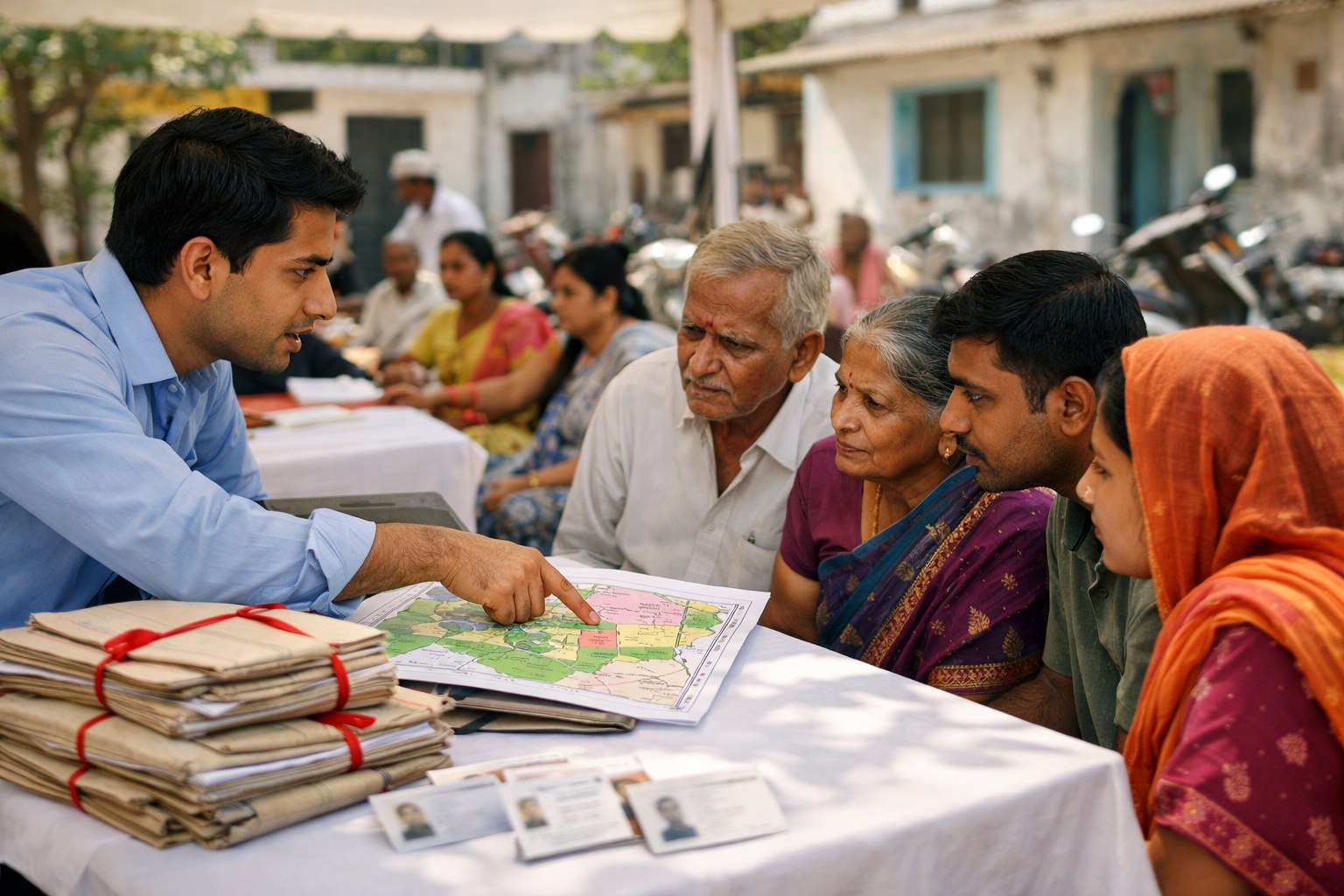
Telangana 22-A Parcels Spur Neighbourhood Legal Aid Push
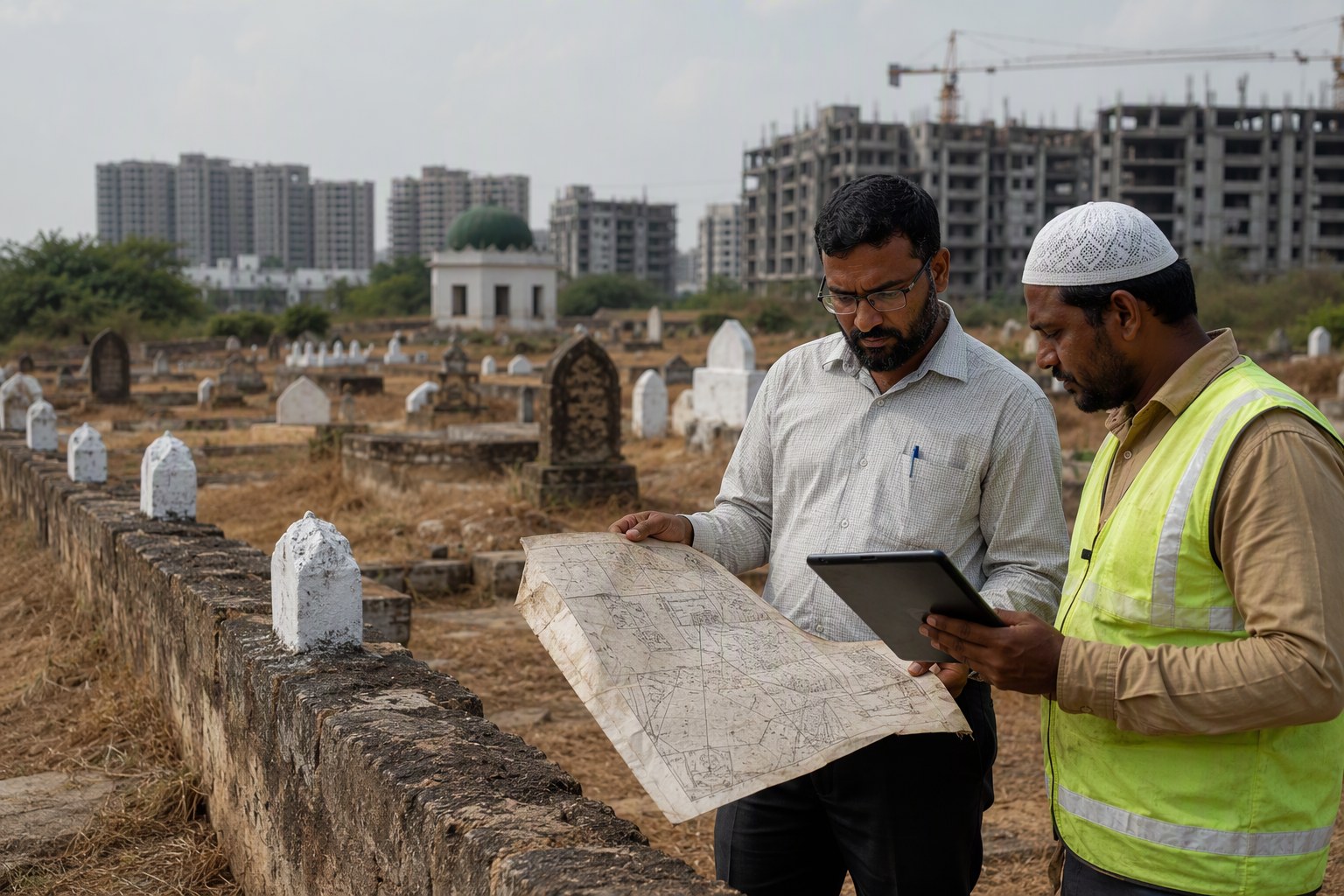
Telangana 22-A parcels are now shaping a new kind of community work across Hyderabad’s growth corridors: weekend legal aid camps, survey-number checks, pahani reading sessions, and buyer-awareness meetings inside colonies and apartment associations. The immediate trigger is the scale. Telangana has 147,934 properties listed under Section 22-A prohibited properties, a number large enough to affect ordinary families, not just large developers or land aggregators.
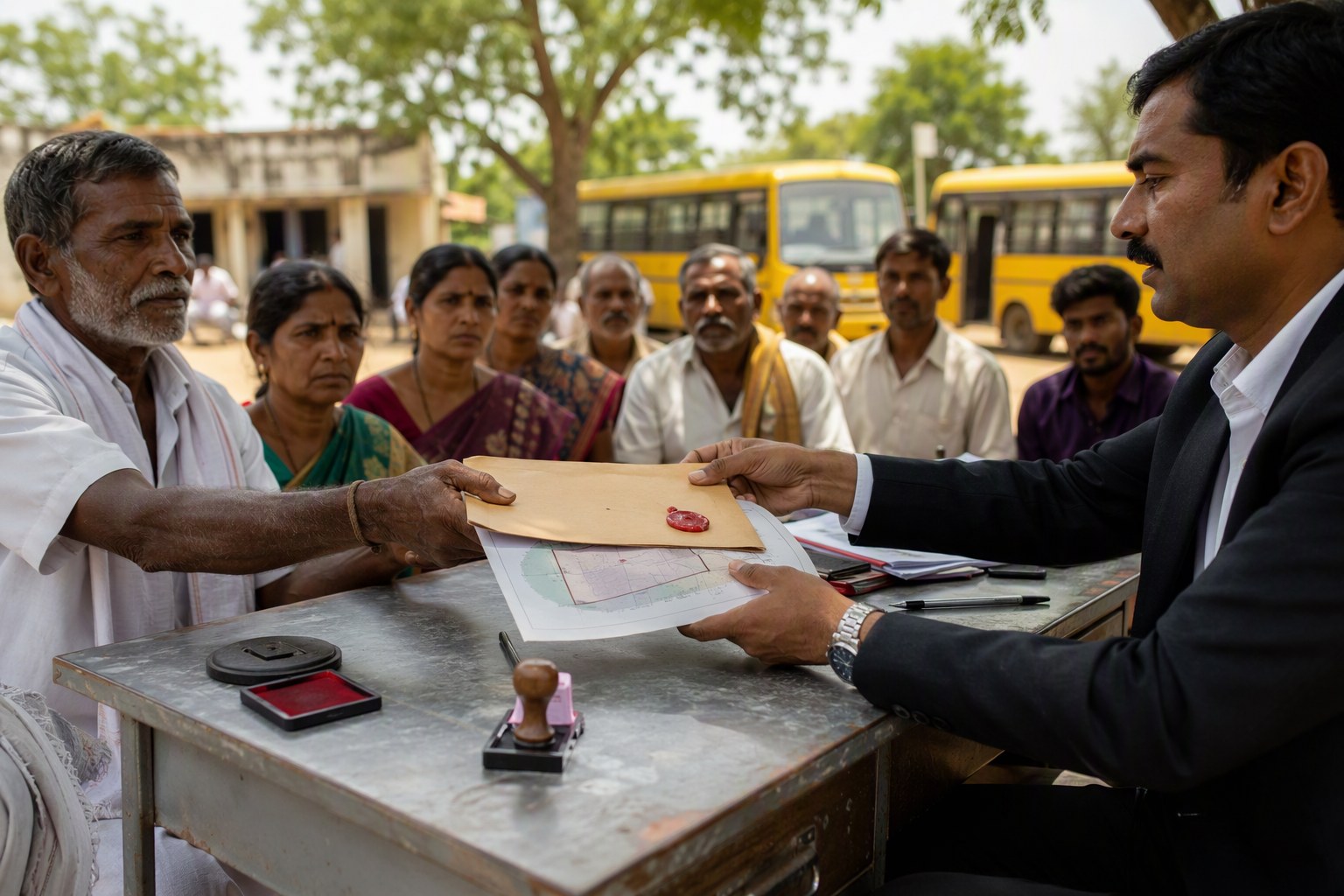
For many homebuyers, 22-A is not a theoretical legal term. It can mean a sale deed not being accepted at the SRO, a bank loan getting stuck, or a family discovering that land shown as “clear” by a broker has a government, assigned, endowment, wakf, ceiling, or litigation-related entry. We’ve seen this anxiety rise sharply in places where old agricultural survey numbers are now sitting next to fast-moving layouts and gated communities.
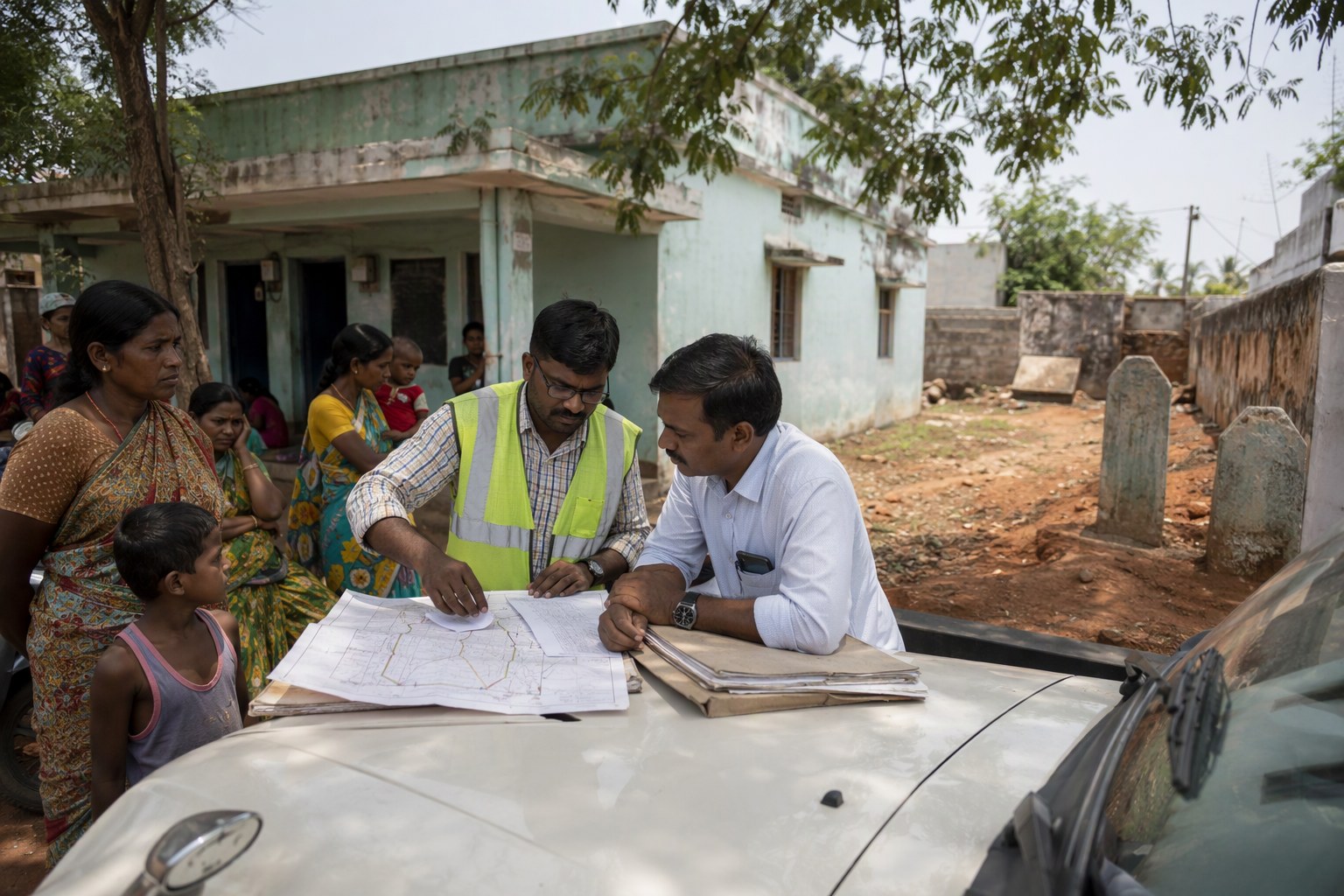
The latest local response is practical: lawyers, retired revenue staff, resident welfare associations, and a few civic groups are helping families read Dharani records, check ECs, locate the correct SRO, and understand whether a property needs deeper verification before any token advance is paid.
Why Telangana 22-A Parcels Are Creating Demand For Legal Aid Camps
Section 22-A of the Registration Act allows the government to prohibit registration of certain properties. In simple terms, if a property is on the prohibited list, the Sub-Registrar may refuse registration. That one line can disturb years of savings for a middle-class buyer.
The problem is not only the number, though 147,934 prohibited properties is a serious figure. The bigger issue is visibility. Families often find out about 22-A only when they reach the registration stage. By then, they may have already paid an advance, signed an agreement of sale, taken a personal loan, or sold gold to arrange margin money.
In our experience, Hyderabad buyers are much sharper now than five years ago. They ask for EC, link documents, layout approval, RERA status, and municipal permissions. But 22-A checking is still missed, especially in plotted land transactions around the edges of the city.
Our view is simple: if the property has a survey number, check the 22-A status before discussing the final rate. Not after paying the token. Not after applying for the bank loan.
Telangana 22-A Parcels: Hotspots Where Families Are Seeking Record Support
Legal aid camps are seeing interest in mixed-growth belts where old revenue lands, gram panchayat layouts, HMDA approvals, and new apartment projects sit close to each other. The questions are coming from both buyers and existing owners who want to regularise their paperwork before resale.
| Area / Locality | Mandal / Nearby SRO Context | Common Buyer Concern | Market Conversation Seen Locally |
|---|---|---|---|
| Miyapur, Hafeezpet, Madinaguda | Serilingampally mandal | Old survey number trail, link documents, EC gaps | Apartments often discussed around Rs 7,000–10,500 per sq ft depending on project and age |
| Manikonda, Narsingi, Kokapet belt | Gandipet mandal | High-value land parcels, government land rumours, layout scrutiny | Premium apartments and villas can move at much higher ticket sizes; land rates vary sharply by road access |
| Nagole, Uppal, Peerzadiguda | Uppal / Medipally side | Converted plots, old GP layout records, SRO refusal fears | Apartment resale usually gets compared against metro access and main-road frontage |
| Adibatla, Kongara Kalan, Bongloor | Ibrahimpatnam mandal | Assigned land checks, industrial corridor speculation, survey mismatch | Plot pricing changes street by street; buyers are asking more for pahani and Dharani extracts |
| Bachupally, Mallampet, Dundigal | Dundigal-Gandimaisamma mandal | Layout approvals, village-to-municipality record transition | End-user demand is strong, but buyers want clean HMDA/RERA proof |
These are not panic zones. They are active real estate markets. That is exactly why record-checking camps matter. A buyer looking at a Rs 80 lakh flat in Miyapur or a plotted investment near Adibatla cannot depend only on a broker’s WhatsApp PDF. The documents must match across Dharani, EC, SRO records, municipal approvals, and ground possession.
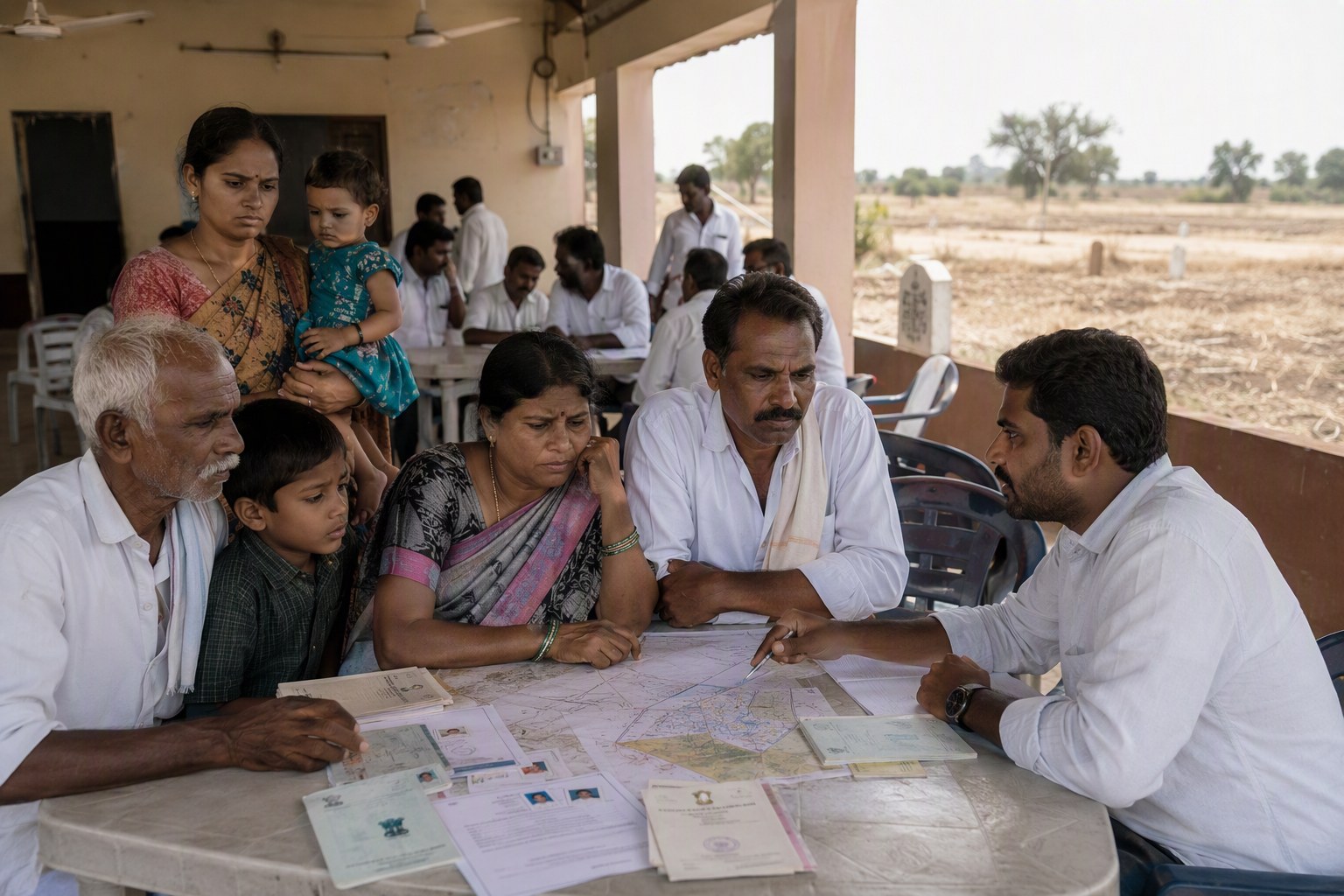
What Happens Inside These Local Legal Aid Camps
The better camps are not dramatic. They are document-reading sessions. A family comes with a sale deed copy, pattadar passbook details, survey number, EC, layout approval, and sometimes only a broker brochure. Volunteers or lawyers then help them identify missing records.
Typically, the first round includes:
- Checking whether the property falls under Section 22-A using a Section 22-A Prohibited Property Check.
- Finding the correct registration office through Find Your SRO Office.
- Reviewing past transactions through Encumbrance Certificate Search.
- Locating the survey number using Survey Number Finder.
- Comparing government market value through Market Value / Guideline Value Search.
For apartments, the conversation shifts slightly. Buyers are asked to check RERA registration, sanctioned plan, land ownership of the project, mortgage releases, and UDS share. A quick RERA Project Lookup can catch many early warning signs. For land and independent houses, the focus stays on survey number identity, title flow, mutation, and 22-A status.
Why 147,934 Prohibited Properties Is A Family Issue, Not Just A Legal Issue
When people hear “prohibited property”, they imagine a large disputed land bank somewhere outside the city. Reality is more personal. One unclear survey number can affect a teacher buying a 150 sq yd plot, an NRI family planning to sell ancestral land, or a retired employee trying to register a small house in his daughter’s name.
The emotional cost is high because property in Telangana is still family capital. Parents stretch budgets for a flat in Kukatpally because the metro is near. IT employees choose Tellapur or Nallagandla for schools and ORR access. Small business families look at Uppal and Nagole because East Hyderabad still offers relative value compared to the western corridor. If a transaction fails due to 22-A after money has moved, the damage is not just financial. It creates family stress.
This is where community-level legal aid has a clear role. Not every buyer can afford a full legal opinion before shortlisting. But every buyer can be trained to ask five basic questions before paying an advance.
Five Questions Every Buyer Should Ask Before Token Advance
- Is the property or survey number appearing in any 22-A prohibited list?
- Does the seller’s name match across sale deed, Dharani, tax records, and EC?
- Which SRO has jurisdiction, and has that SRO handled earlier documents for this property?
- Is the guideline value unusually lower or higher than the quoted deal value?
- For apartments, is the project registered with RERA and are approvals available?
For cost planning, buyers should also calculate duties before final negotiation. The Stamp Duty Calculator helps families estimate registration outgo. If the property involves built-up area plus land share, a Composite Value Calculator can give a clearer picture of transaction value.
How Local Bodies And RWAs Can Make Telangana 22-A Parcels Less Risky
RWAs in Hyderabad usually focus on water, roads, security, and maintenance. Property-document awareness should now be part of that list, especially in colonies with frequent resales. A monthly “record-checking day” can save residents from bad deals.
Municipal councillors and ward-level offices can also help by hosting simple awareness boards: how to check EC, where to find the SRO, how to read a survey number, and when to consult a lawyer. Revenue officials need not clear individual titles at a camp, but they can explain process. That itself reduces misinformation.
One practical idea we like is a colony-level buyer checklist in Telugu and English. Keep it short. Put it in apartment lobbies, community halls, and local WhatsApp groups. Most frauds survive because buyers feel awkward asking basic questions. Normalise document checks, and half the risk comes down.
Buyer Awareness Is Now Part Of Hyderabad Real Estate Due Diligence
The Hyderabad market is not slowing down in any meaningful way across strong corridors. West Hyderabad still carries premium demand. North Hyderabad is seeing interest due to access and relative affordability. East Hyderabad remains attractive for buyers priced out of Madhapur-Gachibowli side. But growth also brings document noise.
Our opinion is firm: every serious buyer should treat 22-A checking like checking the price or location. It is not optional. For families, the safe sequence is record check first, negotiation next, payment last.
If legal aid camps can teach that one habit, Telangana’s large pool of 22-A parcels will not remain a hidden trap for ordinary families. It will become a known checkpoint in the buying journey.
Frequently Asked Questions
What are Telangana 22-A parcels?
Telangana 22-A parcels are properties listed as prohibited for registration under Section 22-A. The list may include government land, assigned land, endowment or wakf land, ceiling surplus land, disputed entries, and other restricted categories.
How many prohibited properties are listed in Telangana?
As per the available database fact, Telangana has 147,934 prohibited properties under Section 22-A. This large number is why local legal aid and record-checking camps are becoming useful for families.
Should I check 22-A status before paying a token advance?
Yes. Check the 22-A status before paying any token advance or signing an agreement. If the SRO refuses registration later, recovering the advance can become stressful and time-consuming.
Which documents should I carry to a legal aid camp?
Carry the sale deed copy, link documents, survey number, pattadar passbook details if available, EC, layout approval, property tax receipt, RERA number for apartments, and seller identity details.
Can a property be removed from the 22-A list?
In some cases, yes, if the entry is wrong or if the owner has valid legal grounds. But it requires proper representation before the concerned revenue or government authority, supported by documents and legal advice.