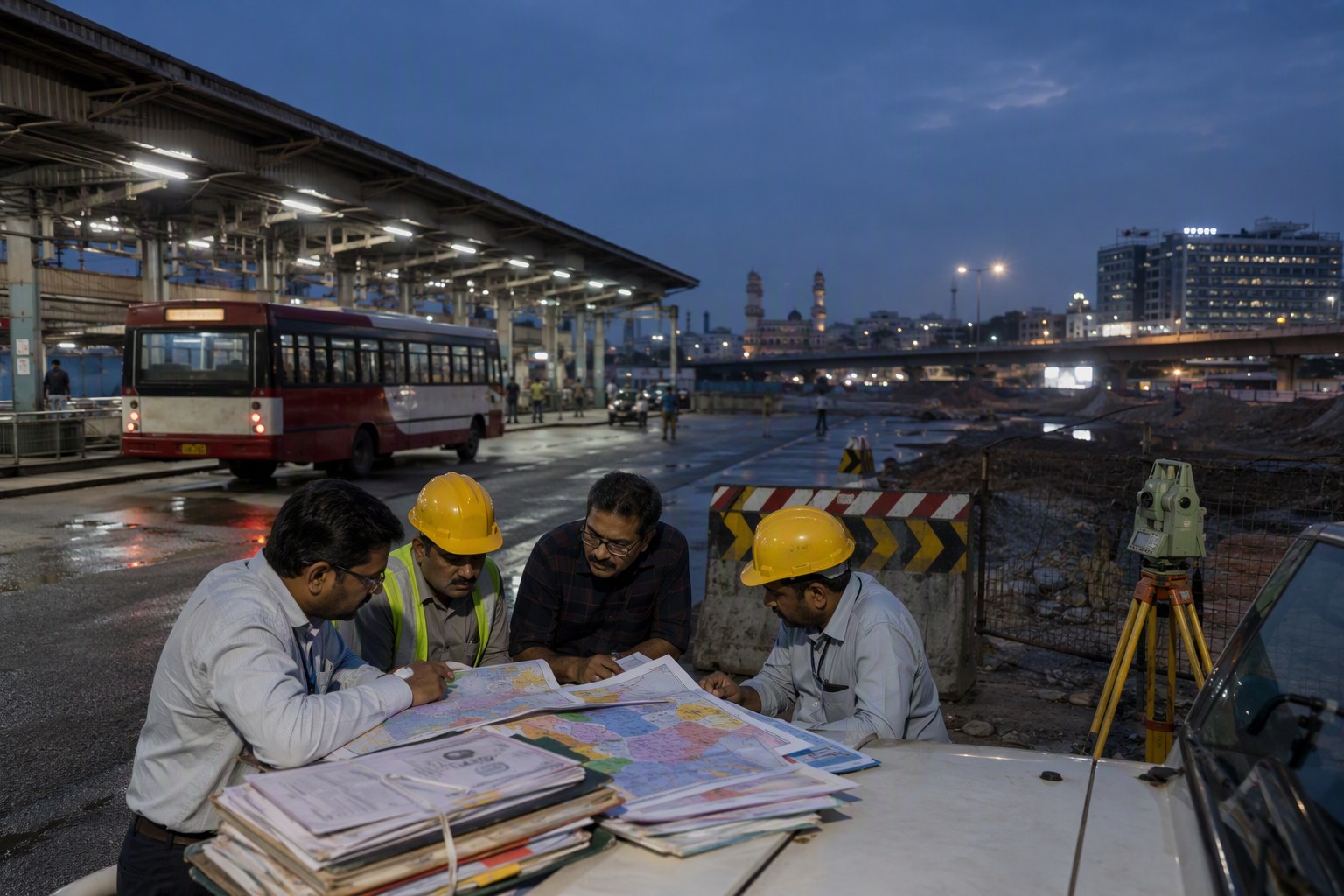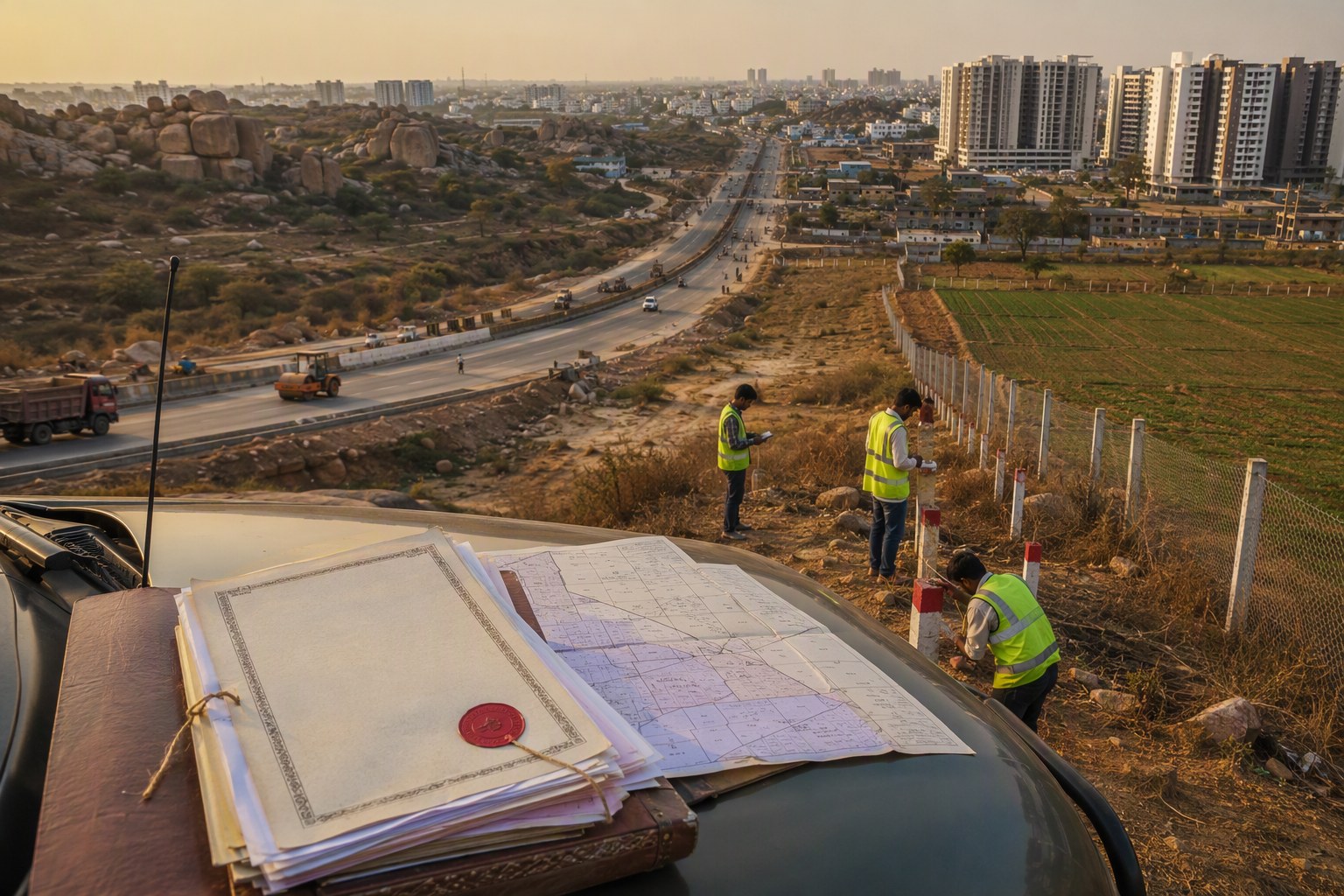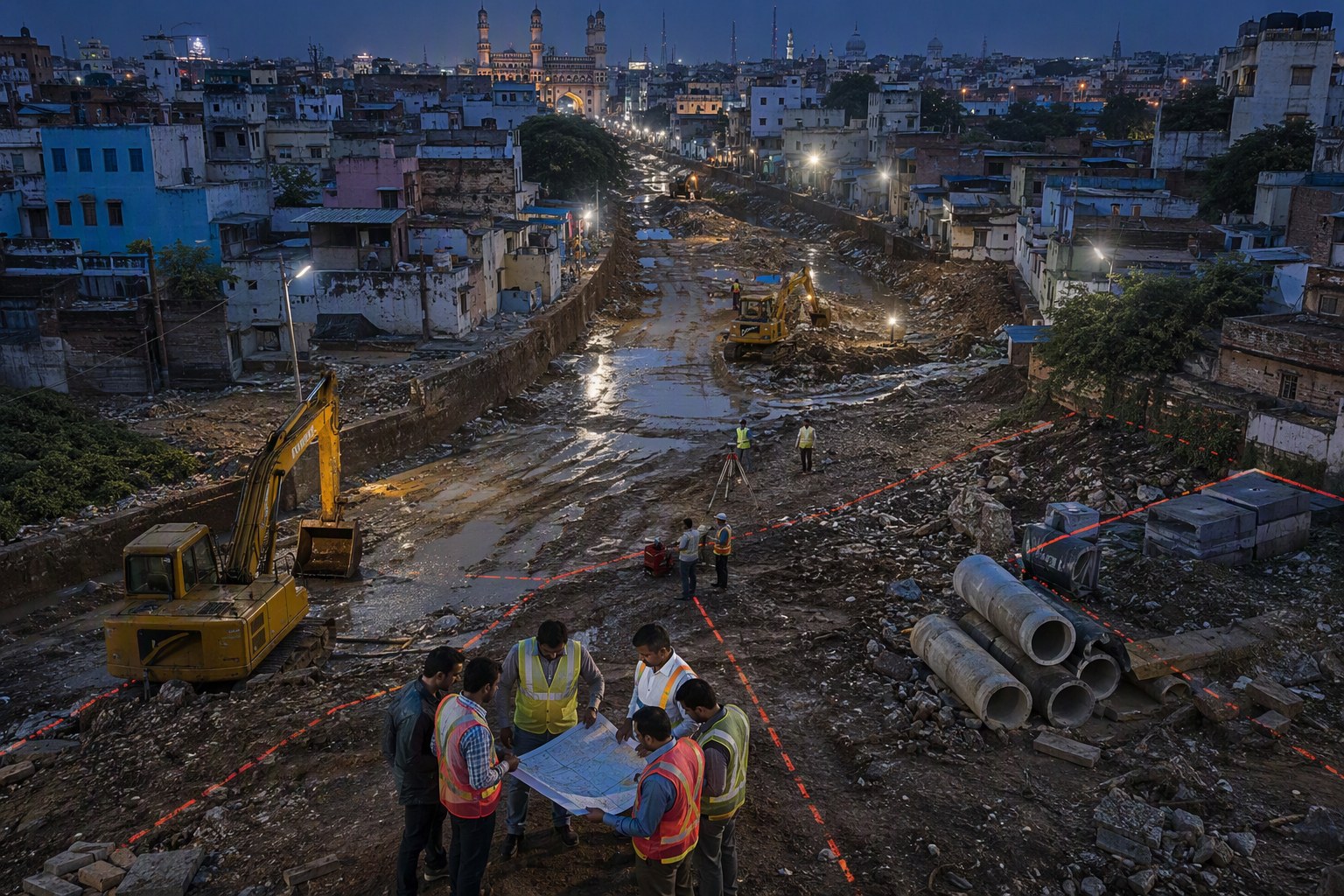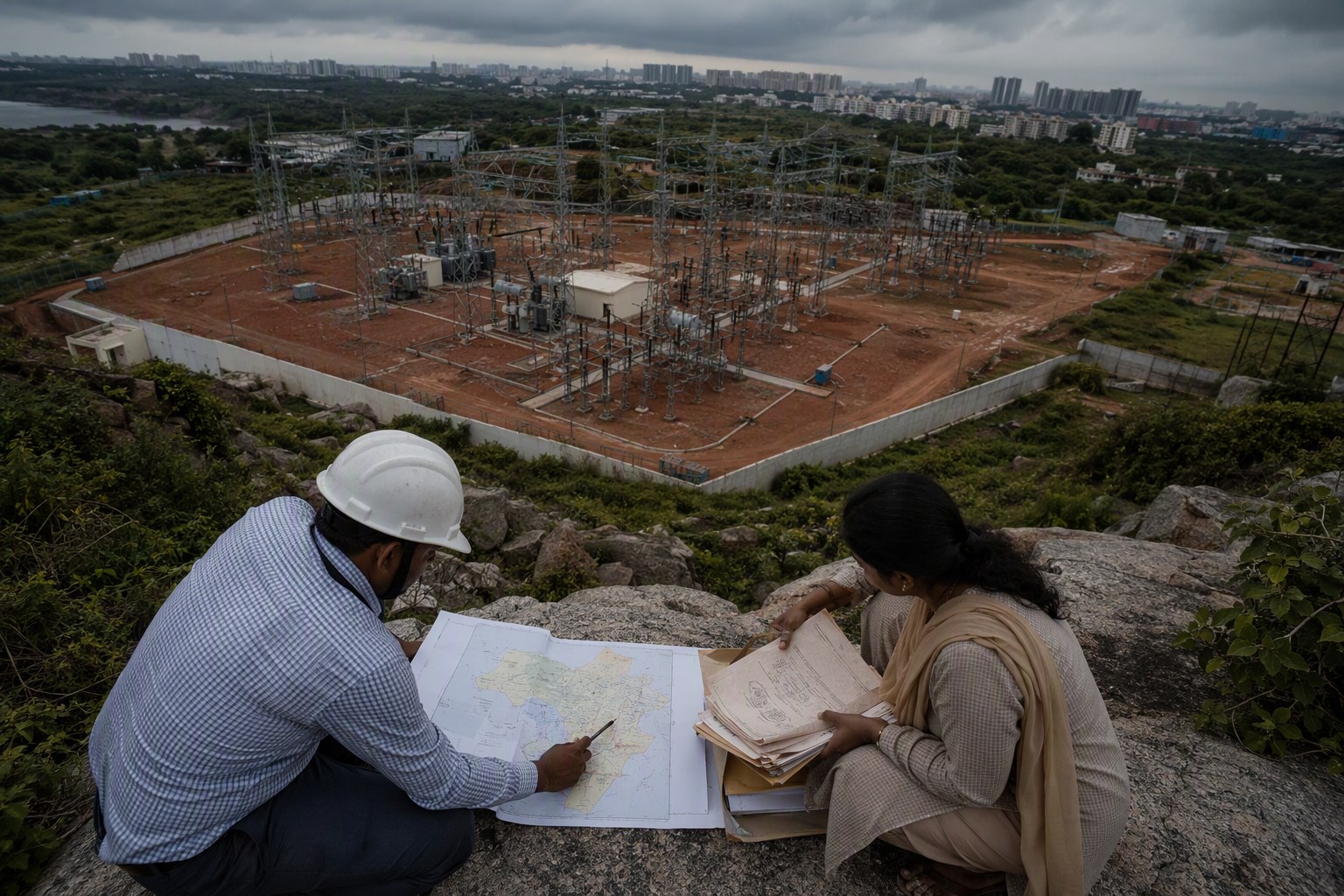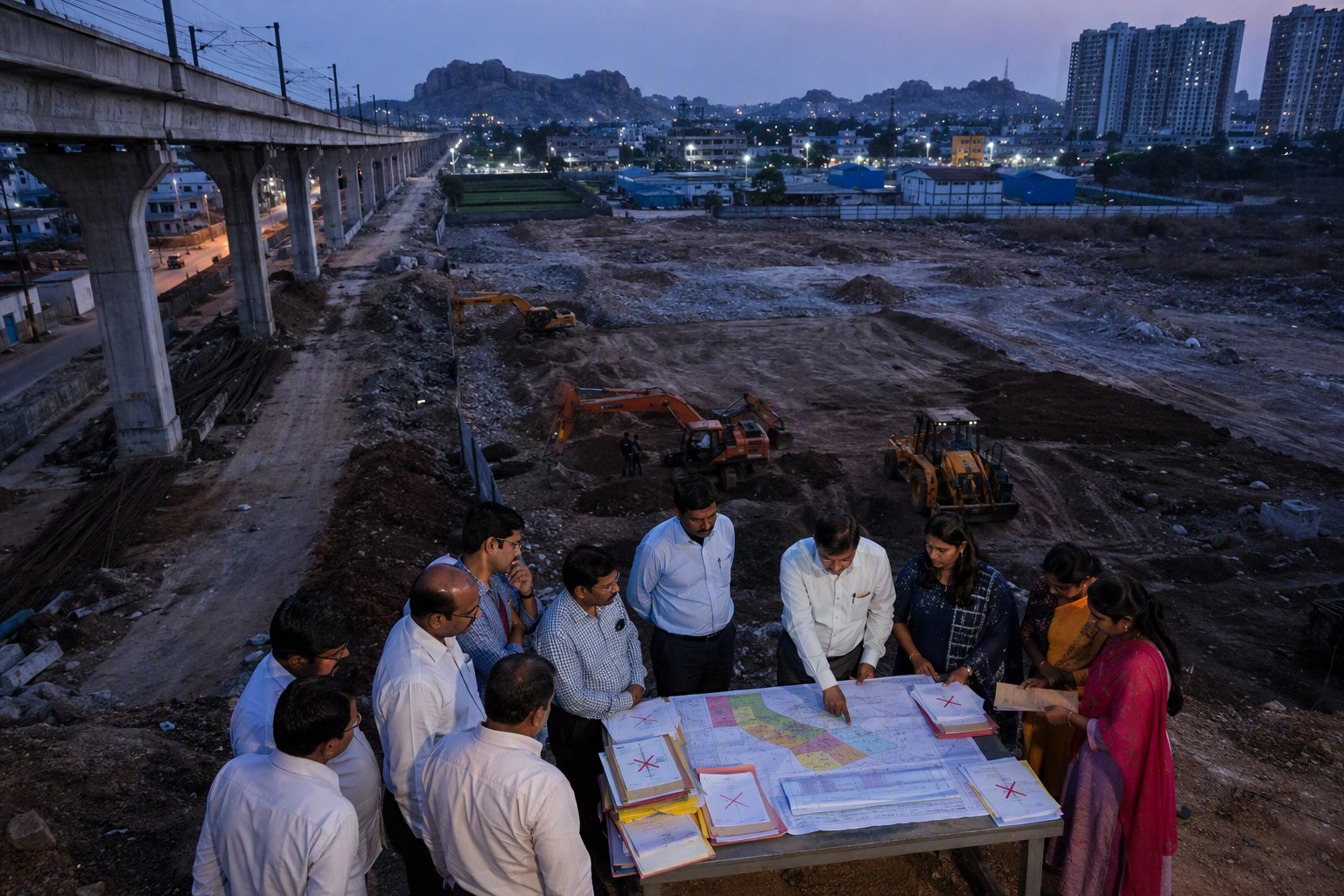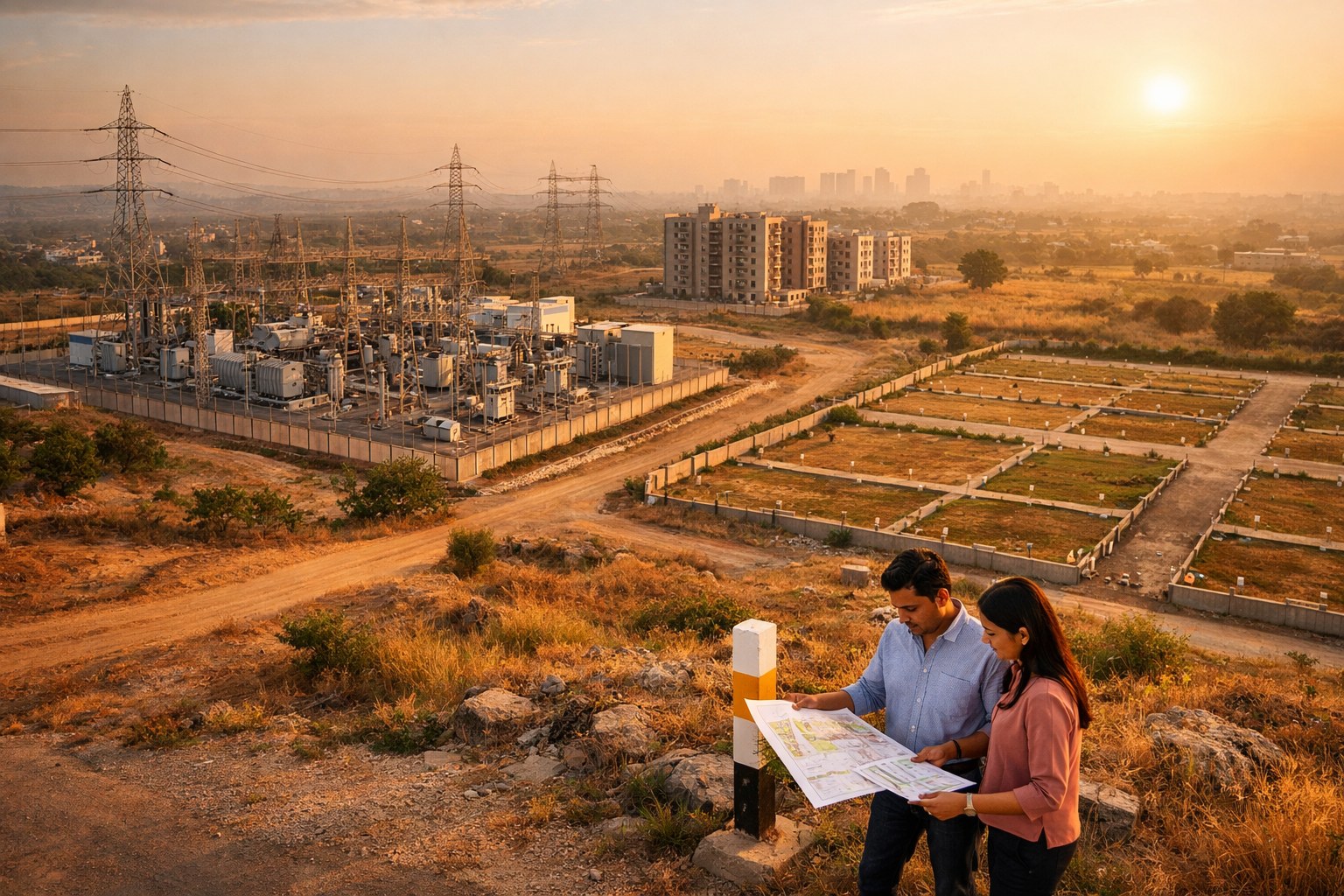
Telangana Power Grid Upgrades are becoming a serious real estate signal for Hyderabad’s outer growth corridors. The news is simple: proposed substations, feeder strengthening and higher-capacity transmission lines can make certain housing belts more livable, more financeable and safer for long-term buyers. In our experience, power reliability does not create a real estate market by itself, but it removes one of the biggest doubts in developing areas: will families, lifts, water pumps, streetlights and small commercial activity get stable supply after occupancy?
For homebuyers, grid strengthening is a positive trigger only when land title, RERA status, road access, zoning and SRO records also check out. Electricity cannot fix a weak title.
Telangana Power Grid Upgrades: why real estate buyers should track them
Hyderabad’s housing demand is no longer restricted to Jubilee Hills, Madhapur, Kondapur or Gachibowli. We are seeing steady buyer interest across Serilingampally’s spillover zones, Gandipet, Kollur, Tellapur, Mokila, Shankarpally, Patancheru, Dundigal, Medchal, Kompally, Shamirpet, Ghatkesar, Hayathnagar, Adibatla, Maheshwaram and Shamshabad.
These belts have one common challenge: residential approvals are moving faster than civic comfort in some pockets. Buyers check road width and water availability, but power load planning is often ignored until possession. A new apartment block may look ready, but if the transformer capacity, feeder redundancy and local substation support are weak, residents face voltage drops, DG dependence and higher maintenance bills.
That is why proposed 400 kV, 220 kV, 132 kV and 33 kV substations matter. They support large layouts, gated communities, warehousing, EV charging, commercial hubs and metro-linked density. For a buyer, the question is not only whether power is available today. The better question is whether the network can handle the next five to ten years of construction.
Telangana Power Grid Upgrades: Hyderabad housing belts likely to gain
The clearest beneficiaries are not always the most expensive localities. Mature areas such as Madhapur and Financial District already have stronger civic demand and deeper infrastructure. The bigger upside is in locations where power upgrades reduce a known risk in an emerging market.
| Housing belt | Key mandals/localities | Why grid strengthening matters | Current market reading |
|---|---|---|---|
| West and north-west corridor | Serilingampally, Ramachandrapuram, Patancheru, Kollur, Tellapur | High-rise apartments, IT spillover, rental demand and lift-heavy gated communities need dependable feeder capacity. | Tellapur and Kollur apartments often quote around Rs 6,000 to Rs 8,500 per sft, while premium Tellapur stock can cross that band. |
| Outer west villa belt | Gandipet, Narsingi, Kokapet, Mokila, Shankarpally | Villa layouts, clubhouses, borewell pumps, EV charging and private water systems increase connected load. | Mokila and Shankarpally plots vary sharply by HMDA approval, road width and approach; quoted rates often move from Rs 35,000 to Rs 75,000 per sq yd. |
| Airport and pharma side | Shamshabad, Maheshwaram, Adibatla, Tukkuguda | Residential, logistics, aerospace and pharma demand can stress older rural feeders unless upgraded. | Tukkuguda and Maheshwaram plotted projects usually price by road access and approval status; Rs 25,000 to Rs 60,000 per sq yd is commonly heard in active pockets. |
| East corridor | Hayathnagar, Abdullapurmet, Pocharam, Ghatkesar | ORR access, institutions and warehouse growth need better substation support before density increases. | Ghatkesar and Pocharam apartment values remain below west Hyderabad in many pockets, often around Rs 4,000 to Rs 6,000 per sft depending on project quality. |
| North growth belt | Medchal, Kompally, Dundigal, Shamirpet, Keesara | Industrial, villa and plotted development need stable supply beyond basic agricultural or semi-urban loads. | Kompally apartments trade at a premium to deeper Medchal pockets; plotted values depend heavily on HMDA layout approval and road connectivity. |
What power reliability changes for project viability
Developers quietly worry about electricity more than buyers realise. A project with weak load sanction or delayed substation linkage can face higher DG costs, late handover of amenities, unhappy residents and poor resale sentiment. In high-rise projects, this is not a small issue. Lifts, fire systems, STPs, WTPs, basement ventilation, security systems and common area lighting all depend on predictable supply.
For plotted layouts, the issue looks different. Streetlights, avenue plantation pumps, community borewells and security infrastructure need feeder planning. If a layout is sold as a future villa community but still depends on temporary supply arrangements, buyers should ask hard questions.
We’ve seen buyers happily pay a premium for a project close to ORR, then struggle with basic occupancy comfort because internal infrastructure was not aligned with actual load. Power grid upgrades can correct this over time, but a buyer should not assume every project in a corridor will benefit equally.
Due diligence checklist before buying in upgraded power corridors
Grid news should be treated as one input, not a green signal to buy blindly. Telangana land records and approvals still need careful checking. Across the state, 147,934 properties are listed as prohibited properties under Section 22-A. That number alone tells us why title checks are non-negotiable, especially in fast-moving mandals where old agricultural survey numbers are being converted into layouts.
- Check the land record: Verify the survey number, pahani history and ownership trail. Use the Survey Number Finder and Property Verification Tool before paying token advance.
- Check Section 22-A risk: If the survey number falls under prohibited property, registration can fail. Run a Section 22-A Prohibited Property Check.
- Check RERA: For apartments and gated plotted developments covered by RERA, verify project status, approvals and promised completion through the RERA Project Lookup.
- Check EC and SRO: Search encumbrances and confirm the correct registration office using Encumbrance Certificate Search and Find Your SRO Office.
- Check valuation: Compare quoted price with government values using the Market Value / Guideline Value Search. For registration cost planning, use the Stamp Duty Calculator.
- Check planning constraints: Road width, land use and FSI affect what can legally be built. Use Road Width Check, Land Use Zone Finder and FSI/FAR Calculator.
My reading: which belts get the strongest buyer confidence?
If grid strengthening moves as planned, I would watch three categories closely. First, the west and north-west apartment belt from Tellapur to Kollur and Patancheru. Demand is already strong due to IT access, but better power resilience can support high-rise density and rentals. Second, the airport-side belt around Tukkuguda, Shamshabad and Maheshwaram, where housing, logistics and employment nodes are all competing for infrastructure. Third, the north belt from Kompally to Shamirpet, where villa and plotted markets can gain if power reliability improves along with road and water infrastructure.
I am more cautious on speculative plots deep inside villages where the sales pitch is only about a future substation or future road. Buyers should ask whether the project has HMDA/DTCP approval, clear approach road, mutation clarity on Dharani, and a realistic timeline for internal electrification. A power substation in the wider mandal does not automatically mean your layout has sanctioned and energised supply.
How to read power upgrade news like a serious buyer
When you hear about a proposed substation, ask four practical questions. Where exactly is it located? Which feeders or load centres will it support? Is the project sanctioned, under tender, under construction or only proposed? What is the distance from your project, and has the developer obtained load approval?
Also check whether the neighbourhood has visible signs of civic maturity: proper road width, streetlights, drainage, transformer installation, occupied communities and functioning commercial services. In Hyderabad, a locality becomes livable not because of one announcement, but because several systems start working together. Power is one of the strongest signals among them.
For end-users, reliable electricity means better daily life. For investors, it supports rental demand and resale depth. For developers, it improves delivery confidence. Still, title and approval checks come first. A well-powered disputed land parcel is still a bad investment.
Frequently Asked Questions
Which Hyderabad housing belts may gain from Telangana Power Grid Upgrades?
Tellapur, Kollur, Patancheru, Mokila, Shankarpally, Tukkuguda, Maheshwaram, Shamshabad, Ghatkesar, Pocharam, Kompally and Shamirpet are likely to benefit if proposed substations and feeder upgrades improve local supply reliability.
Does a proposed substation guarantee property price appreciation?
No. It can improve buyer confidence and project viability, but price growth also depends on title, approvals, road access, water, employment demand, RERA compliance and the exact project location.
What should I verify before buying land in a power upgrade corridor?
Check survey number, pahani, Dharani records, Section 22-A status, EC, SRO jurisdiction, layout approval, land use zone and road width. Telangana has 147,934 prohibited properties under Section 22-A, so title checks are essential.
Are apartment buyers affected by power infrastructure?
Yes. High-rise apartments need stable load for lifts, pumps, fire systems, STPs, basement ventilation and common amenities. Weak power planning can increase DG costs and maintenance charges.
Which tools can help with property due diligence in Telangana?
Use Verified.RealEstate tools for RERA lookup, EC search, guideline value, stamp duty calculation, survey number checks, prohibited property checks, road width and land use verification.