


Hyderabad Musi Corridor Works May Put Riverbed Titles Under Review
Hyderabad Musi Corridor Works may bring a sharper legal spotlight on land titles along the Musi riverbed and its buffer areas, especially where old sale deeds, pahanis, municipal layouts and possession claims do not match cleanly with current government records. For buyers, landowners and developers from Chaderghat to Nagole, Attapur to Narsingi, this is not only an infrastructure story. It is also a title-risk story.
Telangana already has 3,076,153 prohibited properties listed under Section 22-A, as per latest IGRS data available in our database. That single number should make every buyer pause before touching land near a river, nala, tank bed, buffer zone, assigned land pocket or government-record-sensitive parcel.
In our experience, Musi-side property disputes rarely start with one dramatic notice. They usually begin with a small mismatch: survey number not matching the pahani, SRO registration allowed years ago but later flagged, mutation pending on Dharani, or a layout approval that is silent on water-body buffer compliance.
Hyderabad Musi Corridor Works: Why Titles Near The River May Face Closer Checks
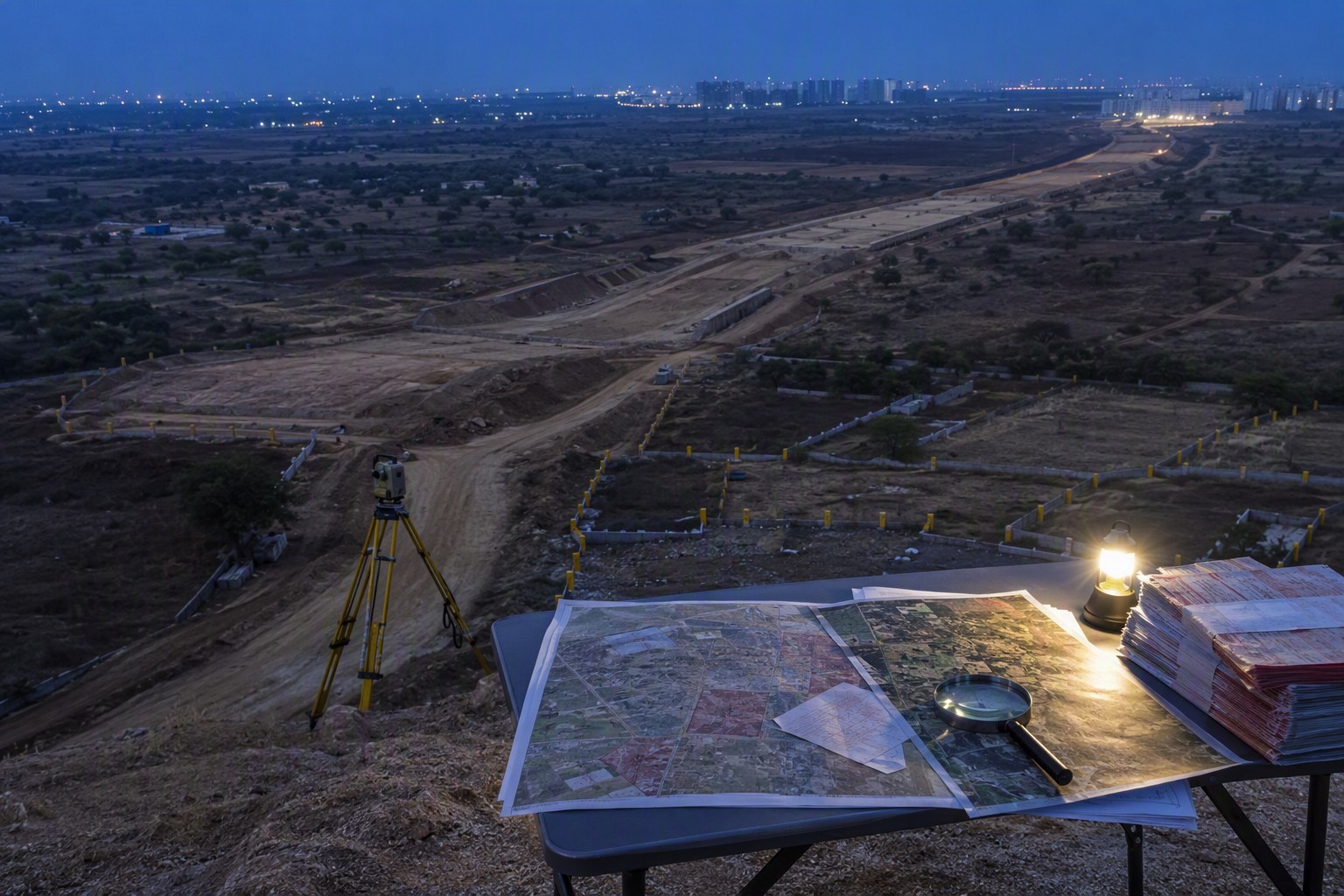
The proposed Musi corridor push is expected to involve planning, demarcation, road access, riverfront treatment, rehabilitation questions and land identification along different stretches of Hyderabad. Whenever such a public infrastructure project moves from drawing board to ground-level work, land records come under pressure.
That is where old titles near the Musi become sensitive. In localities like Afzalgunj, Chaderghat, Malakpet, Moosarambagh, Amberpet, Uppal, Nagole, Attapur, Bapughat, Langar Houz, Rajendranagar and Narsingi, land parcels have changed hands over decades. Some are house plots. Some are small commercial properties. Some are informal holdings. Some may sit close to drains, nalas or the river course itself.
The issue is not that every Musi-side property is defective. That would be unfair. But any title sitting near a riverbed, nala margin, tank buffer or government-marked land deserves deeper checking than a normal urban apartment in a fully approved gated community.
My view is simple: if a property is near the Musi or any connected nala, do not rely only on the sale deed. Check the survey number, EC, prohibited status, land use, SRO history and local planning record before paying token advance.
Hyderabad Musi Corridor Works And The Section 22-A Warning Signal
Section 22-A entries are not a small administrative detail. They decide whether certain properties are restricted from registration due to government classification, endowment status, assigned land issues, ceiling surplus, court matters or other prohibited categories. Telangana has 3,076,153 such prohibited properties in the latest dataset available with us.
For Musi corridor-affected belts, this number matters because riverbed and buffer-zone lands often overlap with older revenue entries, village maps and changing urban boundaries. A property may have an old registered document, but if the present survey number is listed under a prohibited category, the buyer can face registration refusal or future legal trouble.
Before visiting the SRO, buyers should first run a quick check using the Section 22-A Prohibited Property Check. It is also wise to verify the survey number through the Survey Number Finder and then use the Encumbrance Certificate Search to see past transactions.
Where The Scrutiny May Be Sharper
Based on how Hyderabad has expanded along water bodies, scrutiny may be sharper in stretches where the Musi passes through dense residential and mixed-use pockets. These include parts of:
- Malakpet and Chaderghat: older properties, commercial use, legacy documents and dense occupation patterns.
- Moosarambagh, Amberpet and Golnaka: river-adjacent pockets where layouts, road access and boundaries need careful reading.
- Uppal and Nagole: eastern growth corridor where open parcels and older village records may still matter.
- Attapur, Bapughat and Langar Houz: western side pockets where buyers often see redevelopment potential but must check river influence.
- Rajendranagar, Gandipet and Narsingi side belts: areas where urban expansion, revenue records and planning controls should be checked together.
Mandals such as Amberpet, Saidabad, Saroornagar, Uppal, Rajendranagar, Gandipet and Hayathnagar can have different record histories depending on village limits and jurisdiction. Do not assume one locality’s title pattern applies to the next.
Hyderabad Musi Corridor Works: What Buyers Should Verify Before Paying Advance
In Hyderabad, many buyers still stop after seeing the link document and EC. That is not enough for a Musi-side property. A clean-looking deed does not automatically prove that the land is outside riverbed, buffer or prohibited classification.
| Check | Why It Matters Near Musi | Useful Tool |
|---|---|---|
| Section 22-A status | Confirms whether the property is restricted from registration | Section 22-A Prohibited Property Check |
| Encumbrance Certificate | Shows registered transaction history and mortgage indicators | Encumbrance Certificate Search |
| Survey number | Helps match deed, pahani, Dharani and ground location | Survey Number Finder |
| Guideline value | Gives ready reckoner value for registration planning | Market Value / Guideline Value Search |
| SRO jurisdiction | Confirms correct registration office for the village or locality | Find Your SRO Office |
For apartments or plotted projects along the corridor influence zone, buyers should also check project approvals and registration status through the RERA Project Lookup. If the builder is promising future appreciation due to Musi works, ask for approvals first and marketing talk later.
Documents That Need Extra Attention
For land parcels near the Musi, I would ask for these papers before discussing price seriously:
- Current sale deed and all link documents available with the seller.
- Latest EC from the relevant SRO period available.
- Pahani or revenue extract, wherever applicable.
- Dharani record status for agricultural or converted land.
- Mutation proceedings and pattadar details, if relevant.
- Layout approval, building permission or regularisation record.
- Village map, FMB/sketch or survey demarcation where boundary doubt exists.
- Section 22-A check result for the survey number.
- Land use confirmation, especially for parcels marketed as commercial or redevelopment land.
For planning-side checks, use the Land Use Zone Finder. If the property is being evaluated for construction potential, the FSI/FAR Calculator and Road Width Check can help you ask better questions before meeting an architect or builder.
What Sellers And Small Owners Should Do Now
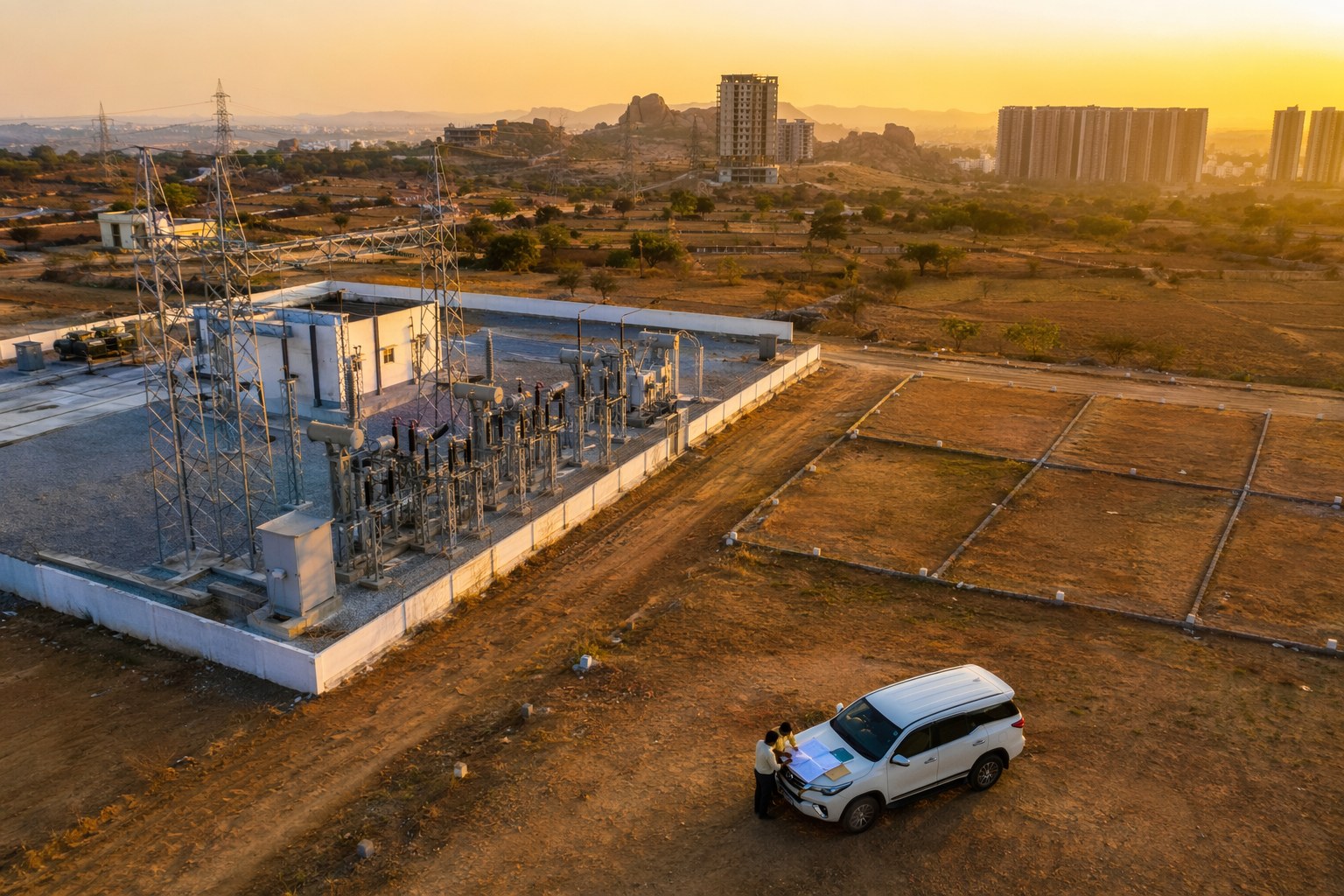
Sellers near Musi stretches should not wait for a buyer’s lawyer to find gaps. If your property is genuine, organise your record file now. Keep the deed chain, tax receipts, old municipal permissions, mutation papers and survey references in one place. If your plot has a boundary wall, old house number, electricity connection and municipal assessment, keep copies ready. These do not replace title, but they help explain possession history.
Small owners in Chaderghat, Moosarambagh, Amberpet, Nagole and Attapur should also check whether their property description in the deed matches the present ground reality. We have seen cases where the street name changed, old door numbers changed, and survey references were not carried properly into later documents. During corridor-related verification, such gaps can slow down sale, mortgage or redevelopment.
Developers should be even more careful. Aggregating small parcels near river-influence areas without a clean land-risk map is a bad idea. One disputed survey number can disturb the whole project. Before signing development agreements, use the Property Verification Tool and keep tracking changes through the Property Change Tracker.
Market Impact: Caution Before Appreciation Talk
Infrastructure usually improves long-term property interest. Hyderabad has seen this around metro corridors, ORR access points and key road-widening stretches. But Musi corridor-linked value is not a blanket benefit for every nearby property. A clear-title property with proper access and approvals may gain buyer attention. A parcel sitting in a doubtful riverbed or prohibited category may become harder to sell.
That difference is crucial. Two properties in the same locality can have very different legal quality. One may be safe for bank funding. Another may fail at SRO or lender due diligence. Buyers should avoid paying a premium just because someone says “Musi development coming, rate will go up.” Ask for documents. Check records. Then discuss value.
For registration cost planning, use the Stamp Duty Calculator. For ready reckoner comparison, use the Market Value / Guideline Value Search. These tools do not replace legal opinion, but they stop buyers from walking blind into negotiation.
Verified.RealEstate View
The Musi corridor works can improve Hyderabad’s riverfront planning if executed with clear demarcation and fair handling of affected people. But from a property-title angle, this is also the time when weak documents may get exposed. Riverbed, buffer and government land questions cannot be solved by confidence alone.
Our practical advice is blunt: if you are buying near Musi, do not rush because of future development claims. If you are selling, clean up your file before listing. If you are developing, map every survey number before signing. Telangana’s 3,076,153 prohibited property entries are a loud reminder that land title in Hyderabad is not just about possession and price. It is about records matching across SRO, revenue, planning and ground reality.
Frequently Asked Questions
Will Hyderabad Musi Corridor Works affect all properties near the river?
No. Not every nearby property is defective or affected. The risk is higher for properties close to riverbed, nala, buffer zone, government land classification or unclear survey boundaries. Each property must be checked separately.
What is Section 22-A and why is it relevant here?
Section 22-A deals with properties restricted from registration under specified categories. Telangana has 3,076,153 prohibited properties in the latest IGRS data available with us, so buyers near sensitive corridors should check this before paying advance.
Which Hyderabad areas should be extra cautious during Musi corridor checks?
Buyers should be extra careful in Musi-adjacent pockets such as Chaderghat, Malakpet, Moosarambagh, Amberpet, Nagole, Attapur, Bapughat, Langar Houz, Rajendranagar and Narsingi, especially where old revenue records are involved.
Is an Encumbrance Certificate enough for Musi-side land purchase?
No. EC is only one part of due diligence. Buyers should also check survey number, Section 22-A status, pahani or Dharani records where applicable, land use, layout approval and SRO jurisdiction.
Should I buy land near Musi for future appreciation?
Only after title verification. A clear-title, approved property may benefit from improved infrastructure, but a doubtful riverbed or prohibited property can become difficult to register, finance or resell.