Hyderabad Metro Phase 2 Spurs Fresh Checks Near Stations
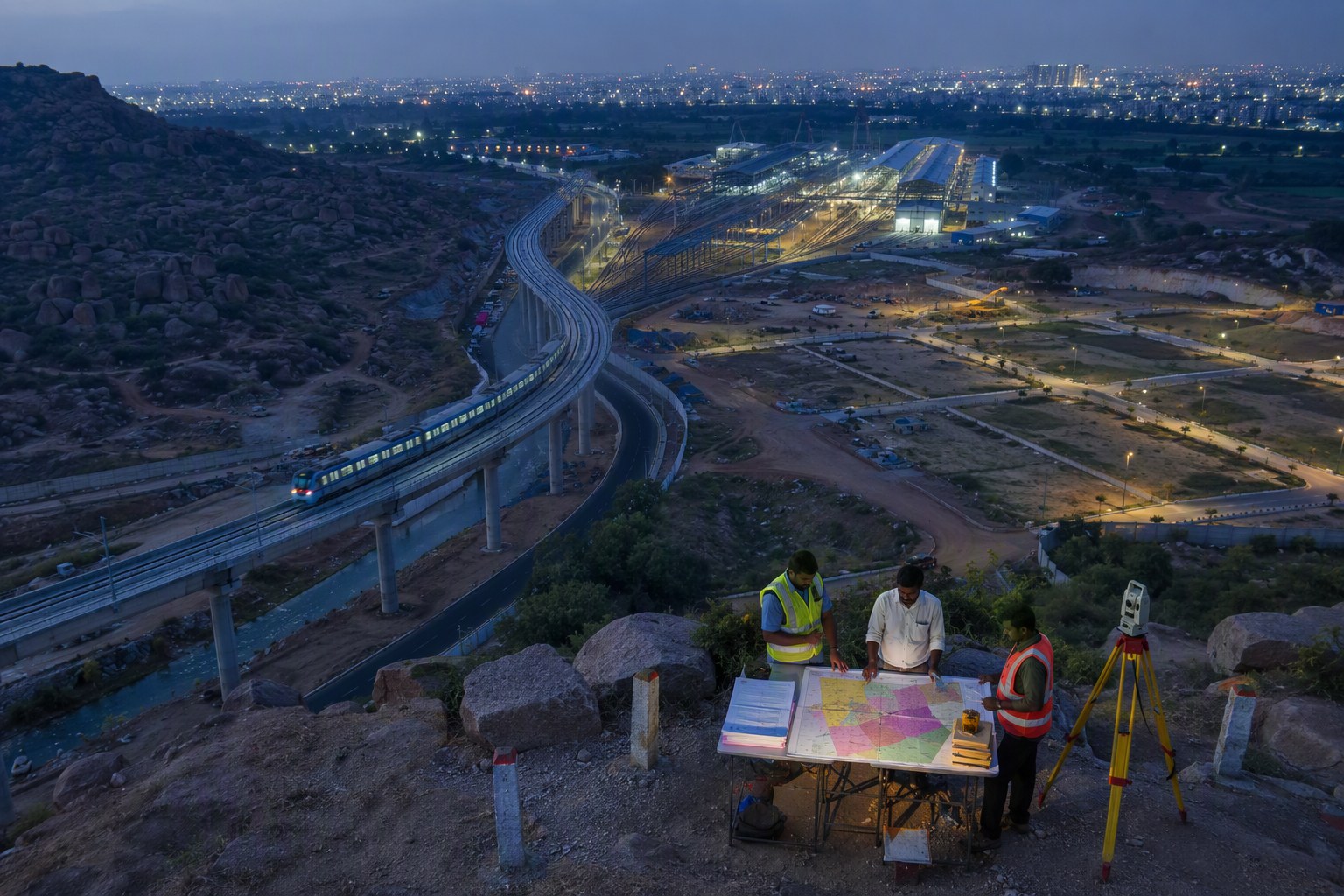
Hyderabad Metro Phase 2 is already changing buyer behaviour around proposed station zones, even before many families have clarity on exact entry-exit points, road widening lines, or final acquisition boundaries. The immediate market reaction is not just price talk. Serious buyers in areas like Raidurg, Nanakramguda, Kokapet, Narsingi, Rajendranagar, Shamshabad, Chandrayangutta, Mailardevpally, Nagole, LB Nagar and Patancheru are now asking sharper questions: Is the title clean? Is the access road legally available? Is the land under any Section 22-A restriction? Will a part of the plot get affected by future road or Metro works?
In our experience, this is the correct shift. Metro news can create urgency, but urgency is exactly when buyers make expensive mistakes. A plot or flat near a proposed station may look attractive on paper, but if the Encumbrance Certificate, pahani, link documents, road access and SRO records do not match, the buyer is taking avoidable risk.
Our view is simple: treat proposed Metro Phase 2 influence zones as high-attention zones. Do not pay a token advance only because the seller says “station is coming nearby”. Verify first, negotiate later.
Hyderabad Metro Phase 2: Why Station Zones Need Extra Due Diligence
Metro-led development in Hyderabad normally brings better visibility to surrounding land parcels, especially near junctions, proposed depots, parking areas, last-mile roads and feeder routes. But Phase 2 conversations are spreading across very different property types: old plotted layouts in gram panchayat limits, HMDA-approved layouts, apartments under construction, converted agricultural lands, builder floors, commercial strips and inherited family properties.
That variety is where the risk comes in. A property close to a future station may still have an old mortgage entry. It may have a missing link deed. The survey number may not tally with the sale deed schedule. The approach road may be shown in marketing material but not reflected properly in revenue or layout records. Some parcels may be affected by road widening, nala buffers, lake buffers, government land classification, court disputes or acquisition-related markings.
Telangana’s property records also have a huge prohibited-property universe. As per latest IGRS data available in our database, Section 22-A prohibited properties stand at 3,076,153. That number should make every buyer pause before paying an advance in a fast-moving corridor.
Before shortlisting land near any proposed station belt, buyers should use Section 22-A Prohibited Property Check, verify the latest EC through Encumbrance Certificate Search, and identify the correct registration jurisdiction with Find Your SRO Office.
Hyderabad Metro Phase 2 Buyers Are Checking ECs Before Advances
The Encumbrance Certificate is becoming the first filter in Metro-linked purchases. Earlier, many buyers asked for EC only at the agreement stage. Now, we are seeing more buyers insist on EC before token payment, especially in station-adjacent pockets where sellers are quoting future connectivity as the main selling point.
An EC can reveal registered sales, mortgages, releases, gifts, partitions, agreements and other registered transactions for the period searched. It does not solve every title issue, but it is a strong starting point. If the EC shows a mortgage not released, a sale from an untraceable party, or mismatch in property description, the buyer should not proceed casually.
For flats, the EC of the underlying land and the project documents both matter. For open plots, the survey number, plot number, extent, boundaries and layout approval should be cross-checked. In mandals around Rajendranagar, Gandipet, Serilingampally, Shamshabad, Hayathnagar and Patancheru, small differences in survey description can create big legal confusion later.
Use EC Analyzer to read entries more carefully. If the property is part of a registered project, check the project status through RERA Project Lookup. For land parcels where the buyer only has a survey number or village name, Survey Number Finder is a practical first step.
Access Roads May Decide the Real Value Near Metro Phase 2
A property can be close to a proposed Metro station and still be weak from an access point of view. This is common in older colonies, interior plots, layouts with disputed approach roads, and landlocked parcels being sold with “future road” promises.
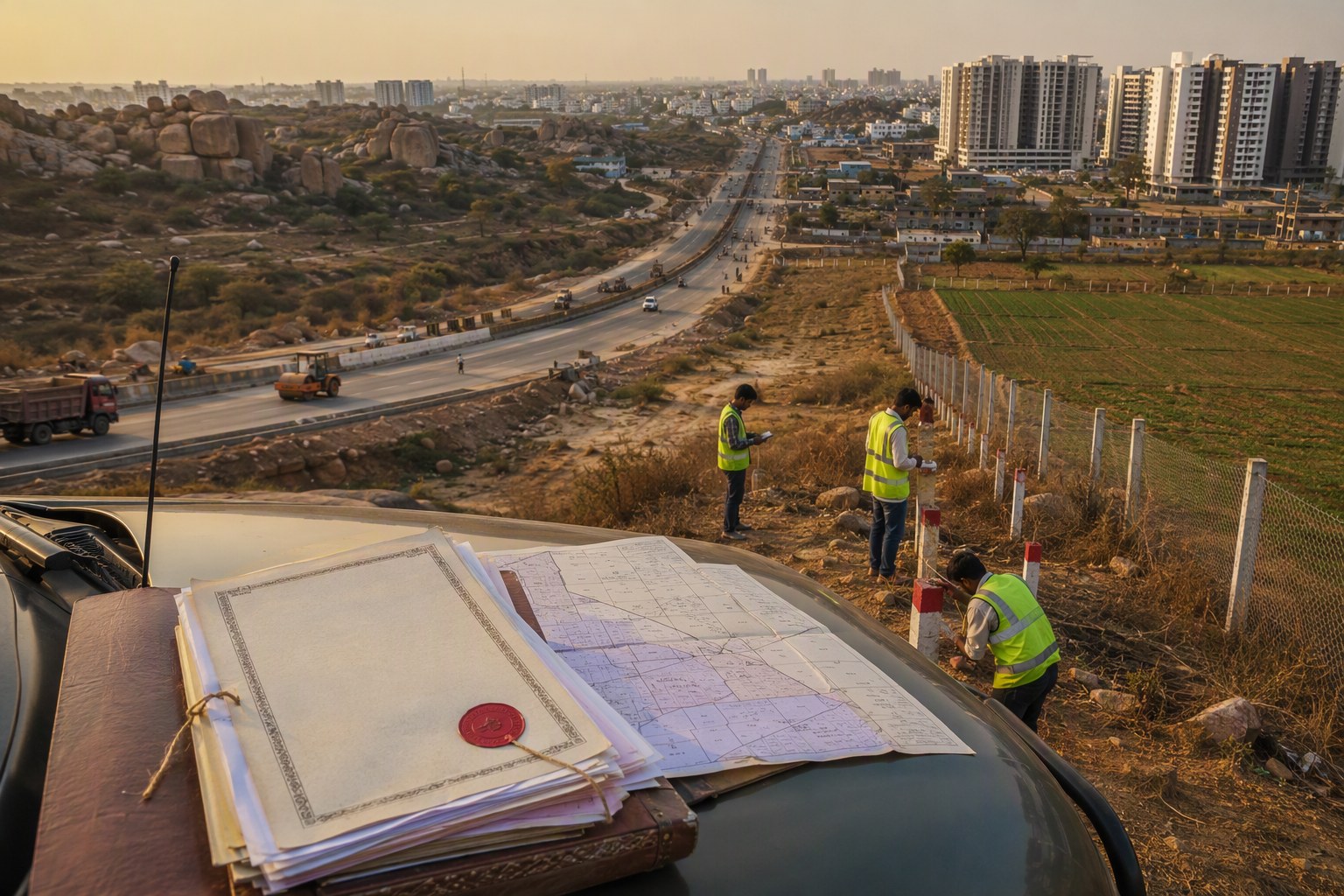
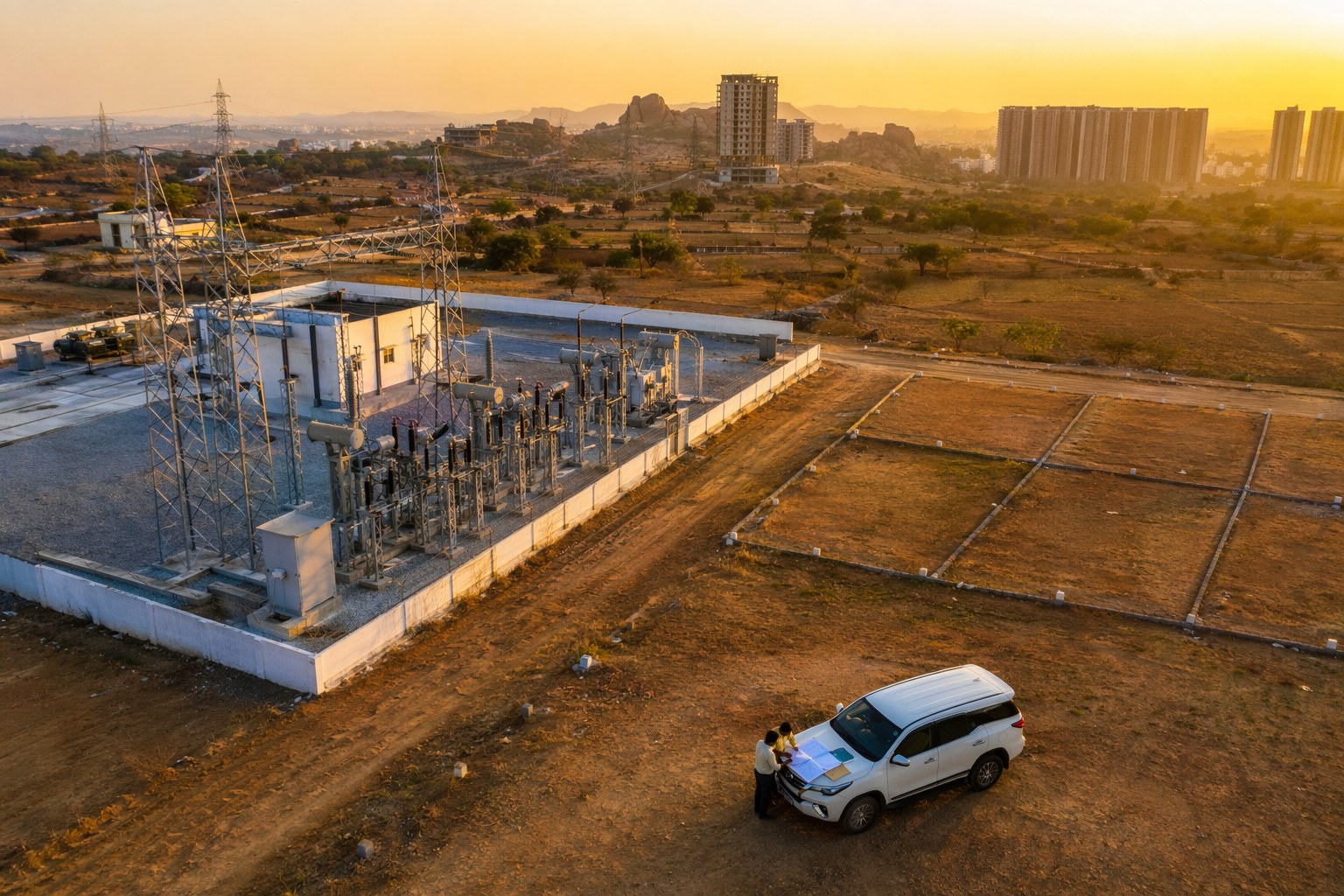
Buyers should not depend only on Google Maps, broker location pins or glossy layout sketches. The legal access road must be checked from layout approvals, municipal permissions, village maps, revenue sketches and actual site inspection. If the road passes through private land without a registered right of way, the risk remains with the buyer.
Near developing belts like Narsingi, Kokapet, Manikonda, Tellapur, Shamshabad, Adibatla-side approaches, Patancheru and Hayathnagar, road width also affects future building permission, commercial usability, parking movement and resale demand. A narrow lane near a future station may not behave like a premium asset unless the road is legally clear and usable.
For a quick screening, buyers can use Road Width Check. For development potential, FSI/FAR Calculator can help buyers understand why road width and zoning matter before committing funds.
Acquisition Risk: Don’t Ignore Proposed Road Widening and Metro Works
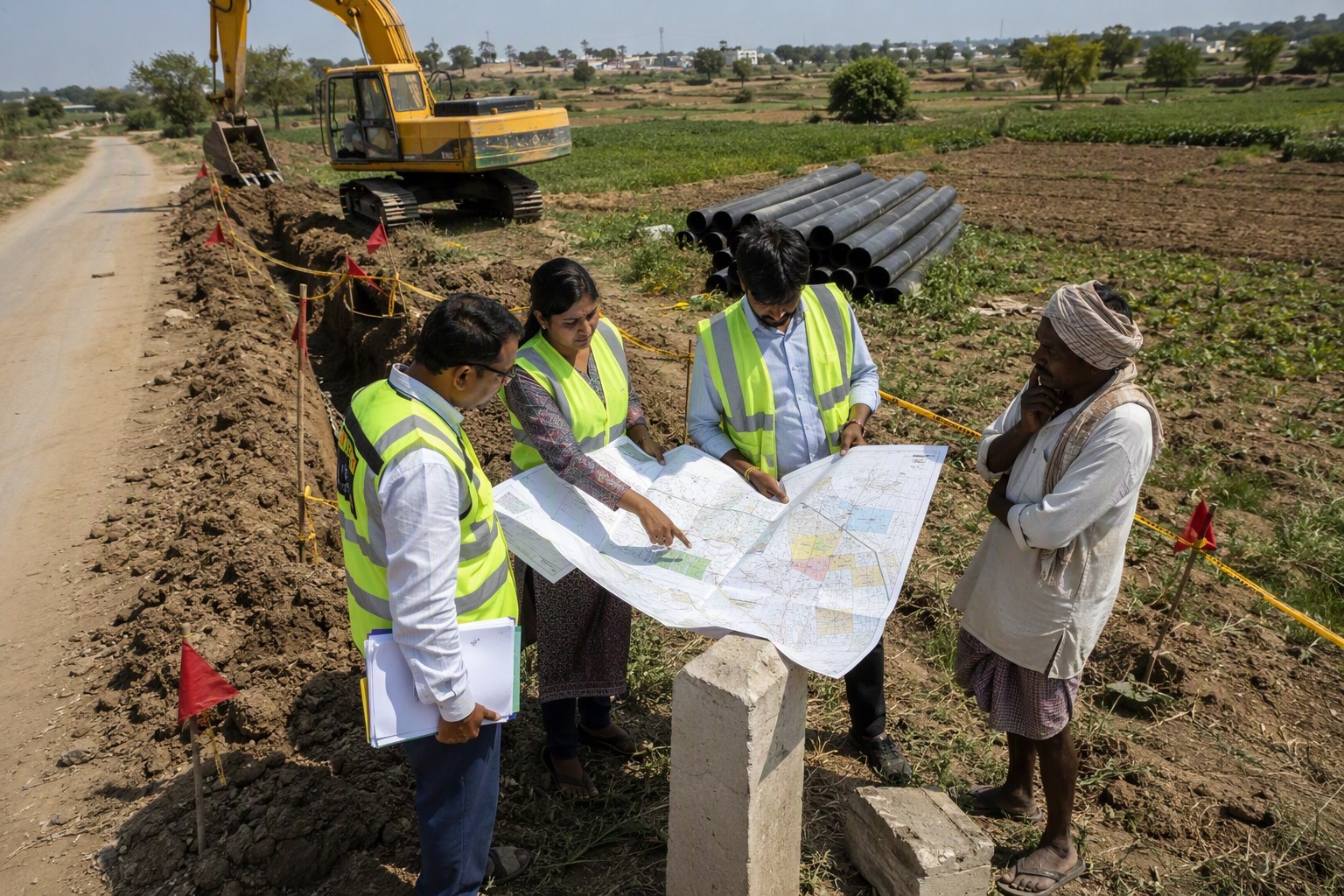
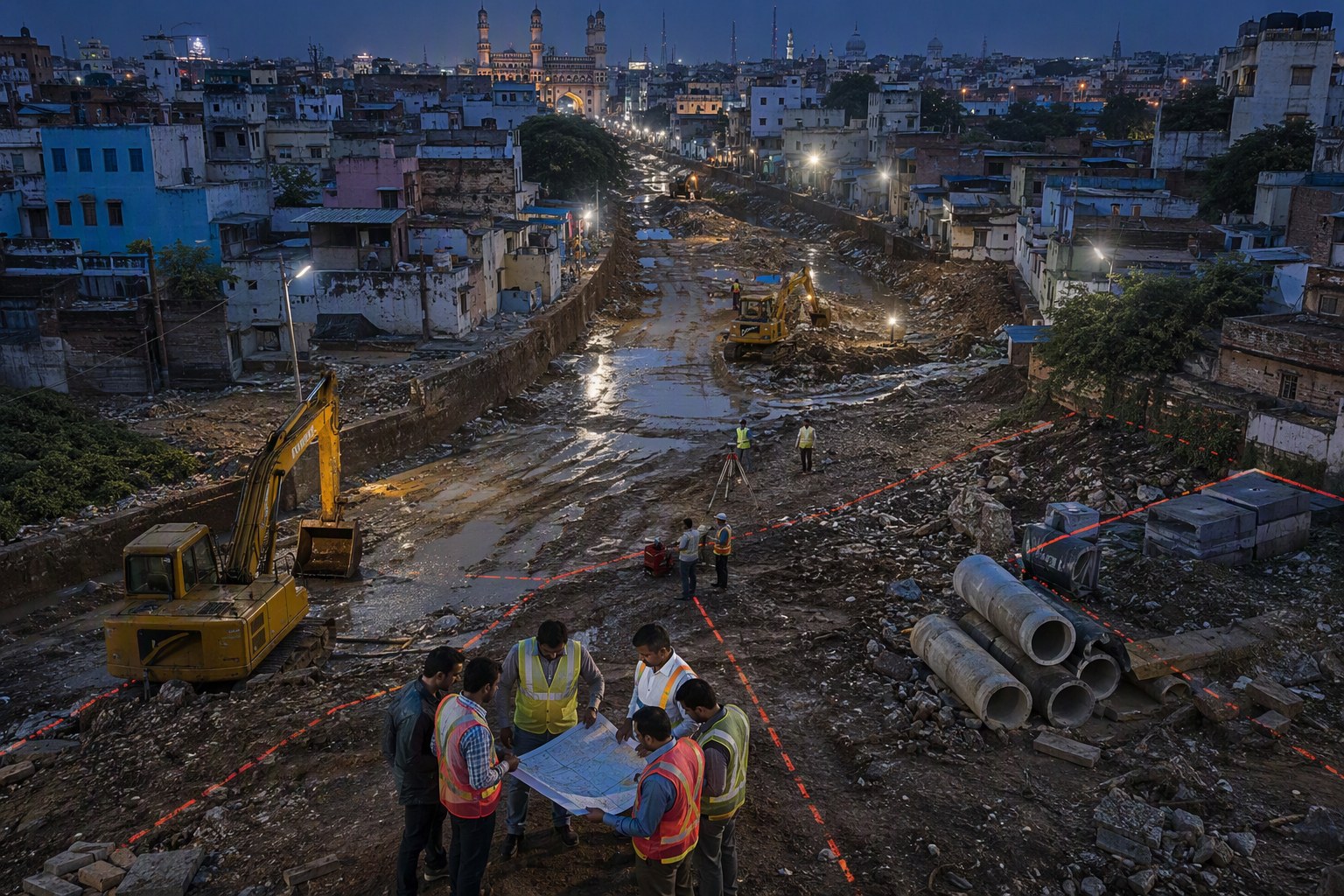
Metro-related corridors can trigger road widening, station access changes, footpath redesign, utility shifting and traffic circulation changes. In some locations, a plot’s front portion may become sensitive if it falls in a future widening line. In other cases, a commercial building may lose parking or frontage advantage.
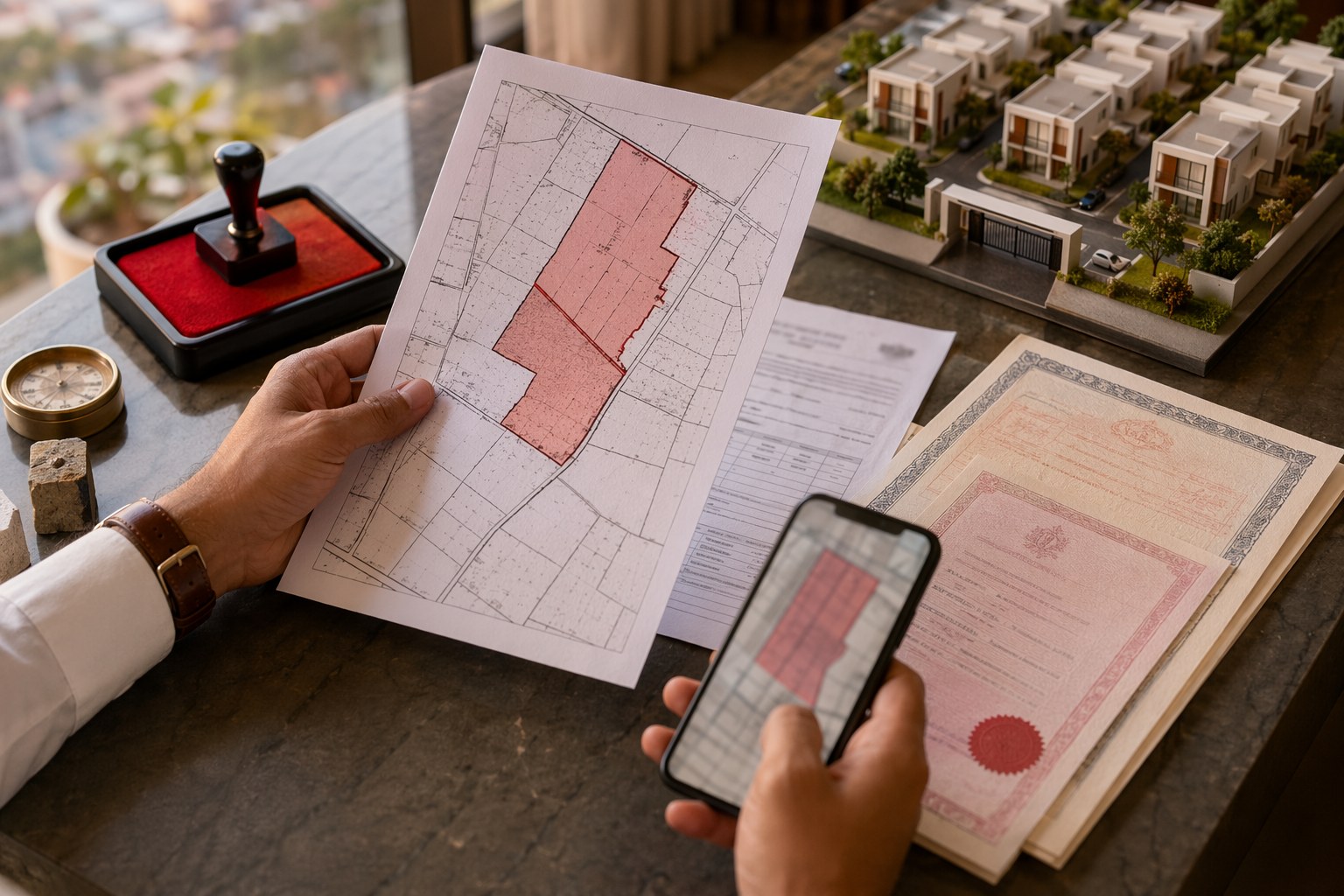
This does not mean buyers should avoid all Metro corridors. It means buyers should verify whether the property is exposed to acquisition or alignment-related risk. Ask for municipal road widening remarks, layout plan, building permission plan, village map, and any notices received by the owner. If the seller says “nothing will happen”, ask for documents, not assurances.
We’ve seen this pattern before in Hyderabad. Infrastructure announcements improve confidence, but they also bring out half-informed claims. One broker may say the station is opposite the property. Another may say the depot will come nearby. A third may claim the road will become wider soon. Unless the buyer verifies official records and site conditions, these claims are only sales talk.
Title Clarity Near Hyderabad Metro Phase 2 Corridors
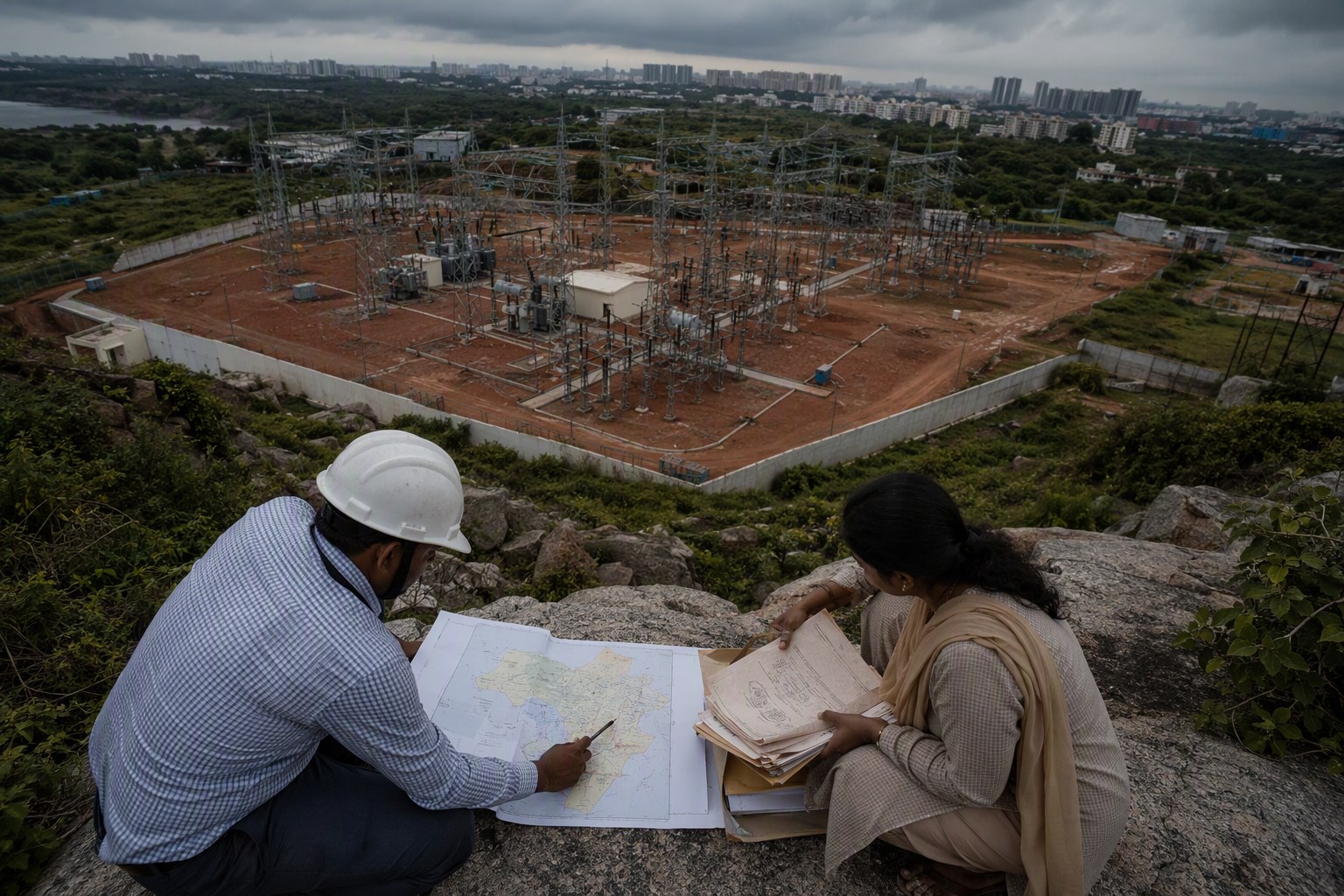
Title verification should cover more than the latest sale deed. For agricultural-origin lands, check pahanis, mutation history, Dharani entries, old pattadar passbook references where relevant, conversion permissions, layout approvals and link documents. For old city-side properties around Chandrayangutta, Falaknuma, Mailardevpally and surrounding belts, family partitions, succession documents and municipal assessment records need careful reading.
For apartments around existing and proposed connectivity nodes, check land ownership, development agreement, GPA, sanctioned plan, RERA status, occupancy certificate where applicable, and whether the builder has created any charge with a lender. A flat buyer should also check if the undivided share is properly described and whether common areas are being sold in a questionable manner.
Use Property Verification Tool for a structured check. If you are comparing government guideline value with the quoted price, use Market Value / Guideline Value Search. Before final registration budgeting, Stamp Duty Calculator can help estimate statutory costs based on the applicable value and transaction type.
Quick Buyer Checklist for Proposed Station Zones
| Check | Why it matters | Document or tool |
|---|---|---|
| EC verification | Shows registered transactions, mortgages and releases | Encumbrance Certificate Search |
| Section 22-A check | Flags prohibited property risk under government records | Section 22-A Prohibited Property Check |
| SRO jurisdiction | Confirms where registration records should be checked | Find Your SRO Office |
| Road width | Affects access, permissions and future usability | Road Width Check |
| RERA status | Useful for registered apartment projects | RERA Project Lookup |
What Buyers Should Do Before Paying Token Advance
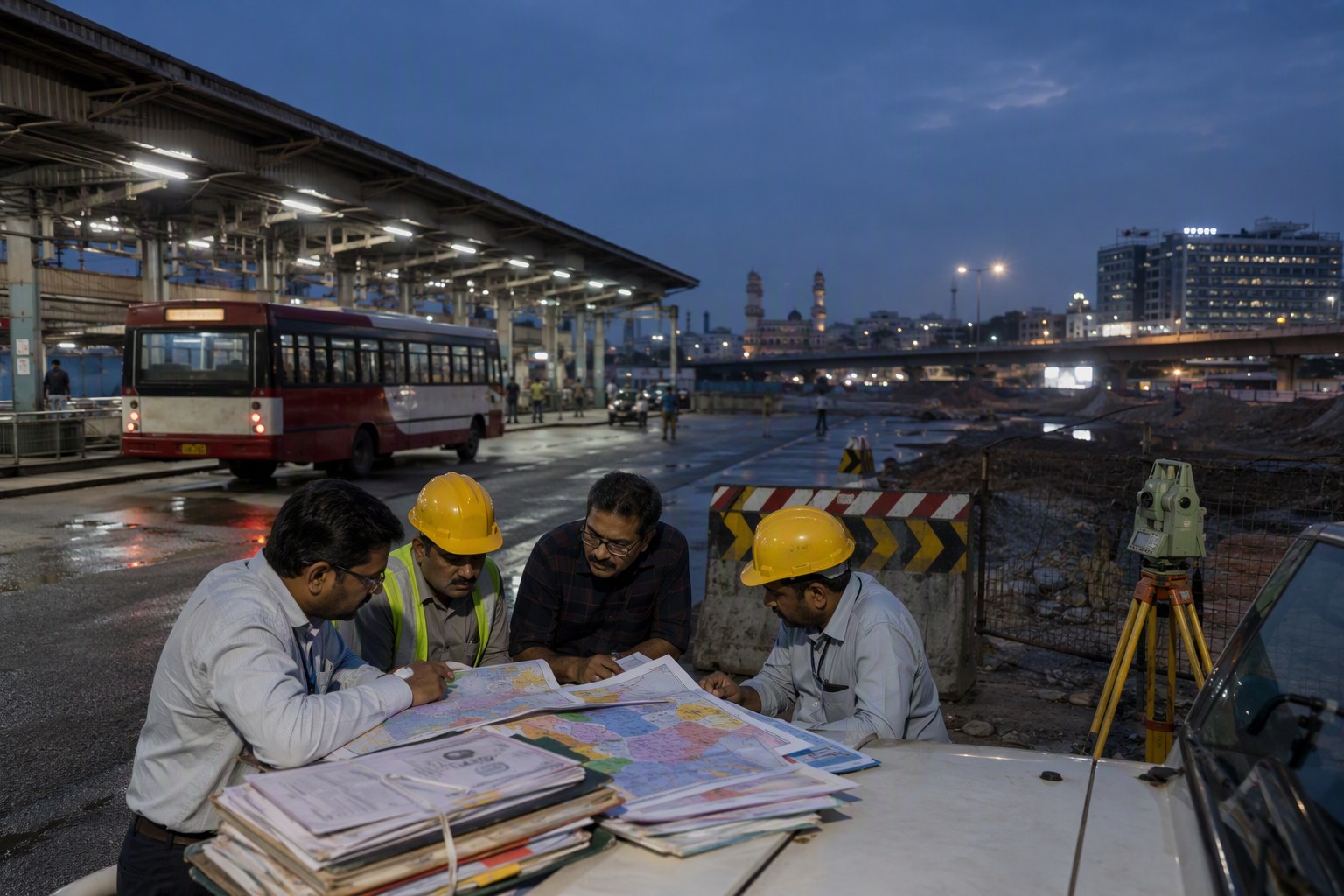
If the property is being marketed as “near Metro Phase 2”, ask the seller to share documents before you pay even a small token. A token paid without document review weakens your negotiating position. In many cases, the receipt language is vague, and refund conditions are not written properly.
- Ask for sale deed, link documents, EC, tax receipts, layout approval and building permission, as applicable.
- Match survey number, plot number, boundaries and extent across all documents.
- Check whether the property appears in Section 22-A prohibited records.
- Verify access road width and legal right of way.
- For apartments, check RERA, sanctioned plan, land title and construction permissions.
- Do not rely only on “Metro is coming” pricing. Compare locality, legal status, road access and actual livability.
Hyderabad Metro Phase 2 can improve long-term confidence in many pockets, but clean title will still beat hype. A legally clear property with dependable access in Rajendranagar or Shamshabad may be safer than a poorly documented plot closer to a proposed station. The same logic applies in Serilingampally, Gandipet, Patancheru, Nagole or Hayathnagar mandal limits.
Our practical advice: keep emotion out of the first meeting. Get documents, run checks, visit the site in daytime and evening, speak to neighbours, identify the SRO, check Dharani or municipal records where relevant, and then decide. Metro proximity is a benefit only when the property itself is legally sound.
Frequently Asked Questions
Should I buy a plot only because it is near a proposed Hyderabad Metro Phase 2 station?
No. Metro proximity can support demand, but you must first verify title, EC, Section 22-A status, access road, layout approval and any acquisition or road widening risk.
What is the first document to check before paying an advance?
Start with the Encumbrance Certificate, latest sale deed and link documents. For land, also check survey number, pahani or revenue records, layout approval and prohibited property status.
Why is Section 22-A checking important near Metro corridors?
Section 22-A records cover prohibited properties. As per latest IGRS data in our database, Telangana has 3,076,153 prohibited properties, so buyers should screen the property before making payment.
Can a property close to a Metro station still have poor resale value?
Yes. If the approach road is narrow or disputed, title is unclear, approvals are weak, or the property is exposed to acquisition risk, resale may suffer despite Metro proximity.
Which tools can help buyers verify a Metro Phase 2-linked property?
Use EC Search, Section 22-A Prohibited Property Check, RERA Project Lookup, Road Width Check, Guideline Value Search and Find Your SRO Office before paying an advance.