Hyderabad Apartments Face Waste Audit Push: Buyer Checks
Hyderabad Apartments Face Waste Audit Push is now becoming a real buyer-side issue, not just a society committee headache. The latest discussion around proposed waste audits for large apartment communities means homebuyers in Hyderabad may soon have to ask sharper questions on solid waste compliance before signing an agreement of sale. In the same Telangana market, 147,934 properties still remain on the Section 22-A prohibited properties list, so due diligence cannot stop at amenities, clubhouse size and carpet area.
For buyers looking at gated communities in Kokapet, Gachibowli, Narsingi, Kondapur, Tellapur, Miyapur, Bachupally, Uppal or Kompally, the practical message is simple: check title, approvals and now the waste management record of the project or resale society. We have seen buyers negotiate hard on floor rise charges, car parking and corpus fund, but skip basic questions on wet waste processing, dry waste handover and municipal notices. That gap may become costly if waste audits are pushed into routine enforcement.
In our experience, the next layer of apartment due diligence in Hyderabad will be environmental compliance. A clean encumbrance certificate is still the first filter, but a non-compliant waste system can affect maintenance costs, resident disputes and resale confidence.
Hyderabad Apartments Face Waste Audit Push: why buyers should care
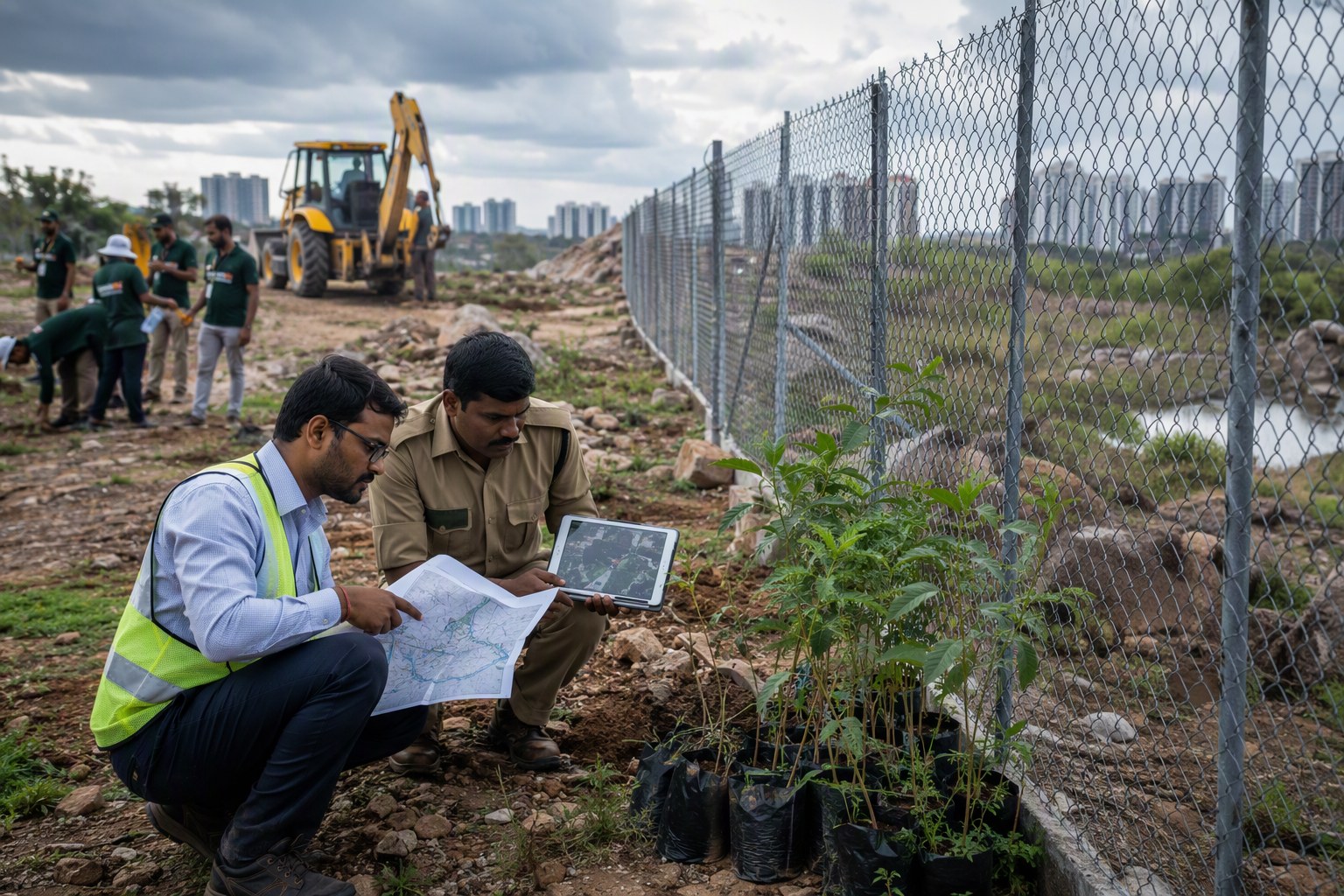
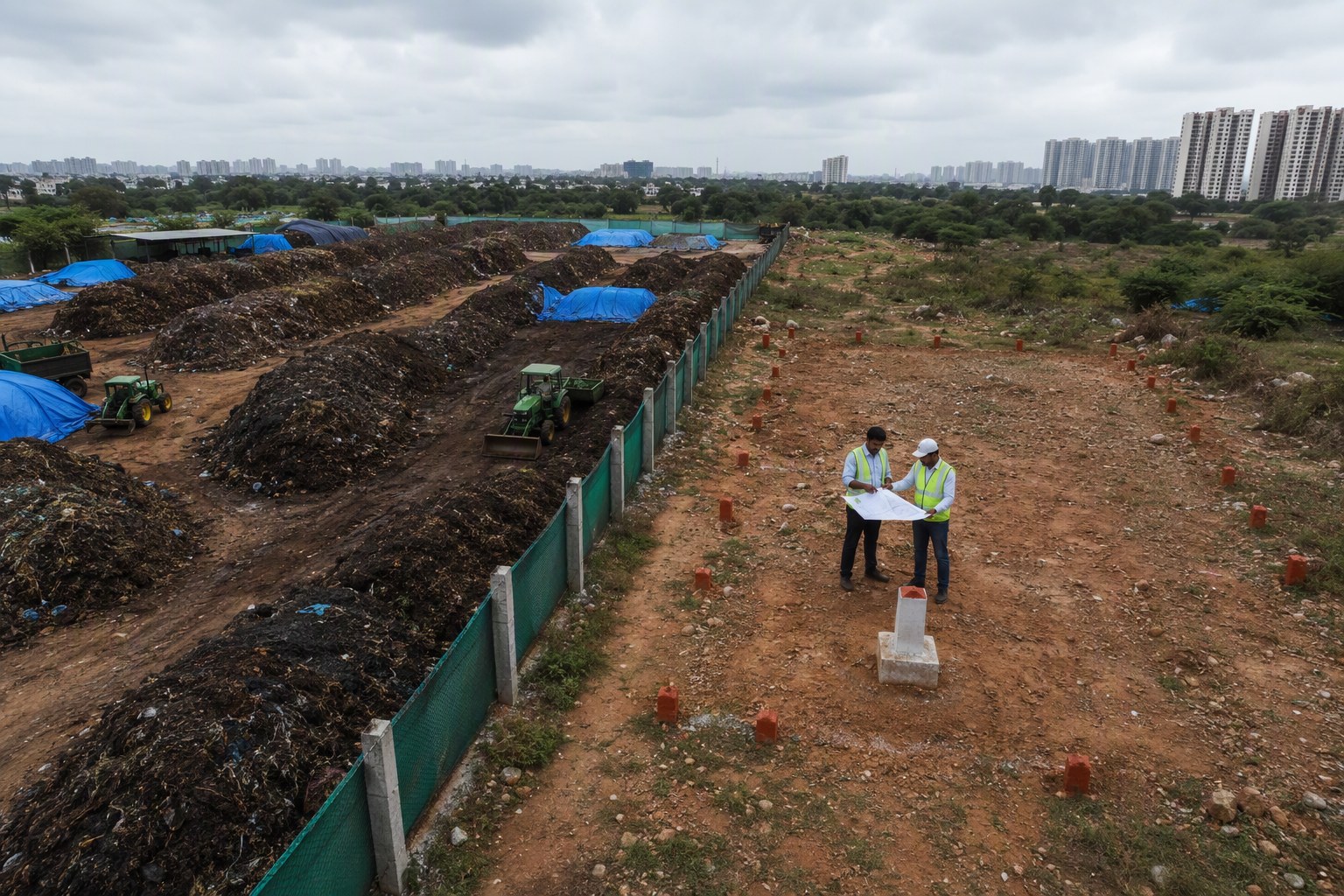
The proposed waste audit push is aimed at larger apartment communities where daily garbage generation is significant. In practical terms, bigger towers with hundreds of flats can no longer treat waste as a back-end housekeeping matter. Segregation at source, wet waste composting or processing, dry waste tie-ups, collection records and disposal receipts may come under closer review.
This matters because Hyderabad’s apartment market is no longer made only of small stand-alone buildings. In Serilingampally mandal, Gandipet mandal, Rajendranagar mandal, Medchal side locations and parts of Malkajgiri, projects with 300 to 1,500 units are common. A project in Kokapet or Narsingi can have multiple towers, large food courts, clubhouses, gardens and staff quarters. That scale creates daily solid waste pressure.
For a buyer, the risk is not only a possible fine on the association. If the apartment owners association has to retrofit composting units, create a waste room, hire extra staff, pay higher collection charges or fight complaints from neighbours, the cost can flow into monthly maintenance. A resale buyer entering such a community should know this before paying token advance.
Hyderabad Apartments Face Waste Audit Push alongside Section 22-A risk
The waste audit discussion comes at a time when property title checks in Telangana are already serious business. As per the available database fact, 147,934 properties are still on the prohibited properties list under Section 22-A. That number is not small. It means a buyer cannot rely only on a broker’s word or a glossy project brochure.
Section 22-A entries can block registration or create legal uncertainty. These may relate to government land, assigned land, endowment land, wakf issues, ceiling surplus land or other restricted categories. In Hyderabad’s growth corridors, old survey numbers have often been converted into layouts and apartment projects over time. That is why survey number checking, SRO verification and Dharani-linked land history matter even when you are buying a flat.
Before paying advance in places like Tellapur in Ramachandrapuram side, Kollur in Sangareddy district, Narsingi in Gandipet mandal or Bachupally in Medchal-Malkajgiri district, run a Section 22-A Prohibited Property Check. It is a basic step. If the underlying land survey number has a restriction, the flat buyer may face delays even when the building looks ready.
What should apartment buyers check now?
Until now, most Hyderabad apartment due diligence followed a familiar checklist: RERA number, building permission, link documents, EC, UDS, sale deed draft, occupancy certificate and SRO value. Those remain non-negotiable. The new layer is solid waste compliance.
Here is the buyer-side checklist we would use for a large apartment community:
- Ask for the waste management plan: Check whether the project has space marked for wet waste, dry waste and reject waste. This should not be an afterthought in a basement corner.
- Check segregation practice: Ask residents or facility staff whether wet and dry waste are collected separately every day.
- Look for processing proof: Composting machine logs, vendor bills, GHMC or municipal collection receipts and dry waste recycler agreements are useful records.
- Ask about notices: In resale deals, ask the association if any municipal notice or penalty has been received for waste disposal.
- Review maintenance impact: If the society is not compliant, estimate whether future equipment, staff and vendor costs will increase monthly maintenance.
- Check OC and sanctioned plan: Waste handling areas should match planning norms and should not occupy fire movement areas, visitor parking or open space.
For legal and registration checks, use the Encumbrance Certificate Search, RERA Project Lookup and Property Verification Tool before committing money. These tools will not replace a lawyer, but they help you ask better questions.
Due diligence table for Hyderabad apartment buyers
| Check | Why it matters | Where to verify |
|---|---|---|
| Section 22-A status | 147,934 prohibited properties remain listed in Telangana; restricted land can affect registration | Section 22-A Prohibited Property Check |
| Encumbrance Certificate | Shows registered transactions, mortgages and charges for the property | EC Search |
| RERA registration | Confirms project registration, promoter details and declared timelines | RERA Project Lookup |
| Guideline value | Ready reckoner value affects stamp duty and registration cost | Market Value / Guideline Value Search |
| SRO jurisdiction | Wrong SRO assumptions can delay documentation and registration planning | Find Your SRO Office |
| Waste audit readiness | Non-compliance can raise maintenance cost and invite municipal action | Ask builder, association and facility manager for records |
Real cost checks: registration rates and monthly maintenance
When buyers compare a flat in Kondapur with one in Miyapur or a resale in Gachibowli with a new launch near Kollur, they usually focus on base price. Registration cost is also predictable if you know the Telangana rates. For most urban apartment sale deed transactions, buyers generally budget around 6% of the property value, made up of 4% stamp duty, 1.5% transfer duty and 0.5% registration fee. Use the Stamp Duty Calculator to estimate the amount before you freeze the deal.
But waste compliance can affect the other recurring cost: maintenance. In premium communities around Financial District, Kokapet and Narsingi, monthly maintenance is already a sensitive point because of lifts, STP, security, landscaping and clubhouse operations. If waste systems are weak, the association may need to spend on composters, odour control, trained housekeeping staff and vendor contracts. That is not a one-time decoration cost; it is an operating cost.
For under-construction projects, ask the builder whether waste processing areas are part of the approved plan and whether the occupancy certificate conditions include solid waste management. For resale flats, speak to at least two residents apart from the seller. Sellers often say, “Society is very good, no issue.” Residents will give a more honest picture.
Locality-wise impact: where the waste audit push may be felt
High-density apartment belts will feel this first. Serilingampally mandal, covering major IT-side demand zones such as Gachibowli, Kondapur and nearby pockets, has many large gated communities. Gandipet mandal, with Kokapet, Narsingi and Manikonda-side growth, has seen premium towers and villa communities rising close to each other. In Medchal-Malkajgiri district, Bachupally, Kompally and Uppal-side apartment clusters also create heavy civic load.
In these areas, waste audits can become a resident welfare issue and a resale talking point. A well-managed society with clean segregation, working STP, proper waste room and transparent vendor payments may command better buyer confidence. A society with overflowing bins and repeated complaints may face discounting during resale negotiations.
From a journalist’s view, this is where Hyderabad real estate is maturing. Buyers are no longer asking only “HMDA or GHMC permission?” They are asking “Is the land clean?”, “Is the RERA status clear?”, “What is the SRO value?”, “Is there any 22-A issue?” and now, “How does the society handle waste?” That is a healthy shift.
Documents to ask from builder or association
- Approved building plan showing utility and waste handling areas.
- Occupancy Certificate, if the project is completed.
- RERA registration details and latest project status.
- EC for the land and relevant flat transaction chain.
- Link documents and land conversion records, where applicable.
- Waste vendor agreements, composting logs or municipal collection receipts.
- Association meeting minutes discussing waste, penalties or maintenance revisions.
If the seller hesitates to share documents, slow down. In Hyderabad, speed is useful for price negotiation, but hurry is dangerous during verification. Use the Survey Number Finder and Property Change Tracker when the deal involves a project built on converted land parcels or when old survey numbers are unclear.
Our take for buyers
The proposed waste audit push should not scare genuine buyers. It should make them sharper. A good apartment community will already have basic systems: segregation, vendor records, wet waste handling and clean common areas. A serious builder will not treat waste space as saleable leftover land.
The bigger warning is for buyers who check only interiors and loan eligibility. A flat may have Italian marble, two car parks and a good view, but if the land has a 22-A concern or the society is sitting on civic non-compliance, the deal is not clean. In Telangana, with 147,934 prohibited properties still on the list, title verification and compliance checks must travel together.
Before paying token, do three things: verify the land and project, calculate the real registration outgo, and ask for the society’s waste management record. That is the new practical checklist for Hyderabad apartment buying.
Frequently Asked Questions
Will waste audits affect Hyderabad apartment buyers?
Yes, mainly in larger apartment communities. If a society fails to manage wet and dry waste properly, future costs may show up through higher maintenance, vendor charges or municipal penalties.
Should I check waste compliance before buying a resale flat?
Yes. Ask the association for waste vendor bills, composting records, municipal notices if any, and recent maintenance meeting minutes. Also speak to residents, not only the seller.
What is the Section 22-A risk in Telangana property buying?
Section 22-A covers prohibited properties where registration may be restricted. Telangana still has 147,934 such properties listed, so buyers should check the underlying land or survey number before paying advance.
Which tools should I use before buying a Hyderabad apartment?
Start with Section 22-A check, EC search, RERA lookup, guideline value search and SRO identification. These checks help you verify title, registration cost and project status.
What registration cost should I budget in Telangana?
For most urban apartment sale deeds, buyers generally budget around 6% of property value: 4% stamp duty, 1.5% transfer duty and 0.5% registration fee.