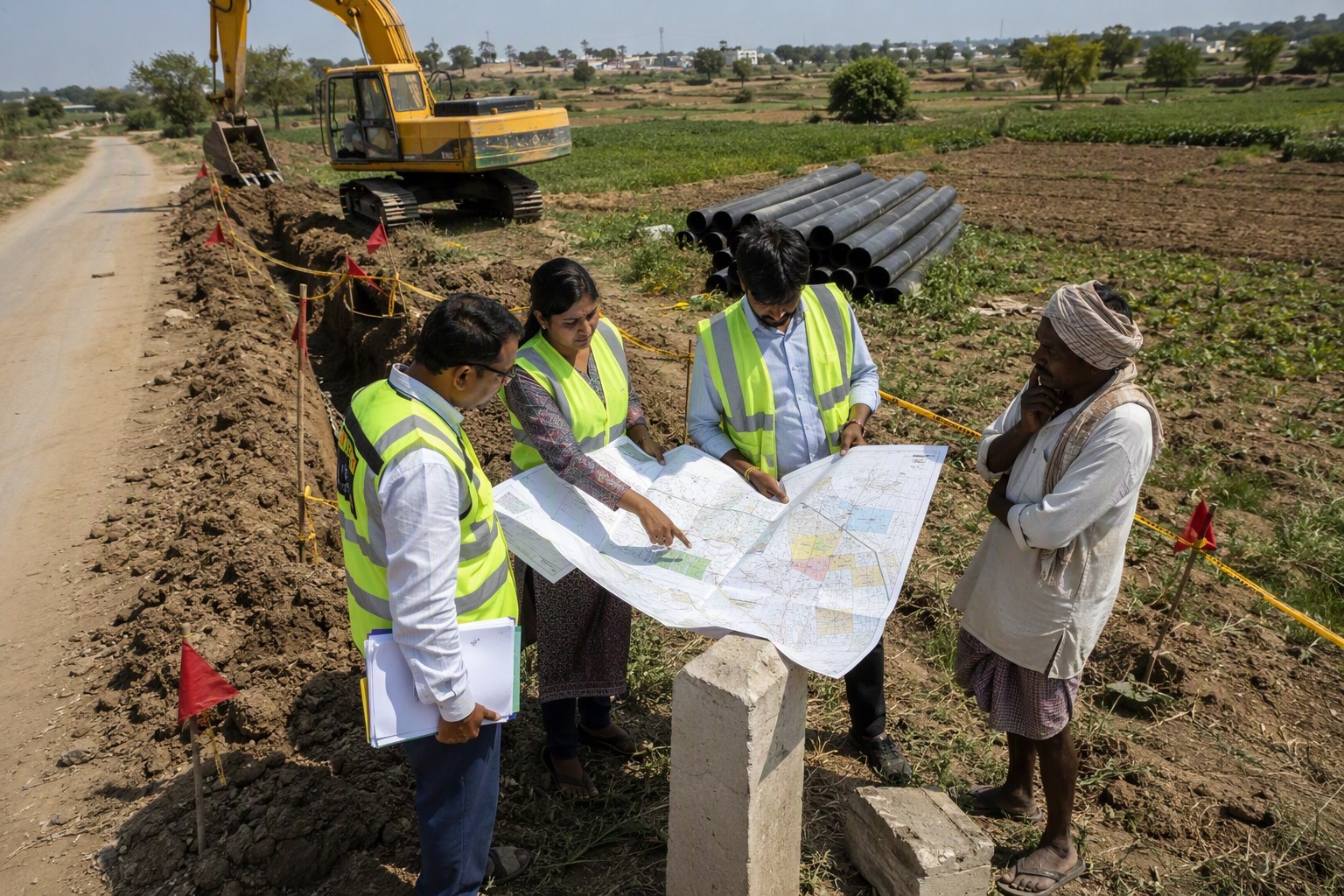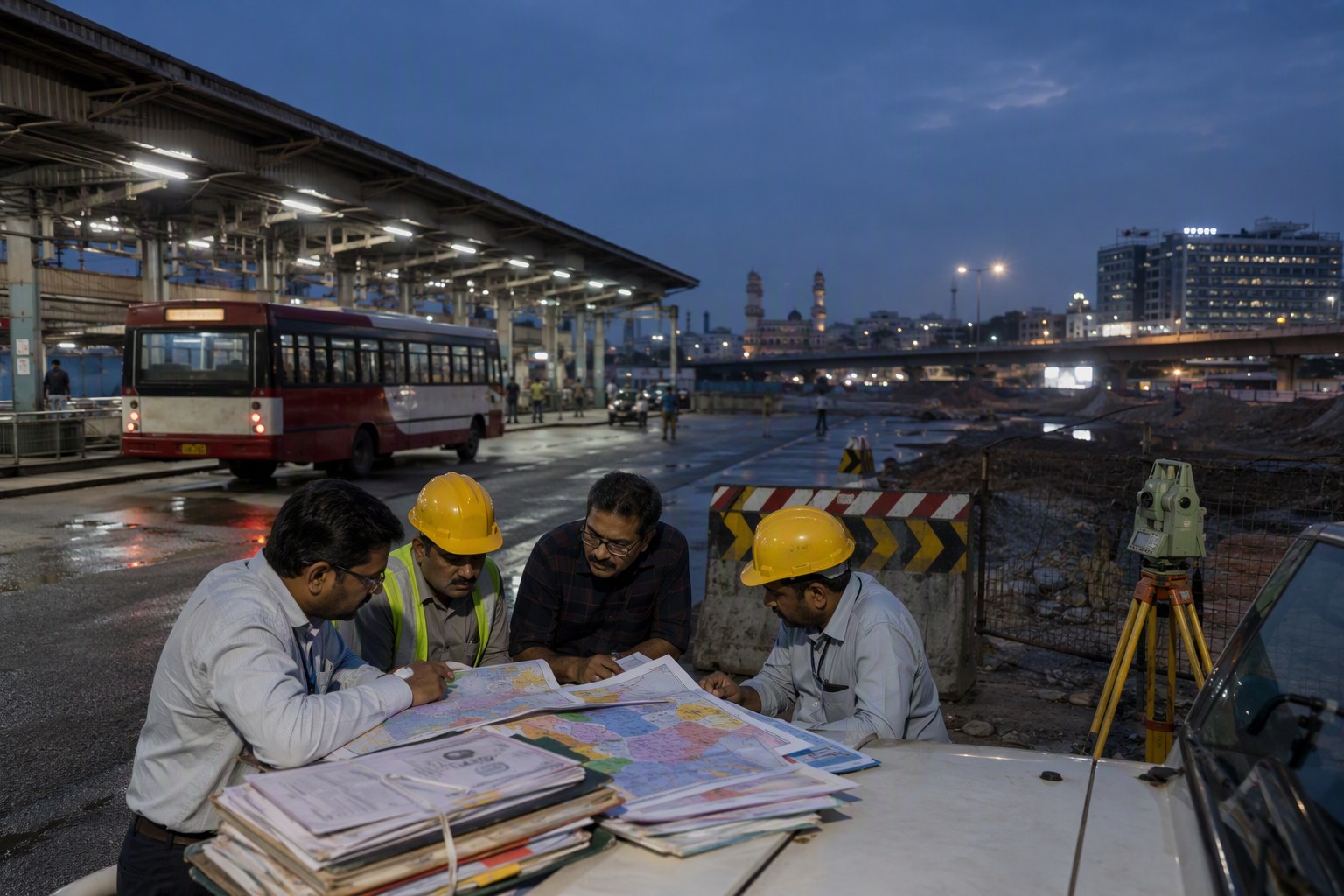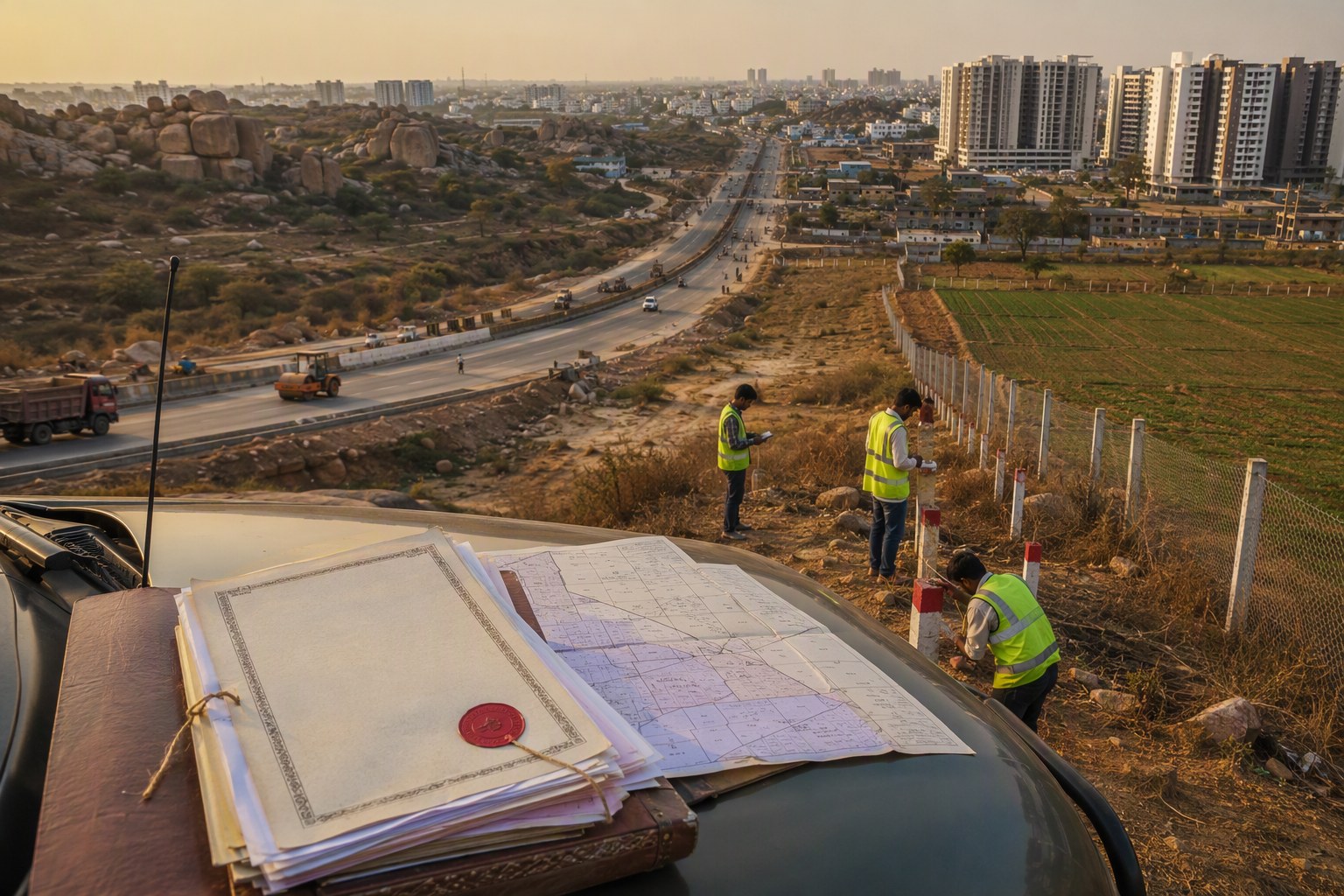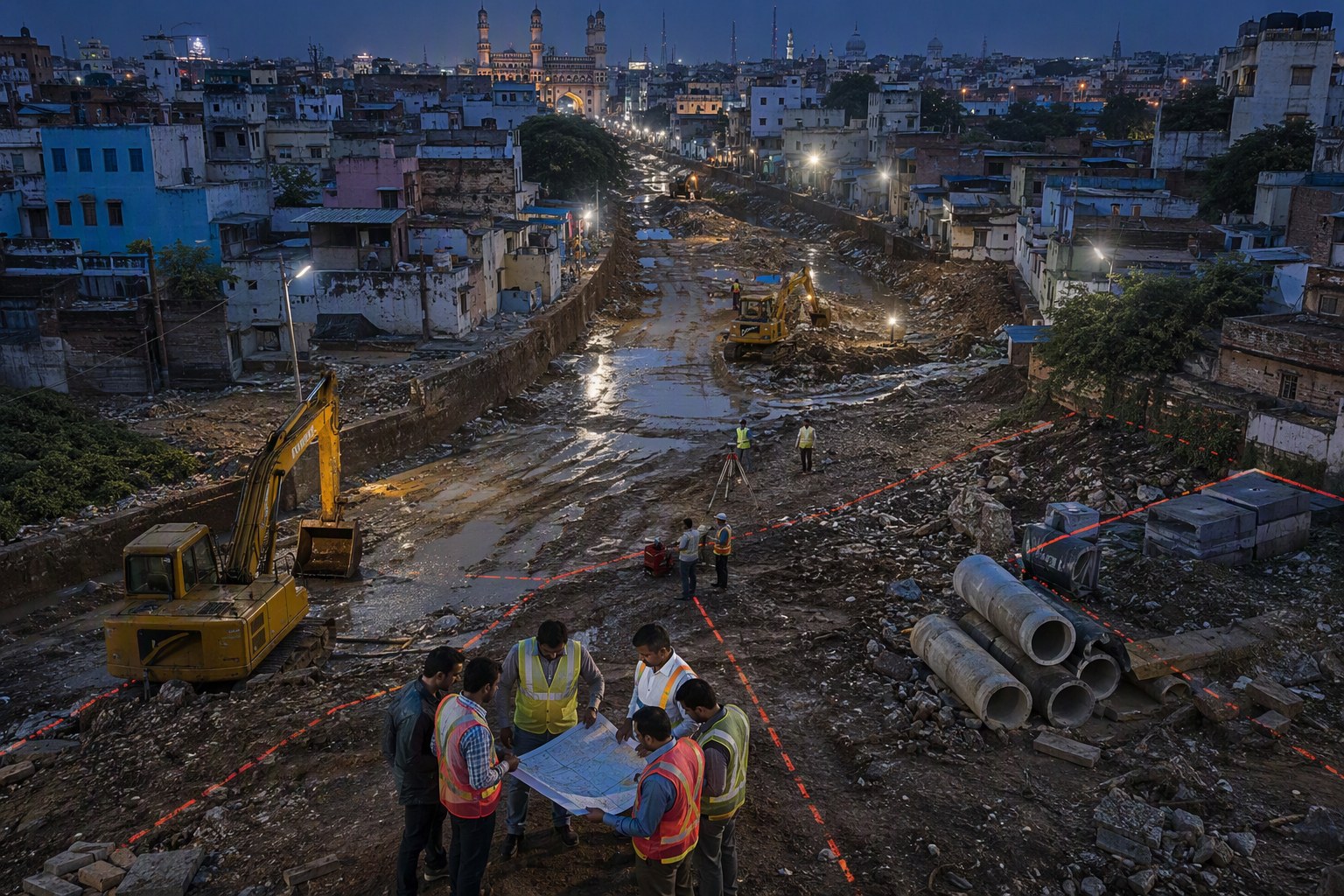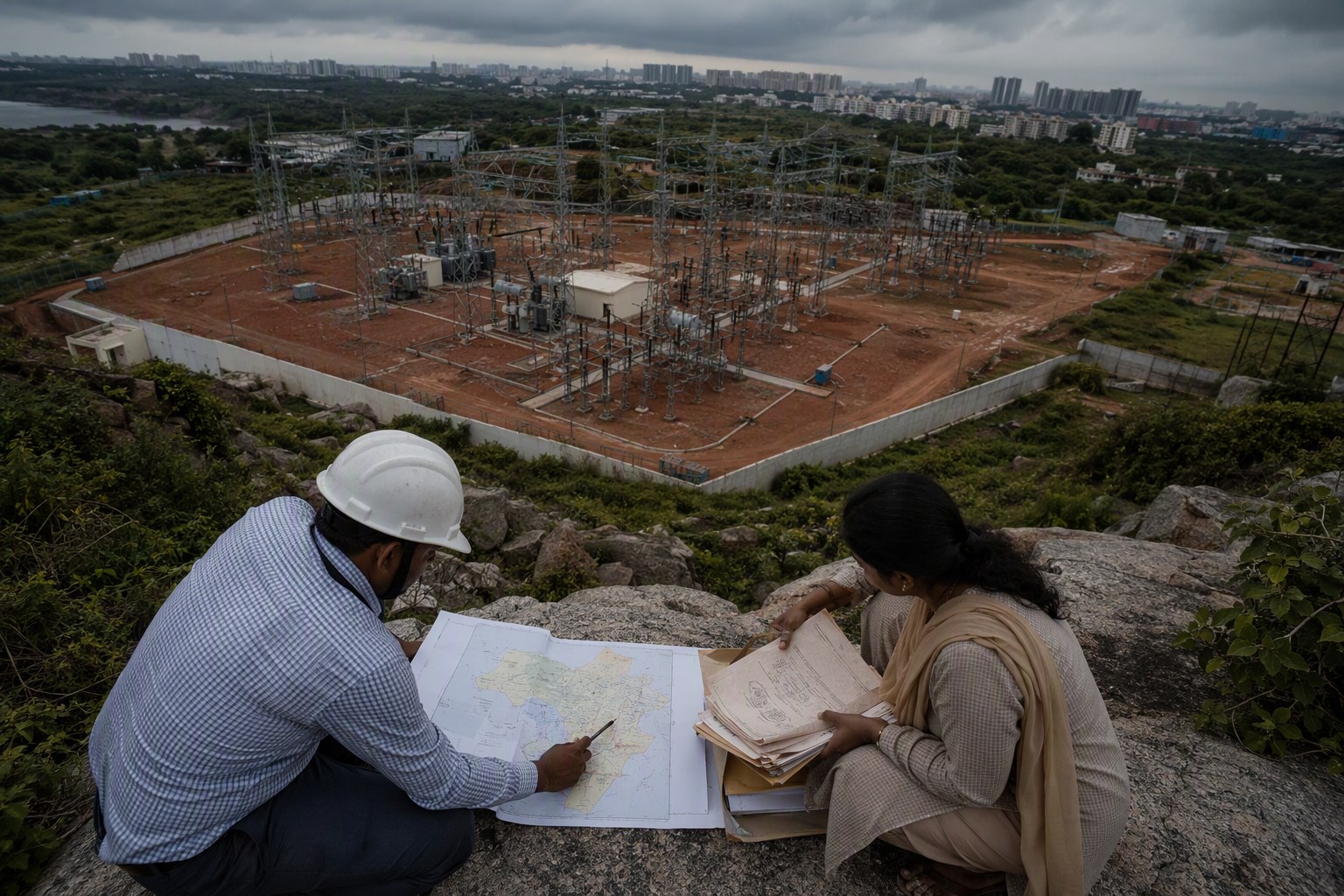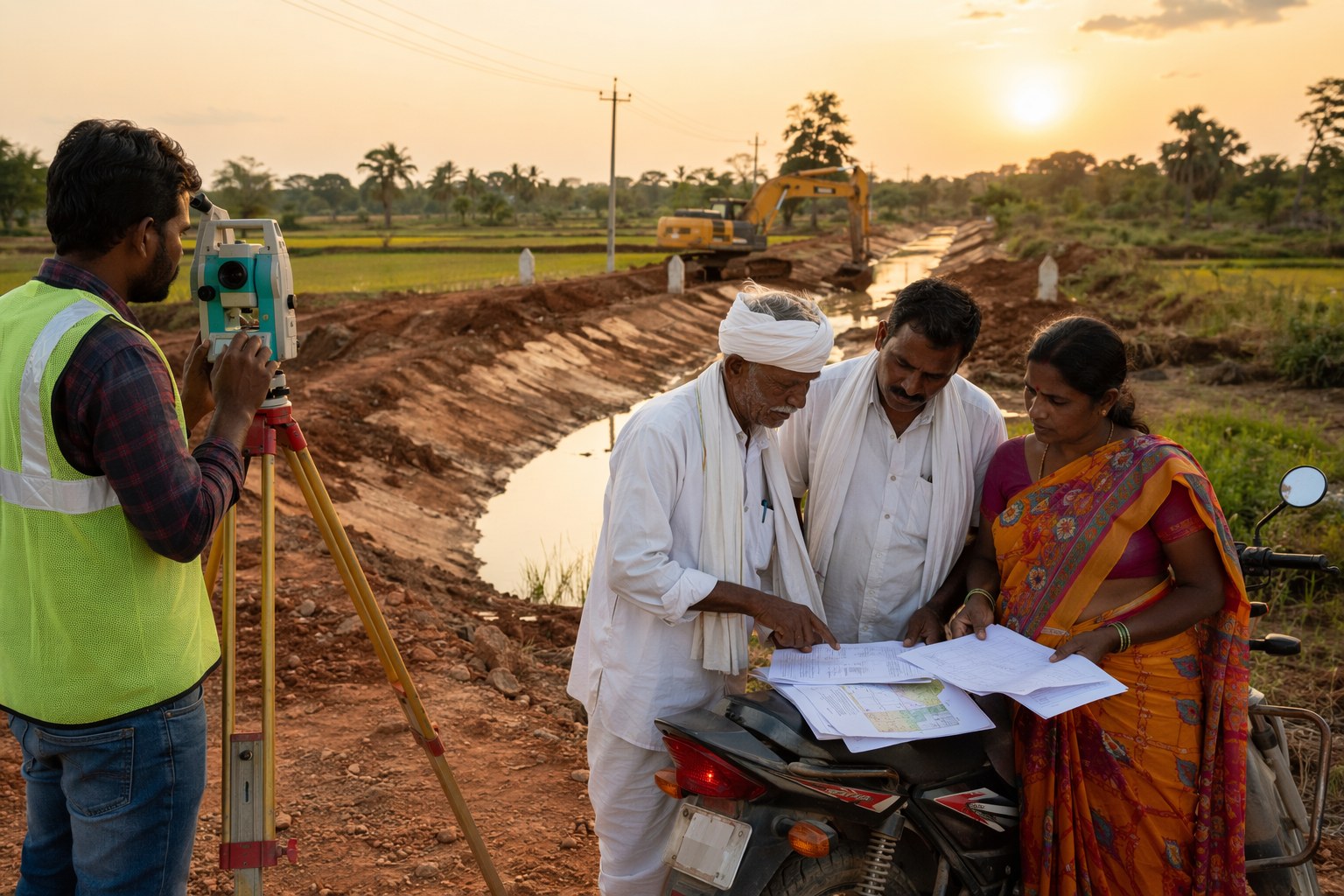
Canal Upgrade Surveys expected around Telangana irrigation corridors may soon bring an old land problem back into focus: whether the farm title is clean enough for compensation, access-road marking, canal widening, utility shifting or right-of-way work. For farmers, buyers and local officials, the practical message is simple — check the Encumbrance Certificate, Dharani record, pahani details and Section 22-A status before survey teams reach the village boundary.
This is not only an irrigation department issue. Once canal alignment, distributary improvements or approach-road works are taken up, the revenue record becomes the first battleground. We’ve seen in Telangana that many land disputes do not start when a sale deed is signed. They start when government work touches a survey number.
Canal Upgrade Surveys: Why Title Checks May Become Urgent
In a canal upgrade survey, officials usually need to identify the affected survey numbers, existing field channels, bunds, government land, assigned land, patta land, access paths and any structures standing near the proposed work area. That exercise can expose gaps between ground possession and paper ownership.
For example, a farmer may be cultivating land for decades, but the EC may show an old mortgage, court attachment or unregistered family arrangement. In another case, a buyer may have paid advance for agricultural land near a canal road, only to later discover that the survey number is listed under a restricted category. These are not rare Hyderabad-style apartment problems. They happen in rural mandals also, especially where inheritance, oral partitions and old pahanis are involved.
As per latest IGRS data available with Verified.RealEstate, Telangana has 3,076,153 prohibited property records under Section 22-A. That number alone explains why a casual title check is risky before any land-linked public work. Section 22-A entries can involve government lands, assigned lands, endowment lands, wakf lands, ceiling surplus lands and other restricted categories. The exact reason must be checked for the specific survey number.
Our view is clear: before canal survey markings begin, farmers should not wait for a compensation notice or a village-level meeting. Pull the EC, check the 22-A status, compare Dharani and pahani entries, and keep old link documents ready.
Canal Upgrade Surveys and Section 22-A Risk
The biggest title red flag in this situation is Section 22-A. If a survey number is prohibited, the SRO may not register transactions on it. That can affect sale plans, development discussions, family settlements and even compensation paperwork if ownership is disputed or the land category is unclear.
Farmers and buyers can start with the Section 22-A Prohibited Property Check. It is also sensible to run an Encumbrance Certificate Search for the relevant SRO period and compare it with physical possession. If the land was purchased many years ago, do not rely only on the latest Dharani passbook entry. Link documents still matter.
In mandals around expanding irrigation corridors, we normally advise people to prepare a small title file before any official survey: registered sale deed or gift deed, pahani copies, old passbook, mutation proceedings if available, family partition papers, death certificates for inheritance cases, and tax or cultivation records. If any of these are missing, the issue should be identified early. Waiting till the survey team places stones or markings near the canal bund is a bad strategy.
What Farmers Should Verify Before Canal Access-Road Work
Access roads are often more sensitive than the canal work itself. A narrow bund path may have been used by villagers for years, but the revenue map may show a different classification. Sometimes a cart track passes through private patta land. Sometimes the old path is actually government poramboke. Sometimes the current road on ground has shifted from the original map alignment.
Before any road widening, machinery movement or temporary access is allowed, landholders should verify:
- Survey number and sub-division: Use the Survey Number Finder if the exact number is unclear.
- SRO jurisdiction: Check the correct registration office through Find Your SRO Office.
- EC entries: Look for mortgages, court orders, GPA transactions, release deeds and old sale links.
- 22-A status: Confirm whether any prohibition is recorded against the survey number.
- Market value: Use the Market Value / Guideline Value Search to understand the government ready reckoner value before sale or compensation discussions.
- Land use: If the land is near a growth corridor or urbanising village, check the Land Use Zone Finder.
Buyers should be even more careful. A canal-side agricultural parcel can look attractive because of road access and future development expectations. But if the title has a 22-A issue, a pending loan charge or mismatch between Dharani and registered documents, the deal can get stuck at the SRO counter.
Impact on Buyers Near Irrigation Corridors
In our experience, speculative buying increases whenever infrastructure activity becomes visible on the ground. Survey stones, earthwork, canal lining, bridge repairs and approach roads create a feeling that the location is “next in line”. That is when buyers must slow down.
A clean-looking farm near Hyderabad’s outer growth areas, or in mandals connected to irrigation and road corridors, may still have problems hidden in old records. Buyers should not depend only on a broker’s word or a photocopy of the passbook. They should check the EC, 22-A status, SRO records and village revenue history. For a broader review, the Property Verification Tool can help structure the document checks.
If the plan is to buy land and later convert or develop it, the checks become wider. Building potential depends on land use, road width, access, layout permissions and local planning rules. In such cases, tools like the Road Width Check and FSI/FAR Calculator are useful starting points, though final approval depends on the competent authority.
How Officials May Use EC and Dharani Records
When canal upgrade work enters the field stage, officials generally need clarity on who owns what, which land is government land, which plots are assigned, and whether any compensation or consent process is required. The EC gives the registered transaction history. Dharani and pahani records show revenue-side ownership and cultivation details. Both have to be read together.
A mismatch does not always mean fraud. It may be a pending mutation, an old family partition not updated in revenue records, or a spelling variation in names. But during public works, even a small mismatch can delay file movement. If siblings are in dispute, if a deceased pattadar’s legal heirs are not updated, or if the land has an old bank mortgage, the issue should be resolved before the government process reaches the payment stage.
| Record to Check | Why It Matters During Canal Work | Who Should Check |
|---|---|---|
| EC | Shows registered sales, mortgages, releases and legal encumbrances | Farmers, buyers, banks |
| Section 22-A status | Indicates whether the property is prohibited or restricted for registration | Farmers, SRO staff, buyers |
| Dharani record | Shows current revenue ownership and mutation position | Pattadars, legal heirs |
| Pahani | Helps verify cultivation and village revenue history | Farmers, revenue officials |
| Village map / field sketch | Helps identify canal, bund, road and survey boundaries | Survey teams, landowners |
Canal Upgrade Surveys: Practical Checklist for Landowners
Farmers should treat the survey period as a chance to clean up records, not as a threat. If your land falls near a canal, distributary, feeder channel or access road, keep copies ready and speak to the village revenue functionaries early. Do not hand over original documents casually. Give copies only where required and keep acknowledgement wherever possible.
Here is a simple field-level checklist:
- Confirm the exact survey number and extent as per Dharani and old documents.
- Download or obtain the latest EC from the relevant SRO.
- Check Section 22-A status before signing any agreement with a buyer.
- Compare pattadar name, father’s name, extent and classification across records.
- Keep old pahanis and link documents ready for inherited land.
- If there is a bank loan, check whether the charge is still active; the CERSAI Charge Check may help in loan-linked due diligence.
- Track any future changes through the Property Change Tracker.
For buyers, the rule is stricter: no advance without EC and 22-A verification. If the seller says the survey is “almost over” or compensation will come soon, ask for documents first. Infrastructure expectations should not replace title due diligence.
What This Means for Telangana Real Estate
Canal upgrades can improve irrigation reliability and local access, but they also sharpen the focus on land records. In villages that are slowly becoming peri-urban markets, one survey can bring farmers, buyers, officials and lenders to the same table. That is good if records are clean. It is painful if documents are missing.
For Verified.RealEstate readers, our advice is practical. If your land is anywhere close to proposed canal improvement activity, start with EC, 22-A and survey number verification. If you are buying, do not treat canal-side location as a shortcut to appreciation. Treat it as a reason to investigate harder.
Telangana’s land market rewards patience. A property that passes the SRO, Dharani, pahani and field possession tests is far safer than a cheaper deal surrounded by unclear records.
Frequently Asked Questions
Why are Canal Upgrade Surveys linked to land title checks?
Canal survey teams need to identify affected survey numbers, access paths, ownership and land classification. This can expose EC issues, Dharani mismatches, inheritance gaps or Section 22-A restrictions.
What should a Telangana farmer check before canal compensation work starts?
The farmer should check the EC, Section 22-A status, Dharani ownership, pahani details, old link documents and any loan or court-related encumbrance before the process reaches compensation or access-road marking.
Can a buyer purchase land if it appears in Section 22-A?
Generally, Section 22-A properties face registration restrictions. The buyer must verify the exact reason for prohibition with the SRO or competent authority before paying advance or signing an agreement.
Is Dharani record enough to prove ownership?
No. Dharani is a key revenue record, but buyers should also verify the registered sale deed, EC, link documents, pahani history and physical possession. All records should match as far as possible.
Which online checks are useful before buying canal-side agricultural land?
Start with EC search, Section 22-A check, survey number verification, SRO jurisdiction, guideline value and land-use checks. If the land may be developed later, road width and planning permissions also matter.