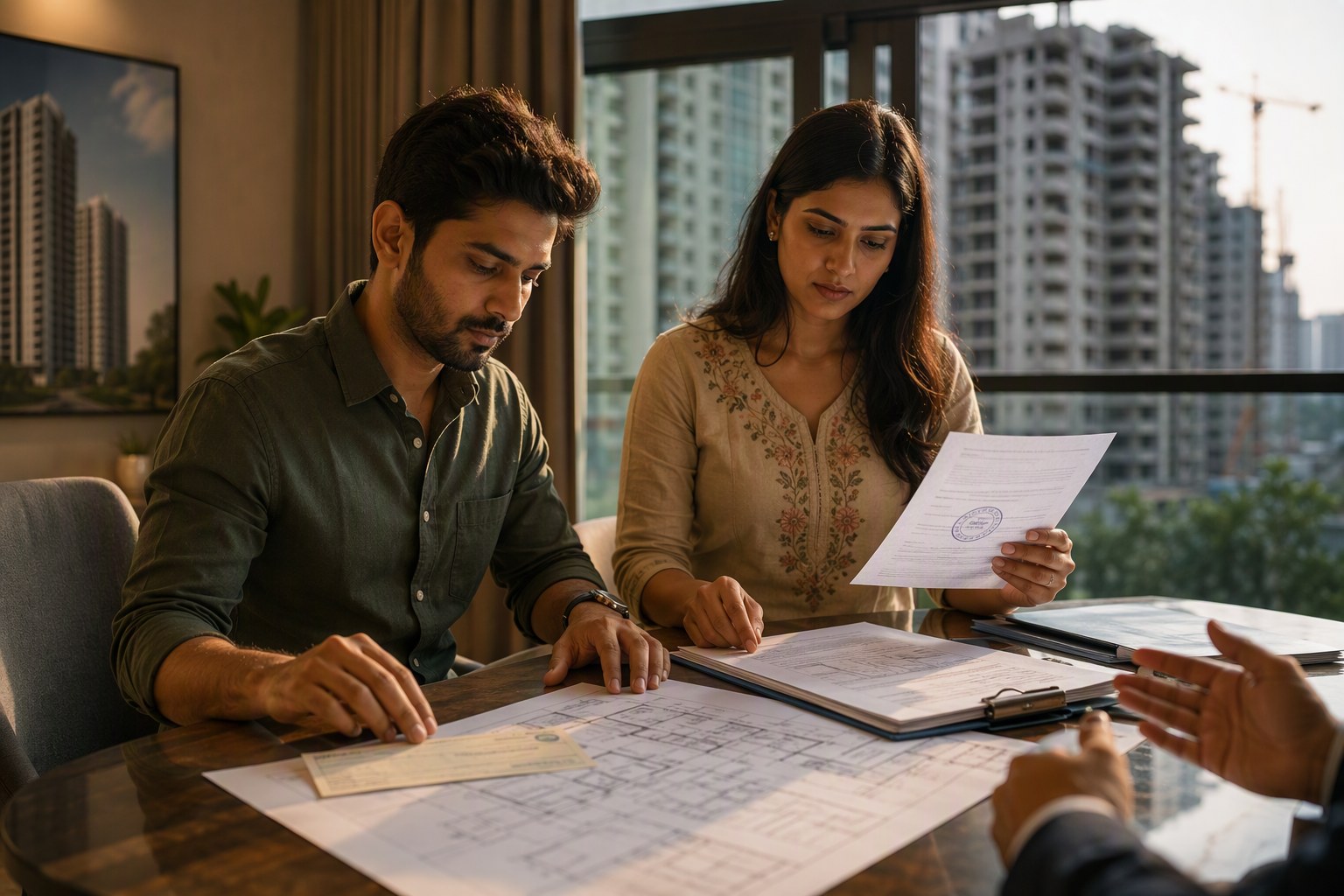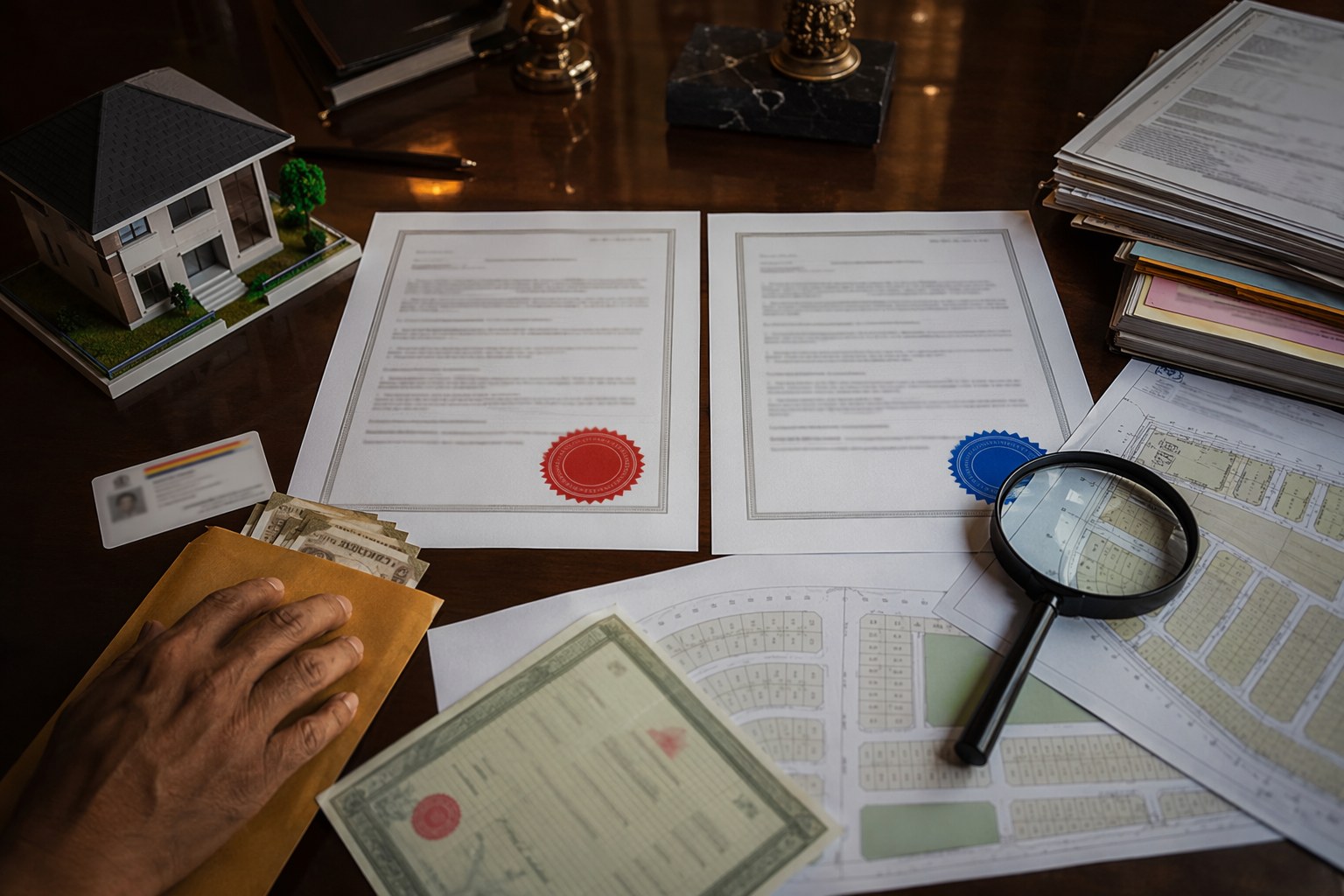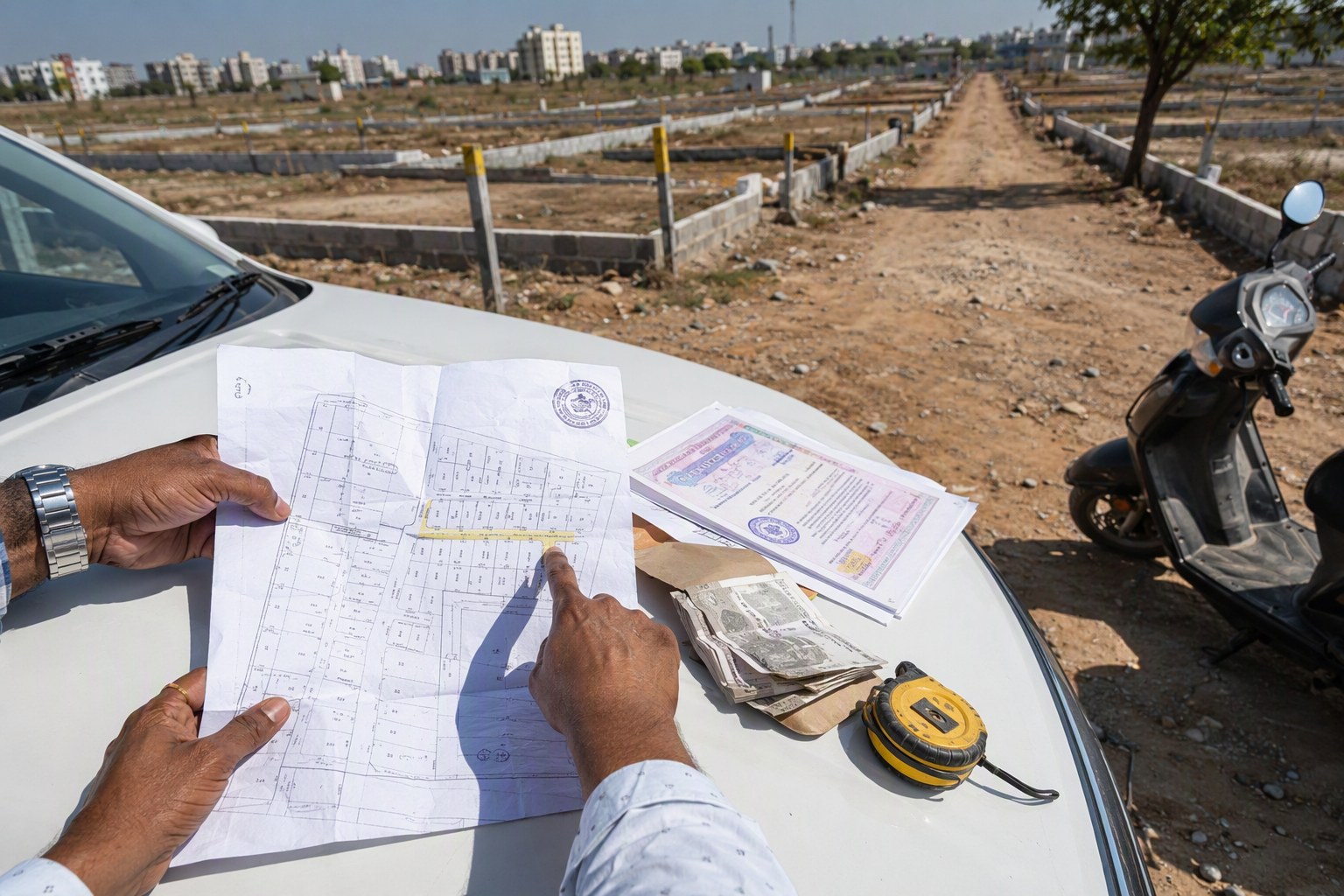
Telangana has 3,076,153 prohibited property entries under Section 22-A, as per latest IGRS data. That single figure is enough reason for every buyer to insist on a Refund Clause Before Token. In Hyderabad and surrounding mandals, token advance is often paid in a hurry after one site visit, one WhatsApp location pin, and one emotional family discussion. In our experience, that is exactly where buyers lose bargaining power.
A token amount may look small compared with the final sale consideration, but legally and practically it can become painful if the seller later refuses to return it. The property may have a Section 22-A entry. The survey number may not match the pahani. The land may fall in a different village than what the broker said. The SRO may raise an objection. A bank legal team may reject the file. By then, if your receipt only says ‘token received’, you are left arguing instead of closing the deal safely.
My simple rule for Telangana buyers: do not pay even a token advance until the refund trigger is written clearly. Trust is good, but a written clause is better.
Refund Clause Before Token: why this clause has become non-negotiable
A Refund Clause Before Token is a written condition stating when and how the seller must return the token advance if the transaction cannot proceed due to title, registration, approval, loan, or verification issues. It should be part of the token receipt, booking form, memorandum of understanding, or sale agreement draft. Do not keep it as a verbal promise.
In Hyderabad, we have seen this issue across flat purchases in Gachibowli, Narsingi, Kokapet, Tellapur, Bachupally and Kompally, and land deals in Shankarpally, Shamshabad, Maheshwaram, Ibrahimpatnam, Patancheru and Medchal mandals. The risk changes from case to case, but the buyer’s protection principle is the same. If the property fails basic due diligence, the token must come back without drama.
The seller may say, ‘Sir, this is standard only, don’t worry.’ A builder sales executive may say, ‘Refund is subject to management approval.’ A broker may say, ‘Owner is genuine, I know him from many years.’ These lines are not legal protection. The refund clause is.
Refund Clause Before Token and the 3,076,153 Section 22-A warning sign
The number 3,076,153 is not a casual database count. It tells buyers that prohibited property risk is not some rare village-side issue. Section 22-A entries can affect registration. If a property is listed as prohibited, the SRO may refuse registration or keep the transaction on hold depending on the record status and category.
For a buyer, the problem is simple. You may like the location, negotiate the price, pay token, and only then discover a record issue. In land parcels, this can happen when the survey number is not checked properly. In apartment deals, it may happen through land title history, development agreement gaps, or pending documentation. In plotted layouts, it may appear when conversion, layout approval, village record, or owner chain is not clean.
Before paying token, run a check through the Section 22-A Prohibited Property Check. For land, also use the Survey Number Finder and confirm village, mandal, survey number and extent. If you are unsure about document quality, start with the Property Verification Tool. These tools do not replace a lawyer, but they help you ask sharper questions before money leaves your account.
Where Telangana buyers usually make the token mistake
The token mistake usually happens because the buyer fears losing the property. In high-demand pockets like Kokapet in Gandipet mandal, Narsingi in Gandipet side, Tellapur near Ramachandrapuram, Kondapur and Gachibowli in Serilingampally, and Bachupally in Medchal-Malkajgiri district, buyers are often told that another party is ready. That pressure can be real sometimes. Many times, it is only a sales tactic.
For open plots around Shankarpally, Moinabad, Chevella, Maheshwaram, Shamshabad, Kandukur, Adibatla and Ibrahimpatnam, the bigger issue is record mismatch. One document may mention an old survey number, another may show a sub-division, and the pahani may show a different name or classification. Dharani records may not match the story told during the site visit. If you pay token first and verify later, the seller controls the pace.
For resale flats in areas like Kukatpally, Miyapur, Manikonda, Uppal, LB Nagar, Sainikpuri and Alwal, the common issues are unpaid dues, mortgage entries, missing link documents, wrong undivided share description, pending association certificates, and loan closure gaps. Here also, a refund clause saves time.
What a strong Refund Clause Before Token should say
A strong clause should be simple, direct and capable of being acted upon. Avoid vague wording like ‘refund as mutually decided’ or ‘subject to seller discretion’. Such lines help nobody except the person holding the money.
Here is the kind of wording buyers can discuss with their lawyer and adapt to the transaction:
If the buyer’s due diligence, legal verification, bank verification, SRO verification, EC search, Section 22-A check, RERA check, title document review, or government record verification shows any defect, mismatch, prohibition, pending charge, approval gap, or registration difficulty not disclosed in writing before token payment, the seller shall refund the entire token advance to the buyer within a mutually agreed written timeline, without deduction.
Do not copy any clause blindly. Tailor it. A flat purchase, villa purchase, open plot purchase and agricultural land purchase need different triggers. But the core idea remains: if the deal fails due to seller-side document or property issue, buyer gets full refund.
Checks to complete before token advance in Telangana
Buyers need not become legal experts. But they should know the minimum checks before handing over token. In Telangana, I would not rely only on a colourful brochure or a broker’s file. I would check the registration trail, government value, prohibited list, SRO jurisdiction, RERA status where applicable, and document consistency.
| Buyer risk | What to check before token | Useful Verified.RealEstate tool |
|---|---|---|
| Section 22-A or prohibited property issue | Survey number, village, mandal and prohibited entry status | Section 22-A Prohibited Property Check |
| Wrong SRO or village confusion | Correct SRO jurisdiction and village mapping | Find Your SRO Office |
| Past sale, mortgage or charge issue | Encumbrance Certificate and registration history | Encumbrance Certificate Search and EC Analyzer |
| Builder project not matching claims | RERA registration and project details where applicable | RERA Project Lookup |
| Guideline value mismatch | Government market value or ready reckoner value | Market Value / Guideline Value Search |
| Unexpected stamp duty planning | Likely registration cost based on applicable value | Stamp Duty Calculator |
The rate you use for negotiation should be supported by the current market value or guideline value record for that village, ward or SRO. I am not quoting locality-wise rupee rates here because the supplied data does not include ready reckoner figures for each locality. Buyers should check the live value for the exact property, not depend on hearsay rates from a WhatsApp group.
How the clause should change for flats, plots and agricultural land
For flats in Hyderabad and HMDA limits
For under-construction flats in areas like Nanakramguda, Gopanpally, Tellapur, Nallagandla, Kondapur and Puppalaguda, your refund clause should cover RERA mismatch, sanctioned plan issues, legal title issues, bank loan rejection due to builder or project documents, and change in carpet or saleable area not disclosed earlier. Use RERA Project Lookup before you pay token to the builder or channel partner.
For resale flats, include unpaid maintenance dues, pending property tax, existing mortgage, missing registered sale deed, missing link documents, and society or association NOC issues. An EC check is not optional. Use Encumbrance Certificate Search first, then review it using EC Analyzer.
For open plots and HMDA/DTCP layouts
In plotted layouts around Shankarpally, Mokila, Kollur, Maheshwaram, Tukkuguda, Kandukur, Yadagirigutta belt and Medchal side, the refund trigger should include layout approval mismatch, road width issue, land use issue, survey number mismatch, and any prohibition under Section 22-A. Check the land use through Land Use Zone Finder and road access through Road Width Check.
If the plot is part of a larger survey number, ask for the layout proceedings, approval copy, link documents, conversion record where applicable, and the seller’s title chain. If the seller says these will be shown after token, say politely that token will be paid after basic verification.
For agricultural land
Agricultural land in Telangana needs extra caution. Mandal, village, survey number, extent, pattadar details, pahani, Dharani status, possession, access road, classification and prohibition status all matter. A token receipt should state that refund is mandatory if any government record does not support the seller’s claim.
Many buyers from Hyderabad look at land in Chevella, Moinabad, Shabad, Shankarpally, Kandukur, Yacharam and Ibrahimpatnam because they expect future growth. That may be fine as an investment view, but land records must be clean. Do not treat a farmhouse-style marketing pitch as title verification.
Red flags before paying token advance
- The seller refuses to share survey number, link documents or EC before token.
- The broker says SRO verification can be done only after advance.
- The owner name in pahani, Dharani or past registered document does not match clearly.
- The property is sold through GPA and the power document is not recent or not clear.
- The builder gives only a booking form and avoids refund wording.
- The land is described by a project name, but not by village, mandal and survey number.
- The seller says there is a small technical issue, but asks you not to worry.
- The token receipt has no date, no property description, no refund trigger and no signatures of all relevant parties.
One red flag may have an explanation. Two or three red flags together should slow you down. We have seen buyers save themselves simply by asking for one line: ‘If documents fail verification, token is refundable.’ Genuine sellers usually understand this. Problem sellers resist it.
What to write in the token receipt
A token receipt should not be a casual handwritten paper with only names and amount. It should describe the property and conditions. Keep it clean and specific.
- Full names of buyer and seller as per identity documents.
- Property description: flat number, project name, survey number, plot number, village, mandal, district and SRO, as applicable.
- Purpose of payment: refundable token advance subject to due diligence.
- Clear list of refund triggers.
- Timeline for document sharing by seller.
- Timeline for buyer verification.
- Mode of refund and account details, where suitable.
- Signatures of all owners, not just one family member or broker.
- Broker role and commission condition, if any.
If you want a starting draft, use the Legal Document Generator and then get the document reviewed by your advocate. For tax impact on the seller side or investment exit planning, the Capital Gains Tax Calculator can also help during early discussions, though it is not a title check.
Seller-side objections and how buyers can respond
Objection: ‘Why are you doubting us?’
Response: ‘I am not doubting you. I am following bank-style verification. If everything is clean, we will proceed faster.’
Objection: ‘Token is never refundable.’
Response: ‘If I cancel without reason, we can discuss deduction. If documents fail, full refund should be automatic.’
Objection: ‘First pay, then documents.’
Response: ‘Basic documents first, token next. That is fair for both sides.’
Objection: ‘Many buyers are waiting.’
Response: ‘Then a clean refund clause should not be a problem.’
Stay polite, but do not surrender your position. A good property will survive one or two days of verification. A risky property usually demands urgency.
Refund Clause Before Token: our practical buyer checklist
Before paying token in Telangana, I would complete this sequence:
- Confirm locality, village, mandal, district and SRO.
- Check survey number or flat details against title documents.
- Search prohibited property status using Section 22-A Prohibited Property Check.
- Review EC through Encumbrance Certificate Search.
- Check guideline value using Market Value / Guideline Value Search.
- Check RERA for eligible projects through RERA Project Lookup.
- Ask for link documents, approval copies, tax receipts and loan closure documents where applicable.
- Write the refund clause before transferring token.
- Pay only through traceable banking mode.
- Preserve chats, emails, receipt and document copies.
This is not about slowing down the deal. It is about keeping the buyer safe while the deal moves ahead. Hyderabad’s property market rewards speed, yes, but it punishes careless speed.
Final view for Telangana buyers
The Refund Clause Before Token is not a negative clause. It is a fairness clause. If the seller has clear title, correct records and proper approvals, the transaction should move smoothly. If the property has a hidden issue, the buyer should not pay the price for discovering it.
With 3,076,153 prohibited property entries in the Telangana data, buyers cannot treat verification as a post-token activity. Whether you are buying a flat in Kondapur, a villa near Tellapur, a plot in Shankarpally, or land in Maheshwaram mandal, write the refund clause first. Then pay token. That order matters.
Frequently Asked Questions
Is a token advance refundable in Telangana?
It depends on the written terms. If your receipt or agreement clearly says the token is refundable when title, SRO, bank, RERA, EC or Section 22-A verification fails, your position is much stronger. Without a written clause, recovery becomes difficult.
Should I check Section 22-A before paying token?
Yes. Telangana has 3,076,153 prohibited property entries as per latest IGRS data. A Section 22-A issue can affect registration, so buyers should check it before paying any advance.
What should a refund clause before token include?
It should cover title defects, EC issues, prohibited property status, survey number mismatch, approval gaps, RERA mismatch, bank legal rejection due to property documents, and any SRO registration objection linked to seller-side records.
Can I rely on a broker’s verbal promise for refund?
No. Keep the refund condition in writing, signed by the seller or authorised builder representative. A verbal promise is weak when a dispute starts.
Which tools should I use before token payment?
Start with Section 22-A check, EC search, guideline value search, SRO check, survey number verification and RERA lookup where applicable. These checks help you identify risk before paying token.