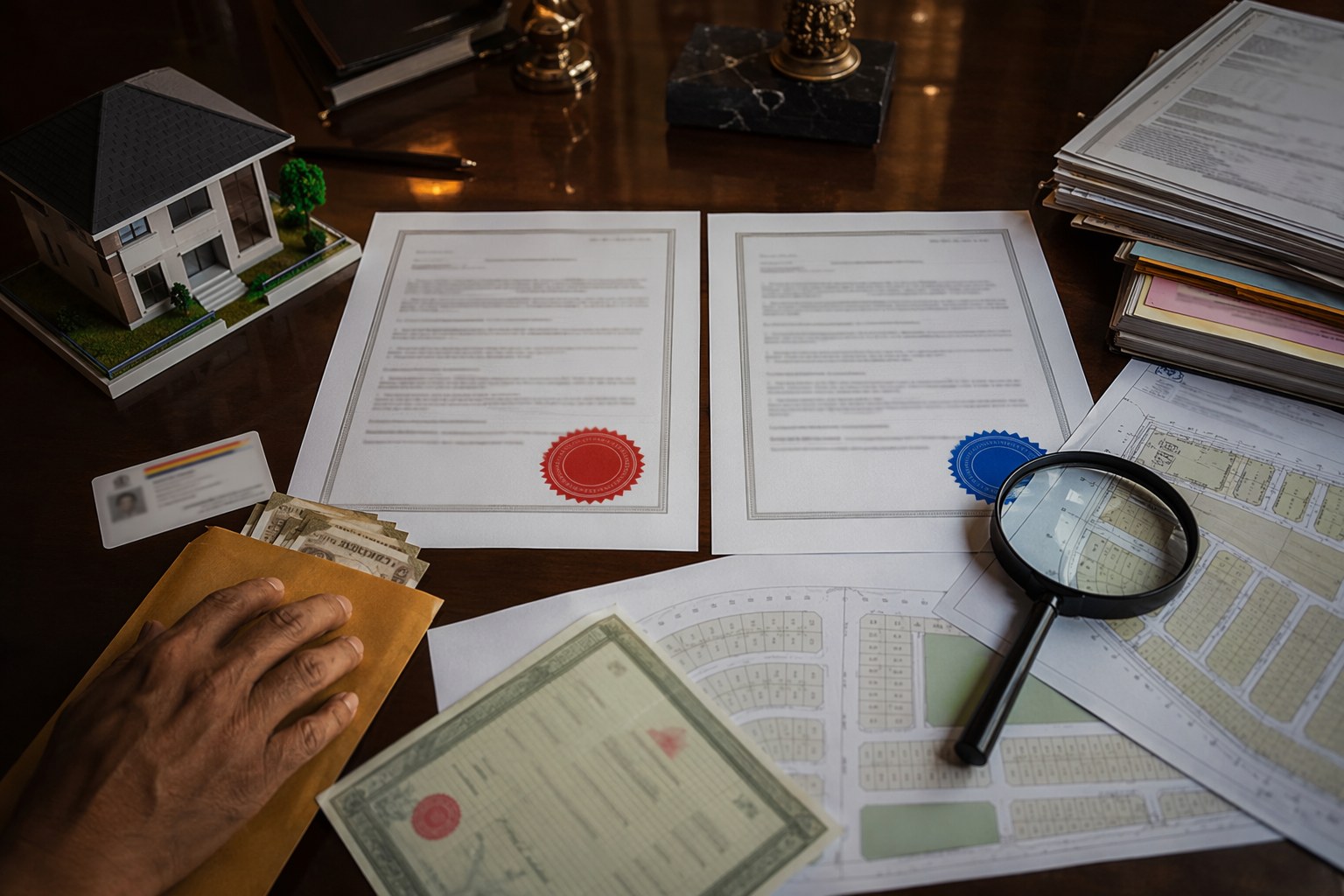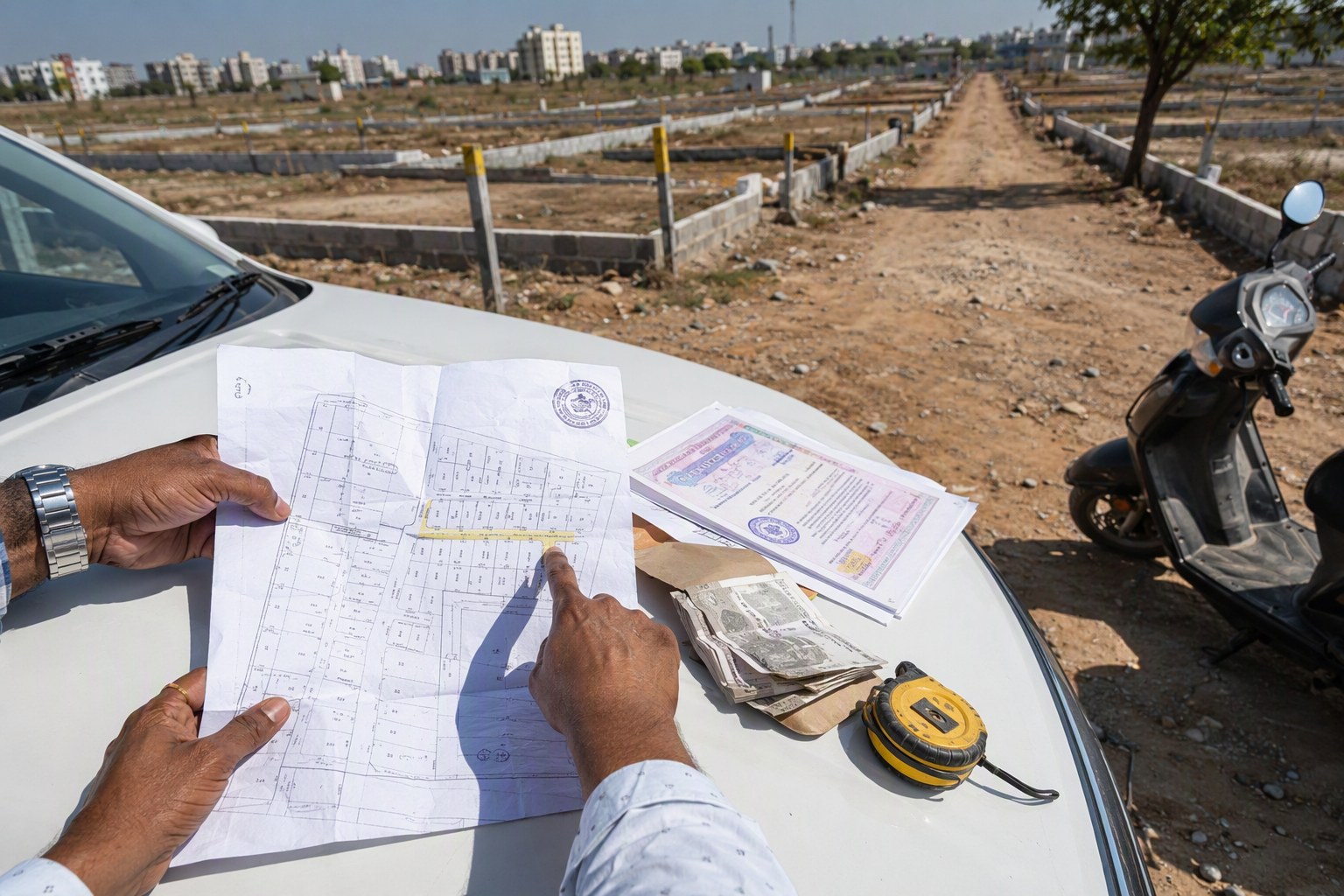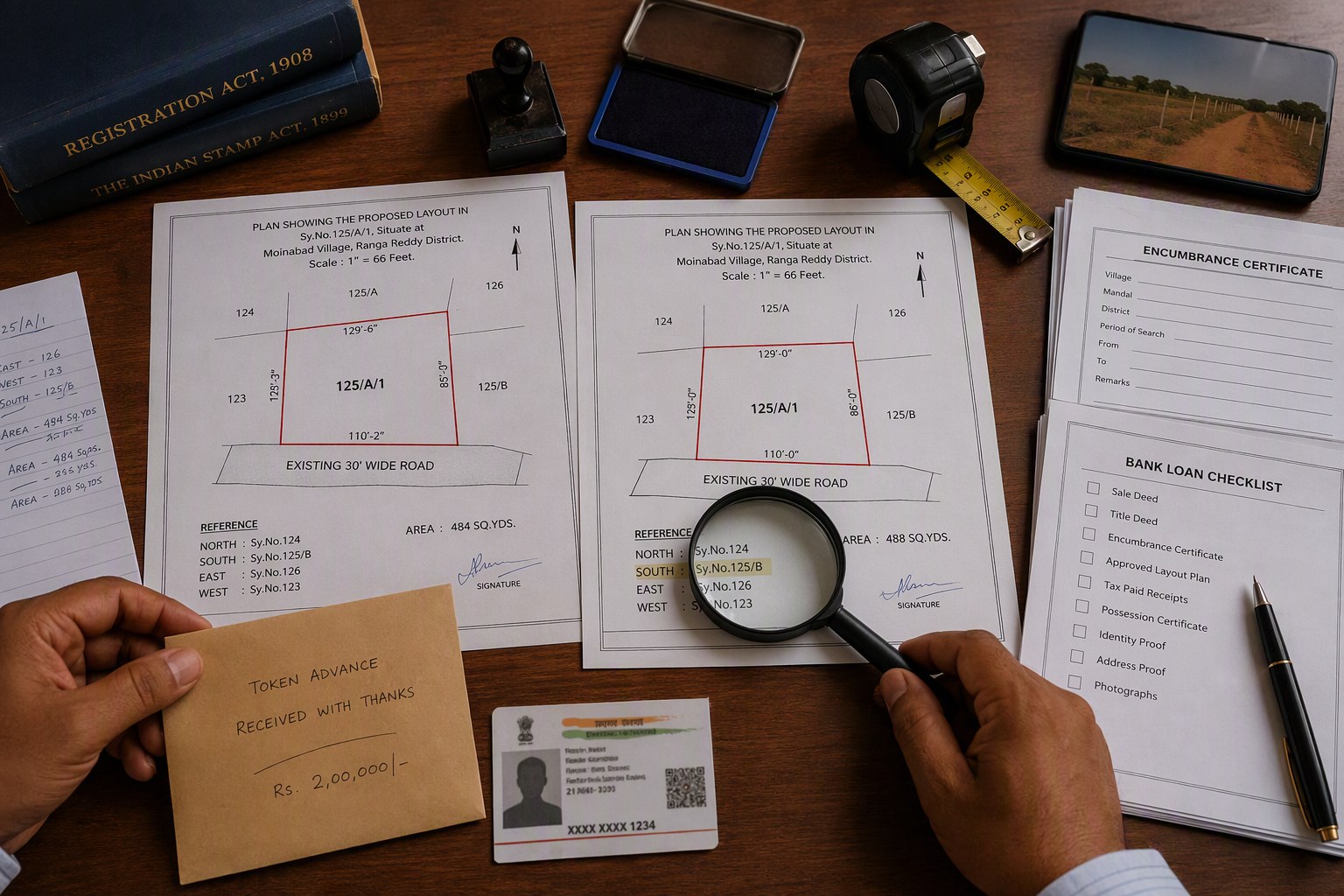
Can You Safely Buy a Home Through Power of Attorney?
Can you safely buy a home through Power of Attorney? Yes, but only in limited situations and only after strict document checks. In Telangana, a Power of Attorney, usually called GPA or SPA, does not automatically make the holder the owner. It only gives authority to act for the owner. That small difference is where many Hyderabad buyers get trapped.
We have seen POA-backed sales in Gachibowli, Narsingi, Manikonda, Miyapur, Kompally, Uppal, LB Nagar and Shamshabad. Some are perfectly genuine: an NRI owner authorises a parent or sibling to complete registration. Some are risky: old colony plots changing hands through one GPA after another, with no registered sale deed in between. The buyer sees possession, keys and a confident broker, but the legal title may still be weak.
My practical view: do not reject every POA sale blindly. But never treat a POA as a shortcut. Treat it as an extra-risk transaction that needs stronger verification than a normal sale.
Before paying token advance, check the Encumbrance Certificate, the Section 22-A status, the SRO records, the chain documents, the seller’s authority and the property identity. Start with our Encumbrance Certificate Search, then run a Section 22-A Prohibited Property Check and use the Property Verification Tool for a wider risk scan.
Buy a Home Through Power of Attorney: What It Really Means
A Power of Attorney is a legal authorisation. The property owner, called the principal or executant, gives another person, called the attorney holder or agent, power to do certain acts. These acts may include signing papers, attending the SRO, collecting payments, handing over possession, applying for permissions or presenting a sale deed for registration.
There are broadly two types buyers come across:
- General Power of Attorney, or GPA: This gives wider powers. It may cover sale, registration, management, litigation, mutation and other acts, depending on the wording.
- Special Power of Attorney, or SPA: This gives limited power for a specific act, such as executing one sale deed for one flat or one plot.
In our experience, an SPA is often cleaner for a buyer because it is specific. For example, an owner living in the US may give an SPA to his father in Hyderabad only to sell Flat No. 302 in a RERA-registered apartment at Kondapur, Serilingampally mandal. The document identifies the property, the buyer, the sale consideration or the right to negotiate, and the SRO where registration will be done. That is much safer than a vague GPA saying the agent can deal with “all properties”.
But remember one point clearly: the POA holder is not selling his own property unless he is also an owner. He is signing on behalf of the owner. So your due diligence must verify both people: the real owner and the POA holder.
When a POA-Backed Sale Is Usually Acceptable
A POA-backed sale can be acceptable when the facts are clean and the power is properly documented. Here are common situations we see in Telangana where buyers may proceed after verification:
- NRI owner: Owner lives outside India and gives a registered or properly attested POA to a close family member in Hyderabad.
- Elderly owner: Owner cannot visit the SRO because of age or health and authorises a trusted relative.
- Co-owner coordination: One co-owner is authorised by other co-owners to complete sale formalities.
- Company or firm property: A board resolution or authorised signatory document supports the POA or representation.
- Specific flat sale: The POA clearly mentions flat number, survey number, extent, undivided share, building name and location.
For example, a buyer looking at a flat in Nanakramguda, Gandipet mandal, may find that the owner works in Dubai. If the SPA is recent, properly executed, clearly describes the flat, permits sale and receipt of consideration, and the owner joins a video call to confirm the deal, the risk reduces. It does not disappear, but it becomes manageable.
On the other hand, a plot in an old layout at Peerzadiguda, Uppal or Medchal being sold only through a decades-old GPA deserves caution. If the GPA holder is not the original owner, if there are multiple revalidations, if legal heirs are missing, or if the EC shows old agreements without registered sale deeds, the buyer should slow down.
Buy a Home Through Power of Attorney: Authority You Must Verify
The heart of a POA transaction is authority. Does the attorney holder have legal power to sell this exact property to you on this date? Do not accept verbal explanations. Read the document line by line.
1. Is the POA registered or properly authenticated?
For immovable property transactions, registration or proper authentication matters. If the POA was executed in India, ask whether it is registered at the relevant SRO. If it was executed outside India, check whether it was attested before the Indian Consulate or otherwise legally authenticated, then adjudicated where required in Telangana after arrival.
Use Find Your SRO Office to identify the registration office linked to the property village and mandal. Buyers often check only the project address, but the SRO mapping may depend on revenue village, survey number and local jurisdiction.
2. Does it permit sale, not only management?
Many POA documents allow the agent to manage, lease, pay tax, deal with utilities or represent in offices. That is not the same as power to sell. The document should clearly authorise sale, execution of sale deed, presentation for registration, admission of execution, handing over possession and receipt of sale consideration.
3. Is the property clearly described?
The POA should identify the property without confusion. For a flat, check flat number, floor, block, apartment name, built-up or super built-up area, undivided share of land, parking, municipal number and locality. For land, check survey number, sub-division number, extent, village, mandal, district and boundaries.
If you are buying land around Shankarpally, Mokila, Adibatla, Maheshwaram, Tukkuguda, Moinabad or Patancheru, use Survey Number Finder and compare it with pahani, Dharani entries where applicable, layout approval and EC.
4. Is the owner alive and legally competent?
A POA normally loses force when the principal dies. This is a common risk in old GPA transactions. Ask for a live confirmation from the owner. Where the owner is elderly or abroad, insist on a recent life certificate, video confirmation, passport or Aadhaar match, and written confirmation through email or notarised declaration. If the owner has died, the legal heirs must come into the transaction. The old POA holder cannot simply continue selling.
5. Has the POA been revoked?
A principal can revoke a POA, depending on the facts and wording. Ask for a non-revocation declaration from the principal. Also check recent EC entries and public notices, if any. For high-value properties in Jubilee Hills, Banjara Hills, Financial District, Kokapet or Raidurg, we prefer direct confirmation from the principal and a fresh SPA for the current sale.
6. Who receives the sale consideration?
Payment trail is a major clue. Prefer paying the actual owner’s bank account. If the POA holder receives money, the POA must specifically allow receipt of consideration. Avoid large cash components. If the transaction later goes into dispute, clean banking records protect the buyer far better than handwritten receipts.
Why EC Still Matters Even If the Seller Has Power of Attorney
Some buyers assume that once a POA is shown, other checks become secondary. That is a costly misunderstanding. A POA only answers one question: who can sign for the owner? It does not prove clean title. It does not prove that there is no mortgage. It does not prove that the property is outside prohibited lists. It does not prove that earlier transfers were valid.
An Encumbrance Certificate shows registered transactions recorded against the property for the selected period. It can reveal sale deeds, gift deeds, mortgages, release deeds, partition deeds, court attachments and other registered encumbrances. Use our Encumbrance Certificate Search and, where you need help reading entries, use the EC Analyzer.
For POA-backed purchase, read the EC with these questions:
- Who is the current registered owner?
- How did that person acquire the property?
- Is there a mortgage or charge?
- Are there multiple POA-related entries?
- Is there any sale agreement or court-related entry?
- Does the property description match your draft sale deed?
In apartment purchases, the EC should be checked for the land and, where available, the flat transaction chain. In plotted layouts, the survey number and plot number must match across layout approval, sale deed, EC and possession documents. In agricultural-to-non-agricultural converted lands, check the conversion and layout trail properly.
Section 22-A Check Is Non-Negotiable in a POA Sale
Telangana has a large base of properties flagged under prohibited categories. As per the verified database available to us, there are 3,076,153 prohibited properties under Section 22-A records. That number alone should tell buyers why one extra check is not enough.
Section 22-A prohibited property issues may involve government land, assigned land, endowment land, waqf claims, ceiling surplus land, court-restricted property or other categories where registration may be blocked or disputed. A POA holder cannot cure a 22-A problem. If the base property is prohibited, the attorney’s signature will not make it marketable.
Before you pay advance for land in Medchal, Maheshwaram, Shamirpet, Yacharam, Ibrahimpatnam, Chevella, Moinabad or Shankarpally mandals, run a Section 22-A Prohibited Property Check. For urban flats, still check land status. Many apartments sit on land parcels with old survey histories, especially near growth corridors.
Also compare the ready reckoner or government market value through Market Value / Guideline Value Search. I am not saying guideline value equals market price. In Hyderabad, actual negotiated prices can differ widely by road width, project brand, floor rise, UDS, permissions and location. But the SRO market value gives a government reference point for stamp duty and registration planning.
Red Flags in Power of Attorney Property Deals
Walk away or pause for legal review if you see any of these warning signs:
- The POA is old and the principal is not available for confirmation.
- The POA holder refuses to share the owner’s contact details.
- The document gives management powers but no sale authority.
- Property description is vague or does not match the sale deed.
- The seller says EC is not required because “GPA is there”.
- The POA is unregistered without proper explanation.
- Legal heirs are not involved after death of the original owner.
- The property falls in a village or survey number with 22-A objections.
- There is pressure to pay token immediately before verification.
- Payment is demanded in the POA holder’s personal account without authority.
- The chain shows sale through GPA-agreement-possession instead of registered sale deeds.
- The layout approval, survey number and boundaries do not tally.
We have seen buyers in fast-moving pockets like Tellapur, Kollur, Narsingi and Kompally accept weak papers because the price looked attractive. In Hyderabad real estate, a “slightly cheaper” disputed property can become the most expensive mistake of your life.
Document Checklist Before Buying Through POA
| Document or check | What to verify | Why it matters |
|---|---|---|
| Original title deed | Current owner’s registered ownership | POA cannot replace ownership proof |
| POA or SPA | Sale power, property description, execution, registration or authentication | Confirms authority to sign |
| EC | Ownership chain, mortgages, prior transfers, charges | Shows registered encumbrances |
| 22-A check | Whether property is in prohibited list | Registration and title risk |
| Pahani or revenue record | Survey number, pattadar, classification where applicable | Useful for land parcels |
| Layout or building approval | HMDA, GHMC, DTCP or local approval as applicable | Confirms planning legality |
| RERA details | Project registration, promoter, approvals for ongoing projects | Useful for new flats and projects |
| Tax and utility records | Property tax, water, electricity, mutation | Possession and civic linkage |
| Identity proof | Owner and POA holder KYC | Prevents impersonation |
| Payment authority | Who can receive money | Protects buyer’s payment trail |
If you are buying in an ongoing project, check the project through RERA Project Lookup. If it is an independent house or builder floor, use Building Value Calculator and review approval documents, setbacks and land share. For stamp duty planning, use the Stamp Duty Calculator before registration day, not after negotiating the final price.
How to Structure the Sale Deed in a POA Transaction
The sale deed should clearly show that the owner is the vendor and the POA holder is signing as attorney. The wording should not make it appear as if the attorney holder is the owner unless he has separate title. The deed should refer to the POA document number, date, SRO or authentication details, and the specific power under which the attorney signs.
For example, the signing block usually identifies the principal owner represented by the attorney holder. The owner’s details, PAN, address and title flow must be captured. The buyer should attach or refer to the POA as a supporting document, depending on SRO practice and document drafting.
Keep these practical points in mind:
- Do not use a generic sale deed format downloaded from somewhere without adapting it to the POA facts.
- Ask the POA holder to sign every page as attorney for the owner.
- Keep identity proof of both principal and attorney.
- Record payment details accurately.
- Take possession memo and key handover record for flats.
- For land, take boundary confirmation and, if needed, physical survey.
You can prepare first-cut drafts through our Legal Document Generator, but for a POA transaction, get the final deed vetted by a property lawyer who regularly handles Telangana registrations.
Local Hyderabad Examples: Where POA Sales Need Extra Care
Every locality has its own paper pattern. In Serilingampally mandal areas such as Kondapur, Gachibowli and Miyapur, POA sales are common in apartment resales because owners often work abroad or in other Indian cities. Here, flat title, UDS, EC and association dues matter.
In Gandipet mandal areas like Narsingi, Kokapet and Nanakramguda, land values and redevelopment activity make authority checks very sensitive. A small mismatch in survey number or owner representation can create serious risk.
In Medchal-Malkajgiri side localities such as Kompally, Dundigal, Bachupally and Suchitra, buyers must check layout approvals, old GPAs, conversion documents and 22-A status. Around Shamshabad, Maheshwaram, Tukkuguda and Adibatla, land transactions need survey-level verification, not just plot-level comfort.
For East Hyderabad pockets like Uppal, Peerzadiguda, Boduppal, Pocharam and Ghatkesar, old revenue records, layout regularisation history and mortgage entries should be read carefully. A POA holder with a confident tone is not a substitute for a clean chain of title.
Final View: Can You Safely Buy a Home Through Power of Attorney?
Yes, you can safely buy a home through Power of Attorney when the POA is valid, specific, current and backed by clean title. The safest version is a recent SPA from the actual owner for one identified property, with direct owner confirmation, clean EC, no 22-A issue, proper approvals and transparent banking payment.
Do not buy only because the broker says “registration will happen, sir”. Registration is not the same as risk-free title. The SRO checks certain formalities, but the buyer must still verify ownership history, encumbrances, prohibited status, approvals and authority.
Our practical rule is simple: if the owner can directly sign, prefer that. If POA is unavoidable, make the paper trail stronger than a normal sale. In Telangana real estate, caution before registration is cheaper than litigation after registration.
Frequently Asked Questions
Can I buy a flat in Hyderabad through Power of Attorney?
Yes, if the POA is valid and clearly authorises sale of that exact flat. Verify the owner, POA holder, EC, payment authority, approvals, RERA status where applicable and the sale deed drafting before paying advance.
Is a GPA holder the owner of the property?
No. A GPA holder is only an authorised representative unless he also has a separate registered title. Your sale deed should show the real owner as vendor, represented by the attorney holder.
Why is an Encumbrance Certificate needed if the seller has POA?
The POA proves authority to act, not clean ownership. An EC helps identify registered sale history, mortgages, charges, release deeds and other encumbrances linked to the property.
Can a POA sale happen if the original owner has died?
Usually no. A POA normally ends when the principal dies. The legal heirs must be identified and brought into the transaction through proper documents.
Does Section 22-A apply to POA-backed property sales?
Yes. If the property is prohibited under Section 22-A or has government, assigned, endowment, waqf or other restrictions, a POA cannot remove that defect. Always run a 22-A check.