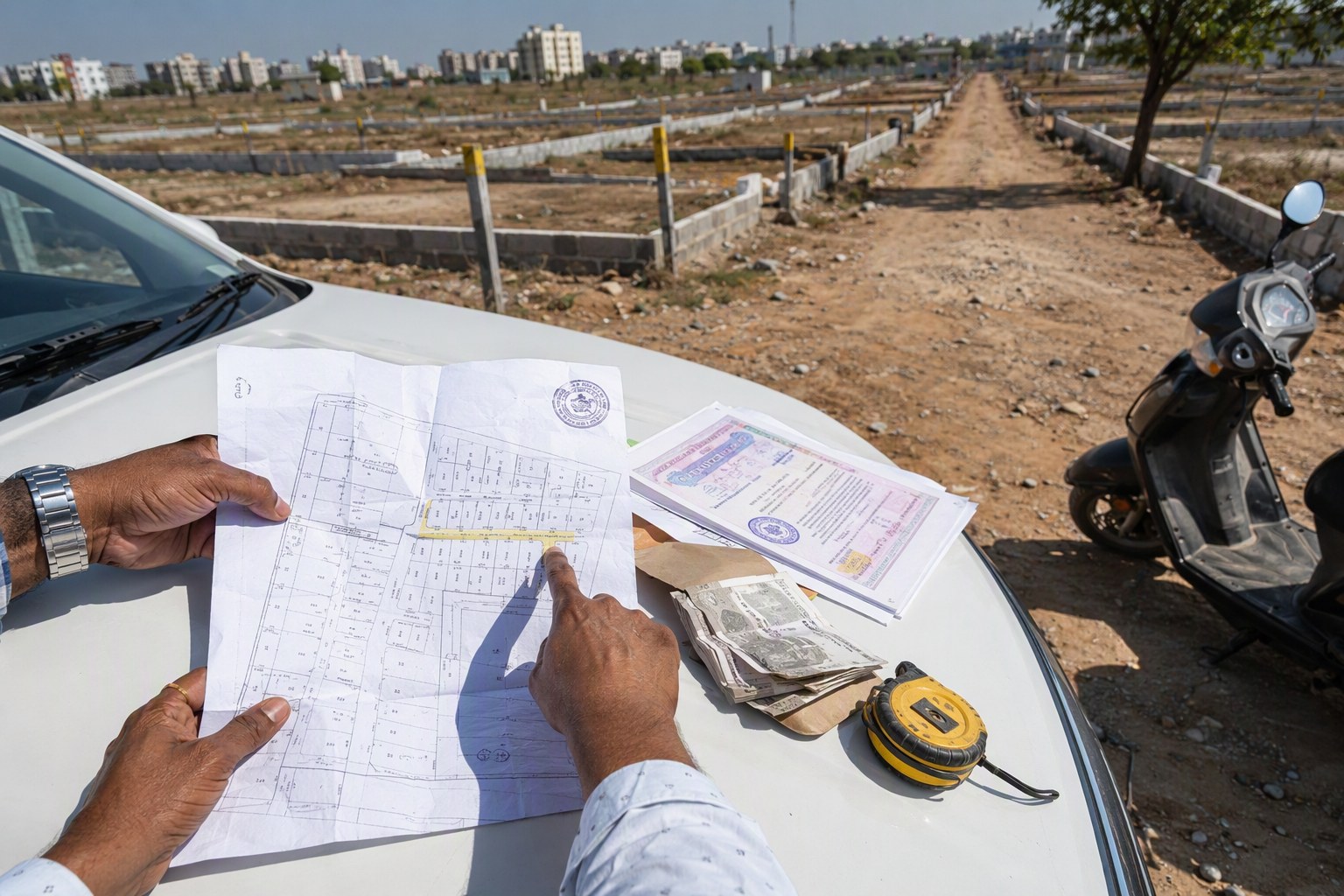
Floor rise charge is not automatically unfair. In Hyderabad’s apartment market, it can be a genuine premium for a higher floor, better light, lower road noise, or a preferred view. But it becomes a problem when the builder uses it to make the base rate look attractive and pushes the real price into add-ons. That is where buyers in Gachibowli, Kokapet, Narsingi, Tellapur, Bachupally, Miyapur and Uppal need to slow down and read the cost sheet like a legal document, not like a brochure.
Our view is simple: pay for a higher floor if you value it, but don’t pay a vague premium that is not shown clearly in the allotment letter, agreement for sale, and RERA disclosures.
Is floor rise charge fair in Hyderabad flats?
Yes, floor rise charge can be fair when it is disclosed upfront, applied consistently, and tied to a visible benefit. Buyers do prefer higher floors in many Hyderabad projects, especially in dense corridors like Serilingampally mandal, Gandipet mandal, Bachupally mandal and Uppal mandal. A higher floor may give better ventilation, a wider view, and less street-level disturbance. Builders price that demand.
But fairness depends on clarity. If the salesperson says the flat rate is one thing and the cost sheet later shows floor rise, preferential location charge, view charge, clubhouse charge, infrastructure charge, documentation charge and other unclear heads, the buyer is no longer comparing the real price. We’ve seen this often in under-construction projects where the advertised per sft rate is treated like a starting point, not the final number.
For a buyer, the question is not whether builders can charge extra. The question is whether the charge is transparent, part of the agreed sale consideration, and reflected properly in the paperwork. If it is only mentioned verbally, treat it as unsafe.
Floor rise charge and the cost sheet: where your flat’s real price gets hidden
A Hyderabad flat cost sheet should not be a puzzle. It should show the base flat cost, floor rise charge, facing or view premium if any, car parking, amenities, maintenance corpus, taxes if applicable, legal charges, documentation charges and registration-related estimates. When these items are mixed together, buyers lose the ability to compare two flats properly.
Here is how I read a builder cost sheet when a client asks whether the floor premium is reasonable:
| Cost sheet item | What it usually means | What the buyer should ask |
|---|---|---|
| Base sale price | The main quoted flat price before premiums | Is this rate same across towers and floors? |
| Floor rise charge | Premium for choosing a higher floor | From which floor does it start, and how is it calculated? |
| Preferential location charge | Extra for view, corner unit, open side, park-facing or club-facing unit | Is this separate from floor rise or overlapping? |
| Car parking | Cost linked to parking allocation or bundled pricing | Is the parking slot clearly identified in writing? |
| Amenities and clubhouse | Charges for common facilities | Are these part of sale price or separately payable? |
| Maintenance corpus | Advance amount for society or association maintenance | Who holds it until handover? |
| Registration estimate | Government registration and stamp duty calculation | Is it based on the declared sale value and applicable SRO value? |
Never compare only the base rate. Compare the full landed cost. A lower advertised rate in Nanakramguda or Puppalaguda can become costlier than another flat in Narsingi if the premium heads are heavy. Same logic applies in Tellapur, Osman Nagar, Miyapur, Bachupally and Kompally.
Floor rise charge is different from SRO guideline value
This is one point many buyers mix up. The builder’s floor rise charge is a commercial pricing decision. The SRO guideline value, also called ready reckoner value or market value in registration language, is used for registration and stamp duty purposes. Both may influence your transaction value, but they are not the same thing.
Before signing, check the local government value for the property area using our Market Value / Guideline Value Search. Then estimate registration outgo with the Stamp Duty Calculator. If the agreement value includes floor rise, the registration discussion should be based on the value recorded in your transaction documents and the applicable government rules. Don’t rely only on the salesperson’s oral estimate.
In Hyderabad and surrounding Telangana districts, the SRO matters. A flat in Gachibowli under Serilingampally side, a unit in Kokapet under Gandipet mandal, and a project in Tellapur side can fall under different registration office handling patterns depending on village and jurisdiction. Use the Find Your SRO Office tool before assuming where the registration will happen.
How to compare floors without overpaying
When you compare two floors, keep every other factor constant. Same tower, same flat size, same facing, same view, same possession stage, same payment plan. Only then can you judge whether the floor premium is sensible.
- Compare the final cost, not the brochure rate. Ask the builder to give floor-wise cost sheets for the exact unit options you are considering.
- Separate view premium from floor rise. A lake-facing unit in Kokapet or a park-facing unit in Narsingi may have a separate premium. Don’t allow the same benefit to be charged twice under different names.
- Ask for the starting floor. In some projects, the charge begins after a certain level. In others, every upward move is priced. The rule must be written.
- Check whether lower floors have a discount. If the builder is charging more for upper floors, ask whether podium-facing, road-facing or lower ventilation units are priced lower.
- Look at resale comfort. A higher floor may attract future buyers, but very high floors can also narrow the buyer pool for families with elderly parents or lift-dependency concerns.
- Account for maintenance behaviour. Premium floors do not always mean premium maintenance. The association, corpus, lift quality, water pressure planning and fire safety matter more over time.
In our experience, the best negotiation happens when the buyer has two or three comparable unit options from the same micro-market. For example, compare a flat in Puppalaguda with another in Narsingi, both under the Gandipet belt. Or compare Tellapur and Osman Nagar projects in the same commute pattern. Then the floor rise charge becomes one line item, not the whole story.
Hyderabad localities where floor premiums need sharper checking
Floor rise charge becomes more sensitive in high-demand apartment corridors. In Financial District, Nanakramguda, Gachibowli and Kokapet, many buyers are paying for office proximity, brand name, community size and skyline view. In such locations, the builder may treat the upper-floor preference as a strong pricing lever.
In Narsingi and Puppalaguda, the conversation often shifts to view, approach road, tower spacing and future surrounding development. A flat that looks open today may face another tower tomorrow, depending on neighbouring land use. Before paying for view, check the broader zone and surroundings with Land Use Zone Finder and Geo Insights.
In Tellapur and Osman Nagar, buyers should check whether the project is positioned as a long-term residential bet or a near-term rental play. Floor rise is easier to justify when the tower planning, open spaces and road connectivity support the premium. In Bachupally, Miyapur and Kompally, practical buyers often weigh commute, school access, water supply and maintenance quality more heavily than floor height.
In Uppal, LB Nagar and Pocharam side, floor premium discussions can be different. Buyers may prioritise metro access, road width, parking practicality and carpet usability over a high-floor view. A premium that makes sense in Kokapet may not make the same sense in Uppal.
Red flags in floor rise charge negotiations
Be careful if you see any of these patterns:
- The charge is not shown in the cost sheet. Any premium collected outside the written cost sheet is a major warning sign.
- The salesperson says it is standard but cannot explain the calculation. Standard does not mean unquestionable.
- The allotment letter has a different structure from the booking form. The cost breakup should remain consistent.
- Floor rise is clubbed with other charges. If the builder writes one combined premium line, ask for a split.
- The agreement for sale does not match the payment schedule. Your bank will also examine this when processing the loan.
- The premium is charged for a view that is not legally protected. Open land next door may be developed later unless planning records say otherwise.
A clear builder will not hesitate to share the breakup. A serious buyer should not hesitate to ask. This is not bargaining for the sake of bargaining; it is basic price discovery.
Check RERA, EC, pahani and Section 22-A before paying token
Floor rise charge is only one part of buyer due diligence. Before paying a token amount for any under-construction flat, verify the project and the land trail. Start with RERA Project Lookup to check registered details, declared approvals, promoter information and project status. Then use Encumbrance Certificate Search or EC Analyzer to review transaction history and charges recorded on the property.
If the project land details are shared, check survey number, village and mandal records. For land-backed apartment projects, old pahani entries, Dharani history and SRO records can reveal issues that a glossy brochure will not show. Our Survey Number Finder and Property Verification Tool can help organise that first-level check.
There is one more serious check: prohibited property status under Section 22-A. As per the Verified.RealEstate database context, Telangana has 3,076,153 Section 22-A prohibited property records. That number itself tells you why buyers should not ignore land verification. Use the Section 22-A Prohibited Property Check before assuming the land is clean.
Questions to ask the builder before accepting floor rise charge
Here is a practical question list. Take it to the sales office. Ask for written answers wherever possible.
- What is the base rate for this exact flat?
- What is the floor rise charge, and from which floor does it apply?
- Is there any separate view charge, corner charge or preferential location charge?
- Is the charge mentioned in the booking form, allotment letter and agreement for sale?
- Will the same amount be included in the bank loan cost sheet?
- Is the registration estimate calculated on the full agreement value?
- Is the flat carpet area, built-up area and saleable area clearly mentioned?
- Is the parking slot exclusive, common, mechanical, covered or open?
- Can I see the RERA carpet area and sanctioned plan reference?
- If I change to a lower floor, what exact amount reduces from the final cost?
The last question is powerful. If moving down reduces the final cost clearly, the builder’s calculation is traceable. If the answer becomes vague, the premium may be more sales strategy than transparent pricing.
Use a simple buyer rule: pay only for written value
A good flat purchase should survive three checks: financial clarity, legal clarity and practical liveability. Floor rise charge sits in the financial bucket, but it affects the other two also. If the premium is in the agreement, it becomes part of your declared purchase value. If it is collected separately, you may face trouble later with bank funding, resale explanation or dispute resolution.
My practical rule for Hyderabad buyers is this: if a charge is not written, don’t treat it as final; if it is written vaguely, don’t sign until it is split; if it is split but not justified, negotiate. Builders respect buyers who read documents. They may not love it, but they respect it.
Before booking, run the numbers through the Composite Value Calculator and compare the government value with the builder’s total cost. If you are buying in a high-rise, also understand the project’s built-up planning with the FSI/FAR Calculator. These tools won’t negotiate for you, but they will stop you from walking into the discussion blind.
Floor rise charge can be acceptable, but hidden pricing is not
So, is the floor rise charge hiding your flat’s real price? Sometimes, yes. Not because the charge itself is wrong, but because it is often used to make the headline rate look cleaner than the final payable amount. In Hyderabad’s active apartment corridors, buyers should expect premium pricing. They should also expect professional disclosure.
If you genuinely want a higher floor in Kokapet, Gachibowli, Narsingi or Tellapur, pay for it with your eyes open. But don’t allow the builder to bury the real price under confusing add-ons. Ask for the full cost sheet, verify the project, check the SRO and guideline value, review EC and RERA details, and keep every promise in writing. That is how a buyer stays in control.
Frequently Asked Questions
Is floor rise charge legal in Hyderabad?
It can be charged if it is disclosed clearly and forms part of the agreed pricing. The buyer should ensure it appears in the cost sheet, allotment letter and agreement for sale.
Does floor rise charge affect stamp duty?
Stamp duty is linked to the transaction value and applicable government value as per registration rules. If the floor premium is part of the agreement value, take it into account while estimating registration cost.
How do I know if a floor premium is too high?
Compare final landed cost across similar units in the same project and nearby localities. Keep size, facing, tower, view and possession stage similar while comparing.
Should I pay floor rise charge before RERA verification?
No. First check the RERA record, EC, land details and Section 22-A status where relevant. Pay only after the project and cost breakup are clear.
Can I negotiate floor rise charge with the builder?
Yes, especially if you have comparable unit options or if the charge is not clearly justified. Ask the builder to show how the premium changes if you choose a lower floor.