

Hyderabad Case Study: Missing UDS Share Delayed Flat Resale
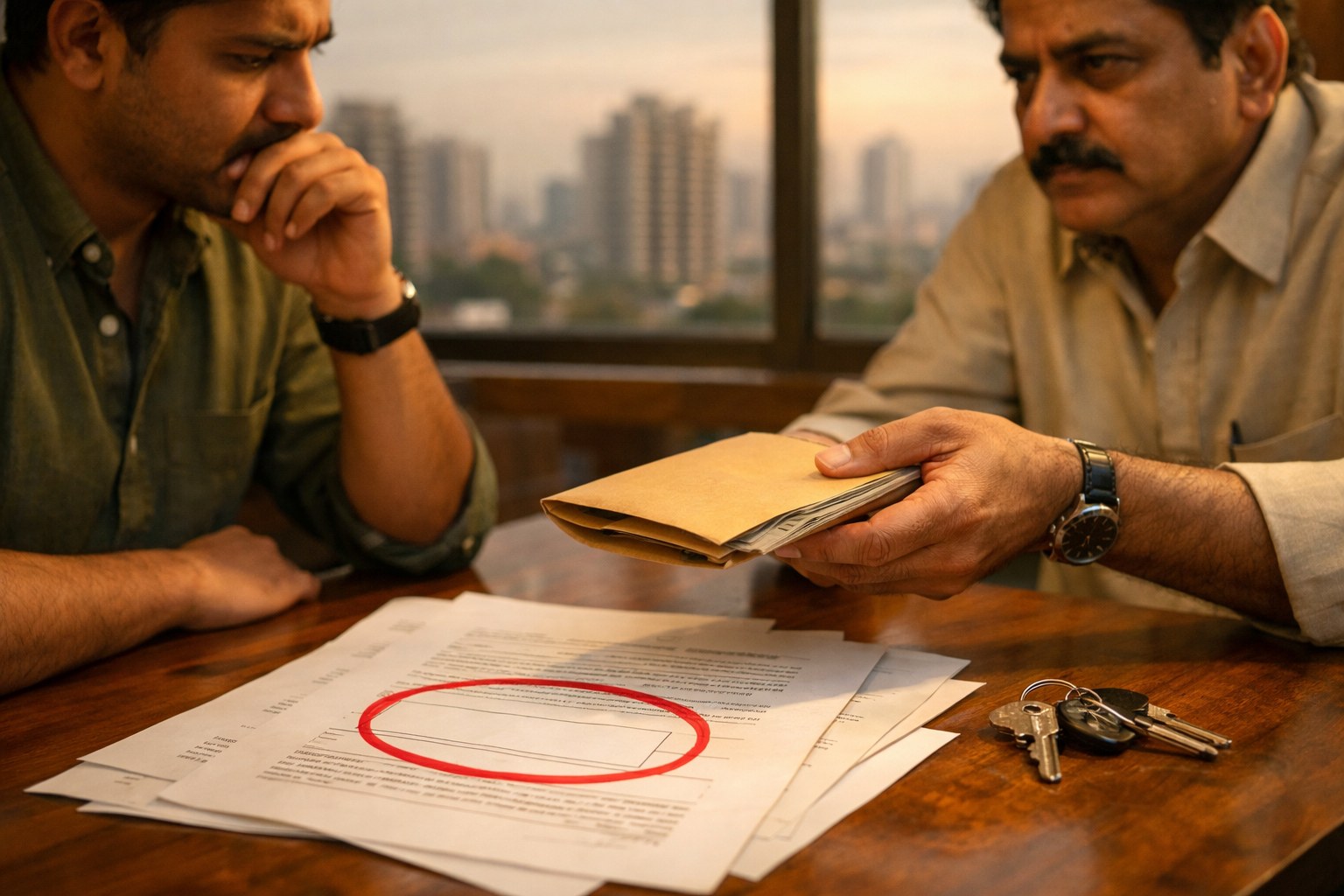
Hyderabad Case Study: Missing UDS Share Delayed Flat Resale is not a rare file-room problem. In a recent resale flat deal in the Kondapur-Gachibowli belt, the buyer was ready with loan sanction, token advance was paid, and the seller wanted quick registration. The transaction slowed when the buyer's document reviewer noticed that the undivided share, commonly called UDS, was either missing or not clearly stated in the earlier sale deed.
The issue did not kill the deal. But it delayed bank disbursement, forced extra document collection from the builder and association, and made both parties renegotiate timelines. In our experience, this is exactly where many Hyderabad resale flat buyers get stuck: the flat looks fine, the building is occupied, EC may show clean entries, but the land share behind the flat is not written properly.
For a flat buyer, UDS is not a small clerical line. It is the buyer's share in the land below the apartment. If that share is absent, vague, or inconsistent across documents, resale, bank loan, mutation, redevelopment value, and future compensation can all become messy.
Hyderabad Case Study: Missing UDS Share Delayed Flat Resale - What Happened
The flat in this case was a mid-sized 2 BHK in a completed apartment project near Kondapur, under Serilingampally mandal in Rangareddy district. The built-up area mentioned by the seller was around 1,250 sq ft. The quoted resale price was in the range of Rs 1.05 crore to Rs 1.15 crore, which is broadly in line with older gated and semi-gated resale stock around Kondapur, Hafeezpet, Gachibowli and Botanical Garden road, where practical resale discussions often happen between Rs 8,500 and Rs 11,500 per sq ft depending on age, parking, floor, facing and amenities.
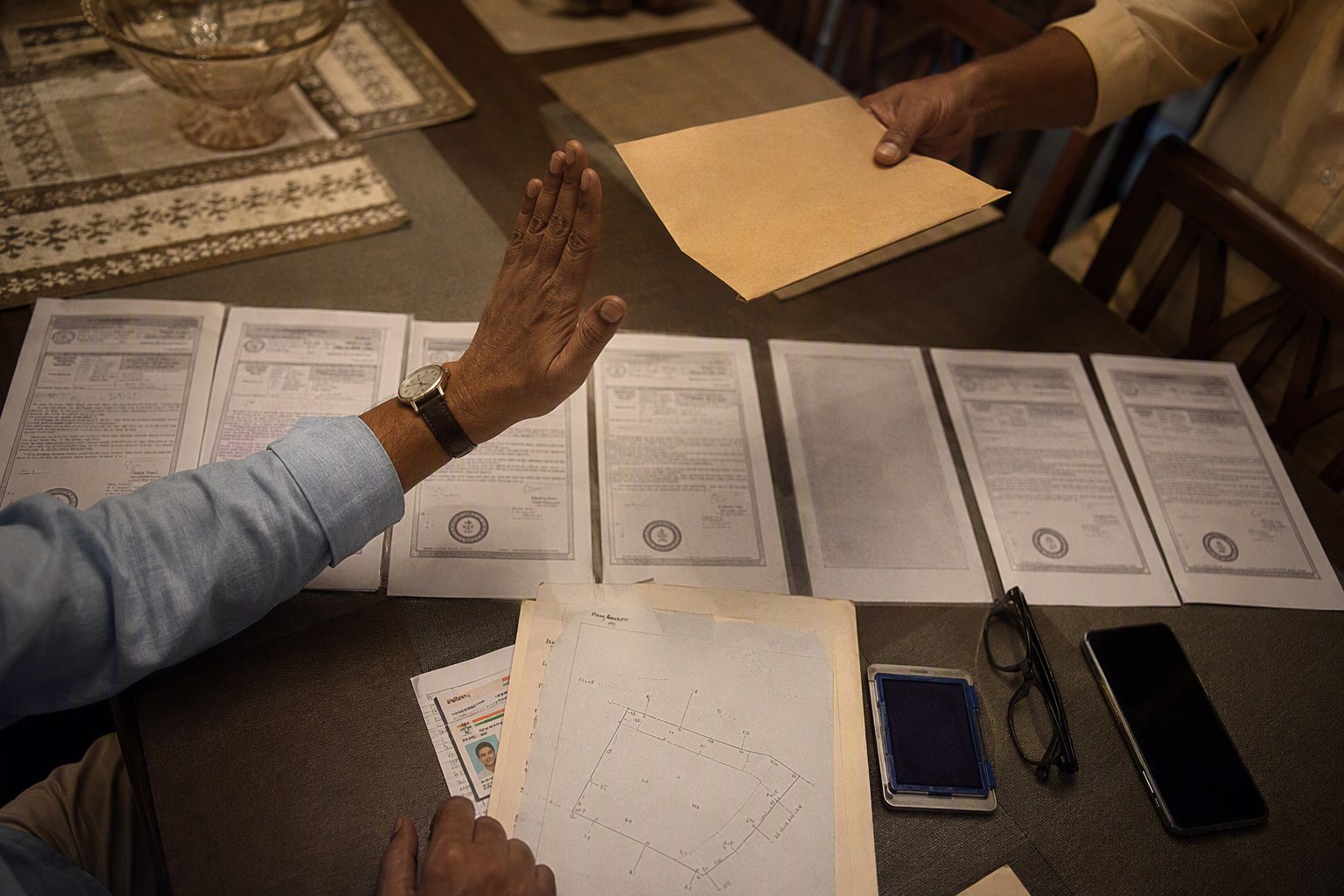
The buyer had checked the usual items: Aadhaar and PAN of seller, earlier sale deed, latest property tax receipt, electricity bill, association no-dues letter, and bank loan closure status. The first warning came during a deeper sale deed review. The document described the flat number, super built-up area, floor and car parking. But the UDS line was absent in one document and unclear in another. One schedule mentioned land boundaries, but the exact land share attached to the flat was not quantified.
That small missing detail changed the tone of the deal. The buyer's bank asked for clarification. The buyer's legal advisor asked for link documents and the builder's allocation statement. The seller insisted that all flats in the building had UDS and that the issue was only drafting style. Both could be true, but a resale buyer cannot depend on oral comfort.
| Stage | Expected timeline | What actually happened |
|---|---|---|
| Token and document collection | 2 to 4 days | Basic documents were shared quickly |
| Legal review | 5 to 7 working days | Extended to nearly 3 weeks due to UDS clarification |
| Bank loan processing | 10 to 15 working days | Disbursement paused till title and UDS were clarified |
| Registration slot | Planned within 30 days | Shifted by almost a month |
For buyers who are planning registration quickly, such a delay can create a chain reaction. Stamp duty calculations, demand drafts, bank validity dates, NOC letters, leave plans and shifting arrangements all get affected. Before fixing the final registration date, buyers should calculate likely duty and charges using the Stamp Duty Calculator and cross-check the locality market value through the Market Value / Guideline Value Search.
Hyderabad Case Study: Missing UDS Share Delayed Flat Resale - Why UDS Matters
UDS is the undivided share of land allocated to a flat owner in an apartment building. When you buy a flat in Hyderabad, you are not buying only walls, tiles and a door number. You are buying a built-up unit plus a proportionate share in the underlying land. That land share is the real long-term asset.
A simple way to understand UDS is this:
UDS for a flat = Total land area of the project x Flat's proportionate share, usually linked to saleable area or agreed allocation method.
For example, if an apartment stands on 2,000 sq yards of land and one flat's proportionate share is 2.5%, the UDS should be around 50 sq yards. In many Hyderabad documents, UDS is mentioned in square yards, square metres or sometimes as a fraction. Good drafting will clearly mention the UDS in the property schedule itself.
Why does this matter so much? Because future value is closely tied to land. A 15-year-old flat in Banjara Hills or Ameerpet may not command premium pricing because of interiors. It commands value because of location and land component. In redevelopment, road widening, structural damage claims, or society-level decisions, land share becomes a key reference.
We have seen older documents in areas like Himayatnagar, Srinagar Colony, Begumpet, Dilsukhnagar and parts of Kukatpally where flat area is described neatly but UDS is written loosely. Some old layouts used different drafting practices. That does not mean the title is automatically bad. But the buyer must understand the risk before paying full consideration.
The Local Market Context: Why This Delay Hurt The Deal
Hyderabad resale flat prices have moved sharply in several corridors after 2020. When prices are high, even a small document defect becomes expensive. In Kondapur, Gachibowli and Madhapur, many resale flats now involve ticket sizes above Rs 1 crore. In Nallagandla and Tellapur, new and recent resale flats are often discussed between Rs 7,000 and Rs 10,500 per sq ft, depending on project quality and possession status. In Miyapur and Bachupally, buyers still find more affordable options, but even there, clear title and correct UDS are non-negotiable for banks.
| Locality | Mandal / zone reference | Common resale discussion band | UDS sensitivity |
|---|---|---|---|
| Kondapur | Serilingampally mandal | Rs 8,500 to Rs 11,500 per sq ft | High, due to older standalone apartments and premium land |
| Gachibowli | Serilingampally mandal | Rs 9,000 to Rs 13,500 per sq ft | High, especially near IT corridor |
| Miyapur | Serilingampally / nearby GHMC belt | Rs 6,500 to Rs 8,500 per sq ft | Medium to high, depends on project age |
| Kukatpally | Balanagar / Kukatpally area | Rs 7,000 to Rs 10,000 per sq ft | High in old apartment blocks |
| Manikonda | Gandipet / Rajendranagar side | Rs 6,500 to Rs 9,500 per sq ft | High where land history has multiple link documents |
These are practical market bands we see in buyer-seller conversations, not a substitute for official registration values. For official value checks, buyers should use the Market Value / Guideline Value Search and compare it with the agreed sale price before registration. Telangana registration values, local ready reckoner references, project age and SRO jurisdiction all influence the final duty planning.
What The Buyer Checked After Spotting The Missing UDS
Once the missing UDS was noticed, the buyer did not cancel immediately. That was sensible. Many document defects can be cured or explained if the land title is otherwise clean. The team asked for specific documents rather than general assurances.
1. Original sale deed and prior sale deed
The buyer compared the seller's sale deed with the first allottee's sale deed and the builder's format used for other flats. If other flats in the same building had clear UDS but this one did not, the concern would be bigger. If all original deeds used the same schedule style, the explanation becomes easier, though still not perfect.
2. Link documents and mother deed
The mother deed showed how the land came to the builder or landowner. In Hyderabad, this is crucial in apartment projects created through development agreements and GPA arrangements. The land may have moved from pattadar to developer through sale, development agreement, supplementary agreement and registered GPA. If the chain is broken, UDS clarity alone cannot save the file.
3. Development agreement-cum-GPA
In many Telangana apartment projects, the builder may not own 100% of the land outright. The landowner and developer share flats under a development agreement. The UDS attached to each flat should align with the sharing pattern and sanctioned building plan. Buyers should check whether the flat belongs to landowner share or developer share, and whether the seller has proper authority in that chain.
4. Sanctioned plan, occupancy certificate and municipal records
The sanctioned plan confirms the approved building, floors and layout. The occupancy certificate, where applicable, supports that the building was completed as per approval. GHMC or municipality permissions matter because an unauthorised floor or deviation can make area and UDS allocation more sensitive.
5. Encumbrance Certificate
The buyer searched the EC for the flat and land references using the Encumbrance Certificate Search. EC is not a full title certificate, but it helps identify registered sale deeds, mortgages, releases and court attachments that are reflected in registration records. In this case, the EC did not show an obvious mortgage problem, but EC alone could not answer the UDS gap.
6. SRO jurisdiction
The registration office matters because records, document numbers and market value references are SRO-linked. Buyers can identify the correct office using Find Your SRO Office. For Kondapur and nearby areas, the relevant SRO may differ based on exact survey number, village and municipal limits, so guessing is risky.
Section 22-A Check: A Separate But Critical Filter
UDS confusion is one issue. Prohibited property risk is another. Telangana's Section 22-A list contains 147,934 prohibited properties as per the database fact available to us. These may include government lands, assigned lands, endowment lands, wakf-related entries, ceiling surplus lands and other restricted categories.
Flat buyers sometimes think Section 22-A is only a land buyer's problem. That is a dangerous assumption. If the apartment land has a prohibited or disputed history, the flat built on it can also face registration and resale trouble. Before paying a large advance, buyers should run a check through the Section 22-A Prohibited Property Check and also use the Property Verification Tool for a broader risk review.
For land references, survey numbers and village names matter. Apartment sale deeds sometimes mention only municipal door number and flat schedule, while the mother deed carries survey numbers. Buyers should pull the land schedule from the parent documents and verify it using the Survey Number Finder where possible.
How A Missing UDS Line Affects Bank Loans
Banks do not like ambiguity in collateral. When a bank funds a resale flat, it is taking security over the flat and its proportionate land share. If the UDS is not clearly recorded, the bank's legal team may raise a query. Some banks accept clarification letters, builder certificates or society records if the rest of the title is clean. Stricter banks may ask for a rectification deed.
In this case, the buyer's lender paused final disbursement and asked for a written clarification from the seller and supporting documents from the builder's side. Since the project was not brand new, getting the builder's authorised signatory took time. The association had records of flat-wise area and maintenance share, but maintenance share is not the same as legal UDS. That distinction matters.
We have seen buyers lose good loan rates because document closure dragged beyond sanction validity. A 0.25% rate movement on a Rs 80 lakh loan is not small over 15 to 20 years. Document discipline saves money.
Can A Missing UDS Be Fixed?
Yes, in many cases it can be fixed, but the route depends on the document history. The cleanest route is a registered rectification deed, executed by the parties who signed the original deed, correcting the schedule to mention the proper UDS. If the original builder or seller is unavailable, the process becomes harder. Legal advice is needed because every file has its own chain.
Sometimes the UDS is present in the parent deed or annexure but missing in a later resale deed. In such cases, the buyer's advocate may ask for a clarification and ensure the new sale deed clearly records the UDS. The new deed should not create a fresh number casually. It should trace the UDS from the original allocation.
If the building is part of a RERA-registered project, buyers can also check project details through the RERA Project Lookup. For older projects completed before RERA applicability, RERA may not help, so registered documents, municipal approvals and SRO records become more important.
Red Flags We Would Not Ignore
- UDS missing in every deed: If no document in the chain mentions land share, get a strong legal opinion before proceeding.
- Different UDS numbers in different documents: A flat showing 32 sq yards in one deed and 48 sq yards in another needs explanation.
- Land extent mismatch: Parent deed says one land extent, sanctioned plan says another, and sale deed schedule says something else.
- Unclear survey number: Especially in Manikonda, Narsingi, Puppalaguda, Tellapur and Bachupally belts where land conversion and layout histories can be layered.
- Only association letter offered: Useful, but not a replacement for registered title documents.
- Seller pushing urgent registration: Speed is fine, pressure is not. A clean seller should allow document verification.
What Sellers Should Do Before Listing A Resale Flat
Sellers can avoid last-minute embarrassment by preparing the file before finding a buyer. In Hyderabad, many resale deals collapse not because the property is bad, but because the seller does not have the papers ready.
- Keep the original sale deed and all link documents scanned clearly.
- Check whether UDS is mentioned in the schedule.
- Collect latest EC before listing the flat.
- Keep loan closure letter and registered release deed if the loan was closed.
- Get property tax, electricity and maintenance no-dues updated.
- If UDS is unclear, speak to a document writer or property lawyer before taking token advance.
Sellers planning to upgrade after resale should also estimate tax impact. The Capital Gains Tax Calculator can help them plan before committing to a new purchase.
What Buyers Should Put In The Agreement Of Sale
The agreement of sale should not be a casual two-page token receipt. It should record that final registration is subject to satisfactory legal verification, bank approval and document clarification. If UDS is pending clarification, mention it specifically. The agreement should say who will provide documents, by when, and what happens if the title defect cannot be cured.
For flats, the agreement should capture:
- Flat number, floor and block or tower name
- Built-up, super built-up or saleable area as per documents
- UDS in sq yards or sq metres
- Car parking description
- Share of common areas
- Previous document numbers and SRO names
- Loan closure and release deed responsibility
- Registration cost split if negotiated
For high-value flats, buyers may also compare composite value using the Composite Value Calculator, especially where land share and construction value need separate understanding for internal assessment.
The Outcome In This Hyderabad Resale Case
The deal finally moved ahead after the seller produced the builder's flat-wise allocation records, link documents, and a draft sale deed that clearly mentioned the UDS derived from the original land schedule. The buyer's bank accepted the clarification after legal review. The registration date shifted, but the transaction did not fail.
The seller was irritated by the delay. The buyer was right to insist. In our view, the buyer's stand was practical. When a family is paying above Rs 1 crore for a resale flat in a prime Hyderabad corridor, asking for clear UDS is not overcaution. It is basic title hygiene.
The lesson is simple: do not wait for the bank lawyer to discover the gap. Check UDS before token, or at least before a large advance. Hyderabad's apartment market is mature now, but document quality still varies widely between old standalone buildings, landowner-share flats, builder-share flats, and newer gated communities.
Quick UDS Verification Checklist For Hyderabad Flat Buyers
| Check | Where to verify | Why it matters |
|---|---|---|
| UDS mentioned clearly | Sale deed schedule | Confirms land share attached to flat |
| UDS matches parent allocation | Builder deed, development agreement, prior deeds | Prevents mismatch in resale |
| Land chain is clean | Mother deed and link documents | Confirms how land reached builder or landowner |
| No registered encumbrance | EC search | Checks mortgages, sales and releases in records |
| Not in prohibited list | Section 22-A check | Protects against registration restrictions |
| Correct SRO | SRO office lookup | Helps verify document numbers and registration value |
Hyderabad buyers are becoming sharper, and that is good for the market. A clean resale flat in Kondapur, Gachibowli, Nallagandla, Kukatpally or Miyapur will always find buyers. But a flat with vague land share will face questions, especially when bank funding is involved. UDS is not legal decoration. It is the land value sitting quietly behind your apartment door.
Frequently Asked Questions
What is UDS in a Hyderabad flat sale deed?
UDS means undivided share of land. It is the flat owner's proportionate share in the land on which the apartment building stands. It should ideally be mentioned clearly in the sale deed schedule.
Can I buy a resale flat if UDS is missing in the old deed?
Do not proceed blindly. Ask for parent documents, builder allocation records and a legal opinion. In some cases, the issue can be fixed through a rectification deed or by clearly recording the correct UDS in the new sale deed.
Will banks reject a flat loan if UDS is unclear?
Some banks may pause or reject disbursement until UDS is clarified. Others may accept supporting documents if the title chain is clean. The decision depends on the bank's legal policy and the strength of the documents.
Is EC enough to verify UDS and title?
No. EC helps check registered transactions and encumbrances, but it does not prove every aspect of title. Buyers should also review sale deeds, link documents, sanctioned plan, UDS allocation and Section 22-A status.
Which documents should I check before buying a resale flat in Hyderabad?
Check the sale deed, prior deeds, mother deed, development agreement, sanctioned plan, occupancy certificate if available, EC, property tax receipts, loan release deed, association no-dues and clear UDS details.