


Case Study: The Survey Number Typo That Hid a 22-A Risk
Telangana has 3,076,153 prohibited properties marked under Section 22-A as per latest IGRS data. That one number should make every buyer pause before paying token advance, especially for land in and around Hyderabad, Rangareddy, Medchal-Malkajgiri, Sangareddy and Yadadri-Bhuvanagiri. In our experience, many risky deals do not look risky on day one. The papers look neat, the seller speaks confidently, the broker says “clear title”, and the buyer checks one survey number online. Then a small typo changes the entire result.
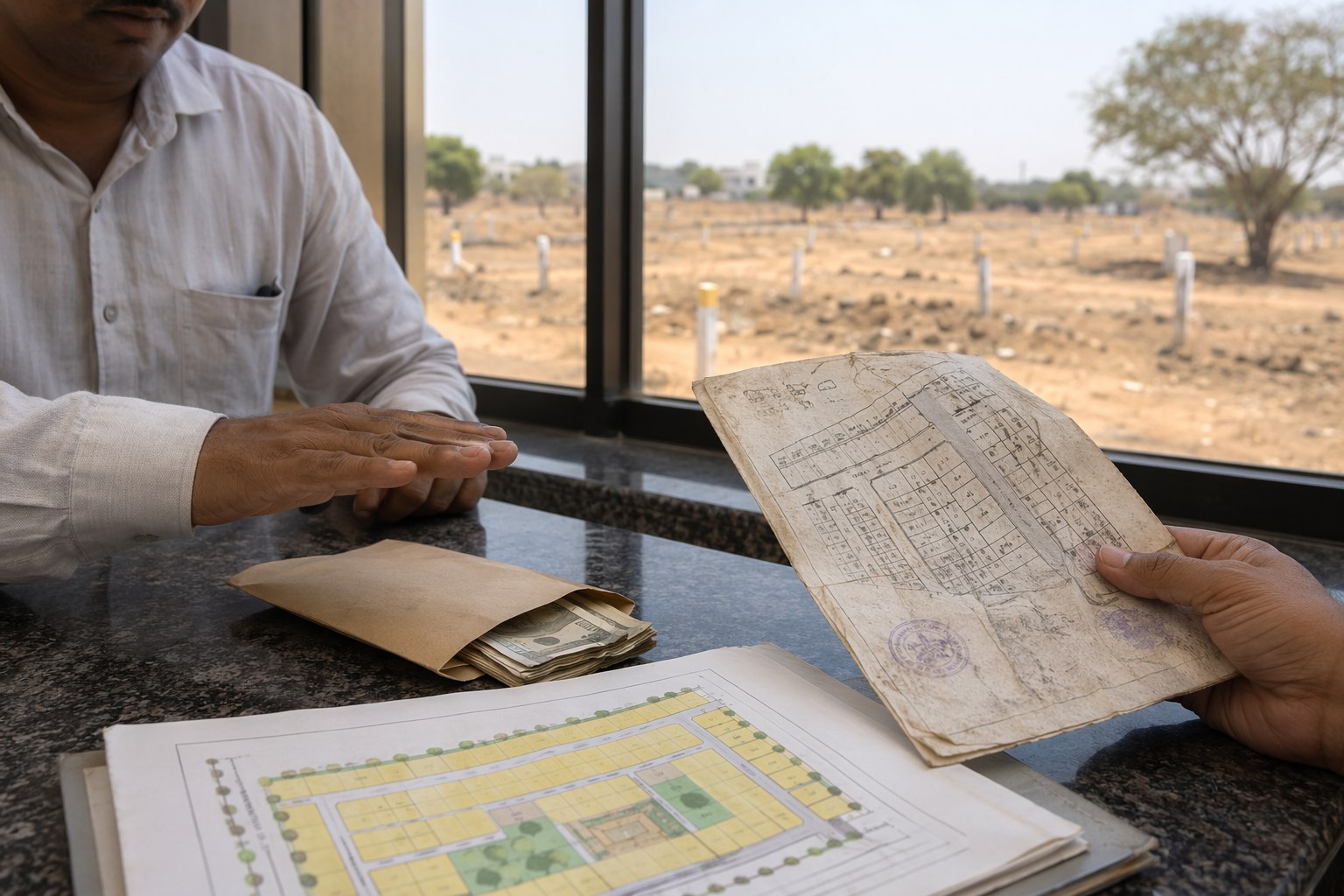
This case study is about one such Telangana land file where a survey number typing error made a 22-A risk appear clean during early checks. The land was not in Jubilee Hills or Gachibowli apartment market. It was a plotted land transaction on the expanding Hyderabad fringe, where buyers often depend on survey numbers, pahanis, Dharani entries, ECs and SRO inputs more than glossy brochures.
The lesson is simple: when you check only one version of a survey number, you may be checking the wrong property. A missing sub-division, a wrong slash, or a mistaken digit can hide a prohibited property flag long enough for the buyer to pay advance.
Our opinion: in Telangana land transactions, the survey number is not a small clerical detail. It is the spine of the due diligence file.
Case Study: The Survey Number Typo That Hid a 22-A Risk in the First Search
The buyer approached us after shortlisting a small land parcel in a village falling under a Hyderabad-side mandal. I am not naming the parties or exact village because the file involved private documents. But the pattern is very common in land deals around Shankarpally mandal, Moinabad mandal, Ghatkesar mandal, Maheshwaram mandal, Keesara mandal, Medchal mandal and other growth corridors where agricultural land, converted layouts, old pattas and family holdings sit side by side.
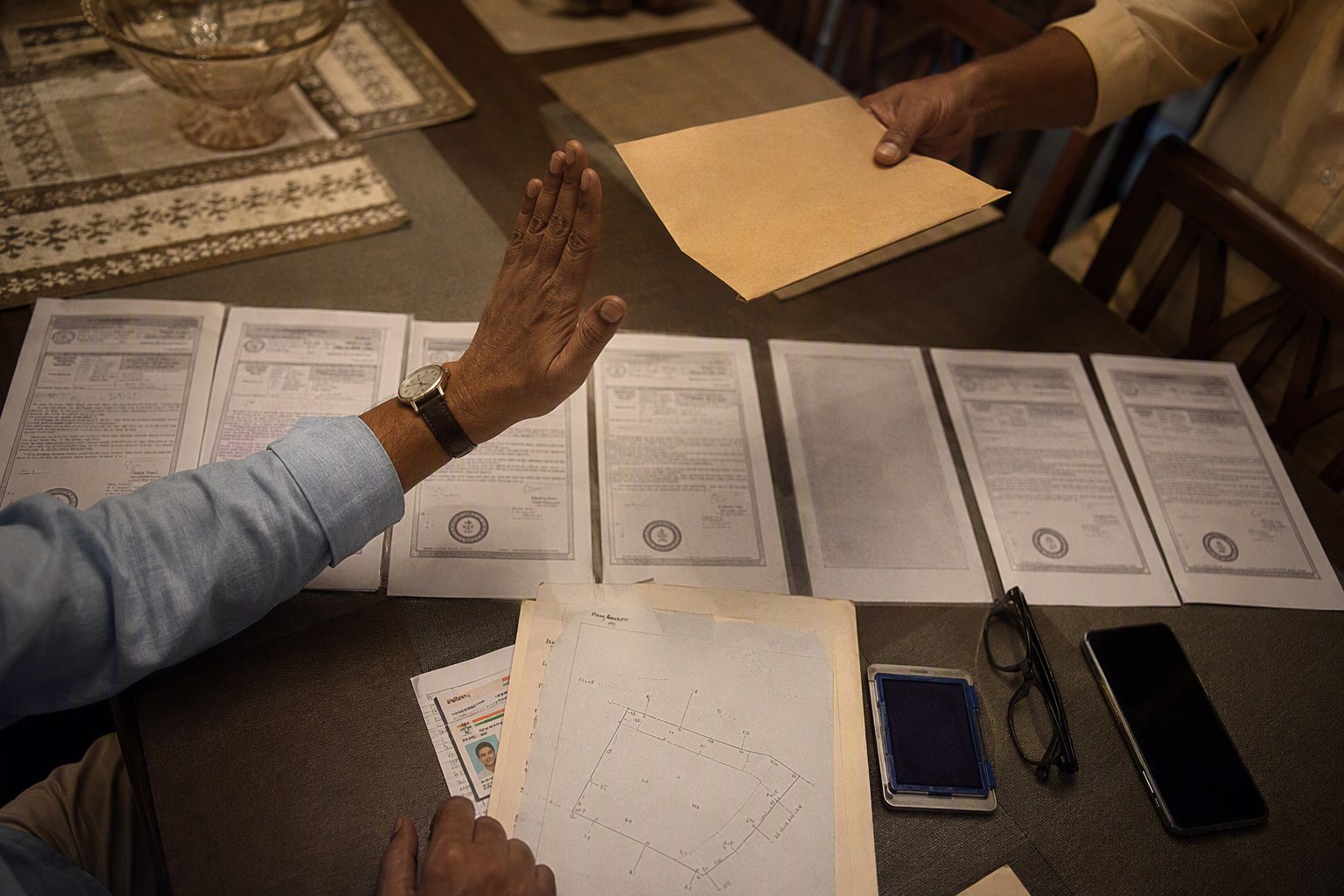
The seller’s file had the usual set: link documents, latest Dharani print, pahani details, tax receipts, a rough location map, and an Encumbrance Certificate. The broker’s pitch was familiar: “The survey number is clean. EC is clean. Registration can happen.” The buyer’s family did a quick online check. They searched the survey number as typed in the WhatsApp message and found no obvious red flag.
That first search gave them comfort. It should not have.
The number in the WhatsApp message had a minor typing issue. The seller’s older document referred to one survey number with a sub-division. The broker’s message omitted part of it. The Dharani extract had one format. The older sale deed had another format. The buyer searched only the broker’s format.
That is where the risk entered the room quietly.
Why a Survey Number Typo Can Hide a 22-A Risk
Section 22-A restrictions are serious because they can stop registration or create title risk even before the buyer reaches the SRO counter. A property may be treated as prohibited due to government land, assigned land, endowment land, wakf-related issues, ceiling surplus, court/government restrictions, or other entries maintained by the registration department and connected records.
When buyers say “we checked 22-A”, many times they mean only this: they entered one survey number online and saw nothing alarming. That is not enough.
Survey numbers in Telangana land records can appear in different ways:
- With or without sub-division numbers.
- With slash marks, hyphens, spaces or suffixes.
- In old village records with one spelling and in current online records with another spelling.
- Under a changed mandal or revenue village after administrative changes.
- In link documents where survey extents are split across family shares.
- In layout documents where plotted areas are carved from a parent survey number.
A typo does not change the ground location. But it changes what the buyer searches. If the prohibited list has the correct survey number and the buyer searches the wrong version, the early result may look clean.
For quick checking, buyers should use Survey Number Finder and then cross-check through Section 22-A Prohibited Property Check. I prefer doing both before discussing token advance, not after.
The Data Point Buyers Cannot Ignore: 3,076,153 Prohibited Properties
The scale itself is the warning. Telangana has 3,076,153 prohibited properties in the Section 22-A dataset as per latest IGRS data. That does not mean every second property is bad. It means buyers must stop treating 22-A checking as a final-minute formality.
In Hyderabad real estate, we’ve seen two very different buyer behaviours. Apartment buyers in Kokapet, Narsingi, Nanakramguda, Tellapur and Miyapur usually ask for RERA, builder approvals, EC and loan eligibility. Land buyers in areas like Shadnagar side, Chevella side, Ibrahimpatnam side, Yacharam side, Medchal side and Bhongir side often focus on price, road access and future growth first. Title checking comes later. That order is risky.
Land due diligence needs a different mindset. The survey number is linked to the village, mandal, extent, classification, ownership flow and registration possibility. A flat number in a gated project may be easier to identify. A land parcel carved from an old survey number is not so simple.
That is why one wrong digit matters.
How the Typo Happened in This Telangana Land File
The file had three versions of the number across communication and documents. One was in the broker’s message. One was in the older link deed. One was in the recent revenue extract. The difference looked harmless to the buyer because the village name and owner name appeared similar. This is a classic trap.
In land files, people often assume that if the seller name matches, the survey number must be correct. Not always. Families may own neighbouring survey numbers. Brothers may hold shares in adjacent parcels. A seller may show a clean portion while the parent survey number has a restriction. A layout may use one parent number in marketing material and another in legal schedules. Even a typing error by a document writer can travel through drafts and WhatsApp forwards.
Here is how the mistake passed through the buyer’s first checks:
- The buyer searched the number shared by the broker, not the number shown in the older deed schedule.
- The village name was typed in its commonly used spelling, not the revenue record spelling.
- The mandal was selected based on local usage, while the records reflected the official mandal mapping.
- The EC was checked for the seller’s name, but the parent survey history was not read properly.
- The buyer did not compare the pahani extent with the proposed sale extent line by line.
None of these mistakes look dramatic. That is the problem. Telangana land risk usually does not announce itself with a red stamp on the first page. It hides in mismatched details.
Case Study: The Survey Number Typo That Hid a 22-A Risk During EC Review
The Encumbrance Certificate looked clean for the searched details. But an EC is not a magic title certificate. It mainly reflects registered transactions for the search parameters. If the parameters are wrong, the output can be incomplete. If the property schedule is weak, the EC may not tell the whole story.
For this file, we checked the EC again using a broader approach. We compared the seller’s deed schedule, older link deeds, village name, mandal, extent and neighbouring boundaries. Then we checked the likely parent survey reference. That is when the concern surfaced. The risk was connected to the correct survey identity, not the mistyped number searched earlier.
Buyers should use Encumbrance Certificate Search for initial review, but do not stop there. If the EC has old transactions, spelling variations or missing links, run the document through EC Analyzer. For a final buyer-side workflow, combine it with Property Verification Tool.
My practical view is this: if the EC is clean but the survey trail is messy, the file is not clean yet.
Where Hyderabad Fringe Buyers Usually Slip
The highest-risk behaviour we see is not fraud by itself. It is hurry. Buyers visit a land parcel on Sunday, like the road width, see a few farmhouses nearby, hear that a big project is coming, and start negotiating. By Monday, the broker is asking for advance. By Tuesday, the buyer is searching random details online. By Wednesday, the family lawyer receives a half-complete file.
This pattern is common across several Hyderabad growth belts:
- Shankarpally and Mokila belt: buyers focus on villa growth and road connectivity, but parent survey scrutiny is still needed.
- Moinabad and Chevella side: farm plots and agricultural holdings need careful revenue record review.
- Ghatkesar, Keesara and Medchal belt: old layouts, gram panchayat records and HMDA-related questions can overlap.
- Maheshwaram and Kandukur side: airport-side interest is high, so buyers rush when a seller offers a “good deal”.
- Ibrahimpatnam, Adibatla and Yacharam belt: land classification, access and survey boundaries must be checked properly.
- Bhongir and Yadadri side: buyers often look at future appreciation, but title basics remain the same.
Locality growth is not a substitute for title clarity. A road widening rumour or nearby venture does not cure a 22-A issue.
The Correct Way to Read a Survey Number Before Paying Advance
In our experience, a buyer should treat survey number verification like a checklist, not a single search. A proper check includes the revenue side, registration side and physical site side.
1. Match the survey number across all documents
Start with the latest seller document. Then compare it with link documents, Dharani details, pahani, mutation references, tax receipts, layout papers if any, and the draft agreement of sale. The number, sub-division, extent and boundaries must speak the same language.
2. Confirm the revenue village and mandal
Do not rely only on local names. Hyderabad outskirts have many village names that sound similar or are used casually. A buyer may say “near Shankarpally”, but the revenue village may be different. The SRO jurisdiction may also differ from what the broker casually says. Use Find Your SRO Office or SRO Village Directory for direction.
3. Search 22-A with variations
If the document shows a sub-division, search with that exact format and related parent reference. If there are spelling variations in the village name, check carefully. Do not assume a blank result means safety.
4. Compare extent and boundaries
A seller may own land in the same survey number but not the exact portion being shown on ground. Check whether the offered extent matches documents and possession. Boundaries are not decoration; they help identify the parcel.
5. Check guideline value separately
Guideline value is not title proof, but it helps you understand the SRO-side market value category. Use Market Value / Guideline Value Search before stamp duty planning. Then use Stamp Duty Calculator once the transaction structure is clear.
What a 22-A Risk Means for the Buyer
A 22-A flag can create several practical problems. The SRO may refuse registration. The buyer’s bank may reject the file. The title lawyer may advise against purchase. If advance is already paid, the buyer may spend time and money recovering it. If the agreement has weak refund terms, the matter can become ugly.
The bigger issue is psychological. Once buyers fall in love with a property, they start explaining away defects. “Only small issue.” “Seller will manage.” “Registration people know him.” “Neighbouring land got registered.” These lines are dangerous.
In Telangana, the registration counter is not the place to discover a prohibited property issue. You should know before drafting the agreement of sale.
Case Study: The Survey Number Typo That Hid a 22-A Risk and the Buyer’s Exit
After the corrected survey identity was checked, the buyer did not proceed with the original advance plan. That was the sensible call. The seller was asked to clarify the mismatch with proper revenue and registration records. The buyer also requested written confirmation on the exact survey number, sub-division, extent and registration eligibility.
This is where many deals either become clean or collapse. A genuine seller with clear papers will cooperate. A doubtful seller may become irritated, blame the buyer for “overchecking”, or pressure for quick payment. My advice is blunt: if a seller refuses basic document clarity, do not treat it as a bargain. Treat it as a warning.
The buyer later considered other properties in nearby locations, but with a stronger due diligence process. That is how it should work. Losing one risky deal is cheaper than buying one bad title.
A Practical Buyer Checklist for Telangana 22-A and Survey Number Checks
Here is the checklist we recommend before token advance for open land, plots, farm land or layout parcels in Telangana:
| Check | What to verify | Why it matters |
|---|---|---|
| Survey number | Exact number, sub-division, parent reference | A typo can point you to the wrong record |
| Village and mandal | Revenue village, mandal and SRO jurisdiction | Local names may not match official records |
| 22-A status | Search correct and related survey references | Prohibited property risk can block registration |
| EC | Transactions, seller name, schedule, gaps | Wrong search inputs can miss relevant entries |
| Pahani and Dharani | Ownership, classification, extent | Revenue record mismatch can affect title confidence |
| Physical site | Boundaries, access road, possession | Paper land and ground land must match |
| Agreement terms | Refund clause if title or 22-A issue arises | Protects buyer before registration |
For ongoing monitoring after shortlisting, use Property Change Tracker. If the property is part of a plotted or apartment project, check RERA Project Lookup as well. For road and planning comfort, tools like Road Width Check and Land Use Zone Finder can support your wider review.
What Buyers Should Ask the Seller in Writing
Verbal assurances are weak. Put the basics in writing before paying money. Ask the seller or broker to provide:
- Exact survey number and sub-division as per title deed.
- Revenue village and mandal.
- Total extent owned by seller and exact extent proposed for sale.
- Latest Dharani or revenue record copy, where applicable.
- Complete link documents.
- Latest EC using correct property details.
- Written confirmation that the property is not affected by Section 22-A restrictions to the seller’s knowledge.
- Refund clause if registration is refused due to title, 22-A, classification or document mismatch.
A serious buyer should not feel shy about asking these questions. In Hyderabad, people negotiate hard on price but hesitate to ask for basic title papers. That is the wrong priority. First confirm what you are buying. Then negotiate.
Red Flags We Saw in This Case Study
The survey number typo was the main trigger, but the file also had softer warning signs. These signs appear often in Telangana land transactions:
- Broker pushing for advance before sharing full link documents.
- Different survey formats in different papers without explanation.
- Seller saying “all numbers are same only” when asked about sub-division.
- EC taken for limited details and presented as full title proof.
- Village name mentioned casually instead of official revenue village.
- No clear refund clause in draft agreement.
- Buyer relying on screenshots instead of certified or properly sourced records.
One red flag may have an innocent explanation. Three red flags need discipline. Stop, verify, then proceed.
Our View: 22-A Checking Must Start Before Price Negotiation
Many buyers ask us when they should check Section 22-A. My answer: before emotional commitment. Not after paying advance. Not after fixing registration date. Not after arranging loan documents.
For Telangana land, the order should be:
- Identify exact land parcel.
- Verify survey number, village and mandal.
- Check 22-A and EC.
- Review link documents and revenue records.
- Visit site with document boundaries in mind.
- Negotiate price and agreement terms.
- Pay advance only with protective clauses.
This sequence may feel slow when the market is active. But it protects buyers from expensive mistakes. A clean property will survive proper checking. A risky property will usually start showing cracks.
Final Takeaway from the Survey Number Typo Case
The buyer’s first search looked clean because the buyer searched the wrong version of the survey number. The actual risk was tied to the correct property identity. That is the whole case in one line.
With 3,076,153 prohibited properties in Telangana’s Section 22-A dataset as per latest IGRS data, buyers cannot afford casual checking. If you are buying land in Hyderabad outskirts, do not treat survey number spelling, sub-division and mandal selection as small matters. They decide what record you are actually checking.
In our experience, the safest buyer is not the one who knows every law. It is the one who refuses to proceed until the survey number, revenue record, EC, SRO jurisdiction and 22-A status all point to the same property.
Frequently Asked Questions
Can a survey number typo really hide a 22-A risk?
Yes. If the buyer searches the wrong survey number or misses the sub-division, the result may relate to a different property record. The actual parcel may still have a Section 22-A concern.
Is a clean EC enough to buy land in Telangana?
No. An EC is useful, but it depends on correct search details and registered transactions. Buyers should also check survey number, pahani, Dharani details, link documents, SRO jurisdiction and Section 22-A status.
When should I do a Section 22-A prohibited property check?
Do it before paying token advance. If you wait until registration stage, you may lose time, negotiation power and sometimes the advance amount if the agreement is weak.
What should I ask the seller before paying advance for land?
Ask for the exact survey number, sub-division, revenue village, mandal, link documents, latest EC, revenue records and a refund clause if title or 22-A issues arise.
Which tools can help with Telangana land verification?
Start with survey number identification, Section 22-A checking, EC review, SRO lookup and property verification. These checks reduce the chance of relying on wrong or incomplete property details.