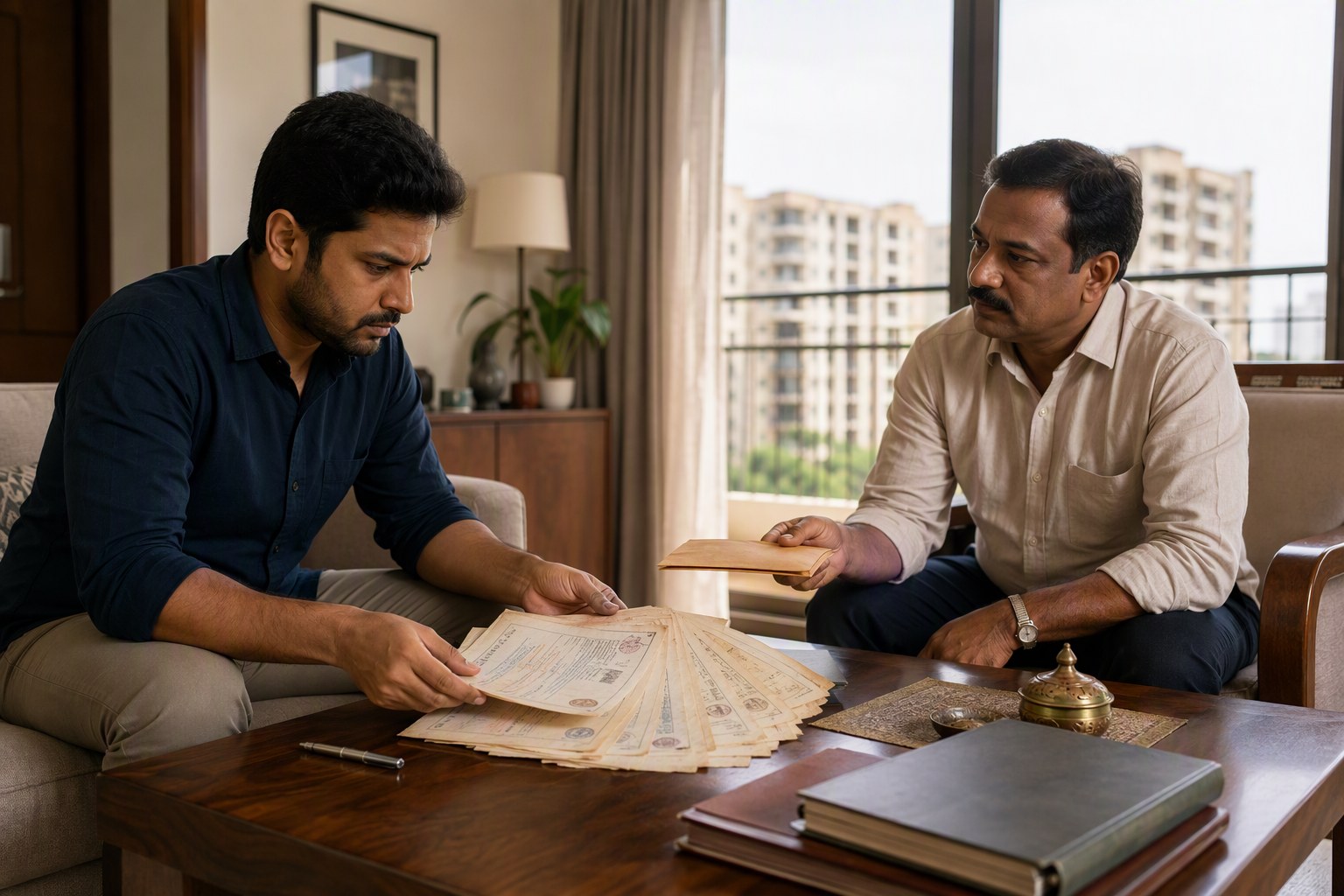
When a Bank Valuation Visit Cuts the Seller’s Price, the seller usually feels blindsided. We recently saw this in a Hyderabad resale deal: the seller treated the valuer’s inspection like a formality, but the buyer came back after the visit asking for a lower price. The bank had not rejected the property. The problem was simpler and more dangerous — the valuer could not comfortably support the agreed price with documents, measurements and comparable proof.
This is where many sellers lose control of the negotiation. By the time the buyer’s home loan is at valuation stage, token advance is paid, emotions are high, and both families are discussing registration dates. Then one valuation note changes the tone. The buyer says, “Bank value is coming lower, sir. Please adjust.”
My view is clear: a seller should prepare for the bank valuation like a mini due diligence audit, not like a casual site visit.
In Hyderabad and nearby Telangana markets — Narsingi in Gandipet mandal, Kondapur in Serilingampally mandal, Attapur in Rajendranagar mandal, Miyapur, Kukatpally, Kompally, Uppal, Manikonda and Alwal — loan-linked sales often get stuck at this exact point. The seller has a genuine property, the buyer has loan eligibility, yet the closing price gets attacked because the valuer did not get enough comfort.
When a Bank Valuation Visit Cuts the Seller’s Price: What actually happens
A bank valuer is not visiting your flat, house or plot to admire the interiors. The valuer’s job is to give the lender a defendable opinion on the property’s value and risk. That opinion is shaped by access, title comfort, building condition, sanctioned plan, location, road access, measurements, guideline value and comparable sale evidence.
In our experience, sellers misunderstand one thing. The bank valuation is not the same as the buyer’s liking. A buyer may love your west-facing flat in Gachibowli because it is near the office. The valuer may still ask basic questions: Is the built-up area matching the documents? Is the undivided share properly mentioned? Is there an occupation certificate or completion proof where applicable? Is the EC clean? Is the project traceable on RERA if it is a registered project? Is the locality rate supported by recent comparables?
The trouble starts when the seller answers casually:
- “All papers are there, I will send later.”
- “Measurement is approximately same only.”
- “Builder gave approval, but I don’t know where the file is.”
- “EC is not needed, previous bank already gave loan.”
- “Neighbour sold for higher price, but I don’t have proof.”
These answers may not kill the deal immediately. But they give the buyer a weapon. If the bank valuation comes cautious, the buyer uses it to reopen the price.
Why the seller in our story had to defend the price
The seller had a resale apartment in a good Hyderabad micro-market. The buyer liked the flat, paid advance and applied for a home loan. The seller assumed the valuer would come, take a few photos and leave. That is not how it went.
On valuation day, the watchman did not have instructions. The valuer waited near the gate. The seller’s tenant was not informed properly, so interior access was delayed. The valuer could not see the terrace, parking marking or common areas clearly. The seller sent the sale deed on WhatsApp, but the sanctioned plan and latest EC were not ready. The buyer had forwarded only basic documents to the bank.
After the visit, the buyer’s tone changed. He said the bank was not supporting the full agreed value. The seller argued that the market was strong. The buyer said he could not increase his margin money. Both sides were right in their own way, but the seller had failed at preparation.
We have seen this play out in Serilingampally mandal flats, Rajendranagar independent houses, Gandipet villa resales and Medchal-Malkajgiri apartment sales. The property may be saleable, but a messy valuation visit gives the buyer bargaining power at the worst time.
When a Bank Valuation Visit Cuts the Seller’s Price, documents matter more than bargaining
Once the buyer raises a valuation issue, shouting about market demand does not help much. The seller needs paper, not emotion. Before the valuer visits, keep a clean document folder ready. If possible, share it with the buyer’s loan team before inspection.
| Valuer’s concern | Seller’s preparation | Why it helps |
|---|---|---|
| Title and ownership | Sale deed, link documents where available, mutation or society records | Shows the seller can transfer clear rights |
| Encumbrance risk | Latest EC and explanation of old loans or releases | Reduces doubt on pending charge or mortgage history |
| Building approval | Sanctioned plan, layout approval, occupancy or completion proof where applicable | Supports legality of construction and usable area |
| Area mismatch | Sale deed area, builder allotment letter, floor plan, physical access for measurement | Prevents valuation haircut due to unclear size |
| Pricing support | Recent comparable sale evidence, guideline value check, locality explanation | Helps justify agreed price to the lender |
| Location risk | Correct survey number, village, mandal, SRO details, road access proof | Prevents confusion between nearby revenue locations |
For EC comfort, use the Encumbrance Certificate Search before the buyer’s bank starts asking. If the EC has an old mortgage entry, keep the release deed or bank closure document ready. If the property is in a project, check the registration details using RERA Project Lookup. For market value and ready reckoner-style government value, use Market Value / Guideline Value Search. These three checks alone can save a seller from avoidable last-minute drama.
The valuation is not only about interiors
Many sellers spend time repainting the hall but ignore the basic file. Clean walls help, yes. But bank valuation is not an interior design award. The valuer is also checking the security value of the asset.
In local Hyderabad resale deals, these are the practical points that affect comfort:
- Access: The valuer should enter the flat, parking, staircase, lift lobby, terrace where relevant and approach road without confusion.
- Identification: Door number, flat number, block name, survey number and project name should match documents.
- Measurement: Carpet, built-up, super built-up and undivided share should not be loosely mixed up during discussion.
- Approval trail: HMDA, GHMC, DTCP, gram panchayat legacy permissions or other applicable approvals should be explained correctly.
- Road width and access: For plots and independent houses, road width can influence lender comfort.
- Land use: For land parcels, the present land use and zone matter. A buyer planning construction will ask this sooner or later.
If the deal involves a plot in a developing pocket like Mokila, Kollur, Shankarpally side, Tukkuguda, Adibatla or Ghatkesar, the survey number and revenue village clarity become even more serious. Use Survey Number Finder and Land Use Zone Finder to reduce location confusion before the bank’s technical team steps in.
Prohibited property risk can destroy valuation comfort
One uncomfortable question every seller should face early is this: is the property affected by Section 22-A prohibited property entries? According to Verified.RealEstate database context, prohibited properties under Section 22-A stand at 3,076,153 entries. That number should make sellers careful, especially in land and plotted development transactions.
A bank may not proceed comfortably if there is a prohibited property concern, government land doubt, assigned land issue, endowment angle, ceiling land concern or unclear revenue classification. Even if the seller believes the entry is wrong, the buyer’s lender may become cautious until the issue is clarified.
Before taking a large token and fixing a registration week, run a check using Section 22-A Prohibited Property Check. For a broader review, use the Property Verification Tool. In land transactions, I would rather identify the problem before negotiation than after the buyer’s advocate and bank valuer get involved.
How to prepare for the bank valuer’s visit
Here is the seller-side checklist we advise before the valuation visit. This is not theory. This is exactly where Hyderabad deals get saved.
1. Give proper access, not half access
Inform the tenant, security, association office and caretaker. Keep the keys ready. If the valuer is visiting a gated community in Narsingi or a high-rise in Financial District side, gate approval can take time. A valuer waiting outside in the sun is not a good start.
2. Keep a one-page property note
Prepare a simple note with project name, flat number, block, floor, parking slot, UDS, built-up area, carpet area if available, SRO, village and mandal. For example, many people casually say “Kondapur” while the documentation may fall under a specific village and SRO jurisdiction. That difference matters during verification. You can check jurisdiction using Find Your SRO Office or SRO Village Directory.
3. Do not exaggerate area
If the sale deed says one area and the seller verbally claims a higher usable area, the valuer will become cautious. Use an area conversion check if the documents mention square yards, square metres, guntas or acres. The Area Unit Converter is useful when older Telangana documents use mixed units.
4. Share comparable pricing proof
Do not rely only on “one neighbour got more.” If you have registered sale evidence, society resale references, builder resale quotes or recent documented comparables, organise them. The valuer may still apply lender rules, but at least your agreed price is not floating without support. Government market value can be checked through Market Value / Guideline Value Search, while constructed value can be cross-checked using Building Value Calculator or Composite Value Calculator.
5. Explain deviations honestly
If a balcony was enclosed, a room was extended, or there is a setback issue in an independent house, do not hide it and hope the valuer will miss it. Hidden issues create bigger doubt. A straight explanation, supported by approvals where available, is always better.
6. Check charges and old loans
If there was a previous mortgage, keep closure proof and release documents. A buyer’s bank may also look at charge-related comfort. Use CERSAI Charge Check where relevant and match it with EC entries.
Where Hyderabad sellers commonly slip
The most common seller mistake is treating the buyer’s bank as the buyer’s problem. That is wrong. If the buyer is funding the purchase through a loan, the bank’s comfort affects your sale proceeds. A valuation shortfall may force the buyer to bring more own funds. If the buyer cannot do that, he will either renegotiate or walk away.
We’ve seen sellers in Manikonda and Puppalaguda quote a premium because of location, but fail to show building approval papers. In old Malkajgiri and Secunderabad-side homes, title chains may be long and family partitions may need explanation. In Attapur and Bandlaguda areas, road access and approval history can come up. In plotted layouts around Shadnagar, Maheshwaram and Ibrahimpatnam, buyers may ask about survey number, layout approval, land use and 22-A status.
None of this means the property is bad. It means the seller has to speak the bank’s language before the buyer uses bank language against the seller.
How to respond if the buyer asks for a price cut after valuation
First, ask for clarity. Do not accept a vague statement like “bank value is low.” Ask whether the issue is technical valuation, legal observation, document gap, area mismatch or loan eligibility. Many times, buyers mix up bank sanction, valuation and their own cash shortage.
Second, separate correctable issues from real value gaps. If the valuer did not get access to parking or sanctioned plan, fix it and request the buyer to ask the bank for reconsideration. If the EC was missing, provide it. If old mortgage closure proof was not submitted, submit it. If the valuation is lower because of a lender’s internal policy, the buyer may need another lender or more margin.
Third, do not reduce price immediately. A reduction may be fair in some cases, especially if the seller’s claim was not supported by documents. But many reductions happen because the seller panics. Ask the buyer to share the exact reason in writing, at least through the bank executive or loan coordinator.
Fourth, if you decide to adjust, record it properly. Revise the sale agreement through a written addendum. Recalculate stamp duty impact if the consideration changes. The Stamp Duty Calculator can help both sides estimate registration costs before the SRO appointment.
A seller’s pre-valuation file for Telangana resale deals
If I were selling a property in Hyderabad with a loan buyer, I would create this file before accepting the final negotiation:
- Sale deed and previous link document copies where available
- Latest EC and explanation for any mortgage entries
- Property tax receipt, electricity bill and society maintenance proof
- Sanctioned plan, occupancy or completion proof where applicable
- RERA details for registered projects
- Parking allotment proof and UDS details
- Recent comparable sale support or locality price evidence
- Guideline value check and SRO jurisdiction note
- Section 22-A check for land, plots and sensitive survey numbers
- Clear access instructions for valuer, tenant and security
This preparation does not guarantee that every bank will value the property exactly at your expected price. Banks have their own policies. But it removes easy reasons for a buyer to demand a discount.
Final word for sellers before loan-linked closing
A bank valuation visit is a negotiation event, not just a bank formality. If you are selling in Hyderabad, especially in localities where rates move quickly and documentation varies from project to project, prepare early. Keep EC comfort, approvals, measurements and comparable pricing proof ready before the valuer comes.
The seller who controls information controls the closing conversation. The seller who says “we will see later” usually sees the buyer asking for a lower price.
Frequently Asked Questions
Can a bank valuation really reduce my selling price?
The bank does not directly reduce your price, but a lower or cautious valuation can make the buyer ask for a discount or bring more own funds. If the buyer cannot arrange the difference, your deal may get renegotiated.
What documents should a Hyderabad seller keep ready before the valuer visits?
Keep the sale deed, latest EC, sanction plan, occupancy or completion proof where applicable, tax receipts, parking proof, UDS details, RERA details for registered projects and comparable price support.
Should I share the EC with the buyer before loan approval?
Yes. A clean and recent EC gives comfort to the buyer, advocate and bank. If there is an old loan entry, share the release or closure proof also.
Is Section 22-A check needed for flats also?
It is more critical for land and plotted properties, but flat buyers may also ask about underlying land title in some cases. For plots and independent houses, do the check before accepting a serious token.
What should I do if the buyer claims the bank value is low?
Ask for the exact reason. If documents, access or measurements caused the issue, correct them and request reconsideration through the buyer. Do not agree to a price cut only on a vague verbal claim.