

When a Buyer Asks for Link Documents Before Paying Token
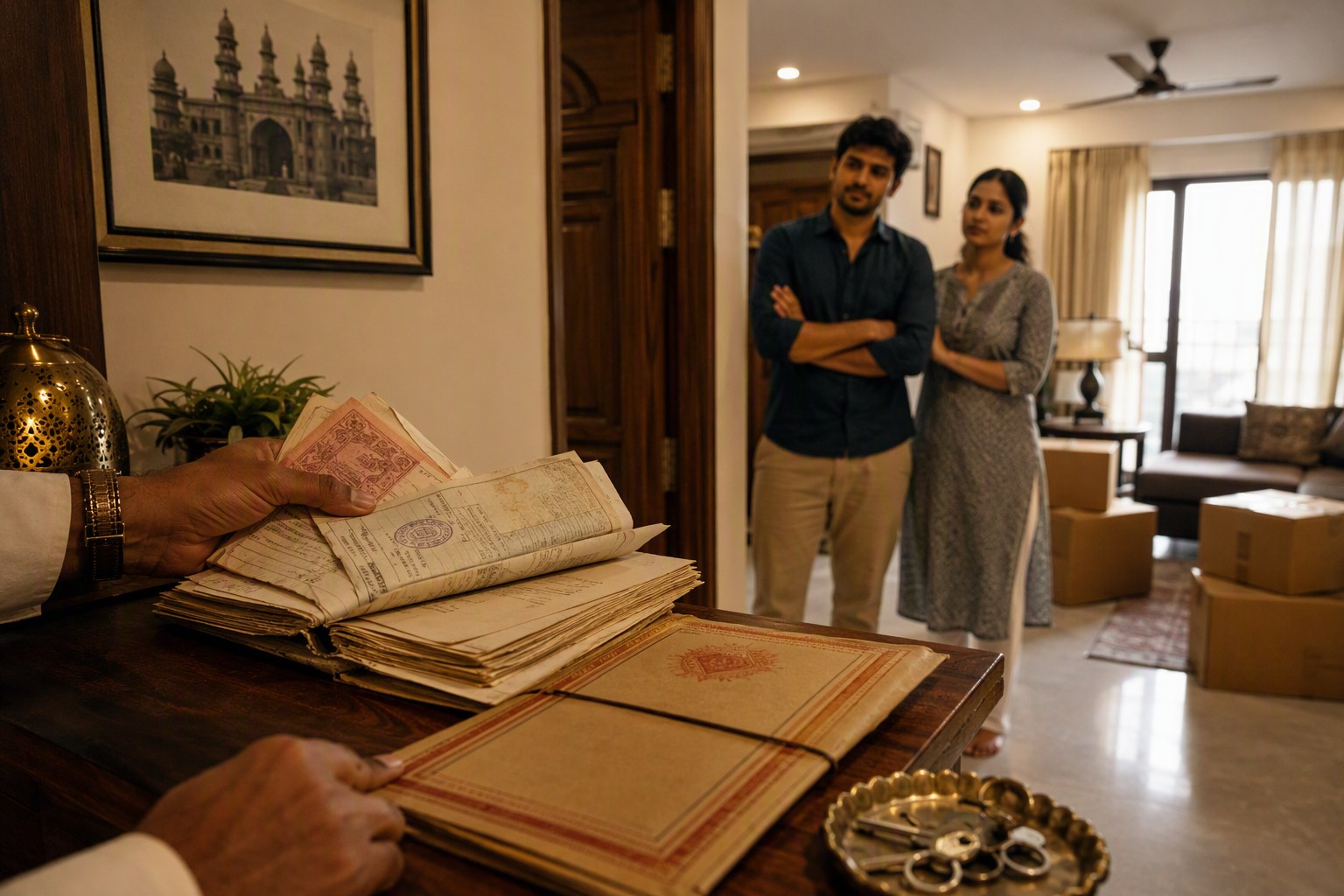
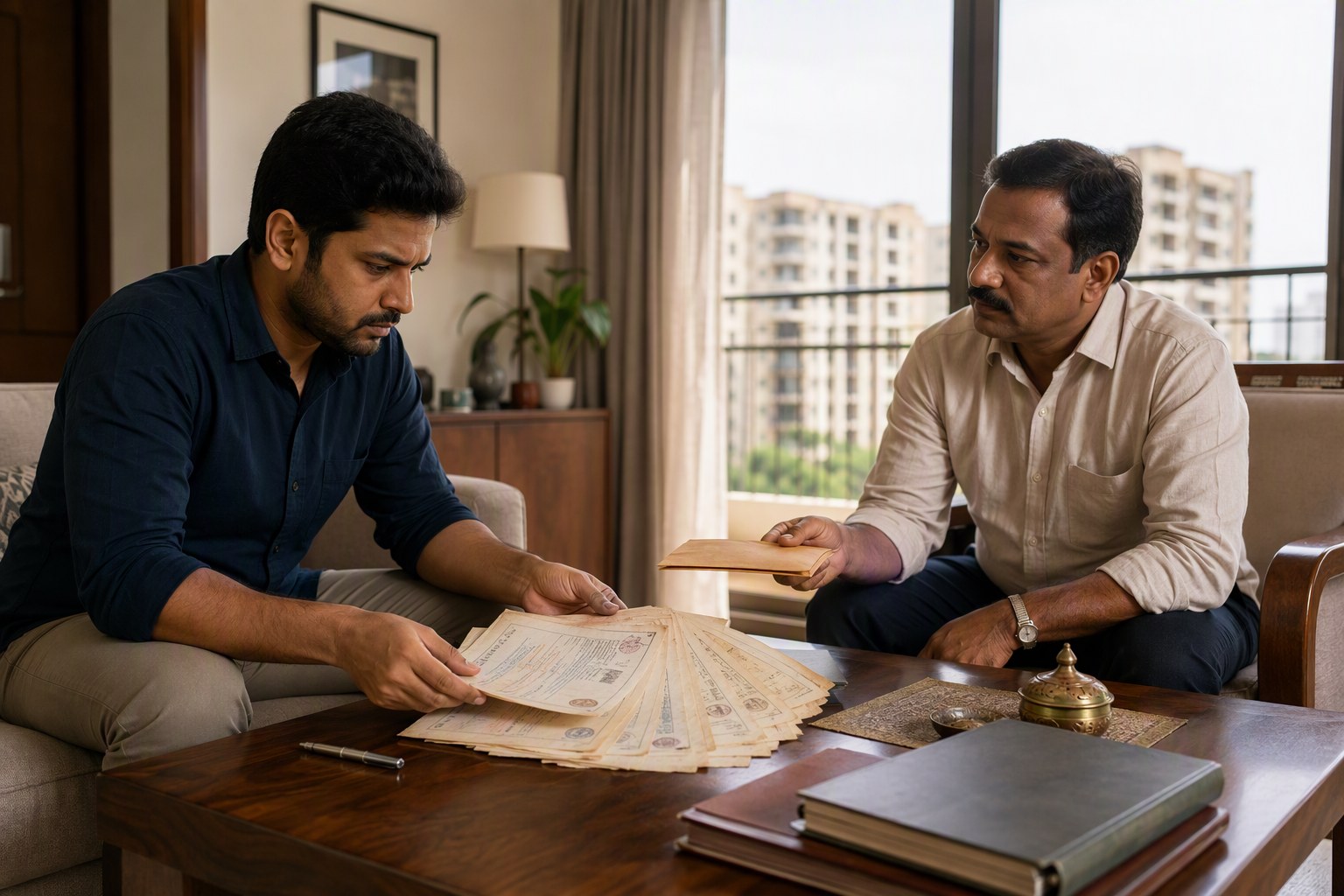
When a buyer asks for link documents before paying token, many Hyderabad sellers get slightly irritated. I understand why. You have agreed on price, both families have spoken, and you are waiting for the token advance. Suddenly the buyer’s lawyer says, “First share the link documents, EC, pahani or prior sale deeds.” It feels like the buyer is slowing the deal.
But in our experience, this request is not automatically a red flag. In Telangana property deals, especially in areas like Kondapur, Tellapur, Narsingi, Mokila, Adibatla, Hayathnagar and Shamirpet, serious buyers usually want a basic title check before they transfer even a small token. A sensible seller should be ready for this. Not by handing over originals blindly, but by preparing a clean document chain and sharing controlled copies.
Short answer: Yes, a seller can share scanned copies of link documents before token advance, provided originals stay with the seller, sensitive ID details are masked where needed, and the buyer is given a clear timeline to pay token after legal review.
Why Buyers Ask for Link Documents Before Paying Token
A buyer’s lawyer is not checking only your latest sale deed. They are checking whether you had the right to sell, whether your seller had the right to sell, and whether the chain is continuous. That chain is what Hyderabad brokers and lawyers casually call “link documents”.
In older city properties around Himayatnagar, Narayanguda, Malkajgiri or Secunderabad Cantonment side, the chain may go back through family partitions, release deeds and inheritance papers. In suburban land around Gandipet mandal, Shankarpally mandal, Abdullapurmet mandal or Maheshwaram mandal, the lawyer may ask for pahanis, old passbooks, Dharani details, mutation proceedings and layout papers. For flats in Gachibowli, Miyapur, Kukatpally or Nizampet, they may ask for the builder’s land link documents along with your registered sale deed.
From a seller’s point of view, the question is simple: “Why should I give documents before getting money?” Fair point. But from the buyer’s side, the question is also fair: “Why should I pay token if title itself is not visible?” A good deal sits in the middle. Share copies, protect originals, and set a time limit.
Link Documents Before Paying Token: What the Buyer’s Lawyer Usually Wants
For most resale transactions in Telangana, the buyer’s lawyer will ask for a document chain that proves title flow. The exact list changes depending on whether it is an apartment, open plot, agricultural land, converted land or independent house. Still, the core idea is the same.
| Property type | Common link documents requested | Seller’s practical response |
|---|---|---|
| Resale flat in Hyderabad | Current sale deed, previous sale deed if any, builder sale deed, construction agreement, link documents of land, occupancy or completion papers if available, latest tax receipt, association NOC where applicable | Share scanned copies first. Keep originals ready for inspection after token or during sale agreement stage. |
| Open plot in HMDA/DTCP layout | Sale deed, prior sale deeds, layout approval, LRS or regularisation papers where applicable, EC, market value details, survey number details | Give a document index and copies. Ask buyer to finish legal check within a fixed number of days. |
| Agricultural land | Registered sale deed, Dharani ownership details, pahani/adangal, mutation, pattadar passbook entries, family documents if inherited, survey map where available | Be extra careful. Verify survey number, extent, classification and prohibited status before negotiation becomes serious. |
| Independent house | Land sale deed, link deeds, building permission, tax receipts, electricity connection proof, water connection proof, approved plan if available | Separate land title from building papers. Buyers may value both differently. |
If you are unsure whether a deed appears in the title chain, check the transaction trail using the Encumbrance Certificate Search. For a more readable review of entries, sellers can also use the EC Analyzer before sending papers to the buyer’s advocate.
How Sellers Should Prepare Link Documents Before Paying Token
The best sellers I have seen do not wait for the buyer’s lawyer to chase them. They keep a digital folder ready even before listing the property. This gives confidence and often helps in negotiation. If two similar flats are available in Kondapur and only one owner has clean documents ready, that owner usually gets the more serious buyer.
1. Start with your latest registered deed
Your latest registered sale deed, gift deed, partition deed or release deed is the starting point. Check whether names, door number, flat number, survey number, extent, boundaries and SRO details are correct. Small spelling variations may not kill a transaction, but they do create lawyer questions.
Also check the SRO jurisdiction. A property in Tellapur may fall under a different registration office from what a buyer assumes. Use Find Your SRO Office if you are not sure where the document was registered or where future registration may happen.
2. Arrange older deeds in date order
Do not send documents randomly on WhatsApp. Make a simple folder like this:
- 01_Current_Sale_Deed.pdf
- 02_Previous_Sale_Deed.pdf
- 03_Mother_Deed.pdf
- 04_EC.pdf
- 05_Tax_Receipts.pdf
- 06_Layout_or_Building_Permission.pdf
- 07_Dharani_or_Pahani.pdf, if land related
This small discipline changes the tone of the deal. The buyer feels the seller is organised. The lawyer also finishes faster because the chain is easier to read.
3. Take a fresh EC, not an old one from your purchase time
Many sellers show the EC they took when they purchased the property years ago. That is not enough. A buyer wants to know what happened after you purchased. Was there a mortgage? Any release deed? Any court attachment? Any sale agreement registered? Any gift or settlement?
Before the token stage, pull a recent encumbrance certificate and compare it with your document chain. If you had a home loan and closed it, keep the loan closure letter and registered mortgage release, if applicable. For bank charges, a buyer’s lawyer may also ask for a CERSAI check. You can start with the CERSAI Charge Check.
4. Match survey number, extent and boundaries
This is where many Telangana land deals slow down. The sale deed may mention one survey number, the pahani may show sub-division, and the layout plan may show a plot number that does not directly reveal the survey number. In areas like Mokila, Kollur, Patancheru, Adibatla and Bongloor, buyers are very alert on this point.
Use the Survey Number Finder to organise survey-related information before sharing it. If the property is agricultural or converted land, compare survey number, village, mandal and extent with Dharani and revenue records. Do not casually say “same only” if the papers do not match. That answer irritates lawyers.
5. Check Section 22-A prohibited property risk early
Telangana’s prohibited property list under Section 22-A is not a small issue. As per the Verified database context, prohibited properties under Section 22-A stand at 3,076,153. That is why careful buyers ask for title papers before token, especially for land and old plots.
For sellers, this check should happen before marketing the property. If your survey number is wrongly reflected in a prohibited category, the sale can get stuck at registration stage. Use the Section 22-A Prohibited Property Check and keep the result in your internal file. If there is any mismatch, speak to a local document writer or lawyer familiar with that mandal before accepting money.
Link Documents Before Paying Token: What You Can Share and What You Should Hold Back
There is a difference between being transparent and being careless. Sellers should share enough for legal review, but not create avoidable risk.
Safe to share as scanned copies
- Registered sale deed and older link deeds
- EC copy
- Approved layout or building permission copy
- Property tax receipt
- Dharani ownership snapshot or pahani copy, for land
- RERA details for under-construction or recently completed projects
- Loan closure proof, if relevant
Be careful with these
- Aadhaar and PAN copies: mask numbers if not required at token stage
- Original deeds: never hand them over before a proper written understanding
- Blank signed papers: do not sign anything casually
- Original passbook or revenue papers: show for inspection, but do not leave them with buyer
- Society NOC: obtain only when deal has moved to agreement stage, unless your society requires earlier confirmation
For an apartment in a RERA-registered project, the buyer may also check project details through the RERA Project Lookup. Sellers should not feel offended by this. In fact, if the project record is clean, it supports your asking price.
Set a Clear Token Timeline After Sharing Link Documents
The biggest mistake sellers make is sharing all documents and then waiting endlessly. Some buyers use papers to compare, negotiate with another owner, or keep you hanging. Avoid this with a polite but firm timeline.
You can say:
“I am sharing scanned copies of the title documents for your lawyer’s review. Please complete legal verification within three working days. If your lawyer is satisfied, token advance and token receipt can be completed immediately after that. Originals can be shown in person before signing the sale agreement.”
This message is professional. It does not sound desperate. It also tells the buyer that document access is linked to action.
In our experience, genuine buyers in areas like Nallagandla, Manikonda, Bachupally and Sainikpuri usually respect this. They may ask one or two extra papers, but they will not disappear. If a buyer keeps asking for more documents without committing any date for token, keep your property open for other enquiries.
Use Ready Reckoner and SRO Details to Reduce Price Arguments
Once the legal review starts, buyers often bring valuation into the discussion. They may say the government market value is lower than your quote. Sellers should be ready for this conversation.
The ready reckoner or guideline value is mainly for registration and stamp duty purposes. Market price can be higher or lower depending on project quality, road width, floor, facing, community, rental demand and immediate neighbourhood. A flat near Financial District may behave differently from a similar-sized flat in another part of Serilingampally mandal. A plot near a wide approach road in Shankarpally can command a different buyer response from an interior plot with access concerns.
Before negotiation tightens, check official value using the Market Value / Guideline Value Search. For buyer-side cost clarity, you can also share the Stamp Duty Calculator. This reduces loose talk and keeps the discussion anchored to registration realities.
Special Cases: Flats, Plots and Inherited Properties
For resale flats
Flat sellers often assume link documents are only for land. Not correct. A buyer’s lawyer may ask how the builder got the land, whether development rights were valid, whether the flat was properly conveyed, and whether your sale deed matches the sanctioned unit details.
Keep these ready: your sale deed, builder-buyer agreement if available, possession letter, parking allotment if separately mentioned, maintenance dues statement, tax receipt, EC and association NOC at the right stage. For under-construction or recently completed projects, keep RERA details ready.
For open plots
Open plots in HMDA or DTCP layouts need extra care. Buyers check layout approval, plot number, survey number, road width and land use. This is common in Kollur, Velimela, Kandukur, Tukkuguda, Bibinagar and Yadadri-side discussions.
If access road or zoning is a concern, sellers can pre-check using Road Width Check and Land Use Zone Finder. This is especially useful when the buyer is planning construction soon after registration.
For inherited or family properties
Inherited property creates the most questions before token. The buyer’s lawyer will ask how the present seller became owner. Was there a will? Legal heir certificate? Family settlement? Registered partition deed? Release deed from siblings? Death certificate of previous owner?
My opinion is simple: if family title is not fully documented, do not rush to take token. First clean up the papers. Otherwise the buyer may pay token, legal review may fail, and both sides will fight about refund. A clean family settlement or release deed before sale is better than emotional explanations after the buyer’s lawyer raises objections.
How to Build Trust Without Losing Control
A seller who hides documents loses trust. A seller who gives originals too early loses control. The right method is controlled transparency.
- Create a PDF folder with document index.
- Share only scanned copies before token.
- Mask personal ID numbers where not required.
- Put a review deadline in writing.
- Keep originals ready for physical verification after token or at sale agreement stage.
- Ask the buyer to confirm whether legal review is only for title or also for loan processing.
- Do not stop showing the property until token is received.
If you want a single starting point for checks before speaking to buyers, use the Property Verification Tool. It helps sellers think like a buyer’s lawyer before the buyer’s lawyer enters the discussion.
When You Should Refuse the Buyer’s Request
Not every request is genuine. Refuse or slow down if the buyer asks for originals before token, wants you to sign blank formats, avoids sharing their full name, or says their “finance person” will collect documents without any written message. Be more careful if the property is high-value land, family-owned property or has pending mutation.
Also watch for buyers who ask for documents and then try to renegotiate aggressively without giving any legal objection in writing. A genuine legal objection will be specific: missing link deed, EC mismatch, survey number issue, mortgage entry, wrong extent, pending release deed, or Section 22-A concern. Vague lines like “lawyer said problem is there” are not enough. Ask them to put the objection clearly.
Practical Seller Checklist Before Token Advance
- Latest registered deed is scanned clearly.
- Older link deeds are arranged in date order.
- Fresh EC is downloaded and matched with deeds.
- Loan closure or release deed is available, if loan existed.
- Survey number, mandal and village details are consistent.
- Section 22-A prohibited property check is done for land or plot.
- Guideline value and SRO details are checked.
- Original documents are kept safely, not handed over.
- Token receipt format is ready.
- Sale agreement draft points are discussed before accepting token.
The token stage is not only about money. It sets the discipline for the whole transaction. If the seller is organised, the buyer is less likely to panic. If the buyer is serious, they will respect a clean process. Hyderabad’s resale market rewards sellers who are transparent, but firm.
So, when a buyer asks for link documents before paying token, do not take it personally. Treat it as a legal checkpoint. Share copies, protect originals, verify your own title first, and insist on a clear token timeline. That is how sellers avoid last-minute SRO shocks, lawyer delays and unnecessary price cuts.
Frequently Asked Questions
Should I give link documents before receiving token advance?
You can share scanned copies for legal review, but do not hand over original documents before a written understanding. Set a clear deadline for the buyer to complete verification and pay token.
What are link documents in a Telangana property sale?
Link documents are the earlier title papers showing how ownership moved from previous owners to the present seller. They may include mother deed, previous sale deeds, gift deed, partition deed, release deed, pahani, Dharani records and layout papers, depending on property type.
Can a buyer’s lawyer ask for EC before token?
Yes. EC is one of the first documents lawyers check because it shows registered transactions and encumbrances for the property. A recent EC is better than an old EC taken during your purchase.
What should I not share before token?
Do not give original deeds, blank signed papers, unmasked ID proofs or original revenue records before token. Copies are enough for initial legal review in most cases.
What if my link document chain has a missing deed?
First check the EC and SRO records. If a deed is missing, try to obtain a certified copy. If the gap is due to inheritance or family transfer, speak to a property lawyer before accepting token.