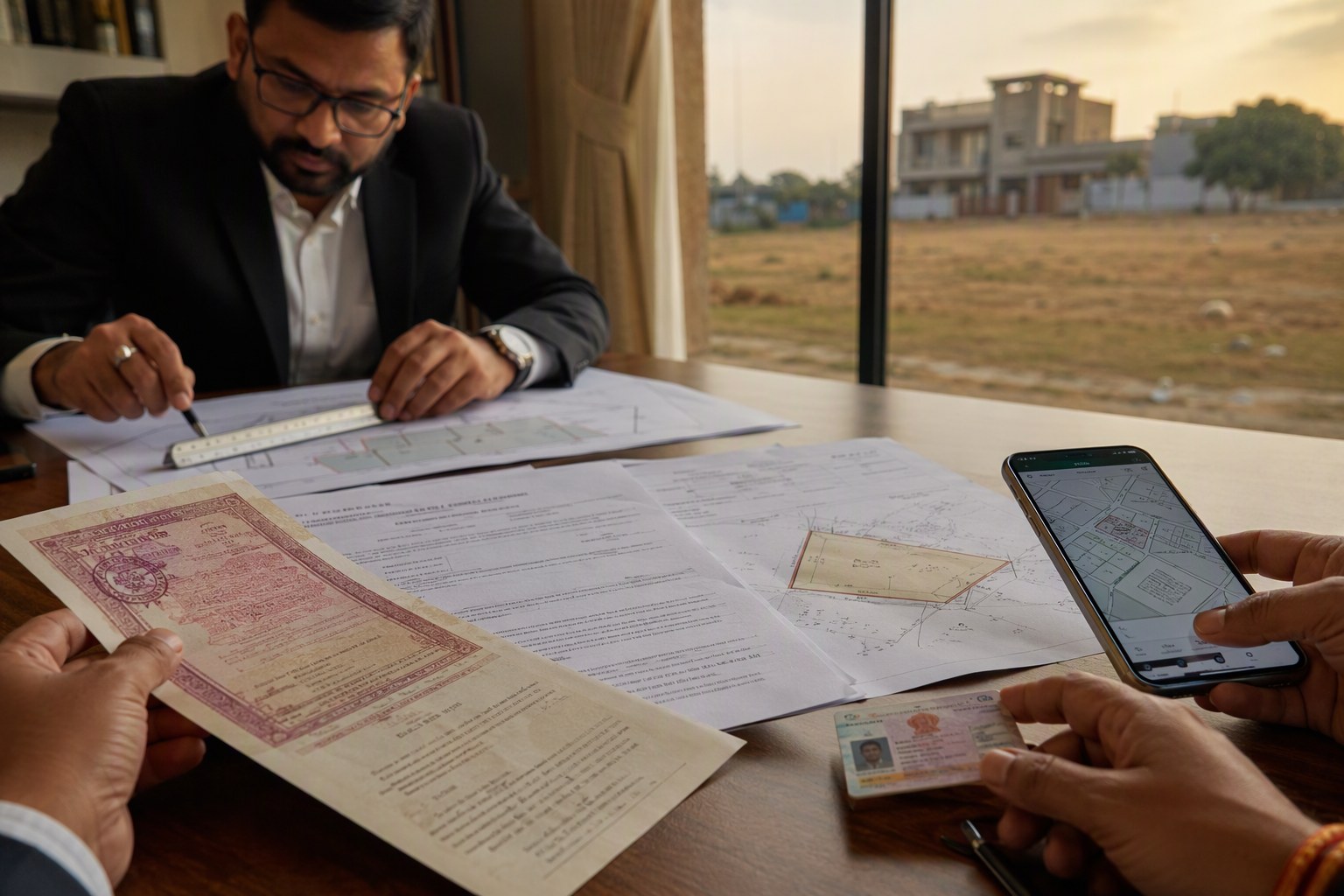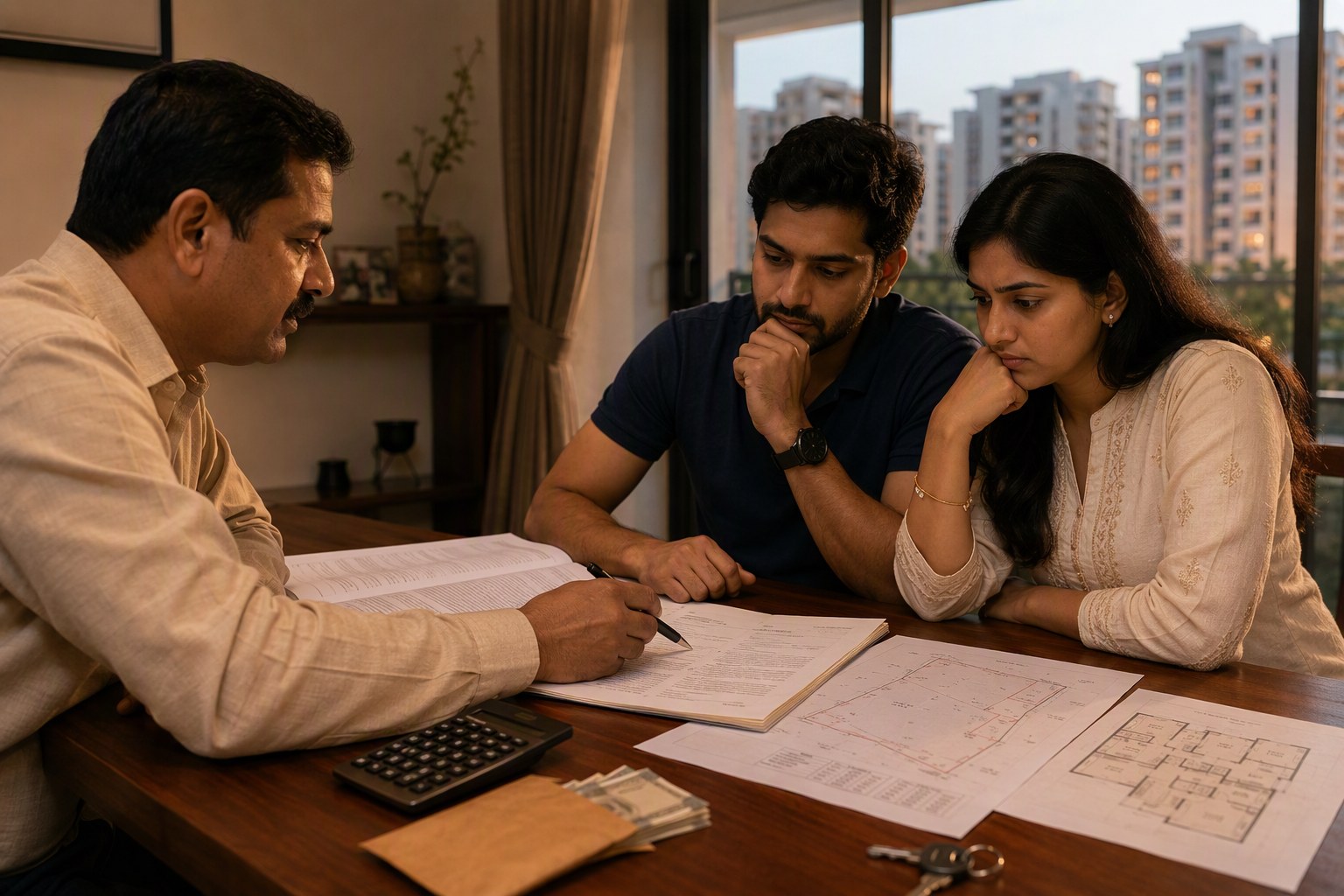
Last month, a seller in Nallagandla called me with a familiar worry. The buyer had agreed to the price, token was paid, and both families were discussing the registration date. Then the buyer’s home loan bank fixed a valuation visit. Suddenly, the buyer started asking for old link documents, latest EC, sanctioned plan, and even parking details. This is exactly where Buyer's Bank Valuation Visit preparation matters. If the seller is casual at this stage, price talks can reopen even after a verbal deal.
In Hyderabad and surrounding Telangana markets, the bank valuer is not coming to admire your flat or plot. They come to check whether the property is legally acceptable, physically identifiable, reasonably maintained, and fit for mortgage. The valuer’s comments can affect the buyer’s loan eligibility, disbursement timing, and confidence. A clean visit protects your negotiated price.
Buyer's Bank Valuation Visit: Why Sellers Should Take It Seriously
Many sellers think bank valuation is the buyer’s headache. Technically, the buyer applies for the loan, pays processing fees, and coordinates with the bank. But practically, the seller controls the property access, original document trail, building condition, and local answers. If these are weak, the buyer may come back saying, “Bank has some issue, please reduce.”
We’ve seen this happen in Kondapur, Miyapur, Manikonda, Bachupally, Uppal, Kompally and Tellapur. The deal is agreed first. Then the bank’s legal and technical team asks questions. The buyer gets nervous. A small missing paper becomes a bargaining point.
My opinion is simple: once you accept a buyer who is taking a bank loan, treat the valuation visit like a mini due diligence audit. Do not leave it to the watchman, tenant, or broker alone.
The valuer will usually check location, access road, built-up area, floor, age of property, visible condition, approvals shown by parties, and whether the property matches the documents. In flats, they may ask for sale deed, link documents, sanctioned plan, occupancy certificate where available, property tax details, electricity bill, association NOC if needed, and parking confirmation. For plots, they may focus more on survey number, layout approval, boundaries, road access, land use, and prohibited property status.
Buyer's Bank Valuation Visit Before Price Talks Get Disturbed
The best time to prepare is not after the valuer arrives at the gate. Prepare before final price discussion, or at least before accepting a token amount. When a buyer is dependent on a housing loan, every unanswered question can become a fresh negotiation point.
For example, in Serilingampally mandal, many apartment resales are clean but document-heavy because there may be developer sale deed, landowner share papers, supplementary agreements, parking letters, and association handover papers. In Gandipet mandal areas like Kokapet and Manikonda, plot and villa buyers may ask sharper questions on layout approval, road width, and land use. In Uppal and Ramanthapur, older houses may have a long family document chain. None of this is unusual. But it should be arranged properly.
Before the valuer visit, keep these ready in one file and one scanned folder:
- Current sale deed in the seller’s name.
- Link documents, preferably covering the chain available with you.
- Latest Encumbrance Certificate details.
- Property tax receipt or municipal assessment details.
- Electricity bill and water bill, if applicable.
- Approved plan, layout approval, or building permission copy, where available.
- Occupancy certificate for newer apartment projects, where applicable.
- Parking allotment or mention in sale deed, if parking is part of the deal.
- Society or association maintenance dues status.
- Identity and PAN details of sellers, especially if there are multiple owners.
A seller who shares organised papers looks serious. A seller who says “broker will arrange” creates doubt. In our experience, doubt is more dangerous than a visible defect, because doubt allows imagination.
Check EC Before the Buyer’s Bank Valuer Checks It
The Encumbrance Certificate is one of the first documents that banks and their legal teams look at. As a seller, you should not wait for the buyer’s lawyer to point out a mortgage entry, release deed gap, spelling difference, or missing schedule reference.
Use the Encumbrance Certificate Search before the buyer starts bank processing. If you already have EC details, review whether the transactions match your document story. If the property was purchased with a previous loan, make sure the release deed or loan closure entry is properly reflected. If the old bank did not complete documentation cleanly, handle it before the new buyer’s bank finds it.
For Telangana sellers, EC review is not only about loans. It also confirms whether registered transactions are showing as expected. In older Hyderabad localities like Himayatnagar, Chikkadpally, Malakpet, Secunderabad, and parts of Kukatpally, document chains may have older schedules with different door numbers, ward references, or boundaries. The valuer may not solve these issues, but their report can flag mismatch. Once flagged, the buyer may slow down payment.
If you are not comfortable reading EC entries, use the EC Analyzer to understand the flow. Then keep your explanation ready in plain words. Do not argue with the buyer’s bank team at the site. Give documents, answer calmly, and send written clarifications later if needed.
Section 22-A Check Is Not Only for Village Land Sellers
Telangana has a large pool of properties listed under prohibited categories in government records. As per Verified.RealEstate database context, 3,076,153 properties are recorded under Section 22-A prohibited properties data. This number is not something a seller should ignore, especially in peri-urban belts.
In mandals around Hyderabad such as Gandipet, Shamshabad, Maheshwaram, Medchal, Shankarpally, Moinabad, Hayathnagar and Ibrahimpatnam, buyers have become more cautious about survey numbers and prohibition status. Even within GHMC-facing markets, buyers’ banks may ask questions if the title trail touches agricultural land, old layouts, assigned land allegations, or government land references.
Before a buyer’s bank valuation visit, check whether the survey number or property reference has any prohibited property concern. Use the Section 22-A Prohibited Property Check. If the result needs deeper review, do not hide it. Speak to a documentation professional and prepare a written explanation with supporting papers.
For plotted land, also cross-check survey identification through the Survey Number Finder. A wrong survey number on a WhatsApp message can create unnecessary panic. Keep the village name, mandal, extent, boundaries, and document schedule consistent across communication.
Do Not Let Access Problems Become Price Problems
A valuer visit can fail for a very silly reason: nobody opens the door. In resale flats, this happens when the property is tenant-occupied. In independent houses, it happens when one family member has the key and another person is coordinating. For plots, the buyer’s representative may reach the wrong lane because nobody shared a pin location or boundary reference.
Before the visit, send the following to the buyer and bank valuer coordinator:
- Google map location pin.
- Flat number, tower name, floor, and block details.
- Contact number of the person opening the property.
- Parking access details, if the valuer needs to see basement or stilt parking.
- Society gate entry instruction, especially in gated communities.
- Best time to visit, avoiding tenant working hours or association restrictions.
For plots in areas like Mokila, Kollur, Tukkuguda, Adibatla, Keesara, Ghatkesar and Dundigal, mark the boundaries before the visit. If there are no compound walls, keep stones, pegs, or at least a clear site sketch ready. If a neighbour or local caretaker knows the land, keep that person available. A valuer standing in front of an open land parcel without boundary clarity will naturally write cautious comments.
In apartment sales, clean access also includes lift functioning, corridor entry, meter room clarity, and parking visibility. If the flat has been locked for months, visit one day before. Open windows, check lights, clear dust, and remove stored junk from balconies. You are not staging for a luxury magazine shoot. You are preventing negative technical notes.
Condition Notes: Be Honest, But Control the Narrative
Every property has some condition issue. A ten-year-old flat in Madinaguda may have seepage near the utility. A villa near Tellapur may have terrace waterproofing marks. An old independent house in Dilsukhnagar may have structural age visible. Hiding obvious defects is a bad idea. But leaving the valuer to interpret everything without context is also risky.
Prepare a small condition note for yourself. It can include:
- Age of construction as per your records.
- Major repairs completed, if any.
- Known seepage or maintenance issues already disclosed to buyer.
- Items included in sale, such as fixed wardrobes or modular kitchen.
- Items excluded from sale, such as loose furniture or appliances.
- Maintenance dues status.
Do not over-explain. Do not say “everything is perfect” if the buyer and valuer can see repairs are needed. Say, “This damp patch was discussed with the buyer; association has inspected the external line,” if that is true. Straight answers build confidence.
If your property is in a RERA-registered project and the buyer asks for project details, you can guide them to the RERA Project Lookup. For resale sellers in newer projects at Narsingi, Puppalaguda, Financial District side, Tellapur, Bachupally and Kompally, RERA details often help buyers feel more comfortable about project identity and approvals.
Market Value, Guideline Value and the Bank’s View
One common confusion is between agreed sale price, government market value, and bank valuation. These are not always the same. The Sub-Registrar Office uses notified market value or guideline value for stamp duty calculation. The bank valuer gives a technical estimate for loan security. The buyer and seller agree on a transaction price based on market demand, property condition, location, floor, view, furnishing, urgency and negotiation.
Before price talks harden, check the government value through the Market Value / Guideline Value Search. You can also estimate registration cost using the Stamp Duty Calculator. This helps both sides avoid last-minute confusion at the SRO.
If the bank valuation comes lower than the agreed price, sellers usually react angrily. I understand that. A valuer may not fully capture a premium corner flat, better interiors, east-facing preference, lake view, metro access, or a well-run society. Still, the buyer’s loan may be tied to that report. So your preparation should make the valuer’s job easier, not harder.
Keep your supporting points factual:
- Exact carpet, built-up or super built-up area as per document or builder papers.
- Floor and facing.
- Parking rights.
- Clubhouse or amenities if part of project documents.
- Recent maintenance upgrades, if documented.
- Clear title and loan closure status.
Avoid quoting random “going rate” statements without support. In Hyderabad, tea-shop rate talk travels faster than registration data. Banks are not moved by noise. They respond better to clean papers and easy site verification.
Seller Prep Checklist Before Buyer’s Bank Valuation Visit
| Area to prepare | What seller should do | Why it matters |
|---|---|---|
| Title papers | Keep sale deed, link documents and ID proofs ready | Reduces buyer anxiety during legal review |
| EC details | Check EC before sharing papers | Prevents surprise mortgage or entry questions |
| Property access | Coordinate keys, gate entry and site contact | Avoids failed or incomplete valuation visit |
| Physical condition | Clean property and note known defects honestly | Controls how repairs are understood |
| Approvals | Keep plan, layout or OC copies where available | Supports technical and legal comfort |
| SRO clarity | Confirm correct SRO and registration jurisdiction | Helps buyer plan registration without confusion |
For SRO-related clarity, use the Find Your SRO Office. Hyderabad buyers often get confused between property location, municipal circle and registration office. A flat in one well-known locality may still fall under a different SRO than what the buyer assumes. Clean SRO communication saves time.
How to Handle the Valuer on Visit Day
The seller or a trusted representative should be present. If the property is tenant-occupied, inform the tenant in advance and request basic cooperation. Do not let the valuer wait outside the gate while the buyer keeps calling three people for permission.
During the visit, keep your answers short and document-backed. If the valuer asks, “Is there any loan on this property?” say the present status and show proof if available. If the loan is closed, keep closure or release papers. If the loan will be closed from sale proceeds, explain the process clearly. Many resale transactions in Hyderabad happen this way, and banks understand it when papers are proper.
Do not pressure the valuer to give a number on the spot. Do not ask, “Will my value come high?” in front of the buyer. It looks desperate. Also, do not make claims you cannot support. If the document says one parking and you are using two because of society adjustment, be careful. Banks prefer documented rights.
For independent houses and plots, show boundaries calmly. If there is a road widening marking, nala nearby, high-tension line, graveyard, lake buffer concern, or access dispute, do not pretend it does not exist. Better to explain with available records than allow the buyer to discover it later and reopen price talks aggressively.
After the Buyer’s Bank Valuation Visit: What Sellers Should Watch
Once the visit is done, the buyer may take a few days to receive bank feedback. During this waiting time, do not create panic by calling repeatedly. Instead, send any pending documents in one organised message or email. Mention file names clearly: Sale Deed, EC, Property Tax, Plan, OC, Parking Letter, Loan Closure, Association Dues.
If the buyer says the bank has raised a query, ask for the query in writing or at least a clear screenshot. Many times the issue is not valuation at all; it may be a legal query, missing link document, name mismatch, or CERSAI charge check. If there is any charge concern, use the CERSAI Charge Check to understand whether a registered security interest needs attention.
Price renegotiation should not be your first reaction. Ask what exactly changed from the buyer’s side. If the bank value is lower, discuss whether the buyer can increase margin money. If a document is missing, see whether it can be produced. If there is a genuine defect, then renegotiation may be practical. But do not reduce price only because the buyer says “bank people told something” without details.
My Practical View for Hyderabad Sellers
A seller who prepares well before the buyer’s bank valuation visit protects three things: price, timeline and credibility. Hyderabad’s resale market is mature now. Buyers in Gachibowli, Kondapur, Narsingi, Miyapur, Sainikpuri, LB Nagar, Attapur, Kukatpally and Kompally are not relying only on broker words. They are checking EC, RERA, SRO, survey number, guideline value and loan eligibility.
That is good for the market. Clean sellers benefit when paperwork is transparent. Problem sellers get exposed faster. If your property is clean, show it cleanly. If there are gaps, handle them before the buyer’s bank team arrives. The valuation visit should confirm the deal, not disturb it.
My final advice: do not treat valuation as a formality. Treat it as the buyer’s confidence test. Once the buyer’s bank is comfortable, your registration discussion becomes smoother, your payment schedule becomes clearer, and your price stands on stronger ground.
Frequently Asked Questions
Should the seller be present during the buyer’s bank valuation visit?
Yes, the seller or a trusted representative should be present. The valuer may need access, document clarification, parking details, boundary identification, or basic condition information.
Can bank valuation reduce the already agreed sale price?
The bank does not directly reduce your price, but a lower valuation can affect the buyer’s loan amount. The buyer may then ask for renegotiation, so sellers should prepare documents and site access properly.
Which documents should a seller keep ready before valuation?
Keep sale deed, link documents, EC details, tax receipts, electricity bill, approved plan or layout copy, OC where applicable, parking proof, loan closure papers and seller ID documents ready.
Is Section 22-A check needed for Hyderabad resale property?
It is advisable, especially for plots, villas, older layouts and properties linked to survey numbers in expanding mandals. Telangana records include 3,076,153 prohibited property entries in the available database context.
What if the buyer’s bank raises an EC or title query?
Ask for the query clearly in writing, review the EC and link documents, and respond with supporting papers. Do not agree to a price cut unless the issue is genuine and affects the transaction.