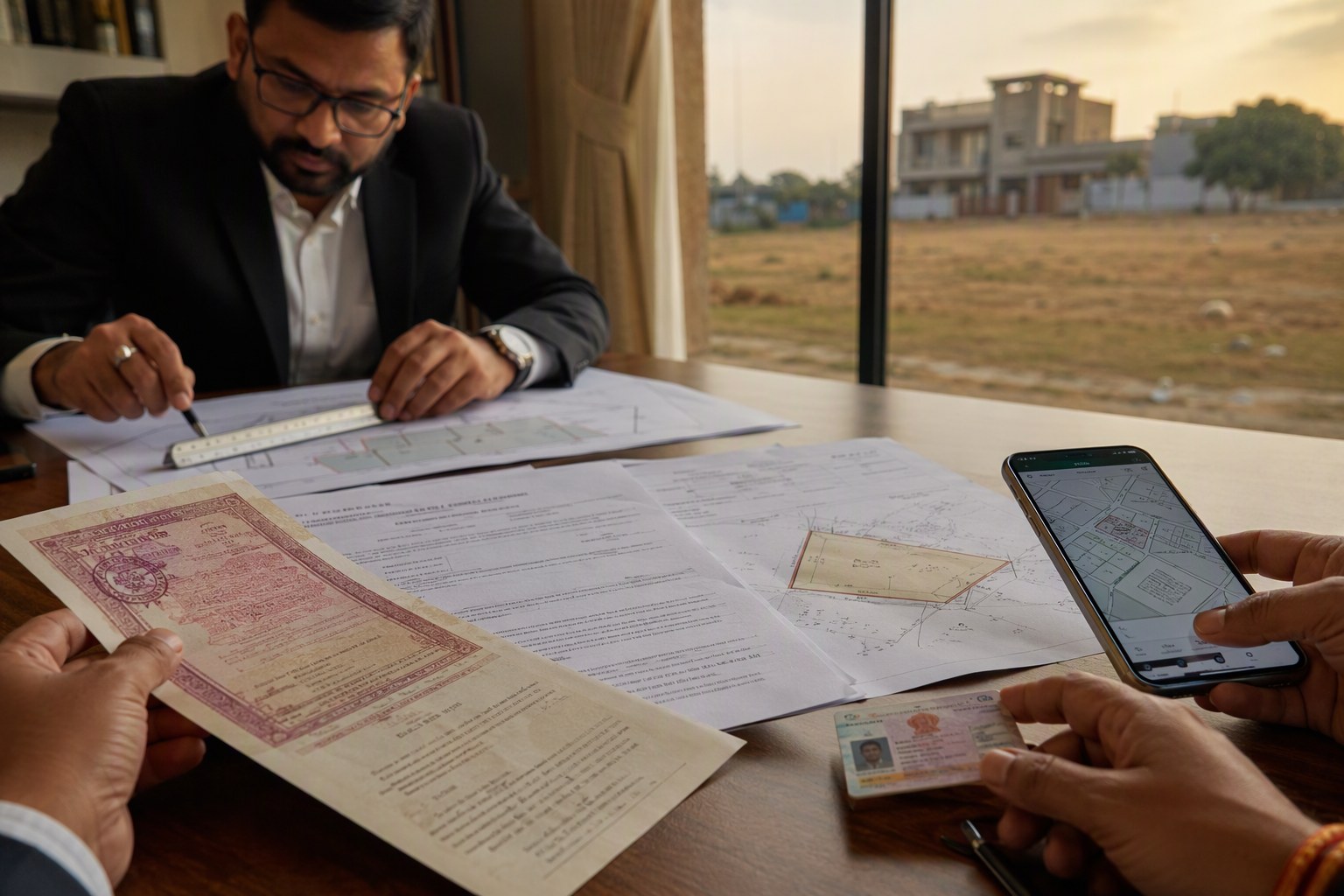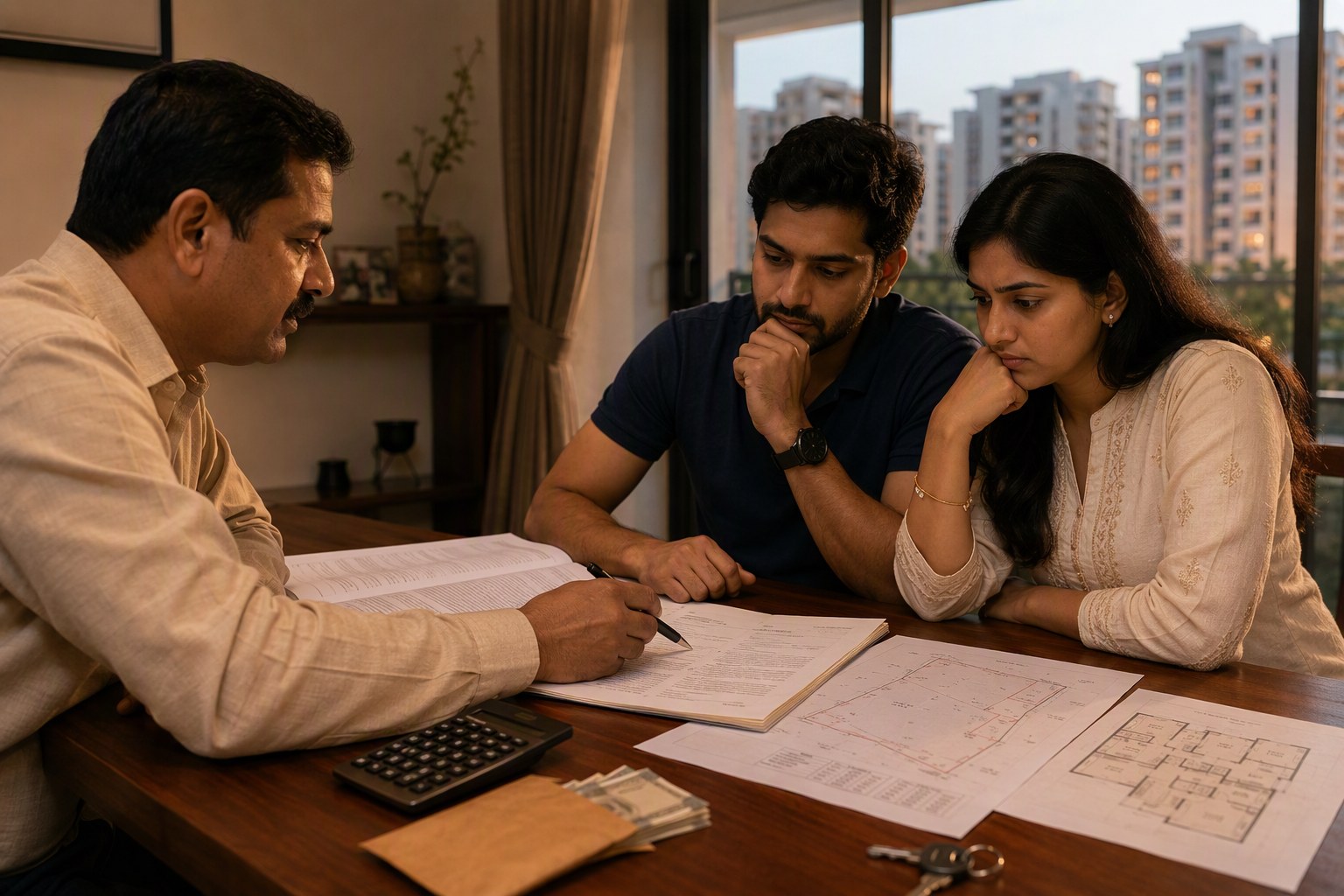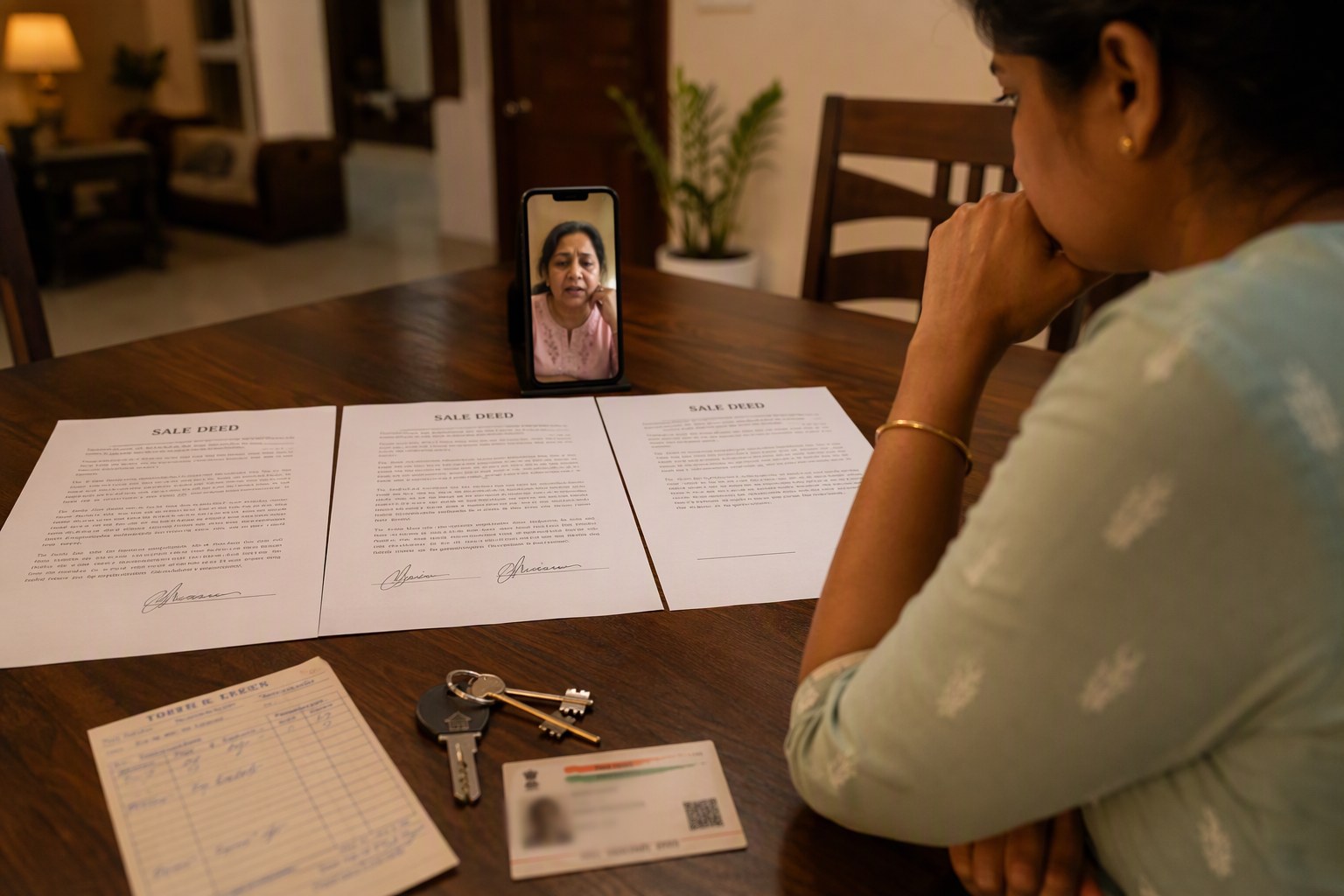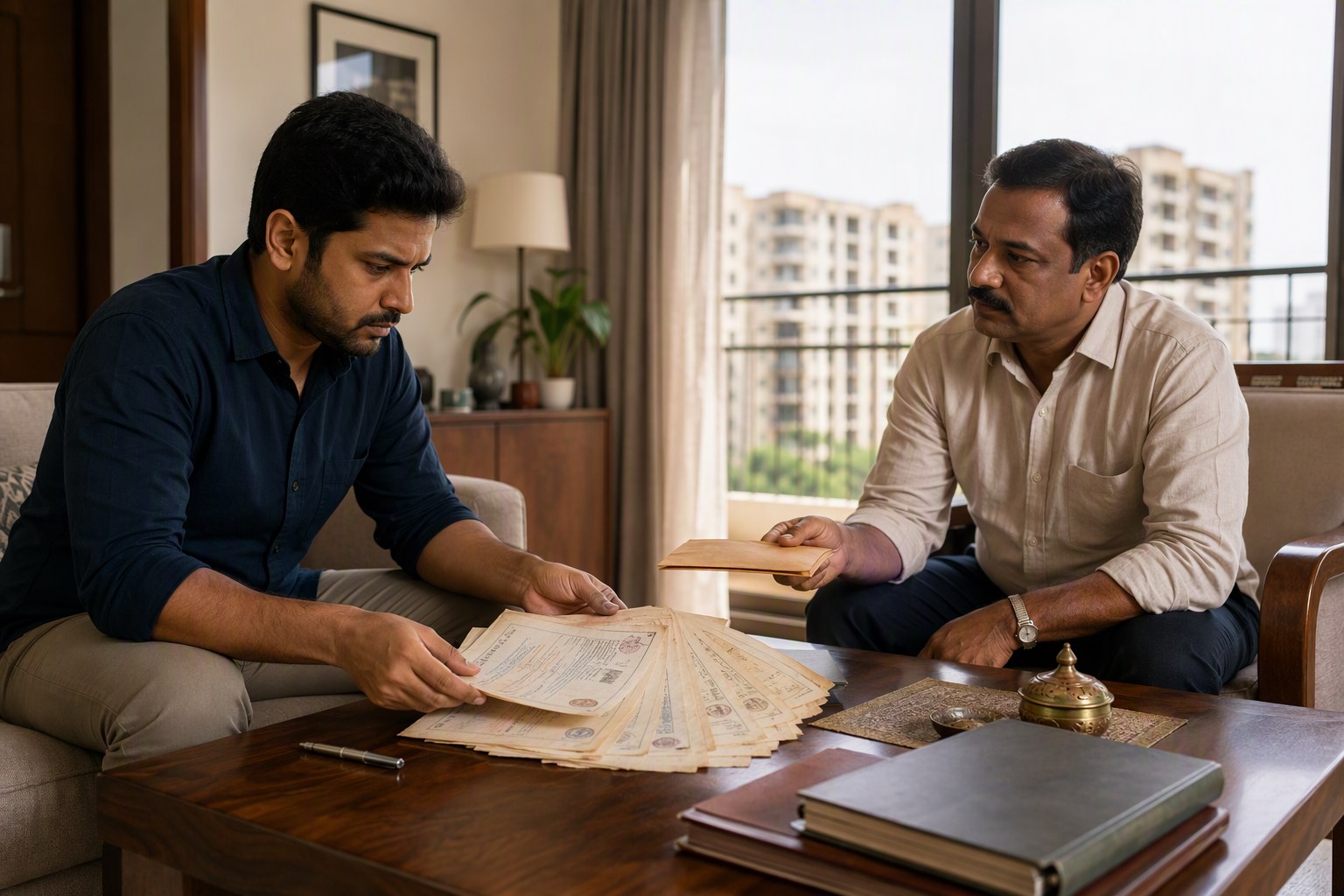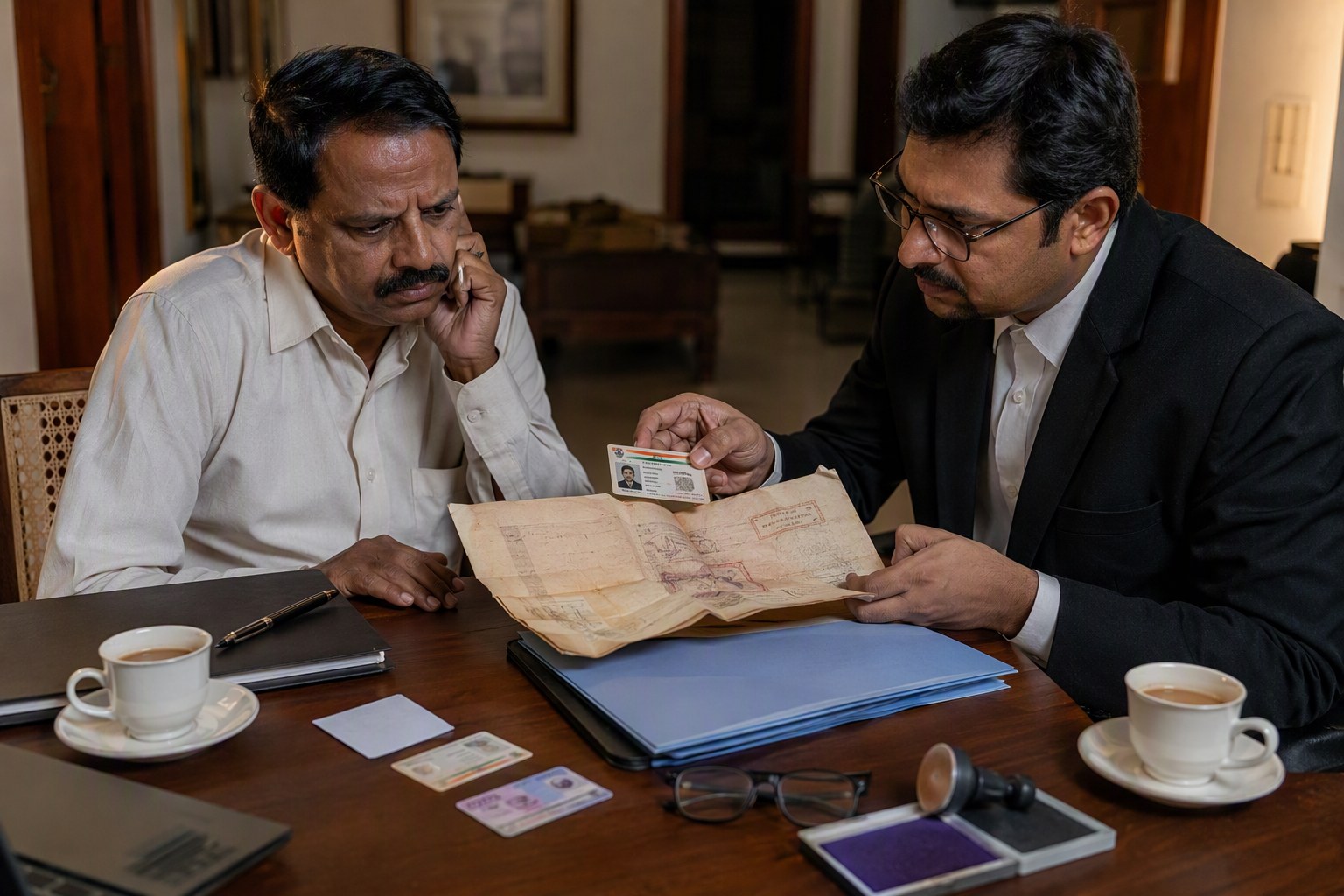
Name Mismatch in Sale Deed cases are quietly slowing down property registrations across Hyderabad and Telangana. A missing initial, a different spelling between Aadhaar and old sale deed, father’s name written differently, or a post-marriage surname change can put a clean sale on hold at the SRO counter. In our experience, many sellers discover this only after the buyer has arranged funds, stamp duty is paid, and both parties are ready for registration.
The practical answer is simple: sellers should correct identity mismatches before listing the property, not after finding a buyer. For flats in Kondapur, plots in Tellapur, old houses in Himayatnagar, agricultural land in Shankarpally mandal, or layouts near Ibrahimpatnam, the registration office looks at document consistency. If the seller’s identity chain is not clear, the Sub-Registrar can ask for supporting proof, clarification, rectification, affidavit, or in some cases fresh legal scrutiny.
Our view is direct: a seller who fixes name mismatch issues early gets better buyer confidence, faster due diligence, and fewer last-minute arguments at the SRO.
Name Mismatch in Sale Deed: Why SROs Take It Seriously
A sale deed is not just a private agreement. It becomes a public record after registration. That is why the SRO checks whether the person selling today is the same person who acquired the property earlier. If the old deed says “K. Srinivas Reddy”, Aadhaar says “Kondapuram Srinivasa Reddy”, PAN says “K Srinivas”, and the pattadar passbook says “Kondapuram Srinivas Reddy”, the officer or document writer may ask for clarity.
In Telangana, the issue becomes more sensitive for land parcels because names appear across multiple records: old registered deed, link documents, pahani, Dharani, pattadar passbook, mutation proceedings, tax receipts, layout approvals, and EC. For apartments, the chain may include sale deed, construction agreement, link deed, society records, electricity bill, property tax, and loan closure documents.
This is also where buyers are becoming sharper. A buyer in Gachibowli or Narsingi may have a bank legal team. A buyer of agricultural land in Moinabad mandal may ask for Dharani and pahani matching. A buyer in LB Nagar or Uppal may verify EC and old link documents before paying advance. Small mismatch, big doubt.
Before you quote a price or accept token advance, run the basic checks: Encumbrance Certificate Search, Property Verification Tool, and Find Your SRO Office. These checks will not correct the mismatch by themselves, but they help you see where the mismatch is appearing.
Name Mismatch in Sale Deed: Common Seller Problems Before Registration
Not every mismatch is a fraud indicator. Many are old clerical habits. Earlier deeds often used initials, short names, or local spelling. Telugu names transliterated into English can vary. For example, “Venkata”, “Venkataiah”, “Venkat”, and “Venkatesh” are not automatically the same person in registration records. The SRO needs a bridge between the documents.
1. Initials expanded differently
This is very common in Hyderabad resale flats and old plots. Old sale deed may show “M. Ramesh”. Aadhaar may show “Madireddy Ramesh Kumar”. PAN may show “Ramesh M”. If the father’s name, age, address, and photo ID support the same person, it may be manageable with affidavit and supporting documents. But if the link deed also has a different father’s name, the issue becomes serious.
2. Spelling variation in surname or given name
Names such as “Rao”, “Ravu”, “Rav”, “Goud”, “Gowd”, “Reddy”, “Reddi”, “Srinivas”, and “Sreenivas” often vary across documents. A single spelling variation may not stop registration, but repeated mismatch across title documents can trigger buyer concern.
3. Father’s name or husband’s name mismatch
This is one of the most sensitive errors. If the seller’s name matches but father’s name differs, the SRO or buyer’s advocate may ask whether it is the same person. In ancestral property, partition deed, gift deed, or succession cases, this can delay the deal badly.
4. Name after marriage
Women sellers often face this. The earlier purchase deed may be in maiden name, while current Aadhaar and PAN carry husband’s surname. This is usually fixable with marriage certificate, gazette notification if available, affidavit, and consistent KYC. Still, the seller should prepare the file before marketing the property.
5. Old deed has no Aadhaar-style full name
Many older deeds have only initials and village address. That may have been normal then. Today, banks, buyers, and SRO counters prefer full identity linkage. Sellers of older properties in areas like Narayanguda, Malkajgiri, Secunderabad Cantonment surroundings, Mehdipatnam, and Chikkadpally should check this early.
6. Dharani name and registered deed name are different
For agricultural land in mandals such as Shankarpally, Chevella, Moinabad, Yacharam, Maheshwaram, Kandukur, Ibrahimpatnam, and Medchal, Dharani entries matter. If the pattadar name differs from the registered deed or succession document, buyers may pause. Banks may refuse mortgage processing until the mutation record is cleaned up.
What Sellers Should Fix Before Putting Property on the Market
Here is the seller-side clean-up checklist we use when reviewing resale properties. It works for flats, plots, independent houses, and agricultural land, with small changes depending on property type.
| Document | What to check | Why it matters |
|---|---|---|
| Sale deed | Seller name, father or spouse name, age, address, schedule | Main title document for identity and ownership |
| Link documents | Same person appearing through the chain | Buyer checks whether title moved correctly |
| EC | Name in transactions, mortgage entries, release deeds | Shows registered history and charges |
| Aadhaar and PAN | Current KYC spelling and date of birth | Used during registration and tax compliance |
| Dharani or pahani | Pattadar name, survey number, extent, nature of land | Critical for Telangana agricultural land |
| Property tax or municipal record | Owner name and door number | Supports possession and local record consistency |
| Bank loan closure | Borrower name and release deed | Needed when property had housing loan |
For market value and stamp duty planning, sellers can also check Market Value / Guideline Value Search and Stamp Duty Calculator. Guideline value is not the same as final selling price, but it gives a ready reckoner-style base for registration cost discussion. I prefer sellers to know this before negotiation, because buyers often bring it up during advance agreement talks.
Name Mismatch in Sale Deed: Which Fix Is Needed?
The right correction depends on where the mistake exists. Don’t rush into one standard affidavit for every case. Some mismatches need only supporting documents. Some need a rectification deed. Some need mutation correction. Some need legal heir or court-backed proof.
If the mistake is in your current ID proof
Correct Aadhaar, PAN, passport, or bank KYC first. Registration relies on present identity proof. If PAN and Aadhaar themselves do not match, fix that before touching the property document. A buyer will not wait calmly if your basic KYC is inconsistent on registration day.
If the mistake is in the old sale deed
If the old deed has a typographical error, a rectification deed may be needed. Usually, the original parties to that document should execute the rectification. If the original seller is not alive or not traceable, the matter becomes more document-heavy. In such cases, take advice from a registration document expert or property lawyer familiar with Telangana SRO practice.
If the name changed after marriage
Keep marriage certificate, old ID, new ID, affidavit of one and same person, and if available, gazette notification. For a flat sale in areas like Miyapur, Kukatpally, Manikonda, or Nallagandla, banks may accept a properly supported identity chain. But don’t assume. Share these papers before buyer loan processing starts.
If father’s name is wrong
Treat this carefully. Father’s name helps identify the person, especially where many people have similar names. If the deed says one father’s name and ID says another, simple self-declaration may not satisfy everyone. Supporting records such as school certificate, old voter ID, passport, family member certificate, legal heir certificate, or court document may be requested depending on facts.
If the problem is in Dharani
For Telangana agricultural lands, Dharani correction route depends on the nature of error. Name, extent, survey number, classification, and succession entries are not all handled the same way. Before listing land in Shabad, Chevella, Kandukur, Ghatkesar, or Medchal mandal, match the registered title with Dharani records. Also use Survey Number Finder and Section 22-A Prohibited Property Check to reduce surprises.
Don’t Ignore Section 22-A While Fixing Name Mismatch
A name mismatch is one layer. Prohibition status is another. Telangana registration checks also look at Section 22-A prohibited properties. As per the available Verified.RealEstate database context, prohibited properties under Section 22-A stand at 3,076,153. That number should make sellers careful, especially in land transactions where survey number, village, mandal, classification, and ownership category matter.
We have seen cases where the seller was busy correcting spelling in Aadhaar but had not checked whether the survey number had any restriction. The buyer’s side checked it later, and the deal went cold. For open plots and lands around Shamshabad, Shankarpally, Maheshwaram, Keesara, and Ibrahimpatnam, this check should happen before advance is taken.
Use the Section 22-A Prohibited Property Check along with EC, Dharani record, and SRO-specific review. If the property is in a layout, verify approval status and land use also. For development potential, tools like Land Use Zone Finder and Road Width Check help frame the buyer discussion better.
How Name Mismatch Affects Buyer Confidence and Price Negotiation
Let us be practical. A buyer may not openly say, “I don’t trust your title.” Instead, they may delay token payment, ask for a lower price, or insist on a larger holdback amount until registration. In hot localities like Kokapet, Financial District, Nanakramguda, Tellapur, and Kondapur, good properties still move fast. But document doubt weakens the seller’s position.
In older localities like Ameerpet, Begumpet, Himayatnagar, Padmarao Nagar, and Marredpally, many properties have decades-old documents. Buyers expect some ageing in records, but they also expect clean explanation. A seller with a ready file gets respect. A seller who says “registration day lo chuddam” creates fear.
For plotted land, the effect can be stronger. Survey number mismatch, pattadar name variation, and old GPA references can make buyers step back. If the buyer’s advocate finds the issue after agreement, renegotiation starts. Nobody enjoys that stage.
Seller File: What to Keep Ready Before Registration
Before you put the property on the market, prepare a seller file. Keep both scanned and physical copies. If there is a mismatch, place a note on top explaining it in plain English. This saves time during buyer due diligence.
- Original sale deed and certified copy if original is with bank or misplaced process is ongoing.
- All link documents available with the seller.
- Latest EC and older EC if property is old.
- Aadhaar, PAN, passport-size photos, and current address proof.
- Marriage certificate, gazette, or affidavit where name changed after marriage.
- Affidavit of one and same person where spelling or initials differ, if legally suitable.
- Rectification deed draft or registered rectification deed, where deed error is confirmed.
- Property tax receipt, electricity bill, water bill, society NOC where relevant.
- Dharani, pahani, pattadar passbook, mutation proceedings for agricultural land.
- Loan closure letter, no due certificate, and registered release deed if loan was closed.
If you are unsure where the mismatch appears, upload or compare documents with EC Analyzer and track record changes using Property Change Tracker. These tools are not a substitute for legal advice, but they help sellers ask the right questions before meeting a document writer or lawyer.
When Is an Affidavit Enough and When Is Rectification Needed?
This is the most common doubt. An affidavit is a supporting document. It cannot rewrite a registered sale deed. If the mismatch is minor and identity is clear through other records, an affidavit may support the transaction. If the registered document itself has a material error, rectification deed may be required.
For example, if an old deed says “S. Lakshmi” and all other records show “Sunkara Lakshmi”, with matching husband’s name and address, an affidavit may help. But if the deed names “S. Lakshmi” with a different father’s name, and the link chain is unclear, buyers may insist on stronger correction.
Rectification deed is safer when the original deed contains a clear clerical mistake in name, schedule, door number, survey number, or extent. But it needs cooperation from concerned parties and should be drafted carefully. Don’t use casual templates for this. A wrong rectification can create a new problem.
Local SRO Practice: Why Sellers Should Ask Early
Hyderabad and surrounding districts have multiple SRO offices, and local practice can vary in how supporting documents are reviewed. The broad law is one thing; counter-level scrutiny is another. A document accepted smoothly in one type of case may be questioned in another because the facts differ.
If your property falls under Serilingampally, Rajendranagar, Gandipet, Uppal, Medchal, Hayathnagar, Shamshabad, or Ibrahimpatnam jurisdiction, identify the correct office first through Find Your SRO Office. For village-level mapping, SRO Village Directory is useful. Once you know the SRO, your document writer can advise what supporting papers are typically expected for that mismatch.
My opinion: don’t wait for the buyer’s document writer to discover the issue. Seller should control the narrative. If there is a mismatch, disclose it with correction plan. Serious buyers appreciate honesty when papers are organised.
Practical Timeline for Sellers
If you plan to sell in the next few months, start document checking now. Some ID corrections are quick. Some rectification deeds take coordination. Dharani correction can take longer depending on category and record status. Bank release deed issues may also take time if the old loan closure was not properly registered.
A good sequence is:
- First, compare your sale deed, Aadhaar, PAN, EC, and tax records.
- Second, check link documents and loan release history.
- Third, for land, compare Dharani, pahani, survey number, and extent.
- Fourth, identify whether mismatch needs affidavit, rectification, mutation correction, or legal opinion.
- Fifth, prepare buyer-facing document file before advertising.
This work may feel boring, but it protects your sale. A property with clean papers stands apart, especially when buyers compare two similar flats or plots in the same locality.
Final Seller Advice on Name Mismatch in Sale Deed
Name Mismatch in Sale Deed problems are best solved before negotiation, not at the registration table. Telangana buyers, banks, and SROs are more document-conscious now. Even small differences in spelling, initials, father’s name, or post-marriage name can slow the process if not supported properly.
Check your EC, guideline value, SRO, Dharani record, and Section 22-A status early. Keep affidavits and rectification papers ready where needed. If the issue is material, take legal advice before accepting advance. In Hyderabad real estate, a clean document file is not just paperwork; it is bargaining strength.
Frequently Asked Questions
Can a small spelling mistake in seller name stop registration?
It can delay registration if the SRO or buyer cannot clearly connect the seller with the earlier title holder. Minor spelling differences may be supported with ID proofs and affidavit, but material errors may need rectification.
Is an affidavit enough for name mismatch in sale deed?
An affidavit may help when identity is otherwise clear. It cannot correct a registered deed by itself. If the sale deed has a material clerical error, a registered rectification deed may be safer.
What should a married woman seller keep ready if her surname changed?
She should keep old and current ID proofs, marriage certificate, affidavit of one and same person, and gazette notification if available. These should be shared during buyer due diligence, not only on registration day.
Does Dharani name mismatch affect sale of agricultural land in Telangana?
Yes. For agricultural land, the registered deed, Dharani record, pahani, pattadar passbook, survey number, and extent should match or be properly explained. Buyers usually insist on correction before proceeding.
Should sellers check Section 22-A before correcting name mismatch?
Yes. Name correction alone is not enough. Sellers should also check whether the property appears under Section 22-A prohibited property records, especially for plots and agricultural lands.