Bank Lawyer View: The 30.76 Lakh Entries Before Valuation starts with one hard number: Telangana has 3,076,153 prohibited property entries under Section 22-A, as per latest IGRS data. That is the first filter many lenders quietly apply before they spend time on valuation. In plain language, if the property cannot be registered, mortgaged, or enforced cleanly, the market value is not the first question. Title is.
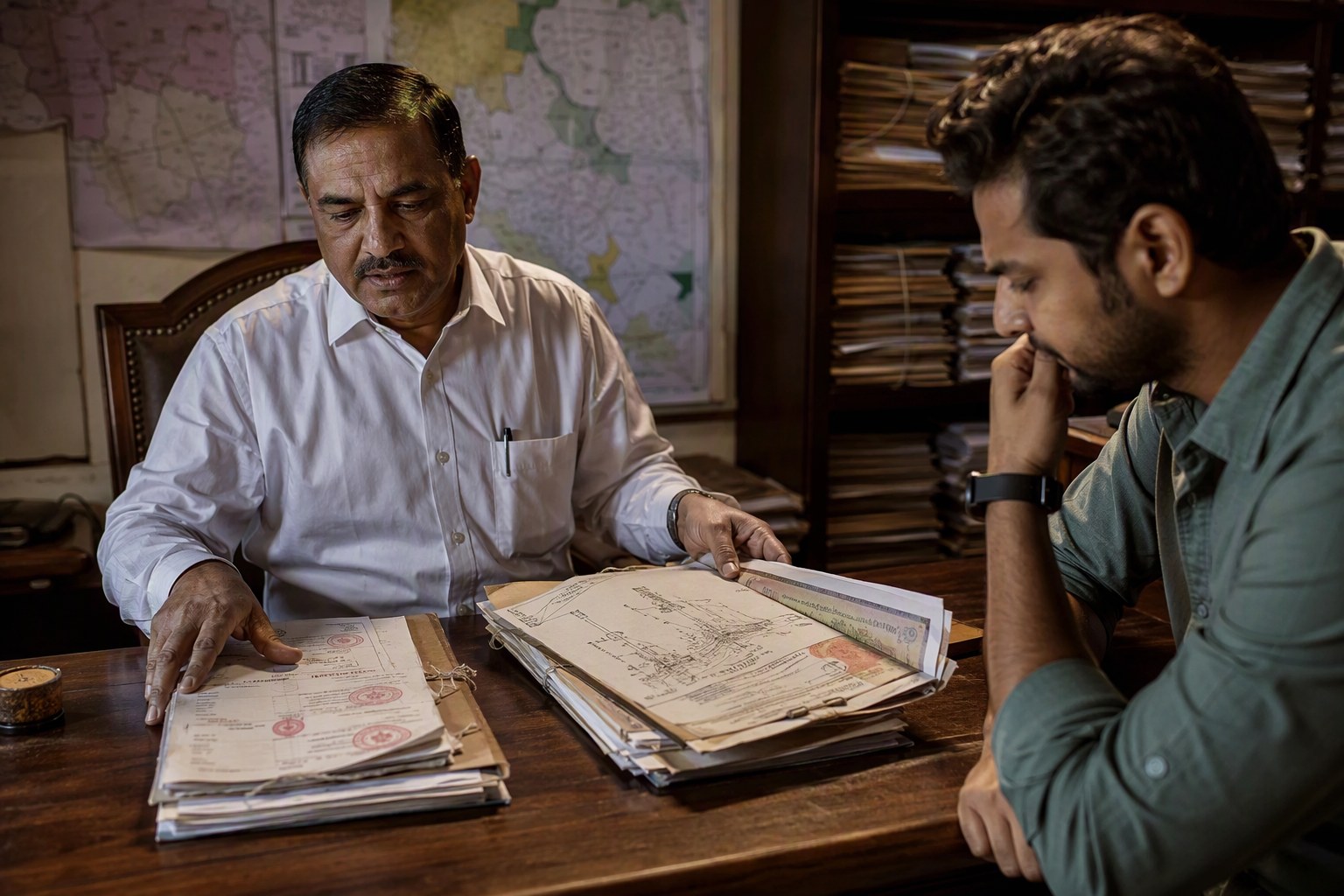
We spoke to a Hyderabad-based bank panel lawyer who regularly examines home loan and LAP files across Ranga Reddy, Medchal-Malkajgiri, Sangareddy, Hyderabad and nearby mandals. His view is blunt: a valuation report is useful only after the legal team is reasonably satisfied that the bank can take a valid mortgage.
“Borrowers think valuation is the main approval step. For the bank, valuation comes after basic legal survivability. If a survey number is hit by 22-A, the valuer’s rate has no meaning for lending.”
This is why a flat in Gachibowli, a plot near Mokila, a villa land parcel in Tellapur, or an old house in Hayathnagar may first go through a prohibited property screen before a valuer visits the site. The lender is not being slow for fun. It is checking whether the security can stand in court, in registration records and in future recovery.
Bank Lawyer View: Why 3,076,153 Section 22-A Entries Matter Before Valuation
Section 22-A entries are not a small side list. With 3,076,153 entries in government records, prohibited property checking has become a routine legal checkpoint in Telangana loan files. These entries can cover different types of lands and properties notified as restricted for registration. For banks, the problem is direct: if the property falls within a prohibited category, the mortgage may be defective or impossible to perfect.
The bank panel lawyer put it in a very Hyderabad way: “A valuer can say the locality is excellent, road is wide, construction is good. But if the underlying survey number is blocked in registration records, the bank cannot sleep peacefully.”
This is especially relevant in the growth corridors around Hyderabad. Kokapet in Gandipet mandal, Narsingi, Puppalaguda, Tellapur in Ramachandrapuram mandal, Mokila and Kondakal towards Shankarpally, Adibatla around Ibrahimpatnam side, Maheshwaram, Kandukur, Medchal, Ghatkesar and Patancheru have all seen strong buyer interest. But buyer interest and bankability are two different things. A property can be popular in the market and still need a tight legal review.
In our experience, the trouble often begins with casual assumptions. A buyer hears that neighbouring plots got registered, or that a builder has already sold many units, or that a bank funded another buyer in the same project. Those facts may help, but they do not replace a fresh property-wise legal screen. Survey numbers, sub-divisions, village boundaries and SRO jurisdiction can change the outcome.
Before paying a token advance, buyers should run the basic identifiers through the Section 22-A Prohibited Property Check, verify the correct village and mandal using the Survey Number Finder, and cross-check registration jurisdiction with Find Your SRO Office. These are not fancy steps. They are the boring steps that save money.
Bank Lawyer View: The Legal Screen Comes Before Market Value
A home buyer usually thinks in this order: location, price, loan eligibility, valuation, registration. A bank lawyer thinks in another order: identity of property, title flow, restrictions, encumbrances, approvals, enforceability, then value. This difference creates confusion at loan processing stage.
Here is how many secured lending files move internally:
| Stage | What the bank checks | Why it matters |
|---|---|---|
| Property identification | Survey number, plot number, flat number, village, mandal, SRO, boundaries | Wrong identity means every later report may be useless |
| 22-A screening | Whether the property appears in prohibited property records | Restricted property can affect registration and mortgage creation |
| Title review | Parent deeds, link documents, pattadar details, pahani, mutation and revenue trail where relevant | Bank wants a clear and traceable ownership chain |
| Encumbrance check | Registered transactions and charges in EC records | Prior sale, mortgage, attachment or charge can affect the bank’s security |
| Approval review | Layout, building permission, RERA where applicable, land use and plan compliance | Unauthorized construction or wrong land use can reduce bank comfort |
| Valuation | Marketability, construction stage, ready reckoner/guideline value reference and local saleability | Value matters only when legal acceptability is reasonable |
Notice where valuation sits. It is not the first gate. It is one of the later gates. This is why some applicants complain that the bank has not even sent the valuer though they have submitted income papers. The bank may be stuck at the property screen itself.
For apartment buyers in Nanakramguda, Kondapur, Hafeezpet or Bachupally, the property may appear simple because it is a flat. Still, the legal team checks the land beneath the project, the builder’s title, project approvals and sometimes RERA registration. For project checks, buyers can use RERA Project Lookup. For resale flats, the Encumbrance Certificate Search and EC Analyzer are very useful before a loan file reaches the lawyer.
What A Bank Panel Lawyer Looks For In Hyderabad Loan Files
The lawyer we spoke to said there are three things he wants early in the file: correct property identity, clean ownership flow and no obvious statutory bar. If those three are weak, valuation is postponed or the file is returned for clarification.
1. Correct village, mandal and SRO mapping
Hyderabad buyers often use locality names loosely. A broker may say “near Kokapet”, but the land may fall in a different village or mandal. Someone may say “Tellapur side”, but the SRO and revenue village must be checked. For legal review, marketing names do not matter. The bank wants the property as described in deeds and revenue records.
In older Hyderabad properties, especially around Secunderabad, Musheerabad, Amberpet, Malakpet and Charminar side, door numbers, municipal numbers and boundaries need careful matching. In peripheral plots, survey number and sub-division are more critical. If the deed says one survey number and the layout plan shows another, the lawyer will not clear it casually.
2. 22-A and government restriction checks
This is the centre of the issue. Telangana’s 3,076,153 prohibited property entries make it unsafe to rely only on oral assurances. A 22-A entry may stop registration or raise serious doubt about mortgage enforceability. The lawyer may ask for clarification, updated revenue extracts, proceedings, deletion orders or other supporting records depending on the case.
For buyers, this is the stage where a small spend on verification is better than a big regret after token advance. Use the Property Verification Tool and keep a record of survey numbers checked. If the property is agricultural or converted land, read the pahani, Dharani details and link documents with a local advocate who understands that mandal.
3. Encumbrance and charge checks
An EC is not a decoration for the loan file. It tells the bank what has been registered against the property. Prior sale deeds, gift deeds, mortgages, release deeds, development agreements and court-related entries can change the decision. A bank also wants to know if another lender has a charge. Buyers can check registered encumbrances through Encumbrance Certificate Search and review possible secured creditor records with CERSAI Charge Check.
The lawyer’s comment here was sharp: “People bring a one-page EC and expect clearance. For a bank, the period, document numbers and link flow all matter. A missing release deed can hold the file.”
Bank Lawyer View: Why Lenders Avoid Valuation First
Valuation is not free for the system. It takes time, site access, measurements, comparable market judgement and internal review. If the legal file is likely to fail, sending a valuer first wastes effort. That is why lenders may screen Section 22-A risk early.
There is another reason. A valuation report can create false confidence in the borrower’s mind. Once a valuer visits a property in Manikonda or Kompally, the buyer may assume the bank has accepted the title. That is not correct. Valuation and legal clearance are separate. A good value does not cure a bad title.
For example, a plot near Shankarpally may have excellent road access and strong demand. But if its survey number needs clarification under prohibited property records, the bank cannot treat it like a clean mortgage. A flat in a well-known corridor like Financial District may have strong resale demand, but if the project land documents or approvals are incomplete in the file, the legal team may still hold it.
We have seen buyers negotiate hard on rate per square yard, then ignore the SRO and survey details. That is the wrong order. First check whether the property can be legally transferred and mortgaged. Then look at guideline value using Market Value / Guideline Value Search, estimate registration cost with Stamp Duty Calculator, and only then argue about the final commercial price.
How This Plays Out Across Common Telangana Property Types
Open plots in HMDA and gram panchayat areas
Open plots need a closer look at survey number, layout approval, land use and title origin. In places like Mokila, Kollur, Shankarpally, Maheshwaram, Kandukur and Ghatkesar, buyers often see fast-moving plot sales. But banks check whether the plot is part of an approved layout, whether the land has any restriction, and whether the seller has a clean title. Land use can be checked through Land Use Zone Finder. Road access doubts can be tested with Road Width Check.
Flats in gated communities
For flats in Kondapur, Nallagandla, Tellapur, Bachupally, Miyapur, Kompally or Uppal, the borrower may focus on amenities and possession date. The bank looks at undivided share, sanctioned plan, occupancy status where applicable, builder title and project registration. If the project is under RERA, the RERA record should match the claims made in the sale office.
Old independent houses
Older houses in areas like Himayatnagar, Vidyanagar, Malkajgiri, Sainikpuri, Dilsukhnagar and Mehdipatnam can have title chains running across several family transactions. Gift deeds, partitions, wills, death certificates and legal heir links become relevant. Here, Section 22-A may not be the only issue; missing link documents can be equally serious.
Agricultural and converted lands
Where agricultural land is being sold for future development, the bank lawyer checks revenue records closely. Pahani, pattadar details, mutation history, Dharani entries, conversion proceedings and local restrictions may all matter. In such files, a survey number mismatch is not a clerical issue. It can change the entire legal opinion.
What Buyers Should Do Before The Bank File Goes For Valuation
The best time to check title is before paying the token. The second-best time is before submitting the bank file. Once you sign an agreement with tight timelines, your bargaining power drops.
- Get exact identifiers: Ask for survey number, plot number, flat number, village, mandal and SRO. Do not rely only on project brochure names.
- Run a 22-A check: Use the Section 22-A Prohibited Property Check before valuation discussions become serious.
- Check EC and link documents: EC should be read with parent deeds, not separately.
- Verify SRO jurisdiction: Use Find Your SRO Office so you know where registration records sit.
- Check guideline value: The ready reckoner/guideline value is not the same as market price, but it affects registration planning. Use Market Value / Guideline Value Search.
- Track changes: If the deal takes time, monitor changes through Property Change Tracker.
The lawyer’s practical advice was simple: “Give the bank a clean file. Do not hide a pending clarification. If there is a 22-A doubt, address it before valuation. Banks dislike surprises.”
Our Opinion: Valuation Without 22-A Screening Is A Half Check
In the Hyderabad market, buyers love talking about appreciation, metro access, ORR connectivity and rental demand. Fair enough. These factors matter. But for a financed purchase, bankability is a separate asset. A property that banks readily accept usually has stronger resale comfort than a property where every buyer has to fight the same legal doubts.
With 3,076,153 Section 22-A prohibited property entries sitting in the system, lenders are right to screen restriction risk before valuation. This may feel irritating when you are in a hurry to close a deal in Kokapet, Narsingi, Tellapur or Patancheru. But a delayed legal query is better than a loan rejection after you have paid a large advance.
My personal view is this: do not treat the bank lawyer as an obstacle. Treat that legal scrutiny as a second safety net. Still, remember that a bank’s clearance is for lending purposes. It is not a full personal title guarantee. If the property value is high or the documents are old, take your own independent legal opinion too.
For Telangana buyers, the sensible sequence is clear: identify the property correctly, check 22-A, read EC, verify SRO, review approvals, then discuss valuation and stamp duty. That order may not sound exciting, but it is how serious property money is protected.
Frequently Asked Questions
Why do banks check Section 22-A before property valuation?
Banks check Section 22-A first because a prohibited or restricted property may not be acceptable as mortgage security. If title or registration risk is serious, valuation becomes secondary.
How many prohibited property entries are there in Telangana?
As per latest IGRS data used here, Telangana has 3,076,153 prohibited property entries under Section 22-A, often referred to as about 30.76 lakh entries.
Does bank valuation mean the title is legally clear?
No. Valuation and legal clearance are different. A valuer estimates marketability and value, while the bank lawyer reviews title, restrictions, encumbrances and mortgage acceptability.
What should I check before paying advance for a Hyderabad property?
Check survey number, village, mandal, SRO, Section 22-A status, EC, parent documents, approvals and RERA status where applicable. Do this before paying a major token amount.
Can a property in a popular locality still have 22-A risk?
Yes. Locality popularity does not remove legal risk. A property in a high-demand area like Kokapet, Tellapur, Gachibowli or Patancheru still needs survey-number-level verification.