


Telangana Weekly Markets May Host Property Check Clinics: the rural title gap
Telangana Weekly Markets May Host Property Check Clinics is the kind of practical idea that can reduce painful land mistakes before they become court cases. The trigger is clear: Telangana has 147,934 prohibited properties under Section 22-A, and many affected families are not sitting in Hyderabad’s financial district. They are in mandals where a weekly shandy is more accessible than an SRO office, a lawyer’s chamber or a MeeSeva centre with a working printer.
The proposal being discussed in local real estate and civic circles is simple: take basic title screening to weekly markets in places like Chevella, Shadnagar, Gajwel, Bhongir, Vikarabad, Toopran, Ibrahimpatnam and Kollapur. Not final legal certification. Not mutation. Not registration. Just first-level checks that tell a farmer, buyer or small plot owner whether the land needs deeper verification before money changes hands.
In our experience, most rural land disputes do not begin with fraud on day one. They begin with one unchecked survey number, one old pahani entry, one family member left out, or one Section 22-A flag noticed too late.
Why Telangana Weekly Markets May Host Property Check Clinics now
The need has become sharper because land transactions have moved faster than local awareness. Around Hyderabad’s growth corridors, families are dealing with higher prices, joint family partitions, Dharani entries, HMDA layouts, gram panchayat layouts, assigned land doubts and inheritance issues in the same conversation.
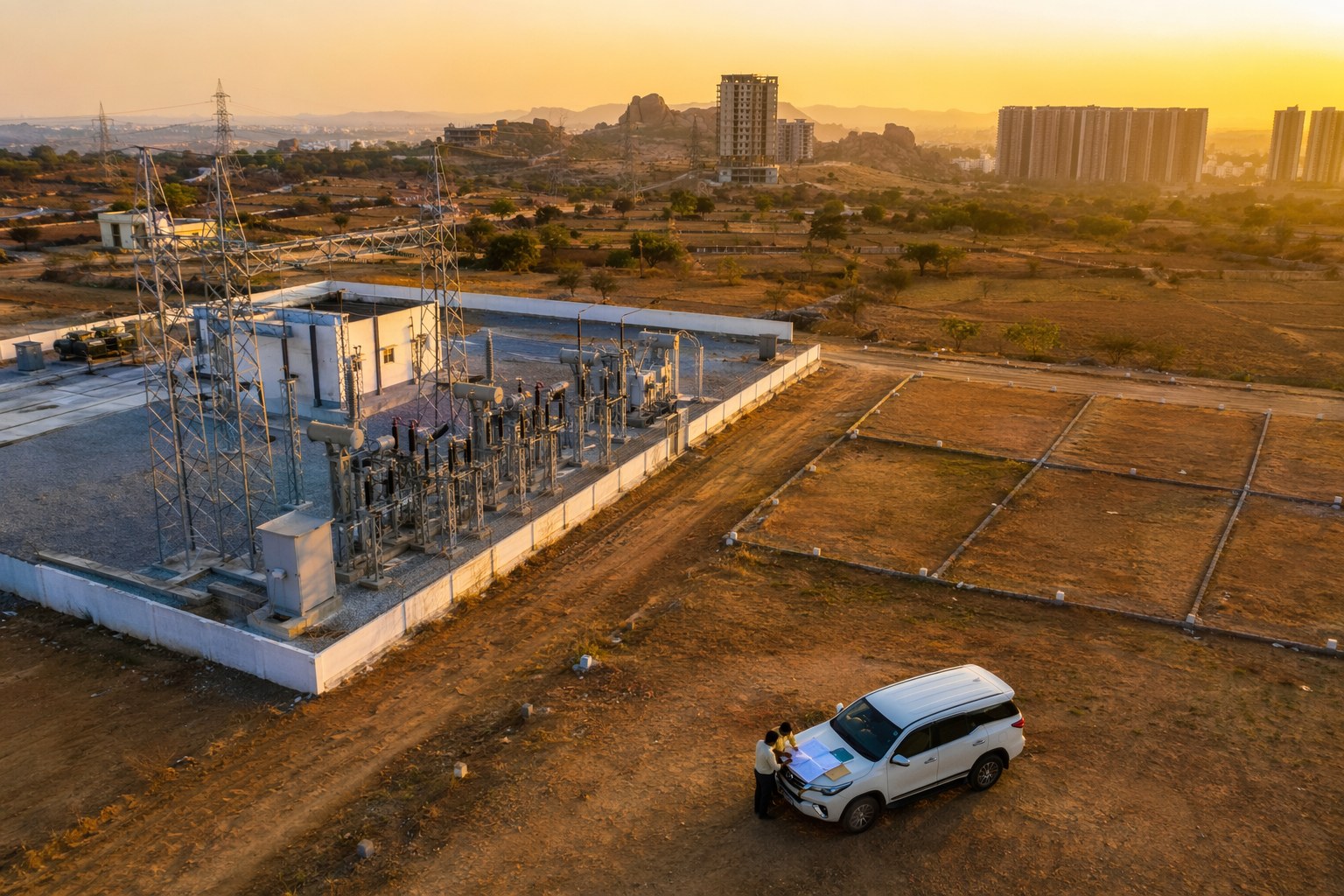
Take the western belt. In Mokila, Kollur, Shankarpally and Nandigama, open plot talk has moved from village discussions to NRI WhatsApp groups. In the south, Maheshwaram, Kandukur, Tukkuguda and Shadnagar are seeing steady buyer interest because of Outer Ring Road access, airport connectivity and industrial land movement. In the east, Yacharam, Ibrahimpatnam, Adibatla, Bongloor and Bibinagar attract budget buyers who want early-entry plots. But the title risk does not reduce just because the locality is popular.
Market prices vary sharply. Kokapet villa plot conversations can cross ₹1 lakh per sq yd in premium pockets. Mokila and Kollur commonly see resale talk in the ₹45,000 to ₹70,000 per sq yd band depending on road width, approvals and location. Shadnagar plotted land may range roughly from ₹12,000 to ₹25,000 per sq yd in active corridors, while Bhongir and Yadagirigutta belts often see ₹10,000 to ₹20,000 per sq yd discussions for plotted layouts. These are market observations, not SRO values. The government value must still be checked separately through the Market Value / Guideline Value Search.
For a rural family, the gap between market price and document confidence is dangerous. A buyer may happily pay an advance after seeing a boundary stone, a borewell and a photocopy of pattadar passbook. But if the survey number is in the prohibited list, under dispute, assigned, ceiling affected, endowment linked or wrongly mapped, the registration desk may stop the transaction.
What a weekly market property clinic can actually check
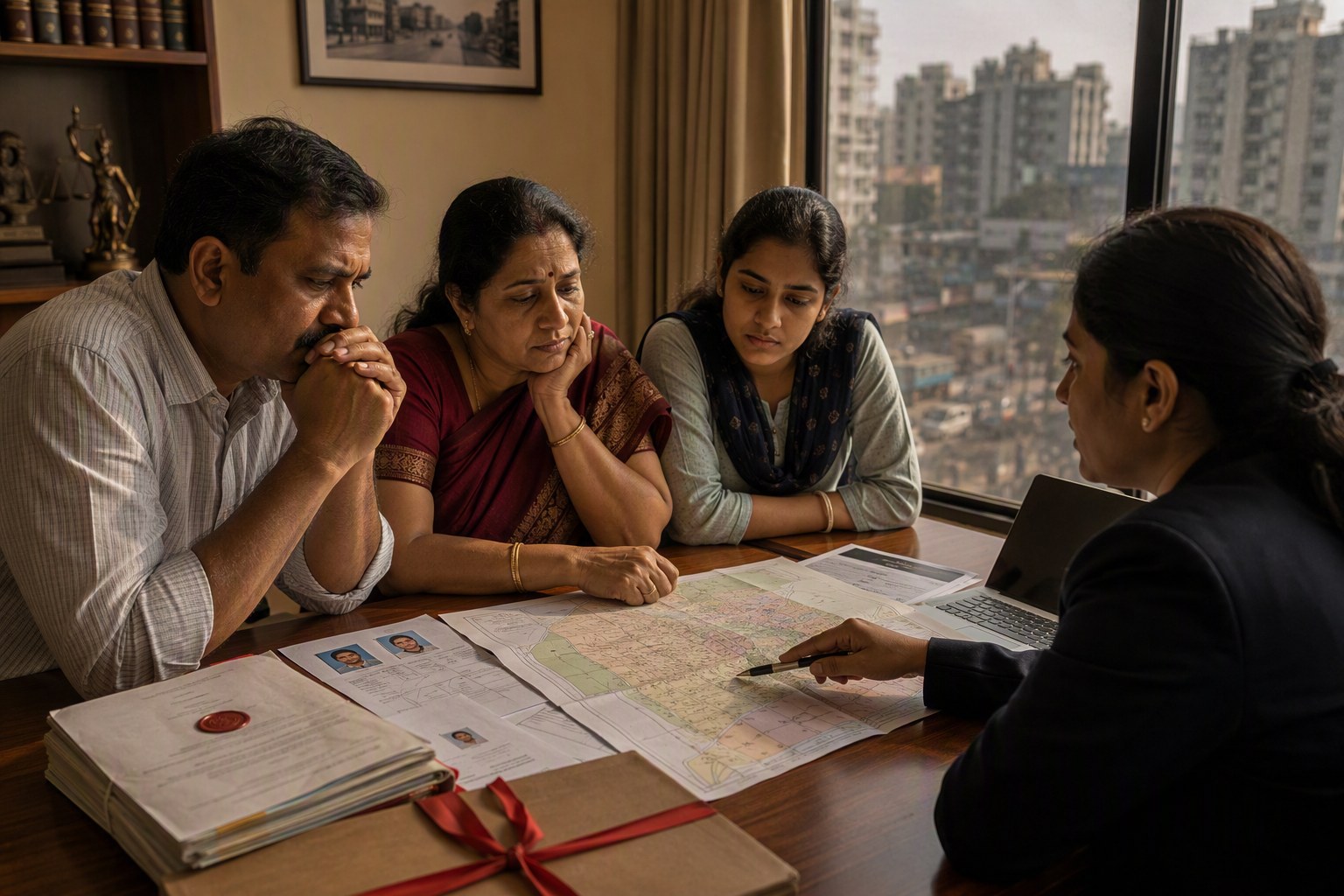
A good clinic should not promise miracles. It should offer basic screening. That means checking whether a survey number appears in the prohibited property database, whether an EC shows unexpected transactions, whether the SRO jurisdiction is correct, and whether the claimed extent matches public records.
For example, a clinic at Chevella weekly market can help families from Moinabad, Shabad, Shankarpally and surrounding villages do first-level checks before signing an agreement of sale. A stall at Gajwel market can serve people from Jagdevpur, Toopran, Wargal and Mulugu mandals. A Bhongir clinic can help buyers looking at Bibinagar, Bommalaramaram, Yadagirigutta and Valigonda lands. These are exactly the places where travel to a legal office in Hyderabad may cost one full working day.
The clinic desk should ideally include the following checks:
- Section 22-A screening: Use a Section 22-A Prohibited Property Check to see whether the land is blocked from registration.
- Survey number confirmation: Use the Survey Number Finder before trusting a seller’s handwritten village map.
- EC review: Pull a basic encumbrance trail using the Encumbrance Certificate Search and compare names, document numbers and transaction dates.
- SRO mapping: Identify the correct registration office through Find Your SRO Office, especially in border mandals.
- Stamp cost awareness: Estimate registration outflow through the Stamp Duty Calculator. In Telangana, sale deed cost is generally 6% overall, made up of stamp duty, transfer duty and registration fee.
- Project check: For apartment and villa projects, use the RERA Project Lookup before relying on brochure promises.
How Telangana Weekly Markets May Host Property Check Clinics without becoming mini SROs
The biggest risk is overpromising. A weekly market desk cannot replace a lawyer, tahsildar office, Dharani correction process, revenue appeal or SRO scrutiny. It should work like a warning counter. Green does not mean perfect title. Red means do not pay advance without expert help. Amber means documents are incomplete or inconsistent.
In Telangana, many rural families still use words like patta, pahani, naksha, sethwar and passbook interchangeably. That creates confusion. A buyer may ask for one document and think the entire title is clear. A seller may genuinely believe his title is clean because his father cultivated the land for 30 years. But registration law, revenue entries and possession do not always tell the same story.
That is why the clinic model should use a simple four-step format:
| Step | What the clinic does | What the family gets |
|---|---|---|
| 1 | Collect village name, mandal, survey number, extent and seller name | Basic case sheet |
| 2 | Check Section 22-A, EC and SRO jurisdiction | Initial risk status |
| 3 | Compare claimed land use with visible records and local facts | Questions to ask seller |
| 4 | Refer high-risk cases to lawyer, revenue office or verified due diligence | Next action list |
This structure is practical for a busy market day. People come to buy vegetables, livestock feed, seeds, spare parts and household items. If the property desk is near a gram panchayat counter, self-help group stall or agricultural input shop, families may actually use it. A formal office scares many people. A weekly market stall feels approachable.
147,934 prohibited properties: what this number means on the ground
The figure of 147,934 Section 22-A prohibited properties is not just a statistic. It means lakhs of family decisions can be affected by one hidden restriction. Section 22-A entries may relate to government lands, assigned lands, endowment lands, wakf properties, court disputes or other categories where registration is restricted.
We’ve seen buyers in the Hyderabad outskirts get emotionally attached to land because the price appears cheaper than nearby plots. A plot near a 100-feet road in Adibatla, a farm parcel in Kandukur, a village site near Vikarabad, or a layout plot near Bhuvanagiri may look attractive. But if the title is stuck, cheap becomes costly.
The clinic should therefore ask families to bring whatever they have: old sale deed, link documents, pattadar passbook copy, pahani, Dharani screenshot, property tax receipt, layout copy, EC, mutation order, family partition deed and Aadhaar-linked seller details. Even if records are incomplete, a trained volunteer can spot missing basics.
Who should run these property check clinics?
The best model is a partnership. District legal services authorities, local bar associations, revenue-aware volunteers, panchayat secretaries, licensed document writers and verified real estate due diligence teams can each handle one part. The clinic should not become a brokerage counter. That line must be strict.
For example, at Shadnagar market, one desk can explain SRO and stamp duty. Another can help with survey number and EC searches. A legal aid volunteer can tell people when a family settlement deed is needed. A revenue volunteer can explain why Dharani correction cannot be solved by a private agreement. This keeps the service useful without confusing people.
Verified.RealEstate’s own view is straightforward: property verification should move closer to where people make property decisions. Not everyone can come to Jubilee Hills, Gachibowli or Himayatnagar for advice before paying a ₹2 lakh advance. A farmer in Yacharam or a teacher in Vikarabad needs the warning before the token amount is paid, not after the sale deed is rejected.
What buyers should do before visiting a clinic
Rural buyers and families can prepare a small document kit. Carry the survey number, village and mandal name clearly written. If the land is in a layout, carry the plot number, layout permission copy, LP number if available, and seller’s deed. If it is agricultural land, carry pahani, passbook copy and link deed copies.
Before committing money, run a basic online check through the Property Verification Tool. If the seller is pushing for immediate advance, slow down. Genuine sellers usually allow time for EC and title review. Pressure selling is a red flag, whether the property is in Kondapur or a village near Amangal.
For plotted layouts, check land use through the Land Use Zone Finder. For buildings and apartments, look at RERA status. For large land parcels, track later changes using the Property Change Tracker. These checks will not solve every dispute, but they reduce blind trust.
The likely impact on rural Telangana families
If done properly, weekly market-based property clinics can reduce bad advances, family fights, registration shocks and document fraud. They can also create awareness about ready reckoner values, SRO jurisdiction, stamp duty, EC history and the difference between possession and legal title.
The idea is not glamorous, but it is needed. Telangana’s real estate boom is no longer limited to Hyderabad’s IT corridor. The pressure has reached mandals, villages and market towns. When land becomes expensive, documents become more valuable than boundary stones. A small desk in a weekly market may save a family from a decade-long dispute.
Frequently Asked Questions
Can a weekly market property clinic give final title clearance?
No. It can only provide basic screening such as Section 22-A status, EC review, SRO identification and document gap checks. Final title opinion should come from a qualified property lawyer after reviewing all link documents.
Why is Section 22-A important in Telangana land deals?
Section 22-A covers properties where registration is prohibited or restricted. Telangana has 147,934 such prohibited properties, so buyers must check this before paying token advance or signing an agreement.
What documents should I carry to a property check clinic?
Carry survey number, village and mandal name, old sale deeds, link documents, pahani, pattadar passbook copy, Dharani screenshot, EC, layout copy and seller details. Even photocopies help for initial screening.
Are market rates and SRO values the same?
No. Market rates are negotiated between buyer and seller. SRO or guideline values are government values used for registration and stamp duty calculation. Always check both before deciding price.
Which Telangana areas need extra caution?
Fast-growing belts such as Shankarpally, Mokila, Shadnagar, Maheshwaram, Yacharam, Ibrahimpatnam, Bhongir and Vikarabad need careful checks because demand, prices and document risks are all rising together.