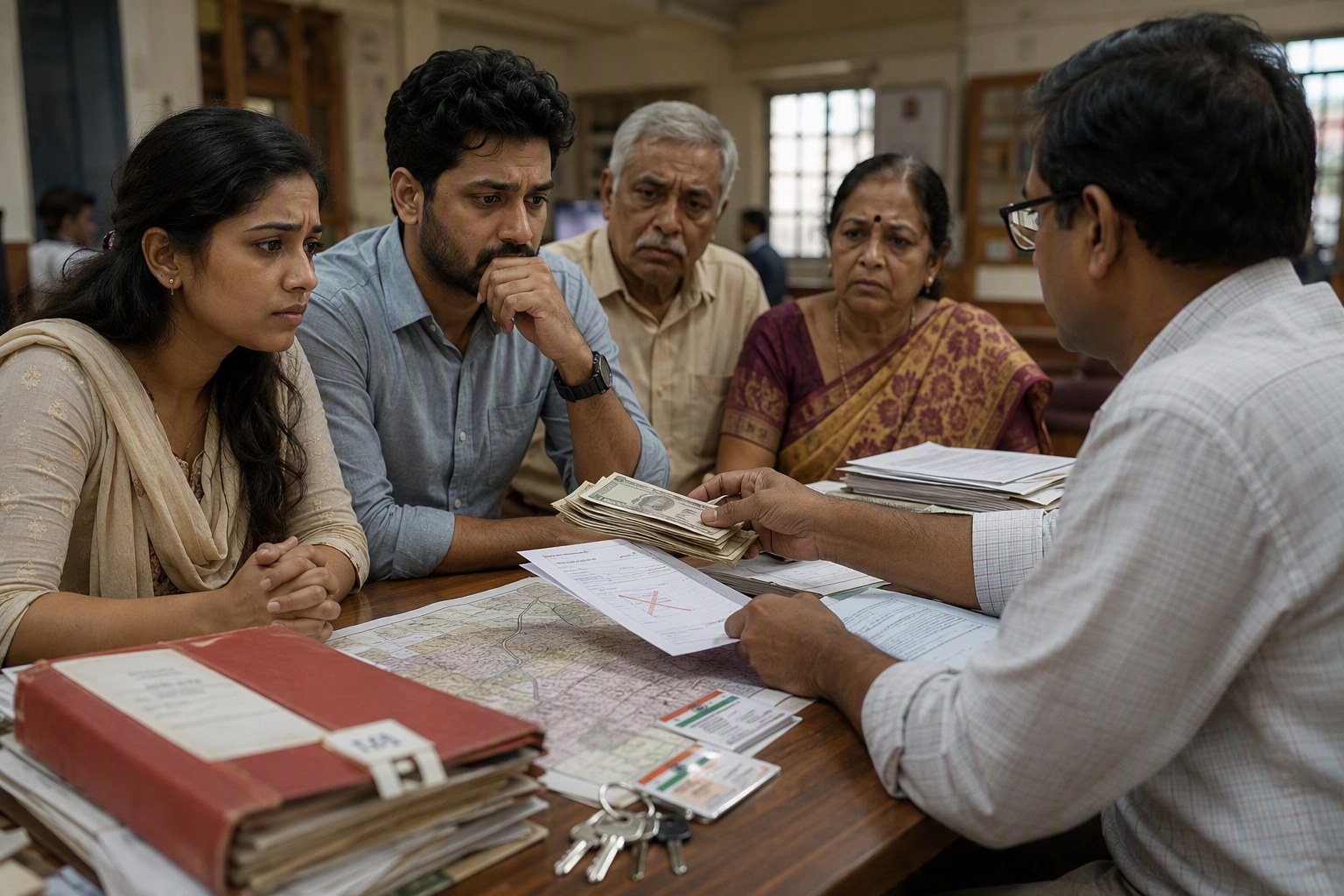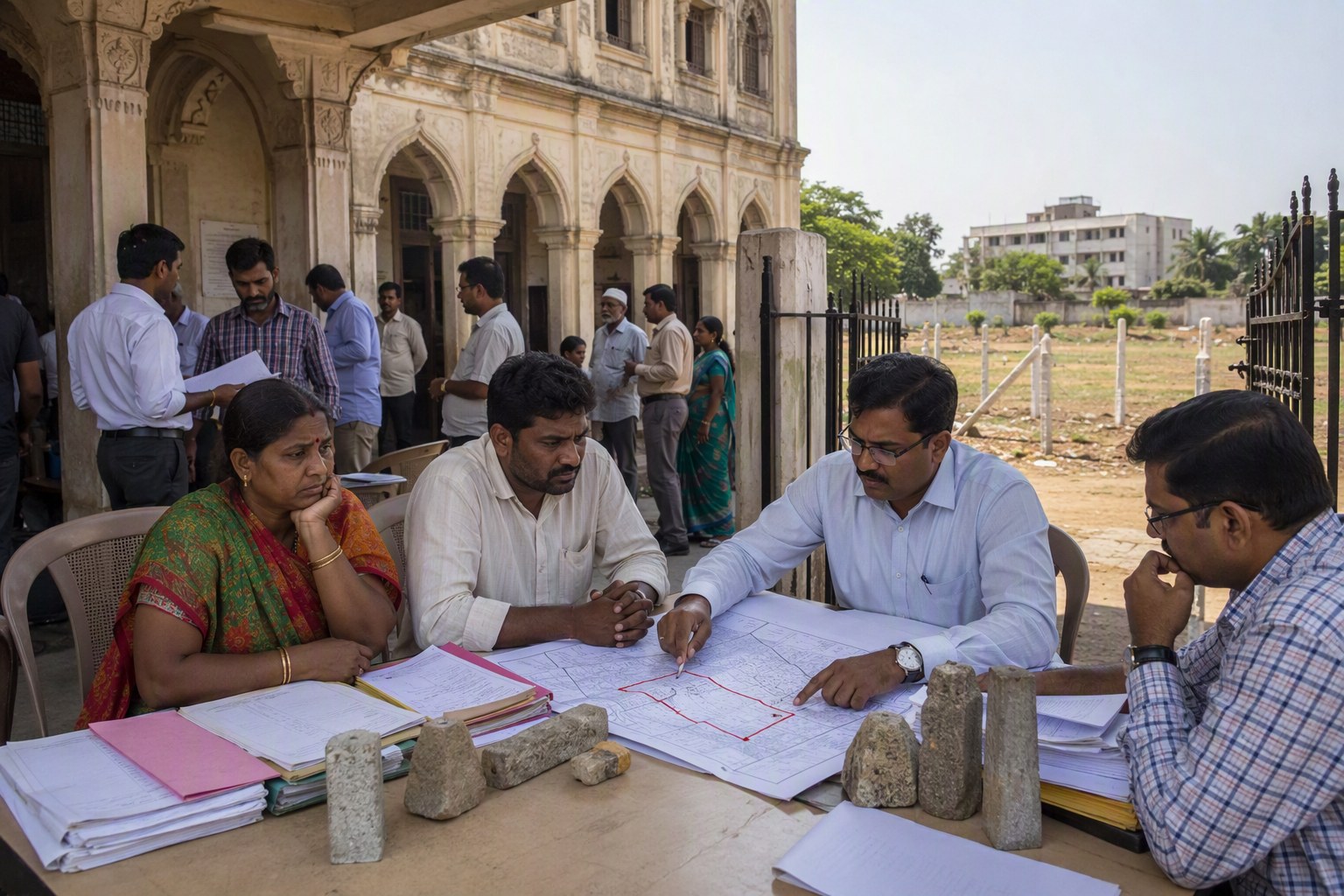



Telangana May Seek Survey Sketches for 22-A Objections, and if this becomes the working rule, land owners will need better boundary-level proof before asking for removal of their property from the prohibited properties list under Section 22-A. For buyers, sellers, advocates and document writers, the practical message is simple: a survey number alone may not be enough. The government may look for a survey sketch that clearly shows the land parcel, its boundaries, neighbouring survey numbers and the exact portion under objection.
As per latest IGRS data available with Verified.RealEstate, Telangana has 3,076,153 prohibited property entries under Section 22-A. That is not a small backend issue. It affects registrations at SRO counters, sale agreements, bank loans, family partitions and development deals across Hyderabad and the districts.
Telangana May Seek Survey Sketches for 22-A Objections: what is changing?
Section 22-A entries are meant to stop registration of certain categories of properties, including government land, assigned land, endowment land, wakf-related land and other notified properties. In practice, many genuine owners also face trouble when their private patta land is mixed up with a prohibited entry due to old survey records, sub-division confusion, village map mismatch or incomplete digitisation.
The possible move to seek survey sketches for 22-A objections appears to be aimed at reducing vague claims. Instead of saying, for example, that land in Survey No. 120 is private, the owner may have to show which part of Survey No. 120 is being claimed, how it sits on the village map, and whether it overlaps with any prohibited land parcel.
In our experience, this is where many objections become weak. The owner may have a registered sale deed, pahani copies and mutation details, but the physical location is not properly mapped. When the revenue record says one thing and the ground position says another, the file starts moving slowly.
For a buyer, the question is no longer only whether the seller has a sale deed. The better question is: can the seller prove the exact land on the ground and show that it does not fall within a 22-A prohibited boundary?
Why survey sketches matter in Section 22-A objections
A survey sketch is not just a drawing. When properly prepared and linked with revenue records, it can answer three critical questions: where is the land, how much is the land, and what are its boundaries. These three points are often the heart of a 22-A dispute.
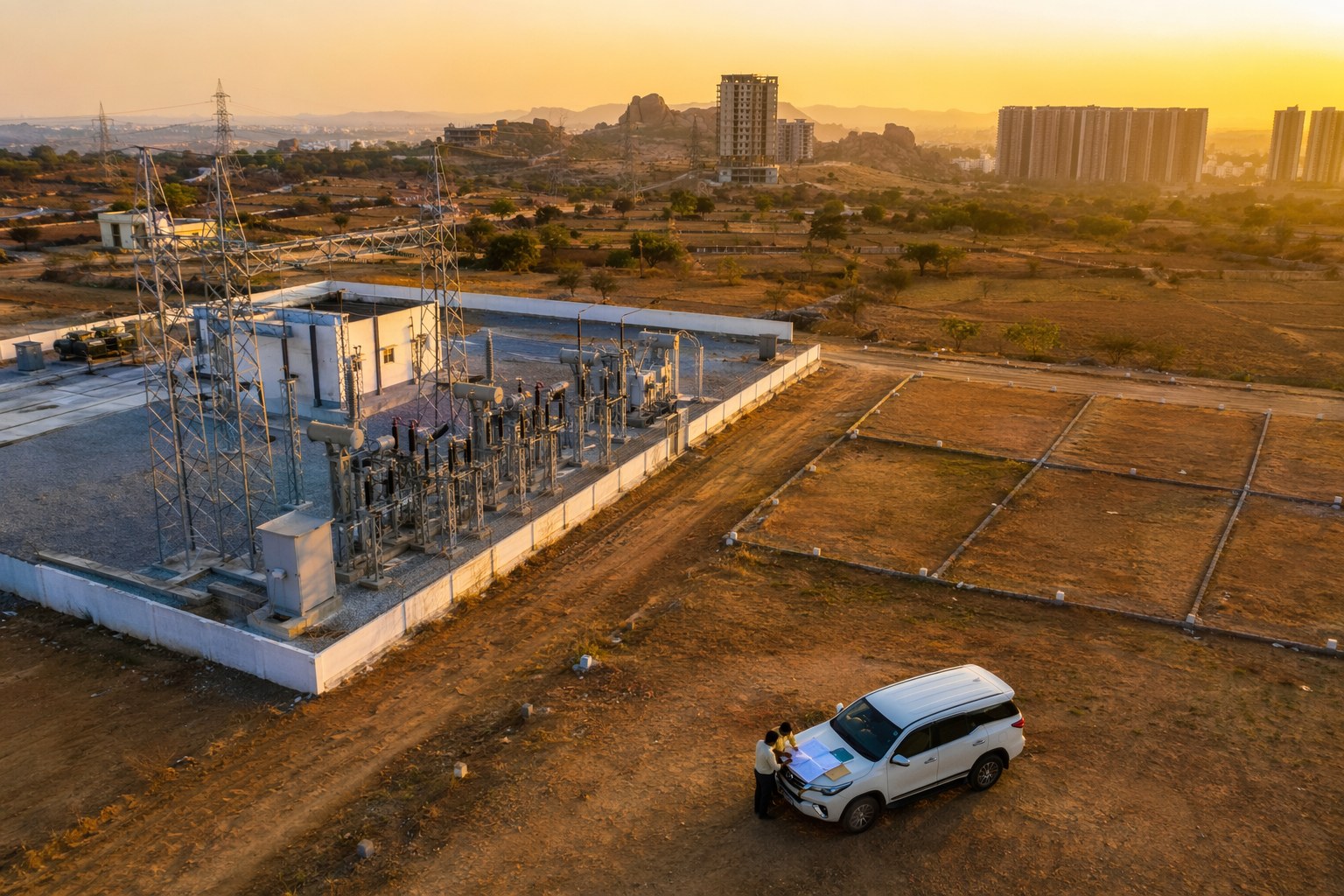
Take areas around Serilingampally mandal, including Gachibowli, Nanakramguda and Raidurg. Land records here have seen decades of urbanisation, layouts, road widening, institutional holdings and high-value development. In such pockets, a general survey number reference can be risky. A small mismatch in extent or boundary can block registration.
Similar issues come up in Gandipet mandal around Kokapet and Narsingi, in Shamshabad mandal near airport-side growth corridors, and in Bachupally and Ramachandrapuram belts where old agricultural survey numbers have been converted into plotted layouts, apartments and villa projects. The buyer sees a compound wall and a board. The SRO system may still see a survey number with a prohibited tag.
Telangana May Seek Survey Sketches for 22-A Objections: buyer impact
For buyers, this likely raises the due diligence standard. Before paying a token amount, buyers should check whether the survey number or property is present in the prohibited property database. Start with the Section 22-A Prohibited Property Check. If there is a red flag, do not treat it as a small clerical issue without documents.
Next, confirm the survey number and village details through the Survey Number Finder. In Hyderabad outskirts, buyers often say the property is in one locality name, while the revenue village and mandal are different. For example, a property marketed as Kokapet may fall under a specific revenue village record, and that distinction matters at the SRO.
Also run an Encumbrance Certificate Search to see the registration history. An EC will not solve a 22-A problem by itself, but it helps you understand whether earlier sale deeds were registered, whether there are gaps, and whether the same land has multiple transactions.
If the seller says the entry is wrong and an objection has already been filed, ask for the acknowledgement, supporting revenue documents, survey sketch, pahani copies, Dharani details where applicable, old title deeds and any communication from the revenue department. A serious seller should be able to show the file trail.
What sellers should prepare before filing a 22-A objection
Sellers need to stop treating 22-A objections as a last-minute problem after finding a buyer. If your land is under a prohibited entry, or if the survey number has partial prohibition, prepare the file before entering into a sale agreement.
- Registered title deeds: Link documents, mother deed, partition deed or gift deed, depending on your title chain.
- Revenue records: Pahani, ROR, mutation details and Dharani entries, wherever applicable.
- Survey sketch: A clear sketch showing the claimed land, boundaries, adjoining survey numbers and access road.
- Ground evidence: Existing compound wall, possession details, electricity connection or property tax record, if relevant.
- SRO details: Confirm the correct registration jurisdiction using the Find Your SRO Office.
- Market value reference: Check government value using the Market Value / Guideline Value Search, especially before negotiating stamp duty and consideration.
One practical tip: do not submit unclear photocopies of old village maps and expect the file to move smoothly. If the objection is based on a boundary distinction, the sketch must be readable. Officials should not have to guess where your land lies.
Due diligence table for buyers and sellers
| Check | Why it matters | Who should do it |
|---|---|---|
| 22-A prohibited property check | Shows whether the property is blocked or flagged for registration | Buyer and seller |
| Survey sketch review | Helps identify the exact parcel and boundary overlap, if any | Seller, buyer advocate, surveyor |
| EC search | Shows registered transaction history and possible title gaps | Buyer |
| Pahani and Dharani review | Confirms revenue-side ownership and land classification details | Seller and buyer advocate |
| SRO jurisdiction check | Prevents filing or verification at the wrong registration office | Both parties |
What this means for Hyderabad real estate deals
Hyderabad buyers are already more alert about RERA, EC and market value. But land-side due diligence is still uneven. In apartment purchases, people check the builder’s brochure and payment plan. In open plot and agricultural land deals, many still rely on a local broker’s word. That is risky when Section 22-A entries exist at this scale.
In places like Mokila, Shankarpally, Tellapur, Adibatla, Tukkuguda and Maheshwaram, land parcels are frequently marketed with future growth stories. Growth may be real, but title has to be real first. A survey sketch requirement can slow down some deals, but it may also reduce casual objections and weak claims. Personally, I see this as a positive step if the process is transparent and time-bound.
Buyers should also check whether the land is part of a plotted layout, whether the layout has required approvals, and whether road access is legally available. Use tools like the Property Verification Tool and Land Use Zone Finder before making a financial commitment.
Our view on survey sketches for 22-A objections
The possible requirement of survey sketches for 22-A objections should not be seen as just one more document. It changes the nature of the objection from a paper claim to a location-specific claim. That is useful for genuine owners, because a good sketch can separate private patta land from prohibited land within the same broad survey area.
At the same time, officials must avoid making this a mechanical rejection tool. Telangana has many old records, missing sub-division details and ground-level variations. A farmer or family owner should not be punished only because historic maps are poor. The better approach is to allow survey verification, field inspection and reasoned orders.
For now, buyers and sellers should act as if stronger documentation is already required. If a property touches Section 22-A in any way, get the survey sketch, check the SRO, verify the revenue village, review the EC and compare the land on paper with the land on ground. That one extra week of diligence can save years of dispute.
Frequently Asked Questions
What is a Section 22-A prohibited property in Telangana?
A Section 22-A prohibited property is a property that is blocked from registration under government records. It may include government land, assigned land, endowment land, wakf-related land or other notified categories. Some private properties also get affected due to record mismatch or survey-level confusion.
Why may Telangana seek survey sketches for 22-A objections?
Survey sketches can help officials identify the exact land parcel under objection. They show boundaries, neighbouring survey numbers and the portion claimed by the owner, which is useful when only part of a survey number is disputed or prohibited.
Should I buy land if the survey number appears in the 22-A list?
Do not proceed only on verbal assurance. Ask the seller for the objection file, survey sketch, revenue records, EC, title deeds and any official communication. Get the property checked before paying advance or signing a sale agreement.
Is an Encumbrance Certificate enough to clear a 22-A issue?
No. An EC shows registered transactions, but it does not remove a prohibited property entry. For 22-A issues, you need revenue-side verification, survey details and official removal or clarification from the concerned authority.